Showing posts with label cinema. Show all posts

Wednesday, March 26, 2025

Orson Welles Spring: The Lady from Shanghai

While in his interviews Welles claimed that The Stranger made him want to leave studio film-making, he did it one last time with The Lady From Shanghai, famously made at Columbia under its notoriously difficult mogul Harry Cohn. Columbia put out a lot of great, truly dark noir at the time, and Lady From Shanghai is best seen as Welles doing his own treatment of that drama. I am a noir lover and watching this film again I realized what an excellent example it is of the genre. It makes me wish Welles has tried other genres, like making a Western or sci-fi film because he takes the genre conventions but gives them a real spark on uniqueness. 

Like many noirs the plot is a maze, and maybe besides the point. If I can restate in generally, Welles plays an Irish sailor who gets tangled in a web of intrigue, adultery, and murder spun by a hotshot lawyer and his femme fatale wife, leading to dramatic deaths in the finale. Like the best noirs it deals with the cruelty of fate. The sailor gets drawn in by actually doing a good thing by rescuing the Rita Hayworth title character from an assault. After World War II, where some lived and some died and there did not seem to be any morality behind the hand of fate, narratives like this made a lot of sense. In our current moment, where the world also feels inexplicable, they resonate again. 

Notably, Welles' marriage to Hayworth was falling apart at the time. For this film he had her sheer her long wavy red hair, and then dyed it blonde. This enraged Cohn, who knew it would drive audiences away (which it did.) Knowing their own relationship difficulties gives this an extra edge, as does the unspoken pain that's always on the title character's face. She seems haunted and desperate and despite being a villain in the end, I never stopped sympathizing with her. Due to her stunning looks, it's easy to underrate Hayworth as an actor. This movie shows that she really had the chops, especially in tackling noir. 

I was also struck by the performance of Everett Sloan as her husband. He played the ebullient Mr Bernstein in Kane, here as the lawyer he is a menacing viper who makes every scene that he is in. Through this character and his corrupt partner Welles also makes several digs at the legal system, which is shown to be a tool of the wealthy and connected. This is a truly down and dirty noir, with little sympathy to go around, since even the sailor seems to be lacking a moral center. 

Of course, not all is well. As I mentioned, the plot is hard to follow even by the standards of the genre. The scenes in San Francisco's Chinatown are gorgeously shot, but also full of cheap Orientalism. Welles' character is Irish and despite his deep love for that country and the time he spent living there, Welles' brogue is notably deficient. The thing is, you forget that all at the end with the shootout scene in the funhouse, for my money the best cinematic montage in the entire noir genre. It's a moment when the sheer thrilling inventiveness of Kane is back and on full display. It's Welles last scene in a studio picture, and it's a helluva way to go out. 

According to Welles' story, he did this movie to quickly get money to pay off debts so his stage production of Around the World in 80 Days could proceed, and the source material was a random novel he saw while he was literally on the phone with Cohn to get financing. Had he had more time and better source material Welles may have filmed an even better noir, but I'll take this one. 

Thursday, March 20, 2025

Orson Welles Spring: The Stranger

The Stranger made the most money of any Welles film, and it also happens to be his least favorite of this own works. Knowing him, this should hardly surprise us. A man who was so willfully committed to art against the odds would be bound to have mixed feelings about success, since it would imply that his work had not been sufficiently challenging. This film has the look, pacing, story, and even actors of a film noir, made during the apex of that genre. Of all of his films, The Stranger conforms most to genre convention. 

It tells the story of a small town in Connecticut with a secret: one of the teachers at the elite college prep school is in fact Franz Kindler (played by Welles), a Nazi intellectual who had escaped Germany after its fall. He is newly married to Mary Longstreet (played by Loretta Young), the daughter of a Supreme Court justice. Kindler is tracked down by Nazi-hunter Wilson, played in a typically spirited performance by the great Edward G Robinson. 

On a political level, it's easy to see why Welles was attracted to this project. He was and remained a full-throated anti-fascist and many of his films speak to that anti-fascism. Here that concern is literal and on the surface, probably too much. Kindler comes across as some kind of evil genius, a way of framing the Nazis that gives them a far more powerful image than they deserve. It's also striking that Kindler and the fascist threat is coming from outside, rather than inside. I can imagine the very WASPy town the film is set in was full of the type of people who had embraced the Klan in the 1920s, as well as the fascist-friendly elements of the opposition to FDR in the 1930s. The whole framing of Kindler as a benign-looking man who is actually indoctrinating the youth in extremist ideology takes the Red Scare framing of communists to such an extent that this may be the only legitimate "Brown Scare" film. 

With all of that said, there are still some very effective elements. The Stranger came out only a year after the end of World War II, and incorporates film footage from the liberation of the camps, evidently the first time this was done in a Hollywood film. The Holocaust was a raw wound at this moment, but one the wider culture did little to reckon with. Edward G Robinson's life experiences and identity give his portrayal of Wilson a power and passion that overcomes the limitations of the script. Robinson had emigrated from a Jewish community in Romania as a ten year old after his brothers were targeted in a pogrom. He was an outspoken critic of Nazi Germany well before Pearl Harbor, something that later caused him to suffer during the Red Scare. When Wilson confronts Kindler and his "just following orders" excuses, Robinson's righteous fury practically blasts through the screen. 

Living as we do now in an era where overt fascism is making a comeback, this scene electrified me. However, narratives like The Stranger's present the values of small-town America as an antidote to fascist ideology, when in fact they have been just as likely to be their incubator. In that respect, The Stranger is an optimistic film, seeing the victory against the Nazis in the war as establishing a new anti-fascist future. The hardest thing to endure in the current political situation for me has been the knowledge that fascism never died, and that its defeat this time around looks far from inevitable. 

I re-read the parts of Welles' interviews with Peter Bogdanovich compiled in The is Orson Welles related to The Stranger, and while he does not have a lot of affinity for the film, he is very much proud of its politics. Evidently he had contemplated dropping out of showbiz for politics full time, and supporting more radical causes like one world governmnet. His issue with the film really stemmed from it being a lone case of him being a studio gun for hire. Other people wrote and produced the film, and they had cut several scenes he had written and filmed for the beginning. In the aftermath he decided from now on to take acting jobs he was not enthusiastic about so that he could have the money to do the directing work he really wanted to do.

Wednesday, March 19, 2025

Orson Welles Spring: The Magnificent Ambersons

Welles' first film still stands as one of the cornerstones of world cinema. His second film, The Magnificent Ambersons, still stands as the most infamous example of studio meddling in a great director's work. I and many other film buffs keep hoping and praying that a complete cut somehow emerges somewhere. For now we are stuck with a film with 50 minutes cut off and a jarring, "happy" ending tacked onto it. 

Because the editing job defaced Ambersons so much, I had not really gotten much out of it on previous viewings, apart from the excellent acting performances and the moments of Welles' brilliance that still shined through. This time, something deeper clicked. Whereas I had seen the film as a family drama before, now I understood it as a social document. If Welles had made this film a mere three years later, after the war was over, the studio would not have butchered it and it would have been embraced by the public. 

At the end of the war, dark film visions made sense to Americans who experienced the death and destruction of a war that was far scarier than depicted in John Wayne movies. Films like The Lost Weekend and The Best Years of Our Lives won Oscars in 1945 and 1946 not despite but because of their dwelling on the dark side of American life. Ambersons is a similarly dark vision, but not one for the rah-rah days of 1942. On a basic level, this film is asking what kind of country we are defending in the first place, not a question people were asking back then, but soon would be. 

The film takes us to the turn of the century, but more than that, it imitates its rhythms. The rat-a-tat-tat of Kane's editing is gone, things have slowed down. The emotions and conflicts are more muted. Like Kane, the character of George is humbled but here he "gets his commupence" in ways that are truly sad to watch. Much of the drama of the film comes from these characters in a bygone, duty-bound world being anguished over not being able to have what their hearts cry out for. To add insult to injury, many of them also end up in penury, stripped of their old comforts.

Welles like Werner Herzog may be a master of a twentieth century art form, film, but his sensibilities lie in the literate, non-specialized world of the nineteenth century. Accordingly, the rise of the automobile is not presented here in a positive light. At the same time, Welles is also critical of the Victorian elite that resisted the massification of American society mostly out of their own self interest. His heart lies in a different time, but he is not a reactionary. 

I also have the say that the roughness of the edits made me emotional when I watched Ambersons this time because I felt like something great had been stolen from me. The early parts of the film work so well, then suddenly the main characters are in dire straits with no explanation, and by the time the viewer can recover from the whiplash, a poorly shot improbably happy ending seems to invalidate all the emotions the viewer has put into the film. It was especially painful after the fadeout to hear Welles' conclusion praising the book's author and the cast and proudly taking credit for something that I knew was not what he had intended. 

I found myself on the verge of tears at this humiliation, which puzzled me somewhat. Why was I getting so emotional? It hit me that I was probably reacting to current events. Musk's DOGE initiative is yet another example of wealthy powerful people destroying beautiful things in the name of money because they are incapable of creating good things, or are even interested in doing so. Welles will still make many more movies, but the path would be rocky forevermore. 

Monday, March 17, 2025

Orson Welles Spring: Citizen Kane

This scene really hit different this time

Orson Welles Spring kicks off with a film so monumental that it seems pretty silly for me to write a commentary on it. It's one of if not the most analyzed films of all time, and the stories behind its making have been turned into multiple films of their own (RKO 281 and Mank). Instead of writing any kind of general overview, I thought I would just offer a few notes for thought that might generate some thoughts of your own. 

When I was growing up I heard about Kane all the time as the film that had been anointed the "best movie ever." I had heard others my age who had sought it out on that basis, and left disappointed. Kane is one of my favorite movies, but to present it to someone on the terms of "best ever" is a bad idea. Luckily for me, I did not see it until my mid-20s, after I had already seen a lot of other films of that era. With that context in mind, Kane absolutely blew me away. It looks, feels, and MOVES like nothing else of its era in the "golden age" of Hollywood. It shows, frame after frame, just what cinema can do. It's hard for modern viewers who don't know old movies to get what's going on because the films they have been raised on live in a post-Kane world. 

Watching it again last night, I was struck by its inventiveness. Practically every shot grabbed my attention. The chopped up timeline combined with the masterful editing kept me far away from scrolling on my phone. It's easy to see why Kane became such a totem among cineastes, since it shows just what can be done with the medium. Things were getting there in the late silent era, where the camera achieved freedom. The advent of sound put the camera within new limits, but Kane found ways to overcome them. 

This time around I watched Kane thinking about the current political situation, and the political nature of the film really came home to me. When I first saw it in the early 2000s I didn't really think about this much, focusing far more on Kane as a person rather than as a political figure or symbol. Because this is a film long praised for its film-making accomplishments, we have tend to miss its message and the historical context it emerged from. 

Kane came out in 1941, in the midst of World War II and at a time when disenchantment with capitalism had reached its highest point in the Western world. Welles himself was on the left and had done work for New Deal theater programs. His famous stage adaptation of Julius Caesar made it into an allegory for the rise of modern fascism. In America the was the age of the Popular Front, the broad anti-fascist coalition that mainstreamed leftist radicalism more than it ever had been. Looking at Kane with fresh eyes, Welles is telling the story of America before the New Deal. Charles Foster Kane is a robber baron raised by a bank, the type of man who when challenged about what people will think of him crows that they will think what he tells them to think. 

Kane is the exemplar of American capitalism after the Gilded Age, and thus is shown rather intentionally as a figure from the past, adrift in the present. Welles was prone to his own arrogance, and he seems to be telling the audience "Aren't you glad that these people don't have ultimate power any more?" It feels like a victory lap for the New Deal and Popular Front, but the aftermath of the film's release showed that the forces of capital were far stronger than suspected. Welles put a thumb in the eye of the mega-wealthy and they retaliated against him. Hearst almost had the film destroyed (shades of Zaslav!) and Welles would never again be able to make a Hollywood film with the financing and freedom he had on Kane. I still admire the man for using his one shot at glory to show how completely craven and dysfunctional the wealthy can be. 

On this last point I feel the film is far more relevant than when I first saw it about 24 years ago. Modern America is dominated by Kane manques (see what I did there?) like Zuckerberg, Bezos, and of course, Musk. Yes there were rich people with massive fortunes back in 2001, but unlike Kane they were not overtly political figures with pretensions of using their wealth to mold public opinion. As the film vividly illustrates, wealth is a corrosive thing that warps the souls of those who possess it. We are now witnessing an attempted revolution from above so sweeping that Charles Foster Kane could not conceive of it. As scary as the moment is, I can find comfort in Welles' film. As much power as these wealthy people seek, they will never be happy, and they too will have to die someday, just like the rest of us. 

Watching Kane again last night with that in mind, the final scene hit differently. There was the usual shudder at watching so many of his possessions being burned after his death, including the childhood sled that represented an alternate life where he would not have been rich and maybe have become a decent human being. I usually feel a heavy sadness in that moment, and a clear warning about how to live my own life, but this time a smile came to my face. In the final shot, watching the smoke of all he had accumulated go through the chimney I muttered to myself with spite, "good." 

Sunday, March 16, 2025

Introducing Orson Welles Spring

For fourteen years I posted regularly in this spot, but have let things go to seed while I've been concentrating on my Substack, where I am writing less and with more intention. I have been missing writing here for Notes From the Ironbound, however. In recent years I've loved doing my album-by-album retrospectives of legacy artists' back catalogs. I wanted to do another, but my potential picks just aren't inspiring me. 

Last year I happened to watch all of David Lynch's films, the first time I had ever really done that with a legacy film-maker. It was such an enriching experience, and I began to think I should do a blog series about a director rather than a musician. I listen to the Blank Check Podcast, so I also knew I would have to go with someone they had not covered yet. 

As the country has descended into its current state I have clung to comforting things to watch to distract myself and try to get rested enough to sleep at night. Late at night I often fire up an old interview with Orson Welles, it's my own version of ASMR. I was watching one from the early 80s where he said he was more interested in politics than film, and that suddenly unlocked something for me. Welles' films are indeed political, and his politics were formed in the crucible of the interwar years, a time that feels uncomfortably like our own. 

Welles' did not just critique capitalism in his films, he lived the consequences of that critique. He only got to make one Hollywood movie without interference, his first. He spent much of his career working independently, begging for money and scraping together productions under difficult circumstances. He is the patron saint of artists who insist on creating against difficult odds. His is a spirit that we need today, both in our culture and our politics. At a time when mainstream culture seems almost opposed to the entire concept of artistry, I think viewing his films will be an inspiring endeavor. 

Soon I will post about Citizen Kane, that one shining moment where his artistry had the full backing of a major Hollywood studio. 

Sunday, December 17, 2023

The Holdovers and Alexander Payne's Cinema of Life

Yesterday I had the good fortune to see The Holdovers in the theater. It's been out for awhile, so I saw it in a small box inside of a small-town independent movie theater, which was pretty much the perfect combination. 

I had seen the trailer multiple times, and I knew the movie would be catnip for me. Not only was one of the main characters a history teacher at a private school (like me), it was about the melancholy side of the holidays, it was set in the 1970s, and it was directed by Alexander Payne. What a combo! I was glad that it exceeded my expectations.

Payne has long been one of my favorite filmmakers, and not just because he's a fellow Nebraskan. He started out making wicked satires like Citizen Ruth and Election, but since About Schmidt has mostly made films about life itself, in particular how we deal with its inevitable pains and disappointments. As I have entered middle age, that subject has felt much more real. I have probably never cried harder in a movie theater than I did when I watched Nebraska because it so perfectly represented the world where I am from and I had never imagined ever seeing its stilted emotional landscape being put up on a big screen for all the world to see. 

I cried a lot at the movie theater yesterday, too. I knew that mourning a loved one was a theme because of the school's chef losing her son in Vietnam. I did not know it was also about the experience of mourning a loved one while they are still alive because a mental illness has made them into someone else. (I won't give away any spoilers beyond that.) That's a kind of mourning I am very familiar with. 

The pains and disappointments of life are often followed by resentments, something Payne explores deftly in this film and others. Giamatti's teacher character resents his wealthy students for their privilege, even more for their obliviousness to it. He may live in a campus apartment and drive a shit car, but he gets to put them in their place when he fails them on their exams. Of course, this is not a healthy way to go through life. I think too of his character in Sideways, the father in Nebraska, and the title character in About Schmidt. All of them seem beaten down by life's unfairness and the feeling that things should have turned out differently.

The other characters in The Holdovers have ample reasons for resentment. Angus is stuck alone on the holidays because his mother would rather vacation with her new husband. Mary had her son's promising life snuffed out by a stupid and unjust war. In middle age I have learned that resentment is the soul killer. Life is unfair and heartless but dwelling on it will make you insane. If I think too long about how I work hard to teach students who are often blase about an education that costs more than my old yearly salary as an assistant professor I get paralyzed. 

We all have to find ways to overcome the dynamic of disappointment and resentment because there are only a blessed few whose lives turn out the way they want them to. Even then, bad things happen. I heard this week that an old classmate of mine who was a good dude and had gone on to be a highly successful basketball coach is beset with a painful, deadly illness. For some cruel reason the hardest and most untimely losses of life among people I care about have happened in December, so I can't get through the holiday season without thinking about how some people are robbed of the time they should have had on this earth. 

I appreciate Alexander Payne's cinema of life because he gets at the dailiness of these emotions. Certain feelings are always with us, sometimes as a barely perceptible ache, sometimes as an all-consuming fire. I also appreciate how the endings are never neat. The characters in The Holdovers find ways to survive and gain some needed perspective, but there's no guarantee that they won't get pulled back into the undertow of disappointment and resentment. We can only try to handle it as best we can. I hope Payne keeps making movies like this because they've helped me with my own process. 

Sunday, May 21, 2023

The Therapeutic Joy of Watching Silent Film

I have been on a mission to reduce the amount of time I spend in the virtual world. It's becoming clear that social media is designed in ways that make me anxious and unhappy when I use it too much, and that it often distracts me when I should be focused on other things. 

Like any other addiction that one wishes to tame into moderation (as opposed to abstinence), one needs to establish rules and practices. When it comes to my device I push myself to go to news sources themselves, rather than social media. One problem I still face is the lure of "double screening," which usually means not fully enjoying a film or TV show.

My willpower can't always do all the heavy lifting, so watching certain things helps. Recently the Blank Check podcast, one of my favorites, decided to do a series on Buster Keaton. Since I can easily watch all of his films due to the good folks at Criterion and Kanopy, I decided for the first time to watch all of the films the podcast would cover in their series. 

I'd seen a couple of Keatons before, a long time ago. Watching a bunch of silent movies has been strangely therapeutic, since they completely resist double screening. The lack of sound demands closer attention, and the intricacies of Keaton's set-ups and gags provide an amazing payoff. I find myself getting lost in these movies in ways I just haven't been watching movies at home in years. 

The best silent films are the purest cinema, and are visually far more exciting than anything to come for decades after. Not having to worry about microphone placements or sound or setting scenes around dialogue gives the camera an exhilarating freedom of movement. The lack of dialogue also allows something made 100 years ago to still feel contemporary in the most uncanny ways.  

It is ironic that film, that most visual of mediums, was more viscerally so in its earliest incarnations. It was the first to utilize the screen, the origins of our modern screen-obsessed daily lives. Yet somehow, the originators managed to do things a century ago that seem impossible today. Watch a great silent film and lose yourself; I guarantee a good time. 

Saturday, May 20, 2023

Bring Back the Roadshow Format

 My most recent Substack is about the need to bring back intermissions in movies. They are making movies even longer without any way for us to pee! Back in the 50s and 60s Hollywood showed longer epics in a "roadshow" format that included an overture and intermission. I say bring it back!

(No worries, some Notes From the Ironbound exclusive content is coming this weekend!)

Sunday, January 22, 2023

Getting Through the Winter Doldrums

It's late January, the grimmest part of the year, a stretch that will last about a month. It's cold and dark. The weather tends to make commutes hellish. The holidays are over and the decorations stripped. Lunar new year came early this year and is now over and marred by tragedy. There's little to do and the only real "event" is the consumer orgy of the Super Bowl, which mostly just makes me feel ill. 

It's Sunday night now, which means facing another work week after a weekend spent in the fog of this winter malaise. The end of the last year brought reflect, as the end of the year always does, and that reflection in middle age typically leads one to contemplate how dreams hoped for in youth are just never going to come true. 

If I had been wiser in my youth, I'd have gone to law school instead of grad school and now I'd be making enough money to go on a vacation somewhere warm and sunny to get away from all of this. I foolishly chose to pursue knowledge rather than lucre in a society that worships the latter and despises the former. Sometimes I can be comforted in the knowledge that my work actually has meaning but this time of year the old narratives don't work their magic like they usually do. 

I am willing to bet a lot of you are feeling the same way right now. So how do we get through this? Sometimes the only way out is through.

I lean into despair with my trusty friends music, books, and movies. Here's some recs if you are looking for them. 

Jackson Frank's "Blues Run the Game" just totally embodies that feeling that winter is never going to end and life is pretty hopeless. He also talks about sending out for whiskey and gin, which are my preferred tipples this time of year. 

Robert Altman's anti-Western McCabe & Mrs Miller is suitably bleak and gloomy. The dark rainy Pacific Northwest setting perfectly frames a story where love and passion are ultimately futile. Sometimes the bastards win and the hero doesn't ride into the sunset. 

Sad folk music is my preferred soundtrack this time of year, and no one did it better than Nick Drake. All three of his albums are superlative, but Pink Moon gets busted out on many a winter night in my house. It's eerie and dark but weirdly comforting, too. 

Sometimes a little anger helps, too. January in an odd-numbered year means a brand new Congress and brand new state legislatures. It does not exactly help my mood to read about Republicans trying to hold the country hostage with the debt ceiling or finding new and unique ways to persecute trans people and target my fellow educators. It's even worse when the people who ought to be fighting back are AWOL. That's when I put on Neil Young's "Ambulance Blues." "You're all just pissing in the wind."      

In terms of books, last year at this time I decided to reread le Carre's "Karla Trilogy." I won't do the same thing this year, but I might just give Tinker Tailor Soldier Spy another spin. Gloomy 70s London combined with Cold War intrigue is perfect for this time of year. It's also the kind of story where the "good guys" have to make moral compromises in order to win, compromises that undermine their "good guy status."

****

These are the winter days of out discontent. I'm too pessimistic to think they can be avoided, but I at least I hope we can get through them with some splendid wallowing. 

Sunday, October 16, 2022

John Carpenter's Halloween and Fortress Suburbia

I released my newest Substack this weekend, inspired by my first viewing of John Carpenter's Halloween. Released in the late 70s after the last major waves of suburbanization and before the dawn of gentrification, it questions suburbia's founding myths. The place that supposed to be protected actually spawns true evil. Check it out!

Monday, October 25, 2021

Dune and Historical Contingency

37 years after David Lynch's famously beautiful failure to adapt Dune, I am entranced and obsessed with Denis Villeneuve's new and even more beautiful adaptation. It's been a long time (maybe never) since Hollywood has embraced full on gonzo hardcore science fiction, rather than the kiddie space opera stuff. This kind of sci fi provides a way to look at ourselves through an imaginary reality. While Dune might have more obvious connections to the roles of environmentalism, imperialism, and religion in our world, I also think it provides some opportunities to think about history.

Those of us who study history seriously learn early in our education that popular renderings of history as a playground of great noteworthy individuals just don't hold true. We tend to jump to the opposite, to seeing broader economic and social contexts determining so much behavior. At some point, however, you realize that despite all of larger tides of history, events can still turn on individual actions that are completely unpredictable.

Dune is a great way of thinking about this. The desert planet Arrakis does not seem like the kind of place so set off a movement to topple a galactic empire. The messiah was supposed to come a generation later, nor in the form of Paul Atreides. Lady Jessica was supposed to have a girl, not a boy. It is fundamentally a story about what happens when unpredictable forces completely derail history from the train tracks.

There are plenty of examples of this in history. The rise of Islam out of the backwaters of Arabia, leading to a total conquest of the Middle East, could never have been predicted. (It's also an inspiration for Dune.) The Berlin Wall fell in a kind of fever dream, and Vaclav Havel went from being a dissident playwright to president of Czechoslovakia in a month. 

Of course, the coronavirus has been the biggest such contingency in living memory. They put memos saying "Bin Laden determined to strike in the US" on Dubya's desk in the summer of 2001, but the complete world changing implications of all of this have unfolded without the least bit of predictability. Like the characters in Dune, we too are living through a time when much that seemed certain has melted into air. One of the worst things about the pandemic is the feeling that nothing can be depended on, that day to day anything can change. Dune is realistic too in showing the violence of change, the uncomfortable fact that building a new world means the painful destruction of an old one.

Saturday, April 17, 2021

On Gambling Movies

One thing I love about the Criterion Channel is how they gather films into special collections and series by theme, style, and genre. Right now I am really enjoying The Gamblers, a set of films about gambling and gamblers made from the 1940s to the 1990s. As is usual with these collections, some films are old favorites, some are ones I have wanted to explore, and some I've never heard of and am glad to have on my radar. 

This by the way is an argument for streaming services to do more curation. So many just shotgun blast content out there without offering viewers a chance for deeper engagement and new discoveries. But I digress...

I've always felt a little weird about gambling because I have personally seen how people can get addicted, and I tend to have a risk averse personality. I enjoy it, but only if the stakes are low. There is a real kind of thrill when one wins, it feels like you've managed to get one over on the universe. The losses, of course, just reinforce the cruel, capricious hand of fate's rule over our lives. And as in life, the game is rigged and you lose on more days than you win. Gambling is something that makes the reality of human existence a little too real. 

Of course, that makes it a great subject for movies. Here are some of my favorites:

Croupier 

I just rewatched this one, which I've seen a few times. I saw it first in an art theater back in my Chicago days and fell in love, then acquired a VHS tape when a local video store went out of business. It's the movie that put Clive Owen on the map, playing a struggling author who returns to being a casino dealer out of boredom and desperation. I don't want to give too much away, but the title character is someone who enjoys gambling without ever wanting to place a bet. He knows it's a loser's game, and sees gamblers' quest to get one over on the universe as a sign of delusion and selfishness. (It doesn't help that his dad was a gambler.) I love a good neo-noir and this is a great little hard gem of a film. 

The Hustler

I am a sucker for a certain kind of gritty 1960s movie shot in black and white with a jazzy score saturated in cigarette smoke. Paul Newman, Piper Laurie, Jackie Gleason, and George C Scott is a helluva combo. 

California Split

Gambling seems to be a perfect subject for Robert Altman, whose films captured the small disappointments of life so well. What I love about this film is how well it captures the places where truly degenerate gamblers get their fix. It's not Rat Pack Vegas, it's smoke-filled poker rooms and racetracks with fifty layers of spilled beer and soda absorbed into their floors. There's a lesson here too, about how even when you come out ahead you never win because the true gambler can never be satisfied. This film also uses Altman's signature overlapping dialogue more effectively than any other since poker table talk lends itself to this method.

Lost in America

This one is cheating a little because the entire film isn't about gambling, but it's most famous scenes certainly are. This is the tale of an 80s yuppie couple played by Albert Brooks (also the filmmaker) and Julie Hagerty to decide to leave their corporate LA life and go cross country in an RV. Their first stop is Vegas, where they lose all of their travel money in one night due to the Hagerty character falling into a gambling frenzy. The scene where Brooks tries to convince the casino boss to give him his money back is hilarious as well as a great satire on affluent types who think the consequences don't apply to them. For the first time he can't get out of it because in a casino the house always wins. 


Saturday, September 19, 2020

Why Sorcerer Is a Great Quarantine Film

For years the film Sorcerer was more of a legend than a movie to me. Peter Biskind's book about 70s New Hollywood, Easy Riders and Raging Bulls came out right as I was becoming a film obsessive. I devoured and re-read it. He talks a lot about Sorcerer, William Friedkin's 1977 follow-up to The Exorcist and The French Connection.

In those films Friedkin had combined genre film-making with international art cinema techniques. The results were absolutely thrilling and made a lot of money. A few years ago I got to see The French Connection on the big screen and was blown away by its energy and creativity, hardly a usual crime film. Sorcerer came out in 1977 and flopped. It arrived in theaters right when Star Wars hit its wide release. 

As Biskind pointed out, the whole thing was a kind of metaphor of where Hollywood was heading. Blockbusters were in, arty movies by difficult directors were out. I learned in the book that Friedkin spent massive amounts of the money on the film. twice as much as Star Wars cost. The expense was not in models and special effects, but in getting the perfect shot of a truck driver shifting gears. Reading the book it sounded horribly self-indulgent.

The Tangerine Dream score is just too good

Sorcerer was very hard to find on video and wasn't streaming, but a couple of years ago I got my mitts on the blu-ray release. I bought it sight unseen because I had waited almost twenty years and I was damn well going to see it!

I also knew that the underlying story was a good one. It's an adaptation of the 1953 French film, Wages of Fear, one I had already seen and liked. In both films a group of outcasts and vagabonds in South America must drive trucks full of unstable nitroglycerin over treacherous jungle and mountain roads. Their pay will be their ticket out of a nightmarish existence. With a setup like that, it's hard to go wrong. 

In Friedkin's version we get to see how the four vagabond criminals came to be outcasts. One is a Mexican assassin, another part of a New Jersey gang that met a band end, another a Palestinian terrorist, and the last a corrupt French banker. The films starts as four short films, a format I find innovative and interesting. 

The film has been criticized for having all this setup for characters who still remain distant from the audience. I actually like that. These outcasts -who know they have done wrong- are really standing in for the broader human experience of being playthings in the hands of fate. All four were unlucky, and while they did bad, they seem more honest that the oil company officials sending them on their deadly mission. 

The tension in some of the scenes, especially in driving the trucks over a rope bridge swinging in a raging storm, is almost unbearable to watch. Seeing the film last night, however, it felt more familiar and less fantastical.

School has started again, meaning that I am working like the devil to make distance learning work for my students while juggling my children's education needs and somehow preparing meals in the midst of days that are spent in a constant state of frenetic anxiety. It really does feel like managing my emotional state is akin to driving a truck full of nitroglycerine over a flimsy jungle bridge in a thunderstorm. Like the characters of the film, I have no confidence that I can make it, but not pushing forward is not an option. It must be done.

The universal quality of the characters' dilemma is helped out by the fact that none of the actors (who do a great job) are stars. The closest is Roy Scheider, who is the kind of actor who only could have been famous in the 70s. His charisma is more subtle, but his presence is unmistakeable. At the end, when his mind is fraying under the stress he is enduring, you can put yourself in his shoes the way you couldn't with say Steve McQueen.

This past year has reminded me more than ever that I am at the mercy of forces well beyond my control. I have had to make my peace with the complete uncertainty ruling my existence. Being unexpectedly called into campus? My children's school schedule altered? Loved ones I can't visit getting really sick? Ruth Bader Ginsburg dying? I'll just have to keep driving that truck, whether I make it or not.

Sunday, March 1, 2020

On Watching Quadrophenia in Middle Age


This year I have made a point of listening to as much new music as possible. Now that I've hit middle age I am shocked by how backwards-looking people my age can be. I hear their fear and derision towards a changing world and pray that does not become me. It has become increasingly clear to me that indulging in the comforts of nostalgia in middle age too often is a soul killer.

Despite my resolution to stick to new stuff, I ended up rewatching the 1979 film Quadrophenia this weekend. It's based on the 1973 concept album by The Who of the same name, but without being a rock opera. The Who's music is always in the background, the main characters don't break into song, other than to hum or sing their favorite pop songs to themselves. (One of the best scenes involves two characters singing rival kinds of music in adjoining public bathtubs.)

The story is set around Jimmy, a young working class man engaging in the "mod" subculture of mid-1960s London. Jimmy and his mod friends often tangle with "rockers" from the same working class neighborhoods. The mods wear smart suits, ride scooters with lots of mirrors, and listen to British rock bands like Kinks, Who, and Small Faces. The rockers prefer motorcycles, black leather, and American rockabilly like Gene Vincent and Eddie Cochran.

Jimmy finds himself in a personal crisis. He works a crummy office job (that he eventually loses) while living at home and clashing with his parents, who disapprove of his lifestyle. He strikes out hard in love and alienates his friends. It's implied that he's suffering from mental illness, but isn't getting treatment for it. (In the album he is, but the film is far bleaker.) Perhaps worst for him, a mail truck destroys his scooter.

The mods and rockers tangled on the beaches of Brighton, and the film ends with Jimmy going there, trying to relive one glorious weekend where he led his friends into battle and won the affection of his crush. He discovers that the "ace face," the coolest of the mods (played memorably by Sting) is actually just a bell boy. Jimmy steals the bell boy's scooter and drives it to the white cliffs over the beach. Watching it you fear that Jimmy is going to kill himself, but since the film opens with him walking away from the cliff at sunset, you know that he doesn't. (Although some people seem to miss this.)

Instead, he sends the scooter, the symbol of his allegiance to the mod life, over the side of the cliff. The shot of it crashing on the rocks freezing into a still photo as Roger Daltry sings the line "You stop dancing" is one of my favorite final shots ever. It hits like a punch to the head, especially after the beautiful, sweeping footage of the cliffs. The whole mod thing, which promised liberation, was just a dead end trap, and Jimmy has rejected it.

It's a scene that hit me hard in my 20s, when I like Jimmy was still trying to define myself. In middle age it hit harder, but for different reasons. By the time one reaches 40 plenty of compromises have been made and beloved things left behind. At some point you have to recognize that you are no longer young, and that the aging people around you who insist on being young look absolutely pathetic.

Seeing that scooter go off of the cliff was a reminder of what I've had to quit. First and foremost I quit academia, which ended up being as imprisoning as mod life, even if I was decked out in boxy tweed instead of the slim threads of Swinging London. So much of what we put our hopes and dreams into ends up going wrong, it seems.

But beyond that dramatic life change, getting old means losing people. They got lost to death, to distance, to drifting and sometimes in explosions of anger and recrimination. I think back to my two years in Chicago and how one of my closest friends from then is dead and the other is estranged from me. Places get lost, too. When I go back to my hometown I don't usually recognize too many people. Most of my old haunts in the town where I went to grad school are shuttered now.

As I said, however, nostalgia is a bad disease in middle age. Instead of looking back, it's best to see forward. I don't go to rock shows much anymore, but I do have fun doing impromptu dance parties with my daughters, for instance. The possible onset of a pandemic had me soul searching a lot recently, and I realized that even though I never managed to be a respected professor or writer, I'm happier than I thought I'd ever be back in my young confused days, and that's all I really need.

Wednesday, October 3, 2018

Bring Back Trash Cinema!


We are living in dark times. In these days of woe we need escapist entertainment to distract us. We need cheap thrills. We need dumb fun. We need trash cinema.

Back in the olden times trash cinema could be found in the drive in theaters across America. From killer robots to killer shrews to killer motorcycle gangs there were cheap thrills aplenty. The drive-ins hit their decline, but in the 1970s the grindhouses stepped into the breech. Exploitation cinema hit a high point worldwide, from Italian horror to Australian road flicks to American blaxploitation. A lot of film-makers raised on this stuff turned it into art cinema in the 1990s, with Quentin Tarantino being the most notable. In the 1980s the home video market undercut the grindhouses but opened up many more opportunities for trash cinema. A suburban dad might not go to the city to see an exploitation movie in a grimy cinema, but he would totally rent American Ninja.

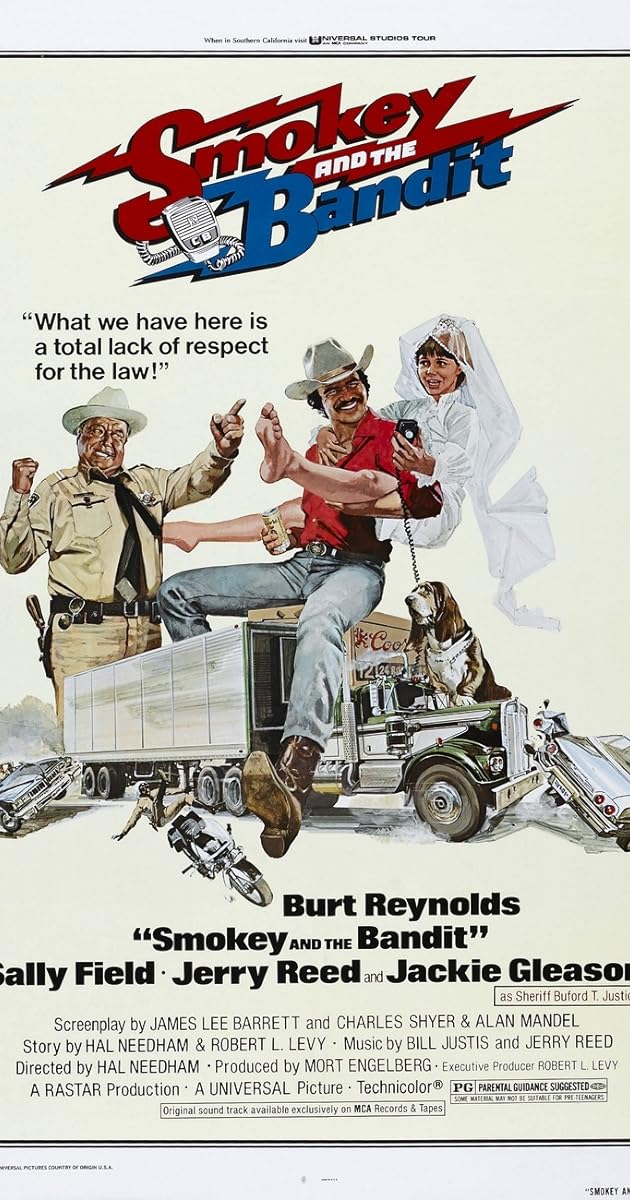
I saw so many B-action movies as a kid because my father loved martial arts (he earned a black belt) and would watch anything with Chuck Norris in it. In the early days of cable in the 80s stations like WGN and TBS would show any old Charles Bronson or Lee Marvin flick, and I would watch it. Burt Reynolds became the biggest box office draw of the late 70s and early 80s via what's essentially a higher budget drive-in feature, Smokey and the Bandit.

While the 80s were a golden age of trash cinema, in the 90s it went into decline. Mom and pop video stores were replaced by Blockbusters. Those mom and pop places needed those B movies to have product on the shelves, a reputable megacorp like Blockbuster would just put up an entire wall of copies of Armageddon. The world of streaming that replaced the local Blockbuster store should have resulted in a trash cinema renaissance, but it hasn't.

On the big screen studios put out fewer and more expensive movies, with the cheap thrills of the past left aside. On the small screen there is an obsession with "prestige" television. Amazon and Netflix are swimming in cash, and so can bankroll attempts at recognition rather than a shotgun blast of B movie pleasure.

Of course, a lot of this "prestige" television has grown stale and formulaic and self-serious to a self-parodying level. I'm honestly bored and tired of it. America wants, nay craves trashy cheap thrills, not yet another group of stiff-lipped royals or criminal suburban dads. If you want to know what you're missing, watch Electric Boogaloo on Netflix. It is an amazing documentary about Cannon Films, the ultra-productive schlock producers of the 1980s led by the undaunted Golan and Globus. It's made by the same people responsible for Not Quite Hollywood, a similarly engaging look at Australian genre cinema in the 70s and 80s.

So please Netflix, hire a modern-day Roger Corman to run a spin-off studio that makes dumb, fun, inventive genre movies. Bring back the backwoods moonshiners running from the revenuers, the Pam Grier-type righteous woman hero, giant mutated animals, ninja throwing stars, and over the hill action stars shooting up the screen

Here's some great clips to tide us over until we get our trash cinema back:

Ninja golf course massacre in Ninja III: The Domination


Don't mess with a pissed off trucker! White Line Fever is a secret blue collar masterpiece


Before he was the Bandit, Burt Reynolds was Gator. Both films also featured themes by underrated country singer Jerry Reed, who also starred.

1970s trash cinema, when Joe Don Baker could be an action hero.


The one and only Pam Grier


Death Wish 3 is grotesque, what a friend called "a Trump speech given sentient life." Trash cinema should occasionally make you feel icky for watching it.

Wednesday, May 16, 2018

Indiana Jones And The Temple Of Regret

This poster grabbed my imagination back in '84

[Editor's Note: I wrote this as a submission to an online film magazine asking for pieces on reconsidering films we once loved. It didn't get accepted, but I still want to share it with you, dear reader.]

I was born in 1975, meaning that I am of a certain cinematic generation that grew up repeatedly watching certain movies that were taped off of television broadcasts onto VHS. It is hard even to recall now the state of home video in the first two-thirds of the 1980s when VHS copies of movies were priced at about a hundred bucks in 1980s money. In those dark days movie studios figured most of their films were being sold to video stores, so they needed to make sure that they got their due and proper.

Being a kid at this time meant that your parents got ultimate veto power over the films rented from said video stores, and parents were not too keen on renting films like Indiana Jones and the Temple of Doom over and over again, no matter how much the kids liked it. That’s where taping movies off television became a lifesaver. I became an expert at timing the pause button so that I could cut out the commercials while not shaving any time off of the movie. It is a now useless skill that many of my fellow Gen Xers possess.

I would watch the weekly TV listings in the local newspaper like a hawk, always ready to add a new favorite to my collection. I was especially delighted when I got to tape Indiana Jones and the Temple of Doom, which at that time I (now embarrassingly) considered to be better than Raiders of the Lost Ark.

Some context is order. Temple of Doom came out in the summer of 1984, and I never got to see it in the theater. It seemed, like Ghostbusters, to stay at the mall threeplex in my rural Nebraska hometown for the entire summer. I would walk by a poster for it at the mall for weeks, tantalized by my hero Harrison Ford holding a sword and a whip, his shirt unbuttoned to reveal a muscular chest. Perhaps my mom considered it too mature. After all, it is the film (along with Gremlins) credited with bringing on the PG-13 rating.

What made matters worse, when I got back to school in late August, Temple of Doom was the only thing anybody wanted to talk about. My friends talked wide-eyed with wonder about monkey brains, baby snakes, and eyeball soup. The banquet scene was the kind of epic gross-out fest that prepubescent boys find unassailably awesome. But that wasn’t all. I heard that there was a scene where the villain ripped the heart right out of someone’s chest. How could such a thing even be possible? One of my friends had a novelization of the movie (remember those?) and the color photos inside tantalized me like little else. I felt like I had missed one of the greatest events of my lifetime.

Of course, once it came out on VHS, an eternity in those days, all of my high hopes were more than fulfilled. No one had told me about the spiked floor and ceiling almost crushing Indy, or the insane shootout at the nightclub, or the river raft sledding down the Himalayas, or Indy cutting the rope bridge over the gorge with his sword. There was a little kid sidekick to identify with, and the coal car chase, one of the most thrilling things I had ever seen. Taping it off of television meant that I could watch it as many times as I wanted to, and I am still not sure of the number. In those times of langorous, long summer days full of hours waiting to be filled, there was plenty of opportunity to dive into the VHS tapes and dig out Temple of Doom.

Temple of Doom soon got eclipsed by Last Crusade, which I saw in the theater on the last day of school in 1989. It was almost a religious experience, seeing an amazing Indiana Jones film with the entirety of the summer just stretched out and lying there before me. I doubt that I will ever leave a movie theater in greater ecstasy than I did that evening.

My viewings of Temple of Doom began to drop off after that point, but it still had a warm place in my heart. Years and years passed, and sometime in my early 30s, while talking with friends about ranking movies, one of them said that Temple of Doom was obviously the worst Indiana Jones movie. Could that actually be? Evidently a lot of people felt this way. Perhaps spurred by that conversation I sat down and watched the trilogy of Indiana Jones films, and realized that my friend was absolutely right.

It was a shattering experience, the adult equivalent of realizing there is no Santa Claus or that American history is a depressing litany of horror. Between my childhood and my early 30s not only had grown older, I had gone to graduate school in the humanities. There is little else that can turn someone into a hypercritical buzzkill than this life path. Watching Temple of Doom I realized that it was, in the dreaded parlance of grad school, “problematic.”

Lucas and Spielberg modeled the Indiana Jones films off of action serials that were old when they saw them re-run on TV in their youth. Those serials, which often featured sinister “oriental” villains like Fu Manchu, were super-racist. So was Gunga Din, the 1939 action hit featuring the title character played by a white guy in brown greasepaint. That tale, set in India, was supposedly one of the influences on Temple of Doom. Both films featured a bloody Kali cult, portraying Hinduism as a religion promoting ritual murder. For this reason, among others, India’s government did not grant Spielberg permission to film there.

In that context the banquet scene horrified me, but in an entirely different and not fun fashion. The monkey brains, eyeball soup, and baby snakes fit into long-standing tropes portraying Asians as barbaric, twisted, “other.” As someone who would gladly eat his weight in lamb saag and nan, I knew that this scene had nothing to do with actual Indian food. (I had regrettably never had any Indian cuisine in rural Nebraska in the 1980s.)

As in Gunga-Din, the British empire comes off as necessary and essentially benevolent. At the end of the film it is the British imperial troops and their red-coated officers who come in and help save Indy. The educated Indian official who challenges the British army officer at the banquet is ultimately weak and easily dominated by the Kali cult. The implicit support of imperialism is pretty clear, but probably so unquestioned that George Lucas and Stephen Spielberg did not really think much about it.

Beyond celebrating an empire whose policies led millions to die in multiple deadly famines in India, there are things that make watching Temple of Doom difficult that have nothing to do with its politics. There’s also the screeching. Oh the screeching! In this movie Indy has not just one, but two sidekicks, and they love to screech. There’s Short Round, the Shanghai street kid, and Willie Scott, the American nightclub singer.

Jonathan Ke Quan as Short Round must have been auditioning for his role The Goonies, which has got to be the screechiest movie of the 1980s. A lot of his response to dangerous situations is just to yell out really loud. Of course, the viewer almost forgets that when confronted by the constant, hurricane-force caterwauling from Kate Capshaw as Willie Scott. Practically every scene involves her shrieking and screaming, a walking parody of male stereotypes of femininity.

It would be easy to blame Capshaw for this performance, but I won’t. Her character was written in a two-dimensional fashion, and Capshaw is simply playing that character to the hilt. When she yells out “AND I BROKE A NAIL!” after a litany of complaints it’s effectively silly and expresses a thirteen year old boy’s understanding of women’s emotions, but she gives the line a reading with much more conviction and humor than it deserves. For that reason my sister (who also loved this movie and watched it on tape with me) would repeat it with a cackle.

In the writing of Willie Scott and Short Round and in the impossibly over-the-top moments, such as the banquet, Indy and Willie falling through several canvas overhangs in Shangai, and to somehow surviving a fall out of an airplane in an inflatable raft I see signs of Lucas and Spielberg’s problems with comedy. Spielberg had previously tried to turn complete outlandishness into jokes in 1979’s 1941, his first failure. That movie is monumentally unfunny. While Temple of Doom’s jokes have a higher batting average, the worst moments have parallels in that earlier film (which also treats women horribly.)

George Lucas’ funnybone, as we all should be well aware by now, goes in some odd directions when he is left unsupervised. Just witness Howard the Duck or the Star Wars prequels. The droid factory scene in Attack Of The Clones might be the most unwatchable snippet in all of the Star Wars films, and it was inserted late in production as comic relief. It’s less reviled than Jar Jar –himself a horrible attempt at comedy- but probably a bigger offense because at least Jar Jar is memorable in his awfulness.

In Temple of Doom, made when both Spielberg and Lucas were under the stress of divorce, some of their biggest flaws as filmmakers are exposed. A lot of the same things dragging this film down are what made Indiana Jones and the Kingdom of the Crystal Skull so forgettable and put “nuking the fridge” into the cinematic lexicon. No child today is craving to watch that film over and over again, VHS tape or not.

That said, Lucas and Spielberg were still young and inventive in 1984, and despite changing my mind about Temple of Doom, there’s still things I love. The coal car chase is an absolutely thrilling bit of action filmmaking, all amazingly done without the use of CGI. The very beginning, with the lush old Hollywood musical touches as Kate Capshaw sings “Anything Goes” is a wonderful Busby Berkely throwback. The shootout in Club Obi-Wan (groan) is a master class in action film-making. 

And, truth be told, when I watch it I am transformed a little into that kid who once loved Temple of Doom. For me I guess it holds the same place those old adventure serials did for Lucas and Spielberg: a trashy bit of fun wrapped in the gauze of nostalgia. Maybe that was their point all along.

Tuesday, August 22, 2017

My Piece At Tropics Of Meta On Smokey And The Bandit


As loyal readers know, I am a contrarian in all things. This is why I am a Mets and White Sox and Everton fan. I just can't bring myself to embrace the bandwagon. So in a time when everyone is writing their hot takes about the political implications of the most recent blockbuster, I did my piece about a 40 year old trucker/car chase movie. At least the kind folks at Tropics of Meta were willing to publish it, and I am grateful for that.

I talk about how Smokey and the Bandit was an attempt to display a new, "post-racial" South to the country that had exorcised its demons, but had maintained its unique charms. Of course, recent events in Charlottesville and elsewhere show that the fraught racial history of the South, and the nation at large, refuses to be ignored.

Wednesday, June 21, 2017

Bring Superheroes Back To Their Socially Conscious Roots

From the first Superman story, where he fights to save an innocent man from execution

As a lifelong nerd, there is perhaps no more surprising development in our culture than the domination of the movie box office by superheroes. I'm old enough to remember a time when Marvel films in the early 1990s were straight to video or not even released at all.

Some of the films have been great, some have been awful, and many, many of them have been merely forgettable. (The infamous 1990s Roger Corman take on The Fantastic Four is still more entertaining than the recent big budget treatments.) Be that as it may, they remain popular. And the big knock on superhero movies, which I am sure I have repeated at some point, is that they are shallow and escapist and politically problematic.

As we approach peak superhero in an era of political upheaval, I think it's time that superheroes be interpreted in the light of the first superhero comic, 1938's Action Comics #1. This of course was the debut of Superman, and it you read this issue, you might be surprised at Superman's behavior and adversaries. While we often think of him as the establishment superhero, in this book he seems more like a vigilante. He also doesn't just sock it to criminals, he also intervenes to prevent an innocent man from being executed, to protect a woman against a domestic abuser, and to punish a corrupt, war-mongering politician. Slumlords and corrupt politicos also appear in other early Superman stories. Superman was a New Deal superhero in his earliest incarnation, not merely a crime fighter. World War II changed all of that and turned the Man of Tomorrow into a patriotic mascot.

World War II made Superman an Establishment superhero

Of course, plenty of superheroes created in those heady early days lacked any socially conscious component. Just think of Batman, a billionaire playboy who busts the heads of criminals trying to steal jewels from rich people. But also take a look at Wonder Woman, created under explicitly feminist auspices by William Moulton Marston. Her revolutionary and socially critical nature would also be undermined after her more subversive early years. The process started by World War II was completed by the anti-comics scare of the 1950s, which forced comics to be drained of political content.


Flash forward to the so-called Bronze Age of the 1970s, and socially conscious superheroes returned. Silver Surfer was a kind of space hippie critical of war and oppression. In 1975, after the Fall of Saigon, Iron Man questioned his involvement in Vietnam, and remembered witnessing the deaths of civilians at the hands of the American military. After Watergate Captain America threw off his uniform in disgust, working as Nomad. In the early 70s Neal Adams and Denny O'Neil wrote a set of team up stories with Green Lantern and Green Arrow where the former was forced to see issues like poverty and racism, and to question all the work he had done on behalf of the authorities, who now appeared to be the real villains. While those books were a little heavy handed, they still make for good reading today. They feel like they actually mean something deeper than the spectacle of people in tights throwing punches.


So Hollywood, I ask you to take this strand of superhero comics into account with your new movies. The superhero bubble is bound to burst, if you want to keep that cash rolling in, you'll have to do something more meaningful to keep the audience coming. I would love to see the Green Lantern-Green Arrow series adapted for the screen or a socially-conscious Silver Surfer flick. Why not a period-piece superhero movie starring the New Deal Superman? Or how about a plot where Bruce Wayne loses everything in a stock market crash, and is forced to confront the social and economic forces that breed crime?


It would also be worthwhile to see currently existing franchises take these values to heart. Take Wonder Woman, for example. As my friend Chauncey DeVega pointed out in a recent podcast, she is a hero who is new to the world of humans, and in the film thus critical of war and gender inequality. However, when she learns of the racism faced by Sameer and Chief, members of her combat team, her response is muted, rather than enraged. Knowing Wonder Woman's background and her values, would she not be a fiery anti-racist? For that matter, if Batman is a true vigilante, why not have him crusade against corrupt and murderous cops? As a hero who is adamant about not using guns and not killing people, police killings of innocent suspects would surely enrage Batman and cause him to make war on killer cops and those who protect them.

Superhero entertainment can easily devolve into spectacle and empty escapism, but it does not have to. As Grant Morrison, one of the most interesting comics writers has argued, superheroes are modern day mythological figures, and as such their stories can carry great meaning. It's time to remember that again.

Thursday, May 25, 2017

Stars Wars As 70s Cinema

Check out those sideburns!

[Editor's Note: Today is the 40th anniversary of the initial release of Star Wars, and keeping with tradition on this blog, I'm writing about it.]

For years there's been a narrative in film criticism that Star Wars was the death knell for the flowering of personal, edgy American cinema in the 1970s. After that point Hollywood would prize blockbusters more than small films by auteurs, seeing them as the key to big bucks after Star Wars' unprecedented success. This is all mostly true, of course, but it ignores one crucial factor: Star Wars itself was a product of the 70s cinema culture that it helped to destroy. Its roots in the auteur-driven, realist cinema of the polyester decade are in fact what made it so good and has helped it endure.

Let's first take the fact that 20th Century Fox was willing to give George Lucas millions of dollars to make a kind a movie with a plot and setting more commonly associated with B movies and 1940s serials. The freedom given to directors by studios is what enabled Lucas to even make this film in the first place. In today's environment there's no way a studio would allow a director the level of creative control Lucas had on Star Wars.

On the surface, the setting of Star Wars seems antithetical to the realist currents of 70s cinema. Watch a Robert Altman film of the era, for example, and you will go into people's cluttered living rooms in a way Hollywood films today never do. In Star Wars, we are sent off into a fantastical galaxy far, far away. But it still has the values of 70s cinema. As many before me have discussed, this is a "lived in" universe in ways that prior sci-fi and space fantasy never were. People usually talk about the beat up spaceships and dirty taverns, but there are even deeper examples. For example, when we go into the Lars homestead and see that bottle of blue milk and hear the hum of cooking machines, it reminds me of Elliot Gould's apartment in The Long Goodbye. The "lived in" world of Star Wars makes it so much more human and accessible than all of the space movies that came before and after. Luke Skywalker feels like a small town kid aching to get out, as much as Richard Dreyfus in American Graffiti.

Then, of course, there's Lucas himself. Like most of the other directors of New Hollywood, Lucas was of a generation that went to film school and was deeply influenced by foreign film. His first film, THX 1138, is both small and challenging, much like the films of other auteurs of his generation like Peter Bogdanovich, Martin Scorsese, and others. American Graffiti was a crowd-pleaser, but it really just shows a slice of life on one night in a small town. Star Wars was more ambitious, but was grounded heavily in his foreign film influences. As Lucas himself has been quick to point out, Star Wars owes a huge debt to Akira Kurosawa. The plot resembles that of Hidden Fortress, and R2D2 and C-3PO were directly inspired by characters in that film. That's only the beginning, obviously. You can add the samurai sword nature of lightsaber fights and the long shots of the droids traversing the Tatooine desert.

But hey, don't take my word for it. If you can, get your mitts on a despecialized edition of the film and see it was originally made without all the embellishments. What you will see is a gloriously shaggy 70s movie, from the sideburns all over the rebel pilots and imperial officers to the ratty cantina to the matte paintings to Luke's haircut. And yes, Lucas did a lot of things new, such as his much more rapid pace of editing and his pulpy subject matter. But as much as Star Wars heralded the changes to come in filmdom, it only got there because it incorporated so well the milieu it would ironically destroy.

Tuesday, April 18, 2017

Two-Lane Blacktop (1971 Project)

The trailer makes the film seem a lot more action-packed than it is

I'd like to start off the 1971 Project with a cultural artifact that is highly emblematic of that year, Monte Hellman's film Two-Lane Blacktop. It came in that truly glorious early 1970s period when Hollywood, desperate to cash in on the success of Easy Rider and to appeal to the younger generation, gave a bunch of aspiring filmmakers money to make low-budget movies that did not fit the norm. It was something that hasn't really happened before or since, and for my money 1971 is among the most fertile years in cinema history.

The film's story is barebones. The Driver and the The Mechanic take their souped-up and stripped down 1955 Chevy across the country engaging in drag races, with very little to be said between them. Along the way they meet The Girl, a young woman who seems similarly lost and looking for meaning, trying to carry on conversation with men who only seem interested in their mission. They also encounter GTO, a middle-aged man driver the car of the same name, who engages them in a race across the country, each betting their car on the outcome. The Driver and The Mechanic were played by neophytes James Taylor (the folksinger) and Dennis Wilson (of the Beach Boys), and their acting, as wooden as the HMS Bounty, somehow works in this understated film. Laurie Bird, who would die tragically young, has a real naturalism about her. Warren Oates, a great character actor of the 1960s and 1970s, plays GTO with a cocky bravado that barely masks his deep well of sadness.

It is a deeply introspective film. As someone who has driven 800 miles at a time, I feel it captures that Zen-like feeling of relaxed concentration that one gets behind the wheel on long road trips. In Two-Lane Blacktop, that feeling of concentration also feels a lot like ennui, and ennui embedded in the world of 1971.

As I mentioned in the post kicking off this series, 1971 to me feels like the true sunset of the 60s counterculture. In this film The Driver and The Mechanic are still devoted to living outside of society, but they seem tired, and a little broken. The Girl has an air of desperation about her. None of these characters seems like they will last too long in the harsh reality of 1970s America. While they represent the counterculture, with their single-minded dedication to outfitting their own car and living outside of society, GTO is the avatar of American consumer society. He seems affluent, though we don't learn where the money comes from. Instead of putting his soul into outfitting a car of his own, he has merely bought the GTO, a mass-produced status symbol. While the trio of youngsters seems spent or lost, GTO seems spiritually adrift, and aware of the emptiness of his lifestyle but without a clue about what else to do.

Hellman seems to imply (at least to me) that America's soul in the early 1970s is empty. The old consumer values are rubbish, but those that oppose them seem headed for a dead end. Appropriately, the movie ends abruptly during a drag race, suddenly cutting out while the last frames of the film appear to burn up. The road goes on forever, as The Allman Brothers once said. Befitting a time of transition and confusion, there's no resolution in Two-Lane Blacktop, and it would feel completely false if there was.