Showing posts with label popular culture. Show all posts

Saturday, July 30, 2022

Ghost World, The Last Nineties Movie


Decades are notoriously inelegant ways of periodizing popular culture but impossible to resist. "The sixties" obviously did not start in 1960, or really by at least 1964 for that matter. Chuck Klosterman's recent book The Nineties argued for it as a "last decade" in this regard, and I tend to agree with him. When we say "nineties" in terms of popular culture we still have a notion of what that means in the way we just don't for the 2000s or 2010s. 

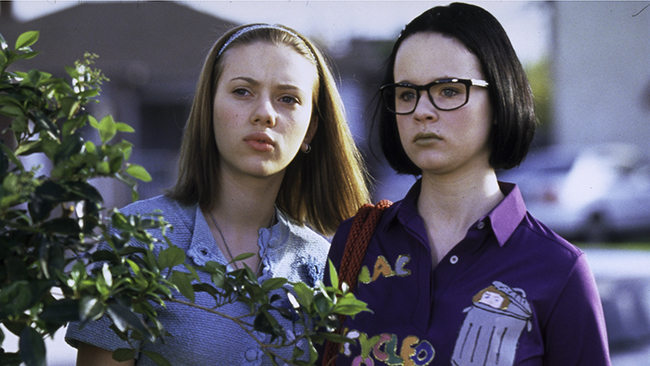
I recently rewatched Ghost World, and even though it came out in 2001 (just ten days after the 9/11 attacks), it feels like the last nineties movie. Like many indie films of that decade, it prioritizes an outsider perspective and the whole slacker mentality. It disdains politics as a waste of time, an annoyance that has little meaning for daily life. That's a perspective that's impossible to imagine in this day and age.

The main characters, Enid, Rebecca, and Seymour, are out of step with the consumer world of late capitalism. Since there's no political way to counter it in a world of "there is no alternative," resistance takes the form of slackerdom. Gen Xers who grew up with the Reagan delusion of "morning in America" did not have many productive ways to reject it. Being one of those young people, I longed to be a part of political movements for change that didn't exist yet. Instead, I abandoned the profit motive by going to grad school (lol). 

Enid and Rebecca are two high school grads with no clear ideas about the future and brimming with loathing over their surroundings. Seymour is an adult with the same mentality who lives a monk-like existence, driving a broken down car and living in a crappy apartment while putting his money and passion into collecting old blues records. Rebecca starts to make peace with the world, but Enid and Seymour never will, and they can't even maintain a connection with each other despite having so much in common.

Nowadays, the characters' obsession with authenticity feels quaint. Everybody sells out. Indie rock bands license their music for car ads and social media has turned everyone into a PR flack for themselves. Plenty of prominent socialists spend their days on Twitter hustling to get more followers. 

The film also has a very 90s attitude towards politics. The two parties both bought fully into neoliberalism and neither seemed all that appealing. The whole Lewinsky thing summed it up. Clinton was a slimey liar, but Newt Gingrich and Ken Starr were reactionary liars trying to gain power in skeevy ways. The serious problems the country faced weren't being addressed at all, either by politicians or the media. There did not seem to be much point in engaging with such a completely hopeless political world. 

This stance comes across in Enid's art class. Her teacher seems to think that art can only be "serious" if it specifically topical. She therefore touts her own bad video art and praises a student in class who constructs pieces that are very heavy handed allegories for abortion rights. The film treats this as unbelievable cringy and lame. When Enid tries to get her teacher's approval by doing a "found art" piece using a nasty old racist caricature to point out modern hypocrisies over race, she ends up getting in trouble at the exhibition. The film treats the reaction as an example of what today gets called "cancel culture." The lesson seems to be that political engagement is ultimately futile, a common understanding of the time.

Back in the 90s using blatantly offensive language and imagery to critique bigotry was far more accepted than it is today. It was also striking to hear characters throw the word "retarded" around so much and to use "gay' as an insult. Modern day Enids would probably be put off by that kind of thing. 

In smaller ways the film reflects the 90s in a positive fashion. Enid and Rebecca both work low wage jobs, but can also rent a decent apartment together on that money in the LA area. That's pretty much impossible today. The scenes where Enid fails to catch on doing crumby service work at a movie theater reflects 90s tropes in movies like Clerks and books like Generation X. The reality of low wage service labor has pretty much disappeared from film nowadays apart from a few exceptions.

It might be a cliche that the nineties ended on 9/11, but things become cliches for a reason. The problem of the nineties, of how to find meaning in a postmodern world devoid of anything real, got replaced by the war on terror, and that was replaced by battle over the country's very soul. Nostalgia is stupid, but I do have nostalgia for a time when the stakes were lower and the problems more quaint. When I feel that way I can always pop on Ghost World. 

Tuesday, June 16, 2020

Life's Rough Middle Patch

"Harvest Moon" is a rare positive song about middle age and appreciating what you have

Last week I opined a little on Twitter on the emotional difficulties of middle age, and I think it actually lost me some followers. Twitter is a place slanted towards the young, so I should talk about my middle-aged angst on a blog, which is a fittingly unfashionable platform for an unfashionable topic.

I've been reading a lot recently about "deaths of despair" from suicide, alcohol-related illnesses, and drug overdoses, and how they have been spiking among the middle-aged. This full blown national midlife crisis is getting surprisingly little attention despite the fact that it has dragged down the nation's life expectancy. There are deeper causes behind this, but there's also a reason why this is manifesting among those in middle age.

It's the stage of life that's perhaps the most emotionally fraught, even more than adolescence. Once you hit middle age you suddenly realize that you've gotten to where you are going to be. There is no bright future anymore, just the present for another few decades until you die after you've hopefully had a little time to enjoy your retirement. With each passing day, I can hear a door slam. The sense of possibility that came with youth is gone.

Once you've reached this point and become cognizant of your rut, you start to think long and hard about whether it's a good rut to be in or not. A lot of what we call a "midlife crisis" is merely people realizing the die is cast and they are deeply unhappy about having to live the second half of their lifetimes in the place where they have ended up.

It hasn't been too bad for me. Quarantine has reminded me of how lucky I am to have my wife and daughters. The way my school has handled the transition to distance learning makes me happy to work for them. The appreciations I got from graduating seniors last week reminded me that my job is one that truly makes an impact on others.

However, it's becoming more and more apparent what I am not going to have and where I have failed. Being a teacher who sacrificed prime earning years to grad school means I will never have the money to travel to a lot of the places I've dreamed about since my youth. I am probably never going to get a book published. My attempts to be an "independent scholar" after leaving academia have basically failed. Name publications don't want to publish my submissions, and never will. I haven't made many new friends where I live and it's unlikely I ever will, and will spend the rest of my life hundreds of miles from my family and closest friends.

On balance things have worked out! But that doesn't mean that certain things don't get lost to the point that they can't come back. That's the bitter truth of middle age. It's little wonder that people my age far less affluent than me are dying "deaths of despair." America is a place where it is less and less likely that people can reach middle age feeling good about where they have ended up.

Yet we lack even the most basic public conversation about this. The "midlife crisis" is a stock target of derision in our popular culture. In this youth-obsessed society discussing aging is a faux pas deserving of mockery. It's high time that we reckoned with the emotional difficulties of middle age. Maybe the beginning is for us sad sack middle-aged types to just talk about it.

Monday, May 20, 2019

How The Phantom Menace Saved Me From Fandom


Yesterday marked the 20th anniversary of the release of The Phantom Menace, a film that in many respects marked the beginning of our current moviemaking culture. The heavy use of CGI and its role in extending a beloved franchise were harbingers of the future. It's a film that made over a billion dollars, but is one that no sane person thinks is a great movie. It's best known today as fodder for jokes and derision.

It is safe to say that there is no film I have ever seen or ever will see that filled me with such anticipation. I was one of the Star Wars firekeeper fans. The original films dominated the pop culture Zeitgeist in the late 70s and early 80s, but were very quickly thought of as passe. When my sixth grade class had to choose an end of school year movie in the spring of 1988 I lobbied for Return of the Jedi, and my teacher was shocked. "You still want to watch that kid stuff?" he asked. (The chosen film was Monster Squad. History has vindicated me.)

I stayed true to Star Wars, recording the movies off of network TV and practically wearing out the tapes. I devoured Timothy Zahn's Heir to Empire when it came out in 1991 and read the Dark Horse comics. In those pre-Amazon days my best friend in high school managed to cajole the manager of the local Ben Franklin variety store to order models of the old Star Wars ships for him. He spent a summer doing an epic detailing job on the Millennium Falcon.When I was in college I delighted in getting the remastered versions of the trilogy on VHS (not knowing this would be the last time they'd be available in their original form.)

Seeing the special edition of Star Wars in the theater in 1997 was absolutely thrilling, even if I was underwhelmed by the new additions. That night in the theater the mood was positively joyous. I made sure to see it at the now sadly defunct Indian Hills Theater in Omaha, which had a giant 60 foot concave Cinerama screen. Star Wars had never looked so good.

Two years later, I could barely contain my excitement at seeing The Phantom Menace. Part of me wondered if I would be capable of viewing the movie in any kind of objective light. If it was shit would I ever recognize the fact? I saw it at a much less exalted location, a junky movie theater on the South Side of Chicago. At one point a derelict the row in front of me was passed out, snoring.

The film perplexed me. I liked the lightsaber battles and the pod race, but so much of it just seemed off, and the dialogue just flat. I also didn't buy this budding relationship between a kid and a teenage girl much more mature than him. Of course, nothing bugged me more than Jar Jar. The comic relief in the original trilogy was so natural, here it was forced and grating. However, I thought the film looked visually stunning, and I'd never really seen CGI used so well before.

I left that first night telling myself that it was still a new Star Wars flick, and hey "Isn't this supposed to be kids' stuff?" I went again, and then realized that the movie actually kinda sucked. Soon The Matrix and The Fellowship Of The Ring would blow George Lucas' vision out of the water and The Phantom Menace would just seem lame. I hoped for better from Attack of the Clones, but that film was arguably worse.

The second film completed the shift in mentality that the first had begun. I didn't get mad at George Lucas or anything like that. I realized simply that I had probably invested too much of myself in Star Wars. If they were going to make shitty Star Wars movies, maybe I just didn't need to care about it so much. I remain a big fan of Star Wars, but that fandom in no way is fundamental to my identity. I would like to thank The Phantom Menace for that.

Fan culture has become so rotten and toxic. Fans expect fan service in their movies, and for the artists who make the film to only do what the fans demand. This of course is a recipe for really boring entertainment. Even worse, fans talk about box office receipts like they are some kind of personal validation. "Avengers made the most money, so that means I'm the best!" What kind of messed-up perspective on the world is that?

By all accounts George Lucas is a good boss who gives very generously to fine causes. He also jealously guards his independence to a fault. When there was no one who could say no to him, he was allowed to indulge his worst tendencies, and the prequels were the result. While those films were a letdown, I wish the "fans" had gotten the right message. As much as you care about this stuff, ultimately you don't own it. Lucas has made that clear through his impounding of the original version of Episode IV. As much as I am dying to see it again, I'm also pleased that his recalcitrance is angering the fans (including myself) so much.

So today I would like to thank George Lucas for making a bad movie and giving me a little perspective.

Wednesday, May 1, 2019

Commercials From Hell: Bartles and Jaymes


In the 1980s wine coolers bestrode America like a colossus. Yuppies had given wine a leg up, but most Americans didn't know a chardonnay from a merlot. Wine coolers allowed cheap sophistication, and 17 year olds who did not like the taste of beer could now drink something less potent than vodka and cranberry juice.

The actual drink was pretty atrocious. A few years ago as a joke I picked up a pack of them for a party, and they tasted like Mad Dog doused in corn syrup. (Don't ask me why I know the taste of Mad Dog so well.) At that moment I realized that I had been seduced by nostalgia not for the taste of wine coolers, but for their commercials.

Bartles and Jaymes had some of the catchiest commercials of the 1980s. Two old codgers dressed in an old-timey way pitched the product. Bartles did all of the talking, and finished off his little folksy monologue with "thank you for your support." Jaymes stood in the background, a silent enigma with a wry smile. These ads took a mediocre corporate product and made it seem like the passion project of local eccentrics.

The ads also smartly contrasted the new product consumed by a young audience with the old-fashioned characters and their courtly formality. There's nothing more poisonous for a youth product's advertising than pandering to what middle-aged ad execs think young people want. This ad also fit in with the old people as cute mascots trend of the 1980s, from the "Where's the Beef" lady to Sophia on Golden Girls.

Watching it now, the sensibility seems so alien from modern day advertising, to the point that it feels refreshing. Certainly much more refreshing than the product it's pushing.

Wednesday, January 31, 2018

How Anti-Government Rhetoric Became The Tool Of Despotism

Remember when the press stood up to despotism in America?

I have been thinking a lot about Watergate lately, partly because I just finished the Slow Burn podcast about it, and partly because we are mired in a similar presidential scandal. In retrospect, Watergate ended up being a case where conservatives lost the battle, but won the war.

Sure, Richard Nixon was removed from office, but that was done with the cooperation of other Republicans, who could then wash their hands of his crimes.Watergate added to the thinking after Vietnam and the actions of police and law enforcement in the 1960s that "the government can't be trusted." Conservatives then used this impulse to attack liberalism, which used the government as an instrument to enact social legislation. For those in the middle, who rarely think very deeply about politics, it was easy to translate Watergate into being pro-tax cuts and deregulation. (Of course, using cloaked racism a la Lee Atwater was also crucial to this.)

Soon in popular culture the government became a force of evil, even in family films like E.T.. Who's the biggest human villain in Ghostbusters? An EPA regulator. Later years saw much more explicit connections, such as in films as Enemy of the State and Absolute Power. This all perhaps culminated in the execrable House of Cards, which feeds every mediocre Beltway apparatchik's fantasy that they are genius, behind the scenes masterminds.

Folks on the left and the right distrust different parts of the government, from the left's skepticism of the military and CIA to the right's constant calls to end the Department of Education. Again, for the vast American middle of political ignorance (you know, the kinda people who say "I'm socially liberal and fiscally conservative), all they hear is "don't trust the government." After forty years, that message might be the one general political statement with broad support in America.

Republicans and Donald Trump are currently using it to their advantage. The whole Nunes memo and rhetoric about the "deep state" keys into this notion that government institutions simply can't be trusted. While the left is right to be skeptical of the FBI (hell, I am for sure) that skepticism has also been manipulated into a Glenn Greenwald-ian obtuse moral stance that says "As bad as Trump is, I refuse to defend the FBI." (Greenwald is not a good influence. Go ahead, fight me.)

This is why the White House's cynical strategy to undermine the investigation will work. A lot of folks on the left won't fight it, conservatives will believe a conspiracy if Fox says it's so, and those in the middle will default to their usual "well, you can't trust the government."

One fact that has been chilling me for years is that the military and police are our most trusted government institutions. We now have a wannabe despot in charge of the military and federal police power who has been rhetorically attacking other government and public institutions. In typical despotic language, he is fond of saying "I alone" can solve the problems that face the country. This means we are heading into some dangerous territory, folks. We've been sleepwalking through history, unaware that our post-Watergate path has been leading us to this point all along.

Monday, August 28, 2017

A Century Of Jack Kirby


I have some things to say about Houston, but I am going to let that wait. Instead, I'll just ask everyone to donate some money to the relief and rescue work going on right now.

Today I'd like to mark the centenary of Jacob Kurtzberg, better known to the world as Jack Kirby. His was a name I sort of knew, but I did not learn the true extent of his importance until very recently. Last year I got back into comics after a 25 year hiatus, and realized that they were exactly the escapist medium that my soul required to endure waking up in the morning frightened at living in a country falling into the abyss. I also started diving deep into the history of comics (one of my favorite things to read about), and then realized how much Jack Kirby meant.


It is hard for me to even summarize his accomplishments. He, along with Joe Simon, co-created Captain America in 1941, at the infancy of comics and before America had even gone to war. His famous first issue cover, showing Hitler getting punched, displayed the great kinetic nature of his art. If you look at other Golden Age stuff and then look at Kirby, the differences are impossible to miss. His art is just that much more exciting, and it set the template for what came later.


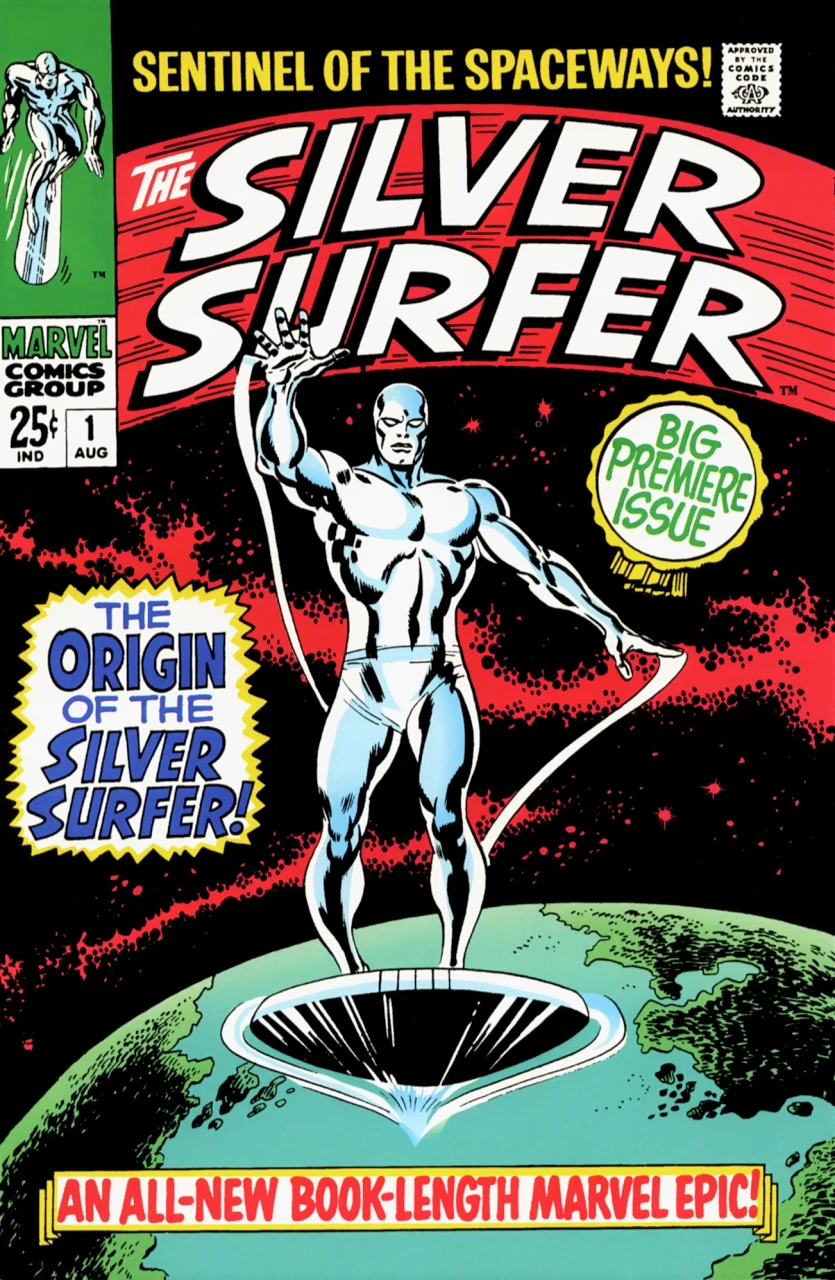
In the early 1960s he teamed up with Stan Lee to essentially create the Marvel universe, and had a hand in the origins of superheroes from Thor to Iron Man to Black Panther to the Hulk to the X-Men. He managed to create an huge array of iconic characters and "looks" in a very short period of time. With characters like Silver Surfer, he also added a new level humanity and emotion to superhero comics. After fighting with Lee he went to DC in the 1970s, where Kirby began his Fourth World universe, one of those things little known in the straight world, but idolized by comics fans. (You could even argue that he influenced George Lucas' notions of the Force.)


The fact that he created his magum opus a whole thirty years into his career is pretty amazing. Of course, part of the reason Kirby feuded with Stan Lee was that he was not compensated nearly what he was worth. This has to do the the comic book industry's work for hire structure, which did not give artists control over their creations. (That has changed somewhat at the independents, but is still an issue at the Big Two.) For that reason I consider him to be a patron saint of modern creatives, who are told that they can be paid with "exposure."

Movie theaters today are, for better or worse, dominated by characters created by Jack Kirby. This is an amazing thing considering that he was born into the immigrant slums of the 1920s Lower East Side, had little formal arts or literary education, and worked in an industry that for years treated their creations as disposable tripe. He helped make the medium meaningful, and in the process captured the imaginations of millions. Because he worked in a lowbrow medium that did not respect its artists, and was not a charismatic self-promoter a la Stan Lee, Jack Kirby is "the king" to comics geeks but unknown to the people who avidly pay to see his characters on the big screen. It's time that changed.

Tuesday, August 22, 2017

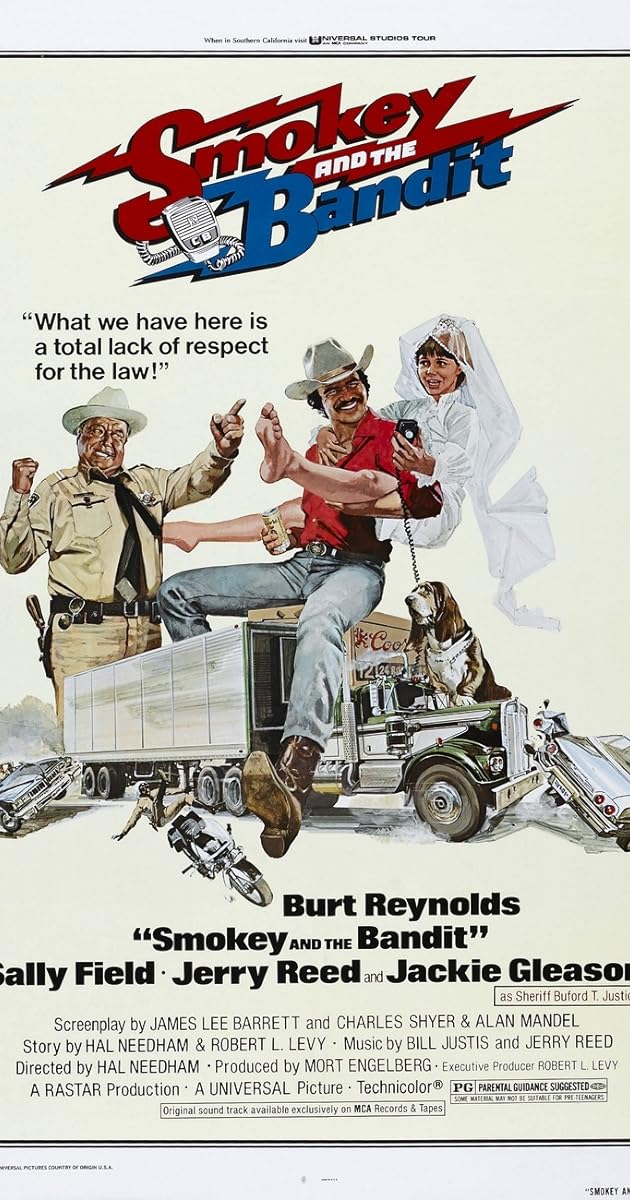
My Piece At Tropics Of Meta On Smokey And The Bandit


As loyal readers know, I am a contrarian in all things. This is why I am a Mets and White Sox and Everton fan. I just can't bring myself to embrace the bandwagon. So in a time when everyone is writing their hot takes about the political implications of the most recent blockbuster, I did my piece about a 40 year old trucker/car chase movie. At least the kind folks at Tropics of Meta were willing to publish it, and I am grateful for that.

I talk about how Smokey and the Bandit was an attempt to display a new, "post-racial" South to the country that had exorcised its demons, but had maintained its unique charms. Of course, recent events in Charlottesville and elsewhere show that the fraught racial history of the South, and the nation at large, refuses to be ignored.

Monday, February 20, 2017

The Green Lantern Movie I Want To See


As I have mentioned on this blog, I have recently re-entered the world of comic books after a quarter-century absence. I am of the opinion that everybody needs silly cultural diversions, and I find comics more fulfilling than television and more ethical than watching the NFL or college sports like I once used to. I also enjoy watching so-bad-it's-awesome movies, but my lovely spouse is not as enamored of this pastime.

I am a born contrarian, so I also tend to like stuff other people don't, like the Mets, White Sox, prog rock, and the Green Lantern. He is definitely a second-tier hero, and being in the DC universe, already has a strike against him in the hipness department. One of the big reasons I like him is that many of his adventures take place in space, and "cosmic comics" are able to render scenes that millions of dollars in CGI can't replicate. One of the things I love most about comics is how they can render visual flights of fancy that other mediums cannot, and Green Lantern is especially conducive to this. He is also limited in key ways as far as his powers are concerned. The Green Lantern derives his power from his ring, and he has his ring as part of his job as a galactic law enforcer. His ring only works through his willpower, meaning that his inevitable human weaknesses can thwart him. Superman never has that problem.

So far there has not been a good film adaptation of the Green Lantern. I have yet to see the Ryan Reynolds flick all the way through, but I've seen and heard enough to know it's sub-par. I doubt we'll get any new adaptation any time soon, especially considering the failures of the Zach Snyder (blech) driven DC films. But I know a great one that could be made, and with a more limited budget, to boot.

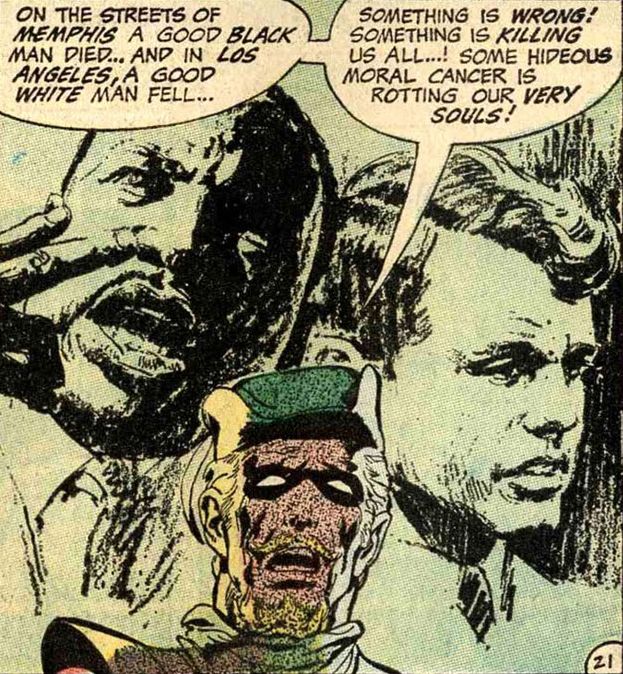
Green Arrow gets woke

Back in the early 1970s, when comics were losing readership, DC teamed up Green Lantern with Green Arrow in a short-lived but influential title: Green Lantern and Green Arrow. It was written by Denny O'Neil, and drawn by the great Neal Adams. While the title lasted only about a year, it was revolutionary. After being confronted by an African American man over Green Lantern's neglect in helping the oppressed people on this planet (as opposed to others) he joins with the far more socially conscious Green Arrow on an Easy Rider type road trip across America. That trip and later issues dealt with things like drug abuse, slum lords, racism, environmentalism, and political corruption. While many of the title's stories come across as ham-fisted or dated today, the approach taken was revolutionary.

I would not want to see a period piece or direct adaptation on film, but a Green Lantern movie set today with the same conceit. I would like to see a superhero confronted with their complicity with authority. I would like a superhero movie where structural inequalities and the political system, not outlandish super villains are the enemies. It would be a good way of showing how pernicious and powerful those things are if superheroes who can take on Sinestro cannot defeat them. I also think the interplay between Green Lantern and Green Arrow would work well, and could be used in some interesting ways. Green Arrow would still be the radical, Green Lantern still the decent person unaware of how invested he is in the power structure. Green Arrow could even be used to show the pitfalls of "white saviorism" and bad allyship.

And if I could get real crazy, I would love to see Batman and Superman as antagonists. After all, Batman is a violent, vigilante billionaire out for vengeance with little understanding of social justice. Superman pledges himself to the "American way," which includes a lot of injustice within it. If I could be truly gonzo, I could see a movie where Superman maintains his loyalty to the government under President Trump. In the end Batman would realize that he needs to make war on more than criminals, and Superman would realize that his immigrant roots are more important than his loyalty to the American state.

 I know this will never get made, but a Green Lantern fan can dream, can't he?

Monday, October 3, 2016

Westworld, Stranger Things, And The Need For Joy


I am not a binge watcher, which these days feels almost like an admission of fuddy-duddyism. I am a full time teacher (and now grade dean) with a long commute and two four year old children. I have precious little free time, and honestly, television shows expecting me to sacrifice twenty hours of something I get for MAYBE two hours a day are asking way too much. My commuting and child rearing have reinforced my reading habits and podcast addiction, instead.

I long for old school TV watching habits, and so last night my wife and I sat down to watch Westworld, both of us fans of the dark hard sci-fi that spawned the original, and intrigued by what would be done with the update. I also just thought it'd be nice to have a show to watch on the regular, once a week, without feeling any pressure to give it a chunk of time that I just don't have.

I thought the show was worth the watch, and I think I'll watch it next week, but it had many of the hallmarks of HBO TV that I don't really care for. Were women other than the leads unnecessarily naked a lot? Yes. Was there a constant "dark gritty" overtone? Yes. Were the opening credits an eerie song beneath metaphorical graphics? Yes. Was there constant, gratuitous violence? Yes. Was there rape and violence against women? Yes. At least there wasn't a "complicated" male protagonist or an ironically sordid suburban setting.  The show raised enough questions about human behavior and artificial intelligence that I was willing to let my annoyance with the formulaic elements take a back seat.

Since watching it I've been thinking a lot about Stranger Things, I show I LOVED in ways that I don't think I have ever loved a television show. We had the time to binge watch it this summer, but spaced out the episodes because we didn't want it to end. (I felt the same way about Jessica Jones.) Was some of this nostalgia for all the things it referenced and the mood it evoked? Maybe.  But here's the deal: the things it reminded me of worked for the same reasons that Stranger Things worked. I really liked the characters. It actually showed a working class household with some measure of accuracy. The bad boyfriend ended up becoming a mensch by the time all was said and done. I could actually ROOT FOR the characters I loved to survive and emerge victorious without feeling ambiguous. (There's a reason Barb has become a meme. WE CARE FOR HER.) The show was still emotionally complex, and managed to touch on parenthood, adolescence, social class, bullying, and friendship. Pleasing the crowd does not mean sacrificing depth.

Wanting someone to root for seems to have become a no-no in the age of "dark and gritty" and "complicated." Look, I love 70s cinema and films like Chinatown and The Godfather, so I'm all about complicated protagonists. But on prestige television it has become a hoary cliche, just as it has in so many superhero movies. I think The Force Awakens succeeded because when Finn and Poe are escaping the Star Destroyer and shouting "woo!" in their TIE fighter it is such a moment of joy and fun. It just made me so damn HAPPY. And that feeling could still coexist with the sad story of the Solo family's disillusion.

Darkngritty for the sake of darkngritty is getting tiresome. When Walter White became progressively more evil, it pained me to see a man sell his soul a piece at a time, because I was allowed to root for him early on. Years from now Game of Thrones might end up being seen as a massively deleterious force on the course of television, just the same as Star Wars' unintended consequence was to squeeze out all those creative 70s cinema trends I mentioned before.

Friday, September 23, 2016

1986, The Reagan Era's Apotheosis

Reagan's address to the country about the Iran-Contra affair in November of 1986, perhaps the moment where the end of the Reagan era began

I've been thinking a lot recently about the 1980s, and also how that decade was more complex than just Reaganomics, cocaine, spandex, and synthesizers. When Reagan won reelection by a whopping landslide in 1984, he and everything he stood for seemed unstoppable. In two years, however, the cracks began to show, even though the year 1986 may very well have marked the highest cultural saturation yet of Reagan values. It was a year of yin an yang, and for that reason fascinating to look at thirty years later.

In some areas of popular culture, the triumph of Reagan seemed complete, especially in pop music. Just check out the list of the top ten singles of that year:

1 Dionne and Friends,"That's What Friends Are For"
2 Lionel Richie, "Say You, Say Me"
3 Klymaxx,  "I Miss You"
4 Patti Labelle and Michael McDonald, "On My Own"
5 Mr. Mister, "Broken Wings"
6 Whitney Houston, "How Will I Know"
7 Eddie Murphy, "Party All The Time"
8 Survivor, "Burning Heart"
9 Mr. Mister, "Kyrie"
10 Robert Palmer, "Addicted To Love"

That's right, not one, but two songs by Mr. Mister. It's a completely forgettable list of mediocre music, perfectly representative of the Reagan era's cultural blandness and homogenization.

That cultural saturation of Reaganism is most evident in Top Gun, the highest grossing film of that year, and one big, long shiny love letter to the machinery of war. The Hollywood that a decade before produced the likes of Apocalypse Now! and Coming Home was now making MTV-influenced war movies with the subtlety of an old school John Wayne flick. Top Gun is practically a recruiting video for the Navy, and is so over the top in its gung ho patriotism and homoerotic masculinity that it almost seems like a Paul Verhoeven satire a la Starship Troopers. At the end, Maverick gets to shoot down a bunch of Soviet MiGs without any international consequences.

By the end of the year, however, Top Gun's summer movie magic would start to look like the relic that we joke about today. In October Reagan and Gorbachev met for a summit meeting in Iceland that now looks like a permanent thawing in the Cold War. The days of "evil empire" rhetoric and fear of nuclear war were numbered, if not over. In late December of 1986 a very different war movie entered limited release: Platoon. Oliver Stone's film, the first about Vietnam by a veteran of that conflict, struck a very different tone than Top Gun and would go on to win the Oscar for best picture. Other recent films about Vietnam had been bloody revenge fantasies or POW rescue flicks, like Uncommon Valor, Rambo, and the Missing In Action films. Now the war was being portrayed much more realistically, and as a tragic mistake.

The shift from triumphalism to questioning mirrored the larger political fortunes of Ronald Wilson Reagan. Early in the year he got to have a Top Gun moment when he ordered American ships to Gulf of Sidra and bombed Colonel Gaddafi's home after a terror attack on American GIs. The mass approval of this action seemed to signal an end to the "Vietnam Syndrome."

Yet all was not well for Reagan. After almost six years in office, his party lost the Senate in the 1986 election. He was facing increased criticism over his inability to publicly address AIDS, which would kill over ten thousand Americans in that year. At the end of the year, in November, news of the Reagan administration's illegal trade of arms for hostages with Iran and later illegal funding of the Nicaraguan Contras first broke. The scandal would consume the Reagan administration, and even though it would not turn into another Watergate due to Oliver North's destruction of incriminating evidence, it would take a big hit on Reagan's popularity. His age started to show, and he now appeared feeble, and not always in control of the situation.

In 1987 the short-lived Reagan-era consensus would be broken. The stock market crash later in the year would call Wall Street's new growth into question. The newly Democratic Senate's refusal to accept Robert Bork's nomination would open a new front in the culture wars, which would be fought with much greater intensity. The Cold War would cease to be such a distraction from the decaying domestic sphere, and AIDS, the neglect of America's cities, and growing inequality would be put much more in the foreground of the national conversation.

The ultimate failure of Reagan's promise to bring "morning in America" was perhaps prophesied by an event that burned itself on the psyche of my generation: the space shuttle Challenger explosion in January. It was not just any other space program disaster, since NASA had been using that mission to promote space exploration to children via the participation of a non-astronaut teacher, Christa McAuliffe. This meant that many, many kids saw the explosion live, as it happened. For me it was a sad tragedy, but also a sign of the vulnerability beneath the massive wave of nationalism being pushed on us. Six astronauts and a teacher had to sacrifice their lives in an ill-fated attempt to maintain an image of Reagan's America that was soon about to be completely faded.

Wednesday, September 7, 2016

The Superman Movie I Want To See


Since delving back into comic books, I've noticed that graphic novels give me much more of a thrill than most movies based on them. Because comics are a serial medium with long story arcs, film is probably inherently ill-suited for translations, as opposed to television. (Having seen Jessica Jones and Flash, I think TV's great potential for comics adaptations is unassailable.)

Graphic novels also seem to better capture the human element of the characters than movie adaptations. The problem with seeing so many CGI cities getting shattered is that it's just pure spectacle. (Plus Godzilla movies sixty years ago did that schtick better!) We don't care much about the people involved, and in recent films, the heroes really don't seem to either.

I recently re-watched the 1978 Superman, and while it has its flaws, I was struck by how the disaster stuff was secondary to Superman's personal anguish when Lois dies. (Is his turning the earth around a little ridiculous? Yes, but pretty cool.) The scenes with him as Clark were also a master class in subtle, character-driven comedy by Christopher Reeve. It got me thinking about how a new Superman film could really grab the audience's emotions by going in a different direction.

In my ideal Superman film, the main plot point is that the Daily Planet, like other newspapers, is experiencing massive layoffs, and that Superman is trying to save Jimmy, Lois, and Clark's jobs. He's worried that Lois might move from Metropolis to take a job in Central City, or perhaps that he'll be out of work. Remember, Superman is not Batman. He does not have a family fortune to fall back on. It would be interesting to see a man (I'm not calling him an alien for these purposes) who can fly and stop bullets but who can't save his job. Worse than kryptonite is the nagging feeling of failure and insecurity. In our current world, where so many of us struggle to support ourselves and our families no matter how excellent we are, I feel that message would resonate brighter than a million CGI explosions.

We could see Jimmy Olson turned into a free lancer (as photographers are everywhere in the publishing world) scrounging for work and having to move into Clark's apartment. We could see Superman take on political corruption, as opposed to sci-fi baddies, in order to give Clark sensational stories to pitch to online magazines. We could see Lois forced to relocate to a much less desirable location in order to maintain her career, and the heartache and longing it instills in Clark Kent/Superman. Perhaps even Superman will reveal his true identity to her out of desperation. As someone forced for a time into a long distance relationship by trying to maintain an academic career, I know how helpless these situations feel. Basically, we could see the realities of economic life in America, especially in professions like journalism, reflected on film, which is so rare. It just might take the normally escapist superhero genre to do it.

Tuesday, August 23, 2016

Trailers From Trailers From Hell

I am a Gen X child of the 80s and 90s, which meant that I spent a lot of time watching cable when it consisted of B-grade movies and 70s TV reruns. I stayed up late on the weekend to watch USA Up All Night and its treasure trove of trash, but also random monster movies, westerns, Kung Fu Theater, World War II flicks, and lesser Clint Eastwood films. (The Gauntlet and Coogan's Bluff anyone?). My whole family did Tae Kwon Do for a few years, and my dad would watch any random martial arts movie and dissect the fighting style, especially impressed with Chuck Norris and Bruce Lee. (He reached black belt.) Mystery Science Theater 3000 was such a revelation because the characters were riffing on bad movies the way me and my friends and my family did, just a lot funnier. Once I left college and was too poor for cable, my consumption of trash entertainment was replaced by pretentious foreign film rental. In recent years, however, I have been going back to the entertainment that nourished me in my youth. Three of my favorite recent documentaries are Not Quite Hollywood, about Australian "Oz-ploitation" films of the 70s and 80s, Electric Boogaloo, about schlock purveyors Cannon Films, and The World Of Roger Corman, about America's greatest B-movie producer.

As luck would have it, I learned about Trailers From Hell, and amazing website where B-movie film-maker experts like Joe Dante, John Landis, and Allison Anders offer commentary on the trailers for all kinds of great B-movies. I can sit down and lose hours looking at it. Fans of the genre should check it out. Here are some trailers from the site that I like, either for the movie, the commentary, or both.

Bloody Mama 
Shelly Winters as a murderous, gun-toting 1930s bank robber? Yes please! Roger Corman himself gives the commentary on this trailer. Also notice the very young DeNiro in the trailer.

Taste The Blood of Dracula
I love Hammer horror films, which are all spooky castles and Gothic moods with the blood mixed in, rather than the main attraction. Christopher Lee was the greatest Drac ever, period. I think the fact that he (purportedly) had killed men at close range as a member British special forces in World War II gave him special insight into the character.

Monster Squad
I loved this movie soooooo much when it came out. I dare not watch it again lest my happy childhood memories be disturbed, because I am sure my adult eyes will find it ridiculous. "Wolfman's got nards!"

The Car
This movie has haunted me for decades. It's about a killer, possibly possessed car that goes around running people over. I remember watching it with my dad late at night and being scared out of my mind, and being sent to bed before it was over. I woke up the next day and immediately asked my dad how they managed to stop the car.

Beneath The Planet Of The Apes

Bad sequel, but as John Landis points out, interesting in its badness. Charlton Heston delivers a performance that's insanely sweaty and over the top even by his standards. I'll never forget the moment when the mutants pull off their faces, which is serious nightmare fodder.

I Was A Teenage Werewolf

One underrated effect of the postwar teen culture was the proliferation of the "I Was A Teenage..." movies. My favorite thing is that the titular werewolf is Michael Landon. Yes, that Michael Landon. I remember seeing him as a guest on Carson one time, and Johnny showed a clip of this after he came out to embarrass him.

The Terror

Maybe the most infamous Corman film, because it had multiple directors and no discernible plot, until a completely contrived speech by Dick Miller at the end (in a Nu Yawk accent transported to old England) attempted to tie everything together. It still made money, which is more than you can say for a lot of Hollywood blockbusters.

Viva Las Vegas

Elvis movies are schlock personified, and mostly unwatchable. This one is different, mostly because of the unstoppably vivacious force of nature that was 1963 Ann-Margret. She practically bursts through the screen, and seems to inspire Elvis to wake the heck up and match her energy.

Alligator 

A baby alligator gets flushed down the toilet, then emerges a decade later from the Chicago sewers as a massive, man eating monster. I remember seeing this on TV and loving it as a little kid. Little did I know, the writer, John Sayles, would later go on to be a respected independent film maker.

Piranha

Last but by no means least, this is the best of all of the rip-offs of Jaws, and a movie I still can't believe my parents let me watch. Also written by John Sayles and directed by future Gremlins director Joe Dante, it's the rare film that shows children getting killed. The sequel was actually directed by James Cameron!

Friday, August 12, 2016

Zen And The Art Of Going To The Mall

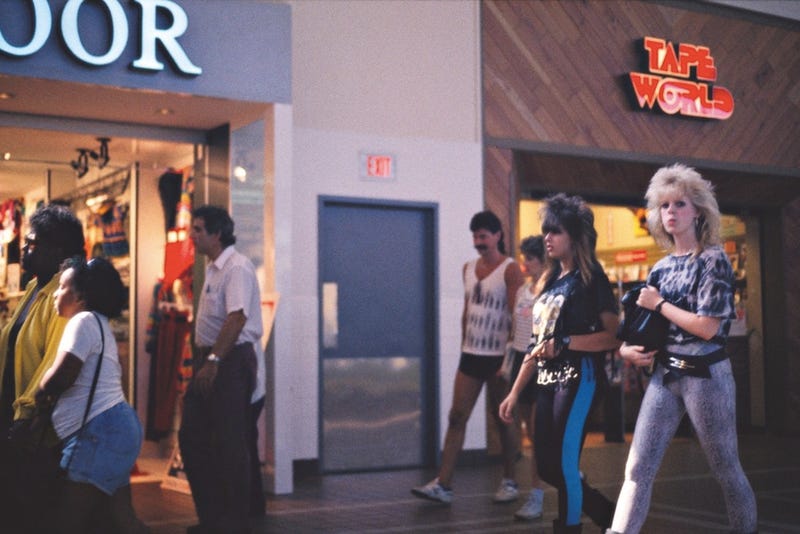
When the mall ruled

My four year old daughters have evidently been drinking what's in the New Jersey water, since they spent most of the summer asking if we could go to the mall. I finally broke down yesterday, but we decided to go a little further afield than our local mall in Livingston and make a day of it. In any case, it was hot and brutally humid yesterday, with the kind of air you choke on more than breathe.

We took the 45 minute trek to the Rockaway Mall, located in the far suburban interzone of Dover, near the foothills of the Appalachians. I saw the trip mostly as a way to keep my daughters occupied and to find a couple of shirts on clearance for the school year for me and some pants for the one daughter who inherited my abnormally long legs. It was mission accomplished on both counts. The large play area in the mall was more than big enough to accommodate double toddler wackiness, and the clearance racks yielded a cut rate gold mine.

What I was not expecting was the feeling of peace that came over me at the mall. It helped that we were there at 10AM on a weekend, with hardly anyone about. With the prestige and attendance of malls now being eroded by online shopping, they've actually become much more pleasant places to be. On an awful, muggy day I could walk around in air conditioned comfort without sweaty balls. My daughters could expend their vast reservoirs of energy without making a mess for me to clean up or constantly demanding to watch some godawful kids show on TV. Sure they made the usual hue and cry for me to buy them a toy, but their general level of happiness at being in the mall made it pretty easy to turn back their entreaties.

Walking around the mall I also remembered what the mall meant in my youth. In my small town it was the center of youth culture, and luckily within walking distance of my house. My hometown mall was about a quarter the size of the Rockaway Mall, which made trips to Omaha positively thrilling. Going to Westroads Mall at age eleven was a sublime experience. I realize now that some of that experience was aspirational. In the 1980s the mall was the apex of the Hegelian unfolding of history, as far as I was concerned, and going to those big Omaha malls was a taste of what I could experience once I grew up and got out of my isolated, small hometown. I did probably spend too much time in college at the mall, but I took it as a sign of my independence and moving up in the world. I bought artsy movies at the Suncoast Video, existential novels at Barnes and Noble, and punk rock CDs at Blockbuster Music. (Some of those stores were mall-adjacent, but I went as part of my mall trips.) I was a sophisticated mall goer. Well, maybe except for the time I saw Showgirls at the mall multiplex.

The mall has lost its once mighty status, both socially and in my heart. Once I moved to Chicago after college my nascent love of urban life went full-blown, and I began to see the mall as a symbol of the tacky and inauthentic nature of mainstream American society. I rarely went to malls after that, unless out of necessity. Yesterday the mall was much quieter than malls back in the 90s were, almost sleepy. It felt like the times I'd been to church in massive medieval cathedrals in Germany with only a sparse scattering of worshippers. In both cases, the experience was spiritual. So much for the gulf between the sacred and profane.

Wednesday, May 25, 2016

My Star Wars Day Wish


Today is May the 25th, and every Star Wars fan worth their salt knows that today, not May the fourth, is the true Star Wars day. It was on this day in 1977 that Star Wars was first released to theaters, and the world has not been the same ever since.  Despite that fact, it is extremely difficult to obtain an official, legally distributed copy of that film, which seems mighty odd that the local Target's bins are practically bursting over with the likes of That's My Boy and Fantastic Four. The only version available is one altered in key respects by George Lucas after twenty years of tinkering.

The crime of this came back to me recently when I taught an intercession course at my school about Star Wars. One thing I wanted to bring across was how and why so many people were wowed so spectacularly when they first saw it in the theater. I set that up by showing parts of other sci-fi films that preceded it in the 1970s, like THX 1138, Silent Running, and Logan's Run as well as the Flash Gordon serials that had been a big influence on Lucas. I decided to show them only the first reel of the film (even though we were seeing it on DVD), and then for us to analyze it.  And while I knew that there were not the kinds of severe alterations in the first reel that so badly alter later scenes (especially in Mos Eisley), I knew that there were small changes, some barely detectable. That fact bugged me, since it was hard even for me to know what was there in 1977, and what was not.  I realized that my students could not actually see the thing in 1977 that had carried such a heavy impact.

Forget all the whining by Star Wars fans like myself upset over "ruined childhoods."  In the first place, my childhood was ruined a long time ago by an abusive kindergarten teacher. In the second place, it's what posterity has lost that is more important. I came to realize that the vast majority of my students had never actually seen the original Star Wars, only the special editions. The original had been disappeared before they were even born.  Considering the massive cultural importance of Star Wars, it is a crime against history to suppress or destroy such an important cultural artifact. It would be like painting a permanent mustache on the Mona Lisa, or putting a neon sign in the background of Starry Night. It is my most fervent Star Wars day wish that the powers that be release a remastered version of the original 1977 version of the film on blu-ray.  If they want to include it with the special editions, or versions with different sound mixes for the true obsessive, all the better.  Perhaps that way George Lucas' feelings can be spared. Hell, I'll even allow them to call the original version "bonus materials" if that makes him happy. I would pay a pretty penny for it, like a lot of other Star Wars fans, so Disney, 20th Century Fox (who still owns distribution rights to the first films), and Lucas will all benefit. Despite rumors that it's going to happen, for some reason I doubt it.

Above all, I wish for a remastered 70mm version of Star Wars released to the theaters. I first wrote about that last year at this time, and plan on making the same plea every Star Wars day to come.

***


The film podcast The Projection Booth is a must-listen for me, and they've termed this month "maudit May."  They have been discussing films so snakebitten or unfortunate that they cannot be seen, such as Orson Welles' The Other Side of the Wind, which the master never completed.  Imagine my surprise when I saw that Star Wars is their film this week.  Wasn't the world saturated with Star Wars, and DVD copies easy to find?  After that initial thought, I remembered the reason: Star Wars cannot be seen in its original 1977 version, which George Lucas has kept under lock and key, and which he has even claimed no longer exists.  (I call shenanigans on that one.)  Instead we are stuck with constant revisions of the original film, which I can only see now with cheesy add-ons made with low-grade 1990s CGI.  This great film now has a completely clunky, idiotic scene with Jabba the Hutt jammed in where Han is forced to step on Jabba's tail to account for the gratuitous retrofitting of a fake-looking CGI slug, in addition to all kinds of silly crap happening during the trip into Mos Eisley spaceport.

The new sequels make me mildly excited.  You know what would make me truly elated?  Seeing a restored, remastered, 70mm version of the 1977 original in stereo sound on the big screen.  This would still technically be a "special edition" because the original, first release of the film in May of 1977 had multiple sound mixes, both mono and stereo.  The stereo mix was a bit of a rush job, and Lucas actually preferred the mono mix because it was more refined.  (Little known fact, the sound mix was still being put together just days before the film hit theaters.)

Seeing the original film with cleaned up sound fit for modern theater speakers in glorious 70mm would truly be something else.  I saw the 1997 special edition at the now demolished Indian Hills theater in Omaha in 70mm on a towering, concave screen built for Cinerama.  Despite the annoying additions to the film, it was one of the most amazing cinematic experiences of my life.  Please Disney, get this right and give the people what they want: the movie they fell in love with (or at least the closest we can come to it) looking fantastic and sounding great in glorious analog film.  There are a lot of people who will put cash on the barrelhead for this.  If that isn't motivation enough, at least bring back one of the most culturally significant films ever made and stop allowing it to be suppressed in favor of a far inferior version.

Thursday, April 14, 2016

The Long Shadow of 1989's Batman


I've had Batman on the brain a lot recently. My daughters enjoyed seeing reruns of the old sixties series with Adam West, so we bought the new DVD versions, which look fantastic. Now when we get in the car my daughters ask me to "be Robin, and mommy be Batman." I then must tell them things like "holy moly Batgirls, we've got to get to school!" I am a little bummed that they never let me let loose my Adam West impersonation.

My wife also recently picked me up a copy of Glen Weldon's The Caped Crusade, which tells the story of Batman through the years while adding some compelling interpretations. In the midst of my Batmania I decided to rewatch the 1989 version of Batman directed by Tim Burton starring Michael Keaton. I was motivated both by the book, and the apparent disappointment in the new Batman v Superman flick. Burton's version of Batman had really grabbed my 13 year old self when it came out, and it sparked a huge interest on my part in Batman comics and in books about the history of the Batman.

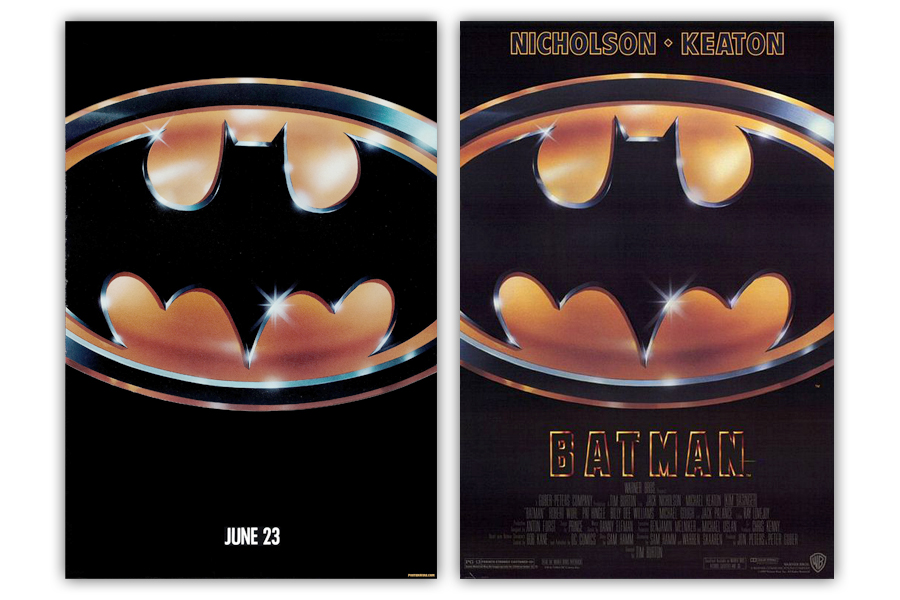
Rewatching the 1989 film and reading about it has made me realize that it is one of the most influential films of the last thirty years. In the first place, it was a superhero movie that made a huge amount of money, convincing Hollywood that the supes were valuable properties. While some legendarily shoddy product that came in the wake of Batman (the 90s Captain America, the never-released Fantastic Four), it nevertheless set the template for the new century of blockbusters. It was a film that also revolutionized home video, in that it was one of the rare movies at the time to have a low price, intended to be sold for home consumption, rather than to be bought by video stores. To get Jack Nicholson to star, the studio offered him an unprecedented amount of money, as would soon become the practice in Hollywood blockbusters. The marketing campaign for the film was also stunningly modern, using minimalist posters with just the bat symbol and date of release (June 23, 1989, I can still remember it). That campaign came with an overwhelming number of toys, tie ins, and publicity, enough to make George Lucas blush.

Crucially, it was also the first Hollywood film to explicitly address the desires of the nerd/fan community. I've been looking at old reviews and articles about the original Star Wars films recently, and have been taken aback at just how openly contemptuous many critics and commentators and even participants like Hamill are of the notion that these films are anything more than "kids stuff." (And this from some who actually like Star Wars.) By '89 the maligned nerds had proven their monetary value, and the producers of Batman were worried. Tim Burton himself had admitted little interest in or knowledge of Batman. Picking Michael Keaton, a smallish guy known for comedies, to be Batman caused a massive outcry among Batman fans frightened of a return to the campy Adam West Batman. Warner Brothers responded by cutting a trailer pitched straight at the fans and by hiring co-creator of the character Bob Kane to shill for the film. The trailer, Kane, and absence of Robin all pointed to a "dark gritty" Batman a million miles from the lovable clown who danced the Batusi.

The film itself did have plenty of literal darkness (it's almost all at night), as long as a fair amount of the metaphorical variety. However, it also broke from the conventions of the comics in a big way. It gave the Joker an origin story, and also made him the killer of Bruce Wayne's parents. It also had Batman reveal his secret identity to Vicki Vale. Wayne and the Joker confront each other in a scene that I like, but that Weldon and others think grinds the movie to a halt.  While there's plenty of violence and angst, Nicholson played the Joker in the over the top manner he had become accustomed to by the late 80s, tripping over into Batman '66 territory in the scene where he playfully defaces paintings in the art museum while a Prince song blasts from a massive boombox.

Weldon observes that the 1989 film was an action film that had Batman in it, rather than a Batman film. I won't go quite that far, but it's obvious that it was the first of many successful Hollywood attempts to bring in the legions of comic book fans while offering enough familiar tropes to attract casual move goers. That formula does not appear to be going away any time soon, and for that we can credit or blame the 1989 Batman.

Wednesday, February 17, 2016

Billboard Top Ten February 21, 1987

I was going to limit myself to one top ten breakdown a month, but I've spent the last four days seriously ill and in need of the kind of goofy pick me up you can only get from 80s pop music.

10. Cyndi Lauper "Change of Heart"

Hellooooooo 80s!  The synths and drums are IN YOUR FACE!  This is a sad contrast to Lauper's first album, which had more unique singles like "Girls Just Wanna Have Fun" and "Time After Time."  If you ever needed a master class in 80s overproduction techniques, just listen to this song.

9. Ready for the World "Love You Down"

Soul music had become so processed and systematized by the late 80s that Public Enemy was prompted to write "Who Stole the Soul?"  Is there some slap bass?  Oh you bet!  All over it, baby. This song is the musical equivalent of the lead singer's jheri curl and wispy mustache combo, a true time capsule.

8. Madonna "Open Your Heart"

Okay, now we're in the major leagues.  Yes the gated snare drums are over the top and the synths shinier than a disco ball, but Madonna really adds something here.  Unlike on her earlier records, she's really learned to use the lower register of her voice, and it sounds great, almost enough to make me forget the computerized juggernaut sound beneath it all.

7. Lionel Richie "Ballerina Girl"

Now if there is a true master of mid-80s top 40 pop music, it's got to be Lionel Richie.  Here's a very tasteful little ballad, with strings that remind me more of 70s than 80s pop.  Evidently he wrote it for his daughter Nicole, and for that reason as the father of daughters I guess I can't mock it that much. It does sound like the kind of thing written specifically for father-daughter dances at weddings.  It also marks Richie's last trip into the top 10, a sign that the late 80s were going to be a different pop landscape.

6.  The Jets "You Got It All"

Watery electric piano and smoooooth sax? Aw yeah, it's an 80s pop ballad alright.  I was not surprised to discover that this song was written by Rupert Holmes, the man responsible for "The Pina Colada Song."  I liked The Jets back then, but more for their danceable stuff.

5. Samantha Fox "Touch Me"

Gulp.  This song made 11 year old Bear feel things he hadn't quite felt before listening to the radio.  I had a friend on the wrong side of the tracks who I'd started to drift from -and would eventually end up in Boys Town- who loved this song.  I was intrigued and a bit scared by the raw sexual force that was Samantha Fox, a voluptuous cockney with a limited singing range.  The song's utter lack of quality just didn't register with me.

4. Huey Lewis and the News "Jacob's Ladder"

Now it wouldn't be an 80s countdown without a little Huey Lewis, would it?  I will defend the band's 1983 Sports album as a fun collection of bar band music gone pop.  Unfortunately, by the time they put out Fore! all of their bar band spirit was gone.  The tacky suit on the cover knows the score.  This song just….isn't that good.  It's the musical equivalent of a flat bottle of Perrier overheating in a yuppie's 1987 BMW.

3. Chicago "Will You Still Love Me"

One of the small number of post-Peter Cetera songs by Chicago to hit the top ten.  This is full-on 80s ballad cheese, the kind of thing I imagine teens necking to in the back of their Datsuns after the football game.  Of course, there are a few loud guitar crashes here and there, but it's pretty weak sauce.

2. Georgia Satellites "Keep Your Hands To Yourself"

Yes Yes Yes YES!  Now this is what I am talking about!  A song played by an actual band that doesn't sound like it's been sequenced within an inch of its life.  The drums sound like drums, not bricks hitting the pavement.  It has SWING and RHYTHM and still manages to rock.  I also think it's a pretty funny tune about the reality of eventually needing to settle down and leave one's rough and rowdy ways behind.  Before the Black Crowes showed up the Georgia Satellites revived the southern rock of the seventies on this track.  Is it derivative?  Sure, but it's a helluva lot more fun and real than most of the other stuff on the charts.

1. Bon Jovi "Livin' On A Prayer"

But of course, it had to end with this.  Nothing in recent years chaps my breeches like the idea that Jon Bon Jovi somehow belongs in the same Jersey rock pantheon as Bruce Springsteen.  Bon Jovi has managed to attain this level of praise by never going away, and always having a knack for producing some more lame, middle of the road music just attuned enough the radio of the time to get hits.  I will at least give them credit for two things on this song: 1. Centering the song on gritty working class reality 2. The infectious chorus.  Just remember, y'all, diseases are infectious, too.

Monday, February 8, 2016

Billboard's Top Ten February 2, 1985

[Editor's note: I was thinking about this time of year today and a very specific memory bubbled up in my head about listening the Casey Kasem's Top 40 in February of 1985.  I then looked up the charts and was surprised and amused by what I saw.  Every now and then I plan on looking at what the top ten was that week during a year in the past, both for my own amusement and as an exercise in cultural history.]

Starting in late 1984, I began to religiously tune in to Casey Kasem's weekly top 40 countdown, one of the great bygone cultural practices of the spandex decade.  Being a nerd, I took note of which songs were on top, and which were climbing and falling.  This week sticks in my mind, because Madonna's hold on the top slot was finally broken by Foreigner, of all people.  And now, on with the countdown.

Number 10: "The Neutron Dance" by The Pointer Sisters
I remember really liking this song at the time, one of the many tracks from the Beverly Hills Cop soundtrack to hit the charts.  It marries the Pointer Sisters' soulful singing with the electro-plastic production of mid-80s pop music, which isn't as bad as it sounds.  There's not much funk here, emblematic of how the pop music of the mid-80s drained away groove and feel in favor of big dumb beats.  In many ways we are still living with that change.

Number 9: "Method of Modern Love" by Hall and Oates
I also remember digging this song, which is rarely cited these days by Hall and Oates enthusiasts. Like the Pointer Sisters they had dialed back the rhythm and amped up the gated snare drums and synths.  Listening to it today I can hear traces of Can and Neu!, which makes me realize that the influence of krautrock reached deeper than I ever imagined.  It's got some odd sound textures, making it fairly daring by the pop song standards of the time.

Number 8:  "I Would Die 4 U" by Prince
This too is a lesser single by a renowned artist.  By this time Prince was starting to suck his monumental Purple Rain album dry of singles.  This song is in no way the equal of say "Let's Go Crazy" or "When Doves Cry," but it's a nice bit of pop song, and has enough of the Prince character to make it stand out from the other chart-seekers of the time.

Number 7: "Like A Virgin" by Madonna
I must admit, this song kinda scared me.  I was nine years old, and I had no clue what a virgin was.  Madonna was sexy, but not in the smiley accessible way of Catherine Bach aka Daisy Duke, my first celebrity crush.  I had no way of understanding the words of the song, but the deeper meaning was somewhat apparent, and it frightened the shy little third grader I was.  Listening to it now I can't stop hearing how limited Madonna's singing was at the time (she got a lot better), but also how in the midst of the boring shopping mall facade of Reagan-era America this was something a bit dangerous.

Number 6: "Boys Of Summer" by Don Henley
Okay, here's a song I really liked at the time and I still most confess to have never left behind. The mid-80s had a genius for dark sultry top 40 music with an air of mystery to them.  The rhythm is insistent, like driving a car 70 miles an hour in a rain storm.  The song touches on nostalgia and loss, and hearing it was a kind of early introduction to adult emotions.  The Doppler-effect guitar still spooks me, just like the immortal line about seeing a "Deadhead sticker on a Cadillac."  This song might be better than anything Henley did in the Eagles.

Number 5: "Loverboy" by Billy Ocean
Billy Ocean is one of the great forgotten chart toppers.  Why do some people score hits and then fade out of consciousness?  Perhaps this song is too much 80s.  It's part of that weird mid-80s rocking R&B genre, with synth-drums and squeeeely guitar as far as the eye can see.  It is not something you can listen to and find timeless, that's for sure.

Number 4: "You're The Inspiration" by Chicago
I remember staring with hate-filled eyes at the happy lovers couple skating to this song at the roller rink.  It is hard to imagine that the same band responsible for jazzy rock like "25 or 6 to 4"in the 1970s would conquer the charts with soft rock pablum like this in the 80s.    Peter Cetera's voice has a certain timbre that I can't describe, but which seems perfectly suited for the 1980s and no other time. I am surprised that there's no sax solo here.

Number 3: "Careless Whisper" by Wham!
Oh, but speaking of saxophones, the the sax riff on this song is one of the most memorable of the era when mellow sax ruled the charts.  This was the last song on Wham!'s Make It Big album (don't ask how I know that), and seemed a lot more serious and adult that the jaunty fare like "Wake Me Up Before You Go Go."  There is no Andrew Ridgely on this song, which seems to signal that George Michael is about to strike out on his own.  For some reason Great Britain has kept the groove of soul music alive, and this song actually has some cool musical interplay beneath the requisite sheen.  At the time I found this song rather emotionally moving, but while I certainly no longer feel that way anymore, I don't think it's a punchline to a joke about the 80s, either.

Number 2: "Easy Lover" by Phil Collins and Philip Bailey
I wrote about the video for this song, which is just so much of its time.  The mid-80s had a thing for duets, and this is an odd one on the surface.  Phil Collins, who was drummer for proggy Genesis in the 70s, and Philip Bailey, who lent his falsetto to the great Earth, Wind, and Fire at the same time, make for an interesting combo.  This song has a rocking tempo with some bonafide rocking drums (not a drum machine), giving the right foundation for the kickass guitar riffing.  It's ultimately saved from being butt rock both by those drums and Bailey's always wonderful falsetto, which is too cutting and unique to be constrained by the strictures of mid-80s chart topping pop music.

Number 1: "I Want To Know What Love Is"
Foreigner were world-conquering cock rockers in the 1970s who managed to update their sound to make it in the 80s, adding synths and New Wave beats and saxophones on songs like "Urgent."  It was thus inevitable that they would make a power ballad.  This song starts so moody, with singer Lou Gramm, once "hot-blooded" now talking about his "heartache and pain" walking the mean streets of life with a minor chord synthesizer accompanying him.  The song builds and builds, until a massive gospel choir comes in, turning the very teenage sentiment of "I wanna know what love is/ I want you to show me" into something like a hallelujah.  The choir lifts the song up into something so much better than it has any right to be.

Monday, January 11, 2016

Ranking The Star Wars Films After Re-Watching Them All

After re-watching the prequels I heartily endorse Patton Oswalt's assessment of them

I finally managed to see Star Wars: The Force Awakens the week after Christmas, and now, I am finally able to write about it.  There are enough takes flying around out there about the film, so I decline to add my own.  Instead, I'd like to discuss it in context with the other Star Wars films, because I sat down and rewatched them all before seeing Force Awakens.  Here's my annotated ranking of the films now that I've seen them all again back to back:

1.  Empire Strikes Back
This was number one for me before the great rewatch, and seeing it again in juxtaposition to all the others just solidified that position.  In the first place, it looks amazing.  Evidently there were cost overruns in making it, but it looks like it was money well spent.  The original looks a little chintzy in spots, and Jedi has parts that could have looked better, too.  Unlike all the other Star Wars films (except The Force Awakens), the human relationships feel real.  It's practically a flawless film, as far as I am concerned, except maybe for that bad line reading of "two fighters against a star destroyer?"  It is also telling that it is the film among the first six where George Lucas has the least involvement.  He came up with the story, but Lawrence Kasdan wrote the script, Irwin Kershner had a lot of leeway in directing it, and Gary Kurtz did most of the day to day production on set.  (This also led to those aforementioned cost overruns that also led to Kurtz not taking part in the next film.)  Lucas has a real talent for world building, creative scenarios, and drawing the broad outlines of mythical stories, but he needs other people to translate that story into script and to direct actors to say the lines. Five stars

2. Star Wars
(I categorically refuse to call this A New Hope.)  This film is very very close to being number one, but gets edged out due to the more fully human emotional landscape of Empire and the drama that comes with it.  In any case, it is a truly great film.  It blows me away that something made in 1977 holds up this well.  If not for the sideburns and haircuts, it looks almost contemporary.  It also may be the best edited film ever made, somehow propelling itself forward while leaving room for the extended and slower story of the droids landing on Tattooine.  The lived-in universe this films creates is so rich that we still want to return to it decades later, and it is left so open that so many stories can still be told there. It doesn't just build that world, it hits all the right notes and never fails to surprise.  Thinking about it from the perspective of my first viewing, its crescendo is breath-taking.  After blowing our minds for over an hour and a half, Lucas gives us the assault on the Death Star, which feels light years ahead of the film's beginning, which was light years ahead of 70s sci-fi cinema. Five stars

3. Return of the Jedi
When I was like ten or so, I probably would've put Jedi first.  Since the 80s it's come in for some abuse due to the Ewoks and other factors, but seeing it again it is obvious that this is a really good film.  The Jabba's palace adventure at the start and the three-way battle and duel in the throne room at the end are both fantastic.  Yes the Ewok stuff drags the movie down and slows it up, and Han's role seems weird and ambiguous, but that does not outweigh the greatness elsewhere.  I think Mark Hamill really outdoes himself in this movie, he seems to wear his burden to destroy his father on his face.  By ranking Jedi third, this is less by default and more just to say that while it is really good, it's not as good as the other films in the original trilogy.  Perhaps it gets underrated because after seeing the prequels, the seeds of Lucas' future wrong turns are evident.  The Ewok stuff comes across as silly and motivated more by marketing than by art, a harbinger of Jar Jar. Four and a half stars

4. The Force Awakens
Again, this ranking is based on the fact that films ahead of it are so good, not because this film is not good.  In fact, I think it is really, really good.  As I mentioned before, it is the one film other than Empire that really seems to have nailed human relationships.  I was at the edge of my seat several times in the theater.  Unlike the prequels, it seems to have figured out how to incorporate humor and to introduce new characters that the audience actually cares about.  Some touches, like Finn's origin story, are truly brilliant.  This film so good that I put it just about even with Jedi, in fact.  It doesn't quite make it for me, because some of the derivative elements mirror the 1977 original beyond a reasonable point.  Also, while it does a good job of keeping things mysterious and not over-expositioning, the First Order and its motivations, as well as the status of the Republic, are all murky to the point of distraction.  By trying hard not to make the mistakes of the prequels, TFA may have overreacted in this area. Four and a half stars

5. Revenge Of The Sith
Now here we have a change in one ranking slot, but a sheer cliff drop-off in quality.  When I first saw Sith I thought it flawed but as good or better than Jedi.  Now there is no way I would say anything so ridiculous, especially after rewatching Sith.  Ewan MacGregor gives it his all, and thus makes the final showdown with him and Anakin feel meaningful to the point that I get goosebumps for the only time in any of the prequels.  But my God, some things are just awful.  R2D2 is given ridiculous abilities.  The Jedi bodyguards for Mace Windu are all slayed in a matter of seconds by Palpatine in a way that defies belief.  Key dialogue and the reading of it are dreadful, especially Hayden Christensen's "From my point of view the Jedi are evil."  The "Padme died of a broken heart" thing is a stupid cop-out.  The mission to protect baby Luke and Leia could've been a great movie, and it lasts about five seconds with zero tension.  The destruction of the Jedi, supposedly the greatest warriors in the universe, ends up being as easy as microwaving a burrito.  Frankenvader.  Decades of anticipation went into the storyline of this film, it should have been a big fat pitch over the middle smacked for a home run, but instead it was mashed into the ground for a squeaker of an infield single. Three stars

6. Attack of the Clones
Before this set of rankings, I considered this one the worst, but now that title goes to Phantom Menace. Make no mistake, this is a bad movie.  The romance between Anakin and Padme simply does not work, the dialogue is rotten, and the bad delivery of said dialogue is probably down to the lack of proper direction of actors who have otherwise done well.  I should add that I am not as critical of Hayden Christensen's performance as others are, he's just not given much to work with.  His Anakin comes off as an edgy creep with violence lurking below the surface.  That's a good choice, but it's also very, very jarring after seeing the good-natured kid from the first film, who seems to have none of these characteristics.  Apart from the bad romance and bad direction, the film is bloated (the longest of all of them) and has massive set piece action sequences that don't quite work.  The whole droid factory sequence is useless, and C3PO's "humorous" experiences irritating in the extreme.  The CGI is not all that great and it is so ubiquitous that so many crucial scenes are distractingly fake looking. I give this film a reprieve from the bottom for a few reasons.  In the first place, I like the whole Obi-Wan as detective plot.  It's something a little new for Star Wars and interesting, even if I could do without the Boba Fett origin story.  Some of the design elements are also really cool, especially Coruscant.  Lucas never lost that ability to envision breath-taking worlds.  Last and certainly not least, Christopher Lee is in this and brings his wonderful glower.  Why couldn't he have been in the movie from the beginning, or at least halfway through? Two stars

7. The Phantom Menace
This movie is last because so many bad decisions were made in its conception that marred the prequel series as a whole.  Making Anakin a little boy (and thus making the romance with Amadala creepy.) Centering the plot around poorly explained trade routes that nobody can get into or care about. Midochlorians. Jar Jar. Giving the aliens ethnic stereotype accents. Taking the lived-in universe of the originals and making it all shiny, sheeny, and bland.  It's a shame because the lightsabers are so much cooler and the duels well-executed.  There's some great actors here (McGregor, Neeson, Portman, Jackson) but they look lost or like they are phoning it in, especially in Neeson's case.  This movie also has no real reason to exist, in terms of the larger plot. It is fun in places, but that doesn't come close to saving it.  Two stars