Showing posts with label history. Show all posts

Monday, March 20, 2023

The 20th Anniversary of the American Empire's Self-Immolation

On the evening of March 19, 2003, I went with a friend to the movies to see The Quiet American, adapted from Graham Greene's novel about American idealism's failure to understand Vietnam. Little did I know how appropriate that choice would be.

I came home, and a couple of hours later in the basement room, I watched the start of "shock and awe" with absolute horror. Rumors of war had been circulating for months, with a whole kabuki theater of nuclear inspections and Congressional testimony making the public believe this was about "weapons of mass destruction." I was in the minority of Americans who knew this was all bullshit. I had shown up to anti-war protests, had been yelled at by "patriots" from their pickup trucks and told I was ignoring threats to this country. Sitting there watching Baghdad being blown up on television I felt such profound despair. So many other awful things have happened since then (the 2008 crash, multiple police murders, Trump's election, COVID, January 6th, etc.) that we have failed to account for the consequences of the Iraq invasion. Beyond the human consequences, it represented the end of the United States' post-Cold War predominance. 

The invasion of the anniversary has passed unmarked in this country because so many people pretend they never supported it when it had been very popular in the moment. Its boosters cannot deny that it was a disaster, so they must deny their connection to it. Even ultra-nationalists like Trump have done this, allowing his supporters, the same people yelling at me back in 2003, to wash their hands of the whole affair. 

Even if the majority in this country may not feel the Iraq invasion to be an act of grave immorality as I do, they still understand that it meant the destruction of America's post-Cold War dominance in the world. After 1991 the United States stood as the lone superpower. 9/11 gravely shook the feelings of invincibility, but those same feelings spurred Bush's actions in Iraq. It was a completely elective war. Iraq posed no threat to the United States, nor was it threatening any of our key allies. Bush's crew really thought they could use this invasion to remake the Middle East to America's liking. Many of its own allies cautioned against it and the "weapons of mass destruction" had not been located, but no matter. 

The Quiet Amerian, both the Graham Greene novel and the 2003 film, concerns Alden Pyle, a CIA agent in 1950s Vietnam in the twilight of French colonialism. He naively believes that he can create a "third force" in the country that is both democratic and anticolonialitst that will push both the French and the Vietnamese communists aside. Furthermore, Pyle is willing to fund terror attacks and sacrifice lives for his unrealistic vision. The narrator, a British journalist named Fowler, understands the country's realities far better and is not surprised when Pyle meets a bad end. Greene wrote the book years before American "escalation" in Vietnam, but like many of us on that night in March of 2003, he clearly saw what was coming. 

Like Alden Pyle, Bush and the neo-cons soon discovered that not every group of people in the world are just Americans trying to come out. They hadn't even bothered to consider the most basic issues in the war's aftermath, watching mobs loot priceless artifacts from museums and calling it "the price of freedom." Any moral credibility the United States had managed to amass in its post-Cold War humanitarian interventions was erased in that moment. But it wasn't just America's moral hypocrisy that was exposed by the invasion. The American military's inability to win a decisive victory against Iraqi insurgents or to quickly capture Saddam Hussein revealed the clay feet of a supposed Colossus. 

And so thousands died, including someone I went to college with. We wrecked Iraq, with the ultimate strategic winner being our regional rival, Iran. We destroyed homes, killed civilians, and shredded infrastructure for less than nothing from a strategic standpoint. Hussein is no longer in power, but I get the feeling that's cold comfort for those mourning their dead. 

I want to remember the dead, but also that the vast majority of Americans supported the invasion at the time. It is easy to blame this all on politicians, but if there had been more robust opposition, those politicians would have changed their tune. The media helped too, treating protestors like me as unserious or naive. Practically every media outlet became a cheerleader for the invasion. Country music stations banned The Chicks when they criticized George W Bush. All of this has been forgotten because it is inconvenient for so many to recognize that the self-immolation of the American empire happened with the majority's full faith and support. Right-wingers certainly need to be held to account for their cheerleading of this conflict, but I should hope that this would prompt the Left to rethink their naive ideas about "the masses." 

Tuesday, September 27, 2022

A Post-"Process" Politics?

I've been doing a deep dive into the politics of the late-80s and early 90s, a time I feel to be a secret turning point in American history. I just read Nicole Hemmer's excellent Partisans, on conservative politics in the 90s, and am currently digging into Political Fictions, a collection of political essays by Joan Didion written from the late 80s to 2000. Both books have been driving me further to the conclusion that the seeds of the current political scene in America were laid during that period of time. 

The presidential elections in that period seem pretty alien compared to today. Distance between the major parties shrank as Democrats adopted neoliberal policies and Republican nominees shied away from the blood and soil nationalism craved by their base. As Didion pointed out in her classic essay "Inside Baseball," politics was something increasingly practiced by a narrow "in group." Back in the 90s many people (including myself) described themselves as "politics junkies," implying that politics was something most normal people paid little mind. Participation in elections was incredibly low, a further reflection of this dynamic. 

In that same essay, Didion described how the 1988 presidential campaigns all boiled down to "the process." Candidates would hold events with the only express purpose being getting a soundbite on the evening news. The people there, as Didion reports, did not seem so interested, but that never made it into print. She found that the media was mostly reporting to people already inside of the "process" bubble. The candidates jumped to the middle and spent all of their time an effort trying to win the same narrow band of middle-class suburban moderates. (Remember "soccer moms," anyone?) According to Didion, the lack of participation by the masses had less to do with apathy and more to do with antipathy. A lot of people just did not think "the process" had anything to do with them. Ross Perot's campaign in 1992 and Pat Buchanan's "Culture War" speech pointed to a desire to break beyond "the process," a feeling Hemmer claims Newt Gingrich exploited to his advantage.

That's the political world where I came of age. While I was a "politics junky" I did not feel invested in the system, and tended to view Democrats as Republican Lite. I voted for a fringe third party candidate in my first election in 1996 because Nader wasn't on the ballot in Nebraska, and I voted for him again in 2000 while living in Illinois. I really disliked the Republican Party, but I desperately wanted Democrats to move to the left. My vote did not seem like one they were particularly interested in. (The 2000 election converted me into the "Democrats are the best option out of bad options" crowd.)

While there is still a lot of inside baseball in politics, we are potentially living in a post-process world where both parties now aim to win over their respective bases first and have dropped their old taboos. Republicans have embraced blood and soil nationalism and an anti-democracy stance now that Cold War commitments no longer force spoliticians to pay lip service to higher ideals. Democrats have dropped their adherence to neoliberalism and have once again embraced the welfare state. Even Republicans like Trump have moved away from austerity. It's hardly a surprise that participation in elections has shot up in the last few years.

Obviously, this has been accompanied by a great deal of volatility and the emergence of a wannabe despot in the form of Trump. While the end of "the process" has enabled the growth of blood and soil nationalism, it also has the potential to create a new political landscape where participation is not just limited to insiders. At least that's what I'm hoping for. I certainly think the landscape we used to have is not worth mourning, and that out of its ashes a real democracy can rise. 


Sunday, August 7, 2022

Bob Dylan in the Reagan Dawn


One of my pet cultural history theories is that the popular culture of the period from 1979 to 1982 reflected and reinforced the neoliberal and social conservative turns that would set the Reagan years off from the social changes of the 1960s and 1970s. The cultural "eighties" did not really begin until 1982, when this process was ending and the new paradigm reigned supreme (and the economy finally started to recover.) I call this period Reagan Dawn.

I got to thinking about it again because I have been going through one of my periodic Bob Dylan obsessions, and have been trying hard to crack the mystery of his Christian years. I suddenly realized that Dylan's strange path made sense in the Reagan Dawn context.

In 1979, after years of gathering strength, evangelical Christians became an independent political force by establishing the Moral Majority. That happened to be the same year that Dylan declared his conversion experience, and put out his first Christian-themed record, Slow Train Coming. Unexpectedly, Dylan won some plaudits for his new direction. The album scored positive reviews, and he earned a Grammy for "Gotta Serve Somebody." I was shocked when I learned this, because I assumed his Christian stuff got a negative reaction. That would mostly come later.

For one thing, the record has a slick au courrant sound, the kind that Fleetwood Mac rode to the top of the charts at the time. He also keyed into the running on empty vibes of the sixties generation, to use the title of one of the truly emblematic Reagan Dawn songs. "Slow Train Coming" talks about people feeling shell-shocked in a cruel world run by a rigged system. Other searchers and seekers of the 70s turned away from wanting to change the world to change themselves. Dylan did that too, but through Christianity rather than New Age belief.

More people turned on him once Dylan toured again and started delivering fire and brimstone from the stage instead of "Like A Rolling Stone." It certainly must have been surreal to see the poet of the sixties counterculture telling his audience to adhere to the same narrow evangelicalism professed by the people who were pushing hard to erase all of the cultural changes of the prior twenty years. Saved and Shot of Love, his other Christian albums, were not as warmly received as Slow Train Coming. They are full of finger-pointing jeremiads against people who refuse to be born again, rather than Dylan's old targets in the establishment. The Bobfather was not directly singing about the Moral Majority or tax cuts, but his turn certainly felt like an endorsement of the conservative restoration. 

It's interesting then that Dylan stopped making explicitly Christian albums in 1983, after the end of the Reagan Dawn, with Infidels. (The title certainly shows some residue, though.) It was all over the map politically. "Neighborhood Bully" supported Israel after its bloody invasion of Lebanon, but "Union Sundown" commented on how Reaganomics and globalization left the American working class in the lurch. His other 80s albums would be far less topical, but in any case one could no longer assume that Dylan had thrown his lot in with the forces of the conservative restoration. 

I continue to find the Reagan Dawn to be a fascinating period because it represented the beginning of a political, economic, and cultural order where there was, in Thatcher's words, "no alternative." Even a figure like Bob Dylan was unable to resist. For better or for worse, it was the world I have spent most of my life in.

Thursday, August 4, 2022

CPAC and Orban in Historical Context

My Substack post this week is about CPAC inviting Viktor Orban to speak. My main idea is that authoritarian nationalism is endemic to modern politics going back to the nineteenth century, and both American conservatives and Viktor Orban are drawing from its lineage. I also get into how American conservatives more resemble our country's own anti-democratic white supremacist movements, but the legacy of Jim Crow is so toxic that conservatives need to use Orban as their avatar. 

Wednesday, July 20, 2022

America's Brezhnev Years

Loyal readers of the blog know I have used the Soviet Union's decline in the Brezhnev years as a metaphor for recent American history. I decided to write about that for this week's Substack, which you can access here.

And in case you missed the news, I have started a Substack. Fear not, I will post all the links here and will still be blogging original essays and observations on this site. The Substack is called I Used to Be Disgusted, Now I Try to Be Amused, and I would appreciate if you subscribed. 

Monday, July 4, 2022

July 4th Vertigo

Due to the stresses at the end of the school year and my resolution to NOT do any writing on my vacation I think this blog has had its longest ever hiatus (not that anyone noticed.) Appropriately enough, I caught COVID on that vacation (still worth it) and am sitting on my screened-in back porch, my children remarkably sanguine about our 4th plans being canceled. 

In the past two weeks I have felt intense, literal physical vertigo on multiple occasions, an unsettling sensation that applies to my mental state whenever I contemplate the state of the nation. For example, my school's end of year teacher gathering was held on a boat docked in the Hudson. I was on it for five minutes before getting puking sick and having to go home (I suffer pretty badly from motion sickness.) At Disney with my family I made the mistake of taking "non-drowsy" Dramamine, which should be called "non-working." I managed to recover and get back on the rides but I spent a couple of hours feeling like absolute garbage. 

I got spiritual vertigo from the Supreme Court's decisions destroying reproductive rights, erasing church/state boundaries, and promoting gun proliferation, along with the revelations of the 1/6 hearings. The "non-drowsy" medication failing to fix this vertigo happened to be the tepid response from the gerontocratic Democratic Party leadership and general apathy in the population apart from those already politically committed.

I'm sitting here now in COVID quarantine, anxious and tired and without anything to distract me from contemplating the reality of what faces the nation on this July 4th. Reading about a mass shooting in Highland Park, Illinois, only makes my anxiety worse. For the past seven years of my life I feel like I have been watching the chickens of the past four decades coming home to roost. Ever since I was able to consume and understand the news in the 80s I have been hearing about increasing econommic inequality, racist policing, Christian nationalists forcing their vision on the country, mass shootings, and a general loss of faith in the future. Back in the 80s one could look back 20 years to the 60s to contemplate the possibilities of radical change, but for people of my generation, we never experienced such a time our lives. For younger people the rot was already obvious decades before they were born. My entire life we have been confronted by the same same structural problems and nothing has been done to fix them.

I have been contemplating the collapse of the American Empire for just as long, but I always assumed it would be like Britain's: a long, managed deflation. Now I forsee something like the Soviet Union's fate. I am sure the average Soviet citizen in 1988, even in the midst of perestroika and glasnost, had no thought that the USSR would cease to exist at all in three years' time. January 6th proved that the Right is willing to use force to seize power. The rigging of the Supreme Court and the rigging of state elections through gerrymandering and suppression mean that minoritarian rule is already here. We are basically seeing a return to the post-Reconstruction American political order, complete with white supremacist militias. 

Driving South to Florida I could not help but notice the gun store billboard with an assault weapon proclaiming one could but "Guns Ammo Freedom" there. I could not fail to notice the trucks that had both blue line flag decals and "don't tread on me" logos. Their drivers see no contradiction between praising the state's wielders of violence while proclaiming their independence. Freedom is for them, state violence is for other people. That is the folk fascism that dominates large swathes of this country, including much of the military and law enforcement. If push comes to shove I have no doubt which side those institutions will take, and how eagerly they will deputize those truck owners. 

And even without the horrific prospect of open civil conflict, I still live in a country where in many areas ten year old rape victims are forced to carry their pregnancies to term and where Black suspects are shot 50 times by the police and their corpses handcuffed. (Both of these incidents took place in Ohio last week.) Mass bloodshed still takes place even if there aren't battle flags in places like Buffalo, Highland Park, and Uvalde. So many progressive minded people, including myself, don't really see a way forward. If we maintain a democracy in this country I imagine it will be by dumb luck. I'm planning on taking some mental Dramanine in quaratine this week so I can shake this vertigo and figure out what the hell needs doing. 

Sunday, June 19, 2022

Justified Pessimism and the Hard Way Forward

Events of the past few weeks have heightened my usual pessimism into Schopenhauer territory. The Russian invasion of Ukraine has devolved into a bloody slog that will at the very least cleave away more of its Eastern territory while causing mayhem on world food markets. The Supreme Court is about to destroy the Roe decision in a way likely to undermine other rights. One of the justices is married to a woman involved in a coup against the US, and is facing zero consequences. A court in Minnesota struck down Minneapolis' drive to solve the housing crisis. The Uvalde and Buffalo massacres have been horrifying enough, the lack of action in their aftermath just makes me feel hopeless. The Fed just jacked up interest rates, intentionally tanking the economy to deal with high inflation in an election year. The Republicans currently attacking teachers and trans youth are poised to win power. This same group of people still refuse to acknowledge the enormity of 1/6, and many who fought to overturn the election will soon wield even greater influence. The 1/6 hearings themselves are only really preaching to the converted. 

I look out right now at a nation on the brink of autocracy, and a world where nationalism and militarism are ascendant. The conservative capture of the courts means any legislation that could be passed will just get struck down. Those laws won't happen anyway due to gerrymandering, voter suppression, lopsided Senate representation, and Democrats who refuse to suspend the filibuster. President Biden like those Senators and the Democratic leadership in general is stuck in a long-lost past of bipartisan comity and are simply incapable of rising to the fascist threat that we currently face. I do not know how anyone who isn't a right winger can feel optimistic about the future right now.

We have long been in denial about the state of things. A lot of pundits and politicians have conceived of Donald Trump as the cause of conservative extremists, unwilling to see that he was an effect. He was elevated because he spoke to the conservative base, and without him around the base is still persisting. They have been emboldened by how election manipulation and judicial capture have made it possible to govern as a minority. They aren't even trying to gain a mandate, but despite that will likely get a majority in the midterms due to the bad economic situation. Anyone who isn't pessimistic right now is a fool.

At the same time, I would argue that we should put our justified pessimism in the context of American history. I recently read Heather Cox Richardson's West From Appomattox about Reconstruction, and am halfway through Jefferson Cowie's The Great Exception, which puts the New Deal in the context of broader American history. Both historians show that moments of expanded freedom like Reconstruction and the New Deal are rare and fragile in American history. They are exceptions from a norm where policy is governed by the old Jeffersonian ideology, which in modern America effectively means corporate dominance and suppression of minorities. It takes special circumstances to break through the stranglehold of that way of thinking. The rise of Trump presented one of those moments for a "new birth of freedom," but that moment is long gone now. 

I've also been digging into the work of Derrick Bell, whose actual (as opposed to mythical) critical race theory is grounded in a highly pessimistic view of American history. According to Bell, the success of the civil rights movement was down to a convergence of interests, not a moral change of heart by white Americans. The Cold War made Jim Crow a counterproductive embarrassment in a decolonizing world, and thus white elites had to acquiesce to protestors. Not out of conviction, but out of material benefit. 

I am not sure if I 100% back all of these ideas, but I do think that some pessimism can be useful right now. Yes, pessimism can curdle into toxic inaction and apathy. However, we don't talk enough about how optimism enables deadly complacency. Way too many liberals these days seem to think that history moves in a progressive direction, and that progress is inevitable. They find it to be so inevitable that do not even bother fighting for it. 

We need pessimism because we cannot find a way forward until we fully understand how bad things are and how difficult they will be to change. "Just go out and vote" isn't good enough when the votes are suppressed and the courts rigged. If the system is being rigged by a bunch of proto-fascists, then it is also essential to imagine far more radical adjustments to our frame of government. It also means building strong, lasting movements. Those movements need to be there when the right conditions appear to make change, rare as they are. That work is hard, and takes time. It also pays off. 

The American labor movement built itself up over many decades and faced many setbacks before the New Deal. Because that movement was there, however, it could mobilize in that moment. A similar moment may not come soon. Heck, it might not happen in the next twenty years. Even so, it's time to put away childish notions of history's arc bending without a whole bunch of us making that bend happen. 

I am very pessimistic about the immediate future, but I also know I cannot abandon my children to live the rest of their lives in the kind of world right wingers want to build, We may not be able to stop them for a long, long time, but the only way we ever will is by clearly seeing just exactly what we are up against. 

Sunday, April 17, 2022

American Weimar and the Soft Middle

I just finished reading my advisor Peter Fritsche's recent history of the first 100 days of the Nazi regime, which has me feeling both optimistic and shaken. He argues that after the Reichstag Fire the Nazis had the 52% of people who voted for them and their allies in the German National People's Party on their side, and it the ensuing 100 days through both coercion and mostly consent grabbed a significant chunk of the remaining 48%. 

As he has for a long time, Fritzsche argues that the nationalist desires and resentments from World War I gave the Nazis a great appeal to the political middle, who were aching to embrace a new national community even if it meant the death of democracy. This made me somewhat optimistic about the current political situation in the US, because there is no similar galvanizing issue that the crypto-fascists in the Republican Party have on their side. The crisis that killed Weimar lasted about three years, the current American crisis has been going on for at least twice as long. The fact that democracy has not fallen despite it might have to do with the lack of a fascist appeal to the middle.

However, I got more depressed when I realized that in the US facsists don't need a majority to attain power. The electoral college, Senate, and gerrymandering gave us Donald Trump and states like Wisconsin where conservatives have large majorities in the state legislature that do not reflect the vote. Add blatant voter suppression and now perhaps voter nullification, and the attainment of power becomes far easier. 

We've seen this before in the United States, of course, during the reign of Jim Crow. That's a more apt historical comparison to be made than to Germany. As I have said before, it's looking a lot like 1877, not 1933.

But I do think Fritzsche's book keys in on something relevant for the current moment in the US. Fascists cannot attain a majority on their own, but they can if they find ways to win over the mushy political middle, and that middle is extremely persuadable right now. Panics over crime and children's education are potent and exploitable. Look at Youngkin's win in Virginia, and Adams' win in New York City. Also take into account the media's coverage of politics, which is at great pains to "both sides" every single issue, making the existence of anti-democratic party literally something they can't report on, lest it be "biased." The voters in the soft middle hear about crime, inflation, and CRT and think the Republicans are merely a center-right alternative to the party in power, and give it their vote. 

For more proof, just look at how the attempt to overthrow the government on January 6 has played out. None of the politicians who backed Trump's coup have been punished; in fact, they have grown their profiles. MTG, Lauren Boebert, and Madison Cawthorn are all celebrities now. Ted Cruz and Josh Hawley are even more powerful. Trump has not faced any consequences beyond a Twitter ban. Back on January 6, QAnon's extremism finally crossed the radar of normie America. Fifteen months later the logic of QAnon and its conspiracies of child abuse are at the heart of the Republican message after being laundered into attacks on LGBT people and public schools. 

Come November the party of these fascistic forces will control even more states and likely Congress as well. Up against them is a weak, gerontocratic party trying so hard to appeal to the soft middle that they are losing their base of support in the process. Many will stay home, others will say "time for something new." In the meantime democracy will be eroded and lives ruined. I am more and more convinced that there was enough opposition to weather the crisis of Trump, which culminated in 1/6. That opposition has spent itself, while the fascists have regrouped. If the soft middle still sees this as just another partisan split, get ready for 1877 all over again.

Wednesday, March 16, 2022

The Seven Year Spiral

The older I get, the faster time seems to pass. When I worked for two years in Michigan after getting my PhD those years seemed to last forever. I cane remember them today incredibly distinctively. Since I've aged and especially since I have had kids, the years just seem to rush by in an indistinct mass. Say "2007" or "2003" to me and I will have immediate associations. Say "2013" or "2018" and well, I got nothin'. 

It suddenly hit me today that I've been living through a constant spiral of negative change for seven years now. World War II only lasted six! I have become used to a constant crisis. I am sure you have, too.

I date it to Trump's announcement that he was running for president. He immediately sucked up all of the politics media coverage, and became the central problem of American politics and public life from the day he came down the escalator in June of 2015 to January 6, 2021, and beyond. His election in 2016 with a minority of the vote was an indictment of a failed political system and an American society dominated by fear and hate. 

If his misrule and undermining of democracy were not enough, we then experienced the worst pandemic in a century, a fascist backlash against movements for racial equality, and finally a war unleashed by Vladimir Putin. This war has generated so much uncertainty about the future of the world order on top of America's dire domestic situation. Sometimes it feels like I have experienced thirty years of history in just these seven years. 

The spiral ought to be forcing us to realize that there is no going back to "normal." That ship sailed long ago. The past is a dead weight on us right now, pushing us lower into the quicksand of crisis. It turns out that history did not end in 1991, and instead of seeing the status quo as an inevitability that cannot be changed we desperately need to imagine a different future. If we are not capable of imagining a new future I can guarantee you the facsists will. 

Saturday, January 22, 2022

Reading War and Peace in the Time of COVID

This Charlie Brown special was how I first learned of Tolstoy

When quarantine began in the middle of March, 2020, I decided to order a couple of long nineteenth century novels I had been meaning to read for years. I love those old classic doorstops, which considering their serialized nature are like literary versions of a Netflix series. The more characters, the more side plots, the more philosophizing, the better. The two novels in question were Middlemarch and War and Peace. I started on the former and got over two hundred pages in, mostly because the start of quarantine coincided with my spring break. Then came the transition to fully remote teaching, which was so taxing and brutal that I could not spare the mental capacity for Middlemarch.

Months later, in the summer of 2020, I dug out War and Peace from my bedside book stack, and couldn't get into it. The same thing happened the next summer. It begins in the world of noble salons and drawing rooms, not exactly the most engrossing thing for me.

Fast forward to last week. My wife gave me a bunch of great books for Christmas, including Ruth Scurr's recent book about Napoleon telling his life through his experience with gardens (trust me, it really works!) I got into a serious Napoleonic mood after reading it, and the only relevant book readily available to me was Tolstoy's tome. 

This time it clicked with me, and after three days I am 150 pages in, despite my tired old eyes straining to read the small print of the footnotes whenever the French dialogue is being translated. This was partly because my mind was in the right Napoleonic frame to appreciate the world Tolstoy was recreating. However, it was mostly because I saw a connection between that once foreign salon world and myself.

As the two year anniversary of quarantine approaches, I have been getting extremely vivid flashbacks to the earlier days of the pandemic. I am especially remembering its strange mesh of emotions. I was scared and mentally dislocated, but I was also optimistic and energized by the challenge ahead. I had no clue, of course, what really laid in store for me. I had no conception that the pandemic would still be affecting my life two years later, one year post vaccine. 

That's what Tolstoy is showing us with the salons and all their partying and gossip as war with Napoleon commences. The characters are preparing themselves for something they think is important, but they have no way of understanding just how momentous and life-altering the coming changes will be. They can only talk about it in the abstract before the brutal reality smacks them in the face. It feels good to dip into the past and find people like me being tossed on the waves of history desperately looking for a lifeboat. 

It's a shame that the epic social novel is a relic of the nineteenth century. I sometimes feel like the United States of the past six years would be great fodder for such a thing. While I know the present will always soon be the past, the recent years have felt more like living through history than any time in my life, including during the end of the Cold War and the years of the War on Terror. All that is solid melts into air nowadays, as a wise man of the nineteenth century once said. I increasingly feel like my individual will has zero bearing on my fate in a world being shaken by forces well beyond my control. Reading a masterful epic novel of the past makes those feelings more bearable. Maybe I will get to Middlemarch, too.


Sunday, October 31, 2021

The Turning Point That Failed To Turn (How 2020-2021 Reminds Me of 1848-1849)

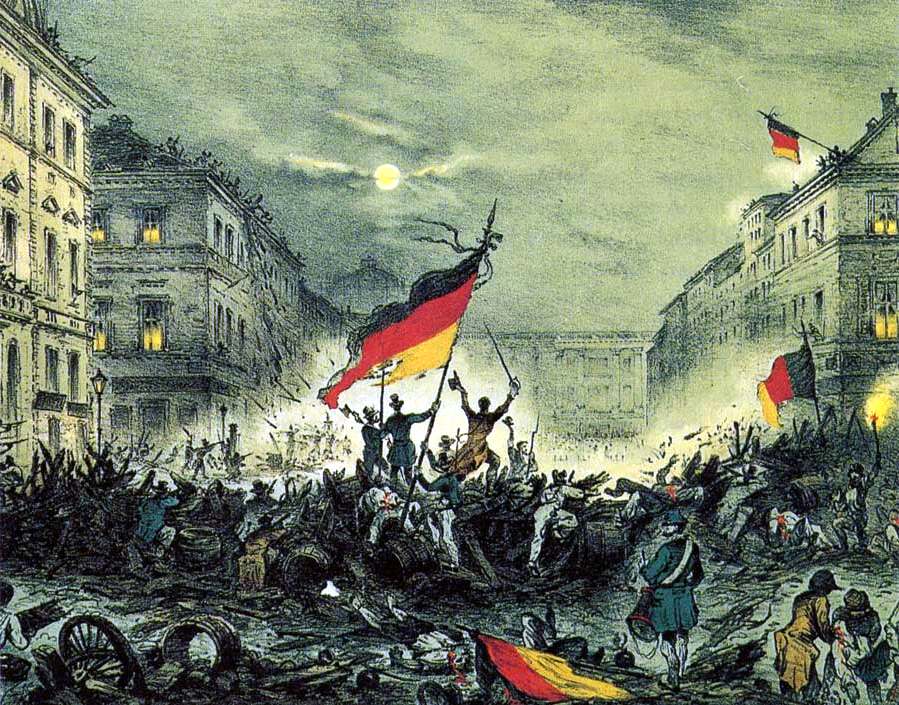
As an undergrad history major and later as a PhD student in European history I had a huge interest in the Revolutions of 1848 in Europe, an event that seemed both earth shaking and perplexing yet under-studied. There was very little historiography about 1848, even among German historians studying a place where 1848 raged as intensely as anywhere outside of Paris. 

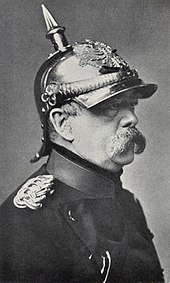
The line I always heard about 1848 was that it was "the turning point that failed to turn." Revolutions toppled governments across Europe, established a republic in France, and promised a unified in Germany. Instead France ended up with a new Napoleon and the Frankfurt Assembly was dissolved by the Prussian king. Russian troops invaded Hungary and crushed Kossuth's government. France would have to wait until 1871 for a republic, Hungary until 1918 for independence, and Germany would be unified under the auspices of the conservative Otto von Bismarck into something very far from a democracy.

It is my firm belief that the United States has just endured another turning point that failed to turn. From the spring of 2020 to January of 2021 an opportunity for change from below opened. The protests after George Floyd's murder rocked cities in every region. Statues fell across the nation, a common symbol of revolution. Institutions from elite private schools to Hollywood scrambled to show they were taking anti-racist measures. The energy of those protests could be felt in the get out the vote campaigns that won Georgia for Democrats. After years of Trump and the economic disparities he exploited with racialized rhetoric, Democrats eschewed neoliberalism for a bold plan of social democracy. 

Then came January 6th. In the aftermath the need for a renewed commitment to democracy seemed obvious not just to progressives, but more generally. When Georgia pushed voting restrictions the MLB moved the All Star Game from Atlanta. 

Eleven months after January 6th and a year and a half after the George Floyd protests it is now illegal to teach the history of racism in public schools in several American states. In many of those same states it's legal to run over protestors. Biden and Democrats are unable to get their social democratic agenda through Congress due to the filibuster and a few feckless members of their own coalition. The news that paid family leave would get axed felt a lot like the Prussian troops attacking barricades of Frankfurt in 1849. This Saturday Donald Trump, who it is now completely obvious tried to destroy democracy in this country on January 6th, showed up at a World Series game in Atlanta. The same city that months ago was censured over voting restrictions. The wannabe dictator is now free to move about the nation as he pleases, as if he is just another celebrity. 

Well folks, as Marx said about 1848, "History repeats itself; first as tragedy, then as farce." This farce has uniquely American characteristics, namely what Carol Anderson famously called "White Rage." There is an endless cycle in American history of racial progress being met with racist progress, to paraphrase Ibram X Kendi. The chance to make permanent change in that 2020 moment is long gone. Now we must suffer what will be years and years of reaction. The Third Reconstruction is over and we all need to be working every day to bring about the fourth one.

Monday, October 25, 2021

Dune and Historical Contingency

37 years after David Lynch's famously beautiful failure to adapt Dune, I am entranced and obsessed with Denis Villeneuve's new and even more beautiful adaptation. It's been a long time (maybe never) since Hollywood has embraced full on gonzo hardcore science fiction, rather than the kiddie space opera stuff. This kind of sci fi provides a way to look at ourselves through an imaginary reality. While Dune might have more obvious connections to the roles of environmentalism, imperialism, and religion in our world, I also think it provides some opportunities to think about history.

Those of us who study history seriously learn early in our education that popular renderings of history as a playground of great noteworthy individuals just don't hold true. We tend to jump to the opposite, to seeing broader economic and social contexts determining so much behavior. At some point, however, you realize that despite all of larger tides of history, events can still turn on individual actions that are completely unpredictable.

Dune is a great way of thinking about this. The desert planet Arrakis does not seem like the kind of place so set off a movement to topple a galactic empire. The messiah was supposed to come a generation later, nor in the form of Paul Atreides. Lady Jessica was supposed to have a girl, not a boy. It is fundamentally a story about what happens when unpredictable forces completely derail history from the train tracks.

There are plenty of examples of this in history. The rise of Islam out of the backwaters of Arabia, leading to a total conquest of the Middle East, could never have been predicted. (It's also an inspiration for Dune.) The Berlin Wall fell in a kind of fever dream, and Vaclav Havel went from being a dissident playwright to president of Czechoslovakia in a month. 

Of course, the coronavirus has been the biggest such contingency in living memory. They put memos saying "Bin Laden determined to strike in the US" on Dubya's desk in the summer of 2001, but the complete world changing implications of all of this have unfolded without the least bit of predictability. Like the characters in Dune, we too are living through a time when much that seemed certain has melted into air. One of the worst things about the pandemic is the feeling that nothing can be depended on, that day to day anything can change. Dune is realistic too in showing the violence of change, the uncomfortable fact that building a new world means the painful destruction of an old one.

Wednesday, September 29, 2021

America's Estates General

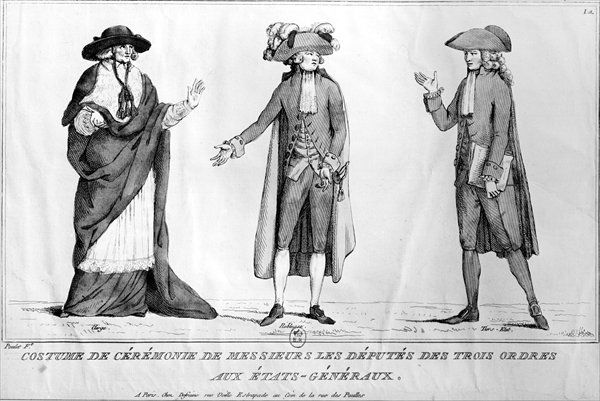
I have been reading Mike Duncan's excellent new Lafayette biography, which has been especially good at seeing the French Revolution from the angle of a pro-Revolutionary yet anti-Jacobin nobleman. Reading the drama of this even again I also remembered the oddity of the Estates General, called by Louis XVI in 1789 to sort out France's financial difficulties.

It had not met since 1614 because the kings of France had maintained such a tight grip on power via the construction of the absolutist monarchy. This medieval representative body included three groups voting as blocs: the clergy, the nobility, and everyone else. It was an obviously undemocratic system meant to prevent the commoners from wielding real power, and soon the third estate and revolutionaries from the other two formed a national assembly to write a constitution.

Going back to when I learned about this in high school I had always laughed at the crown trying to gain legitimacy in a changing, modernizing society through such an institution. I have stopped laughing, because I have come to realize that the US Senate as an institution is hardly less farcical.

Wyoming getting the same representation as California is just as ridiculous as the nobility getting the same number of votes as the commoners, isn't it? Just as the Estates General did not in any way represent the majority, the Senate is split down the middle despite many more votes in Senate races having gone to Democrats. Of course, the majority (once counting the vice president) still doesn't even get to govern due to the filibuster. Like royalists clinging to the traditions of kingly authority when it had long lost its luster with the people, the filibuster is being preserved by Democrats who are more invested in the symbols of a dying, dessicated system than they are in paving the way for a more democratic and beneficial future.

Ironically the American Estates General could in fact lead to the kind of collapse the original was called to avoid. Congress needs to raise the debt limit, but with Republicans blocking it via filibuster and feckless Democrats like Manchin and Sinema refusing to budge, our government could default not due to extravagant spending on palaces or foreign wars, but simply because our system is being taken hostage by a radical minority that the majority simply refuses to stop. 

Reading about events like the French Revolution is a reminder that things do not have to be as they are, and that events and the world can radically change in ways that are impossible to predict. In 1783, after a successful war against Britain, the French monarchy looked to be the strongest in Europe. Its palace at Versailles put all others in awe. Ten years later the king was beheaded, a republic established, and Notre Dame cathedral transformed into the Temple of the Supreme Being. 

Nothing says that the United States is going to be the world's great power in ten years, or that it will even continue to have this form of government, or even exist as a unified country. I get the feeling that we are sitting atop a volcano. Interesting times, indeed.

Wednesday, September 8, 2021

The Day the Future Died

(I was going to wait until 9/11 itself to post this, but the emotions of this 20 year milestone are weighing on me too much and I have to release them.)

Those of us old enough to remember 9/11 all have our stories about when we first heard the news, but we don't talk enough about our emotions that day. When the actual enormity of the event sank in I was hit by the knowledge that as horrible as the death of this day would be, it would lead to much greater death and destruction in its aftermath. After walking around in shock it was that realization that caused me to break down and cry. It pains me to say I was right in ways I could not even imagine.

There were the wars of course, which dragged on for decades. There were also the drone strikes, "extraordinary rendition," wire-tapping, secret prisons, and torture. Twenty years later the US failed to defeat the Taliban. Instead it militarized its own police, emboldened to commit bloodshed in poor neighborhoods, especially if they were black or brown. Now the terrorists mostly come from within our own borders and had their preferred candidate in the White House for four years. Some of them, including a bunch of off-duty cops and military veterans, tried to overthrow the government this year.

Their rallying cry, "Make America Great Again," is rooted in the notion of an idealized past. 

It was an effective slogan because Americans by and large no longer believe in the future. We are witnessing the consequences of climate change but are doing little to stop it. We let our bridges and roads crumble, block new buildings from our cities, and have endless fights over the smallest changes to school curricula. Our children are shot to death in their own classrooms with such regularity that there are ritualized reactions to it and no expectation that it will ever end. Even before COVID life expectancy went down because so many Americans were committing suicide and dying of alcoholism and opioid addiction. The vaccines made to combat COVID, a genuine marvel of modern technology, have been refused by over thirty percent of the population, allowing the disease to keep killing. 

Our system is a gerontocracy. Our last two presidents were in their 70s, and so is the Speaker of the House. The leader of the movement to push back against the current economic system is even older than the president. University departments are full of tenured Boomers who refuse to retire while younger scholars languish in precarity. The aged rock stars of the 60s and 70s still tour and rock until they literally drop. Film and television audiences are fed a steady diet of sequels, reboots, and remakes. There are no young film stars anymore, just old ones who have not gone away despite their advanced age. Even plenty of original stuff, like Stranger Things, is still drenched in nostalgia for a bygone time. 

9/11 feels like the day the future died. It was a shock to the system disproving America's invulnerability in the most flagrant and tragic way possible. The failed wars waged in the aftermath showed that the United States was in fact not some dominant hyper-power, but a crumbling empire inflicting greater wounds on itself than any hijackers could. It didn't even spawn a sense of civic-minded unity that could last more than a month or two. In the aftermath George W Bush told Americans just to keep shopping. 

I feel like the last twenty years have been a never-ending nightmare of failures rooted in the preceding decades of neoliberal rot. Some of those failures, like the useless wars, have been easy to see. Others, like growing inequality and lowered quality and length of life, have been buried away from mainstream discussion. It's a strange thing that so few believe in this country's future but the majority that doesn't will never outwardly say so. In this country, so invested in its image of exceptionalism, one isn't allowed to admit certain things. So twenty years after 9/11, with great pain, I will. This country doesn't have a future, and most of you know that already. Living in a dying empire is no picnic.   

Sunday, April 4, 2021

Are We Still in Nixonland?

A prime example of Nixon's wedge-driving

Rick Perlstein's Nixonland might be my favorite entry in his mammoth four volume history of the conservative movement's rise from the days of Goldwater to the Reagan Dawn. His key insight is that Nixon intentionally made pre-existing divisions in America even starker, then won elections by making sure that the bigger chunk of the divided nation was on his side. Until Watergate, this strategy worked remarkably well, propelling him to a massive landslide in 1972.

The point of the book was that our politics have been stuck in Nixonland ever since. It came out in 2008, at the end of the Bush years. Karl Rove had used the Nixon strategy very well, incorporating homophobia to make gay marriage a wedge issue in 2004 and portraying anyone opposed to the invasion of Iraq as a hater of America. Those same tactics served Republicans well when they unleashed the Tea Party in 2010, effectively hobbling the Obama administration for its last six years. 

Nowadays, however, it seems that Republicans can only win by gaming the system and suppressing the vote. Bush's win in 2004 was the only time a Republican presidential candidate has won the popular vote since his pappy won back in 1988. That certainly explains efforts to manipulate elections in Georgia. 

However, it also emerged this week that the Republicans are planning a political strategy based on the culture war, as opposed to policy. Some have mocked this, but I see it merely as the continuation of the one reliable strategy Republicans have had for the past fifty years. Some are puzzled that they are calling themselves a "working class party" while failing to do anything to materially improve people's lives. They forget that the Nixon strategy depends on resentment, on saying Republicans are protecting good people against the elites. They don't mean the economic elite, whom they wish to shower with tax breaks, but the "cultural elite." Anti-university, anti-trans, anti-environmentalism, and anti-anti-racism all fit into this. 

I do not scoff at this gambit because it has worked in the past and also because it represents to much potential harm to vulnerable people in this country. The question I keep asking is whether it can still work after all these years. Will this be the time that Republicans intentionally drive the wedge, only to find themselves stuck with the lesser part? 

Demographic and political shifts seem to indicate that ground has shifted enough that Republicans just might play themselves. This is not the late 20th century anymore. Church attendance is dropping, making appeals to "traditional values" less effective. Younger people are far more progressive now than when I was young. The attacks on 1/6 have made it impossible for conservative reactionaries to pretend that opposition to democracy itself is not at their core. 

And that's what scares me, since the wedge-driving isn't happening in a vacuum. Republicans might be grabbing the smaller half of the population, but gerrymandering, voter suppression, and the electoral college mean that they don't actually need to win over the majority. In that sense we are no longer living in Nixonland, but in a place somehow far worse. 

Tuesday, January 19, 2021

The American Louise Solmitz-es

When I teach my class on the history of Nazi Germany my students are always taken aback by one primary source I use to evoke the reactions to Hitlers ascension to power. It's an excerpt from a diary by a woman name Louise Solmitz, a Hamburg teacher married to a converted Jew. 

She was not a Nazi. However, as a right wing supporter of the allied German National People's Party she wrote with enthusiasm about the torch-lit parade by nationalists, brown shirts and Nazi students through the streets of Hamburg after Hindenburg named Hitler chancellor: 

"We were drunk with enthusiasm, blinded by the light of the torches right in our faces, and always enveloped in their vapor as in a cloud of sweet incense. And in front of us men, men, men, brightly colored, grey, brown, a torrent lasting an hour and 20 minutes. In the wavering light of the torches one seemed to see only a few types recurring again and again, but there were between twenty-two and twenty-five thousand different faces!"

She also noted the violent anti-Semitic slogans chanted by the marchers, apparently willing to overlook them despite the fact that her ethnically Jewish husband (and half-Jewish child) might potentially be threatened. (It reminds one of stories of Trumpers married to undocumented immigrants who are shocked by the deportation of their spouses.) 

In the moment Solmitz didn't care about that. Instead she relished how "the Reds will inevitably have to give in now." Hitler was not her first choice, but she was happy with anyone who would smite the people she disliked on the Left. 

I am thinking about the document because the last four years revealed many Louise Solmitzes in America. They were Republicans who did not vote for Trump in the primaries but were more than happy to pull the lever for him in the general election twice. They used abortion or their stock portfolio or taxes and a cover. When people took to the streets after George Floyd's murder they shook their heads at a torched Starbucks and shed not a tear for Floyd or the countless other victims of police violence. When Trump spouted his racist hatred of "shithole countries" and "build the wall" they overlooked it as much as Solmitz overlooked the brown shirts yelling "death to the Jews." Like Solmitz they themselves would never repeat such slogans, but were more than happy to stand by and cheer when others did. 

When their political allies tried to overturn an election by assaulting the Capitol they showed about as much outrage as the Solmitzes in Germany did when Hitler used the Reichstag fire to strangle democracy, which is to say none. Instead they just made excuses. Like Solmitz they enthusiastically went along with the regime even when it directly threatened their own family members. Commitment to their side and seeing the opposing factions punished mattered more than their concern for their own flesh and blood. 

With Trump leaving office, an account must be given. The militia members need to be called to account. The Ted Cruzes and Josh Hawleys need to be called to account. Fox New needs to be called to account. But especially the Louise Solmitzes are called to account. 

Monday, January 18, 2021

MLK Day Reflections

Every year I treat Martin Luther King Day as a time to reflect on the nation's path. Are we closer to or straying more from the society that he demanded that America become? It's an especially difficult evaluation this year because I have probably never seen hope and despair so mixed.

Last spring and summer saw the biggest mobilization for social justice in this country in over fifty years. While that fire has faded, it has forced multiple powerful people and institutions to critically re-examine themselves. It has also mainstreamed critiques of policing and the justice system that used to be shut out of regular American political discourse. As a teacher I can see that this cohort of youth is by far the most committed to change I have seen in my twenty years in the classroom.

At the same time, white supremacists invaded and briefly held the Capitol. In most places little to nothing was done to rein it in the police. In fact, many off-duty cops were in the fascist mob trying to overthrow the government. In terms of the pandemic, it has taken a far higher toll among Blacks and Hispanics and poor people of all races. 

The mob marched on the Capitol in order to overturn an election that they interpreted as a threat to white supremacy (and Christian and male supremacy for a lot of the people there too). It is not the first time in our country's history that such a thing has happened. At least for the first time in my adult life the head shaking of "this is not who we are" no longer dispels the notion that something deep and fundamental must be changed about this country. 

It is fitting then that one one the new Senators is Raphael Warnock, pastor at the Ebenezer Baptist Church where MLK and his father preached. I've been lucky enough to go to the historical church more than once and listen to recordings of sermons as I sat in the pews in the same place where they were given. There is a spirit that still hangs in the air there. Last time I visited and thought about the need to keep the faith against the powerful doubts that can drown a soul in cynicism.

I am thinking about that again today. In the time since my last visit in the summer of 2019 a lot of terrible things have happened. But as bad as the damage is, we have the capacity to recover. I look with hope to inauguration day, the spread of the vaccine, and most of all the fighting spirit in the streets back in the spring and summer of 2020. We sure are going to need it. 

Friday, January 8, 2021

The Sacking of the Capitol

I have an interest in the history of the late antiquity and early middle ages ever since my childhood, especially the breaking apart of the Roman empire. While references to Rome's fall and America's situation can be tenuous and trite, I want to make a comparison that is less a one to one deal and more a way to get some perspective on the events of this week. 

The sacking of the Capitol got me thinking about the sacking of Rome in 410 by the Goths. Obviously, the two events are unlike in terms of participants and motivations, but they share a SYMBOLIC meaning. Rome being sacked showed the world that a once mighty empire was vulnerable. That empire still lasted in name for a few more decades (the exact date depends on how you want to argue what the "fall of Rome" is) but its allure was shattered.

The US Capitol being stormed by a MAGA mob containing white supremacists and literal Nazis who were then treated with kid gloves by law enforcement had a similar symbolic power. The notion that this country is some kind of democratic beacon to the world has been a useful myth for quite some time, and while it is indeed a myth it still had some staying power. Plenty of people here and in other countries wanted to believe in it. It's a myth that both Obama and Biden deployed. Seeing a bunch of red-hatted thugs literally smear their shit in the halls of Congress has broken that forever.

It is impossible to deny what everybody saw. China's government is mocking the us. A Kenyan newspaper had the headline "Who's the Banana Republic Now?" The American Empire is merely a hollow shell. This is not hyperbole or speculation, it was laid out for all the world to see on television. 

The only way to prevent the fate of Rome is stop claiming "this is not who we are." It obviously IS who we are, but we are presented with an opportunity to make things better. We cannot miss this opportunity. The perpetrators, both the ground level thugs and their politician enablers, must face consequences. They must no longer be accepted into polite society. It should be impossible for Trump administrators to ever find a job again in public life. Trump himself must be impeached and removed.

As awful as the sacking was, I know that these people do this stuff to make us feel hopeless. Without hope, you can't fight. Well I refuse to give away my hope and I will keep my shoulder at the wheel. All you fascists bound to lose. 

Monday, December 7, 2020

Dispatches From The Front

Wilfred Own Knows What's Up

Back in September as the school year began I likened the difference between teaching in March when the virus hit to going back for a new year to the difference between World War I and World War II. The first time out I was full of the vigor and enthusiasm of taking a leap into the unknown, as dangerous as it could be. My attitude was all Rupert Brooke "swimmers into cleanness leaping" and all that. After surviving those months of remote learning to be thrown into hybrid learning in the fall, my enthusiasm was gone. All that was left was a devotion to duty. In September of 1939 there were no jubilant crowds on the streets of the combatant countries, just fear, resignation, and some quiet resolve. 

I have done my best to fulfill that duty all while hoping and praying that this all ends soon. I have been uplifted by the spirit of my students, which has truly impressed me, as well as many of my front-line comrades, and even some of the commanding officers. 

This morning I had enough time to actually reflect, and something hit me really hard. I have become inured to the ridiculous demands of teaching hybrid while parenting children in remote school with a spouse required to go to school every class day. I get up in the morning and shoulder the burden and get to work not even thinking about how impossible the task is or how ridiculous any of this would have been to conceive of a year ago. I just do it.

I realized this morning that this attitude is what has kept me from having a nervous breakdown. At the same time, I feel like part of my soul has died and won't be coming back. The same thing happened in my last years in academia, where some of my natural generosity and openness got permanently destroyed after it led me to be taken advantage of. The experience made me a harder person, and definitely not a better one. 

Right now I am starting to get tunnel vision. For example, I am no longer bothered when I hear and see people I love and care about being reckless in their behavior towards the virus. They are adults. Just let them do what they want. If they want to be careless, fine. I can't stop them and trying to will just make them mad. I can only hunker down and protect the people in my household and hope all turns out well. It's really the only thing I can control. 

So the war goes on, with no end in sight. The only thought that fazes me anymore is the idea that there never will be an end. I find that unbearable but I have little reason to think otherwise. Tonight I will rest and try not to think about it. Tomorrow I will be back in the trenches doing the impossible, but at least the work occupies my mind and gives me a reason to care. See you at the front, comrades. 

Sunday, November 15, 2020

America is More Wilhelmine Than Weimar

Over the past four year there have been a lot of comparisons between the United States and Weimar Germany. These were mostly rooted in comparing democracies succumbing to fascism. The most recent election has me thinking of a different period in German history, the period know in Germany as the Kaiserreich but sometimes in English as the Wilhelmine period, lasting from 1871-1918. (It also happens to be the period of German history I used to be a paid expert in.)

Historical analogies are always limited and imperfect, so it's best to use them not as a one to one comparison, and more simply as a way to get some deeper insights into the present by looking into the past. 

In this case I see an analogy because Wilhelmine Germany had a hybrid political system with elements of democracy and authoritarianism. The Reichstag was voted on through universal male suffrage, a much broader franchise that existed in most of Europe in 1871. The Social Democrats would become the largest party in that body by World War I.

So while Germany had the biggest socialist party of any country at the time, the Kaiser was still the head of state. The military declared an oath of loyalty to him. He controlled foreign policy as well, and got to choose the chancellor. The German electorate may have looked left and liberal on paper, but conservative elites still got to run the show. It all came crashing down in the revolution in November of 1918, when a war-weary people had enough and forced the Kaiser to abdicate, making way for the Weimar Republic. 

The most recent election is a sign that America too is more of a hybrid system than a true democracy. Joe Biden won a clear majority of the vote, and a clear majority of voters chose Democrats in the House and Senate races. Despite that success, Democrats will likely not control the Senate, which much like the Kaiser will get to decide what kinds of laws get passed and which don't. The judiciary has been loaded with conservative judges by a president who lost the popular vote and Senate that is not representative of the people. They will likely strike down or neuter progressive legislation. 

As in Wilhelmine Germany there is great tension between urban and rural areas, and by proxy between the forces of tradition and modernity. In both cases tradition has a lopsided Constitution on their side to effectively veto any changes they don't like. That traditional phalanx is a minority of Americans, but because they think they are the "real Americans" this seems totally fair to them. Just as German conservatives viewed Social Democrats as foreign to the nation and their power illegitimate (especially later under Weimar), American conservatives view liberals and even "Democrat run cities" as outside the nation. They have not recognized the legitimacy of a Democratic president since Carter. They impeached Clinton on spurious grounds, said Obama was a foreigner, and are currently refusing to acknowledge the results of the election.

There are of course some very important differences, but I find them telling. (Again, we should use historical metaphors to illuminate, not as a parlor game.) As someone pointed out on Twitter, the less democratic Kaiserreich produced an innovative social welfare state, while America's democracy is eroding it. In the German case this was a way of buying the compliance of the masses, in the American case it's a reflection of Herrenvolk nationalism. Most white Americans simply do not want to share with others, especially those of different races. McConnell and co. have made the greatest mission to thwart any expansion of the welfare state, as evidenced by their refusal to accept compromise on the ACA and challenging it in the courts. 

Another difference is in the legitimacy of the varying hybrid systems. Germany was a new nation in 1871 and its union of various states and kingdoms tenuous. It really took the experience of World War I to truly forge it together, but ironically the failures of the war killed that system. America by contrast has had the same Constitution for over 200 years, and it is politically unacceptable to state that it needs to be replaced. It has been woven into the very identity of the nation. This means, of course, that the current system where the courts, electoral college, Senate, local voting requirements, and gerrymandering limit democracy as much as the Kaiser choosing the chancellor did will not be changed save for a revolution or a massive shift in political consciousness. I don't expect either to be in the offing.

I do want to end with an important parallel, however. We spend so much time talking about Weimar because most Americans know little about the rise of authoritarianism outside of that example. If we look back to the Kaiserreich, we can see the rise of what historians refer to as volkish nationalism. This was a national conception based not on language or culture, but blood and soil. The Nazis obviously grew out of this tradition, but it had many offshoots. In the time of the Kaisers extreme nationalist groups like the Navy League achieved a great deal of popularity. The massive monument built to the Battle of Leipzig in 1913 (which I've written about for the German Studies Review) was really a monument to the German nation as a Volk, with no references to the Hohenzollerns (whose army had helped with the battle!) 

This somewhat inchoate nationalism thus undermined nationalist allegiance to the system the Kaiser represented. I think of Trumpism in similar terms. His supporters don't really care about the rule of law or other once conservative values. They see themselves as the real nation and want their enemies to be smote. They have little affection for traditional elites. Trump's appeal, and why he won the Republican primary, was that he represented a kind of nihilistic anti-politics. And yes, you can see that with Nazism and its self-definition as a "movement" rather than a party. But for the most part I suspect the people who voted for Trump will remain what they always have been: Republicans. 

They will continue to support the hybrid system that chokes democracy and deny legitimacy to liberals in authority. It's not a one to one with Wilhelmine Germany, but like that system a veneer of democracy helps paper over a system rigged in the favor of the wealthy and advantaged. I don't think a November 1918 is coming in our case, though. Be prepared for decades of semi-democratic stasis.