A lot of famous people died this week, and I feel like the passing of Ian Tyson got lost in the shuffle. A Canadian cowboy turned folk singer, he wrote "Four Strong Winds," the ultimate New Year's Eve song.
It's about how the winds of life scatter us from the people we love, and the sadness that comes with it. The line "But our good times are all gone/ And I'm bound for moving on" always makes me think of my amazing circle of friends in grad school and how fate condemned us to be separated. It also makes me think of being a high school teacher, where I get to watch teenagers blossom into adults but then have to say good-bye to them. I repeat this bittersweet ritual every year and it never gets easier.
I used to love New Year's Eve as a holiday. It meant a fun gathering with a group of my friends in Lincoln. Nebraska, made merry by food and drink. I haven't been able to take part for over a decade now, and the old professor who linked us all together has been dead for a few years. Nowadays New Year's Eve just reminds me of the impermanence of everything in this life.
I've got more yesterdays than tomorrows, and the burden of the past weighs heavy on my heart. The new year represents less a new beginning for me than it does a stark reminder of my mortality. I am thinking a lot tonight about how the strong winds of life have separated me from so many people over the years, some of them permanently through death.
I know this isn't exactly the cheeriest New Year's Eve message but tomorrow I will focus on the future. We owe it to those we've lost through death, distance, and estrangement to remember the good times we had together before they were all gone.
For the first forty years of my life, a September Saturday meant college football. I will never care about a sports team again the way I cared about the Nebraska Cornhuskers. My newest Substack is about how I have lost my enthusiasm for college sports, but also how it has been impossible for me to shake the Huskers completely.
I have a long-standing theory that there is a 20 year nostalgia echo. In the 70s there were 50s movies like Grease and American Graffiti and 50s TV shows like Happy Days. In the 80s there was The Wonder Years and Vietnam movies. In the 90s there was Dazed and Confused and That 70s Show. So we are due for oughts nostalgia, even if the phrase itself sounds so alien.
It was a decade so indistinct that we weren't even sure what to call it. That's in part because of a major transition in the decade itself. On or about February 2007, to paraphrase Virginia Woolf, human character changed. The smartphone hit and the internet went at long last from an ancillary thing alongside day to day life to its ubiquitous center and the biggest conduit for entertainment.
It had the effect of speeding things up and slowing them down at the same time. While it put communication of ideas and discourse into hyperdrive, people today dress pretty much the same as back then. (You would never think the same of comparing 1967 and 1981, for example.) This is why the 90s is the last true coherent decade in the way we started thinking about decades back in the "Roaring Twenties."
So maybe nostalgia for the oughts is impossible on the basis of it not even being a tangible entity. That being the case, I feel weird pangs for that time. It's mostly personal. I am a late bloomer and the oughts, of all times, ended up being my salad days. It's when I started my PhD program, met a lot of people whose friendships I still cherish, got a tenure track job, met my wife and got married. Related to the last point, I had figured out how to dress myself properly and make small talk. I was old enough to know some things about the world, and young enough to still enjoy it to its fullest.
Beyond the personal level subjective stuff like this, one might question oughts nostalgia. This was the time of 9/11, government crackdowns, the Afghanistan War, the invasion of Iraq, Hurricane Katrina, and the 2008 economic crisis. How could anyone want to go back to the Bush Era?
Well the Trump years and pandemic have shown us things could get even worse than America under Dubya. In any case it looks like we are doomed and as the 2010s are worse than the oughts the 2020s will likely be even worse than that. Nowadays what I once thought unbearable seems quaint.
At base I feel like there is something we lost in that fateful circa 2007 transition. We went from blogging to Twitter and Facebook, from long, deep essays to bon mot tweets and all their snark. (This blog itself is a kind of relic, one I am not willing to part with no matter how much it makes me look like a guy in 1983 with a Beatle haircut.) The internet had been this strange, rich haven that soon became corporatized and dominated by social media.
The late 2000s saw the first Marvel movies, a transition toward a one note Hollywood churning out blockbusters and blocking out more mature art. The high point before this came in 2006 with the release of both No Country For Old Men and There Will Be Blood. Both films are masterpieces, and both seemed to distill the decade's dark realization of America's imperial decline.
As one of a dwindling number of rock music fans I can also look back to the oughts as that genre's last and moment of cultural relevance. Back in 2001 everyone was playing the Strokes and White Stripes. The whole "the band" thing wasn't so much a genre as the last distinct rock movement to hit the mainstream. Since then it's either been lame nostalgia or great stuff that's buried left of the radio dial. That was the decade that brought file sharing and burned CDs, and with it the culling of record stores. Its true symbol was the iPod, a harbinger of much more to come and maybe the best device ever invented to deliver music. It also happens to be completely obsolete, a true artifact of an era with no name.
So it could be that the oughts represented the last moment of the culture existing outside rather than inside the internet. A time when you had no clue of the reactionary political opinions of someone you once knew in your hometown because there was no Facebook to throw it in front of your eyes on a constant basis. Perhaps this century's oughts will seem like the last century's, a time before a new modernity stripped away part of our humanity. In the meantime, I'll crank some Wilco.
Today's one of those quarantine days when I came a little untethered. I didn't have a regular school day, this was a day for writing reports for my classes. This meant it was easier to get distracted by the news during the course of my day. These days looking at the news just makes me anxious, angry, and depressed. I've come to realize that there's just no plan here, even by the best informed, most well-meaning leaders. I wonder if I will even be starting classes in person come fall.
So when I was in the kitchen making dinner, I decided to bust my iPod and its now anquated player out of mothballs and play music from it while I cooked. I just hit play, and the playlist was one I made at a time when I was teaching myself guitar and thinking about the kind of music I would make if I could. Oh was I naive. My guitar now has as much dust on it as my iPod did.
Both were products of my two year stint in Grand Rapids, Michigan, a very meaningful time in my life. I had moved there after grad school to take a "visiting" professor job. It's when my now wife and I started dating, and she bought me the iPod as a gift. On the back she had it personalized with my name and my newly minted "Dr." title.
It was 30GB, top of the line for 2007. I filled it up with my CDs, as well as CDs I borrowed from the amazing collection at the Grand Rapids public library. My obsessions at the time with cool jazz, alternative hip-hop, and folk music are well-represented on the iPod. Even though I added a lot to it later, it's still an artifact from that transitional time in my life. It's reminder of the hopes and dreams I had as I was hitting my early 30s. Some, like my academic career, ended up in dead ends. Others, like my new relationship with my wife, flowered into something more beautiful than I could have dreamed.
As I have been listening to my iPod tonight I have been hearing some good stuff that takes me back. Here are some of the more notable songs that popped up.
The Jam, "That's Entertainment"
This song captures the ennui of day to day city living like no other. A friend who grew up in the UK when this song came out said it was the perfect summation of Thatcher-era England. In these quarantine days it feels spiritually appropriate.
I was really into the Once soundtrack at that time. This song is edgier and angstier than a lot of the other stuff on that album. This breakup song stands in for a lot of other stuff, like when Hansard yells that "I'm caught in a pattern and I can't escape." I played this one a lot when I was having job market angst and despairing of finding a permanent position.
Lanegan and Campbell's Ballad of the Broken Seas was one of my favorite albums of the time and for my money one of the best forgotten records of the 2000s. The moody folk and Lanegan's husky voice were made for having along in cold Michigan winters. Give it a listen.
When Uncle Tupelo broke up I was firmly in team Son Volt, rather than Wilco. Jay Farrar seemed like the bigger talent, and his band made the better first record. Trace is one I still listen to, even if I have subsequently become a Wilco superfan. This song has so much country soul in it, and it's strange that Farrar never seemed to find it again. May the wind take your troubles away.
Those Michigan days coincided with the high point of my obsession with early Rod Stewart and the Faces. I was like a demented preacher, telling everyone that before he sold out that Stewart made several albums of amazing music. I still believe that. This song is about leaving where you're from, growing old, and wishing you could go back there. Let's just say that I am feeling that sentiment pretty hard right now.
Every year at my daughters' school they put on a big show of different musical skits directed by parent volunteers, and end the show with a big number where all the kids take the stage. This year the finale song is "Sing." Tonight I played both the Sesame Street and Carpenters versions of the song for my daughters and was hit with almost overwhelming waves of emotion.
Sesame Street and The Carpenters were a big part of my early childhood, which was probably the happiest I've been in my life until recently. Back then my parents had about a half dozen cassette tapes, and one of them was The Carpenters' greatest hits. Since I was born in 1975, the music was a little back dated, but I didn't know that disco had crowded early 70s easy listening off of the charts. I knew all the songs front to back, and some were especially meaningful to me. "Sing" was one of those songs, which I also knew from Sesame Street, where it had originated.
It is every bit a product of its time, like the Free To Be Your And Me TV special. The simple, sing-along ways of folk music had blended into soft rock like Bread and The Carpenters, and a little song about how we all should just, well, sing a little song was the kind of meta-level culture people in 1973 craved. It was the ultimate terminus of 60s culture, the good vibes stripped of revolution and fit for housewives popping valium and their little kiddies playing with Lincoln Logs on the shag carpet. The war in Vietnam was lost, the president was a crook, and the price of oil was going through the roof, so just sing a song and forget about it.
The Carpenters and songs like this are easy to mock, but very little in this world can give balm to my soul like the voice of Karen Carpenter. I spent so many countless days at home with my mother and sisters, happy and safe with that voice in the background. That ended when I went to school and confronted a verbally and physically abusive Kindergarten teacher, and then constant bullying from my peers. I would think back to those early days as a kind of Garden of Eden I had been expelled from. Ever since Karen Carpenter's voice will wrap me up in warm memories and sometimes it's too much for me to take.
Even in my youngest days I could pick up the sorrow in her voice in songs like "Rainy Days and Mondays" and "Superstar." The passage of time has only made that sorrow more profound to me. The music also started hitting me harder after seeing the TV movie about Karen Carpenter's life that came out in the late 80s. That's where I learned about her losing battle with anorexia, and that film crushed me harder than just about any I've seen since, no matter how "serious." That night my mom told me that she went to a Carpenters concert years before, and that they barely started performing before Karen had to be taken offstage.
But enough of this sorrow. There's enough that in the world right now. Listen to "Sing" and feel just a little better for three minutes.
This time of year, as late fall fades into winter, has become very tough for me. Six Novembers ago my grandmother died, a person who had been so present in my life I could not really conceive of life without her. Two years ago in early December my aunt Joann passed away. Last November my aunt Kathleen's health started failing, she died this past January. Too many trips home to rural Nebraska in the past few years have been marked by death. Three times I've talked with people I've loved over the phone halfway across the country, knowing in my heart it was the last time I was ever going to hear their voice.
Every morning when I ride the subway to work I can't get over that I grew up in a place so far removed from the world of New York City. It's not anything I could have imagined when I lived there. I love my job and I love my life here, but every now and then I feel like part of myself is missing. A big chunk of my soul is still out there, 1500 miles away, beneath the skies so vast they feel like they could crush all the world beneath them. When I go back to Nebraska I can feel that part of me reawaken.
I don't necessarily want to go back and live there, but living away from there weighs on my soul. It's the paradox of being a self-inflicted exile. Sometimes I fantasize about buying an old Nebraska farmhouse and making it a kind of low rent, countrified summer home. You can have Newport and Martha's Vinyard, I'll take the prairie.
I think I've always liked Neil Young partly because he too grew up in a small town, moved to the big city, but never really left rural Ontario behind. He was never more forthright about this than on "Journey Through the Past." It comes from the haphazard 1973 live album Times Fade Away, such a document of a low point in Young's life that he kept it out of print for decades. While there are decadent tales of junkies like the title song, or cries for help like "Don't Be Denied,""Journey Through The Past" is far more straightforward and sentimental in its emotions.
It's about homecoming as a journey through the past. When you leave where you are from, it's almost as if time stops there. For years I would come home to my old teenage bedroom, the same shelf full of Stephen King novels, the same Rolling Stone cover of Nirvana on my closet door. Even though my room has been made over some, it's still a place where I access feelings and memories that would otherwise disappear from my mind.
However, the people I knew and loved there keep disappearing, and this time of year I spend a lot of time remembering them. I can go back to my old room, but I can't ever talk to them again. So the years go by, the past fading ever more, and the ache that comes each November can't be nourished.
While baseball may not hold the preeminent place in American culture that it once did, its metaphors still permeate the American vernacular. To fail is to “strike out.” A major success is a “home run.” When making an estimate, we provide a “ballpark figure.” The president is fond of saying “big league” as a positive adjective. The opposite term, one used to connote low quality or shoddy performance, is “bush league.” While I now work in the president’s big league hometown, the biggest league city in all of America, I grew up in a literal bush league town. I have spent so much time in the big leagues of New York that while I still hold it in my heart, my hometown feels more and more distant to me.
Last July I was back in Hastings, Nebraska, a small city of 24,000 in the stereotypically flat south central part of the state, 150 long miles west of Omaha. It is the smallest of the triangle of the “tri-cities area,” completed by Grand Island and Kearney. While Hastings’ population has remained static, those other towns have been growing for the past forty years. Interstate 80, the Cornhusker State’s grand trunk road, bypassed Hastings for those other cities. The local state college in Kearney was elevated to a state university, and Grand Island has grown by 50% since I was born. With Hastings’ mall now officially dead and the local department store closing, residents of my hometown have to drive twenty four miles north to “GI” to do any shopping that can’t be done at the hulking Wal-Mart that sits like a cancerous growth on the edge of town.
There is little in the way of opportunities for those with a college education or ambition. Those like me who left town to get an education rarely come back. This is mostly down to the economic situation, but also to an insular attitude that has only worsened as the town has lost its relevance. There is a vicious feedback loop whereby young people leave for better chances, making the people left behind even more rooted in the town, which then drives more young people out, thus making the locals that much more obstinate in their dislike of the outside world. When I tell strangers I meet in Hastings that I live in New Jersey the mask of “Midwestern nice” suddenly drops. They don’t even try to hide their judgment and contempt. One total stranger I talked to after Superstorm Sandy actually told me that we were parasites on the government for asking for rebuilding money. Incidents like this have made coming home to visit feel like going to a hostile foreign country, not the place I grew up.
On my last summer visit, however, I found something that made me feel more at home in my hometown than I had felt in years: a minor league baseball game.
The wonderfully named Sodbusters are not a minor league affiliate, but a member of the Expedition League, a new wood bat summer league made up of college players trying to get noticed by scouts. Even such a lowly rung on the baseball ladder is exciting to have in a town where people are used to having to drive several miles to Grand Island or Lincoln for entertainment. My heart swelled to think that for once WE had something THEY didn’t. I also felt part of that WE for a change.
It was as if the clock had been turned back to the town’s heyday when I heard about the new team. When you drive around Hastings you notice that it must have been a real jewel in the early 1900s. The ornate façade of one downtown building is a sign that it was once a department store where the well-to-do traveling by rail from Chicago to Denver got off and bought luxury items. The Dutton-Lainson Company, a manufacturer and the town’s biggest employer also owns the tallest structure in town, a warehouse called the “Victory Building” for its commemoration of the just finished World War I. The war brought prosperity to Nebraska’s farming country even as it sent doughboys back home in coffins. Hastings was a railroad junction too when the railroad was king. The railroad brought in speakers to stand on the rostrum at the town’s Chatauqua pavilion, built in 1907 for the cultural edification of the growing town’s residents. That included the prairie populist William Jennings Bryan, whose political power coincided with the Plains’ rise. Hastings had always prided itself on its more refined nature, whereas sister city Grand Island was a rough-hewn, Western cow town full of saloons and brothels.
Hastings had even played a part in one the early milestones of world baseball history. In 1888 AG Spalding took his team of all-stars on a world tour to promote the game. On the rail route to the west coast they stopped off in Hastings and played an exhibition game. Hastings fielded minor league teams in its 1910s and 1920s zenith, including one nicknamed the “Third Citys” [sic]. Despite the boosterish claim in their nickname, Grand Island was already ahead of Hastings as the third biggest city in Nebraska.
Hastings’ combination of early 20th century prosperity, boosterism, love of baseball, and civic-mindedness created the thing that made it possible for Hastings to even host a baseball team in the 21st century: Duncan Field. Completed in 1941 as a municipal project, it has a subtle grandeur from another time. The outfield wall is brick, a reminder that Hastings was once known for its multiple brickyards. Unlike Wrigley Field in Chicago, the wall is not covered with ivy and is too tall for a player to scale. Also unlike Wrigley, it is impossibly far from home plate. The wall is 380 feet down the lines, and 405 to the “power” alleys. There’s a flagpole by the wall in dead center, but it hardly constitutes a hazard since no ball will ever get that far. A home run there is a truly notable experience, a kind of throwback to the dead ball era when John “Home Run” Baker could get that nickname after smacking only a dozen round trippers in a season.
Duncan Field once hosted regional American Legion youth baseball championships and a Hastings side in the D-level Nebraska State League. Legend has it that when a young Yogi Berra played there in an amateur playoff game that he managed to clear one over the wall. As the minors started contracting, Hastings lost its team in the late 1950s, but for a few years in the late 1950s and early 1960s Duncan Field hosted the American Legion baseball World Series. (Take that, Williamsport!) After that, it was home only to local Legion games. (In rural Nebraska baseball is still a club sport and high schools don’t field teams.) When I played in little league, the ultimate goal was to play for the league championship at Duncan Field. For nine year-old me Duncan Field may well have been Yankee Stadium.
So on a surprisingly temperate Nebraska July evening I went there to see a Sodbusters game with my family. I’d last been there as a young child to watch the Legion high schoolers play. Now the old metal benches had been replaced with actual seats, and the facilities updated. The wall was still there, of course. There is something about really large diamonds that I find aesthetically pleasing, that huge green jewel stretched out before my eyes. The game really seems to be being played on a field in the literal sense as opposed to a sports complex.
That 405 is not to straightaway center, but to the supposed "power alley"
While Duncan Field has an illustrious history and beauty to it combined with infinitely better bathrooms than Wrigley, it is still most definitely bush league, in both senses of the word. The Burlington Northern’s tracks run right next to the stadium, trains blowing their mournful horns all through the game. The lone parking lot sits behind the home plate grandstand, and my dad insisted on parking the car as far away as possible. The reason soon became obvious, as many foul balls left the park and made ominous thudding and cracking noises. In the kind of bush league humor I always appreciate, the announcer read off a paid advertisement for a local windshield repair shop right after the first foul ball went into the parking lot.
That was a sign that the Sodbusters, like most minor league teams, have a fan experience policy of laying it on thick. They are apostles of the great Chicago White Sox owner Bill Veeck, who when accused of sullying the game with gimmicks, wrote that “All I was saying was that a losing team, plus bread and circuses, was better than a losing team and a long, still silence.” The Sodbusters, like a lot of minor league teams, might be rightfully criticized for their hatred of silence and overabundance of bread and circuses. Every pitch and play seemed to be accompanied by some kind of sound effect or short canned movie quotation aimed at Generation X nostalgia.
I’m not going to complain, because this kind of hucksterism ended up netting me a free beer. I was pulled out of the crowd for a trivia challenge and got all three questions right, and a gratis brewski was my reward, so much more fulfilling than getting corporate swag or a gift certificate to a mediocre restaurant. The fact that I was able to get an IPA with my free beer certificate was a sign that perhaps my hometown is getting a lot hipper these days.
This made me a fan for life
In another malted barley based gimmick, a Sodbuster player was given special status for the game. If he scored a run, all Busch and Budweiser beers would be two for the price of one. When that player in fact scored, there was a roar of joy and a mass exodus from the stands to the beer concession.
Despite all the noises and gimmicks, baseball is experienced more palpably in a bush league game. For one, you are right on top of the action, and the noise of the crowd does not drown out the noise on the field. I also found myself watching it much differently than a major league game. When a player for either team muffed a routine play I felt sad, knowing that their chances of hitting the big time were on the line. I felt especially bad that the starting Sodbusters pitcher, a local boy from Grand Island, got shelled worse than the trenches at the Somme. This was not the bad feeling I get when say Zach Wheeler gets crushed against the Nationals, but a personal feeling of empathy for another human being.
This is why it was great to go to the game with my father, who probably could not name five current major league players but still knows more about baseball than I ever will. He noticed the small things that most fans at major league games miss, like the positioning of the fielders, the pitch selection, and the swings of the various batters. At a Mets game I might talk with other fans about who hits where in the lineup, the latest trade, or which relief pitchers are most effective in the eighth inning. My father is much more likely to be concerned with a pitcher’s throwing motion or the way an outfielder closes on a fly ball. That eye is especially important at a bush league game, where you are looking to spot the future big leaguers
In those moments with my father I was reminded that baseball is so much more a “game” than other popular sports. Baseball people regularly refer to it much more often as “our game” or “the game.” Notice as well that baseball was once dubbed “the national pastime” rather than “the national sport.” In fact, central Nebraska is a place where baseball as a game played locally by local teams, rather than as a major league sport, managed to hold on longer than elsewhere. In old times every town big and small had its own organized teams. That culture still existed in rural Nebraska in the 1950s, and my grandfather played on the local team for his little town of about 350 people well into his fifties.
Much of this probably has to do with the fact that Nebraska is so isolated that it does not fit naturally into any one team’s fandom. Both of my grandfathers had an affection for the Cardinals because they were the closest team and could hear their games broadcast over the radio, but neither was a Cardinals fan, per se. My mom’s father used to love to tell the story of “Pepper” Martin’s exploits in the 1931 World Series, but knew nothing of Ozzie Smith and Whitey Herzog. South Dakota is just as isolated, but it is firmly Twins country. The same goes for Kansas and the Royals. You’ll find Cardinals, Royals, Rockies, and Cubs fans in Nebraska, but no one team has any kind of hegemony.
This was kind of a gift I was given as a baseball fan in Hastings. I developed a love less for any team, but for the game of baseball itself. Some of that came from my dad’s father. Tiny Lawrence doesn’t have a hospital, and he stayed with us for awhile in Hastings while getting some treatments. During that time in 1986, almost every day I came home from school he was watching the Cubs game on WGN. It wasn’t because he was a Cubs fan, he just loved watching baseball. While I was initially miffed I couldn’t watch my GI Joe cartoons, that was the moment where baseball really put its hooks in me. My grandfather died less than two weeks after the next opening day, but by that time I was buying packs of baseball cards and poring over the box scores in the paper every day after school. My memories of him are faded, but his impact on me lives on.
So thirty-two years later I found myself at a game in my hometown, now 1500 miles away from where I live in a place so alien from rural Nebraska that it might as well be another country. In front of the massive green expanse of Duncan field beneath the impossibly large Nebraska evening sky talking baseball with my dad and trying to get my six year old daughters to share my enthusiasm. As always, my dad talked wistfully about how much his father loved baseball, and I could tell that my enthusiasm for the game was something that made him happy. That night I felt like I was still a link in a chain I feared was getting broken in my exile.
The Sodbusters got destroyed 15-4, but it didn’t matter. I felt happier leaving that game than any other I’ve been to, including seeing the Mets win in extra innings in their wild card run in 2016. The night was proof that being in the bush league doesn’t have to be bush league.
I've been seeing things about the 75th anniversary of D-Day all day today, but it's left me nothing but conflicted and sad. It's a day that marked the inevitable demise of Hitler's regime, as well as the ascendance of the United States to being a true world power. Yet here we are 75 years later, the United States ruled by perhaps the worst person our society has barfed up in the last fifty years, that same man openly supported by American Nazis who dared to yell "Hail Trump!" on the day he took office. It seems as if the victory of that glorious day was for naught.
Of course, we should not romanticize D-Day too much. After all, the American government that fought the Nazis maintained a segregated military and denied black people the right to vote. It firebombed the people of Tokyo and dropped nuclear weapons on defenseless civilians. That being true, it was still a far greater evil that was defeated. I am still proud to this day that I had a great uncle who parachuted into Normandy with the 82nd Airborne.
But I am also aware of how empty that pride is. D-Day was a long time ago now. Instead of pining for the victories of the past, we ought to be far more concerned with the fight that cries out for our blood, sweat, and tears in the present. We are living in a world where nationalism is on the rise again, and shows no signs of abating. Our memories should not make us complacent, lulling us into the false notion that all the fights happened in the past. No, our memory of D-Day ought to be preparing us for a new kind of combat, one not fought on battlefields.
In Eisenhower's famous order of the day on D-Day, he proclaimed that "The eyes of the world are upon you." Now that gaze has shifted to us living right now, trying to fight the rise of Fascism 2.0. It is up to us to take the actions that will have us remembered 75 years from now. So let's get fighting!
I am still on spring break, but unable to travel because my wife and kids are still in school. I have been recharging myself by taking a "staycation" of sorts in between getting the house organized and a head start on my school work. This usually involves taking the train from New Jersey to New York City and spending a day wandering around.
Yesterday I took a path I'd never taken before, in search of World War I monuments. I am going to be teaching a short spring session course on World War I and cultural memory, and I thought it would be great to take students to see some of their city's memorials. These monuments are so obscure that I realized that I'd never actually seen many of them. I started the morning by taking the 1 train from Penn Station to 66th Street. I sought out and found a couple of monuments in Central Park, one a memorial grove whose trees have not survived the ravages of time, the other a pretty standard bronze sculpture of soldiers charging.
The small scale of these monuments reflected that they were regimental in nature. I'd heard the biggest local Great War memorial was up in the Bronx, and so I grabbed the 6 train at 68th and Lexington. I deliberately stayed on the local, kicking back and reading a book and watching the people on the train and the Bronx pass by my window once the train crossed the Harlem River. I find reading a book on an empty local subway train to be remarkably soothing, it was about the most relaxed I've felt in awhile. I was traveling in that 9:30-10:30 sweet spot where the last rearguards of rush hour have faded away and there is a blissful stillness for those unchained by jobs to enjoy.
I got out at the end of the line, right by an interstate highway. Due to the decisions of Robert Moses and other planners to build highways along most of New York's coast line, it is a city oddly cut off from the water, despite being built on islands. I had to take a pedestrian bridge over the freeway to get to Pelham Bay Park. I was there to see the Bronx Victory Column, maybe the most substantial World War I monument in the city. It was easy to find, its gold statue shined bright, facing the highway.
The monument is in remarkably good shape compared to other forgotten artifacts in the city like the crumbling Soldiers and Sailors Monument and the aforementioned grove without its trees. Perhaps that's because the monument is borough specific to the Bronx, and thus something the locals can take pride in. It also might be just because it's located in such an isolated place, and so is not a target for vandals. I certainly didn't see anyone else around while I was there, despite the many inviting places to sit.
I was struck by the emptiness of the monument and the park. In the nation's most densely populated city, there was hardly a person to be found. I wandered until I found a path to the bay itself, since there was no signage to point the way. While sitting on a rock gazing absent-mindedly at the water somebody came walking by and I was completely startled, since I thought I was the only person around. On the way back I noticed an old brick wall, whose purpose I could not ascertain. There was a gate at one spot, but what had once been a path was overgrown.
I thought this made sense in light of the monument. World War I is an almost completely forgotten event in American history, but the people who experienced it thought at that time that it was the most important thing that had happened in the world during their lives. As we all know, a much bigger war was on the horizon, and one that provided an easier narrative of triumph for Americans. World War I killed millions worldwide and over 100,000 in this country, but it got lost in the shuffle. It's fitting that one of the more substantial monuments to that war is located in a place that few people ever go.
I took another lesson as well, that most of what we care about is pretty ephemeral. Some days that thought is a sad one, but yesterday under gray Bronx skies it felt comforting.
The store has been around in Hastings for over 40 years, there isn't a time that I can remember it not existing. It moved from downtown to the mall in the early 80s, in a sign of the economic times. It moved back downtown in the late 90s as Walmart and other box stores were killing the mall and the downtown was getting an injection of investment. The downtown now has some cafes, restaurants, and even a microbrewery, but retail is practically dead. Allen's, the local department store, closed everything but its grocery store this year, and Herberger's, the last general clothing store, also shut its doors. Walmart now competes with dollar stores, which have sprung up around town like poisonous mushrooms.
My hometown, like so many other small towns in the Great Plains, gets more and more hollowed out with each passing year. It's not just that businesses are closing, it's that these are businesses with real meaning to the community. Prairie Books has a "Nebraska Room" in the back full of books about the state, including a wealth of books on Native American history. Every time I have visited in recent years I have gone to the store to get a book, usually from that room. Places that have meaning for the local community are disappearing, replaced by outposts of corporate behemoths Hoovering up the money from Hastings and depositing it in the pockets of far-away stockholders.
Part of the reason I care about this is that I am cursed as an exile to be more invested in my homeland's uniqueness than the people who live there. But beyond that, I am legitimately sad at the loss of a place that meant so much to me. In my pre-internet childhood having a good bookstore in my small, isolated town was absolutely crucial. It was there when I was in the fourth grade and obsessed with Choose Your Own Adventure books. When I became a fantasy RPG nut it's where I bought copies of Dragon magazine, as well as way too many Dragonlance novels. (Once I developed some taste I bought my Tolkien books there, too.) Later it's where I fed my Stephen King obsession in middle school, as well as my growing interests in history and science fiction. In high school it's where I started exploring heavier literature, from Conrad to Dostoevsky. I still remember the day I came in as a 17 year old and asked the store to order me a copy of Kerouac's On The Road. The owner of the store gave me a little smile at my request. While my teenaged love of that book embarrasses me a little today, that smile was probably my first clue that I would think of that book differently in adulthood.
When I was growing up the Omaha World-Herald, Nebraska's biggest newspaper, compiled a list of best-sellers each week in the state to run alongside the Times' bestseller list. The only bookstore in the rural part of the state they used to compile the list was Prairie Books. It made me feel like my town mattered, that we were more cultured than those other cow towns out on the plains. A lot things over the past three decades have shown my town to be just another rural burg getting hollowed out by global capitalism. Of all those things none stings harder than losing Prairie Books.
This morning I got the sad news that my aunt Kathleen had died. She had been ailing for a couple of months. I last saw her at Christmas time while she was in the hospital and there was still hope for recovery. I am glad that I got to see her one last time at least.
Today I found myself engaging in what is now becoming too familiar a ritual. I called the airline, asked for a bereavement discount, was denied, and used my frequent flyer miles to get a ticket that wouldn't cost my eye teeth. I was a thousand miles short, so I had to spend $80 to get myself over the top. This comes with the territory when you're an internal exile. It doesn't help that my hometown lies 150 west of the nearest airport that I can get a direct flight to, so I will also be having to shell out for a rental car as well.
Despite these headaches I don't have any second thoughts about going. I spent more time with my aunt and her husband and daughter growing up than anyone else in my extended family. They were the only members of that large group (five siblings on each side) to live so close. Tightening the bond my aunt, who was my mom's sister, was married to my dad's brother. (Yes, my family is country. Got a problem with that?)
Many of the Nebraska Cornhuskers' most important 1980s football games were viewed in their living room accompanied by my aunt's delicious chili. I liked visiting her house because they had HBO and unlike my parents, were not opposed to getting takeout for dinner. I have fond memories of going to YMCA basketball practice across the street, then going to their place after before my dad picked me up. My aunt always had a snack to offer or a slice of pizza or taco leftover from the takeout dinner. Regardless of the reason, there was hardly a week that went by when I didn't see her.
I have been thinking about these memories all day today. Their power has been exacerbated by my feelings of exile. Here in New Jersey I live in a town full of Brooklyn refugees talking about gluten free options. I work at a private school in Manhattan that costs more money to attend in a year than I made until I was 33 years old. It's a million miles away from the cheap working class pleasures I used to enjoy so much with my aunt and uncle. I might as well be living in a different country.
This is the feeling I always get when I go back to Nebraska, where it's more and more common for people to treat me as an outsider when I tell them where I live and what I do. Around here in the Northeast my upbringing is a curiosity or an opportunity for someone to say something insulting to me about my background.
That bullshit always prompts me to take more pride in where I came from and cherish the people who raised me there. While I am grieving, I am least looking forward to seeing my family members again in one place. A lot of my cousins like me have left Nebraska and scattered to the four corners of the country. (Quite literally. I've got a cousin in Seattle and one on the Gulf Coast.) I know they'll at least get where I am coming from.
I recently had the good fortune to hang out with two of my friends from graduate school. Like the middle-aged men that we are, we talked about the old times, and how much we miss them. I was broke in grad school, often stressed, and prone to depression, but those were the best days of my life up to that point. It was the only time in my stint in the academy where I was able to "live the life of the mind." The quest for knowledge consumed a plurality of my waking hours. That said, I spent plenty of time with my friends, from playing backyard bocce ball to going to concerts to just drinking and laughing until the wee hours.
We did all of this in Champaign-Urbana, Illinois, one of the great overlooked places to be in this country. It was cheap, easy to get around, but always full of events and culture. It is a place that gave birth to and nurtured writers, scientists, and thinkers. It also gave us REO Speedwagon.
While I lived there I chuckled a bit when one of the streets in downtown Champaign was renamed REO Speedwagon Way. After all, weren't they sort of the standard bearers of a kind of forgotten, lowest common denominator arena rock? A couple of my friends in Chambana who had grown up in downstate Illinois managed to persuade me otherwise. Before REO was an arena rock behemoth in the early 1980s, they were a hard working hard driving hard rocking band that didn't have any hits but did have a devoted following in the midwest. It wasn't until their eighth album in 1978 (the tragically named You Can Tune A Piano But You Can't Tuna Fish) that they even had a long player in the top 40. It's kind of amazing that Epic, their label, hadn't dropped them by that point.
Perhaps they heard something that others hadn't. My friends certainly had, and with their help I heard it, too. I can't help thinking it's some kind of metaphor. People tell me I'm not supposed to like going to graduate school, listening to REO Speedwagon, and living in the corn belt, but I ended up loving all of those things. I guess I was extremely lucky to be around like-minded people for so many years. It's certainly a blessing to see them again.
That's a roundabout way of introducing my song for this week, "157 Riverside Avenue." It's off of REO's first album, but has been a staple of their live shows even after there were hits for the audience to expect. For that reason I chose the live version from their 1977 double-live You Get What You Play For. (They really have a thing for tragically named albums) It makes the most sense, since pre-fame REO played show after show after show searching for that big break while building a loyal audience.
The double-live album was obligatory for rock bands in the 1970s, and one even catapulted Peter Frampton to fame after a similarly long time in the woodshed as REO. The sound is pure early 70s boogie rock but by 1977 the once shaggy band had made itself a fine-tuned arena-rocking machine. The boogie bounce is still there but the solos are blistering, courtesy of the incomparable Gary Richrath, perhaps the most underrated rock guitarist of the classic rock era. Kevin Cronon still throws in a silly bit of banter and scat singing in the middle, but it sounds pretty tight.
Not only does this music remind me of my spiritual home of Champaign-Urbana circa 2000-2006, I try to take some hope from it. As far as my writing goes, I'm still striving and trying after many years to get a hit. I've managed to hone my skills, and even build up a (small) audience. I guess I can hope that something bigger and better is still possible.
[Editor's Note: I wrote this as a submission to an online film magazine asking for pieces on reconsidering films we once loved. It didn't get accepted, but I still want to share it with you, dear reader.]
I was born in 1975, meaning that I am of a certain cinematic generation that grew up repeatedly watching certain movies that were taped off of television broadcasts onto VHS. It is hard even to recall now the state of home video in the first two-thirds of the 1980s when VHS copies of movies were priced at about a hundred bucks in 1980s money. In those dark days movie studios figured most of their films were being sold to video stores, so they needed to make sure that they got their due and proper.
Being a kid at this time meant that your parents got ultimate veto power over the films rented from said video stores, and parents were not too keen on renting films like Indiana Jones and the Temple of Doom over and over again, no matter how much the kids liked it. That’s where taping movies off television became a lifesaver. I became an expert at timing the pause button so that I could cut out the commercials while not shaving any time off of the movie. It is a now useless skill that many of my fellow Gen Xers possess.
I would watch the weekly TV listings in the local newspaper like a hawk, always ready to add a new favorite to my collection. I was especially delighted when I got to tape Indiana Jones and the Temple of Doom, which at that time I (now embarrassingly) considered to be better than Raiders of the Lost Ark.
Some context is order. Temple of Doom came out in the summer of 1984, and I never got to see it in the theater. It seemed, like Ghostbusters, to stay at the mall threeplex in my rural Nebraska hometown for the entire summer. I would walk by a poster for it at the mall for weeks, tantalized by my hero Harrison Ford holding a sword and a whip, his shirt unbuttoned to reveal a muscular chest. Perhaps my mom considered it too mature. After all, it is the film (along with Gremlins) credited with bringing on the PG-13 rating.
What made matters worse, when I got back to school in late August, Temple of Doom was the only thing anybody wanted to talk about. My friends talked wide-eyed with wonder about monkey brains, baby snakes, and eyeball soup. The banquet scene was the kind of epic gross-out fest that prepubescent boys find unassailably awesome. But that wasn’t all. I heard that there was a scene where the villain ripped the heart right out of someone’s chest. How could such a thing even be possible? One of my friends had a novelization of the movie (remember those?) and the color photos inside tantalized me like little else. I felt like I had missed one of the greatest events of my lifetime.
Of course, once it came out on VHS, an eternity in those days, all of my high hopes were more than fulfilled. No one had told me about the spiked floor and ceiling almost crushing Indy, or the insane shootout at the nightclub, or the river raft sledding down the Himalayas, or Indy cutting the rope bridge over the gorge with his sword. There was a little kid sidekick to identify with, and the coal car chase, one of the most thrilling things I had ever seen. Taping it off of television meant that I could watch it as many times as I wanted to, and I am still not sure of the number. In those times of langorous, long summer days full of hours waiting to be filled, there was plenty of opportunity to dive into the VHS tapes and dig out Temple of Doom.
Temple of Doom soon got eclipsed by Last Crusade, which I saw in the theater on the last day of school in 1989. It was almost a religious experience, seeing an amazing Indiana Jones film with the entirety of the summer just stretched out and lying there before me. I doubt that I will ever leave a movie theater in greater ecstasy than I did that evening.
My viewings of Temple of Doom began to drop off after that point, but it still had a warm place in my heart. Years and years passed, and sometime in my early 30s, while talking with friends about ranking movies, one of them said that Temple of Doom was obviously the worst Indiana Jones movie. Could that actually be? Evidently a lot of people felt this way. Perhaps spurred by that conversation I sat down and watched the trilogy of Indiana Jones films, and realized that my friend was absolutely right.
It was a shattering experience, the adult equivalent of realizing there is no Santa Claus or that American history is a depressing litany of horror. Between my childhood and my early 30s not only had grown older, I had gone to graduate school in the humanities. There is little else that can turn someone into a hypercritical buzzkill than this life path. Watching Temple of Doom I realized that it was, in the dreaded parlance of grad school, “problematic.”
Lucas and Spielberg modeled the Indiana Jones films off of action serials that were old when they saw them re-run on TV in their youth. Those serials, which often featured sinister “oriental” villains like Fu Manchu, were super-racist. So was Gunga Din, the 1939 action hit featuring the title character played by a white guy in brown greasepaint. That tale, set in India, was supposedly one of the influences on Temple of Doom. Both films featured a bloody Kali cult, portraying Hinduism as a religion promoting ritual murder. For this reason, among others, India’s government did not grant Spielberg permission to film there.
In that context the banquet scene horrified me, but in an entirely different and not fun fashion. The monkey brains, eyeball soup, and baby snakes fit into long-standing tropes portraying Asians as barbaric, twisted, “other.” As someone who would gladly eat his weight in lamb saag and nan, I knew that this scene had nothing to do with actual Indian food. (I had regrettably never had any Indian cuisine in rural Nebraska in the 1980s.)
As in Gunga-Din, the British empire comes off as necessary and essentially benevolent. At the end of the film it is the British imperial troops and their red-coated officers who come in and help save Indy. The educated Indian official who challenges the British army officer at the banquet is ultimately weak and easily dominated by the Kali cult. The implicit support of imperialism is pretty clear, but probably so unquestioned that George Lucas and Stephen Spielberg did not really think much about it.
Beyond celebrating an empire whose policies led millions to die in multiple deadly famines in India, there are things that make watching Temple of Doom difficult that have nothing to do with its politics. There’s also the screeching. Oh the screeching! In this movie Indy has not just one, but two sidekicks, and they love to screech. There’s Short Round, the Shanghai street kid, and Willie Scott, the American nightclub singer.
Jonathan Ke Quan as Short Round must have been auditioning for his role The Goonies, which has got to be the screechiest movie of the 1980s. A lot of his response to dangerous situations is just to yell out really loud. Of course, the viewer almost forgets that when confronted by the constant, hurricane-force caterwauling from Kate Capshaw as Willie Scott. Practically every scene involves her shrieking and screaming, a walking parody of male stereotypes of femininity.
It would be easy to blame Capshaw for this performance, but I won’t. Her character was written in a two-dimensional fashion, and Capshaw is simply playing that character to the hilt. When she yells out “AND I BROKE A NAIL!” after a litany of complaints it’s effectively silly and expresses a thirteen year old boy’s understanding of women’s emotions, but she gives the line a reading with much more conviction and humor than it deserves. For that reason my sister (who also loved this movie and watched it on tape with me) would repeat it with a cackle.
In the writing of Willie Scott and Short Round and in the impossibly over-the-top moments, such as the banquet, Indy and Willie falling through several canvas overhangs in Shangai, and to somehow surviving a fall out of an airplane in an inflatable raft I see signs of Lucas and Spielberg’s problems with comedy. Spielberg had previously tried to turn complete outlandishness into jokes in 1979’s 1941, his first failure. That movie is monumentally unfunny. While Temple of Doom’s jokes have a higher batting average, the worst moments have parallels in that earlier film (which also treats women horribly.)
George Lucas’ funnybone, as we all should be well aware by now, goes in some odd directions when he is left unsupervised. Just witness Howard the Duck or the Star Wars prequels. The droid factory scene in Attack Of The Clones might be the most unwatchable snippet in all of the Star Wars films, and it was inserted late in production as comic relief. It’s less reviled than Jar Jar –himself a horrible attempt at comedy- but probably a bigger offense because at least Jar Jar is memorable in his awfulness.
In Temple of Doom, made when both Spielberg and Lucas were under the stress of divorce, some of their biggest flaws as filmmakers are exposed. A lot of the same things dragging this film down are what made Indiana Jones and the Kingdom of the Crystal Skull so forgettable and put “nuking the fridge” into the cinematic lexicon. No child today is craving to watch that film over and over again, VHS tape or not.
That said, Lucas and Spielberg were still young and inventive in 1984, and despite changing my mind about Temple of Doom, there’s still things I love. The coal car chase is an absolutely thrilling bit of action filmmaking, all amazingly done without the use of CGI. The very beginning, with the lush old Hollywood musical touches as Kate Capshaw sings “Anything Goes” is a wonderful Busby Berkely throwback. The shootout in Club Obi-Wan (groan) is a master class in action film-making.
And, truth be told, when I watch it I am transformed a little into that kid who once loved Temple of Doom. For me I guess it holds the same place those old adventure serials did for Lucas and Spielberg: a trashy bit of fun wrapped in the gauze of nostalgia. Maybe that was their point all along.
I’ve been away from the blog for the longest time in years, maybe ever. (I haven’t checked.) First off, I spent my writing energy on a piece for publication, something I had resolved to do more often. (So far, no bite.) Soon after my parents came to visit, and I see them so rarely that I resolved to give them the full measure of my time and attention.
My time away, as well as my parents’ visit, has given me some time for reflection. Some of it has been good, some has been hard. On the good side on Sunday I returned to Frank Pepe’s, the justly famous brick oven pizza place in New Haven. We were on a road trip back from Rhode Island with my parents, and made time to get some awesome pizza. It had been seven years since I had been there, and the last time was pretty significant.
I had been in New Haven for a conference. I was not totally excited by said conference, but this was back when I was still an assistant professor in East Texas. Going to New Haven gave me a chance to see my wife, who drove up from New Jersey. I’d also been encouraged to attend by a friend I hadn’t seen in awhile, who was good to see again.
That weekend was a crucial one in my life, since it was on those days that I made the definitive decision to get out of academia at any cost. I knew right then and there that I was not staying in East Texas and nothing was going to stop me. The delicious meal at Frank Pepe’s capped off a weekend where I had suddenly attained clarity.
This came after months of severe anxiety and depression brought on by my career woes, illnesses in my family, living far from my wife, and being bullied and belittled at my job. Coming back to Frank Pepe’s with my wife, my parents, and my children made me realize just how much better my life is than it was seven years ago. That realization helped cut through some of the intense stress I’ve been feeling as of late.
As great as that reflection was, it came during a week of less happy thoughts about myself and my life. When I am with my parents I inevitably think about how I’ve changed since my youth. Seven years on, it’s apparent that my years as a low-level academic, first as an exploited “visitor” and then as a put-upon and bullied assistant professor, had a permanent effect on my personality.
On the positive side, that experience made me tougher. I am more of a fighter than I used to be, more confident and much more able to spot climbers, back-stabbers, and assholes before they have a chance to come at me. At the same time, I am not as nice a person as I used to be. I am much more cynical, and far, far less trusting. I am constantly thinking that someone somewhere is out to fuck me over at all times. I have no patience for other people’s bullshit, which I realize has made me an unpleasant person on things like local town Facebook group where yuppies run amok. I am as patient as I can be with my students, but that sometimes means that my patience is used up before I get home where I need to have some in reserve for my family.
I love Bernand Malamud’s The Natural because (unlike the film) it makes the point that suffering is not redemptive. I survived the worst low of my adult life, but it did not leave me unscathed. I learned some lessons, but also developed some bad habits. I can't ever be the person I used to be, but I am going to be trying hard to be a better person.
We often tend to mistakenly think of the 1980s in ways that paint it as uniformly conforming to certain trends consistently throughout the decade. If you look into the cultural and political history of the 1980s, however, you will see something in the late 1980s I call "Reagan Dusk." During this period criticism of unequal social conditions became more prominent in popular culture, and there was a growing negative reaction to what neoliberalism had wrought. This coincided both with the thawing of the Cold War and the Iran-Contra Scandal, which undermined the Reaganite view of global conflict as well as trust in the Gipper, respectively. The president himself was sundowning, growing senile and more prone to health problems. Public memory of the 1980s has mish-mashed it into a big neon spandex blur, the so-called "Greed Decade" for many progressives, or a golden age overseen by Ronald the Great by conservatives.
Both interpretations are wrong. Dissent coincided with greed. Reagan's popularity waxed and waned, and his so-called "revolution" started running into its own limits.
1986 was the crucial transitional year for all of this. That was the year the Iran Contra scandal broke, hampering Reagan's popularity and bringing on talk of a second Watergate. 1986 was also saw a summit in Iceland between Gorbachev and Reagan that heralded a great lessening of tensions between the superpowers. Earlier that year the Chernobyl disaster forced the hand of glasnost in the Soviet Union. In America Reagan signed a massive tax bill that included tax increases on the wealthy from the extremely low levels he had set in 1981 and a tacit admission that supply side economics were not magic beans that could lower the deficit by cutting taxes. (Of course, that idea would soon be back.) All the while, AIDS raged, the horrible toll unacknowledged by the president. In a nation where thousands were dying of disease, there was no "Morning in America."
Popular culture, however, took longer to catch up. The ultimate expression of Reagan-era ideology on film, Top Gun, was the highest-grossing film of the year. The same year also saw Cobra, Sylvester Stallone's bluntest 80s statement on violence as will to power. (His catchphrase, "you're the disease, I'm the cure" sounds chilling post Trump.) Popular music was as big as the shoulder pads and hair so common at the time and as loud as the patterns on the shorts and dresses of Americans that summer.
At the fringes, however, the Reagan Dusk was just barely visible. It could be heard on Life's Rich Pageant, the fourth album from REM, the rock band poised to bring the sound of the underground to the mainstream. REM's first three albums are masterpieces of jangly guitar and mysteriously mumbled lyrics with an overlay of Southern Gothic on top. Your average indie rock fan today still pays homage to them. They are less likely to do so for Life's Rich Pageant, where the band took a turn that in retrospect ought to be lauded rather than disdained.
The change is obvious immediately, as "Begin the Begin" starts with a hard-edged rock riff and loud feedback beneath Stipe's voice, which is suddenly much clearer, the lyrics more legible and now, for the first time, topical. The loud snare drum reflects the times and the production of Don Gehman, who had worked on heartland rocker John Cougar Mellencamp's albums. This song is a call to arms amidst the wreckage of the Reagan Era, but the lyrics are cryptic enough not to make it a traditional "protest song." There is dark talk of "The powers/ the only vote that matters" but a cautiously optimistic cry "let's begin again" as well.
Before the listener can catch their breath, the song transitions immediately without pause into "These Days," with a fast, loud, blistering riff by Buck over muscular Berry drums. (This is the album where Bill Berry's beginnings as a metal-head are most evident.) It might be the only REM song that encourages head banging. The words are fiery too, "We are old despite the times" and "I'll rearrange your scales." The one-two punch of "Begin the Begin" and "These Days" is an announcement that REM has abandoned its Southern Gothic Folk Mystery thing and is grabbing for the crown of Band That Matters.
These days, when Bono has become kind of a joke and social media has made political activism more accessible, the significance of this move has been diluted. In the middle of the Reagan Era, when nuclear war threatened, cities rotted, and AIDS ravaged the country while the media and political figures barely seemed to care, music stepped into the breach. For someone like me, who grew up in a very rural, conservative area, it was not just a lifeline, it paved a way for my embrace of a more progressive politics. Hip hop (and especially Public Enemy) provided me with the most radical musical critiques, but REM was important too. After all, they hailed from Athens, Georgia, and were a sign that resistance to the dominant politics of the time could exist in places like the one where I lived.
The political themes continue on the first side of the album, but songs ease back into folkier territory, such as in the ringing, beautiful "Fall On Me." "Buy the sky/ And sell the sky/ And lift your arms up to the sky/ And ask the sky and ask the sky/ Don't fall on me." I remember Stipe saying it was about acid rain, but for obvious reasons it calls to mind other environmental dangers we face today. The beautiful Mike Mills background harmonies truly make this song, though. While REM might be headed in traditionally more "rawk" directions here, they are doing it their way with their own unique sound.
"Cuyahoga" continues discussion of the environment, referencing the Cleveland river that was once so polluted that it caught fire. It also discusses Native American history, and how this nation's wealth was built on the theft of others' land. Such critical re-evaluations of American history would be more commonplace during the Reagan Dusk, leading to the inevitable anti-PC backlash of the early 1990s. The sound is folkier than the album's start, but the lyrical message is unmistakable.
After those first four songs, the political elements are more subdued once the band has laid down the gauntlet. With different, less big production, "Hyena" could belong on Reckoning. Of course, lines like "The greater the weapon, the bigger the fear" seem to reference geopolitics just a little. The jaunty Latin dance-y song "Underneath The Bunker" with Stipe's unintelligibly filtered voice might be a nuclear war reference, but that's easy to ignore. It closes out side one, cheekily called the "Dinner Side."
Side two, the "Supper Side," goes into more explicitly political territory with "The Flowers of Guatemala." (On CD the transition from "Underneath the Bunker" to this more serious song is quite jarring.) The song references, of course, America's support for brutal military regimes in Guatemala, but does so in a mournful rather than rage-filled way. Stipe sings mournfully of the flowers on the graves of those murdered by the state. It is one of the most moving and powerful songs in REM's canon, and highlights issue that most people in this country, even those who are political progressives, choose to ignore. Amid the justified anger over Russian meddling in American elections, folks in America might want to take a minute and ponder what their own country has done elsewhere.
It's hard to top a side-opener like that, and REM really doesn't. A trio of solid but less evocative songs follows: "I Believe,""What If We Give It Away," and "Just A Touch." The latter is my favorite for its up-tempo punkiness and the story behind it. Evidently as a teenager Stipe witnessed an Elvis impersonator being mobbed on the day of the King's death by a group of distraught female Elvis fans, one of them saying "C'mon love, just a touch." The whole thing is just a fun rave-up and an unlikely segue into "Swan Swan H."
This acoustic song puts us back into REM's Southern Gothic mode big time. The lyrics reference the Civil War, Reconstruction, and Emancipation ("Hurrah we're all free now.") For such a politically important time in America's history, there does not seem to be much politics here, more setting a mood. That said, it's catchy as hell and in my youth I would listen to it over and over again. The album ends on an unlikely note, with a cover of an obscure 1960s song, "Superman" by The Clique. It puts on full display the band's love of psychedelic garage rock (which is all over the rest of the album), but also mirrors another aspect of the coming Reagan Dusk: 60s nostalgia. One could argue it was kicked off in 1986 when MTV ran a bunch of Monkees episodes one weekend. Nostalgia for that decade, of course, was a kind of a political statement in itself in the midst of the conservative backlash.
Life's Rich Pageant is a classic "tweener" album. REM abandoned the formula that the Pitchfork crowd still idolizes, but its new, rock oriented sound did not yet yield any hits. That would soon come with 1987's Document, once the Reagan Dusk had truly started to fall. Life's Rich Pageant is a document of the other 1980s, the 80s of dissent and protest and resistance, of ACT-UP and anti-Apartheid. In our own fraught times when we need to begin again, it is well worth another listen.
While driving home last week from our trip to Virginia I decided to play DJ on my Spotify while in the passenger seat. I eventually settled in to playing downer hit songs from the 90s. Before I had tried to keep the mood light with some cheesy 80s tunes my wife and I could sing along to, and on an overcast day in Delaware, the Purgatory of states, my wife said she wanted the 90s instead. So I put on "Crucify" by Tori Amos and we were off. We talked a lot about how so many hit songs of that era dealt with minor key emotions, whereas the pop of the 80s and the pop of the 21st century has been all about partying and Reagan-era self-affirmation. Why were we so depressed in the 90s? That period of time looks like a golden age compared to the shit we are mired in now.
Inspired by that DJing I made a playlist, and here are some highlights for your weekend consumption.
Paula Cole, "Where Have All The Cowboys Gone"
Cole would have a bigger hit with "I Don't Want To Wait," but that song hewed a bit too close to the adult contemporary formula. This one has a cool backbeat and some dark, reverby guitar. It's meant to be a kind of critique of traditional gender roles, although the lyrics are probably a bit too heavy handed. That said, the lyrics mean a lot less than the mood, which is damn near perfect. The kind of inner chill I get from a Smiths song on a February day is present in this song.
Sarah McLachlan, "Adia"
Sarah McLachlan was the 90s answer to Carole King (that is a huge compliment coming from me.) This lament of lost love embodies the draggy feeling of heartbreak so perfectly that I would find myself about to break down and cry behind the wheel of my Mazda Protege while driving through the Omaha suburbs in the summer of '98 when this was all over the radio. And I didn't even need a montage of abused animals behind McLachlan's music to get me to that place.
REM, "E-Bow The Letter"
In 1996 REM put out New Adventures in HiFi, their last with Bill Berry and their last truly great record. They were big enough at the time that they could put out a song with a John Cale-worthy drone and still get airplay out of it. The sound is one of dread personified, "Aluminum Tastes Like Fear." Patti Smith coming in at the end is a wonderful surprise.
Counting Crows, "A Long December"
Counting Crows are one of those bands who will be destined to be a metonym for a decade. When folks want to evoke the 70s all they have to say is "Foghat" or "Humble Pie." When they want to refer to the 90s, they just have to say "Counting Crows." Their first record was solid front to back, a kind of ersatz The Band filtered through Prozac. The second one was spottier, but "Long December" was a keeper. It actually came out in a December when I was working at the rubber parts factory over Christmas break from college to get some extra scratch. When it came on the radio in the injection press room where I toiled over the machines, it meant far more to me than it should have.
Eels, "Novocaine For The Soul"
I get emotional thinking that once upon a time songs like this were on the radio. Or at least they were in Omaha in 1996, where there was a vibrant music scene multiple quality radio stations. It still sounds great and fresh today. The lyrics, of course, evoke depression pretty accurately. This song came out when I was in a bit of a down time (my friends later said they almost did an intervention), and it kind of helped me steer into the skid, so to speak.
1995 was the year of Lawrence Phillips, in more ways than one
This is the third installment of a four part series. You can read part one here and part two here.
The 1994 national championship win will never be rivaled as my most meaningful sports fan moment. I don't think I can care about sports the same way now that I am older and wiser, and none of the teams I root for has the dramatic tension of the Osborne-era Cornhuskers. The aftermath of the win, however, was bittersweet. Penn State had managed to win the Rose Bowl and go undefeated, leading to whispers that the poll voters went for Nebraska only out of sympathy to old man Osborne. That rankled. Would Nebraska ever truly get the respect it deserved?
There was also something more serious afoot, namely accusations of sexual assault against defensive lineman Christian Peter. These had first emerged during the 1994 season, but in 1995 the University of Nebraska would award his victim, Kathy Redmond, a settlement. She has gone on to be a prominent activist in the fight to hold athletes accountable for acts of domestic and sexual violence. Peter's acts would be overshadowed during the season by Lawrence Phillips, as the 1995 season exposed a deep, dark underbelly of misogynistic violence on the Nebraska football team. While this team would go on to be the most successful in Nebraska and maybe college football history, looking back 1995 was the year that my Husker fandom stopped being naive and absolute and began to start cracking oh so slightly.
This was a team that absolutely dominated the opposition in ways that have perhaps never been seen before or since. The closest any team got to the Huskers was Washington State, who lost 35-21. Tommie Frazier was back from his blood clots, and at the top of his game. The Blackshirts were putting the fear into opposing offenses, and Nebraska's option attack put up obscene statistics. Four different running backs put up 100 yard games. I got to see them play Pacific in Lincoln, when the Huskers put up over 700 yards and their third string running back, Damon Benning, ran for 173 yards. I was able to attend the game because a friend of mine at Creighton was high school friends with one of the players. We even hung out a little afterward, and there just seemed to be this aura of absolute confidence around him and the couple of other players I met hanging out in the dorm afterward. These guys were not going to lose.
But beneath all of this was a scandal that began to permanently alter my feelings about Tom Osborne and the Nebraska Cornhuskers and college football writ large. Lawrence Phillips went to the apartment of backup quarterback Scott Frost (more on him later) to attack his girlfriend Kate McEwen, who was Phillips' former girlfriend. He dragged her down three flights of stairs by her hair in the midst of the beating. The news was absolutely shocking, especially Osborne suspended Phillips, rather than kicking him off of the team. His reasoning was that Phillips, who had lived a hard youth in foster care, was in danger of going completely off of the rails had he been kicked off the team.
I didn't buy it.
At the time, this was a kind of apostasy. I was sure that Osborne believed at least a part of what he was saying, but this, along with Christian Peter's continued presence on the team, disturbed me. Looking at my fellow Husker fans, I began to believe that they had struck a deal with the devil. In that long period of frustration between 1983 and 1994, Nebraska fans began to turn on their old image of themselves. They used to talk with pride about the team's record number of Academic All-Americans, the number of walk-ons, and the team steering clear of recruits who might be talented but lacked moral values. (Yes, there was some mythology here, but the narrative was important.) Husker fans had started to wonder if these straight and narrow traditions meant that the Huskers would never be able to go to the top. In 1995 it looked like the pinnacle had been reached after the older values were betrayed. Even worse, it seemed that most of the team's fans were willing to accept that. Of course, at the time I would put those thoughts aside on game day, which I guess was an act of true hypocrisy.
After crushing the opposition, Nebraska played in the Fiesta Bowl for the national championship against the Florida Gators. Again, the Husker chip on the shoulder got inflamed, as Sports Illustrated predicted a Gators win, despite the Huskers' absolute dominance. I was actually pretty confident that they would win, which is why it didn't bug me that much that I was in Ireland at another debate tournament during the game. At about half-time a friend made the transatlantic call home to get the score, and when he told it to us, we thought he must have had a bad connection. At that point Nebraska was up 35-10, en route to a 62-24 domination. Lucky for me, my parents taped the game for me, and after I got home I watched it every day for a week. I laughed at the normally cocky Steve Spurier throwing his stupid visor, powerless to stop the Husker onslaught. I exulted when Tommie Frazier broke 8 tackles on a 75 yard run that might be my favorite Husker play of all time. It was his last game, and he went out in style as one of the winningest quarterbacks in NCAA history.
At the same time, Phillips had been brought back, and he started the game. The Huskers did not need him to win. The fourth string running back on the team was a freshman by the name of Ahman Green, who would go on to have a long NFL career. To those who supported Osborne, it was proof that Dr Tom really cared about his player, and not winning. To those who were critical, it seemed especially excessive to give a violent abuser a second change when it made no difference to the team's prospects. Phillips declared a year early for the draft, and would go on to have a troubled and violent life, until killing himself in prison in 2016. As the years passed and Phillips made more headlines for bad behavior, Osborne's decision became harder to defend.
The Huskers went from the top of the world in 1994 and 1995 to more uncertain territory in 1996. Tragedy struck in the off season, as backup quarterback Brook Berringer, who had won several games when Frazier went down in 1994, died in a plane crash. He was actually getting some attention before the NFL draft, rare for a Husker quarterback. The new starting QB was Scott Frost, a figure of some controversy. He was a local boy, from Wood River, and was by far the most touted in-state high school quarterback in my lifetime. He spurned Nebraska, however, to go to Stanford while Bill Walsh was the coach. Many Nebraskans considered this a betrayal, and when he transferred to Nebraska, he was not welcome with open arms. It did not help that he struggled early on, especially in a shutout loss to Arizona State. I remember screaming and throwing my Huskers cap, especially after he got sacked in the end zone. After that game, though, I wondered if I was taking Nebraska football too seriously. I also began to question the people who were so critical of Frost for having signed with Stanford, and by extension the expectation that being a true Nebraskan meant blind loyalty to the football team.
1996 was also a strange season since it was the first of the Big XII, which was the old beloved Big 8 with four teams from Texas added. The Big 8 had four teams in the top ten the year before, so Nebraskans resented it when the Texas squads acted like they were equal partners in the endeavor. The Big XII, part of the supersizing of conferences to make money that still plagues college sports, also destroyed one of the most important aspects of Nebraska football: the Oklahoma rivalry. Nebraska and Oklahoma were now in different divisions, meaning they would not play each other every year anymore. Something was lost in that year that never came back, and now that Nebraska is in the Big Ten, it never will.
After getting embarrassed in Tempe, the Huskers won the rest of their regular season games, including the season finale against Colorado, now the team's "official" rival and the permanent occupant of the slot on the schedule the day after Thanksgiving. I went to the 1996 game in one of the great adventures I ever had with my father. I was home from college visiting my family for Thanksgiving, and my sister was a student at the university with season tickets. She wanted to make the long drive back to Lincoln to go to the game, and my dad and I thought we would try to get some tickets at the stadium, and failing that, watching the action at a local bar. That day brought freezing rain, something all too typical on the Nebraska prairies in late November. Luckily for my father and I, it meant that the scalpers had to drastically reduce their prices. We got seats behind the north goalposts, and stood pretty much through the whole game and the rain pelted us. My coat, which I had thought was water resistant, really wasn't, and by the end I was soaked to the bone, unable to feel my feet. It didn't matter. Despite a struggling offense, Nebraska beat the hated Buffs through the grace of the Blackshirts, who wreaked havoc on their opponents. Nebraska got the lead in the first quarter on an interception return, and never gave it back. It was a tough win in a tough season without Tommie Frazier and it gave me hope for the end of the season.
Somewhere in here you can see me freezing my nuts off
In the old days of the Big 8, winning that big game the day after Thanksgiving meant Nebraska had won the conference. However, now they would have to play an extra championship game for the conference title, which they lost to Texas, and thankfully I did not see. (Yup, I was at a debate tournament.) That game seemed to imply that the days of Nebraska's conference dominance were over. In another such sign, the second-place prize for the Huskers was the Orange Bowl, once the Holy Grail of the Big 8 season. Just as conferences were changing, the bowls were too. The game was played on New Year's Eve, rather than New Year's Day, and while the setting left something to be desired, the Huskers crushed a very good Virginia Tech team, 41-21. I remember it well because it was part of a New Year's Eve tradition. My parents were close friends with two other couples, and every eve one of the families would host the other two, the adults drinking and playing cards upstairs, us kids running around and playing downstairs. That year I was 21, and I and some of the kids were having beers, too. I didn't know it at the time, but just as my New Year's Eve holiday tradition was soon about to end, my connection to Husker football was going to be frayed.
But that didn't happen quite yet. 1997 would be one last golden season for Nebraska, for Tom Osborne, and for me. It was my last football season living in the state, which I never would have imagined when it started. It was only appropriate that Nebraska boy Scott Frost would lead that team with a season worthy of Tommie Frazier, and perhaps even better. He rushed and passed for over a thousand yards, the first Husker quarterback ever to do so in a single season. He ran the complicated option like a well-oiled machine, and more than once followed a pitch to Ahman Green -another Nebraska kid from Omaha- with a punishing block on defender. Despite a very odd throwing motion, he was more dangerous as a pocket passer than most option quarterbacks I'd seen behind center.
Nebraska won all of their regular season games, but one was truly miraculous. Nebraska was behind late against a tough Missouri squad on the road, down by a touchdown. Frost threw a last ditch pass into the endzone. It looked doomed, but bounced (some say kicked) off of a Nebraska player's foot into the diving hands of Matt Davison. The "Flea Kicker" has got to be one of the most amazing plays in college football history, the NCAA equivalent of Franco Harris' "Immaculate Reception." The game went into overtime, and Nebraska won. Again, I was at a debate tournament, and in those pre-cellphone days had not heard the score. We went back to our hotel room to watch Sportscenter, and the highlights of the game had me jumping and hollering with my teammates in exuberant, joyful disbelief.
As if to dispel the demons of the last season, Nebraska went in the Big XII championship game in San Antonio against a local team, Texas A&M, and blew them off the field by a score of 54-15. Despite that, Nebraska yet again had to deal with doubters in the media. The Huskers were only #2 in the AP poll, despite such dominance. Michigan was also undefeated, but had won its games much less convincingly. Because the Rose Bowl still locked in the Pac 10 and Big 10 winners, the Huskers and Wolverines would not be able to settle it on the field. Instead, Nebraska needed a big win in the Orange Bowl against Tennessee to ensure at least a share of the title by holding on to the top spot on the coaches poll.
The Blackshirts made Peyton Manning make Peyton Manning Face
In case you don't know, the Vols' quarterback was none other than Peyton Manning, by far the most hyped college quarterback I'd ever seen. Of course the hype was not misplaced, as he would go on to greatness in the NFL, but at the time I resented the adulation he received. The Blackshirts must've too, because they held the vaunted Manning to only 131 yards passing. He found himself constantly harried by Nebraska's blitz, unable to get the ball down the field. In fact, he was pulled out later in the game in favor of Tee Martin, who would lead the Vols to the championship the next year, something Manning never managed to do. Nebraska's explosive offense blasted through the Tennessee defense. It wasn't even close, the Huskers won 42-17. Even better, the coaches poll gave the Huskers the number one slot, though the media did not. I still think Nebraska would have crushed Michigan had they played that year. Was Brian Griese honestly going to be able to do what Peyton Manning couldn't? In any case, Osborne went out on top. My ill feelings about his handling of Lawrence Phillips subsided a little bit.
Witness the domination
Little did a I know at the time, 1997 would be my last true season as a Husker fan. In September of 1998, I moved to Chicago to start my master's program. Before leaving, I wentto a Husker game against UAB, who Nebraska beat handily 38-7. It was a day after my birthday, and like my first Husker game in the flesh, it was a birthday present. Fittingly, it is also the last Nebraska game I have attended in person. It was a beautiful day late summer day, so different than my last trip to Memorial Stadium in the freezing rain.
While that game had all the hallmarks of the past, from the fans releasing their balloons after the first Nebraska touchdown to the sea of red, the 1998 season felt different. The new Nebraska coach was Frank Solich, who had been Osborne's consigliere for years. Like Osborne, Solich was quiet and stoic in ways that reflected the ideals of Nebraskan masculinity. He was a short, slight person who had played fullback for the Huskers in the 1960s, a testament to his toughness. In true Nebraska respect for tradition and stability, Osborne's hand-picked coach followed him, just as he had been tapped by Bob Devaney back in the early 1970s. But that circle would get broken, like some of the Husker streaks. Nebraska's consistency had been one of the team's hallmarks, and it also reflected the state's values system. We were very proud of the fact that while the championships had not come until recently, Nebraska had been 9-3 or better in every season since 1968. That streak was broken in Solich's first year, as the team went 9-4 and lost a bowl game to Arizona in the Holiday Bowl. The team did not even make a New Year's Day bowl, which was embarrassing enough. The Huskers did not even win their division, much less the conference. For other fans a 9-4 season would not be such a disappointment, but for Husker fans it seemed that the immutable laws of the universe had been challenged. Some began talking that Osborne knew that this team was not capable of maintaining the streak, which was why he decided to retire.
There were other streaks, too. Husker fans took perverse delight in beating up on certain teams year after year after year. Kansas State had not managed to beat the Huskers since 1959. The Wildcats had traditionally been one of the worst teams in top division college football, but even after coach Bill Snyder had come in and magically transformed the team into a winner, the streak remained. In 1997, as the Husker offense truly hummed as Scott Frost hit his stride, K-State got shellacked 56-26. In 1998, the Wildcats finally got their revenge, winning 40-30. It would be Kansas State, KANSAS FREAKING STATE playing for the conference title while the Huskers sat at home. This was impossible, it was not supposed to happen. The lion had lain with the lamb, the seal had been broken, and judgement had been loosed upon the once unstoppable, arrogant Cornhuskers. I saw some of that game in my Chicago studio apartment, so far from the windswept prairies of my home state. Things had changed now for good, both for the Huskers and for me.
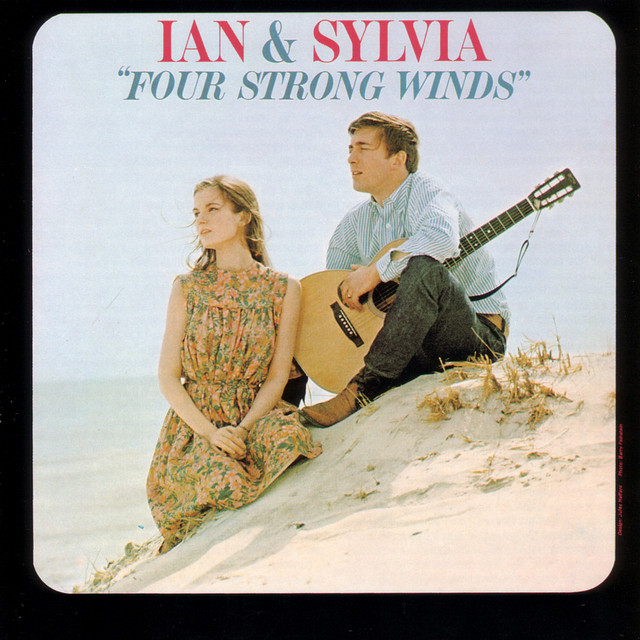


.jpg)


