I've been going back into the music of the 90s recently. I rarely do so, since this music reminds me of the hopeful time in my youth when I felt like my generation was going to make a difference and that the world could be changed for the better. There was plenty of bad stuff out there, but the fall of the Berlin Wall and the end of Reagan-Bush rule seemed to signal a new era unencumbered by the ideologies of the past. The rise of the Gingrich right, Clinton's triangulation politics, and the way a growing economy made inequality worse changed my attitude by the end of the decade.
But in the early summer of 1994 I had just graduated from high school, anxious to escape my hometown after many years of feeling out of place and being reminded of that constantly by my peers. Those months coincided with what was probably the high point of "alternative rock" as a mainstream phenomenon. I could put on the radio and hear the music I had spent years staying up late on Sunday night to see on 120 Minutes. That in itself seemed like a minor miracle.
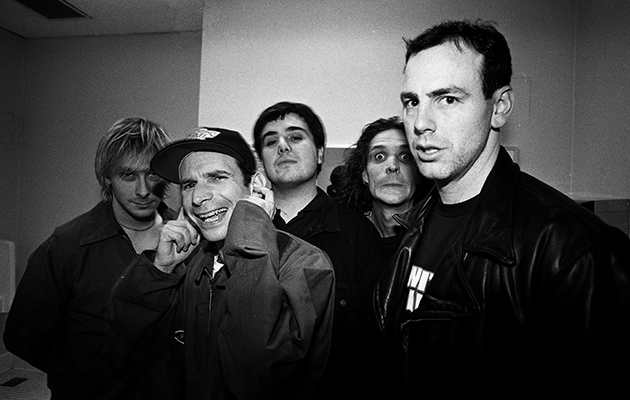
I had a soft spot for Live because they came from York, Pennsylvania, a town not unlike my hometown in Nebraska. They seemed to have retained a kind of small town earnestness. Then as now I could never get with the irony-drenched detached pose affected by the urban hipster crowd. I see it as a sign of weakness from people who are too afraid of their own emotions to experience them. One of my fatal flaws in this cynical society is that I just care too damn much.
"Selling the Drama" is one of the most earnest Live songs, a seeming generational anthem of resistance against the manipulation of authorities. I did not try to understand the particulars back in '94, I could just feel the rebellion in the chorus "We won't be raped/ we won't be scarred like that." The song drives hard, and the beat, to quote the kids, really slaps. Live's musicianship comes on strong in a song that's not the usual grunge by numbers that dominated the airwaves then.
I seemed to hear this song every day as I drove my car to work the evening shift at the rubber parts factory that summer. It never failed to steel me for a few hours of mind-numbing labor in a boiling hot room drenched in carbon black and layered with Stygian chemical smells. (The pay and my coworkers were good, though.) When I hear this song I am immediately brought back to those weeks, hopeful for the future but aware of how much hard work I had ahead of me before going to college at the end of the summer.
It's not cool to like Live nowadays, but honestly, fuck being cool. Being cool is exhausting, and for anyone over the age of 40, it's pretty damn pathetic, too. I've willed, I've walked, I've been there before.
On the latest episode of my podcast I dug into what I like to call the "feel bad" music of the 90s. Instead of spotlighting an album, I decided to talk about a bunch of songs from a playlist I made of these songs. For some reason in the 90s, a time of relative peace and prosperity, we were all in the mood to be sad. I start with "Adia" by Sarah McLachlan, a song I remember bringing me to the verge of tears as I heard it driving around the thoroughly ugly streets of suburban Omaha. I finish the podcast with a rave for Altin Gün, a Dutch-Turkish psych/prog band that I can't stop listening to these days.
I've been going back to the music of the 90s recently. Some of it's been what I call "feel bad" music that owned the "adult alternative" format late in the decade. Whenever I hear "Adia" by Sarah McLachlan I am instantly transported to driving around the Omaha suburbs in the summer of 1998 feeling glum, an emotion the Omaha suburbs are good at prompting.
To get out of my funk I've also been spinning novelty songs of the time. My favorite of that now dead genre is "Camel Walk" by Southern Culture on the Skids. It is amazing to me that something this weird ever got played on the radio, such is the magic of that brief moment in the early to mid 90s when strange sounds were allowed on the airwaves. "Camel Walk" came out in 1995, and by 1996 the winds were already changing and soon Limp Bizkit would come like a plague upon the land.
It has a retro sound, garage punk combined with surf reverb and a beat straight out of a 1960s B-movie set in the Sahara, all deep country fried. It's deeply strange. The singer starts by asking his lady love if she'll eat a "snack cracker" in her "special outfit," including her "pointy boots." Kinky! The whole song is the sensibility of Joe Bob Briggs' MonsterVision on TNT put into musical form, and considering that I loved old trash entertainment like that, I was well-primed for "Camel Walk."
While the band has this sort of psychedelic hick persona, I've always thought it to be genuine, rather than a mere put-on. Growing up in the country myself, one of the few cheap pleasures to be had was junk food, especially Little Debbie cakes. If there was anyone who could turn that into a fetish, it'd be a fellow hayseed.
So what happened to novelty songs? They've been a big part of popular music, from "Disco Duck" to "They're Coming To Take Me Away." When I first heard "Old Town Road" I thought it was a novelty song, but the audience seems to be taking it straight. The range of what constitutes pop music is narrower than it's ever been in my life. And hey, some of it is pretty good, but I really want it to be inscrutably silly every now and then.
I find it very hard to listen to indie rock from the 90s these days. This isn't because I think the music is bad, rather because of its associations. That music was "my music" in my youth, the music of my generation and music obscure enough that it made me feel like part of something. I saw Pavement at a club show in 1997 and the vibe in the room was like everyone there should be my best friend.
Back then I thought the world could be heading in a better direction, and that my generation would be a part of it. The following decades quickly abused me of those naive thoughts. I recently read a political history of the USA since 1974, and once the book got to 2000 the knots started forming in my stomach. Each event felt like a punch to the gut. The stolen election of 2000, the 9/11 attacks, the invasion of Iraq, George Bush using homophobia to get reelected, Hurricane Katrina, economic collapse in 2008, the rise of the Tea Party, Donald Trump. In the 90s the bad things were minor, like the president getting a beej followed by an inept and opportunistic push for impeachment.
Listening to 90s indie rock brings me back to my naivete and a time that wasn't great by any means but that beats what we've got now. I now totally understand the nostalgia some in Europe had after 1914 for the "belle epoque," despite its many problems.
Luckily for me, there's some great 90s indie rock I discovered after 2000, and thus can listen to without the poison of nostalgia. One artist is Mark Lanegan, who I knew at the time mostly as the lead singer of The Screaming Trees, a minor Seattle grunge band who had a well-deserved hit with "I Nearly Lost You."
Sometime circa 2007 in the midst of a raging Michigan winter I turned to folk music for solace, and picked up Ballad of the Broken Seas, the first duet album Lanegan did with Isobel Campbell, former member of Belle and Sebastian. I loved it, and through it discovered Lanegan's solo work from the 1990s.
On these songs Lanegan's voice is in a lower register than with the Trees, which suits him better. They are mostly acoustic, and reminiscent of the great spooky sound Nirvana got on their Unplugged show, a sound that still haunts me a quarter century later. If you want a fine example that will have you asking for more, listen to "Carnival" from the stellar 1994 album Whiskey for the Holy Ghost. The violin is scratchy and eerie, and Lanegan's voice a mix of bourbon and bluster. It sounds like something that gets played at open mic night at the bar in Hades.
I've never bothered to analyze the lyrics, since the mood is so evocative. This is not the ironic detachment of a lot of 1990s indie rock, but something dredged up from the depths of the soul. In the past eighteen years I can't remember the number of nights I've sat up wondering if things will ever stop getting worse. Some music helps distract me from these emotions, but Mark Lanegan's stuff is perfect when I really want to lean into the skid.
I have been thinking a lot about 90s popular culture this week, and the few artifacts that showed an understanding of the way our society was headed. Back in 1994 the whole "pop punk" broke huge at the hands of Green Day and The Offspring. The latter band's album became the biggest selling album put out by an indie label in America. That label was Epitaph, founded by Bad Religion's Brett Gurewitz.
Bad Religion, birthed in the early 80s hardcore scene, even managed to get their videos on MTV and songs played on the new "alternative" radio format. While Green Day was expertly mining teen angst, Bad Religion was older and far more literate and political. Their Stranger Than Fiction album had hooks galore and came out in the only three year window in pop music history where an indie punk band could hit the mainstream.
On the surface, "21st Century Digital Boy" describes a typical suburban scene of a middle class boy "with lots of toys" seduced by consumerism and incapable of dealing with the outside world. Hearing it now, I see the first inklings of a new trend. If the character in this song were young today he'd be in GamerGate and trolling people for the lulz and egging on mass shooters on 4chan. The lost affluent suburban nerdy white boys of the 90s have become politicized these days, often drawn to the alt-right and "incel" misogyny. (I know most aren't but this nexus is pretty clear.)
Some days I think about how things would have been different for me if I grew up now rather than then. I shook off the "woe is me" bullshit, but it was easier then without social media. Now the lost 21st century digital boys are empowered in their hatred.
Because of an episode on one of my favorite music podcasts, I found myself revisiting 90s Britpop this week for the first time in awhile. From about 1995 to 1998 it was the genre of music I listened to the most. By the mid-90s the grunge explosion in America had devolved into corporate radio stations playing hour after hour of the likes of 311, Bush, and Silverchair. While I liked some of the more underground American bands of the time like Pavement, I found that whole scene to be exclusionary and too hip for me to fit in. For that reason even though I was going to college in Omaha at the time I totally missed out on the beginning of a great music scene. I was still a rural dork who wore sweatshirts and baggy light wash jeans.
Instead I gravitated to Britpop, something that only got more powerful after a trip to Ireland for a college debate tournament (told you I was a dork.) I heard the music in all of the pubs, and I picked up a bunch of British music mags. It was here that I learned about groups like Pulp and a pre-"Bittersweet Symphony" Verve. That same year Trainspotting came out and only cemented my obsession with the British Isles. (I'll admit, it's still one of my favorite movies.) I had also been primed for this by having been a huge Smiths fan in high school.
While Britpop's sound owed a lot to Johnny Marr's guitar playing, the songs were usually much more upbeat than what Morrissey and co. had put out. It's easy to understand how Britpop managed to cross over from the margins to the Top of the Pops. It melded catchy hooks with the indie sensibility, and so could appeal to serious rock fans as well as the kind of run of the mill people who care little about music but make the hits once their toes start tapping. However, apart from Oasis none of these groups had hits in America, despite the fact that Blur was a million times cooler than the godawful likes of Seven Mary Three and Toadies.
While some of the Britpop bands were at least known widely among American alternative rock fans, such as Radiohead, Blur, The Verve, Elastica, Pulp, etc., some are almost forgotten. One of these is Sleeper, whom I discovered with the free tape that came with the copy of Q magazine I bought in the Manchester airport on my way home from Ireland. The tape collected a bunch of live TV performances from various groups (including Oasis), but "Inbetweener" by Sleeper was among my favorites (along with a duet on "Waterloo Sunset" with Ray Davies and Damon Albarn.)
It's a tight, bouncy song with a bit of social commentary about bourgeois affectations. Songs about social class tensions are catnip to UK audiences (like Pulp's "Common People"), but that kind of thing is poison in America, where we pretend social class doesn't exist. None of Sleeper's albums are classics, but now that we live in the streaming, post-iTunes world where the single is king once again, their standout songs should be netting Sleeper some recognition. (Check out "Statuesque" and "Nice Guy Eddie" as well.) It's also kind of funny today in the midst of the Brexit fiasco to remember a time when such a phenomenon as "Cool Britannia" was a thing. Time's passage is cruel indeed.
[Editor's Note: I haven't done one of these posts in a bit, and I thought it was about time.]
1991 was a pretty amazing year for music, a year when new genres and approaches were coming into being that really swept the 1980s away. Nirvana's Nevermind sent hair metal to the dustbin of history a few months after REM's Out of Time brought alternative rock to the top of the charts. Guns N Roses' Use Your Illusion albums and U2's Achtung Baby saw big 80s bands totally reimagining their sounds in fascinating ways. Metallica brought hardcore metal into the mainstream with their eponymous album. It was an amazingly fertile period for hip-hop as well. De La Soul put out their wonderful second album and A Tribe Called Quest released The Low End Theory. Of all that great music that year, Spin magazine chose Teenage Fanclub's Bandwagonesque as their album of the year, and I heartily concurred.
This is one of those albums I keep going back to over and over again and just never get tired of. In my world it's in the exalted territory of Abbey Road or Who's Next, but today it is mostly forgotten. This was a paradox that puzzled me at the time. The songs on this album were so damn catchy and beautiful. Why hadn't the world listened? The only other band that makes me think this way is Big Star, who also made perfect pop-rock music that is mostly listened to by cultists. As a 16 year old first hearing it I was made to realize that what's truly great and what the public likes rarely intersect.
Bandwagonesque starts with "The Concept," melding grungy guitars, strings, strong hooks, and wistful lyrics. As a young lad I didn't understand that the line "She's gonna get some records by the Status Quo" that it was a reference to the band, rather than a concept. At the time I thought that was a killer turn of phrase for someone just consuming middle of the road music. The song, misunderstood lyrics or not, is a kind of manifesto for the album. All of the dominant elements are present here.
In true slacker fashion, of course, track two is a jokey noise exercise called "Satan," meant to mock the then current moral panics around devil worship and hard rock. It is an important reminder that as poppy as this album gets, there's a noisy basement punk anarchy here too. Gears then perversely switch into "December," a gorgeous folk-rock testament of love. As a lovelorn 16 year old ugly duckling this song meant a lot to me. I was aching to have a connection with someone of the opposite sex. The lines "She don't even care/ But I would die for her love" were on my lips while I thought about my crush. (I came dangerously close to being a creep back then.)
As if the pure pop rush couldn't get any more intense comes "What You Do To Me," which would have been a number one hit in a just universe. It's the most Big Star song not written by Big Star. "I Don't Know" follows, with a little taste of Madchester rhythm and more emphasis on the rock over the pop. It's still catchy as hell, though. At this point in the album the hooks pile on top of hooks. When I listened to it as a teenager I would just kind of zone out and feel a little hit of bliss. How many albums can do that?
"Star Sign" breaks things up a little bit with a long, hazy musical introduction. This is a good time to mention that Gumball leader Don Fleming gave this album an impeccable production that managed to be both grungy and clear without being slick. "Star Sign" was the first song I head from this album, via MTV's 120 Minutes. That's what motivated me to actually go out and buy the album, and it ended up being a college rock hit stateside. On a bus trip to a band competition I tried playing it to another kid to get him interested and I got mocked. I very likely may have been the only student in my rural Nebraska high school who was a teenage fan of Teenage Fanclub.
"Star Sign" combines the hooks with a faster tempo, but "Metal Baby" slows it down with a funny song about an indie dude falling in love with a heavy metal chick. The whole album projects the slacker vibe of early 1990s indie rock pretty powerfully, and no song more than this one. I find the tone comforting now that I am a sad, defeated middle-aged man.
"Pet Rock" switches things up to more confident riffing, similar to "I Don't Know." That doesn't stop the feeling of resignation, as it starts with "I'll never pass this way again." There's also that bouncy, Madchester undertone that lets us know that we are definitely in 1991. "Sidewinder" switches back again to romantic yearning territory, another song that made my heart ache for a classmate I was desperately in love with. What's funny is that when I was a senior she showed some signs of interest, but I was too wrapped up in my whole lonely Young Werther schtick that I didn't actually act on it. Nowadays this song makes me laugh at myself pretty hard, but also appreciate the fuzzy guitars.
It's followed by the brilliantly titled "Alcoholiday." The romance of the previous songs drops away in favor of an absolutely brilliant breakup song. "There are things I want to do/ But I don't know if they will be with you" pretty much nails that pre-breakup thought process. Little lovelorn 16 year old me didn't quite understand that yet.
The last two songs on the album break from the formula established from the start with "The Concept." "Guiding Star" is mostly strings and harpsichord, like a long lost pop track from the 1960s, Pet Sounds with a dash of grunge. After that things close out with an instrumental, "Is This Music." I find that move kind of brilliant. I cannot remember how many times I sat in my room, basking in the afterglow of a near perfect album, the wordless final song's bright guitars capping off forty minutes of pure happiness. In the awful hormonal confusion of teendom Bandwagonesque was a life raft on more than one occasion.
Listening to it now in middle age it takes me back to what my mind was like back then more than anything else. The songs have not be redefined in my head by radio play or showing up in commercials. This album will always be that bit of audio medicine that I needed, and for me, even though it's now 28 years old, it's as current as if it came out yesterday.
I was born in 1975, which means I am in one of the smallest age cohorts in postwar America. There aren't many people around my age, and our adolescence happened to coincide with the first Bush administration. Our political consciousness was formed at the end of the 80s and beginning of the 90s, a much more tumultuous time than the years that came before and after.
It was the absolute high point of the war on drugs, something pushed hard by the Bush administration. The streets of LA burned in 1992 after police officers were acquitted in the Rodney King case. The gang wars related to the drug trade were never bloodier, and the murder rate shot up in this era. The Cold War ended, and the Soviet Union ceased to exist. With the Gulf War, the United States went to full-fledged war for the first time since Vietnam. Soon after, a nasty recession hit.
Ironically, the Gulf War was the event that capped off my political migration from being a nominal Republican due to my parents' affiliation to adopting a much more progressive political stance. Two other Bush-era events put me on this road: the AIDS crisis and the Central Park Five. They both showed the indifference of the government to the mass suffering of marginalized people, as well as the unfairness of the criminal justice system. I had initially been enthusiastic for the Gulf War, but when it was over I wondered whether such horrible loss of life was necessary. The insane jingoism sparked by the war also frightened me. I knew my country had all kinds of problems, and people were willing to forget about them and wave the maniacally flag because of a victory over a third rate power.
The Bush41 years were also very fraught when it came to race, and forced me, as a white teenager living in a very white rural small town, to actually see the racial inequality I wasn't being taught about in school or able to observe around me. There was the War on Drugs, Central Park Five, and Rodney King beating. Above all, there was the infamous Willie Horton ad. By the end of the Bush41 years I was reading Malcolm X's autobiography in study hall and seeing the country of my birth in a new light.
This was a far cry from where I was in 1988, when I was old enough to observe politics but too untutored to understand what I was seeing. I remember George Bush attacking Michael Dukakis for being a liberal, saying the word like a curse. Saturday Night Live did a funny parody of it, imagining a liberal who like Richard Kimble in The Fugitive must keep running from the authorities. I honestly didn't know what the word even meant. I asked an adult what was so bad about being a liberal and the response was basically that liberals were terrible people who believed in taxes and were against religion.
Of course, liberals ended up having the last laugh when Bush lost to Bill Clinton in the 1992 election. The Bush years coincided with what I like the call the Reagan Dusk. The social problems and inequalities exacerbated by neoliberal policies were becoming more stark by 1989. As the Cold War ended there was a feeling that the United States needed to focus more on its own issues. Bush was not equipped to handle the backlash against the world created by his more amiable predecessor. Back in those pre-internet days of 1992 I bought a book called Bushisms that quoted his most maladroit attempts at rhetoric. As far as I could tell, he was a clumsy representative of a failed establishment.
In fact, Bush provided an example to me of how disconnected America's political leaders were from the lived reality of most people. This came through clearest in an famous moment where Bush was captivated by a supermarket checkout scanner. That one incident seemed to encapsulate so much. There was also the time he talked glibly with the press as the American dead from his attack on Panama were coming home to Dover Air Force Base. Perhaps most flagrantly, Bush seemed incapable of empathizing with people who were being hit hard by the recession in the second half of his term. It was slowly dawning on me that the people who ran everything couldn't care less about the people they ruled over.
Popular music certainly reflected the disenchantment so many had with their supposed social betters. Political rap music flourished in that era, from Public Enemy to Ice Cube. "Smells Like Teen Spirit" burst on the scene in late '91 and banished hair metal decadence to the dustbin of history. At the time I really felt like some real change was about to happen. "Change" was the theme of Bill Clinton's campaign, which I fell for hard. Little did I know how soon he would disappoint me.
The other day I was listening to some of my favorite music from the era, a time when I felt very optimistic about the future. The Cold War had ended without a bloodbath. The Reagan-Bush regime had been rejected. My generation, ready for a better world, was coming of age. My funeral this week is for that feeling, which I sadly found to be naive and short-lived.
I enjoyed doing alternative rock songs for my last top ten, so here it goes again. In November of 1993 I was a senior in high school. After years of being a mocked dork I was starting to figure things out. I had some fake Doc Martens boots from Payless Shoes and lots of flannel. A girl I had a crush on always told me she loved the boots. Was I too chickenshit to respond to this now in hindsight obvious expression of interest? Yes, yes I was. Now on with the countdown!
10. Smashing Pumpkins, "Today"
This was by far the poppiest, catchiest tune that the Pumpkins had managed to craft up to this point. This vaguely proggy grunge band had finally come up with something made for the charts. When I first brought Siamese Dream home from the local Musicland it stuck out to me as far less ambitious musically that the other songs on the album. Billy Corgan's guitar playing was far more reminiscent of classic rock than Cobain's, but the feebleness of his voice helped mask the throwback nature of the music.
9. The Breeders, "Cannonball"
A cassette tape of Last Splash lived in my car in the winter of 1993-1994. It's such a great album, bridging the indie-mainstream divide with some catchy songs and far out sounds. "Cannonball" had a catchy bass riff but was still pretty damn weird. That the video got major MTV airplay was a minor miracle. Back in those days I thought a renaissance of rock music was upon the land, unaware of the Bush-Silverchair-Creed onslaught about to happen.
8. Belly, "Gepetto"
"Feed The Tree" was one of the truly great alternative rock songs of the era, and "Gepetto" was the follow up. (Ironically, Tanya Donnelly had once been in The Breeders.) This song is not as good (few songs are), but its sound is so perfectly, ineffably 1993. I hear the bouncy rhythm and folky guitar with the languid vocals over it and a little tear comes to my eye. Back in 1993 I thought things were changing for the better in the world. The Reagan-Bush years were over, much more interesting music was hitting the mainstream, and the winds of change seemed to be blowing. It's hard for me to say when that feeling of optimism ended for me, but the Republican sweep of the election the next year was probably it.
7. Gin Blossoms, "Found Out About You"
The Gin Blossoms were one of those weird first wave of alternative bands. They came out of a local scene, and were not derivative of alternarock trends like the coming Bushes and Creeds. They sound much more influenced by REM. Of their hits, this minor key song with ringing guitars (both catnip to my ears) is my favorite. The band's story also contains a tragedy worthy of a downbeat 90s alternative song. Original guitarist and songwriter Doug Hopkins penned this song, along with other Gin Blossoms hits. He was kicked out of the band before they hit it big, and signed over his royalties for a pittance. He killed himself about a month after this countdown. Life is cruel.
6. Cracker, "Low"
I loved Cracker's first album, which is a sassy combination of alternative rock and rootsy, country-inflected songs. Bandleader Dave Lowery had pioneered this sound with Camper Van Beethoven, but now in the 1990s it was a sound that could actually hit the airwaves. This song, from their second album, had those great Southwestern guitars, but with a heavy dose of the kind of doom we couldn't get enough of in '93. Cracker was also one of the first acts to have a radio song with a hidden CD trick (remember those?) with "Eurotrash Girl."
5. James, "Laid"
James first came on my radar a year before this, when I heard "Born of Frustration," which sounded pretty unique. This song is another unlikely hit, full of pretty unambiguous sexual references. The band also wore dresses in the video and on the album cover, the kind of cheeky gender-bending common in the alternative rock world before the testosteronal Fred Durst types came in and ruined it. For a teenage boy who was failed at the traditional markers of masculinity of the Nebraska town he lived in, it seemed pretty liberating.
4. The Cranberries, "Linger"
Oh boy. You might find this song cheesy, but it usually makes me cry. It's such a beautiful confection, and the dearly departed Dolores O'Riordan's voice never sounded better. The chorus and her background voices on it is one of the most truly sublime moments in pop music. It's not just the song, either. When I was a senior in high school I would either go to Wendy's for lunch (yeah, I know) or go home and eat. I'd have a lunch of leftovers while watching MTV, and that year I kept seeing the video for this song. At this point I could taste the freedom and possibility of college that lay ahead for me, and "Linger" seemed to hit all of my desperately yearning emotions. I hear it today and I am transformed into that emotional teenager, so full of longing and naivete. RIP Dolores
3. Nirvana, "Heart Shaped Box"
In Utero is my favorite Nirvana album, the band firing on all cylinders with a gritty and more suitable production behind them than on their breakthrough. "Heart Shaped Box" is great for all kinds of reasons, but perhaps most for being a knock against Boomers and their "priceless advice." It's a generational anthem in the form of a dirge.
I must admit, at this point I thought I was too cool for Pearl Jam. Like a lot of dumb teenagers into indie music, I sneered at anything I considered "corporate." I'd actually bought their first album before it went big, but turned my back once the cool kids who wrote for the music magazines told me I should. Today I can see that "Daughter" is, as the kids say these days, a banger. In one of those weird happenings back when singles were things pressed on wax and sent to radio stations, the live B-side of "Yellow Ledbetter" ended up getting played all over alternative radio. They totally lift the guitar sound from Hendrix's "Little Wing," but you should always steal from the best.
The Lemonheads don't have the recognition of the other bands on this chart, but this was their big shining moment. They were part of the indie scene playing punk way back in the 1980s, but in the 90s took on a folkier, more pleasant sound. It was tailor made for the alternative explosion of the early to mid 1990s. Like "Gepetto" the sound of this song is pure 1993, those guitars just jangling all over the place. The mark of Big Star is all over this, as it was of so much music circa 1993-1994. Nostalgia is a disease, and this kind of music gives me the sickness like nothing else.
In the past I have only done top ten lists of Hot 100 singles, but I thought I'd do the alternative charts, since that's the music that mattered most to me in the 1990s. That and the fact that this music is such a relic of that time. In October of 1994 I was in my first semester of college, happy to be in a place where people actually liked the same music I did. And now, on with the countdown!
10. Veruca Salt, "Seether"
This song was still climbing the charts in October of 1994, before it became a big crossover hit. A simple, classic, hard hitting rocker. This song showed how many alternative bands were grounded in a punk aesthetic but had grown up listening to AC/DC. Veruca Salt got dissed for the hard rock-iness of their sound (which they fully embraced on their second album), but this one still holds up for sure.
9. Toad the Wet Sprocket, "Something's Always Wrong"
Here's a band that was definitely NOT grounded in the punk aesthetic. Like Counting Crows they combined a more heartland/roots rock vibe with the mopiness that dominated the 90s. As a melancholic person that combo suited me fine. There's a catchy folk guitar riff but this song does not have hooks as sharp as the band's bigger hits.
8. Live, "I Alone"
It is not cool to like Live anymore, but I will always have a soft spot for them. They like me came from a small rural town and like me did not give into big city cynicism. Throwing Copper had some great hard-edged songs with emotional heft, and this one fits the bill. Sure there's the usual "loud-quiet-loud" formula but it's executed better than most. Bonus points for a throwback video where the band vamps and makes faces at the camera.
7. Liz Phair, "Supernova"
Yes yes yes. Great alternarock tune with Liz at her absolute sultriest. It was kind of amazing to hear a song this blatantly carnal on the local alt-rock station. Alternative rock tended to be pretty sexless compared to traditional rock music, but Phair was a pathbreaking exception. I had such a massive crush on her, musically and otherwise. When I moved to Chicago in the late 90s I got to see her live and it was absolutely fantastic.
6. Offspring, "Self Esteem"
Well this is a bit of a contrast with its male self-pitying. The Offspring were such an unlikely success, a California punk band that had a massive chart busting album on an independent label (Epitaph) started by members of Bad Religion. In this song you can begin to hear the seeds of the future, when what was known as "alternative" became the same old macho butt rock with more distorted guitars and fewer solos.
5. Dinosaur Jr, "Feel The Pain"
No song takes me back to hanging out in my dorm room my freshman year of high school like this one. In a lot of ways 1994 was the absolute peak of alternative rock. Dinosaur Jr, an indie scene stalwart that had existed well below the surface for years all of sudden were getting significant MTV airplay. This song has some of my favorite J. Mascis guitar pyrotechnics, but what's more amazing is that a song with his broken voice on it got airplay. That was the magic of the year of our Lord 1994.
4. Nirvana, "About A Girl"
It is extremely difficult for me to hear Nirvana's Unplugged in New York without getting super emotional. Before the album got an official release my college debate coach had taped the episode off of TV and we played it on our long college debate road trips. Kurt Cobain's death had shaken me and playing this album on those dark nights crossing the prairie was like sitting shiva. This song came from Nirvana's pre-fame first album, and sounds even better acoustically. It's the first song of the set, and when those acoustic guitars churn it sets off something very deep inside of me. I once even started an aborted novel with that particular moment. The novel didn't go anywhere, and neither has the feeling this song gives me.
3. Stone Temple Pilots, "Interstate Love Song"
In the autumn of 1994 I professed to hate Stone Temple Pilots. In my new life as a college student I wanted everyone to know how deep and sophisticated and BETTER my musical tastes were. Having read too many rock critics I sneered at this band as a bunch of Johnny-come-latelys. And yes, they were not original but in time and with wisdom I could at least acknowledge that they were a decent rock band with a handful of bangin' singles. This is one of them. ("Big Bang Baby" is actually transcendent.)
2. The Cranberries, "Zombie"
With over twenty years of peace it is easy to forget how awful and bloody the Troubles were for Northern Ireland. The Cranberries, who had made their name with beautiful, ethereal singles, got hard and loud on this topical song. The sound is dated but the message is not. As Fela Kuti knew, "zombie" is a good metaphor for a person who commits violence unthinkingly. This is the kind of angry cry against hate we need more of today.
1. REM, "What's the Frequency Kenneth?"
I have commented before how REM's Monster is the 90s alternative rock album you'll always find multiple used copies of at record stores. It was a rocking, feedback-laden follow up to their two folky smashes, Out of Time and Automatic for the People. A lot of people bought on the strength of hits like this, then tossed it aside. I am a Monster apologist. A couple of songs near the end are weak, but there are some amazing tunes all over that album, and a drone-y, psychedelic sound that's pretty unique. This song is certainly on the weird side, with the title being a reference to a man attacking Dan Rather in the street and most of the lyrics being mumbled by Stipe in ways we hadn't heard since Fables of the Reconstruction. On this song in particular it was nice to hear Peter Buck cut loose on the guitar after years of mandolin-ing.
Advocating for a moon base was Newt at his Newtiest
There's a recent profile of Newt Gingrich in the Atlantic that's been making the rounds, and it has been giving me uncomfortable flashbacks to the 1990s. He led the Republican stampede into Congress in 1994, the first use of a partisan government shutdown, and the impeachment crusade against Bill Clinton. Beyond that (as was even evident in the 1990s), he was responsible for a new kind of Congressional politics. Ever since the Republicans have been practicing a kind of right wing Bolshevism, treating power as the only moral concern. Trump has merely dropped the last pretenses of decorum and civility. He is a creature who arose from the muck of this fetid swamp, not an alien to the Republican party.
Gingrich is a fatuous blowhard who likes to talk like what a dumb person thinks a smart person sounds like. Even so, he proved himself to be an effective tactician. Back in 1994 one thing he perfected was the use of political narratives. His GOPAC campaign was all about attacking Democrats as immoral, corrupt, and wasteful with coordinated messages. He also generated the so-called "Contract With America," which gave every GOP candidate, no matter how uninspired, a narrative and platform to run with. Republicans, already whipped into a frenzy with their dislike of first-term president Bill Clinton, came out in droves to the polls and took both houses of Congress for Republicans for the first time in 40 years.
Flash forward to 2018.
Democrats are also running against an unpopular first term president whom their base despises. It's fertile soil for a landslide, but that's hardly a guarantee. The issue is not just an unfavorable Senate map and gerrymandering in House. The Democrats have elected not to generate a national narrative. They have taken a "let a thousand flowers bloom" approach, perhaps hoping not to alienate voters in red areas with a progressive national message. The issue is, I have no clue how the Democrats will govern if they win Congress. Do you?
That is a huge problem. How can you claim to be an alternative to the status quo when you aren't telling people what that alternative even is? Democrats need to take a page from Newt Gingrich and establish a broader narrative. They need to paint conservatives as antithetical to the will of the people, and to make them have to come out and play defense against that narrative. Right now all the talk is about Trump, and that's not good enough.
There's three weeks left until the election, and Mitch McConnell provided the perfect ammunition today. He essentially said that his biggest regret as a politician was that he has failed to cut back on Social Security, Medicaid, and Medicare, and that cuts in those programs would be necessary to cut the deficit. The narrative here is pretty simple: Democrats want a country where people's basic needs are taken care of, and Republicans want to take away your health care and retirement so that they can give even more money to rich people through tax cuts. Please Democrats. Say it. Again and again and again and again. Say it until you are blue in the face. Say it until even our wretched excuse for a fourth estate forces Republicans to have to answer to it. The stakes are too high for politics as usual, and those politics have been a massive failure for Democrats anyway.
While driving home last week from our trip to Virginia I decided to play DJ on my Spotify while in the passenger seat. I eventually settled in to playing downer hit songs from the 90s. Before I had tried to keep the mood light with some cheesy 80s tunes my wife and I could sing along to, and on an overcast day in Delaware, the Purgatory of states, my wife said she wanted the 90s instead. So I put on "Crucify" by Tori Amos and we were off. We talked a lot about how so many hit songs of that era dealt with minor key emotions, whereas the pop of the 80s and the pop of the 21st century has been all about partying and Reagan-era self-affirmation. Why were we so depressed in the 90s? That period of time looks like a golden age compared to the shit we are mired in now.
Inspired by that DJing I made a playlist, and here are some highlights for your weekend consumption.
Paula Cole, "Where Have All The Cowboys Gone"
Cole would have a bigger hit with "I Don't Want To Wait," but that song hewed a bit too close to the adult contemporary formula. This one has a cool backbeat and some dark, reverby guitar. It's meant to be a kind of critique of traditional gender roles, although the lyrics are probably a bit too heavy handed. That said, the lyrics mean a lot less than the mood, which is damn near perfect. The kind of inner chill I get from a Smiths song on a February day is present in this song.
Sarah McLachlan, "Adia"
Sarah McLachlan was the 90s answer to Carole King (that is a huge compliment coming from me.) This lament of lost love embodies the draggy feeling of heartbreak so perfectly that I would find myself about to break down and cry behind the wheel of my Mazda Protege while driving through the Omaha suburbs in the summer of '98 when this was all over the radio. And I didn't even need a montage of abused animals behind McLachlan's music to get me to that place.
REM, "E-Bow The Letter"
In 1996 REM put out New Adventures in HiFi, their last with Bill Berry and their last truly great record. They were big enough at the time that they could put out a song with a John Cale-worthy drone and still get airplay out of it. The sound is one of dread personified, "Aluminum Tastes Like Fear." Patti Smith coming in at the end is a wonderful surprise.
Counting Crows, "A Long December"
Counting Crows are one of those bands who will be destined to be a metonym for a decade. When folks want to evoke the 70s all they have to say is "Foghat" or "Humble Pie." When they want to refer to the 90s, they just have to say "Counting Crows." Their first record was solid front to back, a kind of ersatz The Band filtered through Prozac. The second one was spottier, but "Long December" was a keeper. It actually came out in a December when I was working at the rubber parts factory over Christmas break from college to get some extra scratch. When it came on the radio in the injection press room where I toiled over the machines, it meant far more to me than it should have.
Eels, "Novocaine For The Soul"
I get emotional thinking that once upon a time songs like this were on the radio. Or at least they were in Omaha in 1996, where there was a vibrant music scene multiple quality radio stations. It still sounds great and fresh today. The lyrics, of course, evoke depression pretty accurately. This song came out when I was in a bit of a down time (my friends later said they almost did an intervention), and it kind of helped me steer into the skid, so to speak.
February is the worst month of the year. Winter refuses to go away. With Super Bowl over and March Madness and the baseball season yet to start, sports options are really lame on nights when I have nothing better to do than watch television. Hollywood dumps its shitty movies in the theater. Awards shows and their fatuous celebrity worship are everywhere.
Every year at this time I never fail to get into the dumps. In these times I have lean especially hard on music for help. Back in grad school I even made a mix tape (one of my last) called "Late Winter Blues" that I kept in my car tape deck through the whole month of February. One of those songs, one that I always return to, is Yo La Tengo's "From A Motel 6." While this came out during their 1990s heyday, I did not discover them until I met my friend Kevin back in the year 2000, when we learned we were both way into indie rock. The Painful album was one of the first CDs anyone ever burned for me. The year we spent rooming together was a musical education, one I am still grateful for.
I like Yo La Tengo's 90s period in winter because of the droning, Velvet Underground-derived guitar. It's the sound of hard, cold winter sunlight reflecting off a snowbank whizzing by my window while I drive on slushy streets. I have no idea what the song's about, I just know that the title is a reference to Bob Dylan's "From A Buick 6," which also has a strong riff behind it. When I listen to this, like a lot of 90s indie guitar rock, I let my mind wander in the swirls of the feedback-drenched guitars, losing myself for a few minutes. It's a welcome deliverance from February.
(Is this a listicle? Well, I was writing listicles before content aggregators were, so sue me.)
Last night I started watching the new Oasis documentary and I was floored by how old everything looked. It was kinda depressing, since Britpop was my favorite music in college. I had been jamming to Suede my senior year of high school, and then picked up Definitely Maybe, Parklife, and Elastica's debut album in my first year of college (1994-1995). American "alternative" music was looking pretty bleak after the death of Kurt Cobain, and the likes of Bush and Silverchair were rushing to cash in. The Britpop bands were fun, catchy, and more sophisticated. It was a short-lived period, roughly 1994 to 1997, which also coincided with my college years. Anyway, here are ten albums that I think managed to stand the test of time.
10. Elastica, Elastica
Elastica were a one album wonder, but it's a great album. Lead singer Justine Frischmann brought a punky brashness and the band also sprinkled in elements of early New Wave. Sex was front and center in a frank and real way. Songs like "Stutter" talked about a boyfriend's impotence, "Vaseline" about well, you know. Like rock in general, Britpop was a male dominated field, but some woman fronted bands like Elastica, Echobelly, and Sleeper made their mark.
9. Oasis, Definitely Maybe
Oasis were the biggest band in Britain in this era on the strength of their catchy songs and don't-give-a-toss attitude. While the songs were catchy, the lyrics could be godawful. According to the new Oasis documentary, Noel Gallagher wrote the lyrics to "Supersonic" in the time it took for his bandmates to eat some Chinese takeout. I don't doubt it. The song has a great power to it, despite being slightly turgid with just dumbass lyrics. Liam Gallagher's punky John Lennon voice helps pull these songs off. Some of them, like "Cigarettes and Alcohol," make Oasis sound like the greatest bar band in the world. (That's a compliment.)
8. Suede, Suede
This 1993 record along with Blur's Modern Life Is Rubbish are the real kick off of Britpop. I saw the video for "Metal Mickey" on 120 Minutes and ran out to buy it immediately and it quickly became my soundtrack to that summer. Unlike the other groups, Suede were highly influenced by glam and engaged in gender bending and flirted with gay imagery (especially on "Drowners.") Lead singer Brett Anderson brought the androgyny and guitarist Bernard Butler just shredded in a creative way that seemed to have disappeared from the heavy riffing on alternative music. This record also has some range. "She's Not Dead" is the greatest Smiths song the Smiths never wrote. "See You In The Next Life" is a haunting ballad. It's a shame Butler left the band after this, they never recovered.
7. Pulp, His N Hers
Jarvis Cocker had been kicking around the Sheffield music scene for years before his band Pulp finally hit the big time in the mid-90s. They were not a typical Britpop band, in that their songs were not usually based on guitar riffs, and because the lyrics were perhaps the most important component. The music was reminiscent of 80s New Wave, but in an updated way that sounded fresh. Like Elastica, Pulp talked pretty frankly about sex and relationships in a way that was totally foreign to what American bands were doing at the time. The smart ones, like Pavement, tended to avoid love altogether and shroud everything in irony. There is perhaps no song about young love and sex more frighteningly real and awkward than "Babies," and that's only the tip of the iceberg on this album.
6. Blur, Parklife
This in many ways is the curtain-raising album to the whole Britpop thing. Instead of imitating the grunge blasting out of Seattle, Blur made a conscious decision to Anglicize their approach a la The Kinks. That was obvious from the packaging of the album, which featured racing dogs on the cover and the back, which was stylized like a racing form. I mean they had a song called "Bank Holiday," fer cryin' out loud! I was most struck by how they had rehabilitated the 80s in their music, from the synth touches on "London Loves" to the New Wave style of "Girls and Boys." The title song, with Quadrophenia star Phil Daniels providing Cockney narration, may well be the most British thing ever created.
5. Blur, Blur
1997's self-titled album, however, was a statement by Blur that they were not going to be confined by the strictures of Britpop. This album was clearly inspired by what was happening in the indie scene in America, especially the great blast of noise that was "Song 2." This was quite a surprise after the uber-Englishness of their previous outing. Along with Radiohead, by 1997 Blur had figured out that the old Britpop fields would no longer yield such a great musical crop, and began looking to reach out. Oasis, on the other hand, would fall flat on their collective arse with Be Here Now, a wet fart of a record.
4. Radiohead, The Bends
In this century Radiohead would become the bards of our fractured, uncertain world. Radiohead had first hit in 1993 with "Creep," which nailed the sweet spot of 90s grungy teen angst. The Bends was much more mature, Johnny Greenwood's guitar especially dynamic on songs like "My Iron Lung." "Fake Plastic Trees" foresaw the more adventurous musical direction was about to take as well as a focus on the daily uneasiness of modern existence.
3. Oasis, What's The Story Morning Glory
Yes, Oasis were a bunch of caveman blokes making straight-ahead meat and potatoes rock, but damn if they didn't make a perfect example of how good that music could be. Noel Gallagher may have lifted some rifts and melodies, but he had exquisite taste in which ones to choose. And despite all the bash and boom this album produced "Wonderwall," one of the best ballads of the 90s, and "Champagne Supernova," one of the great all time late night inebriated sing along tunes. The lyrics are perhaps even stupider than on the previous album, but the songs are so good you barely notice.
2. The Verve, Urban Hymns
The owl of Minerva flies at dusk. This is perhaps the last great Britpop record, coming in the autumn of 1997. The Verve had always been good, but much spacier and less poppy in their approach. On this album their cool sound finally gelled with some really strong songs from Richard Ashcroft, who looked like he was forged in a Britpop rockstar lab by a mad scientist. This album also happens to be the soundtrack to my life in the autumn of 1997, a very tumultuous time when I experienced love for the first time, a lot of drama within my circle of friends, and saw a couple of people very close to me go into some mental health troubles. ("The Drugs Don't Work" will always bring me to tears for this reason.) "Bittersweet Symphony" will last for ages.
1. Pulp, Different Class
Back in 1995 all the talk in the British music press was over Blur versus Oasis, and in the midst of it, Pulp beat 'em both. This is Jarvis Cocker's masterpiece. There are few love songs as genuinely affecting as "Something Changed." "Sorted Out For E's and Whizz" is a hilariously real description of a rave gone wrong. "Disco 2000" embodies the intersection of unrequited love, memory, and regret in ways that still makes my soul clench whenever I hear it. Most importantly, "Common People" summarized the working class attitude to affluent hipster poseurs perfectly, apparently predicting how common they would become in the next two decades. If this music doesn't move you then you have no heart.
The best British album from this period, Radiohead's OK Computer, is not on this list, since that album went well beyond the world of Britpop into something far less traditional and far stranger. A lot of folks who liked The Bends were flummoxed by it, but it soon became clear that Radiohead were operating on a totally different plane of existence. Straight-ahead melodic rock was nice, but this was an album that broke new ground and summed up the feelings of pre-millennial anxiety, a taste of the far less sunny decades to come.
For whatever reason, my aging brain still retains very vivid memories of the early summer of 1990, the summer between middle school and high school. That summer I started buying a lot of music, rather than just listening on the radio, and first started developing something like taste. At the same time, I was still listening to what was on the charts and watching way too much MTV. 1990 was a strange year culturally, still spiritually in the late 80s but with signs of change afoot, especially on the charts. And now, on with the countdown!
10. Sinead O'Connor "Nothing Compares 2 U"
Sinead O'Connor freaked 14 year old me out. I was a good, devout Catholic boy, so her later infamous ripping up of the pope's picture on national television scared me. Her shorn head and unconventional manner were hard to assimilate for a boy who had yet to figure his relationship with traditional gender norms. All of that made it hard to appreciate what is a real classic love ballad, one infused with a kind of raw emotion so often missing from the top 40. Whenever I hear this song used as background music in supermarkets and airports I still prick my ears up and drink it in.
9. MC Hammer "U Can't Touch This"
Another song using "U" in the title, but it couldn't be more different. I was getting into rap music at this time, but Hammer was a million miles from Public Enemy and Eric B and Rakim. I didn't care. I still remember taking my lawn mowing money from my first mow of the summer down to Musicland to buy Please Hammer Don't Hurt 'Em, which I promptly wore out over the course of the summer. I had in my walkman during my summer job detasseling corn, and I remember one day, stuck in the detasseling bus on a muddy road in a thunderstorm, me and another kid reciting the whole song vertabim, including that tough part near the end where he says a bunch of lines fast. Like it or not, this song, baggy pants and all, broke hip hop music into the malls, and the world has never been the same since.
8. New Kids On The Block "Step By Step"
The New Kids are one of those true cultural relics of a very specific time, like OK Cola and polyester bell bottoms. My little sister loved them, and I always taunted her for it. My other sister and I would mock sing "Step by step/ooh baby/Gonna get to you girlrlrlrl" and fall on the floor in gusts of laughter. This song is a bit goofy, even by New Kids standards, but is evidently the biggest hit they had. The production is certainly forward looking with more than a dose of new jack swing. The twin onset of grunge and hard-edged rap swept the New Kids into the dustbin of history, only for boy bands to appear again in the late 90s when pop regained its ascendancy.
7. Linear "Sending All My Love"
Linear too is going for the new jack swing boy band vibe here. The production is far less polished, but that's actually a little welcome. There's little minor key flourishes in here, making it a much more compelling listen a quarter century on.
6. Janet Jackson "Alright"
Janet Jackson's Rhythm Nation album sort of bridged the gap between the 80s and 90s. It's got both the big synthesized pop sound and the big hip hop beats. This song, unlike a lot of the other hits off of the album, is more about dance than it is about the melody. The Jimmy Jam and Terry Lewis production still dominates, though.
5. Roxette "It Must Have Been Love"
Okay, here's an embarrassing admission: in September of 1990 I asked for and received a copy of the Pretty Woman soundtrack for my birthday. It was packed with hits, including this one! I'd known Roxette for their slinky "The Look," so hearing this very conventional lost love ballad from them surprised me. The backing has a kind of baroque pop element to it that I have to admit I sort of like. The chorus is awful catchy, too. Dammit, I think this song just got in my head.
4. Heart "All I Wanna Do Is Make Love To You"
Heart came on the scene in the late 70s with some fantastic hard rock. I would always crank "Magic Man" and "Barracuda" when they came on the classic rock radio. In one of the more improbable mutations a band has undergone, they retooled themselves for the 80s with lots of overproduced ballads in videos draped in fog and lace. This song is not ready for the 90s. Lots of gated snares, watery guitars, and shimmering synths. It's a sign that Heart's run was about to come to an end.
3. Bell Biv Devoe "Poison"
Before the New Kids producer Maurice Starr had created New Edition. Bobby Brown broke out of the group as a big time solo artist, and the other members tried their luck, too. (Johnny Gill and Ralph Tresvant, anyone?) "Poison" is probably the best post-New Edition song of them all. The beat is absolutely irresistible, one of the most recognizable of the era. There's a cool minor-key vibe to the background vocals and the song avoids the overly bright, sugary sound that had a stranglehold on the charts in the late 80s. I bought this one on cassingle at Wal-Mart after the first time I saw the video on MTV. I still like hearing it.
2. Madonna "Vogue"
If anything, this song taught me the names of a bunch of classic Hollywood stars ("Rita Hayworth gave good face" etc.) This song is Madonna at her best: appropriating gay male subculture and mixing it with fresh dance music and a reserved cool. The gay voguing dance craze was now safe for the Willowbrook Mall. Snark aside, it might be her greatest accomplishment.
1. Wilson Phillips "Hold On"
Speaking of the mall, I think I've heard this song in malls for twenty-six years straight. This group combined children of Brian Wilson of the Beach Boys and Michelle Phillips of the Mamas and the Papas. That might sound like a flimsy idea for a group, but Carney and Wendy Wilson and Chynna Phillips made some great harmonies, a disappearing art in the pop world. The melodies almost but don't quite overcome the dated production, which is stuck in the 80s world of big, loud, and obvious. The lyrics are also part of that whole 80s self-affirmation music genre. It's a song meant to be played at corporate retreats and to introduce "inspirational" speakers.
I've had 90s Britpop on my brain a lot this week. Something somewhere gave me the impetus to listen to music that pretty much dominated my stereo from 1995 to 1998. Blur, Oasis, Pulp, and Radiohead all became big favorites of mine at the time. Of all the Britpop bands, however, I loved The Verve the most. Their music combined psychedelia with groovy rhythms and lyrical emotional reflection, and today still sounds pretty unique. "Bittersweet Symphony" and the Urban Hymns album raised their profile stateside, but I was first hooked by their 1995 album, A Northern Soul.
I bought it, in those pre-internet days, without having heard a single song. I'd been in Ireland in January of 1996 for a college debate tournament, and while there picked up a bunch of British music mags that placed it high in their year-end lists. I figured it must be pretty good, and in those days when I listened to Blur and Oasis incessantly, I figured anything the Brits liked must be good. (I bought Pulp's Different Class for the same exact reason.)
It's hard to pinpoint a song from A Northern Soul to highlight, since they're all so good and often go in wildly different directions. Going by how I'm feeling right now, I'll nominate "So It Goes." It comes after the first three songs, which are fairly direct. "So It Goes" is more loose, and it signals a switch in the album, which soon gets more groovy and jam-y. Nick McCabe's guitar sort of flows out of the speakers, like a lotus in bloom, over the top off a head-nodding groove. The lyrics are pretty stark: "So it goes/ you come alone into this life/ and you leave on your own." It's a rumination on mortality and heartbreak, made palatable by the beauty of the guitar work.
As usual Richard Ashcroft delivers them with just the right amount of anguish and resignation. In the The Verve he was this strange combination of sensitive poet and charismatic rock frontman, like the mutant child of Michael Stipe and Steven Tyler. He was a big part of the band's distinct musical voice, one that was too rhythmic for most rock bands, too jammy/trippy for the pop charts, and too "rock-ish" to be avant-garde. (Later hit tunes like "Lucky Man" and "Bittersweet Symphony" came after McCabe had been in and out of the group, allowing the poetic Ashcroft to call the tune.) They are evidence for one of my pet theories about regionalism and rock music. Coming from the mining town of Wigan, they were not part of the whole Madchester thing and its fallout, or the London scene. A lot of music that forges odd paths, my theory goes, tends to come from artists cut off from trend-setting scenes, allowing them to do their own weird things in isolation. That certainly helps explain the Seattle sound of the 90s, REM's emergence from Athens, Georgia, and how Minnesota could simultaneously produce The Replacements and Husker Du in the early 80s.
So give this song and the whole album a listen. I doubt you'll be disappointed.
A Bill Clinton ad from '96 touting a capital gains tax cut and expanded death penalty. If he ran today his campaign would do about as well as Jim Webb's did
It is hard for me to fathom, but the 1990s are officially The Past. They are past enough that we can begin to grasp that time period in a more historic sense, and evaluate it as such. This strikes me every time I see a Seinfeld rerun while I'm flipping channels, and I wince at the clothes and hair. It struck me even more this week, of course, when Bill Clinton offered an uncharacteristically artless defense of the 1994 crime bill, which he had championed.
That bill was part of the wave of policies leading to a massive uptick in incarceration. It added 100,000 police officers to forces recently enamored with "broken windows" policing and included a "three strikes" provision at the federal level. At the time it had a lot of support across the political spectrum, and was also a typical "New Democrat" exercise in courting the middle by being so "tough on crime" as to disprove the perception of liberal permissiveness.
This was the story of Bill Clinton's presidency. His major policy moves included welfare "reform," deficit reduction, NAFTA, signing the Defense of Marriage Act, slashing bank regulations, and prison building. On the other hand, Clinton's attempt at health care expansion was such a legislative failure that it killed the chances for reform for over a decade. A friend of mine likes to joke that he was the best Republican president since Eisenhower. From Clinton's point of view this was all fine, since it resulted in the thing he cared about most: keeping Bill Clinton in the White House.
At the time it worked gloriously for him, since progressive Democrats had been taking a beating in the post-Reagan era. I still remember the 1988 election, when George HW Bush called Michael Dukakis a "liberal," as if that very fact disqualified him from being president. Clinton had few strong opponents to his left back then. I remember disliking him intensely from a left perspective, and being very lonely in that position, especially later during the Dubya years. "At least he wasn't Reagan or Bush" was what I'd hear from Democrats.
Bill Clinton's exchange with Black Lives Matter activists, and the reaction to it in social media, are a stark illustration of how times have changed. Barack Obama has governed well to the left of Clinton, and his successes despite the letdown from the expectations of 2008, have given progressives a great deal of confidence. This has also made them much more critical of the compromises of the past. Clinton's triangulation helped him keep power in 1996, but in 2016 the obvious failures of policies like mass incarceration are glaring. The bill has long come due.*
The high levels of support that Bernie Sanders is getting is perhaps the most telling evidence that we are not in the 90s anymore. As is the much more progressive cast of Hilary Clinton's policy positions this time around. Bill Clinton continually gave up bigger goals for short term gains and power in the 90s. Back then he looked savvy, but events of this week are showing that we aren't in that political world anymore, and I for am glad for it.
*I should add that the 1990s being two decades old has also made people forget that the crime bill didn't come out of nowhere. The murder rate in big cities in the early 1990s hit the highest point ever. Real people were dying in awful numbers, and people across racial lines really wanted strong action in response. This was not just a case of chasing phantoms. At the same time, the policies of incarceration were extreme, racist, and have more than outlived any usefulness they once had.
The Mets game tonight is making me anxious and I need a distraction. Nothing works better for this purpose than watching old music videos that once ruled MTV. Typically in this series I've discussed the videos of the 1980s, but I thought it was high time I dipped a finger into the 90s. And what better video to start with than the Citizen Kane of golden age videos, "November Rain."
Back in the late 80s Guns N Roses burst onto a rock scene overrun with geezers and hair metal. GNR brought a hard, dangerous edge, one that had been sorely missing. In the early 90s, however, the band began to branch out from their early approach on the twin Use Your Illusion albums. There were ballads and glimpses of roots music amidst the bombast and killer Slash riffs. No song was more out of character from their Sunset Strip scumbag days than "November Rain." It had strings and flutes and a sound that was more Elton John and less Thin Lizzy.
It was also a long song, clocking in at almost nine minutes, and thus not the kind of thing you'd expect to hear on the radio. Nevertheless, the Guns, at the height of their popularity, decided to make a video for the single, a video that was completely inescapable for a time for an MTV addict like myself in 1992. There is a narrative nowadays that "Smells Like Teen Spirit" killed off all of the 80s metal bands. Sure, the likes of Warrant and Poison were shit out of luck, but Guns N Roses had never been bigger than at that time. While Nirvana was breaking punk into the mainstream, "November Rain" was trying to rehabilitate the grandiosity of classic rock. It would take another year or so before the winner of this battle became obvious.
The video itself is rock star excess at its most indulgent. It starts with a dark room and Axl Rose taking some pills with a whiskey chaser, ever the rock n roll bad boy, but looking a little sad and pathetic. Cut to him playing a piano with the orchestra in what looks like an opera house. There's scenes of a wedding, and Stephanie Seymour (Axl's then paramour) walking the aisle in a ridiculous wedding dress that exposes almost all of her legs. There's clips intercut of Seymour and Axl having fun the with Guns crew, everything appears to be absolutely idyllic. The strings swell as Slash leaves the country church to go play an absolutely killer guitar solo. Is he upset that his buddy Axl is leaving him for his new wife? Does he just want to get his hair tossed around by the helicopter getting a sweeping shot? We'll never know.
At this point the video has already gotten completely ridiculous. Nowadays, that's obvious to see, but in 1992 I and most others were fixated on the kickass solo itself, which sounds like Slash's attempt to keep Axl from getting this song buried under its own pretensions. In any case, we see Axl and Stephanie leave their church, but it's a DIFFERENT CHURCH than the one Slash left, though that's a goof I never noticed at the time. Oh, but it gets better. We see the reception, outdoors with people dancing and the various Guns smoking and drinking and having fun. There's even a gratuitous shot of Rikki Rachtman, host of Headbanger's Ball, perhaps inserted to insure maximum MTV airplay. Suddenly, the rain comes down (just to make sure this hits exactly on the nose), people run for cover, and someone DIVES into the wedding cake in one of the most blatant examples of a music video shooting something cool in slow motion for no discernible reason. We see a wine spilling out of an overturned bottle, implying spilled blood.
Suddenly, we are transported to a church where Stephanie Seymour's body is in a coffin, prepared for her funeral. How does she die? Why does she die? Was she killed by an errant raindrop? There is no explanation whatsoever. Again, the ridiculousness is covered up by an even better Slash solo, this one burning with the power of a thousand suns, pulling on the heartstrings like Eric Clapton playing "Layla." The solo's so good I never noticed the neat trick of showing Seymour throwing her bedding bouquet, having it flying through the air, then BAM becoming the flowers on the coffin. In between we see clips of Axl in the bed at the beginning, distraught, and also crying in the rain at the grave. The last two minutes of the video are absolutely nuts, but for some reason many of us agreed to overlook the ridiculousness. I think the credit belongs to Slash, and his searing solo was in many ways the last gasp of classic rawk music, an endangered species in the post-grunge world.