Showing posts with label nebraska. Show all posts

Wednesday, July 24, 2024

Nebraska Sojourn (Road Trip 2024)

I'd been too busy back in my hometown to write much, but now I am back on the road and staying the night at a hotel in Iowa City and able to get my thoughts down. I spent almost a week in Hastings, Nebraska, seeing family and friends alike. It's always a joy to see my loved ones again, and sad that I only get to spend this much time with them once a year. 

This time I also had the good fortune to be home during a spell of moderate weather. Three years ago we got to go tubing on the Niobrara River, but temperatures jumped up to one hundred degrees. This coincided with staying in a bargain-basement motel in Valentine, Nebraska, that never seemed to be comfortable. That year over Christmas we had to drive to the airport in Omaha in an ice storm. The next Christmas bad weather had us stuck at O'Hare. Last year it was brutally hot again in that blustery Great Plains way that make you feel like you are living inside of a hair dryer. 

This year the moderate weather reminded me of just how beautiful Nebraska can be in the summertime. The corn rises tall and the grass waves green under impossibly vast blue skies. In the evening the sunsets dazzle on the flat horizon, while the coolness of the morning air makes perfect weather for thoughtful walks. The cottonwood trees, which look like weeds with trunks and branches in winter, abound with thick green leaves.

We had some escape from last year's hotter weather via a trip to the Black Hills of South Dakota, where I luxuriated in the cool mountain evenings. This year we stayed in and around Hastings instead of taking a long trip with my parents, and I was glad for it. This year more than any other I have witnessed how my hometown has become a more livable place. In my earlier memories (which date to about 1978-1980), the downtown was bustling, the commercial center of an agricultural region. As the 80s progressed the mall near my house grew in popularity as the downtown stores started closing. At the end of the decade the arrival of Wal-Mart put this dynamic in overdrive. Out in the surrounding countryside, farmers were getting slammed and leaving the land during the Farm Crisis. By the end of the 90s, the once mighty Imperial Mall had become an empire in decline and downtown was almost completely dead. Come this century venerable local restaurants like Bernardo's and the OK Cafe closed for good, leading to a restaurant situation so dire that people welcomed Applebee's and Dunkin as saviors. 

Miraculously, in the last few years things have completely shifted, thanks to people from the area who moved out than came back and to new arrivals from elsewhere. There is an abundance of tasty Mexican food, for example. Downtown there is a microbrewery, artisan bakery, new bookstore, multiple coffee houses, and a cheese shop and wine bar opened by a childhood friend who once plied his trade in Los Angeles. This morning at the Back Alley Bakery I had a delicious brunch I would put up against any place in Brooklyn. More importantly, these new, more interesting local businesses seem to be doing well. My friend told me to come to his place on Monday because that was his slow day, but it was still bustling. 

The foodie revolution has even penetrated rural Nebraska. More than that, people there were yearning for alternatives to the dominant corporate chains and boring traditional local food culture. The whole thing is a great example of what a little new blood can do. I guess it was appropriate to witness that first hand the same week a generational shift happened in the presidential election. 

While it might sound strange, the founding of better restaurants in my hometown gives me real hope. In so many ways we are oppressed by the dead hand of the past and by older people committed to keeping the status quo, no matter how shitty it is. A little bit of faith in the future, even in the form of a tasty breakfast, goes a long way. 

Saturday, August 5, 2023

Notes on a Trip to Small-Town America

 I haven't been posting due to being on the road. I went on a cross-country journey to my Nebraska homeland, where we wrapped in a trip with my parents to the Black Hills. I wrote about it in a Substack post that I am pretty proud of, and would like you all to take a look. I used my own hometown to discuss the realities of these places, not the mythical versions we encounter in pop culture.

I muse a lot about politics, and I will offer an insight here that I did not include in the original article due to its growing length. While I was there, I noticed that Wal-Mart was one of the few crowded public places. I also noticed how so many people had a worldview shaped by Fox News, and I see a connection. Small-town America used to be much more varied and diverse. Small towns in different regions could be wildly different from each other. While each town is different, national institutions like Wal-Mart and Fox have created a kind of national small-town culture. This new culture has replaced the small-c conservatism of my town with the usual MAGA stuff. That terrible Jason Aldean song speaks to the self-narrative of this newly nation-wide small-town culture. 

As I write about in my piece, however, there's a lot more than this going on in my hometown. Give it a read!

Saturday, September 17, 2022

The Disillusionment and Nostalgia of a Former Cornhusker Superfan


For the first forty years of my life, a September Saturday meant college football. I will never care about a sports team again the way I cared about the Nebraska Cornhuskers. My newest Substack is about how I have lost my enthusiasm for college sports, but also how it has been impossible for me to shake the Huskers completely. 

Friday, August 6, 2021

Signs (Lost Highway Series)

I recently returned to my road trip out to Nebraska, where my whole family was together for the first time in two years. It was restorative as well as a lot of fun. We got to innertube on the Niobrara River, catch fish with my dad, and enjoy time at a friend's lake cabin.

On this journey I kept my eyes peeled for signs, both physical and metaphorical. I was trying to gauge the mood in Trump Country, or at least its rural Midwestern marches. I saw about a dozen Trump signs/flags/bumper stickers on this trip. Honestly, that's a lot less than I expected. I also however saw two large homemade QAnon signs, one at a farm in Illinois, the other outside Valentine, Nebraska. One was merged with Trump, the latter just read in huge letters "Who is Q?" These for some reason I was not expecting, but should have been. 

This is just anecdotal evidence, of course, but other anecdotal evidence supports my growing thesis that Donald Trump's importance to conservatives is shrinking but the politics he embodies have a stronger hold on conservatism than ever. For example, I went to 7:30 Mass with my parents, and outside of the doors where was a whole table of pamphlets, something I had never seen before. I didn't want to ruin my time with my folks by hectoring them about the stuff people leave at the church, so I only quickly managed to grab a flyer that caught my eye instead of multiple pamphlets, including one discussing the "Luciferian" Masonic ideology. 

Here's the flyer I grabbed:

It caught my eye because I had been reading the local newspaper and the firestorm over proposed changes to the state's sex education curriculum. Lots of things are striking about it. This man is no mere former Marine, but a failed Republican candidate for the Senate. Seeing an event at an evangelical church is something that never would have been promoted in a million years at my Catholic church growing up. Most of all, I was struck how there were claims of the presence of "critical race theory" in sex education, where it didn't seem applicable. Like the ubiquity of "communism" in reactionary rhetoric in the 50s and 60s, "critical race theory" is a free-floating signifier for the conservative fear that nefarious and shadowy forces are out to destroy their way of life. (You could argue this dates back to the discourse around abolition in the 1800s.)

The sex education standards were opposed by school boards and officials around the state, evidently for the crime of teaching children that gender identity, transgender people, and same sex marriages exist. They basically won the battle and the standards have mostly been dropped. This kind of cultural politics is red-meat for post-Trump conservatives. It's not about doing anything to change anyone's material circumstances, only to assure the MAGA majority in these red areas that their cultural values will remain hegemonic and that people they don't like will suffer.

Another way of formulating it is "Don't you dare tell me what to do, but I get to force "those people" what to do." This is how you get people who refuse to comply with masking ordinances and avoid paying their taxes waving the blue line flag, ostensibly showing their support for the state that they otherwise excoriate. They love the police because the police keep "those people" down, and are seen as a force that will always be on their side. Schools and public health officials and anyone with expertise is to be feared and knocked a peg. "Freedom" is not paying taxes and not being beholden to the most basic public health restrictions like masking. Criminalizing abortion and cannabis is not anti-freedom because those thrown in jail are "those people." (Speaking of I did see about a half dozen anti-abortion signs, including one saying "Life begins at conception" but showing a one year old and not a zygote.)

The whole mentality is a frightful combination of consumer capitalism and Herrenvolk nationalism, and it's pretty much become the common sense of forty percent of the country, but in "the Heartland" that proportion gets a lot higher. I enjoyed visiting my hometown and I am proud to call myself a son of Nebraska but every time I go back it feels less and less like the place that made me.

Thursday, July 29, 2021

West (Lost Highway Series)

Today we started our trek back to New Jersey to Nebraska. After some time fishing with my dad this morning, we got as far down the road as Iowa City. This university town has been a perfect place to stop. People take COVID seriously and we had an amazing meal outdoors. College towns are also one of the few places in America designed to be walkable, so it felt good to stretch our feet after six hours in the car.

Iowa City is definitively the Midwest. Just two days ago we were in Valentine, Nebraska, which is definitively the West. My hometown of Hastings lies somewhere in-between, a place I always thought of as Midwestern, but now feels geographically liminal. As a child I thought the West didn't begin until North Platte, 150 miles west. My view was confirmed in high school when I read On the Road and Kerouac (through the character of Sal) described the sudden change in the landscape as farms disappeared and the range opened up. To him the transition was melancholy:

"Tall sullen men watched us go by from false-front buildings; the main street was lined with square box houses. There were immense vistas of the plains beyond every sad street. I felt something different in the air in North Platte, I didn't know what it was. In five minutes I did....'What in the hell is this?' I cried out to Slim. 'This is the beginning of the rangelands, boy. Hand me another drink.'"

People may mock Kerouac's style but this is pretty much spot on. In this trip to the West, as in others, I like Kerouac was struck by its hardness and precariousness. Even my hometown, which puts on airs more than pure West towns, feels like a hard prairie wind could just blow it off of the map. On that broad flat plain under that impossibly big sky you feel like you are being smashed by nature's hammer and anvil. The horribly unpredictable and savage weather only compounds that feeling. I had nightmares growing up about the so-called "Children's Blizzard" in the late 1800s when an unexpected winter storm hit after a warm morning and children were stranded in their one room schoolhouses or froze to death, snowblind, trying to get home. There's a story of two girls at that time near Thedford who went out playing and lost their bearings. One survived, the other died after walking 75 miles. The West is a pitiless place. 

This trip a contrast hit me harder than ever: the West has the nation's most beautiful landscapes and its most atrociously ugly built environment. In the land of majestic mountains, mighty rivers, and breathtaking vistas so many buildings look like they are falling apart. The rest are practical to the point of grotesque. We ate at a metal-sided restaurant one evening in Valentine that felt like a glorified garage. The next night we ate at the best steakhouse in the area, a pricey place nonetheless located in a strip mall with an interior with all the charm of an airplane hanger. The other patrons were dressed like they just rolled out of bed, and this was what passed for fancy eating.

I think this awful built environment is a natural response to living in a place where nature is so powerful and fearsome that any human attempt to alter the landscape seems doomed to failure. No need to bother building nice things, they'll just get blown away. At other times it's a sign of the spiritual failure of the imperialist mission in the far West undertaken by the United States after the Civil War. The civilizers may have ravaged the original inhabitants and taken their land, but couldn't really do much with it. The people they killed and dispossessed had built something more sustainable and were treated with miserable cruelty in response. The Great Plains still feels like a place that has not been fully "settled." Everything is rough-hewn, not built to last. The food is the worst in the country: bland and lacking in variety. People still seem to eat merely to fill the need for calories, reflected a practical place stripped of any higher strivings apart from day to day survival. 

Be that as it may, I still love my Plains homeland. When our car headed west out of Iowa and broke free of the Omaha suburbs the immense sky lifted my heart. Floating down the Niobrara River I felt peace like I hadn't in a long time. Driving through the Sandhills I fell into a kind of mystic trance. The ugly dumpiness of the towns can't erase the sublime beauty of what surrounds them. Can't wait to go back. 

Thursday, July 15, 2021

Voluntary Exile is Still Exile (Lost Highway Series)

At the end of the school year, with my reserves of energy depleted, I was in a meeting and for an ice breaker we were asked to say what the first sentence of our memoir would be. My response was "A voluntary exile is still an exile." Perhaps my complete fatigue had allowed me to dig deep for that insight, since I have been thinking about it ever since.

I will soon be driving back to my rural Nebraska homeland for the first time since Christmas of 2019. I am very excited to see my parents, sisters, niece, nephews, cousins, aunts, uncles, family friends, childhood chums, college compatriots and random encounters with old acquaintances. At the same time I have other, more conflicted emotions.

These stem from my voluntary exile. 

While I long to see the endless Plains skies, the shoulder high July corn, and experience the eerie pressure drop whiplash of a prairie storm, I am dreading the negative comments about my move to the East Coast or the masks my children will be wearing in public places. A relative of mine is making a similar trip to the interior from the west coast, and we have promised to share a list of "WTF Americuh?!?" moments from our respective journeys to commiserate.

Every time I go home it feels more and more foreign to me. Some of this is to be expected, of course. People I know have died or left, old haunts have closed down. With the deepening political and regional divides, however, the sense of distance has intensified. For all intents and purposes, I have chosen the "other side."

The process began in my teen years, when my political consciousness emerged and I got some chances through school activities to go to cities (Omaha, St Louis, and Chicago). This happened after enduring years of bullying, which already made me feel like an outsider in my own hometown from a very young age. I knew probably as early as age 12 that I was not going to be staying in my hometown. It didn't feel like I was making a choice, more that it had been chosen for me. Still, I never saw myself going that far away. I went to college in Omaha, and for most of that time sort of figured that's where I would settle down. That way I could have the pleasures of a mid-sized city without really leaving my home region.

However, I embarked on an academic career and went to live in Chicago for two years after college, and that changed everything. Committing to that profession is like committing to the clergy, and I knew from that point that I would live wherever the four winds took me, which I pretty much did in the eleven years after I left Chicago. By the time all was said and done I met a Jersey girl and moved to the east coast and was working in Manhattan. At no point did I ever think I had to move back to Nebraska, but as the years went on I realized I had become a sort of voluntary exile.

Ten years ago when I moved from rural Texas to New Jersey the red-blue divide was stark; nowadays it seems completely insurmountable. The yard signs and bumper stickers tell the tale pretty clearly. The Black Lives Matter and LGBT signs and banners I see in my New Jersey neighborhood are far scarcer back home, where I am more likely to see anti-abortion billboards and Trump stuff. The feeling I get is that I am an imposter, a representative of enemy forces. A couple of times people I don't even really know have questioned my living in New Jersey when making casual conversation, as if there is something wrong with me. I dread having that happen again because my reservoirs of politeness have been drained. 

This also pains me because as much as I felt alienated from my surroundings in my teen years, rural Nebraska still feels more like home than anywhere else. I feel like an imposter when I go back there, but I also have never really felt like I truly belonged anywhere else that I've lived, except for the college town where I went to grad school (which being a college town is a special case.) I like Jersey better than any of the many places I've lived since leaving home, but I don't know if it will ever be home to me like rural Nebraska is. The only thing I can do about it is make peace with the fact that I am a permanent exile.

Saturday, August 29, 2020

Colter Wall, "Plain To See Plainsman" (Track of the Week)

Quarantine has had plenty of negative effects on my life, but not being able to go home and visit my parents is at the top of the list. We were set to make the road trip to Nebraska right before virus numbers started spiking again in the Midwest. Once New Jersey added Nebraska to the two-week quarantine list, our decision was made. (There was no way we would be able to maintain sanity if our kids were confined to the house with us for that period of time. And since we aren't assholes, we were actually going to follow the quarantine rules. You're welcome.)

Today I am feeling especially homesick. I miss my family the most, but I also miss the landscape. Something about impossible expanse of the Western sky lifts my soul. I also need a break from the culture of the NYC area, where everyone is constantly displaying their status and spraying their anxieties everywhere. Give me a taste of Plains humility and reserve, please.

Lucky for me, I got a tip via Twitter to listen to Colter Wall, a young country and western (with an emphasis on western) singer from Canada. I was immediately drawn in from the first song I listened to, "Plain to See Plainsman."

He sounds like a cross between Gordon Lightfoot and Waylon Jennings, combining the plain-spoken deep folk voice with a slight outlaw edge of surly grit. "Plain to See Plainsman" is about being homesick for the plains. In his case it's Saskatchewan, not Nebraska. Nevertheless, replace "wheat fields" with "corn fields" and it perfectly expresses the way I feel right now. There is something about that place that is lodged in my heart, and I am never complete without it. Part of that comes from never feeling truly at home in any of the places I have lived since I left Nebraska.

I am as surprised about this as anyone. For a long time I felt zero nostalgia for central Nebraska. There were people there that I loved, but I never fit in there and years of childhood exclusion and bullying hardly made me embrace the place. I even thought that if my parents moved elsewhere in retirement that I would not even go back to visit my hometown. Well, I guess there's a reason that "distance makes the heart grow fonder" has become a cliche.

"Plain to See Plainsman" is about wandering and wandering and finding out that your true home is the place you left. Maybe not where you want to live the rest of your days, but definitely where you want your bones to rest. 

Monday, November 11, 2019

Neil Young, "A Journey Through The Past"


This time of year, as late fall fades into winter, has become very tough for me. Six Novembers ago my grandmother died, a person who had been so present in my life I could not really conceive of life without her. Two years ago in early December my aunt Joann passed away. Last November my aunt Kathleen's health started failing, she died this past January. Too many trips home to rural Nebraska in the past few years have been marked by death. Three times I've talked with people I've loved over the phone halfway across the country, knowing in my heart it was the last time I was ever going to hear their voice.

Every morning when I ride the subway to work I can't get over that I grew up in a place so far removed from the world of New York City. It's not anything I could have imagined when I lived there. I love my job and I love my life here, but every now and then I feel like part of myself is missing. A big chunk of my soul is still out there, 1500 miles away, beneath the skies so vast they feel like they could crush all the world beneath them. When I go back to Nebraska I can feel that part of me reawaken.

I don't necessarily want to go back and live there, but living away from there weighs on my soul. It's the paradox of being a self-inflicted exile. Sometimes I fantasize about buying an old Nebraska farmhouse and making it a kind of low rent, countrified summer home. You can have Newport and Martha's Vinyard, I'll take the prairie.

I think I've always liked Neil Young partly because he too grew up in a small town, moved to the big city, but never really left rural Ontario behind. He was never more forthright about this than on "Journey Through the Past." It comes from the haphazard 1973 live album Times Fade Away, such a document of a low point in Young's life that he kept it out of print for decades. While there are decadent tales of junkies like the title song, or cries for help like "Don't Be Denied," "Journey Through The Past" is far more straightforward and sentimental in its emotions.

It's about homecoming as a journey through the past. When you leave where you are from, it's almost as if time stops there. For years I would come home to my old teenage bedroom, the same shelf full of Stephen King novels, the same Rolling Stone cover of Nirvana on my closet door. Even though my room has been made over some, it's still a place where I access feelings and memories that would otherwise disappear from my mind.

However, the people I knew and loved there keep disappearing, and this time of year I spend a lot of time remembering them. I can go back to my old room, but I can't ever talk to them again. So the years go by, the past fading ever more, and the ache that comes each November can't be nourished.

Wednesday, July 17, 2019

Cracked Windshields and Free Beer on a Bush League Nebraska Night


While baseball may not hold the preeminent place in American culture that it once did, its metaphors still permeate the American vernacular. To fail is to “strike out.” A major success is a “home run.” When making an estimate, we provide a “ballpark figure.” The president is fond of saying “big league” as a positive adjective. The opposite term, one used to connote low quality or shoddy performance, is “bush league.” While I now work in the president’s big league hometown, the biggest league city in all of America, I grew up in a literal bush league town. I have spent so much time in the big leagues of New York that while I still hold it in my heart, my hometown feels more and more distant to me.

Last July I was back in Hastings, Nebraska, a small city of 24,000 in the stereotypically flat south central part of the state, 150 long miles west of Omaha. It is the smallest of the triangle of the “tri-cities area,” completed by Grand Island and Kearney. While Hastings’ population has remained static, those other towns have been growing for the past forty years. Interstate 80, the Cornhusker State’s grand trunk road, bypassed Hastings for those other cities. The local state college in Kearney was elevated to a state university, and Grand Island has grown by 50% since I was born. With Hastings’ mall now officially dead and the local department store closing, residents of my hometown have to drive twenty four miles north to “GI” to do any shopping that can’t be done at the hulking Wal-Mart that sits like a cancerous growth on the edge of town.

There is little in the way of opportunities for those with a college education or ambition. Those like me who left town to get an education rarely come back. This is mostly down to the economic situation, but also to an insular attitude that has only worsened as the town has lost its relevance. There is a vicious feedback loop whereby young people leave for better chances, making the people left behind even more rooted in the town, which then drives more young people out, thus making the locals that much more obstinate in their dislike of the outside world. When I tell strangers I meet in Hastings that I live in New Jersey the mask of “Midwestern nice” suddenly drops. They don’t even try to hide their judgment and contempt. One total stranger I talked to after Superstorm Sandy actually told me that we were parasites on the government for asking for rebuilding money. Incidents like this have made coming home to visit feel like going to a hostile foreign country, not the place I grew up.

On my last summer visit, however, I found something that made me feel more at home in my hometown than I had felt in years: a minor league baseball game.

The wonderfully named Sodbusters are not a minor league affiliate, but a member of the Expedition League, a new wood bat summer league made up of college players trying to get noticed by scouts. Even such a lowly rung on the baseball ladder is exciting to have in a town where people are used to having to drive several miles to Grand Island or Lincoln for entertainment. My heart swelled to think that for once WE had something THEY didn’t. I also felt part of that WE for a change.

It was as if the clock had been turned back to the town’s heyday when I heard about the new team. When you drive around Hastings you notice that it must have been a real jewel in the early 1900s. The ornate façade of one downtown building is a sign that it was once a department store where the well-to-do traveling by rail from Chicago to Denver got off and bought luxury items. The Dutton-Lainson Company, a manufacturer and the town’s biggest employer also owns the tallest structure in town, a warehouse called the “Victory Building” for its commemoration of the just finished World War I. The war brought prosperity to Nebraska’s farming country even as it sent doughboys back home in coffins. Hastings was a railroad junction too when the railroad was king. The railroad brought in speakers to stand on the rostrum at the town’s Chatauqua pavilion, built in 1907 for the cultural edification of the growing town’s residents. That included the prairie populist William Jennings Bryan, whose political power coincided with the Plains’ rise. Hastings had always prided itself on its more refined nature, whereas sister city Grand Island was a rough-hewn, Western cow town full of saloons and brothels.

Hastings had even played a part in one the early milestones of world baseball history. In 1888 AG Spalding took his team of all-stars on a world tour to promote the game. On the rail route to the west coast they stopped off in Hastings and played an exhibition game. Hastings fielded minor league teams in its 1910s and 1920s zenith, including one nicknamed the “Third Citys” [sic]. Despite the boosterish claim in their nickname, Grand Island was already ahead of Hastings as the third biggest city in Nebraska.

Hastings’ combination of early 20th century prosperity, boosterism, love of baseball, and civic-mindedness created the thing that made it possible for Hastings to even host a baseball team in the 21st century: Duncan Field. Completed in 1941 as a municipal project, it has a subtle grandeur from another time. The outfield wall is brick, a reminder that Hastings was once known for its multiple brickyards. Unlike Wrigley Field in Chicago, the wall is not covered with ivy and is too tall for a player to scale. Also unlike Wrigley, it is impossibly far from home plate.  The wall is 380 feet down the lines, and 405 to the “power” alleys. There’s a flagpole by the wall in dead center, but it hardly constitutes a hazard since no ball will ever get that far. A home run there is a truly notable experience, a kind of throwback to the dead ball era when John “Home Run” Baker could get that nickname after smacking only a dozen round trippers in a season.

Duncan Field once hosted regional American Legion youth baseball championships and a Hastings side in the D-level Nebraska State League. Legend has it that when a young Yogi Berra played there in an amateur playoff game that he managed to clear one over the wall. As the minors started contracting, Hastings lost its team in the late 1950s, but for a few years in the late 1950s and early 1960s Duncan Field hosted the American Legion baseball World Series. (Take that, Williamsport!) After that, it was home only to local Legion games. (In rural Nebraska baseball is still a club sport and high schools don’t field teams.) When I played in little league, the ultimate goal was to play for the league championship at Duncan Field. For nine year-old me Duncan Field may well have been Yankee Stadium.

So on a surprisingly temperate Nebraska July evening I went there to see a Sodbusters game with my family. I’d last been there as a young child to watch the Legion high schoolers play. Now the old metal benches had been replaced with actual seats, and the facilities updated. The wall was still there, of course. There is something about really large diamonds that I find aesthetically pleasing, that huge green jewel stretched out before my eyes. The game really seems to be being played on a field in the literal sense as opposed to a sports complex.

That 405 is not to straightaway center, but to the supposed "power alley"

While Duncan Field has an illustrious history and beauty to it combined with infinitely better bathrooms than Wrigley, it is still most definitely bush league, in both senses of the word. The Burlington Northern’s tracks run right next to the stadium, trains blowing their mournful horns all through the game. The lone parking lot sits behind the home plate grandstand, and my dad insisted on parking the car as far away as possible. The reason soon became obvious, as many foul balls left the park and made ominous thudding and cracking noises. In the kind of bush league humor I always appreciate, the announcer read off a paid advertisement for a local windshield repair shop right after the first foul ball went into the parking lot.

That was a sign that the Sodbusters, like most minor league teams, have a fan experience policy of laying it on thick. They are apostles of the great Chicago White Sox owner Bill Veeck, who when accused of sullying the game with gimmicks, wrote that “All I was saying was that a losing team, plus bread and circuses, was better than a losing team and a long, still silence.” The Sodbusters, like a lot of minor league teams, might be rightfully criticized for their hatred of silence and overabundance of bread and circuses. Every pitch and play seemed to be accompanied by some kind of sound effect or short canned movie quotation aimed at Generation X nostalgia.

I’m not going to complain, because this kind of hucksterism ended up netting me a free beer. I was pulled out of the crowd for a trivia challenge and got all three questions right, and a gratis brewski was my reward, so much more fulfilling than getting corporate swag or a gift certificate to a mediocre restaurant. The fact that I was able to get an IPA with my free beer certificate was a sign that perhaps my hometown is getting a lot hipper these days.

This made me a fan for life

In another malted barley based gimmick, a Sodbuster player was given special status for the game. If he scored a run, all Busch and Budweiser beers would be two for the price of one. When that player in fact scored, there was a roar of joy and a mass exodus from the stands to the beer concession.

Despite all the noises and gimmicks, baseball is experienced more palpably in a bush league game. For one, you are right on top of the action, and the noise of the crowd does not drown out the noise on the field. I also found myself watching it much differently than a major league game. When a player for either team muffed a routine play I felt sad, knowing that their chances of hitting the big time were on the line. I felt especially bad that the starting Sodbusters pitcher, a local boy from Grand Island, got shelled worse than the trenches at the Somme. This was not the bad feeling I get when say Zach Wheeler gets crushed against the Nationals, but a personal feeling of empathy for another human being.

This is why it was great to go to the game with my father, who probably could not name five current major league players but still knows more about baseball than I ever will. He noticed the small things that most fans at major league games miss, like the positioning of the fielders, the pitch selection, and the swings of the various batters. At a Mets game I might talk with other fans about who hits where in the lineup, the latest trade, or which relief pitchers are most effective in the eighth inning. My father is much more likely to be concerned with a pitcher’s throwing motion or the way an outfielder closes on a fly ball. That eye is especially important at a bush league game, where you are looking to spot the future big leaguers

In those moments with my father I was reminded that baseball is so much more a “game” than other popular sports. Baseball people regularly refer to it much more often as “our game” or “the game.” Notice as well that baseball was once dubbed “the national pastime” rather than “the national sport.” In fact, central Nebraska is a place where baseball as a game played locally by local teams, rather than as a major league sport, managed to hold on longer than elsewhere. In old times every town big and small had its own organized teams. That culture still existed in rural Nebraska in the 1950s, and my grandfather played on the local team for his little town of about 350 people well into his fifties.

Much of this probably has to do with the fact that Nebraska is so isolated that it does not fit naturally into any one team’s fandom. Both of my grandfathers had an affection for the Cardinals because they were the closest team and could hear their games broadcast over the radio, but neither was a Cardinals fan, per se. My mom’s father used to love to tell the story of “Pepper” Martin’s exploits in the 1931 World Series, but knew nothing of Ozzie Smith and Whitey Herzog. South Dakota is just as isolated, but it is firmly Twins country. The same goes for Kansas and the Royals. You’ll find Cardinals, Royals, Rockies, and Cubs fans in Nebraska, but no one team has any kind of hegemony.

This was kind of a gift I was given as a baseball fan in Hastings. I developed a love less for any team, but for the game of baseball itself. Some of that came from my dad’s father. Tiny Lawrence doesn’t have a hospital, and he stayed with us for awhile in Hastings while getting some treatments. During that time in 1986, almost every day I came home from school he was watching the Cubs game on WGN. It wasn’t because he was a Cubs fan, he just loved watching baseball. While I was initially miffed I couldn’t watch my GI Joe cartoons, that was the moment where baseball really put its hooks in me. My grandfather died less than two weeks after the next opening day, but by that time I was buying packs of baseball cards and poring over the box scores in the paper every day after school. My memories of him are faded, but his impact on me lives on.

So thirty-two years later I found myself at a game in my hometown, now 1500 miles away from where I live in a place so alien from rural Nebraska that it might as well be another country. In front of the massive green expanse of Duncan field beneath the impossibly large Nebraska evening sky talking baseball with my dad and trying to get my six year old daughters to share my enthusiasm. As always, my dad talked wistfully about how much his father loved baseball, and I could tell that my enthusiasm for the game was something that made him happy. That night I felt like I was still a link in a chain I feared was getting broken in my exile.

The Sodbusters got destroyed 15-4, but it didn’t matter. I felt happier leaving that game than any other I’ve been to, including seeing the Mets win in extra innings in their wild card run in 2016. The night was proof that being in the bush league doesn’t have to be bush league.

Saturday, March 23, 2019

Nebraska Conservatives Voted Against Disaster Relief For Others

One of the more brilliant acts of political resistance in my home state of Nebraska

The flood waters in my home state of Nebraska are receding, at long last. Federal aid has been coming in, and I hope the rebuilding process starts soon. While I am glad to see this, I also feel like this should be an opportunity to remind the politicians of my home state to not be so stingy when other people are getting drowned. One time when I struck up a random conversation with someone in my hometown soon after Sandy that person had the gall to tell my wife and I that hurricane relief for New Jersey was a waste of money. This was not an isolated opinion. So without further ado, let's review the facts, and let's hope the people involved are called out for their hypocrisy.

Ben Sasse (current Senator)
The Senate's biggest prat of course voted against hurricane relief for Puerto Rico. He also voted against Hurricane Harvey relief. In both cases he demanded cuts for government spending before apportioning the money. This man who will stand on principle to deny help to hurricane victims also just recently voted against the resolution condemning Trump's abuse of emergency powers to fund the border wall. At the same time, he tries to position himself as a principled critic of Trump. This pretty much tells you all you need to know about Ben Sasse.

Deb Fischer (current Senator)
Fischer, who has a lower profile but is just as awful, also voted against Harvey relief funding. Back in 2013 she voted against Hurricane Sandy relief as well.

Mike Johanns (former Senator and Governor)
Johanns was in the Senate with Fischer in 2013, and he too voted against Sandy relief.

Jeff Fortenberry (Representative for the first district)
Fortenberry is known outside of the Cornhusker state as the dolt who tried to get a University of Nebraska professor fired. Why? That professor "liked" a picture on Facebook of a Fortenberry billboard that had been hilariously vandalized to give him big googly eyes. Surprise, surprise, this asshole voted against relief funding for Hurricane Sandy.

Lee Terry (former Representative for the second district)
When Terry first ran for office in the district that encompasses Omaha, he ran TV ads bragging that he had helped pass a local ordinance to ban young people from cruising in their cars. Somehow that unappealing, priggish message got him sent to Washington. Later on he ran an ad linking his milquetoast moderate Democrat opponent to terrorist beheadings. Terry too voted against Sandy funding.

Adrian Smith (Representative for the third district)
Adrian Smith is the representative from the district I grew up in. As a former student of Liberty University and a disciple of the Club For Growth, he votes like you would expect him to. He also voted against Sandy relief.

******

I lived through Hurricane Sandy in Newark. A man in my neighborhood died, as we were right on the Passaic River and the storm surge washed him and his car away. Those were some difficult days, and we had it pretty easy compared to a lot of other places in the state. But I have to say it hurt me a great to know that representatives in my home state would not vote to help us, and that total randos would feel like they could tell me that was the right thing to do. I am a bigger person than that, so I am not going to call for aid to be revoked from Nebraska. Instead, I'd like the people responsible for this bullshit to stop denying aid in the future from people who need it. And oh, by the way, they still haven't passed wildfire relief funding for California!

Thursday, March 7, 2019

Requiem For A Small Town Book Store


This week I got the sad news that Prairie Books, a mainstay of my hometown of Hastings, Nebraska, would be closing. I had known this day was coming ever since one of the owners died back in 2015. His wife kept it going for four more years, but whenever I visited home I noticed that the store's hours had been cut back, never a good sign.

The store has been around in Hastings for over 40 years, there isn't a time that I can remember it not existing. It moved from downtown to the mall in the early 80s, in a sign of the economic times. It moved back downtown in the late 90s as Walmart and other box stores were killing the mall and the downtown was getting an injection of investment. The downtown now has some cafes, restaurants, and even a microbrewery, but retail is practically dead. Allen's, the local department store, closed everything but its grocery store this year, and Herberger's, the last general clothing store, also shut its doors. Walmart now competes with dollar stores, which have sprung up around town like poisonous mushrooms.

My hometown, like so many other small towns in the Great Plains, gets more and more hollowed out with each passing year. It's not just that businesses are closing, it's that these are businesses with real meaning to the community. Prairie Books has a "Nebraska Room" in the back full of books about the state, including a wealth of books on Native American history. Every time I have visited in recent years I have gone to the store to get a book, usually from that room. Places that have meaning for the local community are disappearing, replaced by outposts of corporate behemoths Hoovering up the money from Hastings and depositing it in the pockets of far-away stockholders.

Part of the reason I care about this is that I am cursed as an exile to be more invested in my homeland's uniqueness than the people who live there. But beyond that, I am legitimately sad at the loss of a place that meant so much to me. In my pre-internet childhood having a good bookstore in my small, isolated town was absolutely crucial. It was there when I was in the fourth grade and obsessed with Choose Your Own Adventure books. When I became a fantasy RPG nut it's where I bought copies of Dragon magazine, as well as way too many Dragonlance novels. (Once I developed some taste I bought my Tolkien books there, too.) Later it's where I fed my Stephen King obsession in middle school, as well as my growing interests in history and science fiction. In high school it's where I started exploring heavier literature, from Conrad to Dostoevsky. I still remember the day I came in as a 17 year old and asked the store to order me a copy of Kerouac's On The Road. The owner of the store gave me a little smile at my request. While my teenaged love of that book embarrasses me a little today, that smile was probably my first clue that I would think of that book differently in adulthood.

When I was growing up the Omaha World-Herald, Nebraska's biggest newspaper, compiled a list of best-sellers each week in the state to run alongside the Times' bestseller list. The only bookstore in the rural part of the state they used to compile the list was Prairie Books. It made me feel like my town mattered, that we were more cultured than those other cow towns out on the plains. A lot things over the past three decades have shown my town to be just another rural burg getting hollowed out by global capitalism. Of all those things none stings harder than losing Prairie Books.


Thursday, February 28, 2019

New Piece on Ben Sasse

I have another piece on the great Tropics of Meta. This time I wrote about Ben Sasse, the most prominent politician from my home state in many years. Here's a taste:

"Sasse’s take-away from his grueling summer jobs is the need for teenagers to “grow up” and build character. Mine, especially my time in the factory, taught me something very different. I learned that a lot of people work way too hard for too little money. I learned not to look down on people because they did jobs that did not require a degree. I learned that there’s no such thing as “unskilled labor.” That experience only increased my sense that all workers should be treated with dignity and respect. 
Sasse, on the other hand, sees this all in Reaganite terms. The youth of today, according to him, are to be seen with a sort of patronizing contempt. People who struggle need to work harder and learn the right values. The wealthy who violate moral precepts on a constant basis in their business and personal lives are mysteriously unmentioned.
People who work their fingers to the bone but stay stuck on the low-wage treadmill simply don’t exist for him. Hard labor is instead a proving ground for well-off children to build the virtues they need to climb the ladder, not a thing that millions of people must do to keep themselves and their families alive. If they do, they must be losers. Let them eat school vouchers. The saga of huckster JD Vance selling his contempt for the working class at every Barnes and Noble across the country and masking it as concern shows that this kind of attitude brings success and accolades from Very Serious People."

Sunday, January 27, 2019

From Broadway To Gravel Roads And Back

I was back in my rural Nebraska hometown this weekend for my aunt's funeral. As usual, I was hit hard with cultural whiplash. One day I was riding the subway in New York City, the next I was driving on an empty highway under an impossible large sky.

That feeling hit me hardest on Friday night. I drove my uncle back to his house after the visitation and rosary for my aunt because he has trouble seeing in the dark. His house is out in the country, and I had to drive a little on a gravel road to get there. When I stepped out of the car I noticed two things: the unmistakeable cowshit smell from the nearby feed lot and the primeval darkness. Clouds blotted out the stars, it was the kind of darkness that must have existed before the beginning of the world.

That's the thing about the landscape of the Great Plains, it reminds you of your utter smallness in the scheme of the universe. The fearsome winds, terrifying blizzards, vicious hailstorms, and the ever present behemoth of a sky breed a certain kind of humility. It is a shocking contrast to New York City, with its steel, brick, and glass spires blotting out the sky and every nook and cranny teeming with human life. Here humans are supremely confident, not cowering, and no single inch of space is untouched by human hands. New Yorker are, not coincidentally, the very opposite of humble.

The street layouts in my hometown exacerbate the feeling of smallness that the landscape inspires. The streets, even residential side streets, are extremely wide, wide enough for at least four cars. The houses are set back far from the curb. Walking on the sidewalk one feels disconnected and lonely, rarely encountering other people or even that many cars. The crowds of the big city are often cultural shorthand for alienation, but I have those feelings ten times more when walking the empty streets of my hometown, which can only be described as lonesome.

It's such a contrast to my morning commute, spent to cheek to jowl with strangers on the commuter train and subway, followed by a nine block walk up Broadway. In that short time I smell not cow manure but the enticing odors of bacon egg and cheese sandwiches being made in food carts and coffee breezes wafting from the open doors of the greasy spoons and Starbucks to the sidewalk. I take a peek at the marquee of the Beacon Theatre, and dodge the workers bringing in palettes of food to Fairway and Zabar's. I turn the corner and go down 81st street, the cliffs of New Jersey across the Hudson in the distance.

After my latest trip home I realized that I crave the contemplative humility of the rural landscape I grew up in as much as I do the eternally lively city streets and their excitement. I have yet to find a place that brings them together, so I have resolved to live in one landscape and visit the other, and never forget to remember what I appreciate about both of them.

Saturday, January 19, 2019

Death, Memory, and Internal Exile

This morning I got the sad news that my aunt Kathleen had died. She had been ailing for a couple of months. I last saw her at Christmas time while she was in the hospital and there was still hope for recovery. I am glad that I got to see her one last time at least.

Today I found myself engaging in what is now becoming too familiar a ritual. I called the airline, asked for a bereavement discount, was denied, and used my frequent flyer miles to get a ticket that wouldn't cost my eye teeth. I was a thousand miles short, so I had to spend $80 to get myself over the top. This comes with the territory when you're an internal exile. It doesn't help that my hometown lies 150 west of the nearest airport that I can get a direct flight to, so I will also be having to shell out for a rental car as well.

Despite these headaches I don't have any second thoughts about going. I spent more time with my aunt and her husband and daughter growing up than anyone else in my extended family. They were the only members of that large group (five siblings on each side) to live so close. Tightening the bond my aunt, who was my mom's sister, was married to my dad's brother. (Yes, my family is country. Got a problem with that?)

Many of the Nebraska Cornhuskers' most important 1980s football games were viewed in their living room accompanied by my aunt's delicious chili. I liked visiting her house because they had HBO and unlike my parents, were not opposed to getting takeout for dinner. I have fond memories of going to YMCA basketball practice across the street, then going to their place after before my dad picked me up. My aunt always had a snack to offer or a slice of pizza or taco leftover from the takeout dinner. Regardless of the reason, there was hardly a week that went by when I didn't see her.

I have been thinking about these memories all day today. Their power has been exacerbated by my feelings of exile. Here in New Jersey I live in a town full of Brooklyn refugees talking about gluten free options. I work at a private school in Manhattan that costs more money to attend in a year than I made until I was 33 years old. It's a million miles away from the cheap working class pleasures I used to enjoy so much with my aunt and uncle. I might as well be living in a different country.

This is the feeling I always get when I go back to Nebraska, where it's more and more common for people to treat me as an outsider when I tell them where I live and what I do. Around here in the Northeast my upbringing is a curiosity or an opportunity for someone to say something insulting to me about my background.

That bullshit always prompts me to take more pride in where I came from and cherish the people who raised me there. While I am grieving, I am least looking forward to seeing my family members again in one place. A lot of my cousins like me have left Nebraska and scattered to the four corners of the country. (Quite literally. I've got a cousin in Seattle and one on the Gulf Coast.) I know they'll at least get where I am coming from. 

Thursday, December 27, 2018

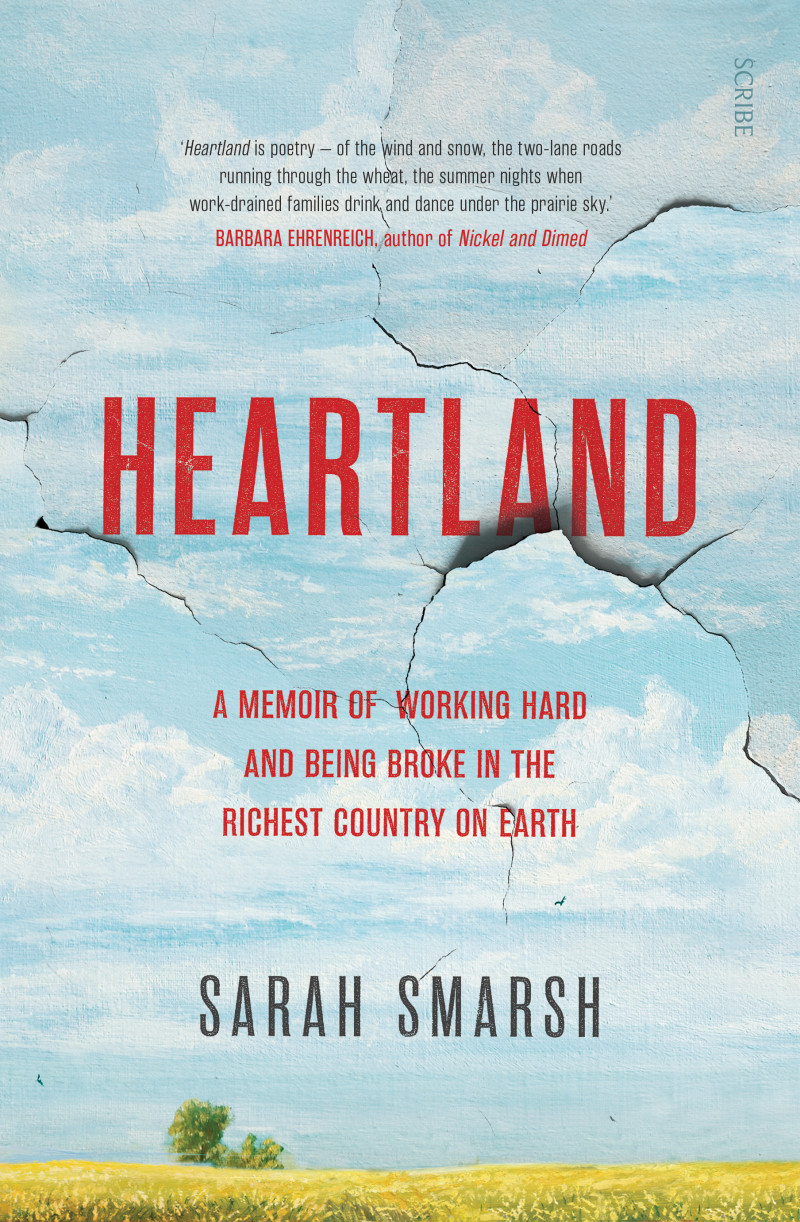
Thoughts On Sarah Smarsh's Heartland


I've just returned from a Christmas visit to my Nebraska homeland and on the way there and back got to read Sarah Smarsh's excellent book Heartland: A Memoir Of Working Hard And Being Broke In The Richest Country On Earth. As a fellow Great Plainsian raised in a rural German Catholic milieu with farming in my family the book was pretty much destined to find its way into my hands. Even closer to home, the author is from the same corner of Kansas where one of my sisters and her husband farm. He evidently once went to the same school as her, too.

The main difference in my experience and the author's is that she grew up poor in an unstable home environment, whereas I grew up lower-middle class in a very stable home environment. Unfortunately, families like mine tended to look down on families like hers in the never-ending quest for respectability. What's interesting about the book is that she explicitly connects her family's poverty to the broader social and political forces around their lives. Smarsh was born in 1980, and sees her life being profoundly shaped by the post-Reagan onslaught of neoliberalism. In her part of the world and mine the farm crisis of the 1980s came in like a wrecking ball. Once small farming ceased to be viable, it tore out the basic economic foundation of so many rural areas. Once her father could finally afford to buy a house in 2007, the housing bubble would burst and that house would become a millstone. This happened to countless other working class families.

Her main point is to use this more systemic understanding to undermine the cherished American idea that we are all the masters of our circumstances, and that simply through working hard we can get ahead. She shows in painful detail how hard her family members had to work throughout their lives, wrecking their bodies in the process. I fear that only people who understand that the American Dream mythology is a lie will actually read the book. Instead folks on the prairie will complain about people buying steak with food stamps and refuse to see how the government, from farm subsidies to backing inexpensive mortgages, has made their existence possible. (I heard plenty of this kind of talk on my trip home.)

This brings me to a question that the book touches on, but does not answer because it lies outside of the main thrust of the narrative: how did this political false consciousness take root in this community? Or is it even false consciousness? (For many folks "saving the unborn" to them is more important than whether they are voting for corporate plutocrats.)

It's a dynamic I've seen a lot in my own circle. My grandfathers, like Smarsh's, were staunch New Deal Democrats. Their children, and most of their grandchildren, are conservative Republicans. Not only that, the nature of conservatism in this region has radically changed in the past thirty years. My home area has always been conservative, but with a small "c." There was still support for public institutions, and guns were pretty non-controversial in my youth. Now schools and universities are being gutted as proposals are made to arm teachers. Kansas famously endured the misrule of Sam Brownback, whose libertarian tax policies have starved Kansas' public schools, once among the nation's best.

I don't have all of the answers either. As near as I can tell, it's a bitter stew of racial resentment, white nationalism, the radicalization of talk radio and Fox News, Boomer narcissism mediated through consumer capitalism, the rise of fundamentalist Christianity, and in how party identity has become closer tied to personal identity. (Being a Democrat marks you as one of "those people," essentially.) The next question that remains, of course, is if that any of the rural white conservatives out there can be swayed by a new economic populism from the left, or whether the aforementioned resentments and religiosity make that a fool's errand.

Another, more personal issue was on my mind as a I read the book, however. Smarsh talked about the difficulty of leaving the world she was brought up in, getting an education, and rubbing shoulders with people of privilege who have open contempt for "flyover country." This hit home for me because I have had to make the exact same transition. Unlike her, however, I have opted to leave for good, instead of to come back. I will get very defensive about my homeland when people around here in the New York area said dumb and ignorant things about it, but I am much more likely to rant against that homeland than Smarsh is. This balancing act is something that all internal exiles must face up to at some point. When I visited home this week I was glad to be there but also reminded that it's a place I could never live in anymore, from its awful politics to its bland food to its suffocating conformity. Standing beneath that all-encompassing, beautiful Plains sky does make my heart leap, but that's not enough for my anymore. Reading Heartland I wished I could feel the same closeness to that world I once felt. Maybe I'll get it back someday, or maybe I will just give up on trying to have it anymore.

Monday, September 10, 2018

Ben Sasse's Passive-Aggressive Conservatism

My home state, which produces corn and passive-aggressive Republican Senators

As loyal readers know, I hail from the prairies of Nebraska. While I left it 20 years ago it is still a place close to my heart, even if it becomes more foreign to me with each passing year. As a born and bred Nebraskan, I have been especially interested in the political career of Ben Sasse, the first Nebraska politician with a national profile since Bob Kerrey.

He sort of came out of nowhere on a cloud of conservative establishment and media hype, an Ivy League technocrat made Senator. The high fathers of the conservative movement positioned Sasse from the get-go as their scion. Unfortunately for him, he achieved this position right before Donald Trump captured the party's base with white nationalism. This has meant the twilight of the faux policy wonkery of "very serious people" conservatism embodied by the likes of Paul Ryan and yes, Ben Sasse. Sasse occasionally expresses alarm about this state of affairs. This week he claimed to think every day about leaving the Republican Party.

Of course, he hasn't.

Sasse wants to rip apart the social safety net, eliminate reproductive rights, and give even more power to the plutocratic overlords. That's basically the core mission of the Republican Party. He may criticize Trump every now and then, but he votes with him. Instead of using his power as a Senator to investigate the president, he attacks the protestors who dare to raise their voices against Trump's nominee to the Supreme Court. Sasse has always been much harsher in criticizing the people fighting Trump than Trump himself.

Take a look at Sasse's voting record and you'll get the real score. He has voted with Trump 86.7% of the time. Where has he deviated? Well, he voted against a relief package for Puerto Rico. He voted against a continuing resolution to fund the government. He also voted for sanctions against Russia. Sasse obviously does not favor the Trump administration's relations with Russia, but he actually wants it to be stingier with helping people in need, too. I get the feeling that this guy who wrote a book about kids these days needing to work to get character looks at old Lewis Hine pictures of barefoot children in textile mills and longs for the "good old days."

I see a lot of this in Sasse's background. Nebraska is a place where personal interactions thrive on passive-aggression. It is impolite to directly confront people or to "toot your own horn." Insults must be veiled in politeness and moralism. I told a much more blunt friend here in the NYC area that if she wanted to send a message to her departing boss that she was not sad to see him go that there was a Nebraska way to do it. Instead of ignoring him or not getting him a gift, she should get him a lame gift and give to him politely, but with little enthusiasm. That way she would maintain the moral high ground, but also make him know that she was not unhappy about his leaving. My people can be quietly cruel, and I include myself in that assessment.

Someone like Sasse dislikes Trump less for his policies than for his vulgarity. He wants Trump to beat down on immigrants (he voted against a bill that to favor immigrants also opposed by Trump) and immiserate the poor, but to do it with his hand over heart and language about "values" and "tough decisions we have to make." He wants him to Tweet Bible verses, not bravado. He wants a president who will decry abortion without assuming he paid for one.

There are plenty of conservatives out there who share Sasse's concern over Trump's ways of speaking who nonetheless endorse 90% of what he does. The one domestic policy they really and truly oppose is Trump's trade protectionism. That also happens to be a priority for the Koch brothers and other plutocrats who fund conservative politics. My bet is that Sasse is trying to get their attention, maybe for a primary campaign against Trump in 2020. I do no think he will run for re-election in Nebraska, because even his tepid criticism of Trump is going to get him getting primaried. If Trump isn't able to serve out this term, he is also putting himself in a prime position to move up in the future. Of course, he won't come out and say that himself. After all, that would be tooting his own horn.

Sunday, July 29, 2018

Hollowed Out (My Hometown As A Microcosm Of The "New Economy")

The Chautauqua Pavilion, a relic of my hometown's Progressive Era boom years

When I was back in my rural Nebraska hometown of Hastings last week I had the pleasure to go on a thirteen mile bike ride around the town with my dad. We went to pretty much every corner of the town of 24,000, and I was able to see more vividly than from my car window what's been happening in it.

Hastings is not typical economically, but many of the broader trends are remarkably visible there nonetheless. The town initially grew up in the Gilded Age as a railroad junction where the Burlington and Union Pacific came together. Growing up timing a trip across town had to include some extra minutes to account for waiting for a train, since there was no under or overpass on the Union Pacific as there was on the Burlington. After the economic depression of the 1890s the town boomed in the early twentieth century. It was my great fortune to have grown up in a town that had its youth in the Progressive Era, which meant the library, parks, and schools were all well-made and well-supported.

It's economic high point came in the 1940s, with the building of a massive naval ammunition plant on the edge of town for World War II. (My dad's father, too old for the draft, worked there.) The city's population increased by a third, but that would be the last major economic boost. After the war small industry assisted by proximity to the railroads remained (and still does), and the city persisted as a commercial center for the surrounding rural area.

However, when the interstate was built through the state, it went through larger Grand Island, 24 miles north. There is a line of broken down and abandoned motels on highway six in Hastings attesting to the significance of this decision. Then, in the 1980s, Nebraska's farm economy took a major hit, forcing many farmers into foreclosure. This is evident in the small towns in Hastings' orbit, which mostly look beaten down and half-abandoned. The industrial sector is still thriving (unlike elsewhere), but the commercial economy has greatly declined. The Union Pacific re-routed their tracks to bypass the town in the 1990s, which seemed to say something about its reduced place in the world.

What you see in my hometown now is something you see around the country: the squeezing out of the middle. I was lucky to be from a middle class family that stayed up during the squeeze, others were not. My old neighborhood is evidence of this. It was built in the 1960s, consisting of very small, box-shaped ranch houses. Growing up it was solidly lower-middle class and people owned their homes. Now many of the homes are rentals, as home ownership even in a market as cheap as Nebraska's is increasingly difficult.

Businesses that cater to the disappearing middle (and especially lower-middle) are also struggling. The local Perkins and Applebee's restaurants are closing, in the midst of what is supposed to be an economic boom. Allen's, the local department store with its own grocery store is now closing everything except for food. The last non-box store general clothing store (Herberger's) is closing too. (I got a couple of things there and mourned the place I bought all my school clothes as a kid.) The local men's store and tailor is still going downtown, but anyone not wanting to buy a men's suit either has to go to Wal-Mart or drive 24 miles to Grand Island. Herberger's was the last holdout in the ironically named Imperial Mall, now a giant dead rotting hulk visible from my parents' front window. Behind it are an abandoned theater, grocery store, and restaurant, likely to be ruins forever.

Many more local establishments are gone now too. A legendarily wild bar with a dance floor called the Second Street Slammer, due to the bars on its windows, is also closed. So is the local family restaurant, the OK Cafe, as well as Bernardo's, the steak house where I marked all kinds of family milestones, from my sister's wedding rehearsal dinner to my grandparents' fortieth wedding anniversary. Ponderosa Lanes is no longer setting up the bowling pins.

It's not all doom and gloom, of course. The local bookstore, Prairie Books, is still going downtown after the death of one of its owners. The beautiful historic municipal baseball park, Duncan Field, now has a summer league team. However, the places that are new and thriving are the ones catering to the affluent, rather than the middle. There are two coffee shops downtown, a new fine dining restaurant that takes reservations (!), two (!) microbreweries and old building lofts being converted into condos, including the home of an old brewery that had never been occupied by anything in my lifetime. Perhaps these innovations will attract the educated professionals who rarely come back after growing up in Hastings, and who do not stay long if they move in from away. Be that as it may, it is obvious that in Hastings, like everywhere else, those at the top are doing well for themselves.

Things are not so great for those squeezed down. For a town with a very low unemployment rate, Hastings has blocks and blocks of dilapidated housing, some of it built in a temporary, slap-dash fashion for war plant workers in the 40s. Working-class neighborhoods look worse for wear, some scruffier, some practically squalid. I got wind of the literal squeeze at the county fair, when I overheard a conversation about a factory worker experiencing wage theft. The low wages that make Hastings attractive to bosses make living tough for workers. Now even Wal-Mart might be too expensive to shop in. There are now three dollar stores in town, one in the cancerous growth of box stores on the edge of town, two others in working class areas on the other side of the tracks where other stores and restaurants lie vacant. 

That vacancy can be seen elsewhere. While associational life in Hastings might be stronger than in many other communities, it is much less pronounced than it used to be. At the county fair there were many, many, fewer civic organizations with tables than 20 years ago, and all of them had conservative religious or political (or both) orientations. A got a graphic glimpse of this when biking past what was once the Knights of Columbus Hall, which is now an auction house touting the sale of guns and ammunition. The Tribune, the Monday-Saturday daily paper, still lives but it is thinner than boarding house soup. When I attended 11 o'clock mass with my parents at one of the two Catholic churches I was shocked at how few people were there, even accounting for it being summer. (There is a megachurch in the aforementioned cancerous growth on the edge of town, so perhaps this represents more a shift than a lack of engagement.)

Associational life is a plumb necessity in an isolated Plains town like Hastings, but even there it is going the way of the dodo. While people what they call "the Heartland" often feel apart from the broader currents of American society, they are not. My hometown, like so many others, is one more atomized and divided by class than ever before. At least they have IPAs.

Thursday, July 26, 2018

A Political Dispatch From Rural Nebraska

Saw this at the county fair in my hometown. Evidently 2nd Amendment porn is a category

I just arrived back home in New Jersey from visiting my family in rural Nebraska, and unlike those journalists who parachute in and talk to the random cranks at the local diner, I actually know the section of "middle America" I'm writing about. Those same journalistic paratroopers also make the same mistake of seeing "between the coasts" as a giant, undifferentiated mass, as if Dallas, Chicago, rural Alabama, and the mountain west are all the same.

I can't speak for other places, I can only tell you what I saw and know from Nebraska. The main thing I noticed was that nothing has really changed from this time last year when I visited when it comes to support for Donald Trump. What I discovered then, as now, is that his support in the Cornhusker State is akin to the state's Platte River, famously described as "a mile wide and an inch deep." He has his hardcore supporters, of course, but I was surprised yet again by how little people there talk about him, when he's all people seem to talk about where I live. Trump seems to get most of his shallow yet dependable support due to the kind of identity politics that don't get discussed much in the press.

A lot of folks in what some call "the Heartland" think of themselves as Real Americans. They also think that voting Republican is a kind of membership renewal ritual for maintaining that status. In their minds liberals are bad people who come from outside and don't share their values. They would rather cut off their right arms than ever vote for a Democrat, it would be akin to them desecrating a crucifix. With that mindset in place, these same voters could find Trump personally repugnant, but at the end of the day he stands for People Like Us, aka Real Americans.

I talked to multiple people on this trip, some strangers and some not, who knowing I live in New Jersey would wrinkle their noses and say "How do you like living THERE?" Or I would get "I could NEVER live in a place like that!" The passive-aggression of those comments wore me out. They literally could not understand how I could have possibly decided to move out of Real America to the east coast. What I noticed more than anything on this trip was how embedded the politics of resentment have become in a place like rural Nebraska.

This paradigm of Real America is incredibly strong and explains a lot of behavior that outsiders don't get. For example, there all kinds of people who scratch their heads at devout Christians supporting a lying, cheating, adultering greedhead who brags about never turning the other cheek. The answer is simple: the true evil are the liberals, and anyone who stands for Real Americans can never be wrong because they are, after, the real America. The media screws this up when they keep talking about "populism" when this is really an issue of nationalism. The reporters really find it more comforting to think that these white people in the hinterlands are mad about their jobs and not animated by an exclusionary bigotry that sees those very reporters as evil people.

The biggest political attitude I seemed to get in rural Nebraska was one of avoidance. I get the feeling that I lot of people know that they signed a devil's bargain with Trump, but they could never allow themselves to question their choice. Therefore nothing seemed to register. The news of relief for farmers hurt by Trump's tariffs was out there, but no one seemed to be talking about it. The kidnapping of immigrant children and Trump publicly selling out the country to Putin might as well have never happened. The only people talking about Trump were those who despise him, who are making their voices louder against long odds.

However, they are extremely marginalized. I went to the county fair while I was back home, and in the area where civic groups have their tables I was taken aback by the lack of a Democratic Party stall. When I was a child both parties would have candidates to talk to people and plenty of swag to hand out. There were also few civic organizations that were not religious or politically religious in nature. The local Christian radio station was there, as were the Gideons and anti-abortion groups. The range of ideological diversity expressed in a public forum like that basically runs from solid conservative to Christian dominionism.

While in that section I ran into someone who was two grades behind me in school who now has seven children that she home schools. (Her new baby was really cute.) In rural Nebraska that's not looked on as being out of the ordinary (and I'm not judging btw), but moving to New Jersey is. My prediction for the political future is that rural Nebraskans will never ever abandon the Trump train, even if their support for him personally is pretty scant.

Apart from that shallow but wide river of support I have noticed an alarming rise in blatantly racist and fascist activity in my home state. I read about three of these stories in the Omaha paper on the same damn day, here's a sampler:

Fascist white supremacist posters put up in Hastings (my hometown)

20 foot swastika burned into the lawn of an Omaha park

A white bicyclist berated a black woman with a racist tirade in Omaha

Small town of Scribner considers adopting a "show your papers" law

Nazi propaganda found in "little free libraries" in Lincoln

The extreme fascist bigots are flexing their muscles. Nebraska liberals have been publicly countering this stuff, but conservatives and those in the middle really just don't seem to care. So while I have not witnessed deep enthusiasm for Trump, there is broad apathy about the worst of what he has brought.

Anyone who thinks these voters can somehow be "turned" by the right message is deluded. My great sadness is that winning is going to require getting the people who don't vote to vote, and that requires messages and imagination that are completely absent from the Democratic Party. In the meantime, the Real Americans will keep voting, and keep passively supporting this criminal administration through their apathy.


Thursday, January 4, 2018

Listen To The Bubble Jumpers

Tropics of Meta was kind enough to publish another essay of mine, one that I am proud of and was the result of a lot of thinking on this blog. In the essay I talk about the concept of "bubble jumpers," those people like me who have moved from conservative to liberal "bubbles." Within it is a critique of all those bad articles where a coastal journalist parachutes into the Rust Belt or a farm town and let's us know that conservatives in those places still like Trump.

So please, read the piece and share it if you can. Also read and support what Tropics of Meta does, they put out great stuff on a regular basis.

Monday, December 18, 2017

My Letter To Senator Deb Fischer


I am proud to say that I was born, grew up, and went to college in the Cornhusker State. While life has taken me elsewhere, most of my family still lives in Nebraska, and I am still very attached to it.

I still pay a lot of attention to who represents my home state in Congress, and I have witnessed your support of the current tax bill with great disappointment. It would do great harm to the people of Nebraska. Many would face tax increases, rather than cuts. By undermining the Affordable Care Act it will increase health insurance premiums on Nebraskans, and hurt access to health care in rural areas where this has long been an issue. Above all, it will blow a massive hole in the deficit that will be paid for with cuts to social services

This is a bill that transfers wealth from the poor and middle class to the wealthy and multinational corporations. It would be more accurate and specific to say that it takes money from my family and gives money to yours. I currently live in New Jersey, which means that the elimination of the local tax deduction will make it harder for my wife and I to provide for our family. Your family’s ranch is owned as a corporation, and thus you and your family stand to gain financially from this bill, which favors corporate income. I am not sure what justifies this. My wife and I are teachers. Do we work less hard? Is our work less valuable? I don’t think so.

Having followed your record, I am well aware that you probably do not feel any shame about this. However, you are up for election next year. Looking at what just happened in Alabama, you might need to think about how you will retain your Senate seat if you keep betraying Nebraskans. When I grew up my state was represented in the Senate by Democrats like Bob Kerrey, Ed Zorinsky, and Jim Exon, people who would never vote for awful legislation like this. Nebraskans are surely now feeling due for leadership like that. I implore you not to vote for this bill. If you don’t do it for the right reasons, at least think about the whirlwind coming next year to sweep you out of office.