Showing posts with label 80s. Show all posts

Monday, May 18, 2020

Billboard Top Ten May 24, 1980

It's been too long since I've done a top ten. I was just talking to a friend last week about my Reagan Dawn theory and we both agreed 1980 was a strange time in American popular culture. The 70s were dying but not dead, the dominant cultural forms of the 80s were still gestating. It's something that this top ten, coming amidst a time of economic turmoil, bears out. Now, on with the countdown.

10. Gary Numan, "Cars"


This here is the harbinger of what is to come. "Cars" still sounds great today, its New Wave synthy weirdness must have been pretty mind-blowing forty years ago. Early synth-pop still didn't sound so slick and automated. Numan used a live drummer instead of a drum machine, and fed his keyboards through guitar effects pedals. I miss that grody bleep-blorp sound.

9. Christopher Cross, "Ride Like The Wind" 

Cross is often cited as one of the main casualties of the MTV New Wave invasion. As the story goes, a plain looking chubby guy could still be a hit maker in the days before image ruled pop music. Once videos were essential, that wouldn't fly anymore. I am not sure if I buy that, but I do know that his brand of smooth music was very much in vogue in the Reagan Dawn. Not for nothing, the backing vocals were courtesy of Michael McDonald, as parodied in this amazing SCTV sketch.

8. Linda Ronstadt, "Hurt So Bad" 

Linda Ronstadt understood that the mellow, mid-tempo California cocaine rock that ruled the second half of seventies was not built for the go-go eighties. This song has a tougher edge with a bigger beat, a sound that Quarterflash would soon perfect with the immortal "Harden My Heart."

7. The Brothers Johnson, "Stomp!"


It makes me so sad to know that this supremely funky style of music was about to go by the wayside in the 80s. Latin rhythms and funky string sections were going to go the way of polyester flared trousers.

6. Ambrosia, "Biggest Part of Me"

This top ten shows that soft rock ruled the charts in 1980. And why not? The economy was crashing, gas was scarce, inflation was shooting up, and Americans were held hostage in Iran. Might as well unplug and sit back and listen to some smooth music by a band with the same name as a dessert.

5. Dr. Hook, "Sexy Eyes"

I honestly had no clue that Dr Hook managed to score a hit in the 80s. This knowledge has shaken me. Like KISS with "I Was Made For Loving You" they were a rock band using disco to cash in and unwittingly making far better music than they did when they were playing it straight. This song is living proof that the seventies were not yet over in 1980.

4. Kenny Rogers with Kim Carnes, "Don't Fall In Love With a Dreamer"

Kim Carnes would conquer the charts the next year with "Bette Davis Eyes," the song I see as truly starting the 80s radio sound. At this stage she was known for collaborating with the late and dearly departed Kenny Rogers. Her cigarette-scarred voice was the perfect counterpoint to Rogers' baritone honey.

3. Air Supply, "Lost in Love"

Was there ever a more appropriate name for a soft rock group than Air Supply? This is also the beginning of the 1980 pop culture invasion from the Antipodes.

2. Lipps, Inc, "Funktown"

If Numan was the prophet of the future, this is the sound of a rapidly disappearing past. Disco was NOT dead yet. This disco sound is more electronic and metronomic though. It would get made over as a synch song in 1987, by which time the pop culture world of 1980 was already unintelligible.

1. Blondie, "Call Me"


I recently finally saw American Gigolo, the film this song from. It plays over the opening credits of Richard Gere driving in Southern California and in that context the song sounded even better. It's the tale of a sex worker, a "call girl," yet I first heard it on the Chipmunks' Chipmunk Punk album. (I was just a little too young for pop music in 1980.) It has the thumping disco backbeat and a tempo made for cutting the rug, but also the herky-jerky New Wave nerves. No wonder this song was such a big hit in 1980. In a time of transition, it combined the pop music forms that were cresting along with those about to take over. It still sounds great today.

Sunday, January 26, 2020

Synthy Winter Blues (Newest Old Dad's Records Ep)


I just put up my newest episode of my podcast Old Dad's Records, and I think the hiatus has been good for me. This edition concerns seasonal depression and synthesizer-driven music. This was inspired both by the awful weather, but also how the electronic sound of the 80s has made a comeback. I start with Bruce Springsteen's "Dancing in the Dark," where the Boss himself starting straying from his bar band roots to make music more relevant to MTV. After that I dig through New Order's first EP and talk about how their sound in this period continues to entrance me. I end with a rave for Sui Zhen, a new artist who is taking this sound in bold directions. In between I muse about why people like me loved sad British music in the 80s, and how the alternative music in the 90s was conservative in its love of heavy guitar riffs.

Monday, August 12, 2019

New Episode of Old Dad's Records (1983 and Duality)


The newest episode of the Old Dad's Records podcast is up!  This time around I was inspired by old music from 1983 I that's popped up in my life.  I start with "Photograph" by Def Leppard, which I heard at a Mets game this week. It is perhaps the starting point of hair metal, a genre I despise. At the same time, it is one of that genre's few real gems. 1983 wasn't just about hair metal, it was also the year that launched REM onto the college radio stations of America with Murmur, an album then gave me a lot of comfort in my youth, and still plays that role in these dark days. I end with a recommendation for Weyes Blood, who has crafted a lovely art folk sound.

Wednesday, May 1, 2019

Commercials From Hell: Bartles and Jaymes


In the 1980s wine coolers bestrode America like a colossus. Yuppies had given wine a leg up, but most Americans didn't know a chardonnay from a merlot. Wine coolers allowed cheap sophistication, and 17 year olds who did not like the taste of beer could now drink something less potent than vodka and cranberry juice.

The actual drink was pretty atrocious. A few years ago as a joke I picked up a pack of them for a party, and they tasted like Mad Dog doused in corn syrup. (Don't ask me why I know the taste of Mad Dog so well.) At that moment I realized that I had been seduced by nostalgia not for the taste of wine coolers, but for their commercials.

Bartles and Jaymes had some of the catchiest commercials of the 1980s. Two old codgers dressed in an old-timey way pitched the product. Bartles did all of the talking, and finished off his little folksy monologue with "thank you for your support." Jaymes stood in the background, a silent enigma with a wry smile. These ads took a mediocre corporate product and made it seem like the passion project of local eccentrics.

The ads also smartly contrasted the new product consumed by a young audience with the old-fashioned characters and their courtly formality. There's nothing more poisonous for a youth product's advertising than pandering to what middle-aged ad execs think young people want. This ad also fit in with the old people as cute mascots trend of the 1980s, from the "Where's the Beef" lady to Sophia on Golden Girls.

Watching it now, the sensibility seems so alien from modern day advertising, to the point that it feels refreshing. Certainly much more refreshing than the product it's pushing.

Thursday, April 25, 2019

Commercials From Hell: The Night Belongs to Michelob


I have been having a hard time finding writing inspiration recently, so I've decided to kick off a new series: Commercials from Hell. This is inspired by the amazing website Trailers From Hell, where commenters give glosses on old B movie trailers. This series will involve me writing about old television commercials and ad campaigns.

I have been consuming too many of these ads because late at night I find myself to watching old blocs of commercials on YouTube gleaned from old VHS tapes used to tape things off of TV (remember that?) Nothing puts me back into the past like these ads, since they don't get rerun, unlike the shows. They thus tend to be pretty amazing cultural artifacts of their time.

I want to start with the Night Belongs to Michelob campaign. Michelob is a product without a niche today, but back in the dark ages before craft beer it was Busch's "premium" beer. This meant that it tasted slightly less watery than Budweiser, and cost a little more. As a premium product, Busch would have to have a premium ad campaign. What better way to show class than a commercial with Phil Collins and Genesis!

I am struck by the juxtaposition of the young singles in fashionable yet bourgeois clothes with middle-aged rockers Genesis. Did they think this was going to sell to both age groups? Did the makers of this think that Genesis was super hip? Phil Collins skullet should have disabused the ad execs of that notion. There's also the awful moment where a guy puts a move on a young woman and puts his hands behind her neck, bottle of Michelob in hand.

Despite those off notes, there is an irresistibly noir element to all of this. Neon signs. Steam rising from manholes. Rain slicked streets. The song may be 80s cheese, but there's enough minor key mood that it sort of works with the commercial. When I saw it back in 1987 as an 11 year old, it gave me a bit of a thrill. Is this what being an adult was like? Seductive glances from across the bar, geezer rock, and a Michelob in hand? It was certainly alluring than beer ads with animal mascots and outdoorsy men going fishing. Premium beer indeed.

Wednesday, March 13, 2019

Billboard Top Ten Mainstream Rock Songs, 3-13-1982

I'm tired and run down from this week but still in a mood to do some writing. I haven't done a top ten of mainstream rock songs, and so I thought I'd give it a whirl. It's also interesting to go to 1982, when what we think of as "classic rock" was entering its death spasms. MTV was a New Wave enterprise, and hair metal was just over the horizon. In the film Spinal Tap this was the year the band embarked on its disastrous tour, suddenly a relic. I can't resist narratives of decline, hence my side-interest in late antiquity and my need to observe my home country's current slide into oblivion. Now, on with the countdown!

10. Le Roux, "Addicted"

This band is totally unknown to me. The beginning of the song actually slaps, reminding me of "Shakin'" by Eddie Money. After that it doesn't seem to go anywhere, though. Like a lot of mainstream rock music of the time, it lacks the aspirations of 70s rock music, and just kind of sits there. It has elements of power pop, but not enough.

9. Peter Cetera, "Living In The Limelight"

I had never heard this song before. The drums are 80stastic and the guitar riff has overtones of the New Wave of British Heavy Metal. I half expected Dio's voice to come in after the intro. This is a million miles away from the processed cheese that Cetera would take to the top of the charts later in the 80s, and also divorced from his band Chicago's jazzy sound. Very strange.

8. J. Geils Band, "Freeze Frame"


Unlike some other folks on the countdown, the J. Geils Band managed to retool their sound for the 80s. The bouncy beat and cheery keyboards are steeped in New Wave. The song's use at sporting events has ensured comfortable retirements for the band members.

7. McKenzie Brothers, "Take Off"

There's a lot of Canadian artists on this countdown, but none more Canadian than the McKenzie Brothers. I am HUGE SCTV fan and so it made me so happy to see this gem on the countdown. And yes, I own the album on LP. I love that Geddy Lee lets his maple leaf flag fly, speaking in local dialect and being totally self-effacing. Musically this is just silly butt rock but I guess that's the point. SCTV's humor was usually pretty subtle and required knowledge to get the references. The whole Great White North bit was much less cerebral, and of course was the part of the shame to be the most famous.

6. Bryan Adams, "Lonely Nights"

Well folks, the smell of back bacon is still in the room for Bryan Adams. This song predates his mid-80s chart breakthrough. It does not have the hooks of a song like "Run To You" or "Summer of '69." The power-poppy sound is trying to establish relevance, but it just doesn't quite get off of the ground.

5. Aldo Nova, "Fantasy"


Believe it or not, Canada just bowled a turkey on this countdown. This would go down as Aldo Nova's biggest hit, and it translates some of the sound of early 80s metal through the filter of Toto-esque hard rock. The organ triplets behind the verses are very reminiscent of "Hold The Line." It's a trick producers of the time were keen to use, from Bon Jovi's "Runaway" to Starship's "Jane." I have to admit I am kind of a sucker for that sound. Also, this dude can shred.

4. Sammy Hagar, "I'll Fall In Love Again"

The man who would go on to ruin Van Halen and become a tequila impresario made a lot of mediocre rock music in the early 80s. This song is part of a pattern in this early 80s mainstream music with its tepid approach and boring tone. Who actually went to record stores and bought this crap back in '82?

3. Prism, "Don't Let Him Know"

One could ask the same question of Prism. I am more interested in the fact that they hail from, you guessed it, Canada! This record is produced within an inch of its life and sounds like something you'd hear in a Toyota commercial. The guitars and drums borrow just enough from metal to not make this completely unlistenable.

2. Joan Jett and the Blackhearts, "I Love Rock and Roll"


Finally we hit a true classic. I remember hearing this song for the first time as a kid and the HEAVYNESS of the guitar just smacked me upside the head. Combine that with Jett's perfect sneer, a handclappy beat and a singalong chorus and you've got yourself a helluva song. It still makes me stomp my feet all these years later.

1. Van Halen, "Oh Pretty Woman"

Most of the "mainstream rock" acts of this era are pretty forgettable, but not Van Halen. I remember seeing an interview with bassist Michael Anthony, who described their sound as "Big Rock," drawing a contrast with both hard rock and heavy metal. What made early Van Halen great was that their sound was in fact pretty unique. They did not sound like the tired old bands imitating New Wave to be relevant, nor were they stuck in the boring hard rock rut. Their covers were always great because they could take that sound and wrap it around old songs and give them new life. This was a solid choice, since you could just picture David Lee Roth in real life pleading for attention from a pretty woman. Van Halen would crest in 1984, about the time that this kind of music was getting completely crowded out by the new pop.

Wednesday, February 13, 2019

Classic Music Videos: Joe Jackson, "Steppin' Out"


February is the worst month of the year by far. Winter has dragged on, and refuses to leave. The only holidays are either lame (President's Day) exploitative (Valentine's Day) or just plain awful (Super Bowl.) It means worrying about doing taxes and whether the furnace boiler will hold out.

In this most awful of months I retreat to my comforts. This means eating meatloaf and rice and beans, drinking bourbon (as I am doing as I write), and listening to 80s pop music. I especially like looking at old music videos, which conjure up my youth like little else.

Joe Jackson's vid for "Steppin' Out" certainly does the trick. The bouncy, fruity Casio synth line anchoring the song tells us that we have landed in unmistakably in 1982. In the video we see the strange 1980s obsession with the 1940s, as Jackson's wardrobe consists of a vintage tie and suspenders, only to change to a tux with a white tie. He plays a kind of narrator, playing the piano as a maid imagines the night she could have on the town with her boss's dress.

The setting is New York City, about to emerge from its 70s malaise to becoming the capital of World Money in the new neoliberal dawn. In that way the video is a very subtle kind of social critique, showing the intensification of class disparities as the Reagan-Thatcher revolution sets its teeth in. Jackson himself would soon announce that he was done making music videos, which was a real statement of rebellion at the time when they were becoming the preeminent art form.

"Steppin' Out" is a pretty little song, encapsulating that feeling of what it's like to move to the big city and going out on the town, feeling both quietly hopeful yet out of place. It certainly fits February, a month of quiet hope if there ever was one.

Wednesday, February 6, 2019

Billboard Top Ten Albums February 6, 1982)

It's been awhile since I've done a top ten, and I realized that I've never done an albums countdown. I chose 1982 because I tend to think of the winter of 1982 and the moment when the transition out of the 70s was being completed, especially in music. I think the albums on this list bear out my thesis. And now, on with the countdown!

10. The Cars, Shake It Up


The Cars are really the emblematic band for this moment in music history. They bridged the divide between the arena rock world and new wave, getting played both on the local rawk station and on MTV. The beat is all new wave nerves and the synths sound like they would be at home on a Human League record. This is not one of their stronger albums, it sort of sits between their early rocking high points and their pop takeover on Heartbeat City.

9. The Police, Ghost In The Machine


I've always loved the cover to this album, which speaks to a time when digital technology was new and cutting edge. My dad got a digital watch in 1982 that made all kinds of bleeps and bloops. I really thought we were living in the future. The album seems to reflect a certain fear of this new frontier, especially songs like "Spirits in the Material World" and Invisible Sun." The dark noises give way to a slight break in the clouds on "Every Little Thing She Does Is Magic," perhaps the best pure pop song the Police ever released.

8. Hall and Oates, Private Eyes


One shocking thing about this countdown is the lack of soul music. Hall and Oates are really the only vaguely soul music act in this top ten. In recent years Hall and Oates have had their reputations justifiably revived. Their music is long on craft with all kinds of subtle touches. "Private Eyes" might be one of their most straight-ahead hits, but "I Can't Go For That" has a sultry slink to it that sounded great coming out of the speakers of my parents' Chevy Malibu.

7. AC/DC, For Those About To Rock (We Salute You)


This album has got to rank among rock history's biggest disappointments. When AC/DC frontman Bon Scott died in the late 70s it seemed like the band was doomed. Then, in 1980, they dropped Back in Black, one of the top-selling albums of all time and a stone cold killer from top to bottom. As far as I am concerned, it's the only really good album the band was able to release after Scott's demise. This may have been a case of AC/DC's formula only yielding so much before the well ran dry. Where they were once supple, they are now flabby. Where they were once sly, they are now overblown.

6. Stevie Nicks, Bella Donna


Fleetwood Mac were THE definitive band of the late 1970s decadent cocaine malaise. It was only fitting that Stevie Nicks would go off on her own and have bigger hits outside of the band in a new decade with a New Objectivity driving culture, rather than the hair shaggy 70s aesthetic. In that respect it was perfect for her to team up with Tom Petty, who was a forward-looking rocker more in tune with the new wave than others. "Stop Draggin' My Heart Around" is one of the great male-female duets of the decade. "Edge of Seventeen" has a high energy intensity lacking from her Fleetwood Mac tunes that's better suited to the new, go go decade.

5. Rolling Stones, Tattoo You


The last classic Stones record? Strange to say for an album made up of outtakes. It's kind of sad that the Stones have not managed to top it in the 37 years since. Their freshest stuff could not longer measure up to what they had tossed off in the 70s. There are some great songs on this album, and not just the hits. Of course, everyone mostly remembers "Start Me Up," one of their best all time songs and a real hip shaker. That kind of rhythm had all but disappeared from mainstream rock music by this point, and its absence has been a true loss. "Waiting On A Friend" is among their best ballads.


4. Royal Philharmonic Orchestra, Hooked On Classics


OK, this one totally flummoxed me. I had no clue that an orchestral album hit the top ten in the 1980s. This is not a Mantovani record like the ones that charted back in the day, it's got an uptempo disco beat behind it. Strings had always been big in pop music, including in the aforementioned disco genre. The 80s would bring an end to that trend with the almighty synthesizer. While there's a touch of disco to this music, it sounds ideal for aerobics class, and thus very much of the new cultural turn.

3. Foreigner, 4


I have often thought of 1981-1982 as the last gasp of classic rock. Was MTV the asteroid that killed the dinosaurs? I am not sure, but cock rockers like Foreigner sounded increasingly out of step with the times. However, on this record Foreigner managed to hold onto relevance by incorporating the harder, straighter, less shaggy sounds of the new decade. "Urgent" has an eletro-groove, as well as an all-time sax solo by the great Junior Walker. In this era the saxophone was ubiquitous and even the arena acts couldn't exist. Thomas Dolby, who had yet to blind anyone with science, was on the synths.

2. Journey, Escape


Journey's Escape album might be the magnum opus of classic rock's early 80s swan song. (It's either that or Rush's Moving Pictures.) Journey maintained the bard rock bedrock of the late 70s with the slick pop sheen necessary for the Reagan years. The power ballad had announced its world conquering presence with REO Speedwagon's "Keep On Loving You," and Journey made it sweeter with "Open Arms." Add to that the beautifully moody "Who's Crying Now" and the hit "Still They Ride" and you've got a good record. When you factor in "Don't Stop Believing," one of the most blissful songs you can still hear on a classic rock station, you've got a stone cold classic. Play that song at midnight in a crowded bar and the punters will still belt it out.

1. J. Geils Band, Freeze Frame


Okay, now THIS makes me feel sentimental. "Centerfold" is the first pop song I remember hearing on the radio and loving. As a wee kindergartener I had no clue of its naughty nature. I could not get enough of the bouncy beat and catchy riff. The J Geils Band were a fun rock and roll band (as opposed to rock band), and so ideal for kids who liked to run around the basement with too much energy to spare. Like the other rock bands on the countdown, the group had adapted their sound in a more new wave direction, putting the keyboards front and center and the nervy beats beneath. While the sound (and album cover) is unmistakably of its time, put "Centerfold" or "Freeze Frame" on at a wedding and people will be on the dance floor.

Wednesday, October 3, 2018

Bring Back Trash Cinema!


We are living in dark times. In these days of woe we need escapist entertainment to distract us. We need cheap thrills. We need dumb fun. We need trash cinema.

Back in the olden times trash cinema could be found in the drive in theaters across America. From killer robots to killer shrews to killer motorcycle gangs there were cheap thrills aplenty. The drive-ins hit their decline, but in the 1970s the grindhouses stepped into the breech. Exploitation cinema hit a high point worldwide, from Italian horror to Australian road flicks to American blaxploitation. A lot of film-makers raised on this stuff turned it into art cinema in the 1990s, with Quentin Tarantino being the most notable. In the 1980s the home video market undercut the grindhouses but opened up many more opportunities for trash cinema. A suburban dad might not go to the city to see an exploitation movie in a grimy cinema, but he would totally rent American Ninja.

I saw so many B-action movies as a kid because my father loved martial arts (he earned a black belt) and would watch anything with Chuck Norris in it. In the early days of cable in the 80s stations like WGN and TBS would show any old Charles Bronson or Lee Marvin flick, and I would watch it. Burt Reynolds became the biggest box office draw of the late 70s and early 80s via what's essentially a higher budget drive-in feature, Smokey and the Bandit.

While the 80s were a golden age of trash cinema, in the 90s it went into decline. Mom and pop video stores were replaced by Blockbusters. Those mom and pop places needed those B movies to have product on the shelves, a reputable megacorp like Blockbuster would just put up an entire wall of copies of Armageddon. The world of streaming that replaced the local Blockbuster store should have resulted in a trash cinema renaissance, but it hasn't.

On the big screen studios put out fewer and more expensive movies, with the cheap thrills of the past left aside. On the small screen there is an obsession with "prestige" television. Amazon and Netflix are swimming in cash, and so can bankroll attempts at recognition rather than a shotgun blast of B movie pleasure.

Of course, a lot of this "prestige" television has grown stale and formulaic and self-serious to a self-parodying level. I'm honestly bored and tired of it. America wants, nay craves trashy cheap thrills, not yet another group of stiff-lipped royals or criminal suburban dads. If you want to know what you're missing, watch Electric Boogaloo on Netflix. It is an amazing documentary about Cannon Films, the ultra-productive schlock producers of the 1980s led by the undaunted Golan and Globus. It's made by the same people responsible for Not Quite Hollywood, a similarly engaging look at Australian genre cinema in the 70s and 80s.

So please Netflix, hire a modern-day Roger Corman to run a spin-off studio that makes dumb, fun, inventive genre movies. Bring back the backwoods moonshiners running from the revenuers, the Pam Grier-type righteous woman hero, giant mutated animals, ninja throwing stars, and over the hill action stars shooting up the screen

Here's some great clips to tide us over until we get our trash cinema back:

Ninja golf course massacre in Ninja III: The Domination


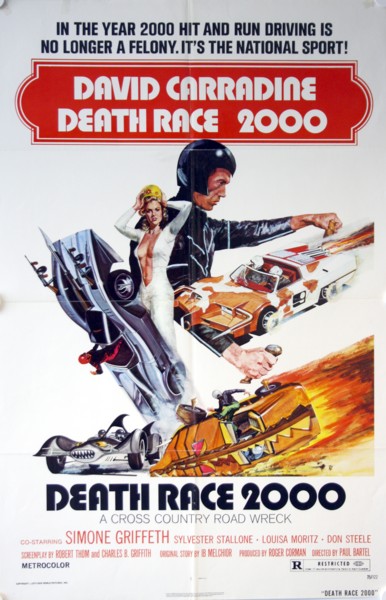
Don't mess with a pissed off trucker! White Line Fever is a secret blue collar masterpiece


Before he was the Bandit, Burt Reynolds was Gator. Both films also featured themes by underrated country singer Jerry Reed, who also starred.

1970s trash cinema, when Joe Don Baker could be an action hero.


The one and only Pam Grier


Death Wish 3 is grotesque, what a friend called "a Trump speech given sentient life." Trash cinema should occasionally make you feel icky for watching it.

Tuesday, May 22, 2018

Billboard Top Ten (May 25, 1985)

Growing up in Nebraska, late May meant the end of the school year. (Here in the Northeast I've still got another month.) I have very clear memories of the end of the school year when I was in third grade, since it had been a crummy year and I was ready to be done with it. One of my third grade teachers was a martinet who made us eat all of our food before we could leave the lunchroom. I also got all As on my spelling tests, but she only gave me Bs for the course on my report card. Summer meant getting out from under her thumb. It was also a time when the big studio production sound of the 1980s was in full flower. Now on with the countdown!

10. Howard Jones, "Things Can Only Get Better"

This is a very Brit-heavy top ten. Jones is one of the great forgotten pop stars of the 80s, scoring a bunch of hits. Unfortunately for him, his sound was so clued into the times that it aged very poorly. This song's chorus still gets me, though. I hear it and I am immediately transformed to hanging out at the public pool in the summer of '85, when the PA played the local hits station all summer long.

9. Power Station, "Some Like It Hot"


Power Station were THE supergroup of the 80s, including members of Duran Duran and Robert Palmer. "Some Like It Hot" takes the big bang sound of the 80s to its furthest limits. Palmer has the salacious sweat to give this number some extra sizzle with the crack rhythm section of Chic's Tony Thompson and Duran's John Taylor behind him. I imagine this song was huge in the clubs in '85.

8. Billy Ocean, "Suddenly"

Another Brit! Billy Ocean had a huge raft of hits in the mid-1980s. This one cuts against type as a syrupy ballad. Usually his songs had a big happy sound ("When The Going Gets Tough" etc.) or a slightly dark, rain slicked streets feel ("Caribbean Queen"). The structure and melody sound straight out of the late 70s, it's a very unlikely 80s hit.

7. Murray Head, "One Night In Bangkok"


That's right, yet another Brit, performing a song from a musical co-written by Bjorn and Benny from ABBA. Nowadays the Orientalism of the lyrics bugs me, but at the time I loved this song. It has a kind of thumping, sleazy beat to it that was unlike most stuff on radio. Back then I had no clue about the musical and its commentary on the Cold War, or what a "massage parlor" was. Flute solo!

6. Madonna, "Crazy For You"

Madonna's image and presentation were revolutionary but her music has always been kinda boring and derivative. This song was hardly innovative, but was a straight up ballad, as opposed to the dancier stuff that she put on the charts. It's also the first single where I really feel like she learned to use her voice well.

5. Sade, "Smooth Operator"

And now back to the Brits! This song has a funky, skanky feel from the 70s, but a sultry sax tailor-made for the 80s. Sade really gives this song the subtle interpretation that it requires. I was getting into Bond movies when this song came out, and I always pictured the "smooth operator" to be a Bond-like character.

4. Harold Faltermeyer, "Axel F"

How much did we love synthesizers in the 80s? So much that a synthesizer instrumental made the top ten, baby. Nine year old me LOVED this song. It was freakin' ubiquitous back then, from wedding dances to the radio to the background of the hold screen for the local cable access TV station.

3. Tears for Fears, "Everybody Wants To Rule The World"

The production is peak 80s but this song still holds up. Tears for Fears were in many ways the absolute tail end of New Wave, and figured out how to blend those sensibilities with the demands of the mid-80s pop world. (And they were, of course, British.) Their lyrics were deeper than the run of the mill top 40 stuff, but the choruses were still catchy.

2. Simple Minds, "Don't You (Forget About Me)"


More Brits, by way of Scotland. Due to its inclusion in The Breakfast Club, this song has become a metonym for the 1980s. It has the exuberance of youth and that teenage feeling of emotional friction. While the production is total 80s, it still holds up because lead singer Jim Kerr puts some real feeling into and the music itself has some of that gusto in it.

1. Wham! "Everything She Wants"


This one kinda scared 9 year old me. This talk of "you're having my baby" confused and frightened me. Did people who weren't married have babies? (I was a very innocent child, which would soon lead to plenty of taunting.) Needless to say, more Brits! This song is very 80s in its tale of personal ruthlessness. Some people want to use you, some people want to be used by you.

Wednesday, May 16, 2018

Indiana Jones And The Temple Of Regret

This poster grabbed my imagination back in '84

[Editor's Note: I wrote this as a submission to an online film magazine asking for pieces on reconsidering films we once loved. It didn't get accepted, but I still want to share it with you, dear reader.]

I was born in 1975, meaning that I am of a certain cinematic generation that grew up repeatedly watching certain movies that were taped off of television broadcasts onto VHS. It is hard even to recall now the state of home video in the first two-thirds of the 1980s when VHS copies of movies were priced at about a hundred bucks in 1980s money. In those dark days movie studios figured most of their films were being sold to video stores, so they needed to make sure that they got their due and proper.

Being a kid at this time meant that your parents got ultimate veto power over the films rented from said video stores, and parents were not too keen on renting films like Indiana Jones and the Temple of Doom over and over again, no matter how much the kids liked it. That’s where taping movies off television became a lifesaver. I became an expert at timing the pause button so that I could cut out the commercials while not shaving any time off of the movie. It is a now useless skill that many of my fellow Gen Xers possess.

I would watch the weekly TV listings in the local newspaper like a hawk, always ready to add a new favorite to my collection. I was especially delighted when I got to tape Indiana Jones and the Temple of Doom, which at that time I (now embarrassingly) considered to be better than Raiders of the Lost Ark.

Some context is order. Temple of Doom came out in the summer of 1984, and I never got to see it in the theater. It seemed, like Ghostbusters, to stay at the mall threeplex in my rural Nebraska hometown for the entire summer. I would walk by a poster for it at the mall for weeks, tantalized by my hero Harrison Ford holding a sword and a whip, his shirt unbuttoned to reveal a muscular chest. Perhaps my mom considered it too mature. After all, it is the film (along with Gremlins) credited with bringing on the PG-13 rating.

What made matters worse, when I got back to school in late August, Temple of Doom was the only thing anybody wanted to talk about. My friends talked wide-eyed with wonder about monkey brains, baby snakes, and eyeball soup. The banquet scene was the kind of epic gross-out fest that prepubescent boys find unassailably awesome. But that wasn’t all. I heard that there was a scene where the villain ripped the heart right out of someone’s chest. How could such a thing even be possible? One of my friends had a novelization of the movie (remember those?) and the color photos inside tantalized me like little else. I felt like I had missed one of the greatest events of my lifetime.

Of course, once it came out on VHS, an eternity in those days, all of my high hopes were more than fulfilled. No one had told me about the spiked floor and ceiling almost crushing Indy, or the insane shootout at the nightclub, or the river raft sledding down the Himalayas, or Indy cutting the rope bridge over the gorge with his sword. There was a little kid sidekick to identify with, and the coal car chase, one of the most thrilling things I had ever seen. Taping it off of television meant that I could watch it as many times as I wanted to, and I am still not sure of the number. In those times of langorous, long summer days full of hours waiting to be filled, there was plenty of opportunity to dive into the VHS tapes and dig out Temple of Doom.

Temple of Doom soon got eclipsed by Last Crusade, which I saw in the theater on the last day of school in 1989. It was almost a religious experience, seeing an amazing Indiana Jones film with the entirety of the summer just stretched out and lying there before me. I doubt that I will ever leave a movie theater in greater ecstasy than I did that evening.

My viewings of Temple of Doom began to drop off after that point, but it still had a warm place in my heart. Years and years passed, and sometime in my early 30s, while talking with friends about ranking movies, one of them said that Temple of Doom was obviously the worst Indiana Jones movie. Could that actually be? Evidently a lot of people felt this way. Perhaps spurred by that conversation I sat down and watched the trilogy of Indiana Jones films, and realized that my friend was absolutely right.

It was a shattering experience, the adult equivalent of realizing there is no Santa Claus or that American history is a depressing litany of horror. Between my childhood and my early 30s not only had grown older, I had gone to graduate school in the humanities. There is little else that can turn someone into a hypercritical buzzkill than this life path. Watching Temple of Doom I realized that it was, in the dreaded parlance of grad school, “problematic.”

Lucas and Spielberg modeled the Indiana Jones films off of action serials that were old when they saw them re-run on TV in their youth. Those serials, which often featured sinister “oriental” villains like Fu Manchu, were super-racist. So was Gunga Din, the 1939 action hit featuring the title character played by a white guy in brown greasepaint. That tale, set in India, was supposedly one of the influences on Temple of Doom. Both films featured a bloody Kali cult, portraying Hinduism as a religion promoting ritual murder. For this reason, among others, India’s government did not grant Spielberg permission to film there.

In that context the banquet scene horrified me, but in an entirely different and not fun fashion. The monkey brains, eyeball soup, and baby snakes fit into long-standing tropes portraying Asians as barbaric, twisted, “other.” As someone who would gladly eat his weight in lamb saag and nan, I knew that this scene had nothing to do with actual Indian food. (I had regrettably never had any Indian cuisine in rural Nebraska in the 1980s.)

As in Gunga-Din, the British empire comes off as necessary and essentially benevolent. At the end of the film it is the British imperial troops and their red-coated officers who come in and help save Indy. The educated Indian official who challenges the British army officer at the banquet is ultimately weak and easily dominated by the Kali cult. The implicit support of imperialism is pretty clear, but probably so unquestioned that George Lucas and Stephen Spielberg did not really think much about it.

Beyond celebrating an empire whose policies led millions to die in multiple deadly famines in India, there are things that make watching Temple of Doom difficult that have nothing to do with its politics. There’s also the screeching. Oh the screeching! In this movie Indy has not just one, but two sidekicks, and they love to screech. There’s Short Round, the Shanghai street kid, and Willie Scott, the American nightclub singer.

Jonathan Ke Quan as Short Round must have been auditioning for his role The Goonies, which has got to be the screechiest movie of the 1980s. A lot of his response to dangerous situations is just to yell out really loud. Of course, the viewer almost forgets that when confronted by the constant, hurricane-force caterwauling from Kate Capshaw as Willie Scott. Practically every scene involves her shrieking and screaming, a walking parody of male stereotypes of femininity.

It would be easy to blame Capshaw for this performance, but I won’t. Her character was written in a two-dimensional fashion, and Capshaw is simply playing that character to the hilt. When she yells out “AND I BROKE A NAIL!” after a litany of complaints it’s effectively silly and expresses a thirteen year old boy’s understanding of women’s emotions, but she gives the line a reading with much more conviction and humor than it deserves. For that reason my sister (who also loved this movie and watched it on tape with me) would repeat it with a cackle.

In the writing of Willie Scott and Short Round and in the impossibly over-the-top moments, such as the banquet, Indy and Willie falling through several canvas overhangs in Shangai, and to somehow surviving a fall out of an airplane in an inflatable raft I see signs of Lucas and Spielberg’s problems with comedy. Spielberg had previously tried to turn complete outlandishness into jokes in 1979’s 1941, his first failure. That movie is monumentally unfunny. While Temple of Doom’s jokes have a higher batting average, the worst moments have parallels in that earlier film (which also treats women horribly.)

George Lucas’ funnybone, as we all should be well aware by now, goes in some odd directions when he is left unsupervised. Just witness Howard the Duck or the Star Wars prequels. The droid factory scene in Attack Of The Clones might be the most unwatchable snippet in all of the Star Wars films, and it was inserted late in production as comic relief. It’s less reviled than Jar Jar –himself a horrible attempt at comedy- but probably a bigger offense because at least Jar Jar is memorable in his awfulness.

In Temple of Doom, made when both Spielberg and Lucas were under the stress of divorce, some of their biggest flaws as filmmakers are exposed. A lot of the same things dragging this film down are what made Indiana Jones and the Kingdom of the Crystal Skull so forgettable and put “nuking the fridge” into the cinematic lexicon. No child today is craving to watch that film over and over again, VHS tape or not.

That said, Lucas and Spielberg were still young and inventive in 1984, and despite changing my mind about Temple of Doom, there’s still things I love. The coal car chase is an absolutely thrilling bit of action filmmaking, all amazingly done without the use of CGI. The very beginning, with the lush old Hollywood musical touches as Kate Capshaw sings “Anything Goes” is a wonderful Busby Berkely throwback. The shootout in Club Obi-Wan (groan) is a master class in action film-making. 

And, truth be told, when I watch it I am transformed a little into that kid who once loved Temple of Doom. For me I guess it holds the same place those old adventure serials did for Lucas and Spielberg: a trashy bit of fun wrapped in the gauze of nostalgia. Maybe that was their point all along.

Saturday, May 12, 2018

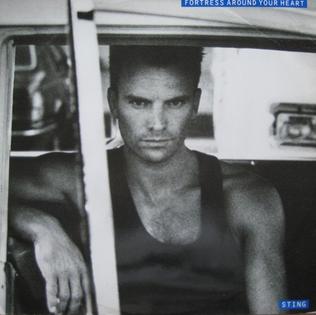
Classic Music Videos: Sting, "Fortress Around Your Heart"


Different eras have different color palettes. I read a New Yorker article about this once, and it fascinated me. All of a sudden designers of clothing and consumer products will decide that certain colors are "in." This is what gave us that avacado green and sunflower yellow refrigerators of my early childhood memories.

After the earth tone explosion of the late 70s and early 80s, pastels came back hard, but so did gray. Don't believe me? Just check out the original NES system.


The use of neutral colors, especially gray, saturated so much at the time, from suits to appliances. It even extended to the world of music videos. The dayglo fantasia of 80s MTV coexisted with vids that were much more self-consciously "serious." These tended to be made by artists who were both popular and trying to "say something."  (Just think of the U2 video for "With Or Without You.")

Sting, of course, fit that bill perfectly. It is difficult to remember, but at this time he was one of the top pop stars, not yet an avatar for the lamest middle of the road. And to drive that point home, the video for "Fortress Around Your Heart" starts in color, but when he starts to perform, it goes to black and white. But it is a washed out, gray black and white. During the part in color he is cajoled by an oily guy in a bad suit to perform in front a video camera, perhaps Sting's commentary on MTV. Like all serious 80s artists, he must communicate that he is above the machinery of the music biz. It's a thoroughly gentrified version of punk rock values.

Now I must admit that I still like the song alright. It has a haunting feeling to it and the chorus is super catchy. This is not the joyously stupid 80s of partying while capitalism runs amok. It is a relic of the 80s of fears of nuclear war, of fretting over what is being lost in the Reagan/Thatcher onslaught. As tame as the implicit critique is, the pop music world today still mostly churns out hymns of self-affirmation or materialistic party music. The threat of annihilation persists, but now it is the earth itself we fear, and not nukes, and we all know, deep down, this time the apocalypse will not be averted.

Thursday, April 19, 2018

Track of the Week: Tears for Fears, "Mad World"


Right before my parents came to visit I suffered from a pretty intense attack of the black dog. The seasons have a big effect on my mental state, and this endless winter we are experiencing had me down, plus work stress and some bad news about the health of someone very close to me.

In times like these I tend to turn to the music I listened to in my youth when I wanted to wallow in sadness. (Sometimes the wallowing makes it better.) This meant Depeche Mode and New Order, since the cold synthy sound of those bands fits the purgatory of the late winter. While assembling a queue of songs in that vein I added Tears for Fears' "Mad World."

I soon became obsessed with it, playing it every day during my commute. Even though I am a child of the 80s, I still knew the song best in the form of Gary Jules' excellent cover, which has eclipsed the original in the collective pop cultural memory. Whereas his song is a quiet lament on a dark night of the soul, Tears for Fears give us a thumping 80s synth pop song. The synths are deep and dark however, more John Carpenter soundtrack than Duran Duran.

It's an incredibly bracing song for one that hit the top ten in the UK, where there seems to be more of a market for sad sack anthems. A line like "The dreams in which I'm dying/ Are the best I've ever had" which is a powerful yet oblique reference to being dogged by suicidal thoughts. It's generally a lament for the treadmill of life, and expresses the nagging doubt (which I often have) that nothing in this world will ever get better. It will be the eternal return of the same, forever and forever and forever. We will all just be stuck desperately plugging away until the day we die while greedheads lord their money over us.

In case you don't know, Depeche Mode is on tour and making serious bank. My fellow dark British 80s pop loving Gen Xers are in middle age, when songs like this have translated our teen angst into fortysomething sadness and fear. It's music that isn't talked about much in the rock or pop canons, but it has more than stood the test of time.

Wednesday, March 28, 2018

REM's Life's Rich Pageant And The First Shadows Of The Reagan Dusk


We often tend to mistakenly think of the 1980s in ways that paint it as uniformly conforming to certain trends consistently throughout the decade. If you look into the cultural and political history of the 1980s, however, you will see something in the late 1980s I call "Reagan Dusk." During this period criticism of unequal social conditions became more prominent in popular culture, and there was a growing negative reaction to what neoliberalism had wrought. This coincided both with the thawing of the Cold War and the Iran-Contra Scandal, which undermined the Reaganite view of global conflict as well as trust in the Gipper, respectively. The president himself was sundowning, growing senile and more prone to health problems. Public memory of the 1980s has mish-mashed it into a big neon spandex blur, the so-called "Greed Decade" for many progressives, or a golden age overseen by Ronald the Great by conservatives.

Both interpretations are wrong. Dissent coincided with greed. Reagan's popularity waxed and waned, and his so-called "revolution" started running into its own limits.

1986 was the crucial transitional year for all of this. That was the year the Iran Contra scandal broke, hampering Reagan's popularity and bringing on talk of a second Watergate. 1986 was also saw a summit in Iceland between Gorbachev and Reagan that heralded a great lessening of tensions between the superpowers. Earlier that year the Chernobyl disaster forced the hand of glasnost in the Soviet Union. In America Reagan signed a massive tax bill that included tax increases on the wealthy from the extremely low levels he had set in 1981 and a tacit admission that supply side economics were not magic beans that could lower the deficit by cutting taxes. (Of course, that idea would soon be back.) All the while, AIDS raged, the horrible toll unacknowledged by the president. In a nation where thousands were dying of disease, there was no "Morning in America."

Popular culture, however, took longer to catch up. The ultimate expression of Reagan-era ideology on film, Top Gun, was the highest-grossing film of the year. The same year also saw Cobra, Sylvester Stallone's bluntest 80s statement on violence as will to power. (His catchphrase, "you're the disease, I'm the cure" sounds chilling post Trump.) Popular music was as big as the shoulder pads and hair so common at the time and as loud as the patterns on the shorts and dresses of Americans that summer.

At the fringes, however, the Reagan Dusk was just barely visible. It could be heard on Life's Rich Pageant, the fourth album from REM, the rock band poised to bring the sound of the underground to the mainstream. REM's first three albums are masterpieces of jangly guitar and mysteriously mumbled lyrics with an overlay of Southern Gothic on top. Your average indie rock fan today still pays homage to them. They are less likely to do so for Life's Rich Pageant, where the band took a turn that in retrospect ought to be lauded rather than disdained.

The change is obvious immediately, as "Begin the Begin" starts with a hard-edged rock riff and loud feedback beneath Stipe's voice, which is suddenly much clearer, the lyrics more legible and now, for the first time, topical. The loud snare drum reflects the times and the production of Don Gehman, who had worked on heartland rocker John Cougar Mellencamp's albums. This song is a call to arms amidst the wreckage of the Reagan Era, but the lyrics are cryptic enough not to make it a traditional "protest song." There is dark talk of "The powers/ the only vote that matters" but a cautiously optimistic cry "let's begin again" as well.

Before the listener can catch their breath, the song transitions immediately without pause into "These Days," with a fast, loud, blistering riff by Buck over muscular Berry drums. (This is the album where Bill Berry's beginnings as a metal-head are most evident.) It might be the only REM song that encourages head banging. The words are fiery too, "We are old despite the times" and "I'll rearrange your scales." The one-two punch of "Begin the Begin" and "These Days" is an announcement that REM has abandoned its Southern Gothic Folk Mystery thing and is grabbing for the crown of Band That Matters.

These days, when Bono has become kind of a joke and social media has made political activism more accessible, the significance of this move has been diluted. In the middle of the Reagan Era, when nuclear war threatened, cities rotted, and AIDS ravaged the country while the media and political figures barely seemed to care, music stepped into the breach. For someone like me, who grew up in a very rural, conservative area, it was not just a lifeline, it paved a way for my embrace of a more progressive politics. Hip hop (and especially Public Enemy) provided me with the most radical musical critiques, but REM was important too. After all, they hailed from Athens, Georgia, and were a sign that resistance to the dominant politics of the time could exist in places like the one where I lived.

The political themes continue on the first side of the album, but songs ease back into folkier territory, such as in the ringing, beautiful "Fall On Me." "Buy the sky/ And sell the sky/ And lift your arms up to the sky/ And ask the sky and ask the sky/ Don't fall on me." I remember Stipe saying it was about acid rain, but for obvious reasons it calls to mind other environmental dangers we face today. The beautiful Mike Mills background harmonies truly make this song, though. While REM might be headed in traditionally more "rawk" directions here, they are doing it their way with their own unique sound.

"Cuyahoga" continues discussion of the environment, referencing the Cleveland river that was once so polluted that it caught fire. It also discusses Native American history, and how this nation's wealth was built on the theft of others' land. Such critical re-evaluations of American history would be more commonplace during the Reagan Dusk, leading to the inevitable anti-PC backlash of the early 1990s. The sound is folkier than the album's start, but the lyrical message is unmistakable.

After those first four songs, the political elements are more subdued once the band has laid down the gauntlet. With different, less big production, "Hyena" could belong on Reckoning. Of course, lines like "The greater the weapon, the bigger the fear" seem to reference geopolitics just a little. The jaunty Latin dance-y song "Underneath The Bunker" with Stipe's unintelligibly filtered voice might be a nuclear war reference, but that's easy to ignore. It closes out side one, cheekily called the "Dinner Side."

Side two, the "Supper Side," goes into more explicitly political territory with "The Flowers of Guatemala." (On CD the transition from "Underneath the Bunker" to this more serious song is quite jarring.) The song references, of course, America's support for brutal military regimes in Guatemala, but does so in a mournful rather than rage-filled way. Stipe sings mournfully of the flowers on the graves of those murdered by the state. It is one of the most moving and powerful songs in REM's canon, and highlights issue that most people in this country, even those who are political progressives, choose to ignore. Amid the justified anger over Russian meddling in American elections, folks in America might want to take a minute and ponder what their own country has done elsewhere.

It's hard to top a side-opener like that, and REM really doesn't. A trio of solid but less evocative songs follows: "I Believe," "What If We Give It Away," and "Just A Touch." The latter is my favorite for its up-tempo punkiness and the story behind it. Evidently as a teenager Stipe witnessed an Elvis impersonator being mobbed on the day of the King's death by a group of distraught female Elvis fans, one of them saying "C'mon love, just a touch." The whole thing is just a fun rave-up and an unlikely segue into "Swan Swan H."

This acoustic song puts us back into REM's Southern Gothic mode big time. The lyrics reference the Civil War, Reconstruction, and Emancipation ("Hurrah we're all free now.") For such a politically important time in America's history, there does not seem to be much politics here, more setting a mood. That said, it's catchy as hell and in my youth I would listen to it over and over again. The album ends on an unlikely note, with a cover of an obscure 1960s song, "Superman" by The Clique. It puts on full display the band's love of psychedelic garage rock (which is all over the rest of the album), but also mirrors another aspect of the coming Reagan Dusk: 60s nostalgia. One could argue it was kicked off in 1986 when MTV ran a bunch of Monkees episodes one weekend. Nostalgia for that decade, of course, was a kind of a political statement in itself in the midst of the conservative backlash.

Life's Rich Pageant is a classic "tweener" album. REM abandoned the formula that the Pitchfork crowd still idolizes, but its new, rock oriented sound did not yet yield any hits. That would soon come with 1987's Document, once the Reagan Dusk had truly started to fall. Life's Rich Pageant is a document of the other 1980s, the 80s of dissent and protest and resistance, of ACT-UP and anti-Apartheid. In our own fraught times when we need to begin again, it is well worth another listen.

Friday, November 3, 2017

Classic Music Videos: "West End Girls"


Growing up in rural Nebraska in the 1980s and early 1990s, MTV was absolutely essential. In those pre-internet days, it was my main conduit to the hip world. (That and the magazine rack at the library and Walgreen's were it.) When I was older I would sit enraptured on Sunday night to 120 Minutes, taking notes on songs that I liked and then hoping the albums were available at the local Musicland.

Before that point, MTV still mattered in the ways it presented the pop music I liked on the radio. A great example is the Pet Shop Boys' "West End Girls." I knew the song, I thought it was super cool (mostly because my older cousin who had good taste liked it), but the video was like a trip into another world. Even though I've been there, when I think of London, I think of this video. At first it doesn't show the London of Big Ben or Buckingham Palace, but the London of boxy modernist buildings, cluttered streets, and turned up collars. Later, when we see some of the monuments they look washed out, faded.

The song itself is about the feeling of disconnection and quiet alienation that one can feel in the city, perfectly embodied by the gorgeous synths and Neil Tennant's wonderfully arch, emotionally detached delivery like Marlene Dietrich in The Blue Angel. In the video he strides in a determined fashion, his long overcoat flowing with Chris Lowe in a tough black leather jacket, quietly half scowling.

At the time I did not know anything about Tennant and Lowe's sexuality, but I definitely put them in the context of other British New Wave/synth acts of the time, who did not project the over the top masculinity of hair metal, the dominant musical genre in my hometown. These men were less testosteronal, and being a nerdy kid who tended to fail to conform to masculine ideals at school, I found that attractive. (It should come as no surprise that the second CD I bought was Depeche Mode's Violator.) I could watch this video and imagine myself in a big city, striding down the street in an overcoat. That's perhaps why when I finish my morning commute by walking up Broadway from 72nd street, I pop this song in my headphones and feel like my life took me in the right direction.

Monday, October 16, 2017

Billboard Top Ten: October 19, 1985

I've been spending a lot of late nights looking up old 80s music videos, and have found peak 80s to be in the 1984-1986 sweet spot. At this point the funk of the 70s had been completely erased, and Reagan's "morning in America" schtick was at its most popular. The top ten chart from this week in 1985 is just about as 80s as it gets.  On with the countdown!

10. Tears for Fears, "Head Over Heels"

By 1985 the post-punk British explosion and all that new wave jazz had evolved (or devolved, depending on your perspective) into a group like Tears for Fears. Their music was very poppy, but still personal and lyrically more deep than the average top 40 fare. (That's probably the reason it made it onto the Donnie Darko soundtrack.) At the time I really liked it.

9. Sting, "Fortress Around Your Heart"


This is another song I really dug back in '85. People forget what a big deal Sting was at this point, his name iconic as the other one-name-wonders Madonna and Prince. His solo music was not even as close to being as good as The Police, but this song had a little magic in it. The grayscale video and vibe of the song reflected the renewed 80s Cold War situation. It's better than anything else Sting would manage in his solo career.

8. Mick Jagger and David Bowie, "Dancing In The Street"


Ohhhhhh boy. This song and video has now become shorthand for lameness. It was a song put together for charity, so I can't be too critical, but man, this is a classic case of being too big to be told no. The 80s butt rock behind this track is as obviously tacky as the color of Mick's shirt and the print of whatever the hell Bowie is wearing. At this point Bowie's momentum from "Let's Dance" had crashed and Jagger was inexplicably feuding with Keef and trying to pass himself off as a solo artist. If you ever want to show anyone how bad the 80s could be, just show them this.

7. Dire Straits, "Money For Nothing"


Here's a song in that genre new to the 80s: songs that became megahits due to their videos. Gather 'round, kiddos, and I will tell you of a time when the sub-screen saver animation of this video was a revelation to us oldsters. The song and video were so meta because they were also commentaries on the ubiquity of MTV. The use of the awful word "faggot" in this song, even in a satirical context makes it difficult to listen to these days. That word was still flung around with ubiquity back then, so much so that on the playground I had no clue that it was a very specific slur. As bad as shit is nowadays, I would never want to go back to 1985.

6. John Mellencamp, "Lonely Ol' Night"


Back in my rural Nebraska homeland growing up there was a holy trinity of contemporary rock music: Bruce Springsteen, Tom Petty, and John Mellencamp. The latter's rural Midwestern origins oozed through his music and really resonated with me. Even his minor hits got saturation airplay on local radio. This was one of my favorites, since it captured the feeling of being in a small town with no action and trying to find that spark of human connection.

5. Jan Hammer, "Miami Vice Theme"


Oh God did I love this song and this show. It was on Saturday night, so I could stay up late enough and watch it. It just made me feel so mature and cool just to be associated with it. The show also had one of the great all time opening credits sequences, which makes Miami look like the hippest place on earth, at least in 1985. The show and synthesizers were so cool in 1985 that its theme could make the top ten. Funny how what we thought was the future is now such an obvious relic of the past.

4. Ready For The World, "Oh Sheila"

I had totally forgotten about this song. The drum and synth sound is pure Prince. I even had to look up if this group was produced by him, but nope. It's a pretty clear version of "drive it like you stole it," but I think it still works.

3. Stevie Wonder, "Part-Time Lover"


This one is sultry and bouncy like a Hall and Oates song. It's a weird kind of thing where the man who originated the sound is imitating the people who imitated him. It's a decent pop song, but pretty lame compared to what Wonder was doing in the 70s. At least he's not embarrassing himself a la Jagger and Bowie.

2. Whitney Houston, "Saving All My Love For You"

I know it's not popular to say this, but Whitney Houston was one of the great wasted talents in musical history. She had an amazing voice, and would often use it in thrillingly creative and surprising ways. It was a shame that her voice was paired with consistently boring, insipid songs and arrangements. If only she had come up in the 60s and 70s, and not in the 80s, which was a dark decade for the poppier side of soul music.

1. a-ha, "Take On Me"

Oh boy, here it is. This right here just might be the most 80sed thing that ever 80sed. The keyboard hook alone makes this a true relic of its time. How in the hell did a Norwegian synth pop band hit the top of the charts? By making perhaps the most bitchin' emotional roller coaster of a video yet seen. Once MTV could take a band like a-ha to the top of the charts the mighty M was truly king. How long did that reign last? It's hard to say, but it as long as it did, it never captured the zeitgeist quite like in did in 1985.

Saturday, October 7, 2017

Nostalgia Rock And The Reagan Dusk


I've talked a lot on here about what I call the "Reagan Dawn," that cultural period from 1979-1982 where the transvaluation of values in favor of neoliberalism took place. I have also begun to theorize what I call the Reagan Dusk, which I date roughly from 1987 to 1991. This was a time when the promises of the Reagan Era appeared to have been false, and when the end of the Cold War forced a reckoning with the consequences of valuing missiles over people. There were contradictory forces to this self-reflection, such as the Gulf War and the peaceful collapse of communism. While these events seemed to say that America had triumphed, the social problems of the time appeared to expose them as Pyrrhic victories. (Neil Young's searing "Keep On Rocking In The Free World" and Public Enemy's "Fight The Power" both hit in 1989 and were calls to action after years of neoliberal regression.)

Culturally, this was a time when the day-glo of the 80s had muted into earth tones, primary colors, and baggy sweaters. (Watch the original Twin Peaks and look at the clothes and you'll know what I am talking about.) Rap music was confronting the realities of American life under Reagan, but the only acts to get played on the radio were the likes of MC Hammer, Young MC, and (yikes) Vanilla Ice. There was too a growing underground rock scene, but it was far left of the dial. Culturally the nineties started in late 1991, once "Smells Like Teen Spirit" dropped and NWA's second album went to number one.

During the Reagan Dusk, things in the rock music world were more confused. Hair metal was the most popular genre, but was despised by anyone over the age of fourteen with five working brain cells to rub together. The rest of us, searching for "authenticity" fed on a diet of what I would call "Nostalgia Rock." This was music rooted in the 60s, often by musicians from that era, which consciously or not opposed the values of that era to the ones of the late Reagan years. Some of this music was purely nostalgic (like George Harrison's "When We Was Fab"). Sometimes the artist simply played original songs in the mode of older forms (like Chris Isaak.)

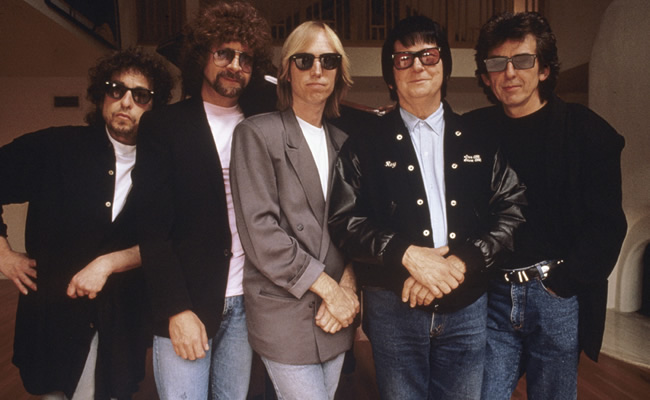
The curtain-raiser on this phenomenon was the Traveling Wilburys, a supergroup formed out of Tom Petty and the Heartbreakers touring with Bob Dylan. Jeff Lynne had produced friend George Harrison's hit Cloud Nine, and Roy Orbison somehow got roped in, too. Petty was the only artist of the now, the others were long in the tooth. This band of geezers cut some hits on their first record in 1988, including "Handle With Care," which still holds up. (I love the contrast between Dylan's late period quack and Orbison's soaring opera tenor.) It also happened to be the beginning of a Bob Dylan renaissance, as evidenced by 1989's Oh Mercy. This Wilburys supergroup album, which might have been dismissed in a time less starved for authenticity, went multiplatinum and won a Grammy.

Soon the deluge followed. In 1989 a bunch of sixties artists hit the road, including bands that had broken up, like the Who. The Rolling Stones toured behind Steel Wheels, inevitably prompting "steel wheelchairs jokes." (The joke's on us, since it's almost thirty years later and the Stones are still rolling.) There was a lot of Boomer nostalgia involved, but also a lot of curiosity by younger people (like myself) who rightly thought "Paint It, Black" far superior to "Cherry Pie." The Stones' current music was mediocre at best, but Steel Wheels was showered with accolades and sold very well.

Other legends managed to find their way back into the charts in this late 80s era, like George Harrison, Roy Orbison with "You Got It", and the aforementioned Neil Young.  Hell, even the damn Grateful Dead had a big hit with "Touch of Grey." Younger artists who borrowed from older styles also broke through. REM became the sole band of the pre-"Nevermind" underground to surface into mainstream MTV and radio play with a Byrds-y sound rooted in the sixties. Tom Petty's Full Moon Fever spawned several hits also with a very retro Byrds-y sound that departed from the more electronic, progressive music on songs like "Don't Come Around Here No More" and "You Got Lucky." Chris Isaak's pompadour, reverby guitar, and Orbison-esque vocals made him look and sound like a lost rock and roller who had fallen asleep in 1962 and woken up in 1990. The Black Crowes emerged big time in 1990 with a sound deeply rooted in early 70s southern rock and had a hit with a cover of Otis Redding's "Hard To Handle."

By 1990-1991 things got meta, and songs like "Black Velvet" and "Walking In Memphis" began to comment on the music of the past and its authenticity. Alannah Myles' "Black Velvet" was about Elvis while never saying his name. The song itself was a sultry blues, rather than Elvis' rockabilly, but recalled a music that could change the world. In 1990, that felt like a long time ago. Marc Cohn's "Walking In Memphis" made all kinds of references to American soul, gospel, blues, and rock n' roll but the song itself was built around a catchy piano hook that was very 1991. Cohn's love for this music is pretty obvious in the lyrics and his passionate reading of them.

But living in this time the years and years of nostalgia for a past music that mattered wore thin on youngsters like myself. I wanted my own music, and had been digging to find it. Public Enemy, Ice Cube, NWA, and Eric B and Rakim all energized me far more than what I was hearing on the radio. The music that mattered to me and felt important was not rock music. That changed in the autumn of 1991, when Metallica's black album and Nirvana's Nevermind dropped. Suddenly punk and metal were going from the losers and glue sniffers to the mall. Even the excesses of Guns n Roses' Use Your Illusion albums (released in late 1991) felt like a jolt to a rock scene desperately in need of one. Pretty much from that point forward the aping of the 60s lost its charm, and the new music made by the legends was immediately cordoned off into the geezer rock pastures. (Except for Neil Young and Tom Petty, who put out great stuff in this era.) For a teenager desperate for HIS generation to have its own musical heroes, it was a kind of deliverance, and marked the end of the Reagan Dusk and the dawn of the nineties.

Tuesday, May 2, 2017

Billboard Top Ten May 3 1986

I tend to think of 1986 as peak 80s. It's the year that Top Gun game out, the most 80s movie of the 80s. It's before the stock market fall of 1987 and the ensuing savings and loan crisis and Iran-Contra Affair threw some cold water on the triumphalism of Reaganism. It also saw some songs that we still hear today. And now, on with the countdown!

10. The Bangles, "Manic Monday"

Written by Prince, and it sounds like it. (That's a good thing.) The Bangles keep his patented bounce, but add a bit of their own flavor to it. From this song to Garfield, we really liked to complain about Mondays in the 80s, didn't we? There's just enough of an edge of melancholy to keep this song from being kitsch.

9. Phil Collins, "Take Me Home"

I'll admit it, I really like this song. I've talked at length about Phil Collins on this blog, because he is such an odd artifact of his time. A short, aging drummer with a receeding hairline who someone managed to make it big in the music video era. His best music, like this song, contains a surprising emotional heft. My understanding is that this is a song about someone in a mental hospital who is desperate to go home again. Collins is pretty good at bringing that tragic longing across.

8. The Outfield, "Your Love"
By this time in the 80s the rock music that made it this high on the charts was by fossils like the Stones (more on them later) or pop metal or, as in this case, a kind of sleek, corporate rock. It's actually a gross song about a guy who is going to cheat on his lady with someone much younger. "You know I like my girls just a little bit older/ I just want to use your love tonight." It's catchy and those chiming guitars sound great, but it's all background for maximum skeeviness.

7. Whitney Houston, "The Greatest Love Of All"
This was originally recorded by George Benson in the late 1970s. Here it gets the fully 80s pop R&B treatment, but with strings rather than synths. It's a shame that a singer as gifted as Whitney Houston was always singing songs with such insipid lyrics and treacly backing.

6. Janet Jackson, "What Have You Done For Me Lately"
Surprisingly, this is the first song on the countdown with that classic, in your face mid-80s production anchored by a gated snare sound and metronomic beats. This song introduced the new, tough Janet Jackson that would reach her apotheosis on her next single, "Nasty." It's a mode that really suited her, and the songs from it hold up pretty well despite the production.

5. Rolling Stones, "Harlem Shuffle"
At this point the Stones were completely adrift and almost broke apart. The production is ridiculously 80s, and Jagger's clowning is even more garish. The song is a classic R&B cover, the type of thing they used to do a lot on their early records, except those songs were actually good.

4. Van Halen, "Why Can't This Be Love"
This once great band, which had given hard rock a necessary shot in the arm when they burst forth in the late 1970s, and made of the great mainstream rock albums of the 80s with 1984 are now fully ensconced in their tepid Van Haggar mode. The Red Rocker lacks David Lee Roth's impishness, and Eddie Van Halen's guitar seems almost completely tamed.

3. Prince and the Revolution, "Kiss"
This song was a staple at the grad student parties I went to in the early 2000s. Much funkier than the other stuff on the charts, you just can't help shaking it when this song comes on. Prince's falsetto is also an interesting choice, giving his lyrics less of a leering connotation. As usual, when viewed in context of the other songs on the charts his hits sound that much more fresh and innovative.

2. Pet Shop Boys, "West End Girls"
I loved this song when it came out and I still love it. The sound is so wonderfully moody, I want to live inside of it. It's one of the few examples of the edgier music of the day actually hitting the mainstream. I will still put this on my headphones and strut languidly up Broadway on my way to work.

1. Robert Palmer, "Addicted To Love"
Hoo boy, this is the mid-80s personified, from the sleek as sleek production to the arty misogyny of the video to the love as cocaine metaphor of the lyrics. The riff is simple and repetitive, but former soulster Palmer gives it just enough grunt and sweat to make it acceptably down and dirty, the top 40 equivalent of 50 Shades of Grey, if you will.