Showing posts with label 70s. Show all posts

Friday, June 23, 2023

70s Airport Movies as Pre-historic Blockbusters


Perhaps it's a reaction to the WGA strike, but all of a sudden I am seeing a whole bunch of older movies on Netflix again. Last week I saw that they had 1970s Airport and its sequels, and I figured they would make decent dumb entertainment for a lazy Saturday afternoon. 

They aren't great films, but definitely met the decent dumb entertainment criteria. The only one I had seen was the one from 1979 that took place on a supersonic Concorde, and I saw it at night on TV in a roadside hotel while traveling with my parents in the 80s. The airport movies were the kinds of movies shown on TV I grew up with, but the one I actually saw multiple times was Airplane!, a  hilarious spoof of the genre. I laughed at the jokes, but didn't get that the sick kid and stewardess flying the plane were direct calls to Airport 75. 

It's weird getting to known entertainment first through its spoofs, something that used to happen to me a lot when I first red MAD magazine as a kid. In a weird way, it's liberating. My expectations were already low, and it was fun to find the things that the parodists referenced. Because I am a cinema nerd, I became fascinated as I watched these films with their part in film history. 

I have an especially weird fascination with Hollywood's attempts to revive its lost relevance due to the rise of television and changing cultural values in the 1960s. Ultimately the way forward was to give the so-called "movie brats" the keys to the kingdom, a very well-documented story. The conventional narrative says that the era of "New Hollywood" ended when Jaws and Star Wars (made by a couple of movie brats) showed that the blockbuster could be Tinseltown's salvation, putting an end to the daring film-making of the early 1970s. 

While much of this narrative is true, I think the Airport movies show that blockbusters were already a thing before Jaws, but in a kind of pre-historic form in need of evolution, a celluloid trilobite, if you will. 1970s Airport was one of the first films to ever top $100 million in domestic box office. It also spawned numerous sequels, just like modern blockbusters.

The trilobite status of the first one is obvious in so many ways. The heroes are all film stars of the last generation (Burt Lancaster, Dean Martin, and George Kennedy) and so is the villain (Van Heflin.)  The film stars the great Jean Seberg, but in a secretary role where she is not given much to do. Similarly, Jacqueline Bisset ends up being the damsel in distress when Heflin's bomb blows a hole in the back of the plane. Absolutely nothing dates the film more than Dean Martin's rogueish Brat Pack act, which feels as out of place as singing "That's Amore" at a love-in. 

Unlike future blockbusters, the plot gets very soapy. It's less about the action and more about whether Burt Lancaster is going to divorce his shrewish wife, who is reasonably tired of him sacrificing his time to managing the airport. The film techniques are also very much in keeping with mainstream film-making of the late 60s, the kind soon to be swept aside in New Hollywood. The sets are pristine and the lighting so bright that you can see every corner of every room. The camera is pretty stationary, too. The use of split screens is the one nod to newer film-making styles. 

While it looks very old fashioned compared to the type of stuff Friedkin, Bogdanovich, Rafelson, Coppola etc were putting out at the time, from the point of view of 2023 I can say it's some of the most gorgeous cinematography of that particular late studio system style. People at the time certainly liked it, and much of the response was literally "they don't make them like this anymore!" There was a craving out there for big crowd-pleasing movies, the kind of thing TV (especially then) could not provide.

Airport 1975 (actually released in 1974) also had high production values, but it's also clear why Jaws and Star Wars would blow movies like this off of the screen. The special effects are really clunky, especially when the jet airliner gets hit by a small prop plane and a stewardess played by Karen Black has to take over. The scene when Charlton Heston, the ultimate sweaty token of Old Hollywood masculinity, gets helicoptered in is similarly laughable. Speaking of laughs, few come from the creaky, groan-worthy bouts of comic relief (with Jerry Stiller's drunk salesman the one exception.) 

Airport 1975 followed the formula of other prehistoric blockbusters like The Towering Inferno by packing the cast full of bygone stars that might get older audience members off of the couch and back in the theater. For example, Gloria Swanson shows up playing herself in her last film role. Karen Black is the only New Hollywood mainstay, and this film wastes her manifest talents as an actor. 

Beyond all of this, the Airport films like other prehistoric "disaster movie" blockbusters echo the downbeat themes of failure and disillusionment that permeated American society after the end of the 1960s. In Airport, Burt Lancaster has to fight against airport owners who are unwilling to finance necessary improvements. In the Towering Inferno, a new skyscraper catches fire, and in the Poseidon Adventure. a modern ocean liner sinks. The jet liner, once a symbol of advanced modern life, is shown to be fragile and a site of anxiety and fear. Star Wars had such an impact in part due to its optimism, of a human being heroically triumphing over the forces of evil in a "galaxy far away" not beset by our own problems. 

Star Wars would Airport movies look like the film equivalent of a horse and buggy in their own time. As more and more people begin to tire of CGI spectacles and Marvel's tiresome march of one blockbuster after the other, it's good to watch some prehistoric blockbusters and enjoy big popcorn entertainment still mired in the conventions of Old Hollywood. 

Saturday, September 19, 2020

Why Sorcerer Is a Great Quarantine Film

For years the film Sorcerer was more of a legend than a movie to me. Peter Biskind's book about 70s New Hollywood, Easy Riders and Raging Bulls came out right as I was becoming a film obsessive. I devoured and re-read it. He talks a lot about Sorcerer, William Friedkin's 1977 follow-up to The Exorcist and The French Connection.

In those films Friedkin had combined genre film-making with international art cinema techniques. The results were absolutely thrilling and made a lot of money. A few years ago I got to see The French Connection on the big screen and was blown away by its energy and creativity, hardly a usual crime film. Sorcerer came out in 1977 and flopped. It arrived in theaters right when Star Wars hit its wide release. 

As Biskind pointed out, the whole thing was a kind of metaphor of where Hollywood was heading. Blockbusters were in, arty movies by difficult directors were out. I learned in the book that Friedkin spent massive amounts of the money on the film. twice as much as Star Wars cost. The expense was not in models and special effects, but in getting the perfect shot of a truck driver shifting gears. Reading the book it sounded horribly self-indulgent.

The Tangerine Dream score is just too good

Sorcerer was very hard to find on video and wasn't streaming, but a couple of years ago I got my mitts on the blu-ray release. I bought it sight unseen because I had waited almost twenty years and I was damn well going to see it!

I also knew that the underlying story was a good one. It's an adaptation of the 1953 French film, Wages of Fear, one I had already seen and liked. In both films a group of outcasts and vagabonds in South America must drive trucks full of unstable nitroglycerin over treacherous jungle and mountain roads. Their pay will be their ticket out of a nightmarish existence. With a setup like that, it's hard to go wrong. 

In Friedkin's version we get to see how the four vagabond criminals came to be outcasts. One is a Mexican assassin, another part of a New Jersey gang that met a band end, another a Palestinian terrorist, and the last a corrupt French banker. The films starts as four short films, a format I find innovative and interesting. 

The film has been criticized for having all this setup for characters who still remain distant from the audience. I actually like that. These outcasts -who know they have done wrong- are really standing in for the broader human experience of being playthings in the hands of fate. All four were unlucky, and while they did bad, they seem more honest that the oil company officials sending them on their deadly mission. 

The tension in some of the scenes, especially in driving the trucks over a rope bridge swinging in a raging storm, is almost unbearable to watch. Seeing the film last night, however, it felt more familiar and less fantastical.

School has started again, meaning that I am working like the devil to make distance learning work for my students while juggling my children's education needs and somehow preparing meals in the midst of days that are spent in a constant state of frenetic anxiety. It really does feel like managing my emotional state is akin to driving a truck full of nitroglycerine over a flimsy jungle bridge in a thunderstorm. Like the characters of the film, I have no confidence that I can make it, but not pushing forward is not an option. It must be done.

The universal quality of the characters' dilemma is helped out by the fact that none of the actors (who do a great job) are stars. The closest is Roy Scheider, who is the kind of actor who only could have been famous in the 70s. His charisma is more subtle, but his presence is unmistakeable. At the end, when his mind is fraying under the stress he is enduring, you can put yourself in his shoes the way you couldn't with say Steve McQueen.

This past year has reminded me more than ever that I am at the mercy of forces well beyond my control. I have had to make my peace with the complete uncertainty ruling my existence. Being unexpectedly called into campus? My children's school schedule altered? Loved ones I can't visit getting really sick? Ruth Bader Ginsburg dying? I'll just have to keep driving that truck, whether I make it or not.

Thursday, July 16, 2020

Where Were You In '73 (Newest At Tropics Of Meta)


As some folks know I have been working on a research project related to the 1970s for awhile now, and for the first time I published something related to it beyond this blog. The piece is over at Tropics of Meta, and it's all about the pop culture nostalgia wave of the 1970s and how it reflected a reactionary political dynamic we are still living with. Please check it out!

Wednesday, October 3, 2018

Bring Back Trash Cinema!


We are living in dark times. In these days of woe we need escapist entertainment to distract us. We need cheap thrills. We need dumb fun. We need trash cinema.

Back in the olden times trash cinema could be found in the drive in theaters across America. From killer robots to killer shrews to killer motorcycle gangs there were cheap thrills aplenty. The drive-ins hit their decline, but in the 1970s the grindhouses stepped into the breech. Exploitation cinema hit a high point worldwide, from Italian horror to Australian road flicks to American blaxploitation. A lot of film-makers raised on this stuff turned it into art cinema in the 1990s, with Quentin Tarantino being the most notable. In the 1980s the home video market undercut the grindhouses but opened up many more opportunities for trash cinema. A suburban dad might not go to the city to see an exploitation movie in a grimy cinema, but he would totally rent American Ninja.

I saw so many B-action movies as a kid because my father loved martial arts (he earned a black belt) and would watch anything with Chuck Norris in it. In the early days of cable in the 80s stations like WGN and TBS would show any old Charles Bronson or Lee Marvin flick, and I would watch it. Burt Reynolds became the biggest box office draw of the late 70s and early 80s via what's essentially a higher budget drive-in feature, Smokey and the Bandit.

While the 80s were a golden age of trash cinema, in the 90s it went into decline. Mom and pop video stores were replaced by Blockbusters. Those mom and pop places needed those B movies to have product on the shelves, a reputable megacorp like Blockbuster would just put up an entire wall of copies of Armageddon. The world of streaming that replaced the local Blockbuster store should have resulted in a trash cinema renaissance, but it hasn't.

On the big screen studios put out fewer and more expensive movies, with the cheap thrills of the past left aside. On the small screen there is an obsession with "prestige" television. Amazon and Netflix are swimming in cash, and so can bankroll attempts at recognition rather than a shotgun blast of B movie pleasure.

Of course, a lot of this "prestige" television has grown stale and formulaic and self-serious to a self-parodying level. I'm honestly bored and tired of it. America wants, nay craves trashy cheap thrills, not yet another group of stiff-lipped royals or criminal suburban dads. If you want to know what you're missing, watch Electric Boogaloo on Netflix. It is an amazing documentary about Cannon Films, the ultra-productive schlock producers of the 1980s led by the undaunted Golan and Globus. It's made by the same people responsible for Not Quite Hollywood, a similarly engaging look at Australian genre cinema in the 70s and 80s.

So please Netflix, hire a modern-day Roger Corman to run a spin-off studio that makes dumb, fun, inventive genre movies. Bring back the backwoods moonshiners running from the revenuers, the Pam Grier-type righteous woman hero, giant mutated animals, ninja throwing stars, and over the hill action stars shooting up the screen

Here's some great clips to tide us over until we get our trash cinema back:

Ninja golf course massacre in Ninja III: The Domination


Don't mess with a pissed off trucker! White Line Fever is a secret blue collar masterpiece


Before he was the Bandit, Burt Reynolds was Gator. Both films also featured themes by underrated country singer Jerry Reed, who also starred.

1970s trash cinema, when Joe Don Baker could be an action hero.


The one and only Pam Grier


Death Wish 3 is grotesque, what a friend called "a Trump speech given sentient life." Trash cinema should occasionally make you feel icky for watching it.

Saturday, May 5, 2018

Billboard Top Ten (May 6, 1978)

It's been too long since I've done a Billboard Top Ten on here. As the seasons change I find myself listening to lots of smooth music from the 1970s. It just seems to fit spring so well, and the height of 70s smoothness was probably sometime in 1978, which is the reason for me picking that year. As you'll see, this is during disco's dominance. Now, on to the countdown!

10. "Count on Me" by Jefferson Starship

Jefferson Airplane were perhaps the quintessential band of the 1960s counterculture. It is only appropriate then that they put out progressively less edgy music under the moniker Jefferson Starship in the 1970s. This song is light, but it is not smooth. In fact, it just isn't all that good. I'm kinda surprised it made the top ten.

9. "Dust In The Wind" by Kansas


This is what happens when a heavy rock band makes a song intended to be played at high school graduations. I will confess to you, dear reader, that there was a time when I found this song to be profound. I was a death obsessed teenager, so any pop song that spoke of life's ephemeral nature was always popular with me.

8. "Lay Down Sally" by Eric Clapton

It is my considered opinion that Clapton is a great supporting player in a band context, and pretty boring as a solo artist. He is a dead-eyed technician with great ability but little artistic inspiration. Hence, the Yarbirds, John Mayall's Bluesbreakers, Cream, and Derek and the Dominoes are far superior that anything he ever did alone. Speaking of collaborations, however, this song is livened up by Dolly Parton on background vocals.

7. "You're The One That I Want" by John Travolta and Olivia Newton-John


Hoo boy. This song has been played to death at wedding dances, which has eclipsed the fact that the two singers were perhaps the two most quintessential male and female stars of their day. Travolta had multiple Zeitgeist defining performances, and Newton-John ruled the charts. This is a song that has so thoroughly become musical wallpaper that I can't really say much more about it.

6. "Too Much Too Little Too Late" by Johnny Mathis and Deniece Williams

Johnny Mathis was on the charts in the late 70s? Honestly I had no clue. I also never knew Deniece Williams for anything other than "Let's Hear It For The Boy." The accompaniment has the lush Philly soul sound, like something off of a Lou Rawls record. This song must've sounded something like a throwback even in 1978. At the height of disco it was an old school soul ballad. I have to admit, I really like it, but for some reason it's one of those top ten hits that did not live on in memory or oldies radio.

5. With A Little Luck" by Wings


Well, this was at the point in time that Paul McCartney could get on the charts with anything that had his name on it. I will say that London Town is an underrated album that's a nice and smooth record for a beautiful spring day such as this. This is perhaps the weakest song on it, though. This is the height of his schmaltziness, which he thankfully turned away from on records like Back to the Egg and McCartney II.

4. "The Closer I Get To You" by Roberta Flack with Donny Hathaway

Now this right here is smooooooooooth. Roberta Flack was just killing it with the ballads in the 70s, and this one also has some wonderful synth sounds. Donny Hathaway is, of course, excellent as always. The male-female duet seems to have been big in '78, and is something that is a kind of a lost pop music art.

3. "Can't Smile Without You" by Barry Manilow

This song might be the proof that the 70s were running out of gas by this point. "Can't Smile Without You" sounds like bargain basement Carpenters. The Carpenters would have sung the shit out of this, at least. Manilow's deficiencies are on full display here.

2. "If I Can't Have You" by Yvonne Elliman


Okay, stop the presses! This song is one of my favorite one hit wonders. It's got the slamming disco sound, but also those airy synths. Barry Gibb (who wrote it) was at the absolute height of his powers, to the point that he could give a little-known Broadway singer a massive worldwide hit. Plus, Elliman gives this song about romantic despair the appropriate emotion. Who hasn't felt this kind of sentiment after having their heart broken?

1. "Night Fever" by the Bee Gees


At this point the Bee Gees, that 60s baroque pop brother act from Australia, were the absolute biggest musical phenomenon in the world. The backlash would be swift, and growing up in the 80s NOTHING was considered lamer than disco and the Bee Gees. But you know what? They put out some great disco records. This one might be my favorite, mostly because Barry Gibb's trademark falsetto is just out of control here.

Thursday, May 25, 2017

Stars Wars As 70s Cinema

Check out those sideburns!

[Editor's Note: Today is the 40th anniversary of the initial release of Star Wars, and keeping with tradition on this blog, I'm writing about it.]

For years there's been a narrative in film criticism that Star Wars was the death knell for the flowering of personal, edgy American cinema in the 1970s. After that point Hollywood would prize blockbusters more than small films by auteurs, seeing them as the key to big bucks after Star Wars' unprecedented success. This is all mostly true, of course, but it ignores one crucial factor: Star Wars itself was a product of the 70s cinema culture that it helped to destroy. Its roots in the auteur-driven, realist cinema of the polyester decade are in fact what made it so good and has helped it endure.

Let's first take the fact that 20th Century Fox was willing to give George Lucas millions of dollars to make a kind a movie with a plot and setting more commonly associated with B movies and 1940s serials. The freedom given to directors by studios is what enabled Lucas to even make this film in the first place. In today's environment there's no way a studio would allow a director the level of creative control Lucas had on Star Wars.

On the surface, the setting of Star Wars seems antithetical to the realist currents of 70s cinema. Watch a Robert Altman film of the era, for example, and you will go into people's cluttered living rooms in a way Hollywood films today never do. In Star Wars, we are sent off into a fantastical galaxy far, far away. But it still has the values of 70s cinema. As many before me have discussed, this is a "lived in" universe in ways that prior sci-fi and space fantasy never were. People usually talk about the beat up spaceships and dirty taverns, but there are even deeper examples. For example, when we go into the Lars homestead and see that bottle of blue milk and hear the hum of cooking machines, it reminds me of Elliot Gould's apartment in The Long Goodbye. The "lived in" world of Star Wars makes it so much more human and accessible than all of the space movies that came before and after. Luke Skywalker feels like a small town kid aching to get out, as much as Richard Dreyfus in American Graffiti.

Then, of course, there's Lucas himself. Like most of the other directors of New Hollywood, Lucas was of a generation that went to film school and was deeply influenced by foreign film. His first film, THX 1138, is both small and challenging, much like the films of other auteurs of his generation like Peter Bogdanovich, Martin Scorsese, and others. American Graffiti was a crowd-pleaser, but it really just shows a slice of life on one night in a small town. Star Wars was more ambitious, but was grounded heavily in his foreign film influences. As Lucas himself has been quick to point out, Star Wars owes a huge debt to Akira Kurosawa. The plot resembles that of Hidden Fortress, and R2D2 and C-3PO were directly inspired by characters in that film. That's only the beginning, obviously. You can add the samurai sword nature of lightsaber fights and the long shots of the droids traversing the Tatooine desert.

But hey, don't take my word for it. If you can, get your mitts on a despecialized edition of the film and see it was originally made without all the embellishments. What you will see is a gloriously shaggy 70s movie, from the sideburns all over the rebel pilots and imperial officers to the ratty cantina to the matte paintings to Luke's haircut. And yes, Lucas did a lot of things new, such as his much more rapid pace of editing and his pulpy subject matter. But as much as Star Wars heralded the changes to come in filmdom, it only got there because it incorporated so well the milieu it would ironically destroy.

Tuesday, April 18, 2017

Two-Lane Blacktop (1971 Project)

The trailer makes the film seem a lot more action-packed than it is

I'd like to start off the 1971 Project with a cultural artifact that is highly emblematic of that year, Monte Hellman's film Two-Lane Blacktop. It came in that truly glorious early 1970s period when Hollywood, desperate to cash in on the success of Easy Rider and to appeal to the younger generation, gave a bunch of aspiring filmmakers money to make low-budget movies that did not fit the norm. It was something that hasn't really happened before or since, and for my money 1971 is among the most fertile years in cinema history.

The film's story is barebones. The Driver and the The Mechanic take their souped-up and stripped down 1955 Chevy across the country engaging in drag races, with very little to be said between them. Along the way they meet The Girl, a young woman who seems similarly lost and looking for meaning, trying to carry on conversation with men who only seem interested in their mission. They also encounter GTO, a middle-aged man driver the car of the same name, who engages them in a race across the country, each betting their car on the outcome. The Driver and The Mechanic were played by neophytes James Taylor (the folksinger) and Dennis Wilson (of the Beach Boys), and their acting, as wooden as the HMS Bounty, somehow works in this understated film. Laurie Bird, who would die tragically young, has a real naturalism about her. Warren Oates, a great character actor of the 1960s and 1970s, plays GTO with a cocky bravado that barely masks his deep well of sadness.

It is a deeply introspective film. As someone who has driven 800 miles at a time, I feel it captures that Zen-like feeling of relaxed concentration that one gets behind the wheel on long road trips. In Two-Lane Blacktop, that feeling of concentration also feels a lot like ennui, and ennui embedded in the world of 1971.

As I mentioned in the post kicking off this series, 1971 to me feels like the true sunset of the 60s counterculture. In this film The Driver and The Mechanic are still devoted to living outside of society, but they seem tired, and a little broken. The Girl has an air of desperation about her. None of these characters seems like they will last too long in the harsh reality of 1970s America. While they represent the counterculture, with their single-minded dedication to outfitting their own car and living outside of society, GTO is the avatar of American consumer society. He seems affluent, though we don't learn where the money comes from. Instead of putting his soul into outfitting a car of his own, he has merely bought the GTO, a mass-produced status symbol. While the trio of youngsters seems spent or lost, GTO seems spiritually adrift, and aware of the emptiness of his lifestyle but without a clue about what else to do.

Hellman seems to imply (at least to me) that America's soul in the early 1970s is empty. The old consumer values are rubbish, but those that oppose them seem headed for a dead end. Appropriately, the movie ends abruptly during a drag race, suddenly cutting out while the last frames of the film appear to burn up. The road goes on forever, as The Allman Brothers once said. Befitting a time of transition and confusion, there's no resolution in Two-Lane Blacktop, and it would feel completely false if there was.

Wednesday, July 27, 2016

Grand Funk Railroad "We're An American Band"


[Editor's note: just a reminder that tracks of the week are jumping off points for discussion, and not always a statement of a particular song's worth. That said, this song is a bit of a guilty pleasure.]

I have an admitted fascination with the hard arena rock of the early to mid-1970s. I own REO Speedwagon's second album on vinyl and have been known to crank "I Don't Need No Doctor" by Humble Pie from time to time. I am not proud of this, this music is often dumb, macho, and is used quite often by the Trump campaign. See for instance his use of "All Right Now" by Free, a 1969 song that basically set the template for the hard arena rock of the decade to come. It was the first song he played after his nomination speech.

One of my favorite Simpsons episodes is the one where Homer joins the Lollapalooza tour as a circus freak getting shot in the belly by a cannon. He shows up to the famous alternative rock festival as a way to prove his coolness to his kids. In an eternally hilarious scene Homer earlier tries playing the classic rock station for his kids, and he is shocked, SHOCKED that they have never heard of Grand Funk Railroad, including "the competent drum work of Don Brewer." Homer's love of Grand Funk signaled his absolute lack of current musical knowledge and being stuck in the past.

Homer was actually on to something. There is no song that better exemplifies the spirit and meaning of the hard arena rock of 1969-1976 than Grand Funk Railroad's "We're An American Band." It's a song about the arena rock culture of the time, the band singing about being on a rock tour as if they are conquering heroes. This was before the rituals of the rock show were completely ossified, when the tickets weren't outrageously priced, and when you could still slam a sixer and blaze a doobie in the parking lot without the authorities or venue getting too uptight about it. The rock show was one of the newest and most exciting cultural happenings in the youth culture of the time, part of the reason so many arena rock bands replicated it on innumerable double live albums.

The beginning has all the necessary elements of hard arena rock, and more. There's a big drum fill and some guitar that moves into a tight riff backed up by thundering bass and, you guessed it, cowbell. In the first verse of "We're An American Band" the aforementioned Don Brewer, as opposed to lead singer and guitarist Mark Farner, brags about playing poker all night with bluesman Freddie King and that "Booze and ladies keep me right/ Just as long as we make it to the show tonight."Then we hear the anthemic chorus, which combines nationalism and partying. I can never get over the repetitive organ part on the chorus, which makes it sound like John Cale or Philip Glass sneaked into the session. (The fact that this record was produced by Todd Rundgren might have something to do with that.)

The second verse starts with Brewer leering at "Four young chiquitas in Omaha/ Waiting for the band to return from the show." Part of the key to this song is that the places mentioned are Omaha and Arkansas, spots off the beaten track that nevertheless are drawn into the new national rock concert culture. Living in an out of the way dullsville place? Well just come on down to the local sports arena and let Grand Funk help you party down! As lame as you might think this song is, I love Brewer's delivery of the line "Feelin' good feelin' right it's Saturday night." It just perfectly captures that feeling of being young in some podunk place on a hot summer night off of work looking for some action. More bragging ensues, as the band parties with the "chiquitas" and proceeds to tear the hotel apart, the ultimate sign of 70s rock star immaturity.

This song feels like an artifact from a long lost civilization, and hence why the writers on the Simpsons chose Grand Funk to be Homer's favorite band. It's not only from a different time, but also from a different place. A very large percentage of American arena rock bands of the 70s came from the industrial midwest right at the point that it was getting smashed on the rocks of recession and deindustrialization. Grand Funk hailed from the auto city of Flint, Michigan. Glenn Frey (the hardest rocking guy in the Eagles before Wichita-born Joe Walsh) and Ted Nugent (barf) were Detroiters. Illinois was especially fertile: Styx from the South Side of Chicago, Head East and REO Speedwagon from  central Illinois and Cheap Trick from Rockford. Forty years of getting hit by an economic hurricane have changed those places into something almost unrecognizable, without many American bands to come to town to help anybody party down. At least not with the out and out unironic gusto of Grand Funk.

Friday, March 4, 2016

Billboard Top Ten March 10, 1979

[The newest post in my continuing series of looking at what was in the top ten in times past during the same week.]

So far we've been looking at 80s top tens, let's dip back a little bit into the 70s, shall we?

10. Dire Straits "The Sultans Of Swing"

Before Dire Straits started rocking sweatbands and getting money for nothing and chicks for free, they managed to update blues rock for a post-New Wave world.  This song shows off the beauty of Mark Knopfler's guitar tone, which can cut through the pedestrian lyrics and flat singing.  This is by far the best thing the band did, and they never equaled it, despite having songs that were more popular.

9.  YMCA "The Village People"

The song that launched a million grandmas to hit the dance floor at Midwestern weddings.  This song may be played today than any more on the countdown, primarily at sporting events.  The music itself is B-grade disco, but the fact that it hides a subversive message of cruising for guys at the Y in an ostensibly family fun song deserves to be saluted.

8. The Doobie Brothers "What A Fool Believes"

Ah, the first true Yacht Rock crossover song.  The Doobies had been around for awhile, putting out rootsy rock with some rhythm behind it.  Then came the late 70s and the entrance of Michael McDonald, whose voice practically defined Top 40 in the 1979-1981 period.  That voice is almost indescribable, as powerful as it is uncannily off-putting.  (And not necessarily in a good way.)  The segue into the "wise man has the power" falsetto is pure pop magic, though.  It's also noteworthy that Kenny Loggins, whose smooth sounds were also of the moment, co-wrote the song.  Notice as well the airy synthesizers, a sign of the decade to come.

7. Peaches and Herb "Shake Your Groove Thing"

This song is what I love about late period disco music.  It is silly and frivolous but also fun and funky. All these years later it still gets them out on the floor.

6. Olivia Newton-John "A Little More Love"

People easily forget just how huge Olivia Newton-John was between 1978 and 1981.  Sure, between her twin peaks of Grease and "Physical" she appeared in Xanadu, but it was hardly a career-killer.  She had that wispy blonde look that was so of the moment, and a gentle voice that was both homey and sexy. This song has kind of a gritty vibe to it, the guitars glitzy yet rough.  Unfortunately, it's a bit clunky, which is why it's one of those hits that never made it into the oldies pantheon.

5. Donna Summer (with Brooklyn Dreams) "Heaven Knows"

Donna Summer too was "hot stuff" in the late 70s, but this is not one of her iconic tracks.  Unlike her collaborations with Giorgio Moroder, this is disco by numbers, except for the sparkling synthesizer on the bridge.  This song might as well be Exhibit A in the decline of disco from the perfect dance music to manufactured pablum.  Fun fact, the male singer is Joe "Bean" Esposito, the guy responsible for "You're The Best" from The Karate Kid, one of the all time great 80s hype songs.

4. The Pointer Sisters "Fire"

This song in a lot of ways is a sign of things to come. It isn't disco, and it combines R&B with rock, a formula that would yield a big bonanza in the 80s.  In fact, it even has a little bit of a country feel to it.  The reverby guitars remind me of the decade to come as well, but without the overdone production.  Man this is a great little song.

3. The Bee Gees "Tragedy"

The Bee Gees ruled the late 70s after their contributions to the Saturday Night Fever soundtrack, managing to weld their unique voices to some great disco tracks laid down by Miami-area R&B vets.  What they did afterward has been lost in the mists of time.  Their follow-up, Spirits Having Flown spawned some hits, but those songs never seemed to having staying power in the pop cultural memory. "Tragedy" is a case in point.  It hit near the top of the charts during Bee Geemania, but has basically been forgotten.  It's an odd song, sounding like minor-key ABBA with a dash of early 80s dance music.  If they hadn't been so popular at the time, I doubt this would've been a hit (and I say that as someone unafraid to profess his love of the Bee Gees.)

2. Rod Stewart "Do Ya Think I'm Sexy"

This song is Exhibit B in disco jumping the shark.  It was a music form song so dominant that rockers like Stewart got into the act, hoping to cash in.  This song also embodies the transformation of the sexual revolution from free love in the 60s into soulless pleasure-seeking in the 70s.  Above all, it shows the sad depths that Rod Stewart had sunk to in the late 70s.  He began the decade with an amazing run in the Faces and a quartet of fantastic solo records.  At some point he decided to sell his soul for fame and fortune, scoring hits with crap like this, which can't hold a candle to the likes of "Stay With Me."

1. Gloria Gaynor "I Will Survive"

Now this right here is a number one song, people. I still remember when the alternative rock band Cake put out a cover of this in the mid-90s and people thought it was a joke, and the band quickly shot that accusation down.  They understood the emotional power of this song, perhaps the most iconic song about being jilted ever written.  It's different because it is defiant.  The singer gets over her feelings of loss and demands that her former lover's ghost never haunt her anymore.  The music itself is not remarkable, but Gloria Gaynor sings the everloving shit out of this song and imbues it with much more meaning than it has any right to have.  It will live forever.

Saturday, October 3, 2015

Donna Summer "I Feel Love"

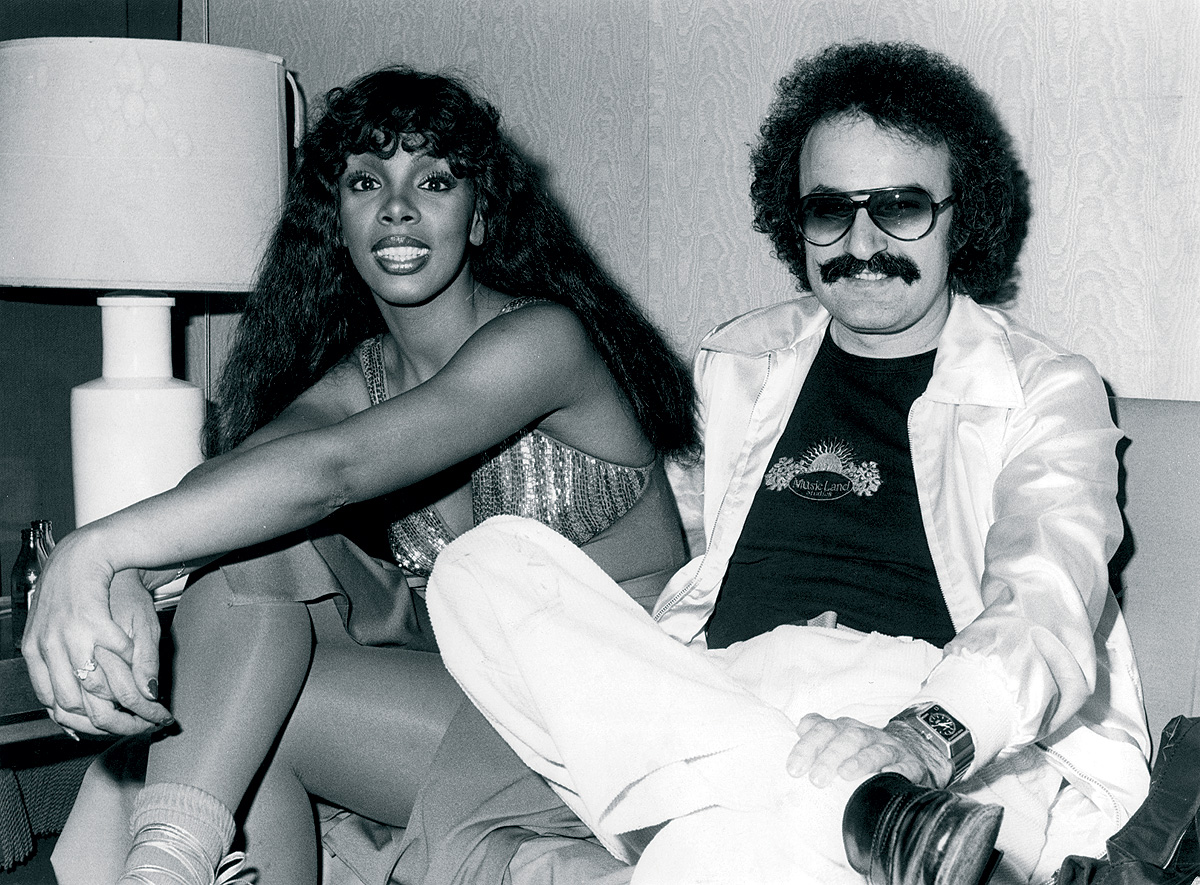
Donna Summer and Giorgio Moroder, one of the great singer/producer teams of all time

I still remember hearing "I Feel Love" for the first time and thinking "what is THIS?"  It happened in the late 90s, when I was beginning to develop of love of disco and to drop my former elevated disdain of pop music.  I knew in my mind that this song was from the late 70s, but it sounded like it came from the future.  It announces itself with a flourish of synthesizer that fades in like a UFO dropping below the clouds, then the endless wave of percussive synthesizer notes carries the song along at a rapid pace.  The strings, horns, piano, and other lavish disco disco trappings are completely absent here, and all that is left is a disarming, spare, crystalline beauty.  This song does not conjure up leisure suits or line dances.  No, it makes me think of a rocket ship hurtling through space.

The revolutionary backing tracks are the work of Giorgio Moroder, but they would not have worked without the voice of Donna Summer.  She sang sensually and openly desirous of sex in ways that other women with her level of popularity never did before.  "Love To Love You Baby" put her on the map with its lascivious moaning, and her biggest album was called Bad Girls. Disco was music for the pleasure centers and the soundtrack to nights of wild 70s excess, and Summer channeled that spirit as a disco singer better than anyone else.  Pairing dance music with a boundary-breaking diva has now become formulaic, and Madonna, Britney Spears, and Katy Perry all owe Donna Summer big time.

One thing I truly love about this song is how it is the beginning of the electronic dance music genre, but manages to sound more futuristic than a lot of EDM that's produced nowadays.  Sequencers can make music sound rigid, robotic, and when ill-used, plain boring.  The early, antiquated technology used by Moroder have a trace of organic feeling to them, making the song seem so much more alive.  Synthesizers can sound like musical wallpaper much of the time these days, but the glorious Moog of the 70s is capable of making some truly unique sounds.  It is a device that rewards dial-twisting and experimentation, and in it you hear not just the machine, but the spark of human inspiration.

This all comes together in my favorite moment of the song.  After the musical intro and some low-key cooing by Summer she increases the volume of her voice and sings out "I feel love!" just as the Moog hits a higher, sweeter note like a sunrise breaking over the mountains.  It is glorious, almost holy, and one of my favorite musical moments.

Tuesday, September 29, 2015

A Nod Is As Good As A Wink...To A Blind Horse

[Editor's Note: I submitted a proposal to write a book for the 33 1/3 series.  I found out today that it didn't get short-listed, which only 15% of the submissions did.  In lieu of ever seeing it in print, here's the introductory chapter.]


Introduction: Every Picture Tells a Story

When picking up any album, especially one from the LP era when each record came with its own cardboard canvas, the cover is key to its contents, no more so than with the Faces’ A Nod Is As Good As A Wink…To A Blind Horse.

There’s a photo on the cover set in a brown border of a peculiar shade not seen much after the mid-1970s.  A band on stage stands in the middle distance, their backs to the camera, the red velvet-suited, rooster-haired lead singer leans in to share the mic, but from this angle it looks like he is trying to hear something that the bassist is whispering in his ear.  In front of them a sea of shaggy 70s rock fans, bathed in a kind of orange light.  We are the midst of the rock show in 1971, at perhaps its cultural apex as the music moved from theaters to arenas where bands increasingly resembled the corporations that sponsored their tours.  We also appear to be in a strange caught moment in that experience, with the photograph making the rock stars on stage look pretty small in front of the massive, crowded audience, not posed toweringly like modern gods.

It’s perhaps the perfect picture for the Faces, a band know by most mainstream rock fans (if at all) as “that group Rod Stewart was in.”  This was a group whose music was suited for a big party.  This was not music to drop Quaaludes to while laying on a 70s shag carpet.  This was not sensitive songwriter music a la James Taylor to emote to.  This was not a rock show where you were going to hear a twenty minute drum solo or see someone apply a violin bow to a guitar.  This music was not going to throw in multiple time signature changes or involve lyrics about hobbits, flying saucers, or add up to anything like a concept album.  There is not going to be any glitter or grand theatricality. And this music was sure as shit not going to get played on AM radio next to Bread and the Carpenters.  No, ladies and gentlemen, this was rock and roll in its feral state.  Music to shake your ass to. Music for making bad decisions for the hell of it.  Music for the good times.

Every picture tells a story, indeed.  Every Picture Tells A Story also happens to be the name of Rod Stewart’s 1971 solo album, the one that put him on the road to international stardom and released a few months before this one.  The tension between Rod the singer for the Faces, and Rod the megastar would lead to the destruction of the band.  A big time star can’t stay just one of the guys on the stage, his face not even visible on his band’s album cover.  This album, the Faces’ best, was fated from birth to be a sideshow.  What a shame, and how typical for the Faces.

Now if you’re reading this, I can pretty safely assume you have more than a passing interest in a long gone rock band.  You are likely one of the initiates, someone who understands the power of the Faces.  We are a small fraternity, since they are one of those groups, like the Yardbirds, who have become more famous for what their members did outside of it.  Ronnie Lane, Ian McLagan, and Kenny Jones all had prior success in the Small Faces, one of those bands that was huge in Britain and relatively unknown in the United States.  McLagen would go on to play keyboards with the Rolling Stones on tour and in the studio and Jones would later join The Who as Keith Moon’s replacement.  Ron Wood and Rod Stewart were both in The Jeff Beck Group first, and Wood would go on to a forty year and counting tenure in the Rolling Stones, while Stewart would get so big that they’d make one of those wretched jukebox musicals out of his solo hits in the early 21st century.

***
If you ask your average Rock Snob (i.e. the target audience of the book) who the three best bands in the early 1970s were, chances are they’d tell you Big Star, Badfinger, and the Faces.  Such fans are well aware of the fact that these bands did not reach mega levels of success, unlike their peers, who still get their songs played wall to wall on classic rock radio to this day.  All three were bands out of time, making them difficult to gain popularity in their day, but easy to love years later when the music can be appreciated on its own terms.  Both Badfinger and Big Star made gorgeous pop-inflected rock songs with bite to them well before the power pop movement emerged from New Wave, and in the midst of the early 70s obsession with loud blues-oriented boogie rock.  Sounding like the Beatles in that time was actually detrimental.

The Faces, on the other hand, stood out of time in a different way.  Like the great number of British Invasion bands that sprouted along the banks of the Mersey, the Thames and the Tyne, their music had a strong R&B component to it, as opposed to Chicago blues.  Of course, Ronnie Wood’s slide guitar still carried in it the spirit of Elmore James, but Ronnie Lane and Kenny Jones had a funky, rhythmic feel that was much more Muscle Shoals and much less Ten Years After.  By the early 70s those R&B influences had been pulled out of rock music root and branch, and those British bands not playing the stomping, obvious glitter rock beats had gravitated to blues boogie.  Rock and roll had started as dance music, but who in the world could dance to Deep Purple?

In this sense it is useful to compare the Faces to Humble Pie, the band founded by former Small Faces front man and lead guitar player Steve Marriott.  Although they did not sell records like Led Zeppelin, Humble Pie established a huge live following playing very straight-ahead, heavy riffing boogie rock.  The rhythm was more for head banging than dancing, and the whole approach was ruthlessly riff-oriented, bass guitar and drums simultaneously bashing out an electrified Morse code.  Their breakthrough record was that now clichéd staple of 70s hard rock: the double live album (Performance: Rockin’ the Fillmore.)  Marriott had struck on a formula for success in the new decade, one later perfected and mellowed on a different double live album by former Humble Pie guitarist Peter Frampton.

When the remaining Small Faces brought in Rod Stewart and Ron Wood and became Faces, they opted for a much less straight-ahead and much more shambolic approach evident on their first two records.  Their debut, 1970’s First Step, even got their name wrong on the cover stateside, which shows the band members sitting down beneath the words “Small Faces.”  The album title implied amateurism, of not yet being ready to actually be a band.  It’s a good record, but rough and ragged from its misnomered cover to the appropriately titled “Three Button Hand Me Down” that closes things out.  There’s a riff here, but it’s a bouncy shuffle anchored by some funky bass with some organ flourishes thrown over it.  The song practically rattles like an old car with broken struts on a gravel road, but it’s a damn fun run ride, like the rest of the record.

The ragged fun just got more joyous and sloppier on 1971’s Long Player, which is either a brilliant or phenomenally lazy title, depending on your perspective.  It kicks off with the most Faces title for a song ever, “Bad ‘N’ Ruin,” which wanders around like a farm boy lost in the big city.  It segues unexpectedly into a live cover of Paul McCartney’s “Maybe I’m Amazed” that’s absolutely gorgeous.  This was a band that seemed willing to try just about anything.  This even meant failing pretty obviously from time to time, such as on the live rambling wreck version of “I Feel So Good.”  Even in this rough state you can’t not shake your butt and dance a little to the music.

The Faces’ live show also betrayed their willingness to stand out and away from many of the mainstream trends of the time.  In an era where rock was taking over arenas and stadiums, with massive spectacles of pyrotechnics and lights, their innovation was to put a bar on the stage.  Members could order drinks while they played, as if they were doing a two set a night gig in some dingy barroom.  When they played the Top of the Pops in 1973, they played soccer –the working man’s game- on stage.  Larger than life rock stardom and counter-cultural affectation this was not.

One can only keep swimming against the tides for so long before going under, for the Faces and everyone else who strains hard to fight the currents of the cultural mainstream.  When A Nod Is As Good As a Wink…To A Blind Horse came out, “Maggie May” had already hit the top of the charts on both sides of the Atlantic, essentially sealing the fate of the Faces right before they managed to put out their best album, one where their ragged sloppiness would be reigned in but still come out in endearing ways.  They would even get their one hit single, “Stay With Me,” out of it, but it was too little, too late.  Over forty years later I am grateful we can still drop the needle on that relic of a doomed band, and hear some of the most joyously raucous music put to wax, along with some stunning ballads that might just sneak up on you. 

Life is short and often painful.  Most of us harbor big dreams that never really amount to much, and we get so stuck in the gears and levers of just getting by that we stop remembering that we even ever had a dream in the first place.  Oftentimes we don’t pursue that dream because the specter of failure haunts our minds, or we know deep down that we are flawed and doubt we’ll ever being able to pursue it.  For those of us who have dreamed hard but seen that dream crumble or falter in the pursuit of it, the Faces are our patron saints.  They didn’t quite make it to the top, but they had a helluva good time trying to climb up there.  They might have dropped some notes or blown some leads, but their listeners were having too much fun to notice.  Music can be so many things, but sometimes it’s just the medicine we need to get by.  The Faces may not have reached superstardom, but they knew music’s healing power, and that’s what really matters.  A Nod Is As Good As A Wink…To A Blind Horse is no one’s idea of perfection and musical virtuosity, but it is definitely my idea of joy.


Thursday, August 20, 2015

The Endurance of Mid-Seventies Malaise Cinema


I can't totally account for it, but I have an abiding and all-consuming obsession with the culture of the mid-1970s.  Perhaps it's because I am fascinated by the world as it was when I was born into it, but I really do think the 1974-1976 time period was a unique turning point.  It coincided with three cataclysmic challenges to the American order: the end of the Vietnam War, Nixon's resignation, and economic instability that marked the end of the long post-war boom.  Understandably, these events led to films that reflected a sense of malaise and deep questioning of American society.  I happen to believe, despite recent revisionist thoughts to the contrary, that mid-70s cinema generated the best films about America, ones that really questioned this society before the era of blockbusters and Reagan washed it all away.  I think that these films endure because the questions they ask and the themes they explore are still with us.


I had a lot of these thoughts re-watching Nashville (the new Criterion version) last week.  Since I have been researching the mid-70s for a book project, that film's themes are even easier to trace.  It deals with the death of the dream of the 1960s, which has fallen into either wistful nostalgia (as in the Barbara Baxley character's sad lament about the Kennedys) or counter-cultural pleasure-seeking nihilism.  While third-party candidate Hal Phillip Walker (who you hear but never see) represents himself as a populist, his political henchmen are conniving and slimy.  Entertainers like Haven Hamilton sing treacly songs like "Keep A Goin'" that tell their working class listeners that they will escape misery if they just try hard enough, as if the game isn't rigged against them.  I could go on and on.  The film ends with a concert for Walker cut short by an assassination of one of the singers, and the startled crowd soon joins in the chorus of a song called "It Don't Worry Me."  In this film Robert Altman uses the city of Nashville, which proclaims its American-ness at every turn, as a symbol of a nation adrift and lying to itself.

Network is probably the only other film of the era to so completely critique American society writ large.  Decades before Fox News, it predicted the devolution of news programming into mere entertainment, and television audiences as easily manipulated.  In one of the most daring scenes in film history, the news anchor Howard Beale is treated to a mad sermon on capitalism by Ned Beatty's character, a reduction of the world into money that I am sure gave Reagan a boner when he first heard it.  (Beale's "mad as hell" monologue, which is an encapsulation of mid-70s malaise, is more famous, but not as good.)  I find it wonderfully insane that a major Hollywood studio once produced a scorch-earthed film that savaged both television and its audience, while containing a critique of corporate capitalism.  In 1976, in the midst of military defeat, economic decline, and Watergate, it probably didn't seem all that radical.


Although it's a period piece set in the late 1950s and early 20th century, The Godfather Part II is very much a product of the mid-70s malaise.  In the first film, for all of its gore and violence, you are kind of rooting for Michael Corleone as a man who is trying to protect his family even as he is losing his soul.  In the sequel, he's much less sympathetic.  He treats his wife poorly before she leaves him, and he has his brother killed.  Michael's story is juxtaposed with that of his father, and how he was able to make a way in America.  In this version of the tale of the American Dream, it is a quest that ends in soul destruction and even the destruction of the very family whose life was supposed to be secured in America.  It's also no mistake that the film portrays the Cuban Revolution and the imperial hubris of American mob bosses in that country, an obvious reference to America's adventure in Vietnam.

The first Godfather suggested a world where violent, shadowy men meet behind closed doors and plan all kinds of nefarious deeds, an image that would be even more powerful after the release of the Watergate tapes.  Watergate seemed to unleash a whole slate of paranoid films suggesting dark forces at work behind the scenes.  The lesser-known Parallax View suggests a cabal carrying out political assassinations and framing patsies. In The Conversation we follow a surveillance expert who finds himself the target of surveillance and who witnesses a horrific act undertaken by powerful elites, but also is unable to stop it or even keep himself from being watched. Also from 1974, Chinatown's noir mystery ends with the knowledge that powerful men behind the scenes commit unspeakable acts without ever being punished.  1973's Executive Action took that notion to its explicit extreme, and theorized a conspiracy to murder JFK.  After the revelations of the Pentagon Papers and Watergate tapes, it seemed downright foolish not to expect such nefarious deeds from the powerful.


Taxi Driver in 1976 may well have been the culmination of malaise cinema.  It presented a New York City full of crime, violence, and decay.  The main character is an alienated psychopath who almost assassinates a presidential candidate, one whose campaign is shown to be more concerned about rhetoric and grabbing power than actually improving anyone's life.  Travis Bickle is unable to carry out his deed, and instead "rescues" a teenage prostitute by carrying out a brutal triple killing.  That action turns a potential villain in the eyes of the public into a hero, but in either case he is a psychopath committing murder.  (It's also implied that Bickle is a Vietnam vet, and scarred by his experience.)  The film implies that our society could easily elevate someone like that into a hero.

As I am finding in my own research, in the midst of all this malaise, the public began to look for redemption.  Beyond its greatness as a film and its groundbreaking nature, when Star Wars came out in 1977 it directly hit that desire for uplift in a huge way.  That, I think, contributed mightily to the film's destruction of box office records.  I love it, but I also love those malaise films, which while they are a lot less fun, stick with me for deeper reasons.  Surveillance, the nefariousness of elites, America's loss of imperial prestige, economic decline, media manipulation, and political apathy are all quite relevant today.  Yes, I will be with the hordes seeing the new Star Wars flick, but when I want to contemplate the state of the nation, the malaise films are the ones I'll keep turning to.