Showing posts with label sports. Show all posts

Friday, September 8, 2017

Memoirs of a Lapsed Husker Fan, Part Three

1995 was the year of Lawrence Phillips, in more ways than one

This is the third installment of a four part series. You can read part one here and part two here.

The 1994 national championship win will never be rivaled as my most meaningful sports fan moment. I don't think I can care about sports the same way now that I am older and wiser, and none of the teams I root for has the dramatic tension of the Osborne-era Cornhuskers. The aftermath of the win, however, was bittersweet. Penn State had managed to win the Rose Bowl and go undefeated, leading to whispers that the poll voters went for Nebraska only out of sympathy to old man Osborne. That rankled. Would Nebraska ever truly get the respect it deserved?

There was also something more serious afoot, namely accusations of sexual assault against defensive lineman Christian Peter. These had first emerged during the 1994 season, but in 1995 the University of Nebraska would award his victim, Kathy Redmond, a settlement. She has gone on to be a prominent activist in the fight to hold athletes accountable for acts of domestic and sexual violence. Peter's acts would be overshadowed during the season by Lawrence Phillips, as the 1995 season exposed a deep, dark underbelly of misogynistic violence on the Nebraska football team. While this team would go on to be the most successful in Nebraska and maybe college football history, looking back 1995 was the year that my Husker fandom stopped being naive and absolute and began to start cracking oh so slightly.

This was a team that absolutely dominated the opposition in ways that have perhaps never been seen before or since. The closest any team got to the Huskers was Washington State, who lost 35-21. Tommie Frazier was back from his blood clots, and at the top of his game. The Blackshirts were putting the fear into opposing offenses, and Nebraska's option attack put up obscene statistics. Four different running backs put up 100 yard games. I got to see them play Pacific in Lincoln, when the Huskers put up over 700 yards and their third string running back, Damon Benning, ran for 173 yards. I was able to attend the game because a friend of mine at Creighton was high school friends with one of the players. We even hung out a little afterward, and there just seemed to be this aura of absolute confidence around him and the couple of other players I met hanging out in the dorm afterward. These guys were not going to lose.


But beneath all of this was a scandal that began to permanently alter my feelings about Tom Osborne and the Nebraska Cornhuskers and college football writ large. Lawrence Phillips went to the apartment of backup quarterback Scott Frost (more on him later) to attack his girlfriend Kate McEwen, who was Phillips' former girlfriend. He dragged her down three flights of stairs by her hair in the midst of the beating. The news was absolutely shocking, especially Osborne suspended Phillips, rather than kicking him off of the team. His reasoning was that Phillips, who had lived a hard youth in foster care, was in danger of going completely off of the rails had he been kicked off the team.

I didn't buy it.

At the time, this was a kind of apostasy. I was sure that Osborne believed at least a part of what he was saying, but this, along with Christian Peter's continued presence on the team, disturbed me. Looking at my fellow Husker fans, I began to believe that they had struck a deal with the devil. In that long period of frustration between 1983 and 1994, Nebraska fans began to turn on their old image of themselves. They used to talk with pride about the team's record number of Academic All-Americans, the number of walk-ons, and the team steering clear of recruits who might be talented but lacked moral values. (Yes, there was some mythology here, but the narrative was important.) Husker fans had started to wonder if these straight and narrow traditions meant that the Huskers would never be able to go to the top. In 1995 it looked like the pinnacle had been reached after the older values were betrayed. Even worse, it seemed that most of the team's fans were willing to accept that. Of course, at the time I would put those thoughts aside on game day, which I guess was an act of true hypocrisy.

After crushing the opposition, Nebraska played in the Fiesta Bowl for the national championship against the Florida Gators. Again, the Husker chip on the shoulder got inflamed, as Sports Illustrated predicted a Gators win, despite the Huskers' absolute dominance. I was actually pretty confident that they would win, which is why it didn't bug me that much that I was in Ireland at another debate tournament during the game. At about half-time a friend made the transatlantic call home to get the score, and when he told it to us, we thought he must have had a bad connection. At that point Nebraska was up 35-10, en route to a 62-24 domination. Lucky for me, my parents taped the game for me, and after I got home I watched it every day for a week. I laughed at the normally cocky Steve Spurier throwing his stupid visor, powerless to stop the Husker onslaught. I exulted when Tommie Frazier broke 8 tackles on a 75 yard run that might be my favorite Husker play of all time. It was his last game, and he went out in style as one of the winningest quarterbacks in NCAA history.


At the same time, Phillips had been brought back, and he started the game. The Huskers did not need him to win. The fourth string running back on the team was a freshman by the name of Ahman Green, who would go on to have a long NFL career. To those who supported Osborne, it was proof that Dr Tom really cared about his player, and not winning. To those who were critical, it seemed especially excessive to give a violent abuser a second change when it made no difference to the team's prospects. Phillips declared a year early for the draft, and would go on to have a troubled and violent life, until killing himself in prison in 2016. As the years passed and Phillips made more headlines for bad behavior, Osborne's decision became harder to defend.

The Huskers went from the top of the world in 1994 and 1995 to more uncertain territory in 1996. Tragedy struck in the off season, as backup quarterback Brook Berringer, who had won several games when Frazier went down in 1994, died in a plane crash. He was actually getting some attention before the NFL draft, rare for a Husker quarterback. The new starting QB was Scott Frost, a figure of some controversy. He was a local boy, from Wood River, and was by far the most touted in-state high school quarterback in my lifetime. He spurned Nebraska, however, to go to Stanford while Bill Walsh was the coach. Many Nebraskans considered this a betrayal, and when he transferred to Nebraska, he was not welcome with open arms. It did not help that he struggled early on, especially in a shutout loss to Arizona State. I remember screaming and throwing my Huskers cap, especially after he got sacked in the end zone. After that game, though, I wondered if I was taking Nebraska football too seriously. I also began to question the people who were so critical of Frost for having signed with Stanford, and by extension the expectation that being a true Nebraskan meant blind loyalty to the football team.

1996 was also a strange season since it was the first of the Big XII, which was the old beloved Big 8 with four teams from Texas added. The Big 8 had four teams in the top ten the year before, so Nebraskans resented it when the Texas squads acted like they were equal partners in the endeavor. The Big XII, part of the supersizing of conferences to make money that still plagues college sports, also destroyed one of the most important aspects of Nebraska football: the Oklahoma rivalry. Nebraska and Oklahoma were now in different divisions, meaning they would not play each other every year anymore. Something was lost in that year that never came back, and now that Nebraska is in the Big Ten, it never will.

After getting embarrassed in Tempe, the Huskers won the rest of their regular season games, including the season finale against Colorado, now the team's "official" rival and the permanent occupant of the slot on the schedule the day after Thanksgiving. I went to the 1996 game in one of the great adventures I ever had with my father. I was home from college visiting my family for Thanksgiving, and my sister was a student at the university with season tickets. She wanted to make the long drive back to Lincoln to go to the game, and my dad and I thought we would try to get some tickets at the stadium, and failing that, watching the action at a local bar. That day brought freezing rain, something all too typical on the Nebraska prairies in late November. Luckily for my father and I, it meant that the scalpers had to drastically reduce their prices. We got seats behind the north goalposts, and stood pretty much through the whole game and the rain pelted us. My coat, which I had thought was water resistant, really wasn't, and by the end I was soaked to the bone, unable to feel my feet. It didn't matter. Despite a struggling offense, Nebraska beat the hated Buffs through the grace of the Blackshirts, who wreaked havoc on their opponents. Nebraska got the lead in the first quarter on an interception return, and never gave it back. It was a tough win in a tough season without Tommie Frazier and it gave me hope for the end of the season.

Somewhere in here you can see me freezing my nuts off

In the old days of the Big 8, winning that big game the day after Thanksgiving meant Nebraska had won the conference. However, now they would have to play an extra championship game for the conference title, which they lost to Texas, and thankfully I did not see. (Yup, I was at a debate tournament.) That game seemed to imply that the days of Nebraska's conference dominance were over. In another such sign, the second-place prize for the Huskers was the Orange Bowl, once the Holy Grail of the Big 8 season. Just as conferences were changing, the bowls were too. The game was played on New Year's Eve, rather than New Year's Day, and while the setting left something to be desired, the Huskers crushed a very good Virginia Tech team, 41-21. I remember it well because it was part of a New Year's Eve tradition. My parents were close friends with two other couples, and every eve one of the families would host the other two, the adults drinking and playing cards upstairs, us kids running around and playing downstairs. That year I was 21, and I and some of the kids were having beers, too. I didn't know it at the time, but just as my New Year's Eve holiday tradition was soon about to end, my connection to Husker football was going to be frayed.

But that didn't happen quite yet. 1997 would be one last golden season for Nebraska, for Tom Osborne, and for me. It was my last football season living in the state, which I never would have imagined when it started. It was only appropriate that Nebraska boy Scott Frost would lead that team with a season worthy of Tommie Frazier, and perhaps even better. He rushed and passed for over a thousand yards, the first Husker quarterback ever to do so in a single season. He ran the complicated option like a well-oiled machine, and more than once followed a pitch to Ahman Green -another Nebraska kid from Omaha- with a punishing block on defender. Despite a very odd throwing motion, he was more dangerous as a pocket passer than most option quarterbacks I'd seen behind center.

Nebraska won all of their regular season games, but one was truly miraculous. Nebraska was behind late against a tough Missouri squad on the road, down by a touchdown. Frost threw a last ditch pass into the endzone. It looked doomed, but bounced (some say kicked) off of a Nebraska player's foot into the diving hands of Matt Davison. The "Flea Kicker" has got to be one of the most amazing plays in college football history, the NCAA equivalent of Franco Harris' "Immaculate Reception." The game went into overtime, and Nebraska won. Again, I was at a debate tournament, and in those pre-cellphone days had not heard the score. We went back to our hotel room to watch Sportscenter, and the highlights of the game had me jumping and hollering with my teammates in exuberant, joyful disbelief.


As if to dispel the demons of the last season, Nebraska went in the Big XII championship game in San Antonio against a local team, Texas A&M, and blew them off the field by a score of 54-15. Despite that, Nebraska yet again had to deal with doubters in the media. The Huskers were only #2 in the AP poll, despite such dominance. Michigan was also undefeated, but had won its games much less convincingly. Because the Rose Bowl still locked in the Pac 10 and Big 10 winners, the Huskers and Wolverines would not be able to settle it on the field. Instead, Nebraska needed a big win in the Orange Bowl against Tennessee to ensure at least a share of the title by holding on to the top spot on the coaches poll.

The Blackshirts made Peyton Manning make Peyton Manning Face

In case you don't know, the Vols' quarterback was none other than Peyton Manning, by far the most hyped college quarterback I'd ever seen. Of course the hype was not misplaced, as he would go on to greatness in the NFL, but at the time I resented the adulation he received. The Blackshirts must've too, because they held the vaunted Manning to only 131 yards passing. He found himself constantly harried by Nebraska's blitz, unable to get the ball down the field. In fact, he was pulled out later in the game in favor of Tee Martin, who would lead the Vols to the championship the next year, something Manning never managed to do. Nebraska's explosive offense blasted through the Tennessee defense. It wasn't even close, the Huskers won 42-17. Even better, the coaches poll gave the Huskers the number one slot, though the media did not. I still think Nebraska would have crushed Michigan had they played that year. Was Brian Griese honestly going to be able to do what Peyton Manning couldn't? In any case, Osborne went out on top. My ill feelings about his handling of Lawrence Phillips subsided a little bit.

Witness the domination

Little did a I know at the time, 1997 would be my last true season as a Husker fan. In September of 1998, I moved to Chicago to start my master's program. Before leaving, I wentto a Husker game against UAB, who Nebraska beat handily 38-7. It was a day after my birthday, and like my first Husker game in the flesh, it was a birthday present. Fittingly, it is also the last Nebraska game I have attended in person. It was a beautiful day late summer day, so different than my last trip to Memorial Stadium in the freezing rain. 

While that game had all the hallmarks of the past, from the fans releasing their balloons after the first Nebraska touchdown to the sea of red, the 1998 season felt different. The new Nebraska coach was Frank Solich, who had been Osborne's consigliere for years. Like Osborne, Solich was quiet and stoic in ways that reflected the ideals of Nebraskan masculinity. He was a short, slight person who had played fullback for the Huskers in the 1960s, a testament to his toughness. In true Nebraska respect for tradition and stability, Osborne's hand-picked coach followed him, just as he had been tapped by Bob Devaney back in the early 1970s. But that circle would get broken, like some of the Husker streaks. Nebraska's consistency had been one of the team's hallmarks, and it also reflected the state's values system. We were very proud of the fact that while the championships had not come until recently, Nebraska had been 9-3 or better in every season since 1968. That streak was broken in Solich's first year, as the team went 9-4 and lost a bowl game to Arizona in the Holiday Bowl. The team did not even make a New Year's Day bowl, which was embarrassing enough. The Huskers did not even win their division, much less the conference. For other fans a 9-4 season would not be such a disappointment, but for Husker fans it seemed that the immutable laws of the universe had been challenged. Some began talking that Osborne knew that this team was not capable of maintaining the streak, which was why he decided to retire.

There were other streaks, too. Husker fans took perverse delight in beating up on certain teams year after year after year. Kansas State had not managed to beat the Huskers since 1959. The Wildcats had traditionally been one of the worst teams in top division college football, but even after coach Bill Snyder had come in and magically transformed the team into a winner, the streak remained. In 1997, as the Husker offense truly hummed as Scott Frost hit his stride, K-State got shellacked 56-26. In 1998, the Wildcats finally got their revenge, winning 40-30. It would be Kansas State, KANSAS FREAKING STATE playing for the conference title while the Huskers sat at home. This was impossible, it was not supposed to happen. The lion had lain with the lamb, the seal had been broken, and judgement had been loosed upon the once unstoppable, arrogant Cornhuskers. I saw some of that game in my Chicago studio apartment, so far from the windswept prairies of my home state. Things had changed now for good, both for the Huskers and for me.

Wednesday, August 23, 2017

Memoirs Of A Lapsed Husker Fan, Part One

The game where I learned the truth about life

I do not think I will ever care about anything the way I once cared about the University of Nebraska Cornhuskers football. My absolute, fervent devotion to the Husker religion was such that when I finally got to go to a game at the age of 12 I considered it the highlight of my life up to that point. Four years later when they lost yet another bowl game in embarrassing fashion after a promising 1991 season, I fell into a depression for about a week.

Since then, things have changed. Like the lapsed Catholic who goes to mass only on Christmas and Easter, I have retained only a nominal membership in the Church of Husker. I will put no other football gods before it, but my connection is more a matter of identity and memory than any true devotion. Just as many of those at Christmas mass need assistance in reciting the Nicene Creed, I cannot tell you much about the team's starting lineup. At one time I could recite the entire roster down to the third string, now I can't even tell you who the starting quarterback is. Like Holy Week for Catholics, the beginning of the college football season is a heightened time for Husker fans, even the lapsed ones. Games start on Saturday, and every year, without me even trying, the memories of my Husker past will flood my mind.

Those who have never lived in Nebraska will have a hard time understanding the cultural significance that college football has in that state, and how much the Nebraskan identity is wrapped up in the university football squad. On gameday Memorial Stadium is the third largest city in the state, and every game has been sold out since 1962. In the 80s, at the height of shopping mall culture, they would pipe in radio play by play of games on Husker Saturdays over the PA instead of Muzak. I have been to many fall weddings in Nebraska where the attendees rushed out of the church to turn on their car radios and get the score.

Unlike in states like Texas and even Kansas, there is only one Division I team. Unlike Ohio and Michigan, there are no professional football teams. In fact, there are no pro teams in any sport whatsoever. In a sparsely populated and regionally diverse state that stretches almost 500 miles end to end, from the biggish city of Omaha in the east to the western rangelands of the Panhandle in the west, Cornhusker football has long been the state's one fixed commonality.

It was even more so in my youth. I was born and raised in Hastings, a town of 24,000 in south central Nebraska surrounded by farms. It also happens to be the hometown of Tom Osborne, and when I was a student visitors to the high school were treated to two giant Soviet cult of personality icons of Osborne in the front stairwell, one of him playing basketball, the other playing football. (He was throwing a ball in the latter picture, which was always the source of jokes considering Osborne's offensive philosophy.) The road from Hastings to nearby Grand Island was called Tom Osborne Expressway. All of this iconography was put in place well before he had even won a national championship.

Tom Osborne in his youth

I began my Husker fandom at a time when it seemed that a championship would never come. Not because of ineptitude like those sad sacks rooting for K-State, but due to the cruel whims of the football fates. In 1982 Nebraska went 12-1, winning the conference and the Orange Bowl against LSU. The one loss came against Penn State, and was enabled by a highly contentious pass interference penalty that Husker fans of a certain age will still grab your arm and bend your ear about. The whole off season all anyone seemed to talk about was how the refs cheated us out of a championship. (I was too young to follow the team in 1981, when it lost the national championship against Clemson in the Orange Bowl, another torturously just short of the line season.)

The following year in 1983 Nebraska had one of the most explosive offenses in the history of college football, blowing out the opposition en route to an undefeated regular season. Tailback Mike Rozier won the Heisman Trophy. Quarterback Turner Gill ran the option offense like a football magician. Wingback Irving Fryar would go first in the 1984 NFL draft. The season ended, however, with an infamous loss in the Orange Bowl against a rising Miami. After storming back from a halftime deficit, the Huskers scored a late touchdown, and could have tied the game with an extra point. If Nebraska had tied the game, the AP voters would still have elected the Huskers national champions.

At that point Tom Osborne, in a decision that was second-guessed more times than Napoleon's invasion of Russia, decided to go for two and the win. He thought that winning the national championship with a tie just wasn't honorable. The conversion failed, and the moment would replay itself in the minds of Husker fans for over a decade. While we wailed and gnashed our teeth, this decision also made Osborne into a Nebraska hero.


Nebraskans place an outsize emphasis on honesty and honor. In my experience, they tend to put a lot less stock in material "success" than people in other parts of the country. Cornhusker fans felt that winning "the right way" was the most important thing, and Osborne choosing an honorable loss over a cheap win made him the avatar of what many Nebraskans thought of as their best selves. That did not, however, dull the aching pain of a true gut punch loss. Rozier, Gill, and Fryar were all gone, and we all knew that it would be a long time before the planets would ever align like that again, if they ever did.

The next three seasons were full of frustration. Even though Nebraska had failed to win national championships after coming very close in 1981, 1982, and 1983, it had at least won the Big 8 conference and defeated hated rival Oklahoma. Back then the Nebraska-Oklahoma game was something like a high holiday, often scheduled the day after Thanksgiving. My abiding memory of those games is being at my aunt and uncle's house, the smell of my aunt's chili and uncle's pipe tobacco in the air. Both teams dominated the Big 8 conference, and the championship inevitably came down to this game every year. Fans of the winning team would throw oranges on the field, since in those days the winner of the conference automatically went to the Orange Bowl. (Stadium security was a lot less lax back then, too.) The sight of bright oranges flying through the chilly November air was always a surreal one, bringing happiness when tossed by Nebraska fans, and blinding rage when tossed by Sooner fans.

In 1984, 1985, and 1986, Nebraska lost to Oklahoma. This was not merely being defeated in a rivalry. For Nebraskans, this was a matter of good and evil. Tom Osborne was the ur-Nebraskan, quiet, steady, honest, doing things the "right way." Oklahoma was coached by Barry Switzer, the loud, brash, bootlegger's son whose program had been rung up for NCAA rules violations in the 1970s and who seemed like he would have shot his dog if it meant winning a championship. The most famous player on those teams was The Boz, Brian Bosworth, an even more brash athlete whose constant disrespect for authority somehow won him fame and adulation. There was nothing more dishonorable to a true Nebraskan than that.

I have never hated an athlete like I hated The Boz (glad to see in his 30 for 30 that he's gained some humility)

After three seasons of good but not great teams, the 1987 Cornhuskers suddenly seemed like the team of destiny. It was that year that I went to my first Husker game, against a Utah State team led by future Detroit Lions disappointment Scott Mitchell. Even though our seats were in the corner of the top row, probably the worst in the house, I had the time of my life. The Huskers returned two punts for touchdowns, and rushed for over 500 yards. Steve Taylor looked like the second coming of Turner Gill, running the option to perfection. In the next game, against UCLA, Taylor PASSED for five touchdowns. It seemed like there was nothing that could stop the Husker juggernaut from cutting through the Big 8 like a combine through a corn field.


Oklahoma was also undefeated that year, but before the big game was to happen, their quarterback Jamelle Holieway, a master of the wishbone offense who had led the Sooners to a national championship, got injured. He was replaced by a freshman, (something almost unheard of in those days) Charles Thompson. The Huskers had the Sooners at home that year. Broderick Thomas, future NFL linebacker and leader of the Blackshirts (the nickname for the Husker defense), had started a trend by proclaiming Memorial Stadium to be "Our House." (This led to some enterprising person making giant cardboard keys with the slogan printed on them that sold like hotcakes.) There was no way that we were going to lose.

Then, in what I thought was proof of the existence of God's grace, I was able to go to the game. My best friend Danny's father managed a local bank, meaning that he had the right connections to get tickets. We took the 100 mile trek to Lincoln with our dads on a brisk November day, but I spent the week before preparing my soul, as if I were about to go on pilgrimage. The local video stores starting renting tapes of Nebraska's glorious win over Oklahoma in 1971, the so-called "Game of the Century," which put the Huskers on the road to their last national championship. I watched that game multiple times, thrilling at Johnny Rodgers' amazing punt return, and Jeff Kinney just barely managing to stretch over the line for the winning touchdown. I believed with the belief that only a 12 year old sports fan could have that I was about to witness a similar moment of world historical importance.


Our seats were fantastic. My friend brought binoculars, and I was able to get a closeup view of the great Steve Taylor warming up before the game. In my eyes, he was invincible. Before the game my friend and I asked our dads if we could rush the field and help tear down the goal posts after Nebraska won, a statement that I should have understood to be a terrible jinx.

Neither team seemed able to get an edge until late in the first quarter, when Keith "End Zone" Jones busted loose for a 25 yard touchdown run. The Huskers went into the locker room at halftime up 7-0, and as he walked off the field Broderick Thomas led the crowd in the "Our House" chant. I have probably never been more innocently and naively happy in my entire life as I was in that moment. I say innocent because despite a constant stream of schoolyard bullying life had not yet taught me yet that pleasure is fleeting, that I should always expect the worst, and that disappointment is life's default setting. I first learned those truths in the second half of that football game.

Amazing that thirty years later I can watch this game on my computer

Nebraska never scored again. Oklahoma's offense moved down the field slowly but pitilessly. Every time their running backs got hit by a defender they seemed to fall forward for just enough extra yardage to keep the chains moving. It was like a kind of football crucifixion, a slow death. After grinding out a touchdown, Oklahoma scored a 65 yard touchdown on an outside run, making it 14-7. It might as well have been 70-7, since Oklahoma's defense shut Nebraska down and Steve Taylor threw three interceptions. In the fourth quarter I actually joined the other fans calling for Osborne to put in his more pass-happy backup, Clete Blakeman. In my anger and frustration I had, like some kind of football Judas turned on Steve Taylor, the player I was marveling over just a couple of hours before.

The game ended in darkness, literal and spiritual. Walking dejected from the stadium after the game, my friend Danny slammed his game program to the ground and gave it a swift kick down the street. We barely talked on the two hour ride back to Hastings. In a moment that every sports fan has at some point in their lives, I did not understand how something I loved so much could cause me so much pain.

[Editor's Note: Part two will soon follow, when I will discuss the seeming vindication of my love for my favorite sports team]

Tuesday, August 30, 2016

Takeaways From The Kaepernick Affair

I don't want to write yet another hot take on a subject that a lot of other people are hot taking. Instead, I'd like to analyze Colin Kaepernick's protest and the reactions to it, and what they say. Here are some simple observations.

The Inability Of White America To Acknowledge Racism Is On Display (again)
I mean, we already knew this, but the reaction to Kaepernick's very silent, unobtrusive protest has touched off a firestorm among white people. The folks upset about his refusal to stand for the national anthem are also the type who never seemed to have a problem with the police murder of African Americans. His protest is meant to address systemic injustice, a thing that the vast majority of white Americans actively or tacitly or implicitly support. The fact is, a very large chunk of white America, probably the majority, cares more about the national anthem than it does about the lives of black people.

Nationalism Is A Very Powerful Force In American Life
This is a drum I keep beating, and I am going to keep banging on it until people listen. In America we coerce children to say a secular prayer to the flag in school every morning with words they don't even understand. At every sporting event we play the national anthem. The flag saturates our clothing, and politicians are expected to wear flag pins on their clothing. Hell, even many sportscasters do it. This behavior is highly unusual in a country that purports to be a democracy. When someone challenges these practices, just watch the lizard brains of so many people in this country go into rage spasms, as we're seeing now.

It's Okay For Athletes To Beat Their Spouses But Not To Engage In Critical Politics
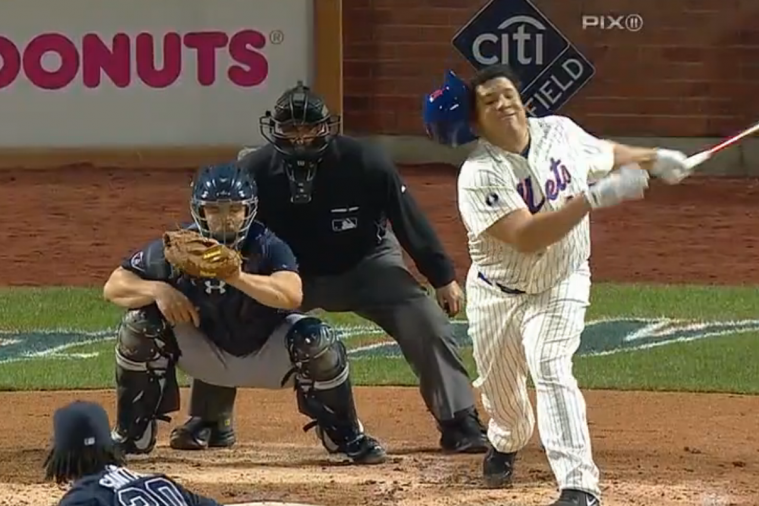
One of the times this year that I've felt the sickest happened at a Mets game. The team had brought back Jose Reyes, who in the off season brutally battered his spouse. While Reyes served out a suspension, the crowd cheered him lustily. If Kaepernick showed up to CitiField, however, I would fear for his safety. Other players have also abused women, such as Aroldis Chapman, and their careers are going just fine. Contrast this to Kaepernick, or even Michael Vick. In our misogynistic society flags and dogs rate higher than women for some people. Athletes are allowed to do a great many terrible things, but for them to be politically critical of this country opens them up for attack. Little has changed since the days of Muhammad Ali.

American Nationalism Is Militarist In Nature
Those who are critical of Kaepernick often say that he is somehow disrespecting veterans and "the troops" who fought and are fighting for "freedom." I find this disturbing on many levels. That so many so easily conflate the nation's symbols with the military's symbols makes me think a military coup could be successful in this country. It also shows tremendous ignorance about what Kaepernick his doing. His protest has fuck all to do with the military; it's about the police and the justice system. Some seem to see the conflate the police with the military, which says a lot about the militarization of the police, and how they are perceived as fighting an internal enemy. (That might explain the willingness in white America to let the murder of black people at the hands of the police slide.) The stuff about the flag being connected to the military as a freedom fighting force not only shows a lack of understanding of American history, but a disturbing tendency to view the military as infallible. Most American wars have had little to do with freedom, from the empire building of the Spanish-American War to the empire building of the Mexican-American War to the empire building of the war in Iraq, and many other in between.

The farcical view of American history as a story of freedom also contributes to the inability of white Americans to see how they have and continue to profit from racism. I salute Colin Kaepernick for jolting those people.

Monday, June 20, 2016

Last Night Is Why I Love Sports


In the internet age cultural tastes have become much more segmented and tribalistic. There is a misbegotten notion, for instance, that sports fandom and nerdom do not intersect. (When otherwise intelligent people like Chris Hardwick preach this line I get irritated.) All kinds of snarky folks use the term "sportsball" online as a sign of their contempt. And hey, they're welcome not to like sports.

It's just that according to the false lines we've drawn, I'm not SUPPOSED to like sports. I am on the left politically, literate, love sci-fi and comic books and am intimately acquainted with both the 20-sided die and the Dungeon Master's Guide. But I love sports, and have since I was a child.

And yes, I have soured on college sports, mostly because of the ways they exploit athletes and warp the missions of universities. And I am also the first person to call out pro sports franchises for making cities pay up for unnecessary new stadiums. I also condemn macho culture and rape culture and the ways that male athletes are allowed to get away with sexual violence. I hate how sports is often over-prioritized in many schools and communities.

But I still love sports, and last night illustrated exactly why. Game 7 of the NBA finals was among the best basketball games I have ever seen. The lead changed hands innumerable times and it all came down to the wire with the kind of drama that script writers could never create. (Sports never, ever seem right in the movies. The real-life magic is too spontaneous.) The two best teams with the two best players slugged it out, putting everything down there on the floor. It reminded me of the last rounds of the Thrilla in Manilla, two punch drunk champions giving it their all to the point that they seemed unable to go another minute. Watching that is unlike anything else.

In LeBron James I saw what I love still more about sports: seeing human excellence in action. There is nothing like watching a truly great athlete perform feats that seem impossible for others to do. Yes, it can lead to hero worship, but it can also inspire us to think about our own potential. I look at Lebron and I marvel that he and I are somehow members of the same species, that another fellow human can do what he does.

As last night also showed, sports fulfill an important community function. My advisor, when discussing the history of memory, always liked to say that "nations remember, but cities forget." I told him that he was wrong, because for many cities it is their sports teams that provide the glue of collective memory joining longtime residents with newcomers. Cleveland's identity was partially wrapped up in its identity of futility in sports. Last night's victory may not bring back the steel mills, but it does give people there a memory that they will be celebrating probably for decades.

I remember onetime being in a friend's basement watching a game, and we were in agony over our team blowing their leading. One of my friend's spouses asked why we watched sports if we didn't enjoy it. I kind of saw her point, and wondered if I was the member of some kind of religious cult. Last night, however, reminded me of the joy that sports can bring. Despite all of the things that need fixing in the world of sports, I know I will keep coming back.

Tuesday, February 16, 2016

A Brief Historical Analysis Of Baseball's Divisional Era (1969-1995)


I’ve been thinking a lot about the recent history of baseball, and that with my obsession with historical periodization made me realize that the period between 1969 and 1995 forms a distinct and important era in baseball’s history.  It is also the period that coincides with the creation of divisions in 1969 and the beginning of the wild card format in 1995.  If I had the time, inclination, resources, and ability I would write a book length history of the topic. Since I possess none of these things, I’ll sum up the themes in this blog post. 


In a lot of ways, 1969 marks a real turning point in baseball’s history.  It was the first year that an expansion team (the Mets) won a World Series.  Expansion in that year also necessitated the division system and playoffs.  In 1969 baseball expanded across the border into Canada with the Expos, an early moment in the internationalization of the game, which would only continue to get more intense over time.  This combined with the movement of teams and integration in the preceeding years made baseball something very different than came before.  


It certainly began to look different.  If you look at film of the '69 series, the teams are wearing flannel uniforms that you could picture on the bodies of Lou Gehrig and Josh Gibson.  Very soon, with the Oakland As as early adopters, double-knits came into fashion, as well as more outlandish and inventive colors.  The same As wore white shoes and bright gold pullover jerseys.  Soon enough the world would witness the Astros' "tequila sunrise" look and the Taco Bell Padres unis.  Add to that the many teams sporting road blues, solid color looks, and a elastic waistbands.  An average fan in 1969 would not recognize half the teams playing in 1976.  Just as the mid-90s rolled around, this sartorial inventiveness began to fade.  Belts replaced elastic, baggy pants billowed, and gray became the solitary road color and white practically the only home one.


In terms of stadiums, the multipurpose sports complex replaced the old ballparks, a trend that began in the 1960s that became dominating by 1969.  In 1995, only Wrigley and Fenway remained of the original parks (Yankee Stadium's renovation in the 70s completely changed its character.)  At the end of the divisional era, new baseball-only stadiums began to be built, and with the success of Camden Yards, opening in 1992, the template for the retro stadium was set.  Over half the parks in the major leagues have been built since the end of the Divisional Era, a truly amazing statistic.  A fan as late as 1990 would only have known a third of the current parks.


This isn't all about looks, though.  If there's a defining attribute of the Divisional Era, it's labor strife.  The strike of 1994, and the attempt by owners to field replacement players in 1995, makes an appropriate bookend, along with Curt Flood challenging the reserve clause by refusing a trade in 1969.  Flood's effort eventually led to the advent of free agency in the mid-70s, which is one of the biggest changes to the game in professional baseball's history.  The players, once docile, became assertive in this era, and the owners, feeling betrayed, clashed time and time again with their teams.  This meant strikes in 1972, 1981, 1985, and 1994, with the strike in 1981 eliminating a large chunk of the season, and the strike in 1994 canceling the World Series.  It also meant collusion by the owners in the 80s to try to thwart free agency.  The players clearly won this long war, and the last twenty years have been marked by a labor peace that is the result of the owners having to accept things that they had tried to destroy or undermine.  The amount of money flowing into baseball from cable TV has also made it easy to make everyone happy.

The Divisional Era is also very interesting from the standpoint of race.  While Jackie Robinson broken the color line in 1947 and many players of color followed, many teams (most notably the Red Sox) resisted integration.  Black stars could easily find a spot on major league rosters, but second tier black players often got overlooked when a white player of similar ability was the other option.  Robinson's last public speech was at Three Rivers Stadium in 1972, during the World Series.  It was an appropriate location, considering the the hometown Pirates had fielded the first lineup without a white player in a game the season before.  That Pirates lineup reflected the rising numbers of black and Latino players at the time, which would lead in 1986 to 19% of major league players being black.  At this speech Robinson lauded the increased number of players of color in the game, but also called for more diversity in terms of managers and front offices.  Soon enough, in 1975, Frank Robinson would manage the Cleveland Indians.  The Blue Jays would win the 1992 and 1993 World Series helmed by Cito Gaston.  However, after the mid-80s the number of black players would start to decline, and there were still signs of racism in baseball, most notable Al Campanis' infamous interview with Ted Koppel, where he implied that black players did not have the intellectual capacity to be managers.  If anything, the Divisional Era both saw deeper integration and illustrated the racist barriers that still existed.


The Divisional Era is very much a transitional period when baseball figured out how to prosper while both no longer being the nation's top spectator sport and breaking away from its past.  Baseball attendance had dipped in the 1960s while the NFL rose and baseball owners remained stuck in the past.  In the late 70s and early 80s, however, attendance started shooting up.  During the 1980s baseball returned to a prominent place in the media landscape and pop cultural mind.  Several baseball movies were hits, and The Natural, Bull Durham, and Field of Dreams have managed to remain in cultural memory.

Beyond a return to pop cultural relevance, the baseball renaissance might have been primarily due to the way baseball was played in the Divisional Era, which was compelling in its balance.  For a long time baseball got boring with station-to-station tactics in the supposed "golden age" of the 50s, when attendance lagged.  (I get the feeling that the preponderance of baseball writers who grew up in the New York area in that time, when the three teams were all great, has something to do with the golden age misnomer.)  Then, just as speed and excitement began to return, pitching became so over-dominant that they had to lower the mound after the 1968 season.  While there were ups and downs in terms of offense, the game was pretty balanced in this era, rebounding from the second dead ball era in the early 70s, but not shooting up in offense until around 1993.  Another round of expansion and the increased use of steroids probably had something to do with that.  In 1996, the runs per game average for a single team would clear the 5.00 mark for the first time since 1936, a sign that the juiced era was on in full force.  During most of the Divisional Era the game included both power and speed, and strikeout rates while rising were much lower than they are today, making for exciting play.


Despite seeing a recovery from the stagnating attendance in the postwar period, the Divisional Era also saw the halo finally and permanently fall off of the game.  To be sure, there had been other scandalous times, such as the reaction to the 1919 White Sox throwing the World Series, but now there was no going back to a norm where baseball's purity was assumed.  This has a lot to do with the general questioning and dethroning of American institutions in the late 1960s and into the 1970s.  The seminal point for baseball was Jim Bouton's Ball Four, which came out in 1970 and described the dirty realities of ballplayers' lives. Joe Pepitone's memoir, which came out a few years later, did much the same work.  Scandals involving baseball players and managers grabbed the headlines, from prominent players being involved in a cocaine ring to Pete Rose betting on baseball.  It is impossible to understand the level of reaction against steroids without taking this period into account.  It established a powerful discourse of baseball as a fallen game, and a standard of behavior not expected of other major sports.


Above everything else, the Divisional Era was the time when baseball learned to adjust to no longer being the top sport in American life, or to being an institution with any assumed level of purity.  It learned, through its revived status in popular culture, that its history and nostalgia for its past were powerful forces.  That emphasis on staying connected to a rich past would come out most visibly in the new "retro" ballparks that followed Camden Yards.  It was a period of survival and adjustment, coming before the "juicing" of the game and all that entailed.  Grayer heads than mine may fondly recall Mantle, Aaron, and Mays, but for me and others this Divisional Era was our golden age.

Wednesday, January 27, 2016

Keep The DH Status Quo

Who DOESN'T enjoy watching Bartolo Colon bat?

It's late January, when thoughts of baseball distract me from the horrors of winter's depths.  It's only 21 days until pitchers and catchers report, so I figure I can start to get excited.  I've also been thinking a lot about the game of baseball in the larger sense, and wondering what new commissioner Manfred will do to make his mark.

Recently he hinted that the National League might adopt the designated hitter, perhaps as soon as 2017.  This must've just been a trial balloon, because he quickly pulled back after getting feedback.  I am glad he did, and I hope that the DH never comes to the National League.  I like the National League style of baseball more than that of the American League, and the inefficiency of the pitcher batting has a lot to do with that.  It forces certain strategic difficulties on managers that add a level of interest to the game.  Teams have to fight a little harder for runs, and that fight for runs is the best tension there is in baseball.  I also hate specialization in sports, which is one of the many things that sucks about pro football, which is so specialized that there are players whose sole purpose it is to snap the ball on kicks and punts.  Without the DH, all of the players must both bat and field a position.  There is a symmetry to that that I like.

Of course, there are plenty of good arguments to be made for the DH.  Who wants to see pitchers hit?  Who wants pitchers to get injured running the bases?  Offense is down, doesn't it need a boost? The DH has also become the standard at other levels of baseball, turning the once odd innovation of the 1970s into the new norm.  When teams play in the World Series, the inconsistency on the DH between the leagues can create problems when teams have to either bench top hitters or try to scrounge up a bench player adequate to a task the team never had to deal with during the season.

And you know what?  Those arguments are perfectly valid.  That's why, unlike some purists over the years, I have no problem with the DH in the American League.  While I prefer baseball without the DH, one thing I truly love about baseball is the distinctions between the two leagues.  These have been worn down by interleague play, and that's a bad thing.  It's an advantage baseball has over, say, football, where there is no real difference between the AFC and NFC.  It's great to see two different styles of play, rather than one.  Variety is the spice of life, after all.

Baseball is an idiosyncratic game, and should cling to those idiosyncracies.  There is no set stadium dimension, which means we have the short right field porch at Yankee Stadium and the massive green monster at Fenway.  Different umpires call the strike zone differently.  The two leagues play the game differently.  We live in a society that's been systematized to the breaking point, baseball's resistance to those forces ought to be preserved.

Friday, September 11, 2015

Behold The Cheesy Horror Of Sports Team Music Videos

I am a child of the 1980s, a time that feels more and more alien to me with each passing day.  I used to think that the distance between my childhood past and my middle-aged present could best be marked by looking at old TV commercials.  However, I have found a new cultural marker: 80s sports team music videos.  They are almost uniformly godawful, but in ways that are so ridiculous as to make them enjoyable.  Here are some of my favorites.

Chicago Bears, "The Superbowl Shuffle"


This here is the original, the pop cultural sensation that set the ball rolling for all the videos that would follow.  It came before the season, and the 1985 Bears backed up their boasts with one the best seasons by a pro football team ever and a crushing Super Bowl victory over the Patriots.  Sadly, their musical talent was inversely proportional to their football greatness.  Despite that fact, other teams imitated the Bears, and as awful as this song is, it actually might be the best of the lot.  I still get a chuckle at the awkward dancing and godawful rap that flows about as well as a backed up toilet.

New York Giants, "We're The New York Giants"


Imitation is the sincerest form of flattery, and the 1986 champion New York Giants had their own electro-funk rap song.  Remember how it goes?  Didn't think so.

New York Mets, "Let's Go Mets"

The 1986 Mets mercifully decided to leave their music-making to the professionals.  You would think this would generate a better song than the "Super Bowl Shuffle," but this is 80s butt rock of the more overwrought variety.  The first words, sung by a guy who sounds like he is trying to parody a parody of Steve Perry, are "We've got the team work/ to make a dream work."  On top of that, it's got Joe Piscopo in a mullet.  This video is peak 80s.

LA Dodgers, "Baseball Boogie"

Not to be outdone, the 1986 Dodgers gave us "Baseball Boogie," which combines bad rapping athletes with satin jackets and generally giving everything a healthy dose of LA glitz.  You really haven't lived until you've seen Orel Hersheiser pelvic thrusting in tight white pants.

Juan Berenguer, "Berenguer Boogie"

I know it's not a team video, but nothing makes me bust a gut like the "Berenguer Boogie."  A middle reliever for the Twins in 1987, he got some of the local Paisley Park guys to write this song, which is bad 80s R&B at its most soulless.  It also seems to forget what sport it's referencing, considering that it starts with a whistle, which isn't used in baseball.  My friend Justin, who hails from the Twin Cities and introduced this to me, has termed it "bad even by 1987 standards" which is about as damning as it gets, since I still believe that the late 80s were America's pop cultural nadir.

English National Soccer Team, "World In Motion"

The team music video apparently went across the pond.  In 1990 the technorock band New Order brought their dance beats to the table for the English national team, making this the most musically adroit of all of these songs.  That said, it still manages to be probably the worst New Order song ever.  The lyrics are completely silly, and when Bernard Sumner lip syncs them he looks embarrassed.  And just when it looked like this song would avoid the trap of having players rap, John Barnes takes the mic.  Yes his skills are superior to William "the Refrigerator" Perry, but that's not saying much.

Calgary Flames, "Red Hot"

Oh, but what of hockey, so full of mullets and goofy Alberta farmboys?  You can bet it's go bad music videos, too.  My friend Jim pointed this one out to me, and I forever in his debt.  It's got 80s hockey players in garish moustaches lip syncing to godawful butt rock while making sincere faces to the most treacly, greeting card statements you could possibly imagine.  This would be the perfect parody of this kind of thing, except that it's playing it completely straight.

Saturday, September 5, 2015

Confessions Of A Former College Football Fan

There was a time when watching this video was food for my soul

Today the Nebraska Cornhuskers played the first game of their football season.  In my youth this day was a minor holiday, as were all Husker gamedays.  While I maintained various sports allegiances, Cornhusker football was more like a religious obligation requiring adherence to rituals and worship.  Going to Memorial Stadium to see a game (which I have only done half a dozen times) was like a major pilgrimage.  In the days before expanded cable I spent many a Saturday afternoon listening to games on the radio while raking leaves or on the road to my grandparents' house, not wanting to miss a single play.  I still remember being somewhere on interstate 80 and hearing the call when fullback Bryan Carpenter ripped off a 47 yard touchdown run to turn the tide of a tough game against Missouri, and feeling total elation.  When Nebraska won the national championship after the 1995 Orange Bowl, I probably felt happier than I ever had up to that point in my life.  I had also felt horribly down in the preceding year, when the team came within a field goal of beating Florida State to get the glory.  In the early days of video on the internet (pre YouTube) I would watch Johnny Rodgers' famous punt return against Oklahoma over and over and over again, feeling the goosebumps each time.

These days things have changed.  I haven't watched a down of today's game, even though it's on TV.  In fact, I haven't even bothered to check the score.  It just doesn't matter a whole lot to me, and I say this as someone who obsessively checks his phone during Mets games, so it's not like I've given up on sports.  I don't really hate college football or won't watch any games this season, it's just that I don't care about it all that much anymore.

It's happened gradually over time, and I have been asking myself why.  I think some of the first seeds were sewn in 1995, the year that the Huskers went undefeated and demolished their opponents in fearsome fashion on the way to a second straight championship.  That year two star players made headlines through horrible acts committed against women, and both were allowed to play in the Fiesta Bowl and celebrate on the field.  Running back Lawrence Phillips went to the apartment of his ex girlfriend and assaulted her, dragging her down the stairs by her hair.  Defensive lineman Christian Peter raped a student who now is a public advocate calling for abusive athletes to be brought to account.  Coach Tom Osborne, a man I had always respected for his integrity, sheltered both of these players.  Unfortunately, I was too weak and ignorant back then to do more than feel uncomfortable and not ask deeper questions.

Over the years these stories kept multiplying, and they still do.  My real skepticism came when I was a grad student and heard a talk by Murray Sperber, a professor at Indiana University who wrote the indispensable Beer and Circus.  He demolishes many of the myths about college sports bringing in revenue to universities.  There a handful that do make money, but it typically goes right to the athletics department.  At the vast majority of schools, sports cost a lot of money.  As a grad student I also knew TAs who'd been brought into the basketball coach's office to be leaned on to give a better grade to an athlete, and athletes who should've been academically ineligible allowed to play.  (Of course, I also had plenty of athletes who were fine students.  The problem isn't them, it's the system.)

I also noticed, both in grad school and as a professor, that the waves of austerity wreaking havoc on academic departments didn't seem to faze the athletics wing of the university.  At one school the faculty were informed of cuts to research, travel, and library money while in the same speech the president proudly crowed about new beacons to be installed on the newest dorm, which would alert everyone when the piss-poor football team won a game.  (And yes, this was in Texas.)  At another faculty were told to excuse their students from night classes on a Thursday if they were attending the game that night, which was nationally televised.  The school's priorities could not have been clearer.  Add to that the knowledge that football itself can cause catastrophic brain damage.  Also add that on the college level players are completely exploited, not getting paid while their coaches are often the highest paid employees of their respective states.  The players make a lot of money for a lot of people, except themselves.  The vast, vast majority don't go pro, and while they get scholarships, their schedules make it hard to study and at many programs the graduation rates for players in the big money sports are abyssmal.

The only foreseeable solution from my point of view is the abolition of the NCAA and college sports in their present form, but that will never happen.  There are too many people out there who are just like I used to be, fanatically devoted to their teams to the point that that devotion is a key element to their identity as human beings.  For that reason, the juggernaut will live on, I just know that I won't be around anymore to watch it.

Postscript: my good friend Brian Ingrassia wrote an award-winning history of how college football's structures came to be.  Talking with him while he was doing his research gave me a lot of insight.  Please buy/read it.

Thursday, June 11, 2015

Reagan Dawn Culture

Over the past few weeks I've been finding myself obsessed with the period between 1979 to 1981, which I think of as "Reagan Dawn."  This was augmented by my recent reading of Split Season, a book about the 1981 baseball season and its attendant strike by Jeff Katz and today's rewatching of Wet Hot American Summer, which attempts to recreate the feel of the time.

Why Reagan Dawn?  A particularly bad set of circumstances (Iran hostage crisis, oil shock, inflation, Soviets invading Afghanistan reheating the Cold War) helped get a Right wing ideologue elected president only sixteen years after Barry Goldwater went down in flames.  This was a time of swift backlash against organized labor (in the form of Reagan's firing of the air traffic controllers), culture war fever (the Moral Majority was founded in 1979), and reheated nationalism (I'll get to that in a bit.)  It was a transitional period of time where the 70s malaise was at its worst, but the 80s neoliberal philosophy was coming into its own.

This time period also happens to be when I became aware of popular culture to the extent that I could participate in it.  I saw The Empire Strikes Back when it came out in 1980 and I remember a kid who wore a "I shot JR" t-shirt.  There were a lot of important cultural moments in that era, but here are few I'd like to comment on, given their links to the political culture of the Reagan Dawn.

Disco Demolition Night

Disco was the dominant music of the mid-to-late 70s, but it also engendered a "Disco Sucks" backlash by rock fans.  While their animus cannot simply be chalked up to racism and homophobia, a good deal of it can.  That backlash achieved its peak in the infamous Disco Demolition Night that took place between two games of a White Sox double-header at Comiskey Park.  The explosion and ensuing riotous behavior by attendees left the field too wrecked to host the second game, which was forfeited.  This moment sees the confluence of eras.  The chaotic dope smoking 70s is on display here, but those shaggy haired rockers are engaged in a reactionary action worthy of the Reagan years.

The "Miracle on Ice"

This is likely the King Daddy moment of the Reagan Dawn.  Most Americans are pretty indifferent to hockey, but they certainly tuned in to see the American national team defeat the Soviet Union.  Portraying the powerful United States as some kind of weak underdog was a common theme during the Reagan Dawn, and no event allowed that narrative to unfold better than the Miracle On Ice.  I am still convinced that this game was a factor in winning the presidency, since Reagan used the newly amped-up nationalism to appeal to voters who would later be eviscerated by his economic policies.

Rock n Roll High School, Over the Edge, and The Warriors

These films, all from 1979, give you an idea of why the Moral Majority was so incensed.  They all show youth gone wild, blowing up their high school, attacking their parents, and joining gangs, respectively.  All treat drug use and sex as wallpaper to teenage life without any punishment for those who engage in once immoral behavior, while mocking authority figures. I get a thrill seeing this stuff, mostly since my teen years were the era of DARE and AIDS, and I thought sex or drugs would kill me.

Absence of Malice

Seven years after Nixon resigned in the wake of Watergate, crusading journalists become the villains, rather than the heroes in this film.  It's a perfect curtain-raiser for the Reagan era, when all those who wish to decry its injustices would be marginalized and defamed.

Corporate Arena Rock

The great rock acts of the 1960s mostly seemed to run out of gas in the mid-1970s, part of what motivated the whole punk movement.  It's easy to forget now with the benefit of hindsight, but the punks were at the fringe of the rock world.  At the center were faceless bands who, like corporations, were easier to identify by their logos than by pictures of their band members: Foreigner, REO Speedwagon, Kansas, Journey, Styx, et al.  All played well-produced music made for the radio, but pretty forgettable compared to the stuff going on in the New Wave and punk world.  Some 60s veterans even managed to be reborn in this mold, like Jefferson Starship, which included members of the seminal psychedelic band Jefferson Airplane.  Their 1979 hit "Jane" dropped any pretense of art and revolution for some ass kicking corporate rock backed by piano triplets a la Toto (which, fitting the vibe of corporate rock, was made up of session musicians.)  During this same period, the once wild and wooly world of FM radio rock stations became corporatized and bureaucratized, leading to uniformity of playlists.

My Life In The Bush Of Ghosts

Beneath the Van Halen surface there was a lot of interesting music coming out during the Reagan Dawn, and much of it reflective of the era's changes.  This album, a one-off by David Byrne and Brian Eno, combined experimental music with field recordings of music and political and religious rants on AM radio.  The radio preachers are a sign of the Moral Majority times on songs like "Help Me Somebody," and the opening track "America Is Waiting" keeps repeating a newscaster's intonation of "America is waiting for a message of some sort or another," a mantra for the malaise of the late Carter years.

Kool and the Gang, "Celebration"

When I say "Reagan Era music" your mind might immediately jump to synthesizers and loud drum machines.  However, the first real specimen of Reagan music might very well be "Celebration" by a suddenly de-funkified Kool and the Gang.  It was #1 in February of 1981, right after Reagan's election and the return of the hostages from Iran.  It's the song that got played at every wedding and graduation and bar mitzvah in the 1980s, an empty, fun song about having a good time.  It's not a bad song, but a far cry from primal slabs of pure funk like "Jungle Boogie."  Like a lot of other people at the time, Kool and the Gang were wanting to put the past behind them and enjoy the present without thinking about the impact on the future.