Showing posts with label regionalism. Show all posts

Thursday, November 8, 2018

Regionalism And The Midterms

As always, there's been a lot of spin and punditry in the aftermath of the election. Much of it is full of sound and theory, signifying nothing more than the need to fill up blocks of time on television with idiot wind. 

One of the many things missed in all of this is the role of regions in the midterm elections. For example, the "urban versus rural" narrative ignores just how different many rural regions are from each other. You can see this in the election results. Iowa has long had a progressive rural block in its eastern counties, and this year the Democrats flipped two seats in that state. 

More broadly, the Midwest went hard for the Democrats. This region was mostly ignored in the pre-election coverage in favor of Georgia, Texas, and Florida, so reporters missed a huge story. No other region probably suffered more under the Tea Party policies and governors of the early to mid-2010s. This election was a huge rebuke, with Tea Party poster child Scott Walker sent packing in Wisconsin, Bruce Rauner canned in Illinois, Michigan brought back to the fold, and Kansas flipped after years of the Brownback disaster. I see a similar dynamic in New Jersey, which endured eight years of Chris Christie. This state will now be represented by Democrats in eleven of twelves of its districts. States that had been put under the yoke of activist conservative governors have proven to be receptive to the Democrats.

Trump and the Republicans put all their chips on an anti-immigrant, white nationalist appeal. While those arguments sadly appeal to white people nationwide, they appeal most to white people living in the South. You can see this in the election results. The South mostly held for Republicans, but pretty much all of the other regions did not. The current iteration of the Republican Party is such that it alienates a lot of "purple" suburbs, which is easy to see in the election results in New Jersey, California, and Virginia. Heck, the Republicans lost a seat that includes Cobb County, Georgia. That was once Gingrich country. 

The Republican strategy of firing up the base and everyone else be damned appears to be running into trouble. The Bible-thumping part of the base is weak on the coasts. In fact, it alienates swing voters in those places. The low-tax Republican economic message used to appeal to suburban voters in places like New Jersey, but the abject failure of those policies on the state level has discredited them.

If the Democrats are able to maintain their new hold on the Midwest and their increased margin of victory on the coasts, 2020 will be in the bag. Here's hoping that this regional shift holds.

Friday, March 25, 2016

Thoughts On An Imminent Trip To Nebraska


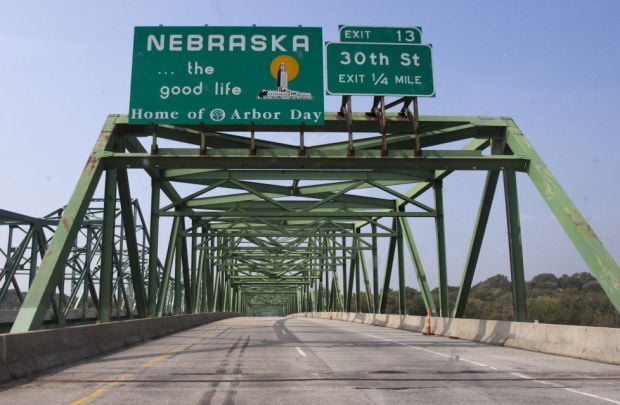
Tomorrow I depart with my wife and kids for my rural Nebraska hometown. I am very happy to be seeing my parents and sisters, nephews, nieces, in-laws, aunts, uncles, cousins, and friends again.

At the same time, it is a bittersweet feeling. There are days when I feel like an internal exile. My hometown and the greater New York City area are such different places that they might as well be in different countries. My travels around the country, which have included residential stints in places as far-flung as Chicago and Texas, have taught me that this is a nation of regions.  By that I do not mean the facile "red state versus blue state" cliche. Places where I have lived, like East Texas and West Michigan, have a unique culture that is all their own, even if both are "red" regions.

Like most of my grad school peers, I am living in a place that I never expected to live in, even though I left academia. I certainly enjoy teaching in New York City, and I have learned to love New Jersey. At the same time, it's still easy to feel out of place. This happens most often when I tell people where I'm from, and they treat me as some kind of oddity, or say disparaging things about "flyover country" in casual conversation. I don't think I've ever encountered a group of people more provincial than the residents of the Upper West Side of New York, and that is saying something, since folks in my hometown often treat the world beyond central Nebraska as if it has "here be dragons" written on the map.

I've at least grown a little used to these feelings ever since I moved to Chicago in 1998 and had someone call me "country" for saying the word "supper" and having a clerk stare at me in bewilderment when I asked for a "sack" with my order. What's been a little harder is the feeling that where I am from feels more and more alien to me. Some of this is the natural process of living apart from it for almost twenty years.

It also has to do, in large part, with the growing political and cultural divisions in the country. In my return visits to my homeland, I've noticed an increasing turn inward, party having to do, I suspect, with the aging of the population in that area. It was always a very conservative place, but it has become radically conservative, in the talk radio mode I normally associate with places like Texas. I still remember a couple of years ago being amused and horrified by a flyer posted in my parents' church about an even called "Guns for Life" featuring a minuteman and a fetus. Evidently it was some kind of gun range anti-abortion fundraising event. That kind of thing never would've happened in my childhood. Last year I had to hear a sermon, demanded of the parish priests by the local bishop, attacking the Supreme Court's recent decision on gay marriage. When Barack Obama spoke his infamous line about people in these areas being bitter and clinging to guns and religion, I just nodded in agreement. I have yet to witness anything in the ensuing eight years to get me to change my mind.

So I am left negotiating two worlds, one where a public attack on gay marriage is mandated, another where it would be thought of as hate speech. (And trust me, I am well aware that other people have much harsher negotiations due to race, sexuality, etc. I'm just thinking out loud here about regional differences.) I wish there was a way to bring the best of both of them together. Rural Nebraska has got to be one of the most culinarily benighted lands in the nation, a place where cheese is a spice and corn is a vegetable, as a friend back home likes to say. Here in New Jersey, on the other hand, there is amazing food from a variety of culinary traditions, so much that it never fails to amaze me. On the other hand, the people of my homeland have an admirable humility, and are much, much less obsessed with status and material possessions as folks are here in the Northeast. (This is perhaps one reason why Trump has not won any states as of yet in the Great Plains.) The way people in these parts view one's college alma mater as a reflection of their value as a human being never fails to disgust me. People back home are a lot more rooted. Unfortunately, that rootedness often expresses itself in an exasperating narrow-mindedness. People in both regions by and large don't understand the other. New Yorkers think of rural Nebraskans (if they ever think of them) as a bunch of dumb hicks, and Nebraskans think of New York as some wretched hellhole of immorality and degradation. Both are completely wrong, and both will never change their minds.

I know I will keep going on, enjoying the pizza and diversity in my new homeland, but silently shocked at the materialism. And I will go home tomorrow and enjoy the easy-going social interactions but be ready to be exasperated at the politics. Perhaps I'll just be satisfied that as an internal exile, I understand a lot of places a whole lot better than people who have lived there their entire lives.

Saturday, April 6, 2013

Our Current Political Divide May Actually Be a Regional Divide


During the last seven years of my life I have lived in four different states in different parts of the country, and that experience has revealed to me the stark regional differences that exist in this country.  The conventional wisdom about important issues is wildly different here in New Jersey as compared to Texas, the state I just left.  We can see such differences in the recent pushes in states like Arkansas and North Dakota to severely restrict access to abortion when no such movement exists outside of the South or West.  A better example might be the map (displayed above) showing where people were most likely to change their Facebook profile pictures in solidarity with same sex marriage activists two weeks ago during arguments in front of the Supreme Court.  The South and Great Plains are noticeably white on this map, and out of step with the rest of the country.  If you look at the map of the 2012 election below, you will see a great deal of correlation.


Shifts in regional power can make a huge difference in national politics.  As historian Bruce Schulman has argued, the rise of conservatism in the 1970s was driven and reflected by the economic and population growth of the Sun Belt.  Unfortunately for conservatives, Sun Belt states like Colorado and California have become more liberal, and Florida has gone for Democrats in the last two presidential elections.  The South and interior West alone cannot give Republicans the votes they need to win.

The regional disparities in voting and on key issues also might help explain the virulence and polarizing nature of political debate in America. The hard-core, true believer House Republicans hail from districts where people who disagree with their ideas are few.  These same ideas are political poison in other parts of the country.   Many states in the conservative regions have taken a combative attitude towards the federal government by refusing to take part in the Affordable Care Act and passing nullification resolutions.  Because of the ideological uniformity of many of these states, politicians there are free to be as kooky and extreme as they want to be.

There is a world of difference between Connecticut, which recently passed sweeping new restrictions on gun ownership, and states like Montana, where the legislature wants to nullify any new federal gun laws.  I really don't think this divide can be breached; fanatics never compromise.  Because our system was designed to diffuse power, it makes it easy for one chunk of the country to band together and jam up the legislative gears.  Mechanisms like the filibuster, for instance, give minority factions an effective veto.

This is not the first time in our nation's history that regionalism has fed political conflict.  (There was that whole Civil War thing, you know.)  For decades the Solid South banded together in Washington to prevent any moves towards racial equality.  Supporters of segregation filibustered and nullified to their heart's content, successfully blocking progress for quite a long time.  If we are to make any progress regarding gun control, reproductive rights, marriage equality, and a whole host of other issues, this regional conflict must be resolved.  Hopefully it will be settled with less difficulty than in the 1860s.