Monday, June 24, 2024
The Whole Wilco Part Four: Many Rivers to Cross
Saturday, June 22, 2024
The Whole Wilco Part Three: New Beginnings
Friday, June 21, 2024
The Whole Wilco Part Two: The Only Band That Matters
Wednesday, June 19, 2024
The Whole Wilco Part One: Out of the Ashes
[Editor's Note: I have enjoyed writing these series where I listen to a legacy artist's music album by album and write about them. The readers I care about the most (my friends who for some reason tolerate me) are into them too and so I will keep writing them!]
So far in my catalog-spanning collection of series on different music artists I have been sticking to the Boomers: Dylan, Springsteen, and McCartney. I wasn't going to write another one for awhile, but Wilco is coming to town and I want to see them again. That got me in the mood to relisten to their catalog. There are only a couple of other bands that have ever meant as much to me personally, and since I was there at the start of their career (unlike the other artists I've covered), this will also be an exercise memoir/shameless autobiography. Also, unlike those other series, I have listened to all of their albums already, many many times. This will be less a voyage of discovery and more a look into what one of my favorite acts means to me and why. I know that as a white, educated Gen X dad from the Midwest I am pretty much a walking stereotype when it comes to Wilco fandom, but I really think it's about more than that.
Also, a quick note: I will only be covering albums with the Wilco name on them. I am planning a couple of appendices, one on Uncle Tupelo, the other consisting of solo and side projects. My reasons are less than scientific; I just wanna hear all of their main records before I see the show and I've only got a week!
Alright, on with the show.
A.M., 1995
Before there was Wilco, there was Uncle Tupelo. I became a fan right at the end when I picked up Anondyne after reading an article about them in Request magazine. Here were a bunch of guys from the small town Midwest who loved both punk and roots music and had decidedly progressive politics. I knew right away that these were my people. I played Anondyne to death, and to this day it takes me right back to the spring of 1994 and my last weeks of high school.
When Uncle Tupelo broke up and Wilco emerged with Jeff Tweedy and Son Volt under Jay Farrar, the comparisons were inevitable. I bought this album and Son Volt's Trace on the same visit to the record store (in this case a Best Buy in Omaha), and immediately preferred the Son Volt record. I had liked Farrar's songs in Uncle Tupelo better, and still to this day "Tear Stained Eye" from Trace is one of my pantheon songs.
Once I stopped comparing those two records, and my Wilco fandom deepened with later releases, I returned to A.M. and realized I had missed a lot. It's more uneven than the records that follow, but the gems are truly glittering. "Casino Queen" is a barnstorming, foot-stomping rocker that I had the pleasure of hearing live back in the early 2000s. "Box Full of Letters" shows off Tweedy's punky roots with some gleefully crunchy guitars. "Passenger Side" hits on a traditional country theme (drunk driving) with both humor and melancholy. (When grad school friends get together and play guitars and sing it always gets featured.) There are some lovely ballads too, like John Stirrat's "Just That Simple" and Tweedy's "Blue Eyed Soul." Admittedly, there are also clunkers like "I Thought I Held You."
Listening to this album in 1995 I figured that Wilco were going to be one of many bands in the alt-country scene, carrying on where Uncle Tupelo left off. At the time my music tastes were starting to move away from roots more into the Bowie-Velvets-punk side and I put the CD aside after a few initial listens, unaware of what was coming next. After their next record no one would be making Son Volt comparisons ever again.
Rating: Four Tweedys
Being There, 1996
I hadn't given Wilco much thought but bought this CD after 1. seeing the video for "Outtasite (Outta Mind)" and 2. noticing that it sold at a discount because it was a double album priced as a single. I know I sound like Grandpa Simpson right now, but in those pre-streaming days these were real considerations.
The first seven songs on this album really throw down the gauntlet and announce that the band has grown a lot since their debut. I noticed right away with "Misunderstood" that Wilco's music still had rooty vibes, but was also sounding more experimental. "Far Far Away" gets more country, but has similar themes of small town isolation. In my 20s and 30s when I moved around a lot I would listen to this song as a newcomer in a strange town and feel a little comfort. All of a sudden from this relaxed, contemplative vibe we get two stone cold rockers, "Monday" and the aforementioned "Outtasite (Outta Mind.)" "Monday" sounds like a lost track from early Skynyrd (a big compliment in my book) and "Outtasite" brings in the punky feel of Uncle Tupelo's loudest bangers. After that we get a detour back to the country, and a good one, in "Forget the Flowers." Then comes "Red Eyed and Blue" backed with "I Got You," long a mainstay of the band's live shows and probably the highlight the first time I saw them back in 2002. The first song starts mellow, a rumination ont the rock and roll life that seems to ask if all of the effort and pain is worth it. (Yes, this is a Gen X band in the 90s, folks!) After that laconic reflection comes the stomping of "I Got You," as the band has decided that, nope, getting to rock is worth it! Awake, Lazarus!
The songs that close out the first disc aren't as thrilling, but they are still good. It's important to remember that this album was first envisioned and released as a double, with each disc having a different feel. For the longest time, I listened a lot to the first disc, and far less to the second. At a party in grad school a friend put the second disc on, saying it was his favorite, and I started listening to it differently after. (I will avoid the old man rant about how physical media allows us these moments of discovery.)
"Sunken Treasure" starts things off on a somber note similar to "Misunderstood" and like it a comment on being "out of tune" with the world. "Kingpin" is a hand-clapping, foot-stomping country trash classic, and one of the rare rockers on the second disc. If the first disc is the interstate, this one is more the backroads. It ends with "Dreamer of My Dreams," a raucous hoedown but also the last full-on country fried song the band would put out under their own name for twenty-five years.
Although the grunge explosion had happened, by 1996 it was fading and rock music's place in the pop music scene was well on its road to decline. I sometimes listen to this album as the last truly great classic rock record. As "I Got You" reminds us, it was the end of the century.
Rating: Five Tweedys
Mermaid Avenue, 1998 (with Billy Bragg)
I wasn't sure whether to include the Mermaid Avenue albums in this series or not, but I am because they are a kind of swan song for Wilco as a band that could be described as "alt-country." In case you don't know, on these albums Wilco partnered with Brit singer Billy Bragg to craft versions of unrecorded Woody Guthrie songs. In many respects it was a throwback to Uncle Tupelo and Jay Farrar's interest in the politics of the Popular Front era. The combination of Bragg, Wilco, and these Woody lyrics works incredibly well, which made this record a critical darling of the time. "California Stars" became a mainstay of Wilco's live shows and "I Guess I Planted" and "Way Down Yonder in a Minor Key" have become big favorites for me. The irony with this album is that artists often put out covers albums to familiarize themselves with the music that influenced them. In this case Wilco is giving it the old country try one more time before taking on far different musical adventures.
Rating: Four and a Half Tweedys
Mermaid Avenue Volume 2, 2000 (with Billy Bragg)
This album comes chronologically after Summerteeth, but it was recorded at the time of the first effort with Billy Bragg and fits this era of Wilco's development. (Sometimes the proper chronology is not a literal one when it comes to writing history!) It feels more like a helping of leftovers, but anyone who's eaten their Thanksgiving meal over and over again for a few days after knows that leftovers can be pretty damn good. There are not as many classics here, but I really enjoy "Airline to Heaven."
Of course, in between the first and second of these albums with Bragg, Wilco took a radical turn. More on that in my next installment.
Rating: Three and a half Tweedys
Monday, July 11, 2022
Wilco, "Cruel Country" (Track of the Week)
Once you're over the age of 25 or so your favorite band isn't supposed to be a part of your identity anymore. It may have been the extended adolescence granted by grad school or the fact that I was living in Illinois when I turned 25, but Wilco was very much part of my identity in my late 20s.
Part of it was that Jeff Tweedy was a fellow small-town Midwestern boy who moved to Chicago. Part of it was that my group of grad school friends were fans too, and we went to multiple shows together. They were sort of the mascot for our gang, the way Mods embraced The Who and Small Faces. That period of time happened to coincide with their best records, as well their fight against their record company. Yankee Hotel Foxtrot wasn't just an album, it was an act of defiance against the corporate machine. Being a Gen X white dude I probably freighted this episode with more meaning than it deserved.
I had been a fan of Wilco from their first albums due to my love of Uncle Tupelo. That first record is still in the alt-country mode, and while Being There breaks from it, it still feels rooted in more traditional approaches. While I think their next three albums, which incorporated electronics and Krautrock, are their best, I kinda missed the old rootsy Wilco. Their last few records have been alright, but their sound has been feeling as staid to me as the alt-country thing felt to Tweedy in the late 90s.
When I heard that their new album, Cruel Country, was returning to their roots, I got excited. The album far exceeded my expectations, as the songwriting did not lose the sophistication that Tweedy has managed to hone in the last 20 years.
I have been most struck by the title track, a sad lament for America that I listened to more than once this fourth of July. The first lines set the tone: "I love my country like a little bot/ Red white and blue/ I love my country, stupid and cruel/ Red white and blue." Despite my best judgement, I still love this country intensely despite how upset it makes me. If you criticize this nation but don't love it, that criticism comes a lot easier. It's a lot harder to feel like you are losing something you love.
I am tired of the flag-waving nationalists getting to define what love of country means. It feels good to know I am not alone in mixing my love of country with a certain horror. I am a few years older than 25, but I am glad Wilco is still able to reach right into the heart of me.
Saturday, March 9, 2019
Wilco, "Shot In The Arm"
I heard today is the 20th anniversary of the release of Wilco's Summerteeth. This news, of course, has me feeling like I am getting too damn old. It came out when I was living in Chicago and Wilco was playing local shows all the time. I still like to think of my Chicago days as my recent past, but they are actually now a long, long time ago.
That album shocked me when I first heard it because I had been there for Wilco's beginning when it was the lesser of the offshoots of alt-country pioneers Uncle Tupelo. The band's second album, the masterful Being There, rocked out more and showed greater maturity, but it was still grounded in roots music. None of that could prepare me for Summerteeth, which completely eschewed any country vibes, as well as the easy-going humor of songs like "Casino Queen" and "Monday." Songs like "She's a Jar" and "Via Chicago" are some real dark night of the soul stuff.
It took a little bit for this album to sink its teeth into me, but "Shot In The Arm" was the song that did the trick. It has one of the great first lines of all time, "The ashtray says you were up all night." That one line tells a story, and it isn't a pleasant one.
It references lost love, depression, feelings of failure, and drug addiction ("Something in my veins/bloodier than blood.") Despite those themes it is uptempo and driving, like the manic side of a bipolar episode. It's song of someone who feels shot up and beaten down by life trying to maintain a sliver of hope about the future. "Maybe all I need is a shot in the arm"is an attempt at optimism in the face of crushing depression. I listened to this song a lot during a two-year period in graduate school where I frequently had bouts of severe depression. (Which I stupidly let go untreated.) I found the song reassuring, because there was someone out there feeling what I was feeling.
The song is also a little meta, with the repeated line "What you were once isn't what you want to be any more." This seems to be a comment on Wilco itself and the new music it was making. There is a kind of desperation on this song that perhaps speaks to Jeff Tweedy's need to break free from the limited musical palate he had found himself using. The band's next album, Yankee Hotel Foxtrot, would complete the process.
Above all, Summerteeth was Jay Bennett's showcase, more than any other Wilco album. "Shot in the Arm" is driven by keyboards and has the eerie synth and mellotron sounds that Bennett added to these tracks like a studio mad scientist. They make this rather catchy song considerably weirder, while adding to the emotional feeling of coming unhinged imparted by the song's lyrics.
Bennett was the friend of a friend, and I even got to have dinner with him once at my friend's house. I could tell from our meeting that Jay might have been the kind of person who was hard to work with, but he was also friendly, funny, generous, and full of creative energy. I can't listen to this song or the album it comes from without thinking about his untimely death, or that short time I got to spend in his presence. Wilco might be synonymous with Tweedy, but it would never have been able to reach its highest creative heights without the shot in the arm it got from Jay Bennett.
Sunday, April 10, 2016
Track of the Week: Wilco "Misunderstood"
I was lacking inspiration for a track of the week this week, and as I was sitting and reading this evening, "Misunderstood" by Wilco came up on a playlist I've dubbed "Late Night Brooding." This song, which has been familiar to me for twenty years now, suddenly hit me with a force it had never possessed before.
Coming first on the Being There album, the song is quite a statement of purpose from Jeff Tweedy and co. No longer will they simply be an 'alt-country" band, as the violent, dissonant build at the end of the song attests. That was brought home to me back in 2002, when I first heard the band perform on stage, by which point the repeated "nothing"s when things get crazy had become so intense as to almost be unbearable.
I've always liked the song, but other Wilco tunes spoke to me on a deeper level. This time around, after two decades, something finally clicked into place. Perhaps it's because I was back in "my old neighborhood" where I had been "so misunderstood" in my youth two weeks ago. It's a song that keys into the feelings of adolescent loneliness and rejection, and I felt those things quite intensely in my youth. Going home was great in terms of seeing my family, but this time, more than others, my visit dredged up some bad memories. Somehow my wall of memory repression had been breached, and I remembered exactly what it felt like to spend years in a place where I felt constantly out of place and alone. These were not memories of things I could see in my mind's eye, but memories of the actual feelings and emotions, which suddenly started running their way through my middle aged body, just as they had when I was teen.
In the spare opening of this song I hear those quiet nights laying in bed, the mournful tones of a train's horn in the air, and impossibly bottomless prairie darkness just beyond my window. I can feel, truly feel my anguished wish as a 17 year old for there to be somewhere, anywhere where I could go to escape.
Thankfully I got out at age 18 to college, and eventually found my true tribe of compatriots in grad school, where we would listen to Wilco, play and sing along to Wilco songs at late night parties, and drive hundreds of miles to Wilco concerts. Hearing "Misunderstood" in concert with my friends was more an acknowledgement of my new community, than anything else. The problem is now that that community is flung far and wide, from the high Plains of the Texas panhandle to the Palouse of eastern Washington to Shreveport to Topeka to Macon. I hear that song now and get homesick for a home that was never meant to be permanent.
Friday, November 27, 2015
My Wilco Years
From about 2002-2007, Wilco meant more to me than any other manifestation of popular culture. Wilco had been part of my life before, but in this time the band mattered in a way it didn't before and hasn't since. I had learned of Uncle Tupelo right before its demise, and loved the Anodyne album. For that reason I eagerly bought the first records by both Son Volt (Jay Farrar's band) and Wilco (Jeff Tweedy's), both coming out in 1995. That first Son Volt record is by far the better one, but Farrar could never best it, while the double that came next year from Wilco, Being There, was an exhilarating great step forward. The roots-rock elements remained, but songs like "Misunderstood" had something more experimental behind them. That experimentation really flowered on 1999's Summerteeth, an album I had a harder time relating to. The fact that the band's next album had been rejected by the record company intrigued me.
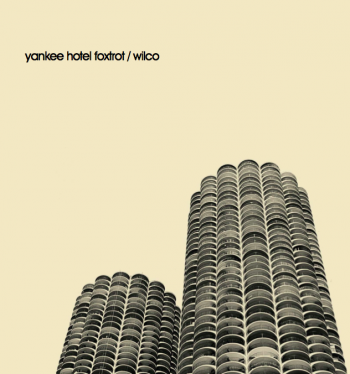
Yankee Hotel Foxtrot, October 2001 and April 2002
I first heard ripped versions of Yankee Hotel Foxtrot in 2001 before buying an official copy in 2002. That album was a complete revelation. I listened to it over and over and over and over again. In that strange post-9/11 time amidst the increasing drumbeats for war, its songs seemed to make sense of the fear and emptiness at the heart of the national condition. The fact that the record company had dropped Wilco over this album made it all the more glorious to listen to, a validation that "they" were wrong-headed and stupid, and "we" were ultimately right. This album was like medicine for the soul. During my year studying abroad in Germany, when I was mostly alone day after day, Yankee Hotel Foxtrot was a comfort, especially amidst the quiet dread of a German Sunday morning. It is difficult for me to even listen to this album again because the associations are so intense. That mostly has to do with "Heavy Metal Drummer," a song that would get played at grad school barbecues after my more musical friends had brought out their guitars. It's a song about not being able to recapture the heedless abandon of youth, and little did I know as I sang along with my friends, I was living in my own golden days.
"War on War," Late Show With David Letterman, April 2002
October 27, 2002 (Foellinger Auditorium)
In the fall of 2002 I was ecstatic that Wilco would be playing a gig on campus in the same giant lecture hall where I was a TA during the week. I bought the tickets the day they came out, and ended up in the lower level maybe ten rows back. At this point Jay Bennett had been jettisoned from the band, Leroy Bach was still in it, and Pat Sansone and Nels Cline had yet to join. The anticipation before the show was palpable in the audience; everyone there had been absorbing the new album for months. I was not disappointed. This was perhaps the best rock show I've ever been to. I was hearing amazing material that was still fresh by a band at the height of their powers and giving it their all. Tweedy was still willing to play some of the older stuff, so I got to hear the rip-roaring "Casino Queen" live, a great thrill. I left that auditorium that night on a high, my expectations more than surpassed. I've been chasing that feeling at every other show I've been to since.
May 3, 2003 (Southern Illinois University)
My circle of friends in grad school was similarly Wilco-crazed, and when one of my friends announced that they would be playing an outdoor show over a hundred miles south in Carbondale, we road-tripped down for it. It was a beautiful spring day, sunny but not hot, with a gentle breeze. The show was a little loose, and a lot of the students there weren't hardcore fans. Tweedy was a little jokey, giving the proceedings a fun, tossed off vibe. They even played "New Madrid," a song from Tweedy's Uncle Tupelo days about predictions of earthquakes on the New Madrid fault, perhaps a nod to concert's location. This was the same line up as before, Kotche-Tweedy-Bach-Stirratt, but with Mikail Jourgensen and his laptop lurking in the background. I like remembering this trip, and the spontaneity of my 20s, so long ago.
A Ghost Is Born, July 2004
My aforementioned year abroad in Germany, where I was doing my doctoral research, ended in July of 2004. A Ghost Is Born was released right before I left, I remember reading a review of it in a Berlin culture magazine maybe two days before my flight home. I picked it up immediately after getting stateside. I listened to this one a lot alone, as I had been hired by my advisor as a house sitter that summer. The heavy Neil Young guitar on "Guess That's What You Said" kinda shocked me, but I grew to love a lot of the songs very quickly, including "Company in My Back," "Late Greats," "Handshake Drugs," "Spiders," and "Muzzle of Bees." If I strip away the layers of memory that these albums carry with them and try to evaluate them objectively, I think A Ghost Is Born just might edge out Yankee Hotel Foxtrot. I still have one very vivid memory of this album: as I was driving back to Illinois from a job interview in Michigan in May of 2006, "Company in My Back" came on somewhere south of Kankakee. As the impossibly flat prairies beneath the unending sky stretched out before me, it seemed like the most perfect song in the world at exactly that moment.
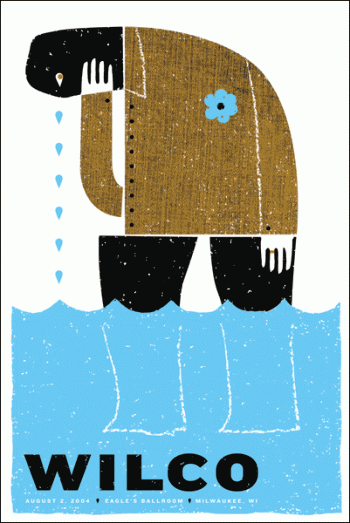
August 2, 2004 (Eagles Ballroom)
Only a month after being back in the States, I trekked up to Milwaukee with a friend (and his parents) to see Wilco live at an old ballroom downtown. It was an interesting night, as I walked down one of Milwaukee's hills on our way to a place to get dinner, I passed right by Dave Grohl of the Foo Fighters, who was chatting with someone on the sidewalk outside of a hotel. (I guess he must have been playing a show there, too.) This was also my first time seeing the current Wilco lineup, without Bach and with Cline and Sansone. The guitar pyrotechnics were certainly impressive in this show, and I do remember Tweedy doing a couple of power jumps with his guitar on "Spiders (Kidsmoke)." However, the old bash and sass I had witnessed before was gone, a relic of the 90s now put away.
February 8, 2005 (Foellinger Auditorium)
This concert was a tad disillusioning. I was back at Foellinger on a cold and dark night, but in the balcony instead of close to the stage. The show wasn't bad by any means, but not inspiring, either. That changed in the encores, which were amazing. Tellingly, the band revived "Kingpin" off of Being There, and really nailed it. They also played a bitchin' cover of "Don't Fear The Reaper."
Dinner With Jay Bennett (sometime in 2005-2006)
One of my friends was a close friend of the now departed Jay Bennett. I can't quite place the exact date, but I did in fact get to have dinner with Jay Bennett. He was in the area doing some production work at a new studio in a nearby town, and my friend and his spouse decided to have Jay and a few other folks over for dinner. Needless to say, I was a little more than starstruck. Turns out that he was a very friendly and gregarious guy, full of some funny stories a couple of which I still remember. I felt lucky just to have met the guy, but this made me especially sad at his passing, and at the impression you get of him from the I Am Trying To Break Your Heart Documentary.
Sky Blue Sky, May 2007
This album is the point at which my Wilco obsession began to simmer down into mere love and affection. This was fitting, since I had graduated with my PhD in 2006, and had trekked off to Michigan to work as a visiting assistant professor. Around that time my life had become much more difficult, having moved to a new place and working a job that was both demanding and unrewarding. This album did not make a huge impression on me when I first heard it. I didn't think it was bad, in fact it was good, but it was definitely not great. I probably like it more now than then, mostly because "Impossible Germany" has grown on me a great deal.
I've liked the other albums since then too, especially the self-titled one, but Wilco hasn't and can never mean what it did in that time roughly between 2002 and 2006. It's probably not coincidental that I reached age thirty at that point. Nevertheless, when I listen to a song like "Heavy Metal Drummer" I am transformed, sent back to a time in my life when I was young but poor, living the life of the mind with some amazing friends. While I am pretty damn happy nowadays, sometimes I wish I could go back to my Wilco days for just one of them.
Saturday, January 17, 2015
Track of the Week: Wilco "Far Far Away"
Last week I was playing an old playlist I'd made of mellow songs for long winter nights, and my wife perked up when "Far Far Away" by Wilco came on. I got to thinking about this humble little song has been a favorite of mine since I first heard way back in 1996.
It's the second track on Wilco's double album Being There, the record that began the band's transition from alt-country to something different and deeper. It comes at the end of the intense, experimental "Misunderstood," and immediately turns down the mood, and perhaps was meant to keep the band's old fans from feeling too confused by transitioning back into more familiar territory. Regardless of classification, it's a beautiful song of quiet beauty and longing. Jeff Tweedy sings about being in the country, far from the city lights of Chicago (he alludes to the CTA) and from his love, backed by a pretty organ and understated steel guitar. It's the sound of lonely rural isolation, perfectly distilled.
It's a song that's meant different things to me over the years. I remember listening to a lot when I first moved from Chicago to Urbana, Illinois. After two years in the big city I had developed a real love for urban living, but my academic aspirations took me back to the prairie landscape I had grown up with. I remember having a hard time adjusting to quiet nights, the lonesome sound of a train horn blowing in the dark, and the vastness of the sky. Before long I met the right people and learned to love the place, but for the first month or so, I felt like an exile, and this song was a comfort.
Nowadays I think about the song, but in reverse. I work in the heart of New York City and live in the densely populated environs of northern New Jersey, and I feel like my rural Nebraska hometown is in another country, or on another planet. So many of my close friends, flung far in the aftermath of grad school, live in small burgs from Murfreesboro to Nacogdoches. When I listen to this song I think about them too, so far far away.
Tuesday, February 4, 2014
Classic Albums: Uncle Tupelo, "Anodyne"
I owe my love of Uncle Tupelo to the long-gone Request magazine, which I used to get free with a purchase at Musicland. I relied on magazines like this, because I lived in an isolated Nebraska town before the internet. Sure, I could see videos of underground acts on MTV's 120 Minutes, but one interesting video could often get me to buy an album that turned out to be a disappointment (I'm looking at you, Catherine Wheel.) I craved the opinions of critics, and Request had Jim DeRogatis, who is still worth listening to.
One issue had a big feature article on Uncle Tupelo, a band I'd never heard of before, mostly because their brand of alt-country was not the kind of thing that 120 Minutes' grunge-centric programmers would play. Not having heard a lick of their music, I wanted to buy their latest album because the article showed the band to be small-town Midwestern working and middle class guys with progressive politics. On the cusp of graduating from high school I was dogged by the dilemma of how to move beyond my upbringing while staying true to the best of my roots, and these guys seemed to have figured it out. I had spent my high school years cultivating an outsider persona in my small town, listening to The Clash and reading Kerouac and Burroughs while proclaiming myself to be a socialist. This article was the first time that I ever knew there were other people like me in other Midwestern towns, still sticking around despite their iconoclasm.
I bought Anodyne without having heard a solitary note, but was immediately entranced within ten seconds of "Slate." Its high, mournful fiddle took Hank Williams and filtered it through the moodiness of The Smiths. It was a complete revelation that country music, a style I had spent years trying to escape from, could reach the melancholy places in my soul the same way that Morrissey and Marr had done to console my teen angst. Things get more up-tempo on the bluegrassy "Acuff-Rose," a celebration of old time country music and one of the best expressions of the joy of song I know.
After these two fiddle-heavy tunes, the record shifts into thrashy, punky territory on "Long Cut," as it also does two songs later on the angst-ridden "Chickamauga." I never been absolutely sure what the latter song was about, but the way Jay Farrar sings "I don't ever want to taste these tears again" has made it a go-to for me over the years to crank up whenever I'm feeling beaten down by life. These rocking songs, just like more traditional "Slate" and "Acuff-Rose," display the split songwriting duties in the band between Jeff Tweedy ("Acuff-Rose" and "Long Cut") and Jay Farrar ("Slate" and "Chickamauga"). The band eventually would not be able to accommodate both of them, and Uncle Tupelo split up into Tweedy's Wilco and Farrar's Son Volt.
With the benefit of hindsight, Tweedy obviously went on to greater acclaim, even if Son Volt's first record was superior to Wilco's (a story for another time.) Wilco might be the most critically-admired band of the last fifteen years, and Son Volt is an afterthought (though they've released some great stuff.) Up until this album, however, Tweedy was obviously the junior partner in the relationship, but on Anodyne, his contributions are at least as good as Farrar's. "New Madrid" is a catchy and amusing song about false predictions of new earthquake on the Missouri fault line that brought the national media spotlight on a rural town. "We've Been Had" is a poppy rocker prophesy of the type of songs on Wilco's breakthrough Being There album. ("There's no call waiting on my head phones" is just one of many great lyrical bon mots in this song.) "No Sense in Loving" recalls old timey country songs about heartbreak but has a jauntiness that belies its lyrics. In general, Tweedy's songs are a little more light-hearted and poppy, something that's surprising considering that this man will later be known for pain-fests like "She's A Jar" and arty, Can-influenced songs like "Spiders (Kidsmoke)."
Farrar has always been something more of an Eeore figure, with a keening voice to match his world-weary lyrics. I must say, being the junior depressive I was at the time, I preferred his songs when I first bought the record. "Anodyne" uses steel guitar to maximum mournful effect in the strongest ballad on the album, a sound replicated on the quiet "High Water." These two songs always make me think of those sitting at my parents' kitchen table, looking out at the impossibly huge sky of my homeland, and feeling suffocated beneath its weight. The more up-tempo "Fifteen Keys" speaks to the feeling of being out of place, and "Steal The Crumbs" closes the album out on a wistful note using the traditional country sounds of "Slate" that opened the album. In-between all this Farrar and Tweedy join the great Doug Sahm, pioneer of the alt-country sound, on a stomping, carefree cover of his "Give Back The Key to My Heart."
Little did I know back in 1993 that I was witnessing the last time that Farrar and Tweedy would create together. Anodyne is a special album for that reason alone, and one that to this day has yet to be topped by the alt-country bands it helped inspire. I also cherish it as a relic of a secret rural Midwest, one populated by rebels against Reagan's America who loved Johnny Cash and Johnny Rotten with equal measure. Since leaving my hometown I've been lucky enough to know other folks from this secret Midwest, to learn that I was not alone.