Showing posts with label U2. Show all posts

Monday, February 28, 2022

Why U2's War Makes a Good Listen in 2022

In recent years no musical artist has been knocked off their pedestal harder than U2. It began with the backlash against their album being added by Apple to people's iTunes libraries, and then just spilled over into general hatred. Slagging U2 has now become a way for too-online people to show how cool they are. The whole thing has reached truly annoying proportions. And while I will acknowledge U2's output since 2000 has been pretty lame, their prime stuff still holds up, in my opinion.

39 years ago today the band put out their first great album, War. It came out in 1983, at the height of Cold War tensions, a year when Soviet air defense shot down a Korean airliner and NATO's Able Arch 83 exercises prompted the Soviets to ready their nuclear arsenal. It was the closest we came to nuclear war in my lifetime, at least until this week. Beyond the Cold War, the Troubles raged in Northern Ireland, civil war and invasion ravaged Lebanon, and the dust had just settled from the misbegotten Falkand Islands conflict. Central America too was aflame. 

In our current unsettled times this album could not be more relevant. If you are ready to put down the smug hipster bashing of U2 and enjoy them again, here is the place to start.

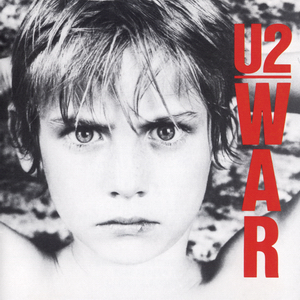
The cover itself let's you know what's up. The boy from the cover of their first album Boy now has a split lip and a fierce look on his face. It's a startling image of lost innocence, how conflict makes too many people grow up too soon. 

U2's first two albums are good but in a more spiritual, and less topical mode. This one begins with "Sunday Bloody Sunday," an unmistakable reference to the Troubles. Larry Mullen's drums strike a martial beat, the first words are "I can't believe the news today/ I can't close my eyes and make it go away." How many times have you had that sensation in recent years? Bono coming out and waving a white flag chanting "no war!" when performing this song in concert back then might strike us as cheesy nowadays, but it meant something profound to me in that moment. Reagan's America was full of Cold War nationalist propaganda, talk of the "evil empire" and revenge fantasies about Vietnam from Rambo to Missing in Action to Uncommon Valor. His was one of the few voices with a big platform in that pre-internet age to say it was all inhuman bullshit. 

After that comes the haunting "Seconds," one of my all time favorite U2 deep cuts. Again, Mullen's drums are insistent and martial. (This album might be his most dominant.) "It takes seconds to say goodbye" references the nuclear button. The bass and vocals make it sound like a lost track from Remain in Light. Despite the themes the song is a bit of an interlude between "Sunday Bloody Sunday" and "New Year's Day," the first U2 song I remember hearing on the radio. The latter song blends political concerns (evidently about Poland's Solidarity movement) with what sounds like a love song. The lyrics might be indistinct, but the sound is amazing still today. This is the The Edge's song, his searing guitar solo among his very best. His guitar really came alive on the last album, October, but here it's finally wedded to a superior song. The echoey piano paired with Clayton's overdriving bass give it a perfectly ominous sound.

"Like a Song..." follows, another stellar deep cut, at least from a musical standpoint. Lyrically we start getting the taste of the kind of overwrought Bono preaching that would get him mocked mercilessly in the Rattle and Hum era as well as the present day. If you can overlook that it has the rest of U2's strengths on full display. Mullen's drumming has never sounded better, driving the song forward with true urgency. As usual Clayton's bass adds to the drive while Edge's reverb washes over everything. 

Side one ends with "Drowning Man." Like all well-sequenced LPs the listener gets a come down before needing to flip the record over. "Like a Song..." is so driving that it's impossible to keep that pace up, anyway. We also get a break from politics to a song about longing for one's love when separated by distance. The sound is still gorgeously haunting, a reminder that U2 got its start in the post-punk world. Those post-punk elements would be scrubbed out pretty soon.

Side two starts with the more up tempo "The Refugee" to kick things off. It doesn't quite sound like anything else on the record, either. It sounds more like an outtake from Bowie's Let's Dance, something for the clubs instead of protest marches. Like a lot of U2 records over the years side one is for the hits and side two is for the experiments. (Just listen to The Joshua Tree). Although the next song "Two Hearts Beat as One" would be a single, it still has the post-punk sound instead of the nouveau arena rock sound of "New Year's Day." Like early New Order, the bass is carrying the melody.

Like a lot of classic albums, the penultimate tracks are not standouts. "Red Light" is hardly bad, but doesn't distinguish itself that much. It does rock hard, at least. "Surrender" has the haunting sound of "Drowning Man" at the start but heads to poppier territory. Again, not bad but not great.

Everything ends with ""40"" (a reference to Psalm 40.) My longstanding theory about U2 is that they are the greatest Christian rock band of all time. The last album, October, overflows with religiosity. Heck, one song is even called "Gloria"! Politics with a religious tint of prophecy replace outright religion on War, but here God makes a comeback. This is a beautiful, languid track recorded at the end of the sessions when Clayton had already split. You can definitely tell this is a band that is about to mesh well with Brian Eno on their forthcoming albums. Edge's bass has a more melodic cast than Clayton's galloping horse, and Bono croons more than shouts for a change. It's a perfect ending to a great record.

It might not be cool to like U2 these days, but their own response to a world gone wrong in the early 80s sure makes a lot of sense today. 

Monday, April 10, 2017

Memories Of The Joshua Tree At 30


It was a gorgeous spring day today. Due to the Passover holiday, I don't have to go to work tomorrow or Wednesday, so when I stepped off the commuter train into brilliant sunshine, I felt a brush of the divine. The long dark winter seemed to melt away in an instant.  When I got in my car, I knew what to do. I rolled down my windows, and fired up "Where the Streets Have No Name" and drove home with the wind in my hair.

I suddenly remembered that the The Joshua Tree turned 30 in March. Its music was some of the first contemporary music that ever meant anything real to me. The reason isn't a happy one, though. It was thirty years ago this April that my grandfather passed away, the first person I was very close to who ever died. He lived about thirty miles away from my hometown, in a tiny rural village that required lots of backroads driving. On the many days we drove back and forth from Hastings to Lawrence for funeral preparations, the funeral itself, and to check in on my grandmother, the radio in my parents' van seemed to play "With Or Without You." To this day I still cannot listen to that song without thinking about my grandfather's death. Even though it's a love song, it's one drenched in a sense of loss and powerlessness, things I was feeling very intensely in my 11 year old soul at the time.

It is very easy to mock U2 these days, it's practically become its own cottage industry. But in 1987, in the midst of the stasis of the later Reagan years and pop music and hair metal with about as much soul as a slice of processed cheese, U2 was a breath of fresh air. As insufferable as Bono can be in his constant political moralizing that lacks a proper level of self-awareness, after years of Reagan and Thatcher and the big dumb lobotomy of 80s pop culture it was exhilarating to hear the anti-imperialist critique contained in a song like "Bullet The Blue Sky."After years of Cold War bullshit, hearing a song about the Mothers of the Disappeared, their children murdered by regimes that had the support of the United States government, felt positively revolutionary.

The songs that were warmer to America (the subject of most of U2's music from about 1984-1989), were more inclined towards the places most Americans choose to overlook. I think here especially of "In God's Country," a wonderful evocation of what it's like to drive through the expansive deserts of the American west. In their video for "I Still Haven't Found What I'm Looking For" the band wanders around Fremont Street, in the seedier, now forgotten part of Las Vegas.

It took awhile before I was sophisticated enough to know that this album was reflecting my country back to me from the point of view of outsiders. That moment I think came when I was in college, when through my Latin American history classes I learned about the real Mothers of the Disappeared. It's also when this album took on another meaning. My friend Lorna really loved it, and back then, I had it on tape, a tape that pretty much lived in my car. On more than one occasion we'd be driving back to the dorms (I was one of the few car owners in our circle of friends on an urban campus), and she'd demand we drive around the block until the last song on side one finished. That song was "Running To Stand Still," a ballad ostensibly about heroin abuse. I hear it now, twenty years after those young and free days, and only think of the blazing fire of college friendships, a fire that lives on in my memory, a fire that those old photos on Facebook can only barely represent.

The Joshua Tree may be the only album in my collection with two such powerful memory triggers spaced ten years apart. It's a wonderful record and it still holds up. Forget every annoying thing Bono has done in the last twenty years and the fact that they put that crappy album on your iPhone without your permission. Give a new listen, and hear the dreams of a time not unlike our own.

Monday, January 23, 2017

Classic Music Videos: U2 "Sunday Bloody Sunday"


[Editor's Note: It's been way too long since I've put a video under a microscope, so here it goes.]

The other day I was talking to a new friend, and after feeling each other out and making sure it was safe to admit, we realized that we both had a deep affection for U2. This has become a bit of an uncool thing to admit recently, I guess for good reason. But as uninteresting as the band's music has become and as insufferable as Bono's public persona can be, they made a handful of really fantastic albums that will always stick with me.

My friend and I noted how in the cultural and political wasteland of the 1980s, their early political moves were exciting, rather than eye rolling. In the midst of the Reagan reaction and its excess of greed, nationalism, and indifference to suffering, the live video for "Sunday Bloody Sunday" hit me upside the head with a spiritual two by four. I was a weird child, so I watched the news and was well aware of the Troubles in Northern Ireland. Living in a town where Catholics and Protestants were pretty divided (at least back then) I was shocked that such differences could be a reason to murder someone. (I wasn't really apprised of the history of occupation and settlement, of course. Due to my Catholic identity I definitely had a side, though.) This song was about those Troubles, but in the midst of Reagan's rearming and the sudden reheating of the Cold War, I took it as a cry for sanity in an insane, war-crazed world.

The marching beat, descending melody of Edge reverb, and keening harmonies immediately provoke an erie, unsettling sensation. That gets magnified in the video, shot in the Red Rocks outdoor theater in Colorado. There are burning flames on the rocks under a famously blood red sky, their colors turned into kaleidoscopic flares by virtue of being shot on early and primitive videotape. (So meta. It's a video where video itself is a major player in the look of it.) The video is also notable for showing Edge with hair and without a hat, perhaps the last one to do so. His buffalo check flannel vest is kind of in style again nowadays, so you can't say this aged too poorly.

As always, Bono is the center of attention, practicing unique and less overtly macho front man moves than say Jagger or Plant. Bono sort of skip-hop marches in time with the beat, occasionally flinging his mullet, perhaps the most glorious of the 80s. The piece de la resistance, of course, is the white flag that Bono plants at the front of the stage screaming "No more!" You can call it cheesy, but it still gets me. In the midst of the glorification of military might and false lies of "morning in America" here was a song calling for humanity and peace. We need that spirit more than ever.

Tuesday, August 9, 2016

U2 "In God's Country"


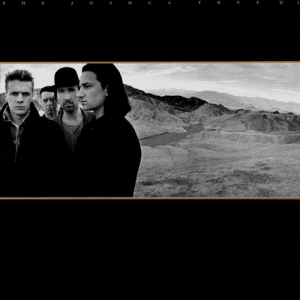
It has become fashionable in recent years to deride U2, something cemented by their ill-advised placing of their lackluster new album on everyone's iPhones. It is easy to forget they from 1983 to the dawn of grunge they were one of the few rock acts making interesting music getting played on Top 40 radio amidst the morass of hair metal. I recently gave The Joshua Tree a fresh listen, and was surprised at how good it still sounds almost thirty years later.

Most people know the hits, like "Where The Streets Have No Name," "I Still Haven't Found What I'm Looking For" and "With Or Without You." I first had the album on tape, and I came close to wearing out the first side (the one with all the hits), which is one of the strongest first sides to any album I can think of. The second side does not have any hits, and certainly has fewer hooks. Without the hooks, the depression that Bono was in at the time was much easier to see. "I Still Haven't Found What I'm Looking For" is a song about failing to find meaning in life, but it is so good as pop music that you don't really think about the undertones.

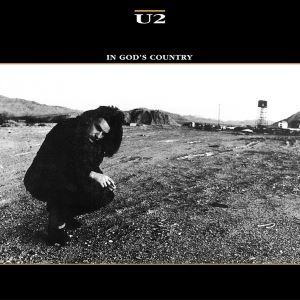
Of all the second-side songs, my favorite is "In God's Country," referencing the term some use to describe the vast deserts in the American West. I also take it to be a bit of commentary on the United States more generally, which was the big inspiration for the album, as a place of spiritual emptiness. It has one of those beautifully understated yet up-tempo guitar parts from The Edge, more reminiscent of The Unforgettable Fire than the more bombastic Joshua Tree. That fast yet faded sound perfectly matches the song's evocation of the desert.

I distinctly remember going on a short family vacation to the Niobrara River in northern Nebraska not long after I bought the album. To get there we drove through the gorgeously vast and empty Sandhills. As I heard "In God's Country" on my Walkman with the landscape rushing by, I knew exactly what the song's inspiration had been. I laid my head against the window and closed my eyes with the hot sun still visible behind my eyelids as Bono sang "Sleep comes like a drug/ In God's country." Mock U2 all you want, but that kind of transcendence does not come around very often.

Saturday, September 27, 2014

Track of the Week: U2 "Bad"


Recently U2 engaged in a blunder of colossal proportions, giving away its album to millions of iPhone users who didn't want it.  One wag compared their new record to the CDs of free internet minutes that America Online used to bombard us with a decade ago.  This hubris and marketing behind this decision, as well as the not bad but not good music on Songs of Innocence, are indicative of a band that has been in a holding pattern since the start of the new century.  Once a great band, they've now been reduced to a punchline.

However, we should not led U2's current irrelevance overshadow the accomplishments of its glory days.  When they put everything together, their songs had a kind of magic to them, capable of hitting on deep emotions in ways other pop music artists could only dream of.  That ability became much sharper on The Unforgettable Fire, when Brian Eno and Daniel Lanois became the band's house producers and de facto silent members.  Their added sense of atmosphere and ambience gave U2's songs a new, deeper resonance.

That impact is best heard on "Bad," which starts with a minimalist figure, just Edge's ringing guitar and a starkly postpunk tamborine before Bono's voice comes in.  He's never been a traditionally great singer, but on this song he shows off his unique emotional belting, which just keeps building and building to the scream of "I'm wide awake!"  After this spookily spare beginning, the rhythm section comes in with the signature pounding thrum of Mullen and Clayton.  My God it is a beautiful thing to hear, slowly building in intensity before the dam breaks and Bono throws all he's got into the mic before dropping to the low "I'm not dreaming" after the unhinged shout of "I'm wide awake!"

I dare you to listen to this song and not be affected. "Bad" hits a kind of frequency in my soul where I MUST listen to it.  It can never be musical wallpaper, the emotional intensity simply can't be ignored.  It's a far cry from a band that now literally can't give away its newest album.  

Saturday, August 9, 2014

U2 Albums Explained Through Their First Tracks


I have been on something of a major U2 kick for the past week.  They are a band I first appreciated in the 1980s, and along with REM were the creators of the first contemporary rock music that I actually liked.  (I grew up when Poison and Whitesnake bestrode the earth like giants.)  After my college years they've meant less to me, but every now and then I go back to them in a big way.  Listening to the podcast U Talkin' U2 To Me has also enhanced this rediscovery, and it got me thinking about U2's approach to recording albums.

Unlike a lot of other bands, their records are not collections of songs, but works in themselves held together by common themes and unique sounds.  While some U2 albums aren't great, none of them really sound alike.  They are also recorded and sequenced with great care.  The band has chosen very distinctive producers from the beginning, including Steve Lillywhite, Brian Eno, Daniel Lanois, and Flood, and that's no mistake.  Neither is the track listing on U2 albums, where the first track is almost always a defining track for the album as a whole, not necessarily the lead single.  Listen to the first track of any U2 record, and you will know exactly the tone, theme, and sound of that album.  To prove my thesis, here's an annotated playlist of all the U2 side one track ones.

"I Will Follow" from Boy
U2 were very young when they cut their first record, indicative in the title and the first track.  "I Will Follow" was indeed their first big single, but it also established the theme of growing up that permeated the album.  At this stage they were very much a post-punk band, and this is a real post-punky song, with its echoing drums, simple riff, and telegraph operator bass.  Their first album is not the most adroit, but full of a sense of adolescent discover in all its pimply messiness, so this song is perfect as an opener.

"Gloria" from October
For years I've been saying that October is an underrated album, mostly because Edge's fiery guitar playing is really fantastic, even if the songwriting isn't totally up to par.  Few U2 fans dispute, however, that "Gloria" is a great song.  It sets the tone immediately in terms of Edge's guitar, which at the end the of the song sounds like a blast of light from the parted heavens.  That's appropriate, since this album is marked by deep Christian spiritualism, to the point that it may be the best Christian rock album ever made.  (Not all songs conform to this theme, but many do.)  Bono shouts his "Gloria" fervently and drops in some Latin, so you know this album is going in a spiritual direction.

"Sunday Bloody Sunday" from War
War announced its intentions before you even broke the cellophane on the packaging.  The cover features the boy from the first album, this time with a split lip and a look of hate on his face.  The cover and title are no mistake, this is a record about the violence and conflict in the world.  That theme is made abundantly clear on "Sunday Bloody Sunday," about the Troubles in the band's native Ireland.  It starts with martial drums of war, and the first words are, appropriately "I can't believe the news today."  You know right away that this is a topical album with a critical take on the world condition.

"A Sort of Homecoming" from The Unforgettable Fire
After taking a "ripped from the headlines" approach on War, U2 cut a new record with master atmospherists Daniel Lanois and Brian Eno with a decidedly more poetic bent.  The new, moodier sound is announced right away with a driving, liquid bass, African drum rhythms and wall of swirling guitars.  The album has some real clunkers ("Elvis Presley In America" and "Indian Summer Sky," anyone?) but this song shows off the best aspects of the band's new direction.  I've listened to it like ten times in the past three days.

"Where the Streets Have No Name" from The Joshua Tree
For my money, this is the best U2 album opener, a really amazing song.  It starts with a quiet, stately organ, almost as if in a church, and then the gorgeous, crystalline Edge guitar comes in building slowly before the throbbing Clayton bass and thumping Mullen drums get it revved up to full speed like a motorcycle on the highway.  Despite being a huge hit, this is an album with some serious themes of loss and escape.  "Where the Streets Have No Name" sounds like an anthem, but it's got lines like "Our love turns to rust."  That's only appropriate for an album with songs about heroin addiction, deindustrialization, and mothers of the "disappeared" in South America.  This is a monster hit album with anthems but without happy pop songs.

"Helter Skelter" from Rattle and Hum
Uh oh, we're in trouble here.  Bono's pretensions get the best of him on this record, which is overblown and full of rock star narcissism.  When an album starts with him saying, without a hint of irony, "Charles Manson stole this song from the Beatles, we're stealing it back," and then segues into a middling cover of a great Beatles song, you know you're in trouble.  There are some really good songs on Rattle and Hum, but it's a major step down from the last three records, and the first song tells you that right away.

"Zoo Station" from Achtung Baby
Right here U2 makes a statement as bold as the one that opened The Unforgettable Fire.  The jagged, distorted guitar and and mechanical-sounding drums let you know right away that the group's obsession with American society and music is over, and that this album is really going to be something new under the sun.  Over twenty years later it still sounds fresh to me.

"Zooropa" from Zooropa
For some reason people aren't as big on this album, which I find to be absolutely brilliant.  It comes out of the band's innovative Zoo TV tour, and more than any other cultural artifact of the time, comments on the spiritual emptiness at the heart of modern society while still delighting in the decadence.  To make the theme clear the album's first sounds are a mishmash of broadcast signals before Edge's guitar hovers over like an alien spaceship, taking it all in.  Bono deftly and humorously incorporates corporate ad copy like "Fortschritt durch Technik"and "you've got the right shoes to get you through the night."  This sets the tone pretty well for what's to come and lays the theme out as directly as any first track on a U2 album.

"Discotheque" from Pop
If most U2 fans are lukewarm about Zooropa, they positively despise Pop.  I am in the small minority that really likes this album, partly because it is such a daring departure, and partly because it combines the spirituality of their early songs with the decadence of their later work.  (It doesn't hurt that at the time I was going to clubs and digging electronic dance music.)  Of course, most U2 fans are not going to warm up to a song about going to the disco.  In terms of theme, it's the least dark song on a dark album, but musically is the most "techno" and tells the listener right away that they are going to be in a world that is more Chemical Brothers and less "I Still Haven't Found What I'm Looking For."

"Beautiful Day" from All That You Can't Leave Behind
The message of this song is basically, "sorry for challenging you too much U2 fans, here's some of that old Lanois magic attached to a catchy pop song."  I will admit that "Beautiful Day" is a gorgeous song, but is ominously by far the best on the album.  U2 repudiated their electronic, challenging ways of the 90s and replaced that stance with solid yet fairly pedestrian music.  This song, as pretty as that is, makes that retreat clear.

"Vertigo" from How to Dismantle An Atomic Bomb
Hard rocking without a whole lot of inspiration.

"No Line On The Horizon" from No Line On the Horizon
Hard rocking with a little more innovation, but the inspiration's still not there.  U2's next album will pretty much decide whether they are still an original musical force or are a rock heritage band like the Stones have been since "Start Me Up."