Showing posts with label The Eagles. Show all posts
Sunday, January 31, 2016
Track of the Week: Glenn Frey "Party Town"
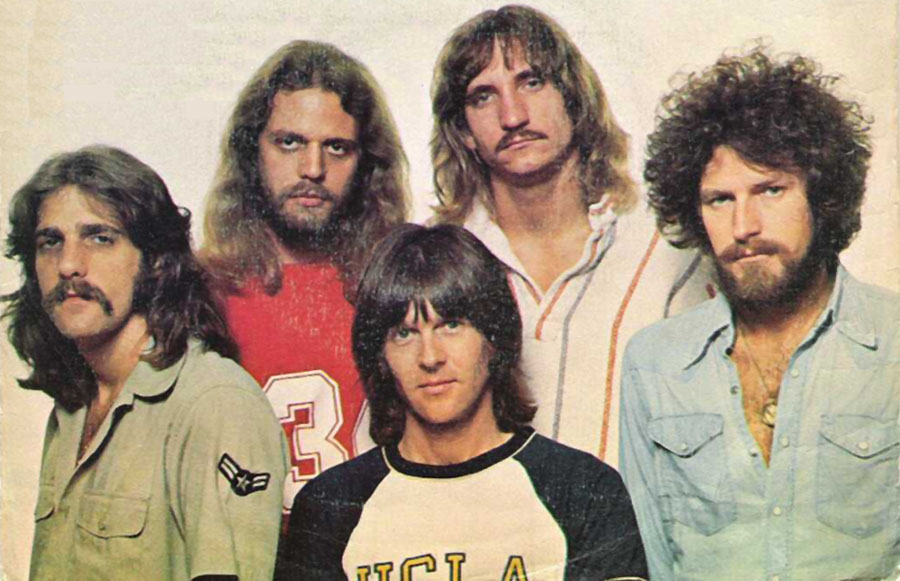
With all of the deaths of celebrities in the field of music this year, it's been interesting to note the difference in the reactions to the deaths of David Bowie and Glenn Frey. Bowie's death brought a much, much greater outpouring of grief and tribute, even though he was far less successful (in terms of records sold) than the Eagles were in America. In fact, the Eagles have the biggest selling rock record in American history despite the lack of a passionate following (something I tried to explain in a previous blog post.) There probably isn't an hour that goes by that "Hotel California" isn't played somewhere on a classic rock station in America. The Eagles made middle of the road music, and their fans were the kind of people who aren't nearly as passionate about music as the fans of David Bowie.
Now I don't want to speak ill of the dead here with any of this. The Eagles did have some real high points, and their greatest hits album has sold so well because of them. I am just young enough (born in '75), that I learned about the band through the solo careers of Glenn Frey and Don Henley. From about 1983 I was listening to Top 40 radio daily and well aware of the big hits of the day, which is where I first their names. In the autumn of 1984, both artists were vying against each other for chart supremacy with two very different songs: Henley's moody and elegiac "Boys Of Summer" and Frey's bright shiny sax-driven stab at 80s pop cheese "The Heat Is On." Frey's song went higher on the charts, but Henley's is probably more beloved today.
The Frey song that I remember best is probably one few people even know these days: "Party Town." It's from his first solo album, the lamely titled No Fun Aloud. As is usually the case with the first solo album by a major member of a major rock band, it's much more uneven that what he was able to do once he got his footing as a solo act. I know the song because the local hits station would play it every Friday at 5PM. When I was still in school it was a happy signal that the weekend was about to begin. It took on a much deeper meaning the summer that I worked the day shift at a rubber parts factory while I was in college. I'd worked the evening swing shift the summer before, but nothing could prepare me for the sheer force of the daytime summer heat outdoors combined with the hot air around the machines I tended all day. I brought a jug of water with me to work every day, which would be drained before lunch, when I refilled it, only to be drained again in the afternoon. Some days my jeans were falling down my hips after all the sweating I'd done.
We always had the radio going at work, and when "Party Town" came on as the shift was ending, it was a kind of deliverance. My week of toil and sweat was finally over, with a summer weekend stretched before me and some money in my pocket. (We got paid every Friday) And hey, it's a fun little song using that tried and true Chuck Berry guitar with a bit of "take this job and shove it" sass. I like to remember Glenn Frey not as the dude from the Eagles, but as the guy responsible for such a happy memory.
Friday, March 6, 2015
Explaining The Eagles' Seductive Mediocrity
The Big Lebowski is one of my favorite films, and one of my favorite moments is when The Dude is riding in the back of a cab with "Peaceful Easy Feeling" playing on the radio, and he blurts out with fatigued annoyance "It's been a long day and I hate the fucking Eagles." The cabbie boots him out, part of the joke being that it would be possible for anyone to get that passionate about such a middle of the road band.
My sentiments about The Eagles have never been quite as vehement as The Dude's, but I've never really cared for them. That doesn't mean, however, that I don't find them oddly interesting. It seems almost inexplicable that their first greatest hits album has sold more than any other in American history. How to explain such massive popularity? Also, because I am a sucker for rock docs, I happened to recently check out a new film called A History of the Eagles that was rather well done and managed to have interviews with the relevant parties. This gave me insight into the band that I never really had before. For example, I thought Don Henley came off as a pretty warm, funny guy, when back in the eighties his image was of a dour scold with a yuppie ponytail.
Part of the reason that the Eagles' greatest hits record has sold so many copies is that it has been much more popular after the band's demise owing partially to the fact that their brand of mellow country rock has set the template for Garth Brooks and all he has wrought in Nashville. It is music for fans of country, pop, and rock alike in ways that little else is. Listening to the band's early work, it's also apparent that they benefited from the groundwork laid by country-folk-rock pioneers like the Gram Parsons era Byrds, his Flying Burrito Brothers, Parsons' solo work, Dillard & Clark, Poco, and Buffalo Springfield. (Appropriately enough, Bernie Leadon played with Dillard & Clark and the Flying Burrito Brothers, and Randy Meisner and later Timothy B Schmitt played with Poco.) The Eagles dropped most of the twang and added large dollops of radio-friendly pop touches on early tunes like "Tequila Sunrise," "Peaceful Easy Feeling," and "Take It Easy." (It also didn't hurt that Jackson Browne co-wrote the latter song.) They basically took a vibrant but marginal popular music trend and brought it to the masses.
If you compare Gram Parsons' work to The Eagles', Parsons just blows them out of the water. There's more soul in "Hickory Wind" than in all of the songs Don Henley ever wrote put together. That being said, The Eagles knew how to craft some catchy tunes, even if they aren't high art. Watching the documentary I noticed something else too: the harmonies. The footage of the band harmonizing backstage before the show blew me away a little. Their harmonies were rich, deep, and seemingly effortless. The ability for singers to hit the right harmonies is kind of inscrutable, it takes the right mix of voices, and the The Eagles had it. The live footage also showed that the musicians in the band could actually play, something obscured by the relatively simple nature of their music.
I also noticed from the doc that Joe Walsh joined at the exact right moment, when it looked like the band was running out of inspiration. The one Eagles song I'd ever liked in my teenage years listening to classic rock radio was "Hotel California," mostly for Joe Walsh's searing leads and the unintentionally hilarious lyrics. That inspiration didn't last too long, since The Eagles didn't come up with a follow up album until three years later with 1979's The Long Run, when the group's seductively mellow mediocrity curdled into maladroit cocaine rock. However, it must be said that "In the City" was a notable exception, and that was essentially a Joe Walsh solo track. (His 1978 But Seriously Folks is a far superior album.)
In the aftermath of all of this in the 80s I grew up hearing lots of Glenn Frey and Don Henley songs on the radio, and I had no clue that they had ever been in another group until I started listening to classic rock in the early 90s. I was surprised that the guys behind 80s-tastic, uber-poppy stuff like "The Heat Is On" and "All She Wants To Do Is Dance" could be responsible for something as winsome as "Desperado." For a band that now has the best selling album in American history, they seemed to have left almost no tangible impact, unlike say the Beatles or Stones. Their pleasing mediocrity, accompanied by pretty harmonies and able musicianship, somehow managed to overcome this lack of relevance. Like Jay Leno, Two and a Half Men, and The Big Bang Theory, The Eagles managed to be the most popular thing going without achieving anything like excellence. In late capitalist America, pleasing, capable mediocrity, not brilliance, seems to be the key to reaching the top of the cultural heap.
Labels:
mediocrity,
popular culture,
The Eagles
Subscribe to:
Posts (Atom)