Showing posts with label Congress. Show all posts
Sunday, March 26, 2017
What's A Congress For, Anyway?
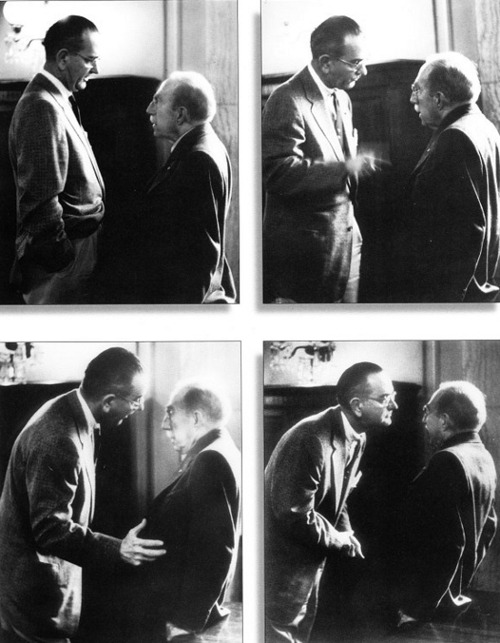
As I mentioned last week, I've gone down a bit of a LBJ rabbit hole. My visit to his presidential library has prompted me to tackle Robert Caro's famous multipart biography. Reading about Johnson's work as a staffer for a House member in Washington in the 1930s while Trump's attempt to get the AHCA through Congress crashed and burned was quite a contrast. In the section I was reading with CSPAN on in the background, Caro's book discusses Sam Rayburn's ability in getting legislation through committee, a reminder that those who sought power in Congress once actually had a clue about how to exercise it.
I was very excited that the AHCA failed so miserably. I experienced levels of Schadenfreude on par with watching Duke lose in the tournament or that time that Fox News reporter got waterboarded on TV. However, I am beginning to wonder how long our country can continue to have its highest levels of government be such an unmitigated shit show. In the case of the presidency, this is a new thing, but Congress has been on this path since 2010, and shows no sign of changing.
Since the Tea Party wave in 2010, Congress has been dominated by a gang of right wing Bolsheviks who hate the very government they're supposed to be managing. President Obama was able to pass legislation during the first two years of his presidency despite unprecedented opposition, after 2010 that opposition had the numbers to bring everything to a halt. These ideologues used the debt ceiling to hold the country hostage, and voted several times to repeal Obamacare.
Today it is obvious that those votes were made without a single clue as to what was going to replace Obamacare. Once they actually had to come up with something they were like the student who's been skipping class all semester who thinks they can handle an intense written final test, and hand in the test after about twenty minutes because they know they have no clue and just want to go home.
A majority of the Republican congressional delegation has come in since Obama's election, meaning that a majority of House Republicans have no memory of a time when they were actually passing legislation. I don't suspect they will ever learn how to do it, since their main path to holding onto power is to get positive coverage from Fox News. Paul Ryan is the avatar of this new political modus operandi. He was never someone who successfully passed important legislation, but a corporately feted ideologue whom the media has been inexplicably fawning over.
Back in early 1964, after he had come to power after Kennedy's assassination, Johnson discussed with his advisors his desire to get the long delayed and filibustered civil rights bill through Congress. They were a bit taken aback by this, knowing what a minefield it could be. Johnson's retort was "What's a presidency for, anyway?" And for all of that man's many, many faults, he understood his fundamental job was to get power and then use it.
Congressional Republicans have proven very adept at getting power, but very maladroit at using it constructively. A lot of this has to do with ideological rifts within the party, for sure. I also think that the dynamics of Congress' relation to its constituents have changed in significant ways. The number of representatives has been frozen at 435, meaning that members must represent larger and larger constituencies, with much less time for contact with their voters. (The need for politicians to spend all of their time fundraising has compounded this.) As local media across America has been hollowed out, representatives don't need to answer tough questions from local reporters, and if they are conservative, can get a bigger platform by playing to Fox News and talk radio. (Gerrymandering has also made such a media strategy effective.) They don't need to deliver the goods to their constituents, who are increasingly alienated from what their representatives are doing. What they can do effectively is block their opponents from using power.
I know I have said this before, but it really is time to reform our out of date, failing model of government. While we often think of the Senate's two Senators per state rule as the prime example of this issue, the House has a lot to answer for, too. It's supposed to be the "people's house," the one part of the national government where voters can actually be heard. After all, that's the point of the two year election cycle, which in today's environment only increases the focus on fund raising. I would love a system where the number of representatives in the House was tripled and the Senate was done based on population where each state has several at large seats chosen through proportional representation. That's never going to happen, so I guess we'll just have to persist with a completely dysfunctional Congress until sanity or collapse happens.
Labels:
AHCA,
Congress,
history,
republican party
Thursday, November 21, 2013
The "Nuclear Option" Should Just Be The Beginning
Today Harry Reid finally utilized the so-called "nuclear option" to end the unprecedented number of filibusters of executive appointees by Senate Republicans, which have hampered the president's basic power to govern the country. I laugh at the term "nuclear option," since most people would term it "common sense." How does it make any sense in a democracy for a minority to prohibit the basic functions of government because it wants to throw a temper tantrum? Republicans warn Democrats that they could well soon be in the minority, but so what? Isn't it about time we recognized that we shouldn't govern purely based on partisan concerns?
Our system of government in obviously broken, something easily proven by the federal shutdown this fall and the ability of individual Senators to put "holds" on nominations without even providing a reason. The Senate likes to think of itself as "the world's greatest deliberative" body, which is a complete joke. Can anyone tell me the last time we had a profound debate of any sort in the Senate? Has there ever been a use of the filibuster which was not negative? I ask the latter question having recently read Joe Crespino's fantastic Strom Thurmond's America, where the titular Senator used the filibuster to slow down civil rights legislation and defeat card check union elections. The Senate consists of a bunch of venal blow-hards who love nothing more than the sound of their own vacuous voices. Despite acting like a bull in a china shop, Ted Cruz fits right in there.
I would be happy to find a way to scrap the current set of Senate rules completely. They are a relic from a time when the Senators were not even elected by the people, and these rules have traditionally been manipulated by reactionaries to stop popular legislation that they don't like. Make the Senate like any other legislative upper house, and force it to actually do its job. It needs to generate laws, not hot air. In any case, these rules were never voted on by the people, nor are they part of the Constitution, and thus seem to have little to no democratic validity in my eyes.
The House could use some changes, too. Above all, it actually needs to be representative of the people. The current partisan mess has left Congress just about as popular as athlete's foot and root canals, yet the same shysters get re-elected. The iron-clad nature of legislative districting has a lot to do with this. When the founders gave state legislatures the power to create districts, I don't think they had any notion of gerrymandering, yet 200 laters we still haven't fixed that awful mistake. California has put districting in non-partisan hands, and this has both made districts more representative, and politicians more responsive.
When it comes to political and social reform, our nation seems to be sleepwalking. Instead of holding onto moldy, failed political traditions like the Senate rules or state legislatures setting up legislative districts, we need to break free of them. Rather than bitching about the awfulness of Congress before pulling the lever for the same old jerks, we need to find ways to make Congress more accountable. Hopefully today will be a solid first step.
Our system of government in obviously broken, something easily proven by the federal shutdown this fall and the ability of individual Senators to put "holds" on nominations without even providing a reason. The Senate likes to think of itself as "the world's greatest deliberative" body, which is a complete joke. Can anyone tell me the last time we had a profound debate of any sort in the Senate? Has there ever been a use of the filibuster which was not negative? I ask the latter question having recently read Joe Crespino's fantastic Strom Thurmond's America, where the titular Senator used the filibuster to slow down civil rights legislation and defeat card check union elections. The Senate consists of a bunch of venal blow-hards who love nothing more than the sound of their own vacuous voices. Despite acting like a bull in a china shop, Ted Cruz fits right in there.
I would be happy to find a way to scrap the current set of Senate rules completely. They are a relic from a time when the Senators were not even elected by the people, and these rules have traditionally been manipulated by reactionaries to stop popular legislation that they don't like. Make the Senate like any other legislative upper house, and force it to actually do its job. It needs to generate laws, not hot air. In any case, these rules were never voted on by the people, nor are they part of the Constitution, and thus seem to have little to no democratic validity in my eyes.
The House could use some changes, too. Above all, it actually needs to be representative of the people. The current partisan mess has left Congress just about as popular as athlete's foot and root canals, yet the same shysters get re-elected. The iron-clad nature of legislative districting has a lot to do with this. When the founders gave state legislatures the power to create districts, I don't think they had any notion of gerrymandering, yet 200 laters we still haven't fixed that awful mistake. California has put districting in non-partisan hands, and this has both made districts more representative, and politicians more responsive.
When it comes to political and social reform, our nation seems to be sleepwalking. Instead of holding onto moldy, failed political traditions like the Senate rules or state legislatures setting up legislative districts, we need to break free of them. Rather than bitching about the awfulness of Congress before pulling the lever for the same old jerks, we need to find ways to make Congress more accountable. Hopefully today will be a solid first step.
Labels:
Congress,
filibuster,
politics,
reform
Subscribe to:
Posts (Atom)