Sunday, May 10, 2015
Track of the Week: Ben E King "Stand By Me"
I can't believe it took me over a week to finally hear the sad news of the death of Ben E. King. I must have been very distracted, or our media (as usual) failed me again. Anyway, I enjoyed his smooth yet powerful voice from a young age, hearing it come out of the radio on the oldies station in my parents' van on our many trips to see my grandparents. My dad always seemed to turn up the volume whenever "On The Boardwalk," "On The Roof," or "Save The Last Dance For Me" came on.
While King had a bunch of hits with the Drifters, "Stand By Me" was his signature tune, and with good reason. In the first place, he wrote it, and in the second place, it's one of those love songs that's both managed to stand the test of time and not be totally cheesy. It's hard to describe, but it has a dark tone at the heart of it that intrigues me to this day. It might be the spare bass and percussion accompaniment at the start, or perhaps its references to the apocalypse. The very first line is "when the night," and one verse starts with the memorable lines "If the sky that we look upon/ should tumble and fall/ and the mountains/ crumble to the sea," deep stuff for a teen love song. The string section in the bridge has a very melancholic sound to it, and it never fails to put a chill down my spine.
This song went back on the charts in 1986 after it was included in the movie of the same name. I heard it first on the hits channel, not the oldies station. At that time a lot of sixties nostalgia was going around, from Dirty Dancing to Monkees re-runs on MTV, and I ate it up. In retrospect it's not hard to why. Would I rather listen to a three minute masterpiece like "Stand By Me," or the likes of Falco and Peter Cetera? The answer should be obvious. This song was part of a general opening up of my knowledge of music, and I'm bummed that its creator has left this earth.
Labels:
classic R&B,
music,
track of the week
Friday, May 8, 2015
What Do The Presidential Candidates Taste Like?
The Guardian did a brilliant little piece where one of their writers, going crazy from election fatigue, wrote about what the different candidates for PM "taste" like. A sample: "Nigel Farage tastes like rich fruit cake, the inside of a frankfurter sausage, fried onions, a few peas, a wet tweed jacket sleeve that grinds on your teeth and a dollop of semolina." Just for kicks, I've done my own for the currently declared and likely to declare candidates for president.
Hilary Clinton tastes like roasted kale.
Jeb Bush tastes like caviar and a bland burrito with too much sour cream in it.
Ben Carson tastes like blanched, unsalted peanuts and a mayonaise and onion sandwich.
Bernie Sanders tastes like a big hot bowl of pho with a little extra siracha stirred in.
Chris Christie tastes like a McDonalds cheeseburger that's been sitting under the lamp too long.
Rand Paul tastes like the gyros they have at Applebee's.
Carly Fiorina tastes like the quince log left for last in the chocolate box.
Ted Cruz tastes like a slurry of Sour Patch Kids, Pop Rocks, and Warheads candy.
Marco Rubio tastes like a gas station hot dog washed down with bottled water.
Mike Huckabee tastes like Waffle House.
Wednesday, May 6, 2015
The Irresponsibility of "Fiscal Responsibility"
[Editor's Note: choice words and salty language ahead.]
The Republican pre-primary is in full swing, meaning that
there are a whole bunch of desperate shysters wanting to get their hands on
that sweet, sweet Koch brothers cash.
The winner of the fund raising war in the GOP primary stage is usually
the winner of the nomination, so this is prime time for potential also-rans
like Chris Christie to make themselves relevant again with a money transfusion.
So what has the Most High New Jersey Bridge Troll done? He’s decided to talk about “responsible” and “honest”
fiscal policy. What this means
specifically is proposing raising the retirement age to 69, and then making
Social Security a much reduced provision that would not even paid out to a
large number of retirees. Christie, in
typically mendacious fashion, has spun all this as “telling hard truths,”
assuming that his listeners believe, like he does, that the money to sustain
old age benefits does not exist.
Of course, we all know that it does. We live in the richest nation on earth, one
where plutocrats are amassing ever-increasing piles of lucre. Just this week comes the news that during a “down”
year the top 25 hedge fund managers were still able to pay themselves bonuses that altogether add up to more than twice all of the money made by all the kindergarten teachers in America last year. James Simons made $2.1 billion in 2011, about the equivalent of the yearly wages of 140,000 minimum wage workers. Imagine
that, the “bonus” to a select group of bankers eclipses the sweat and muscle
expended by literally hundreds of thousands of laborers. They also paid a lower tax rate than I did as a teacher last year.
And yet we are told that we are to sacrifice
even more, that the nation simply can’t afford to give them a secure retirement
before we might give out from overwork.
When I hear the fiscal hawks talk about “hard truths” I know
they are really spinning some diarrhea-soft grade A horseshit. What they really want is a system where the
wealthy can amass even bigger fortunes than before, and perhaps to shovel money
out of Social Security and let their criminal friends on Wall Street play with it. Perhaps due to the pernicious persistence of
a Puritan streak in this nation’s culture, the media elite eat up this “hard
truth” crap and never, ever question the motive, always taking these con artists at face value. Because young voters are so
far away from retirement, they do not take to the streets about being
bamboozled.
Make no mistake, Gen Xers and Millenials, they are out to
bamboozle you. I made my first FICA
payment at the tender age of 13, and have been paying into the system almost
continuously from that time. All that
money has gone to pay for people already in the system, and I was glad to do
it, since I knew that the next generations would do the same for me. Now that contract will be broken, and I will
spend the rest of my working life paying for the same Baby Boomers who got
cheap college education and plentiful jobs to have a much cushier retirement
than I will ever have. It will be the
final insult in a degrading generational war that many in the younger
generations have no clue is being waged against them.
To consign future generations to the dung heap in their old
age so that the plutocrats, hedge fund managers, and bankers dare not make a
greater sacrifice is the height of fiscal irresponsibility. To break apart the social contract that so
many have benefited from is a horrible thing to do, not something deserving of
the canting hosannas of “truth telling” so often heard in the more fatuous
corners of our mediascape. Please, for
fuck’s sake, stop pretending that the attempt to end Social Security as we know
it is anything more than a heinous crime of enormous proportions.
Labels:
austerity,
chris christie,
Generation X,
politics,
social security
Monday, May 4, 2015
Thoughts on the British Election
I have an inordinate interest in British politics and
culture that I still have yet explain except for perhaps having been drawn in
by art and style of New Wave music during MTV’s early days. In any case, I have been closely following
the UK election, which is fascinating in its precariousness. It does not appear that any one party will
have a clear majority for the second time in a row, and the emergence of the
Scottish National Party and UKIP show some real challenges to the two party
system. Of course, in a first past the
post winner take all system, that tends to create a bit of chaos. At this point the UK might as well have a
proportional system.
One thing I have always liked about British elections is
that the parties are pretty open about what they are, and that voters don’t
pretend they are voting for a person.
Despite this fact, the largely right wing press has tried its hardest to
impugn Ed Miliband for his basic appearance and occasional awkwardness. I guess they saw how well that worked in the
US against Al Gore and John Kerry. Like
those two candidates, Miliband has a certain stiffness and over-seriousness
about him. Unlike them, it seems that
his style will not deep six his ability to win.
I also think that his approach works in his favor. I recently saw Miliband’s interview with comedian and political provocateur Russell Brand, something that David Cameron
has attacked him over. Seeing the
interview, I think this is a desperate attempt by Cameron to spin the
interview, in which Miliband comes off looking rather good. He takes Brand’s questions about voter apathy
and the power of the wealthy seriously, and doesn’t just through out the usual
bullshit. While Miliband may be a littly
gawky and awkward, it’s obvious that he actually cares and has a head on his shoulders. I’ve never seen anything in Cameron other
than pure political calculation and toffee-nosed arrogance. I would
love to see American candidates have to go twelve rounds with the likes of
Brand, but alas, that is hoping for too much.
The British election has also been another nail in the coffin of the notion that we are living in an interconnected world where the nation is superfluous. Despite the fact that the referendum on Scottish independence recently failed, the Scottish National Party is poised to win the vast majority of seats in the region. The UK is a confederation of four nations (England, Scotland, Wales, and Northern Ireland), hardly the ideal model for cultivating a strong national identity. In a world where nationalism is getting more, not less, important, this configuration may not survive. The growing popularity of UKIP, an explicitly nationalistic party, has also been on the rise. I think we are poised to see a similar rise in nationalism as a potent force in the upcoming American election. The Tea Party call of "take our country back" has morphed into a more palatable nationalism, one calling to make America "strong" in the world again, and to define immigrants as undesirable.
Relatedly, the British election has shown that along with nationalism, region matters. In America one speaks of "red" and "blue" America, but a similar geographic cleavage can be seen in the UK. As in America, the divide is largely between North and South, with the South trending more conservative (but with plenty of Labour support in London.) It's a split that's been pretty clear at least since Thatcher, and the reliably Labour regions can basically be defined as "areas damaged by Thatcherism."
Last, it is interesting to contrast Britain and the United States when it comes to the issue of health care. Whereas the rather weak half measure of Obamacare has been met with lots of contention and fierce opposition, in Britain both parties pledge to defend and fund the National Health Service. The fact that the Tories may not intend to actually do so has been a major Labour argument in the election. This dispute is the Republican Party's worst nightmare, in that they do not want Americans to learn to love state-sponsored health care, as much as they have learned to love Medicare and Social Security. Deep down, they know that most people appreciate the security and improved quality of life that so-called "entitlements" bring, and are absolutely desperate to avoid reminding the people of that fact, lest they object to the continuing neo-liberal onslaught/corporate money grab.
Saturday, May 2, 2015
Track of the Week: Courtney Barnett "Elevator Operator"
Aussie indie singer-songwriter Courtney Barnett is one of my favorite new artists, mostly because she has a unique ability to capture the beauty and strangeness lurking inside daily life. The first song of hers that drew me in, "Avant Gardener," is about having an anxiety attack while gardening on a hot summer day.
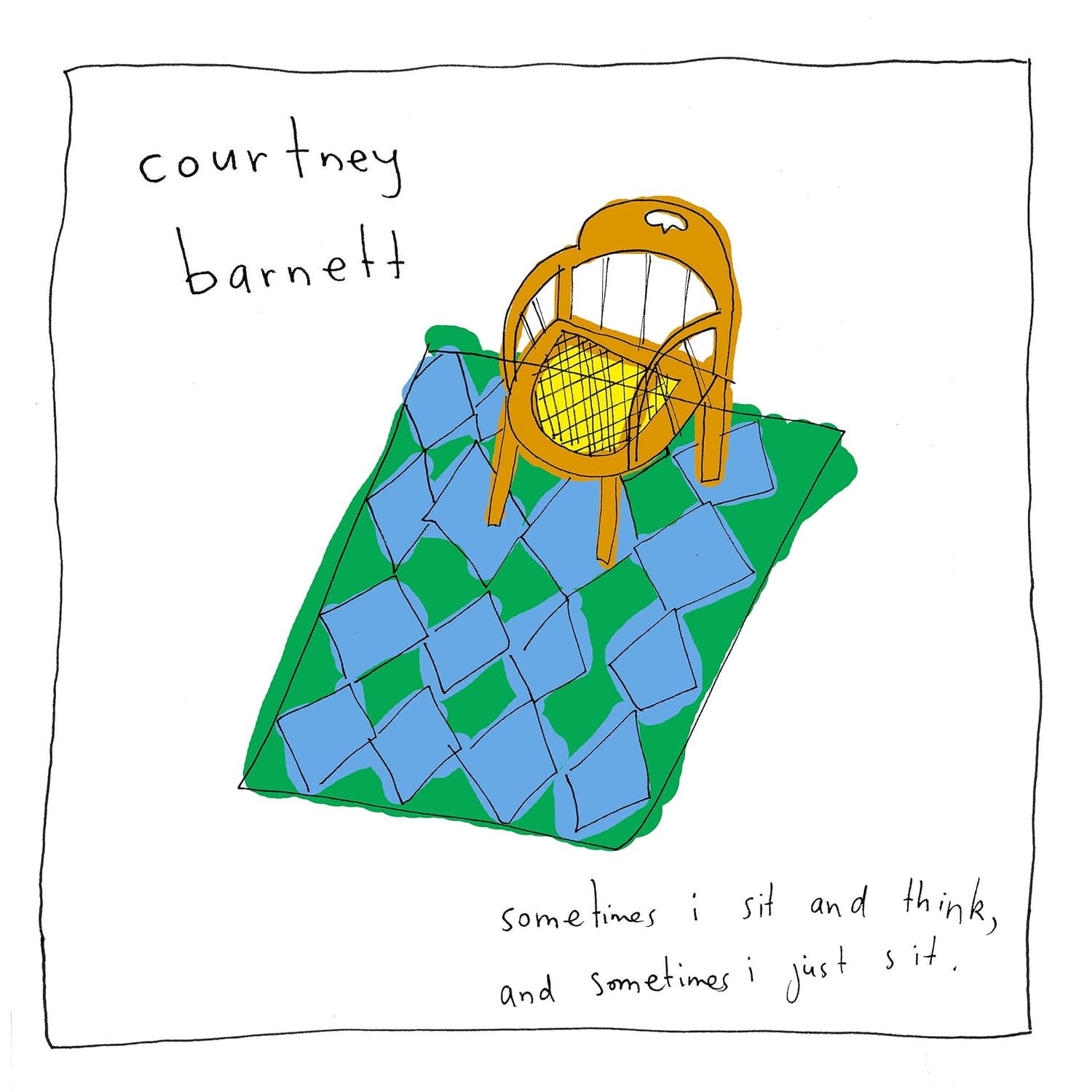
"Elevator Operator," the first track on her new album, is the tale of young worker tired of the daily routine who goes to the roof of his office building to meditate, only to find that people think he is about to jump and commit suicide. It's a funny song, but also great at describing the feeling of ennui that comes from working a crummy service job where people are always looking down their noses at you. The song stomps along at a great pace, mimicking the needless, frenetic push of the morning rush, and thus making the listener really put themselves in the shoes of the titular elevator operator. Barnett delivers her words in a kind of deadpan Aussie drawl, milking the most out of great lines like "I'm not suicidal, just idling insignificantly." If you want to hear the best qualities of 90s indie rock resurrected, or enjoy the poetic observation of daily life, you should definitely check Courtney Barnett out.
Thursday, April 30, 2015
A Footnote On Baltimore and History
My last post discussed the importance of knowing history to understand the protests in Baltimore, but over the last few days I've been thinking that knowing history is also necessary to understanding the backlash against them.
One of my favorite Twitter accounts is of someone embodying (you really can't say parodying) Richard Nixon, and tweeting as if the Dark Lord were still alive, commenting on current events. Having an unhealthy obsession with Nixon, I can vouch for the accuracy of the tweets, which have got me thinking about how Tricky Dick used white racial resentment to overpowering affect in the 1968 election. George Wallace, running as a third party candidate, made such appeals more overtly, getting support not just in the Deep South. Nixon could claim to be more palatable than Wallace, all the while touting "law and order."
His campaign ads in '68 trumpeted this theme time and time again. One ad, juxtaposing Nixon's words with scenes of violence in the streets and bloodied protestors over discordant music, ends with Nixon intoning "the first civil right of every American is to be free from domestic violence, and so I pledge to you, we shall have order in the United States." The uprisings in the ghettoes were, in this interpretation, to be seen merely as chaos to be stopped, not the result of legitimate grievances. The whites who made up Nixon's "Silent Majority" felt the same way, and rewarded him with the White House. Once in office, Nixon supported the FBI's infamous COINTELPRO campaign, which set out to destroy the Black Panthers and similar organizations by any means necessary.
That did not necessarily have to be. The Kerner Commission, set up by LBJ to investigate the causes of the destructive urban uprisings of 1967 in Newark and Detroit (among other cities), concluded in its 1968 report that racism and economic privation were at the heart of the matter. Instead of addressing these problems head on, the government kept spending money to send more young men from the ghettoes to die in Vietnam, and Nixon unleashed the FBI. In the ensuing decades, as I mentioned a couple of days ago, the War on Drugs and the prison industrial complex made the backlash even worse.
Today I fear a repeat of the past. So many in white America are still blind to the reasons why African Americans in Baltimore are so upset, and that blindness is on the tipping point of becoming fear. When white America's racial fear buttons get pushed, bad bad things happen. There's always another Nixon there, ready to exploit it. The key this time is for right thinking people to be prepared to fight back.
Tuesday, April 28, 2015
Baltimore And The Necessity Of History
After Fort Sumter, the first blood shed during the Civil War was on the streets of Baltimore when local secessionists attacked Union troops from Massachusetts
I wrote here back in November how events in Ferguson prove the need for history, and here we are again with unrest roiling Baltimore after
yet another police killing of an unarmed black person. Yet again the news media presents the anger,
protest, and violence in response as if it’s completely divorced from any
larger historical or sociological context.
Baltimore proves yet again why history urgently matters. The world we live in is the product of the
past, and the only way to understand that world properly is to know its
history.
Baltimore is not a unique city in its problems. After World War II several factors converged
there and in many other American cities.
African Americans migrated in to get a better life, only to find
discrimination and that many of the industrial jobs they sought quickly going
away. At the same time, suburbanization,
fully funded by the government via interstate highways and subsidized home
loans, led to white flight and a massive drop in the tax base and with it, city
services. This included schools, which
now did little to offer opportunities to get out. The government, by working with “red-lined”
maps, did not extend generous loans to black urban neighborhoods, abetting
their physical deterioration. To make
matters worse, “urban renewal” bulldozed neighborhoods and placed people in
alienating public housing blocks that were cheaply made and poorly maintained
by design.
1930s housing map of Philadelphia showing redlined neighborhoods
All the while the new impoverished urban landscape was
patrolled by mostly white police officers above the law with undisguised
contempt for the people they were supposed to protect. That unhappy combination of lawlessness and
contempt led to cops murdering and getting off, which in many cases was the
match to light the fuse of several urban riots/uprisings in the 1960s in just
about every major American city. In the aftermath of the destruction, little or nothing was done by government to repair the damage. (I drive down Springfield Avenue in Newark quite regularly, and the scars of '67 are still there despite some of the neighborhoods being revived.) It was as if a hurricane or tornado came through, and nothing was done to help in the aftermath. The aftermath brought further suburban flight (now including middle class people of color) and an even bigger cratering of industrial jobs. Then, in the 80s, came the War on Drugs and the incarceration state, which made police behavior in prior eras seem positively polite by comparison. After that came "Broken Windows" policing, feeding more and more young people into the maw of the prison system, which came to house a higher percentage of the nation's population than in any other country. From the 90s onward, as urban life suddenly became attractive again to the affluent classes (in large part due to the effects of the new policing policies) the less ravaged neighborhoods experienced a massive wave of gentrification, pricing many people out of their homes.
The Cross Bronx Expressway with housing blocks on what used to be a neighborhood
Is it any wonder that people living in places so thoroughly oppressed and abandoned are reacting so angrily? As my friend Chauncey DeVega has expressed, the real wonder is that the scenes in Baltimore aren't much more common. When the media covers urban unrest, it tends to just excise the larger historical context, which of course delegitimizes those making the grievances. It presents the tragic deaths of people like Freddie Gray as an isolated incident, not the product of a historical and systematic system of oppression and inequality. This misperception is incredibly powerful and detrimental. It is up to my fellow historians to put themselves out in the public to set people straight, and for the media to actually listen. If that doesn't happen, the fear-mongers and reactionaries will win.
Subscribe to:
Posts (Atom)