Showing posts with label travel. Show all posts

Saturday, December 7, 2024

Postcard from New Haven

I am writing this from New Haven, Connecticut, a place I have some happy memories attached to. I also love a gritty port town, especially one with excellent pizza and used bookstores. This time I am here with a group of students from my high school competing in a model congress competition at Yale. While I have enjoyed walking around the campus, eating at Frank Pepe's and other fine dining establishments, browsing the Grey Matter bookstore, and drinking Common Grounds' coffee, I am feeling pangs of dread and a certain kind of spiritual suffocation. 

Some of this comes from students in the model congress seeing the whole thing as some kind of joke. During the presidential election at the start a student gave a lazy, tossed-off speech threatening to invade Canada. Evidently he thought this was funny. It was telling that the three girls in the running constructed serious speeches full of ideas, while two of the four boys recited MAGA rhetoric without proposing anything concrete. It seemed to encapsulate the rising tide of misogyny in this country that reacts to girls being better at a lot of things because they actually work hard by trying to subjugate them instead of demanding more from young men. 

Other dread comes from the stark contrasts one sees walking around New Haven. Our hotel is near the Green, where one often sees homeless people and poor and working-class residents catching the bus just two blocks from a university with a $41 billion endowment. I have seen starker contrasts of wealth and poverty in Manhattan, but the fact that the contrast comes from a "non-profit" educational institution just seems to make it worse. The whole scene lays this country's failures bare.

Even worse, today is the dreaded "Santa Con," when America's stupidest and loudest suburban frat and sorority types converge on city centers to get drunk and act even more brain dead than they do on an average day. Walking the streets around my hotel feels suffocating, and not just because of the clouds of cheap weed smoke. Perhaps it's fitting that Trump has returned to the White House, since he reflects the trashy, decadent nature of the nation he is about to rule over. 

It probably hasn't helped my mood that my big used book store score was a copy of Theodor Adorno's Minima Moralia. I have felt it to be quite bracing, and I maybe am absorbing his deep critique of American life at a particularly bad time. Since the election I have been embracing a fundamental pessimism about certain aspects of American life. At base, I think it's obvious that most people have a completely nihilistic attitude about public life and what they owe to others. Much as Adorno worried, the processes of more modern capitalism have shredded individuality and reduced it into nothing more than consumer desire. Life will go on, there will still be good books, pizza, and coffee in the world, but I don't expect much of anything to get better soon. As the last few days have made clear, the younger generation is most definitely not going to save us. There are plenty of exceptional young people, but they are being eaten up by the ever-growing adherents to nihilism. That's my sad report from New Haven. 

Wednesday, July 31, 2024

Reflection (Road Trip 2024)

I got home to New Jersey from my Midwestern road trip last Friday, and I want to conclude my travelogue with some reflection. Before I left I had pretensions of seeing what was going on in different parts of the country during a contentious election year. Little did I know my trip would coincide with one of the most tumultuous two weeks in American political history. 

The assassination attempt on Donald Trump happened two days before we left. At that time the calls for President Biden to withdraw from the race were dominating the headlines. That left the center stage of the political news for maybe two days. The Republican convention followed while we were on the road and in Chicago. Despite some rather, well, weird behavior at the convention, Democrats still dedicated themselves to a circular firing squad instead of highlighting the extremity of their opposition. Speaking of, JD Vance gave a straight up blood and soil nomination speech to began his run as a true wet fart of a candidate. By the time my trip was over the couch memes were dominating my feed.

That week ended on the Sunday when Biden announced his withdrawal from the race. The news flashed across during a family gathering, and I have to thank my cousin (who does not share most of my politics) for jumping in and cutting off any political discussion. The next day Kamala Harris had already claimed the mantle of presumptive nominee. I ran some errands with my wife and kids in the car, abuzz with the kind of political conversations we were avoiding at my parents' house. I knew things were changing when my 12-year old daughters whooped and hollered when we told them the news about Harris. I had been thinking that the Democratic Party was in an impossible situation, that either with or without Biden the election was unwinable. Suddenly progressives had their mojo back, and the needle had been threaded. Biden had stepped down, and a new nominee had been found without a destructive intra-party dispute. That nominee was already generating the kinds of enthusiasm from Democrats unseen since 2008. It was some kind of miracle. The last night of our trip my family gathered around my laptop in our roadside hotel room in Ohio, watching a Harris organizing meeting with barely contained energy. Between July 15th and July 26th it felt like the entire world had changed. 

On my trip I kept looking for clues to the national mood, but since I spent most of my time with family and old friends I would have to admit I can't say I observed much. My anecdotal observation is that I was pleasantly surprised at how little evidence of MAGA I detected. A house in my hometown not far from my parents that once flew a "Fuck Biden" sign no longer did. (I did see another house in another part of town flying one, though.) On our drive to and from Nebraska I saw a lot fewer Trump bumper stickers and fashy emblems than usual. I have long suspected that Trump is losing the juice, and that Biden's fumbling had obscured Trump's decline. With Harris's vitality dominating the news, Trump's doddering incoherence seems that much more pronounced. Nevertheless, one day when we drove through the Nebraska countryside a house on a backroad decorated to their fence to say "I am voting for the convicted felon." As the ranks of enthusiastic Trump supporters have dwindled it feels like the remaining ones have only intensified their zeal. This is a dynamic that mimics that in the churches many of these folks belong to.

It was eerily appropriate that we spent the last morning of our trip on the campus of Kent State University. We had decided to spend the night before at a random spot in Ohio because it was eight hours down the road from our previous stop. I soon realized we were right near Kent State, and I was lucky enough to have an online friend there in the history department who showed us around the site of the 1970 massacre. I learned a lot, to be sure, but I was also shook by the knowledge that when deep political divisions meet authority figures willing to wield violence, the blood will flow. As excited as I was that Democrats had come back from the dead, I also knew the reality of the situation we are in. Thinking about May 4th, 1970, I could not help but be reminded of the violence of our own political moment. I could not stop thinking that a new Trump administration would probably result in dozens of Kent States. My trip to the Midwest and back reminded me of how much I love this country, but also that the people who cheered the National Guard gunning down protestors are still alive and well. I'm more committed than ever to keeping them out of power. 

Wednesday, July 24, 2024

Nebraska Sojourn (Road Trip 2024)

I'd been too busy back in my hometown to write much, but now I am back on the road and staying the night at a hotel in Iowa City and able to get my thoughts down. I spent almost a week in Hastings, Nebraska, seeing family and friends alike. It's always a joy to see my loved ones again, and sad that I only get to spend this much time with them once a year. 

This time I also had the good fortune to be home during a spell of moderate weather. Three years ago we got to go tubing on the Niobrara River, but temperatures jumped up to one hundred degrees. This coincided with staying in a bargain-basement motel in Valentine, Nebraska, that never seemed to be comfortable. That year over Christmas we had to drive to the airport in Omaha in an ice storm. The next Christmas bad weather had us stuck at O'Hare. Last year it was brutally hot again in that blustery Great Plains way that make you feel like you are living inside of a hair dryer. 

This year the moderate weather reminded me of just how beautiful Nebraska can be in the summertime. The corn rises tall and the grass waves green under impossibly vast blue skies. In the evening the sunsets dazzle on the flat horizon, while the coolness of the morning air makes perfect weather for thoughtful walks. The cottonwood trees, which look like weeds with trunks and branches in winter, abound with thick green leaves.

We had some escape from last year's hotter weather via a trip to the Black Hills of South Dakota, where I luxuriated in the cool mountain evenings. This year we stayed in and around Hastings instead of taking a long trip with my parents, and I was glad for it. This year more than any other I have witnessed how my hometown has become a more livable place. In my earlier memories (which date to about 1978-1980), the downtown was bustling, the commercial center of an agricultural region. As the 80s progressed the mall near my house grew in popularity as the downtown stores started closing. At the end of the decade the arrival of Wal-Mart put this dynamic in overdrive. Out in the surrounding countryside, farmers were getting slammed and leaving the land during the Farm Crisis. By the end of the 90s, the once mighty Imperial Mall had become an empire in decline and downtown was almost completely dead. Come this century venerable local restaurants like Bernardo's and the OK Cafe closed for good, leading to a restaurant situation so dire that people welcomed Applebee's and Dunkin as saviors. 

Miraculously, in the last few years things have completely shifted, thanks to people from the area who moved out than came back and to new arrivals from elsewhere. There is an abundance of tasty Mexican food, for example. Downtown there is a microbrewery, artisan bakery, new bookstore, multiple coffee houses, and a cheese shop and wine bar opened by a childhood friend who once plied his trade in Los Angeles. This morning at the Back Alley Bakery I had a delicious brunch I would put up against any place in Brooklyn. More importantly, these new, more interesting local businesses seem to be doing well. My friend told me to come to his place on Monday because that was his slow day, but it was still bustling. 

The foodie revolution has even penetrated rural Nebraska. More than that, people there were yearning for alternatives to the dominant corporate chains and boring traditional local food culture. The whole thing is a great example of what a little new blood can do. I guess it was appropriate to witness that first hand the same week a generational shift happened in the presidential election. 

While it might sound strange, the founding of better restaurants in my hometown gives me real hope. In so many ways we are oppressed by the dead hand of the past and by older people committed to keeping the status quo, no matter how shitty it is. A little bit of faith in the future, even in the form of a tasty breakfast, goes a long way. 

Tuesday, July 16, 2024

Back in Chicago (Road Trip 2024)

On our way out to Nebraska we decided to spend a couple of days in Chicago, a city I lived in for two of the richest years of my life yet haven't seen for 16 years. Growing up in the Midwest it loomed large in my imagination, especially at a time when several beloved movies of my generation from The Blues Brothers to Ferris Bueller's Day Off were set there. When I finally got to visit in high school and in college, I fell in love. Living in Chicago only deepened that love, and when I was a grad student at the University of Illinois after moving out of Chicago, I made the trek up interstate 57 as often as I could. 

After that, a strange thing happened: I spurned Chicago for New York City, the place I worked for the past thirteen years. I used to resent the condescending attitude of New Yorkers to "the second city" when I lived in the Midwest, but I slowly began to adopt it myself. Today I am reproaching myself for this, since I have had an absolutely delightful day here. My children had never been before, and they absolutely LOVE it. They have called it "New York but clean" and "New York but chill." While Chicago has a tough spikiness, it lacks the overbearing neuroses that hang in the air in the Big Apple. As I get older my tolerance for managing other people's anxieties has frayed to the breaking point. People in New York desperately need to get a dose of Midwestern reserve. 

Today has included some old stomping grounds, as well as things I never did when I lived here. On the former count, we spent the morning in Hyde Park and on the campus of the University of Chicago, where I excitedly pointed out locations of major and minor events in my young life. On the latter count, we went to the top of the Hancock Building (I know it's not called that anymore, but whatever) and took at architectural history boat tour on the river. Both let me see a city I thought I knew with new eyes and appreciation. It also didn't hurt that in between we ate Chicago-style dogs from Devil Dawgs. 

For most part I have been quietly pleased with how the city has matured since I lived here from 1998-2000. Hyde Park in particular feels safer and more economically stable, as do the surrounding neighborhoods. Driving up Stony Island I marveled at all the new buildings and flourishing businesses. The experience really shows how much all the Fox News propaganda about Chicago is lying. Yes the city has plenty of problems, but it has figured some things out that its supposedly superior cousin New York could learn from. Putting trash in alleyway bins is probably better than dumping it on the street, for example. Trees can, you know, shade the sidewalk in the summertime. These facts and the Fox propaganda bullshit are good examples of how you shouldn't always believe what you hear. 

Monday, July 15, 2024

West to South Bend (Road Trip 2024)

Today my family began our trip out to Nebraska from New Jersey by driving out to South Bend, Indiana. We are going to spend a couple of days in Chicago next, but this was as far as we thought we could get without exhausting ourselves. We also like South Bend (college towns are the best) and know a hotel here with a good hot breakfast. When you travel the same stretch of road so many times, you figure out important information like this. 

It's a much nicer hotel than what I would normally spring for, but we have credit card rewards points that get it for us for free. This is a far cry from my childhood vacations, often spent at low-slung cheap motels on the roadside with hard mattresses and sandpapery sheets. I've found classing it up helps morale among the troops after a hard day on the road. 

My kids are getting older and one dividend is that they demand fewer bathroom breaks. We made it all the way to South Bend only stopping three times: once in the morning for gas, once to eat lunch, once to gas again in the afternoon. This also meant that I had less of a chance to see what was going on in the areas we traveled through. For that reason I am not sure how much I can trust my observation that there was a real decrease in the amount of visible MAGA stuff in rural Pennsylvania, Ohio, and Indiana. I noticed a farmer with a Trump sign, a pretty elaborate "God Family and Guns" truck decal, and that was about it. There was a Cybertruck with Texas plates and a "Legalize Recreational Plutonium" magnet, but the political valence of that one was hard to parse. My gut tells me that Trump's appeal among his former voters is waning at the edges and this confirms my suspicions. 

While I was on the road proper I marveled at the beauty of some underloved landscapes. The mountains of Central Pennsylvania are quietly gorgeous, for example. The fields and farms of northern Indiana sure look pretty in the evening light, too. 

Now that I have been living in the Northeast for thirteen years, I get a little bit of a shock when I return to my Midwestern stomping grounds. I do not mean this as a judgement, but an observation: people in the Midwest do not seem to put much care into their clothing and looks. In my short time I've seen grown men in tube socks pulled up to their knees, women in ugly "crop pants" paired with the 90s "Rachel" haircut, and scores of people wearing what look to be dirty, unwashed t-shirts. People in general also look like they are taking less care of themselves than they ought to. Now I know going too far the other way leads to narcissism, but the average Midwesterner looks like the "before" image on a makeover show. 

That might sound mean, but I'm from the Midwest and I can say it! Also, that lack of care in personal appearance is the less savory outgrowth of one of the best Midwestern qualities: an aversion to bullshit. I am looking forward to a break from the status-obsessed Northeast.

Sunday, July 14, 2024

Hitting the Road

I have neglected this blog for the past few weeks by concentrating on my Substack instead. That's where I am writing more things about the political moment, and well, that's been a busy beat lately. I have shifted this blog into mostly being about music and culture, and the "listen throughs" I've been doing of legacy artists has been a fun way to focus things. I am doing another one come autumn on Richard Thompson, but in the meantime I've had to figure out what I want to write about. I am realizing that the stresses of the current politics news will burn me out if I'm not careful. I am heading off for a road trip next week, so I will turn this site into a travelogue.

My inspiration to do this came from one of my nerdiest fixations: reading 19th and 20th-century travel writing. I have my hands in two separate research projects involving travel writing as a source base and as a kind of scholarly Stockholm Syndrome I can't stop reading this stuff. One of those projects centers around travel writing in the 1970s with the theme of "finding America." After the tumult of the 60s many wondered what had happened to the country and its identity, and went to find it in the out of the way places on what William Least Heat Moon called "blue highways." My own writing over the next two weeks might hit on similar themes of evaluating the state of the nation in an uncertain time. I'll be going to big cities as well as small towns, but almost completely within the Midwest. Maybe someday I will attempt a full cross-country trek. 

As a bonus, here's some of my favorites of the travel writing genre outside of the 70s that aren't household names that I would recommend. 

Frederick Law Olmsted, A Journey Through Texas

Two summers ago my favorite read was Frederick Law Olmsted's account of a trip across Texas in the 1850s. It brought a different time and place to life while also being a fascinating document of Northern disdain for life in the South on the eve of the Civil War. My interest had been piqued years ago when I was living in Texas and a highly fatuous colleague who was way into being Texan said he hated it. If that kind of Texas Uber Alles blowhard disliked the book I knew it must be good. I have a love-hate relationship with my former state of residence, and this book gets and the state's heritage of oppression and Philistinism that is represented well in the hate column for me. 

Tony Horwitz, One For The Road

A friend loaned me this one back in grad school and I had a wild hair to read it again this spring. Horwitz later became famous for his American history-themed travelogues like Confederates in the Attic. His first is still my favorite, though. In the 1980s he was living in Australia as an expat journalist, and decided to hitchhike across the entire Outback. As you would imagine, this was quite a challenge. In the process, however, he meets quite an array of characters that make you think the Mad Max films are close to being documentaries. The book reminds me of one of my favorite things about travel: seeing some really weird shit you'd never be able to anticipate.

Henry David Thoreau's travel writings

I kinda liked reading Thoreau in high school, but stopped thinking about him after. A few years ago someone convinced me to read all of Walden, and I was suddenly hooked. Thoreau understood one of the key questions of modern life right at its inception: what is necessary to live? He did not put creature comforts high on the list, but he did include nature. Apart from Walden, Thoreau's other book length works were travel accounts, only one of which (A Week on the Concord and Merrimack Rivers) was published in his lifetime. Two others, Cape Cod and The Maine Woods, came after his death based on unpublished writings. All are worth a read because he chronicles the early stages of industrialization and its impact on natural landscapes and our relationship to them. 

Joan Didion, South and West

Here's another work unpublished at the time, an account of travel in the early 70s, mostly through the deep South. Didion is probably my favorite essay stylist, and her tart observations hit just as hard here as in her published works. This book is also an interesting artifact of the South in the period right after the Civil Rights movement. I also appreciate that instead of fetishing the "blue highways" like so many other writers, she touches on the small pleasures of interstate highways and Holiday Inn swimming pools. The search for authenticity is the bugbear of too many travel writers.

Sunday, April 9, 2023

Thoughts on America After A Weekend in Canada


The Canadians in Guess Who were right all along about America

Sorry to have been away for so long. The last week has been taken up with a trip to Montreal and the accompanying preparations. Now that I have returned, I am in a reflective mood. 

As we crossed the border north of Plattsburgh to return to the US this morning, I felt a new emotion. In the past, when I have returned to America after going abroad I have felt a certain warmness about being back in my home country again. This morning I felt dread. During a trip spent walking Montreal's streets, enjoying its sights, and riding its refreshingly modern subway system, I kept seeing the news from America. I read about progressive state representatives being expelled, about the gun deaths of children lowering our national life expectancy, and of Donald Trump's presidential campaign. For a couple of days, I felt like I had escaped a madhouse.

To be sure, Canada has its own problems. There were panhandlers and mentally disturbed people on the streets, for example. By and large, however, it felt like such an infinitely more FUNCTIONAL and livable place. There also wasn't an ever-present feeling of dread, one that has been dogging me in this country every day since the summer of 2015. For almost a decade, America has been on a precipe, our own Years of Lead with mass shootings, police murders, and capitol stormings with the spectre of right-wing authoritarianism constantly hovering. To the last point, I was in Montreal when I saw the news about a Trump judge banning abortion medication.

I had not been out of the country since 2009, by far the longest stretch in my adult life. I've still been traveling a lot however, and in that time have been to practically every corner of the United States. My travels to everywhere from New Orleans to Los Angeles to Alabama to Boston have deepened my love of this nation and given me perspective on its stunning regional diversity. I cherish getting to walk the Golden Gage Bridge, joining a second line on Bourbon Street, and chowing down on Maine lobster. 

But as my love has deepened, so has my despair. I don't much believe in this country's future anymore, and my deeper investment in it makes its precariousness all that much harder to endure. It's a dynamic I had not been aware of until I spent some time in Canada this weekend. It felt good to get a break from America, I only wish I could believe this nation could find a way out of its current spiral. 

Friday, August 6, 2021

Signs (Lost Highway Series)

I recently returned to my road trip out to Nebraska, where my whole family was together for the first time in two years. It was restorative as well as a lot of fun. We got to innertube on the Niobrara River, catch fish with my dad, and enjoy time at a friend's lake cabin.

On this journey I kept my eyes peeled for signs, both physical and metaphorical. I was trying to gauge the mood in Trump Country, or at least its rural Midwestern marches. I saw about a dozen Trump signs/flags/bumper stickers on this trip. Honestly, that's a lot less than I expected. I also however saw two large homemade QAnon signs, one at a farm in Illinois, the other outside Valentine, Nebraska. One was merged with Trump, the latter just read in huge letters "Who is Q?" These for some reason I was not expecting, but should have been. 

This is just anecdotal evidence, of course, but other anecdotal evidence supports my growing thesis that Donald Trump's importance to conservatives is shrinking but the politics he embodies have a stronger hold on conservatism than ever. For example, I went to 7:30 Mass with my parents, and outside of the doors where was a whole table of pamphlets, something I had never seen before. I didn't want to ruin my time with my folks by hectoring them about the stuff people leave at the church, so I only quickly managed to grab a flyer that caught my eye instead of multiple pamphlets, including one discussing the "Luciferian" Masonic ideology. 

Here's the flyer I grabbed:

It caught my eye because I had been reading the local newspaper and the firestorm over proposed changes to the state's sex education curriculum. Lots of things are striking about it. This man is no mere former Marine, but a failed Republican candidate for the Senate. Seeing an event at an evangelical church is something that never would have been promoted in a million years at my Catholic church growing up. Most of all, I was struck how there were claims of the presence of "critical race theory" in sex education, where it didn't seem applicable. Like the ubiquity of "communism" in reactionary rhetoric in the 50s and 60s, "critical race theory" is a free-floating signifier for the conservative fear that nefarious and shadowy forces are out to destroy their way of life. (You could argue this dates back to the discourse around abolition in the 1800s.)

The sex education standards were opposed by school boards and officials around the state, evidently for the crime of teaching children that gender identity, transgender people, and same sex marriages exist. They basically won the battle and the standards have mostly been dropped. This kind of cultural politics is red-meat for post-Trump conservatives. It's not about doing anything to change anyone's material circumstances, only to assure the MAGA majority in these red areas that their cultural values will remain hegemonic and that people they don't like will suffer.

Another way of formulating it is "Don't you dare tell me what to do, but I get to force "those people" what to do." This is how you get people who refuse to comply with masking ordinances and avoid paying their taxes waving the blue line flag, ostensibly showing their support for the state that they otherwise excoriate. They love the police because the police keep "those people" down, and are seen as a force that will always be on their side. Schools and public health officials and anyone with expertise is to be feared and knocked a peg. "Freedom" is not paying taxes and not being beholden to the most basic public health restrictions like masking. Criminalizing abortion and cannabis is not anti-freedom because those thrown in jail are "those people." (Speaking of I did see about a half dozen anti-abortion signs, including one saying "Life begins at conception" but showing a one year old and not a zygote.)

The whole mentality is a frightful combination of consumer capitalism and Herrenvolk nationalism, and it's pretty much become the common sense of forty percent of the country, but in "the Heartland" that proportion gets a lot higher. I enjoyed visiting my hometown and I am proud to call myself a son of Nebraska but every time I go back it feels less and less like the place that made me.

Thursday, July 29, 2021

West (Lost Highway Series)

Today we started our trek back to New Jersey to Nebraska. After some time fishing with my dad this morning, we got as far down the road as Iowa City. This university town has been a perfect place to stop. People take COVID seriously and we had an amazing meal outdoors. College towns are also one of the few places in America designed to be walkable, so it felt good to stretch our feet after six hours in the car.

Iowa City is definitively the Midwest. Just two days ago we were in Valentine, Nebraska, which is definitively the West. My hometown of Hastings lies somewhere in-between, a place I always thought of as Midwestern, but now feels geographically liminal. As a child I thought the West didn't begin until North Platte, 150 miles west. My view was confirmed in high school when I read On the Road and Kerouac (through the character of Sal) described the sudden change in the landscape as farms disappeared and the range opened up. To him the transition was melancholy:

"Tall sullen men watched us go by from false-front buildings; the main street was lined with square box houses. There were immense vistas of the plains beyond every sad street. I felt something different in the air in North Platte, I didn't know what it was. In five minutes I did....'What in the hell is this?' I cried out to Slim. 'This is the beginning of the rangelands, boy. Hand me another drink.'"

People may mock Kerouac's style but this is pretty much spot on. In this trip to the West, as in others, I like Kerouac was struck by its hardness and precariousness. Even my hometown, which puts on airs more than pure West towns, feels like a hard prairie wind could just blow it off of the map. On that broad flat plain under that impossibly big sky you feel like you are being smashed by nature's hammer and anvil. The horribly unpredictable and savage weather only compounds that feeling. I had nightmares growing up about the so-called "Children's Blizzard" in the late 1800s when an unexpected winter storm hit after a warm morning and children were stranded in their one room schoolhouses or froze to death, snowblind, trying to get home. There's a story of two girls at that time near Thedford who went out playing and lost their bearings. One survived, the other died after walking 75 miles. The West is a pitiless place. 

This trip a contrast hit me harder than ever: the West has the nation's most beautiful landscapes and its most atrociously ugly built environment. In the land of majestic mountains, mighty rivers, and breathtaking vistas so many buildings look like they are falling apart. The rest are practical to the point of grotesque. We ate at a metal-sided restaurant one evening in Valentine that felt like a glorified garage. The next night we ate at the best steakhouse in the area, a pricey place nonetheless located in a strip mall with an interior with all the charm of an airplane hanger. The other patrons were dressed like they just rolled out of bed, and this was what passed for fancy eating.

I think this awful built environment is a natural response to living in a place where nature is so powerful and fearsome that any human attempt to alter the landscape seems doomed to failure. No need to bother building nice things, they'll just get blown away. At other times it's a sign of the spiritual failure of the imperialist mission in the far West undertaken by the United States after the Civil War. The civilizers may have ravaged the original inhabitants and taken their land, but couldn't really do much with it. The people they killed and dispossessed had built something more sustainable and were treated with miserable cruelty in response. The Great Plains still feels like a place that has not been fully "settled." Everything is rough-hewn, not built to last. The food is the worst in the country: bland and lacking in variety. People still seem to eat merely to fill the need for calories, reflected a practical place stripped of any higher strivings apart from day to day survival. 

Be that as it may, I still love my Plains homeland. When our car headed west out of Iowa and broke free of the Omaha suburbs the immense sky lifted my heart. Floating down the Niobrara River I felt peace like I hadn't in a long time. Driving through the Sandhills I fell into a kind of mystic trance. The ugly dumpiness of the towns can't erase the sublime beauty of what surrounds them. Can't wait to go back. 

Sunday, June 27, 2021

Myth and Memory in Cooperstown and Woodstock (Lost Highway Series)


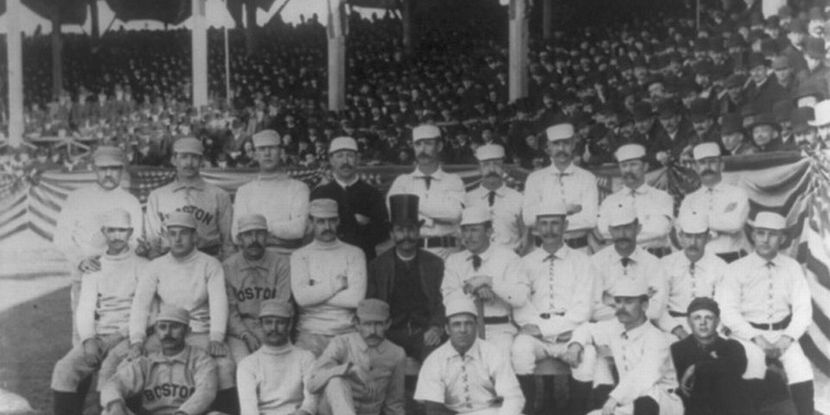
Old Hoss Radbourn giving the finger in this picture is a good allegory for the friction between our myths and historical realities

I am with my parents for the first time since Christmas of 2019. It is a joyous occasion, and keeping with the tradition of their summer visits to New Jersey we took a roadtrip together. Last time we went all the way to Maine. This time we only had three days we could travel, so we took a shorter trip to the Catskills and Cooperstown. Along the way there we made a stop to see some sights along the mighty Hudson up in Catskill, and on the way home went to the site of Woodstock 1969 (not to be confused with the mundane 1994 and catastrophic 1999.) In seeing the museum on that site and the baseball hall of fame in the same weekend I was struck by how both replicated or sometimes denied elements of American mythology. 

Right now we are in a moment of great contestation over the American past and our national identity. The storm and cry over "critical race theory" is based in the intense, burning fear many have that the unproblematic, rah-rah exceptionalist nationalism they were indoctrinated in is just not true. Rather than question their assumptions, they are going insane trying to avoid one moment of contemplation. 

Baseball can easily fit into the exceptionalist narrative, and there's a reason that "baseball, hot dogs, apple pie, and Chevrolet" has been used to sell cars. The supposed genuine American-ness of baseball required a myth, namely that the game was invented by Abner Doubleday in the bucolic rural village of Cooperstown, New York, in 1839. Even if the museum disavows that fabrication in its own displays today, it's still located in Cooperstown. It still passively affirms baseball as a product of rural small-town "real America," not evolved from older games from Britain and reaching its early popularity in its modern form in the growing big cities of the industrial revolution. 

The hall of fame museum does an impressive job of grounding baseball history in its social context and not merely echoing the dominant narratives. It has large exhibits about the women's baseball league, Latin American players, and the Negro Leagues. The almost exclusively white visitors to the museum I witnessed were much less drawn to these exhibits, despite their high quality. Most visitors to the hall are not interested in expanding their understanding of the history of race. 

The hall gives plenty of sugar with the medicine, of course. The new film for the hall gave me goosebumps and almost had me crying. This was partially because many of the players who spoke in it have recently passed (Joe Morgan, Bob Gibson, Hank Aaron, Phil Niekro, Tom Seaver), but also because it jammed in so many glorious moments with the players themselves getting a bit overwhelmed. Even my baseball skeptical daughter was moved by it. There's also of course the hall of plaques itself, the game's Valhalla. 

It was my second time visiting, and it still felt like holy ground to me. My first impulse upon entering was to genuflect. Here, however, the complicated and tangled history of baseball told in the museum disappears. The museum pointed out that the Boston Red Sox were the last team to integrate, in the hall Tom Yawkey, the man behind that shame, is honored with a plaque. Other racist villains called out in the museum like Cap Anson get laudatory words on their plaques in the hall with no mention of the terrible damage they caused. The likes of Effa Manley and Cool Papa Ball were finally included, but their plaques sit uneasy next to those who excluded them. The hall keeps you from questioning any of this as you look at the plaques in awe.

This experience got me thinking about the difficulties in telling a critical history to the public. In the end, the myth is just too damn attractive to leave behind. Baseball fans just want to believe in baseball. That impulse, when applied to larger American history, is hard to fight. 

The solution is thus not smashing all the narratives in a fit of iconoclasm, but to construct new and better narratives. This way of thinking has us replacing Columbus with Pocahontas, Jefferson with Benjamin Banneker, Robert E Lee with Frederick Douglass. 

This process can unfortunately devolve into mythmaking or worse when it turns radical figures of the past into safe symbols of consensus. This has already happened to Martin Luther King, who has been reduced in the minds of most Americans to one line in one speech. I was thinking about this going to the Woodstock museum on the site of the festival.

In the first place, a countercultural event having a museum devoted to it seems wrong. The exhibits themselves at least discussed how Woodstock was really a moment where things that had been "counter" just ended up being mainstream culture. As with the baseball hall of fame, a tension existed between laying out the history and giving the visitors the mythology they craved. The exhibits started with the standard self-serving narrative of "the Boomers lived in a cocoon of postwar prosperity that they rebelled against out of concern for making the world a better place." 

The museum weirdly also tried to present Woodstock as something that was all things to all people. As I gazed around the almost exclusively middle class white clientele gawking at the exhibits in standard issue suburban American clothing I found that conceit to be a cynical way to get the rubes through the turnstiles. The film showed some great musical highlights, including Santana's mind-blowing "Soul Sacrifice." They did not, however, mention the fact that Carlos Santana was tripping on acid and thought his guitar was a snake. That performance would not have been the same without hard drugs, but no need to freak out the squares, man. 

The de-fanging of Woodstock was everywhere. In one of the museum's movies Max Yasgur's son said something to the effect that people were protesting the war but that the American soldiers dying in Vietnam had made the festival possible. This is the usual bullshit when America's most imperialist wars are spun as victories for freedom in America when the poor guys who died in Southeast Asia sadly didn't have any effect positive or negative on the status of freedom in this country. I though of this too when we stopped into a roadside general store nearby for lunch. There was a peace sign American flag hanging outside, but also a POW-MIA flag flying from a flagpole. (If you don't know the pernicious history of the latter read Rick Perlstein's take on it.) The first was to get the tourists in, the second to show that the owners were still good rural "real Americans."

Driving through central New York this weekend I saw quite a few Trump flags and signs and a Confederate flag to boot. The museum's notion that Woodstock made it so the counterculture changed the world seemed laughable. Maybe at the end of the day it was just a different expression of the same individualist ethos that gave rise to someone like Trump. That's hardly the kind of the thing the Woodstock museum would want to cop to.

It's strangely fitting that two such powerful American myths are located less than a hundred miles from each other in upstate New York. It remains to be seen if we can construct a history of ourselves that's capable of being something other than a comforting myth. 

Monday, April 6, 2020

Hotel Floors, Truck Stop Parking Lots, Train Stations at 2AM, and Other Mundane Adventures


Most travel is pretty uneventful. Adventure is expensive, and better left to people on reality television anyway. How else to explain the popularity of hyper-managed, pre-programmed bus tours and cruises? Even the task of walking foreign city’s streets is too much to handle for many Americans.

While I am a bit snobbish about such packaged tours, I must admit I am a regular Bilbo Baggins when it comes to adventure. As a child when I first read The Hobbit I felt a visceral empathy with homebound Bilbo’s discomfort with having been dragged from The Shire by a bunch of dwarves on a strange and threatening quest.

Like Bilbo, however, I have managed to have some travel adventures against my will. For me like most travelers, my biggest adventures are the unintended ones. They happened in mundane places, like airports, train stations, and truck stops (more on the latter in a short bit.) The adventures have made those drab places more eventful than most of the places I visited intentionally on those trips. With the episodic nature of travel in mind, here are some postcards of accidental adventures.

A Truck Stop East of Toledo Ohio
I grew up in a rural Nebraska middle class family that loved traveling and pinching pennies in equal measure. That meant I saw a lot of the country but also never stepped foot on an airplane until I was an adult.

My parents’ cheapskate ways meant maximum discomfort for me on family vacations. I had two sisters, so to save on hotel costs my parents would book one room for the whole family, with my parents in one bed, my sisters in the other, and me sleeping on the floor. Evidently the extra ten bucks for the rollaway bed was an unnecessary expense.

Because we invariably stayed in the cheapest lodgings possible on our 80s vacations (think one rung above a heroin shooting gallery), I spent a lot of my nights with my face next to old shag carpets from the 70s that seemed to carry a mountain of dirt in every follicle. I have one powerful memory of a roadside motel in Sterling, Colorado, woken up by a massive blast of sunshine coming through the ridiculously large gap between the door’s bottom and the floor, a freight train blaring its horn nearby.

One rule of our hotel stays was to never make reservations for hotels for stops along the road. Instead, as we grew tired after a long day of driving my parents would decide to stop somewhere, then stop into multiple hotels at that interstate exit or town, inquiring about their rates until my father found one to his satisfaction. It was a risky strategy, and ridiculously time consuming when we kids were tired and irritable after a long day. One fateful night in July of 1987 in Toledo, Ohio, our luck ran out.

We were making our big trip to Washington, DC. In typical Tebbe family fashion, we decided to get a head start by leaving after my dad got off work on Friday and making our first drive in the evening, thereby minimizing the number of vacation days he had to take. We drove about four hours to somewhere in western Iowa. The next morning the only plan was to get as far as we could, with the goal of arriving in Gettysburg, Pennsylvania, the day after that. It was a beautiful summer day, but started inauspiciously, as my dad left his credit card at the station where he gassed up our 1984 Chevy conversion van, and we had to turn around and get it. We drove across the Iowa and Illinois prairies, a wall of tall green corn the only thing outside of the van’s windows until we hit Chicago. Driving on I-80 meant mostly bypassing the city, and we hit Indiana in the late afternoon.

At that point my parents decided on a spur of the moment side trip to South Bend to see the Notre Dame campus. They both went to a regional state college, and have a thing for going to elite college campuses, which are as exotic to them as a Burmese marketplace. We even went inside the university library. I get a little embarrassed today thinking about the sight we made as a bunch of rural tourists gawking around the stacks.

Being devout Catholics, we popped into the campus church as well. Mass was about halfway through, but my parents decided to stay for communion, thus fulfilling our obligation for the week, since it was late afternoon on a Saturday. (My parents are the kinds of Catholics who go to mass on vacation. When I took them to Boston last summer we went to an early morning mass in the basement of the Catholic student center on Harvard’s campus.)

We left South Bend afterwards, still trying to get through Indiana before stopping. At some point the decision was made to stay the night in Toledo, just across the border. We rolled into the Glass City later than normal, the sun already down. My dad went into a Ramada, and learned the awful truth: the American Legion was having their national convention in town, and there were no hotel rooms to be had in the entire area. Back in those days every one horse town in America (including mine) had a Legion chapter. According to the clerk, hotels were booked “from here to Youngstown.”

We went to get dinner after that at an Arby’s. This was an extravagance to please the kids because we normally ate picnic out of our ice chest on the road to save money. My father queried the kid behind the counter about other nearby cities that might have hotels, and he mentioned Sandusky. (This, children, was a common practice in those dark ages before the internet.) We trudged from the Arby’s, exhausted and demoralized. I believe at this point my mother began wondering why, with increasing volume and intensity, my dad refused to reserve hotels in advance.

So we drove on, ostensibly for Sandusky, which was over an hour away. At this point it was after nine o’clock at night. We had been on the road for over twelve hours, and it was getting to be too much. We didn’t make it into Sandusky.

Instead, we pulled into a truck stop in an extremely dark and isolated spot far from any town. My father went inside, and secured the best hotel bargain we ever got: eight bucks to park in the semi-truck parking area so we could sleep in our car. Since my father’s brother was a trucker, he must have known that truck stops offered this convenient service. I also think he was secretly pleased at having managed to save so much money.

At least our conversion van was bigger than the typical automobile. I leaned back the ridiculously appointed captain’s chair and got maybe two hours of sleep, much of it interrupted by the bright lights of the truck stop and the sound of barking dogs.

That experience on a July night at an Ohio truck stop taught me some things, like the need to reserve hotels in advance. It also made me much more capable of weathering and even savoring the future inadvertent adventures travel has to offer. Most of these have involved sleeping in suboptimal locations and leaning into the surreal weirdness of being in a place I am not supposed to be.

Manchester Airport, 3 AM
There was the time I went to Ireland for a debate tournament in college managed by the world’s least competent travel agent. On the way home we flew from Cork to Manchester in the evening, but our flight back to the states wasn’t until the next morning. Instead of getting a hotel, we stayed the entire night in the Manchester airport, pretty much the only people there. I can still recite the automated message that played throughout the night over the PA exactly every fifteen minutes in a clipped, passive-aggressive British voice: “Attention. Please do not leave any baggage unattended. Any baggage left unattended will be confiscated, and possibly destroyed.”

I didn’t sleep much. Instead I brown-bagged a small bottle of Bailey’s Irish Cream (I was twenty and wanting to savor one last hit of store-bought liquor) while reading a bunch of British film and music magazines I couldn’t buy back in the States. My truck stop experience eight years made it easier to just sit back and enjoy an accidental adventure.

Overnight Stay in Zoo Station
The same goes for 2002, when I was in Germany on a three week research trip scouting archives for my doctoral dissertation. This was perhaps even nerdier than traveling to Europe for a debate trip. My advisor had a cheapskate streak to rival my father’s, evidenced by him still driving his tiny Honda Civic hatchback from his grad school days, complete with sagging rear bumper. He had advised me to take an overnight train on my way back to Berlin before flying out to save money instead of staying another night at a hotel or pension. Who was I to doubt his sage wisdom?

I soon realized that things had changed from his grad school days beyond the rust on his hatchback. There were no overnight trains from where I was traveling, so instead I took the latest train possible, and got into Berlin’s Zoo Station at night, with a plan to take the early train to the airport the next day. I had to spend about four hours in the train station in the dead of night, where I noticed a bunch of other people camped out with their luggage who had the same idea. We were this weird fraternity of young broke travellers and seeing my compatriots there put me at ease. We didn’t say a word to each other, nobody needed to.

Sitting there also gave me a chance to observe those strange hours when even in the busiest of cities, life shuts down. I saw the cleaning crew that’s invisible to those who don’t spend the night in a train station. There is also a certain kind of mystical calm when you are in a place that’s normally bursting with noise and excitement when it’s empty. The residue of years of souls passing through and the emotions that have been spent there seem to hang in the air, tangible now with all the people and clatter removed. That dirty, empty train station with its high glass roof became a kind of monastery cathedral in that moment.

Tenting in a Hail Storm
A lot of aging involves doing the stuff you swore you were never going to do when you were younger, like wearing khakis, having kids, and living in the suburbs (at least as far as I am concerned.) In terms of travel, it meant revisiting the places in Nebraska I had been to a thousand times and long claimed I had tired of.

One year before my twin daughters were born, my wife and I flew out to Nebraska to see my family, then to drive up to the Black Hills, Badlands, and Niobrara River while hitting some familiar stops along the way. We decided to go camping for most of it, except for a brief stay in Deadwood.

The first night we stopped at the Nebraska National Forest, near the town of Halsey. On my family trips to the Niobrara River for canoeing and tubing growing up we always stopped there for a snack and bathroom break, I was always put off by it. The forest is not natural, planted there in the early twentieth century and at one point the biggest man-made forest in the world. It sits in the middle of the wide open expanse of the Sandhills, one of the most subtly beautiful landscapes in America. The trees there look out of place, imposters where they don’t belong. Nostalgia is such a powerful disease that I wanted my Jersey girl wife to experience the uncanny weirdness of the place.

We pitched our tent under some scrubby pine trees but before we went inside to sleep the temperature dropped ominously, a Nebraska summer sign of danger. A great big thunder cracker of a storm was headed our way. Cell reception was pretty spotty, so I could only intermittently see the radar map on my weather app all lit up Halloween orange and fire engine red.

Once we got into our tent I realized that I had left the rain cover for it at home, not realizing the center of the top was only mesh. I scrambled and used the plastic wrapping our tarp came in to imperfectly cover the hole. Soon a blacker than black darkness fell, the storm clouds blotting out all the star and moonlight. The rain pounded angry and soon we heard the telltale ping-ponging of hailstones, a sound that brings both a thrill and a fear to a native Nebraskan’s heart. Being an emigre, I miss the feeling that the sky is trying to kill me, a common sensation that livens up the staid daily life of the rural Great Plains.

Truth be told I was scared, but put on a brave face for my wife. We got pretty wet, but the flimsy plastic kept us from being totally soaked. Once a boring pit stop on family vacations, the Nebraska National Forest has gone down as an adventurous place in the lore of my new family.

We have traveled plenty with our kids, but no real adventures. It’s not responsible, and unlike my father, I make sure to get hotel reservations ahead of time. But maybe, just maybe, we will get to have an accidental adventure in an unexpected place together, and have a new story to pass down together.

[Editor's Note: I submitted this for publication. It was (inevitably) rejected. I wanted it to live on, so I hope you enjoyed]

Thursday, August 1, 2019

Reflections on Summer Travels Around America


I have been on the road a lot in the past month and a half. Back in June I took a group of students on a trip through the South, visiting several historical sites, most of them connected to civil rights and African American history. A couple of weeks later I flew out to Amarillo, Texas, to visit a friend, then we drove up to Colorado for a grad school reunion. Today I have just returned from a trip with my family (including my parents) to Boston and Maine. I've been all around the lower 48, except for the West Coast and Midwest, which I visited last summer.

My travels have taken me to very "blue" places like Boston and "red" places like the Texas Panhandle. What struck me most consistently was a country seemingly oblivious to crisis. When I was with my friends and family I was less connected with TV and internet news sources than I usually am, and without them it seemed as if everything was just humming along. From Alabama to New Hampshire, ferment was not in the air. Even among my grad school friends, who are very politically committed, we seemed to talk less about politics this year than when we last met two years ago.

I sense an increasing air of fatalism. Those who oppose the president seem defeated. They fought hard to turn the House to the Democrats, and what has it accomplished? Even after Robert Mueller essentially said in front of Congress that the president had obstructed justice, Pelosi and other Democratic leaders have refused to make significant moves on impeachment. The president's recent bigoted outbursts are not just random ravings, but they are actually calculated to win the votes of racist white people. We all know that he is a racist who is breaking the law, and that nothing will be done about it.

There's a fatalism on the other side as well, especially among the Republicans who were never hardcore Trump supporters. Like Thomas Jefferson and slavery, they know deep down in their heart of hearts that they support something evil, but have found every rationalization possible to justify their complicity. They put their consciences in the hands of the devil, willing to let their souls be stolen for lower taxes and watching the people they don't like suffer more than they will.

While the country seems united in fatalism, the divisions were easy to see out of the car window. In the "red" areas I visited I saw lots of giant crosses and giant Confederate flags on the roadside, along with the random anti-abortion billboard. In "blue" America I saw countless pride flags and Black Lives Matter signs, stickers, and graffiti. This to me highlighted the ultimate stupidity of the media's "both sides" narrative. One side uses symbolism to assert its superiority and dominance over other people. The other side uses symbols intended to support marginalized people and fight for their equality. In this fight there can be no equivocation.

But despite this firm division of values, there seemed to be little action. Contrast this with Puerto Rico, where protestors drove a bad leader out of office. Mainlanders ought to learn a lesson, but they are too paralyzed by their own fatalism to see it. We have sadly treated the current crisis like something to be watched on television and to be affected by, rather than a play where we all take part. That attitude has had and will continue to have disastrous consequences. As for me, I have resolved to lean my shoulder harder on the wheel, and I hope you join me.

Wednesday, June 26, 2019

Six Days On The Road


I've taken the longest hiatus in awhile from this blog. I just got back from taking a group of students on a road trip through the South visiting historical sites, most of them connected to the histories of slavery, civil rights, and the Civil War. I will talk more deeply about this experience later, but today I just have one main observation.

I have lived in the NYC area for the past eight years, and when I leave to travel in many other parts of the country I am reminded of how much more generally prosperous this region is compared to others. Some of this is general prosperity deriving from the area's economic base, but a lot of it comes from a society that is willing to build a safety net.

There is horrific inequality in this part of the country, but what I saw on this trip was a much bigger bottom much deeper in the hole. The crumbling shotgun shacks in Montgomery, homeless encampments in Atlanta, blighted neighborhoods in Chattanooga, and rusty trailers along countless rural roads all seemed to signal the false promises of the Sun Belt. All the fancy coffeeshops and craft beer bars can't hide that.

This is the region that attracts so many corporations with promises of low taxation. In Chattanooga auto workers voted against a UAW union this month. They are being fed a myth that the race to the bottom somehow means a better life for all. In actuality it's just a continuation of the South's old history of cheap labor being used to keep a group of reactionary grandees at the top. That Southern style of labor relations has been exported to the rest of the country over the past forty years.

This trip prompted a lot of thoughts from me, but the most depressing was that our current worsening inequality is not the precursor to a rebellion of the oppressed, but to a permanent state of brutal hierarchy. White racial resentment is currently the most powerful political force in America, the same force that kept Jim Crow in place for almost a century. I more and more believe that the period from 1965 to 2016, as messed up as it was, constitutes a mere blip in a larger history. I wish that wasn't the case, but it's best to see the world realistically.

Saturday, July 14, 2018

Feeling At Home And Uneasy In LA


I have not been writing as much because I am currently on vacation in California. I have spent the last four days in Los Angeles, a city that I have very quickly learned to like. In a weird way, I immediately felt at home here.

I grew up on the Great Plains, in Nebraska, and the sky here too is a vast, Western sky. The clouds are Western clouds. The dry, dusty air is Western air. The scrubby mountains I see in the distance are Western mountains. This is a fundamentally Western city, not oriented towards the East, but to the Pacific. Here the weather and natural elements are scary and unpredictable. The tornadoes, heat waves, and blizzards I grew up with are mirrored here by earthquakes and wildfires. In the West you can never escape the feeling that someday nature will come and just wipe you off of the map, and are reminded of the unnatural fact of your very existence in a place not fit for millions of people to live in. (Nebraska draws its life-giving water from underground, Los Angeles from rivers many miles away. Neither is ultimately sustainable.) Los Angeles is Western too in that it is a new city with people born elsewhere and a kind of haphazard construction. Nothing here feels permanent.

I have seen a lot on this trip, from the beaches of Santa Monica to the tourist traps of Hollywood to the hipster havens downtown to the rarified culture of the Getty Center. I have eaten Korean fried chicken, tacos al pastor, and a Los Feliz brunch. I've shopped at Amoeba and been to a movie at a 1920s movie palace.

As much as I have loved being here, there is something else that makes me uneasy. The contrasts between rich and poor may be even starker here than in New York, and that is saying a lot. The other day we drove through Skid Row on our way through downtown, an area of squalor so vast that it is named on the map. There were blocks of tents and people living in them. I've seen smaller tent cities all around the city in practically every neighborhood we have visited.

If the West has always symbolically represented a place of opportunity and reinvention, California is both its culmination and its dead end, since you can't pick up stakes and go further west after you've hit the ocean. In a place like this my country's failure to live up to its promises of plenty are stark. Just a few blocks from Skid Row old warehouses are being converted into microbreweries and apartments rent for astronomical prices. Come to Los Angeles, then, and see what has become of the "American Dream," both its possibilities and its limits.

Saturday, February 17, 2018

Postcard From Virginia Beach

Perfect song for a rainy night in the Tidewater by one of its native sons

I'm writing this at night with my wife and daughters asleep, next to a window overlooking the crashing surf of the Atlantic Ocean. We made the extremely necessary decision to get out of town over a long weekend, and opted to go to Virginia Beach. It was far enough away but not too far of a drive, and more importantly, well south of New Jersey. The off season beachfront hotels are so desperate for business that I am paying less for this room than I did for the one at a roadside hotel in Dover, Delaware, last night, whose stunning view consisted mostly of an empty lot and a Pizza Hut.

This trip has been incredibly therapeutic, as good travel often can be. The rain-slicked, wind-chilled streets are empty of beach goers, and instead a great backdrop of quiet contemplation and escape. The ocean itself, as it never fails to do, puts my soul in the right mood. Perhaps it's because I grew up in the landlocked prairies of Nebraska that the ocean has a special pull on me. It is not in the mountains but by the ocean that I truly feel awed by nature. Staring out at its massive size and never-ending horizon I feel the hand of the divine and the reminder of my small place in this universe. That reminder is actually comforting, since it is also a reminder of the smallness of my own problems in the grand scheme of things. If I get to retire, I want so badly to live in a seaside town.

Buoyed by the warmth in my soul that the ocean is giving me, we have been enjoying the small pleasures that make life bearable. Looking at the gorgeous expanse of ocean while driving across the Chesapeake Bay Bridge, during lunch today with an old friend and her kids, watching my daughters' joy at the local aquarium, and washing some fresh oysters down with a crisp beer, I have been happier than I have been in months. All I can do tonight is wish that I could feel this way on an ordinary day, that I did not need the promise of vacation to get through so many frustrating, regular weeks of my life. Now I guess I understand why my dad always seemed so happy and excited on our family vacations. I'm feeling thankful tonight that he gave me an example to follow.

Monday, December 11, 2017

West From Omaha

Yesterday my plane arrived in Omaha from New Jersey just as the sun was setting. Once I settled into the seat of my rental for the two and a half hour drive west to my hometown, I realized that this was the first time I was making this trip alone in almost ten years.

The road from Omaha to Hastings is a well-worn one for me. It was the path home after countless debate and band competitions in high school, to college and back, and then the last leg of my long sojourns home from Chicago, Champaign, and Grand Rapids. I know every road sign, every gas station, every distant grain elevator. The names of the towns are a familiar litany: Gretna, Ashland, Waverly, Seward, Friend, Beaver Crossing (one of my favorites), Aurora, Giltner, Doniphan and many more. In the last decade I've had my wife with me on this leg, and I tell her the same stories about every spot in the road and she patiently waits until about York or so to remind me that I've told all these stories before.

By myself, with no one to tell my stories to, I was struck by the forbidding nature of the drive. Once you get west of Omaha, the sky opens up, a massive sky that feels like it could crush you without a thought. In the dark it is that much more powerful. The real moment of shock, however, comes in a little bend in the road just on the west side of Lincoln. The fifty miles between Lincoln and Omaha have become ever more crowded as these sprawling and growing cities seem destined to join in one giant blob of subdivisions and strip malls. However, once you pass the last exit for Lincoln, the one for Northwest 48th Street, the interstate makes a little curve, you go over a hill, and suddenly all the lights are out. The darkness is darker than any other I've known, a darkness that makes you feel like the other cars on the road represent the only other living people left in the world.

Driving on the sparsely traveled roads of Nebraska at night can be a kind of spiritual experience, but one I took for granted as a child. I never knew that getting from here to there was not a reminder of human mortality in other parts of the country. Last night I even took a little detour, taking a two-lane road for about ten miles, a route where I did not see a single sign of another person until I hit Doniphan. It was like a trip to a distant, empty planet. Under that limitless, inky black sky I never could have imagined that I take a train to the beating heart of Manhattan's human ant swarm every work day. It's been a good respite to be west of Omaha.

Thursday, July 13, 2017

Political Observations After 4000 Miles Of Travel

My wonderful family road trip is now over. We went from New Jersey to Nebraska and back, with plenty of detours in both directions. Politics was one of the many things on my mind during those two weeks, and a LOT happened in Trumpworld. The president went abroad and gave a white identity speech and appeared to unite America's allies against him. The G20 summit looked like another chapter in America's fall from its perch as the "essential nation." Hardly anyone over here noticed, however, because the Russia scandal blew open even further. Junior provided the world evidence that his dad's campaign colluded with Russia. On top of all of that, Trump tweeted gross sexist stuff about Mika Brzezinski and violently threatened CNN in another tweet. He also joked with Putin about the press, the latter a man who has had journalists killed.

I have never seen a president have a two weeks like this, but as recent polling points out, a very high percentage of Republicans think Trump is doing a great job. Some people seem surprised by this, but I'm not. My trip these last two weeks has confirmed my theory that allegiance to political conservatism is primarily a matter of identity. Republicans view themselves as "real Americans," and anyone opposed to them as enemies of the state. Trump is thus ipso facto in the right, no matter what he does. It doesn't matter that he is the kind of wealthy, amoral New Yorker that these heartlanders typically profess to see as the mirror opposite of themselves. He is the chosen leader of their tribe, and as such, MUST be supported. All the talk of "Trump voters" has badly clouded the reality that after the primaries "Trump voters" are basically just Republicans.

At the same time, a lot of folks on the left make the mistake of thinking that this is the dominant identity of conservatives. I was a bit shocked, actually, at how little I heard about the president on my trip. In fact, I heard a lot about Chris Christie closing down beaches, but nothing about Trump. I get the feeling that a lot of conservatives are supporting him out of obligation, rather than enthusiasm. Nevertheless, they still and will always hate and fear liberals more than they will love and support anyone else. In any case, little of the opposing viewpoint will get past their filter. A reminder of this happened when we stopped at a roadside pizza place in rural Pennsylvania and Fox News was blasting away in the corner. This was a very common experience when I lived in rural Texas as well. Many parts of this country have public spaces dominated by what amounts to crass propaganda. Fighting that is an uphill battle, to say the least.

During the height of Jim Crow in the early 20th century any Republican trying to win over masses of white Democrats in the South would be considered a fool. Voting Democrat was a vote for the South, whomever the candidate happened to be. The dynamic today for white conservatives in large swathes of the country is pretty much the same. They might think that someone like Louie Gohmert is a dope, but they'd rather cut off their left arms than vote for a Democrat. Those who think they will get these voters to change their minds by magically making them see their "class interests" are fools. Any money spent on trying to get Republicans to vote for Democrats may as well just be set on fire.

I believe now more than ever that if the Democratic Party is going to win next year it needs to focus on getting its presidential election voters to the polls. This will mean not only a message that appeals to the base, but a massive effort to help voters targeted by suppression efforts to get registered and to get to the polls. (I am contemplating taking election day next year off of work so I can drive people to the polling places in the nearby purple districts currently represented by Republicans.) If the party wants new voters, it needs to find them in the large numbers of independent voters who do not currently vote in midterm elections, but who are not conservative. Again, the party needs to have a compelling message to get those people to want to vote, and "look how crazy those Republicans are" won't cut it.

It needs to be a message about what kind of country they want to build, not just policy wonkery. It should be a country where every person can get medical care, quality public education, and equal rights. A country that values immigrants. A country that protects its black and brown members with the same care as it protects its white members. A country where workers are fairly compensated and protected from exploitation. A country where women will not just be afforded equal rights, but provided the support needed (such as subsidized child care and birth control and protection against sexual assault) for them to lead fuller lives. A country where religion cannot be used as an excuse to persecute LGBTQ communities. A country that values schools over prisons. A country that values sharing wealth so that all may lead a life with dignity over making sure it goes into the hands of a few.

Conservatives, many of them seemingly decent people, are completely willing to support a corrupt criminal maniac in the White House because they see it as a way of asserting their identity and values. The other side needs to have its own values clarification if it wants to win. After this trip, I am more sure of that than ever.

Wednesday, July 12, 2017

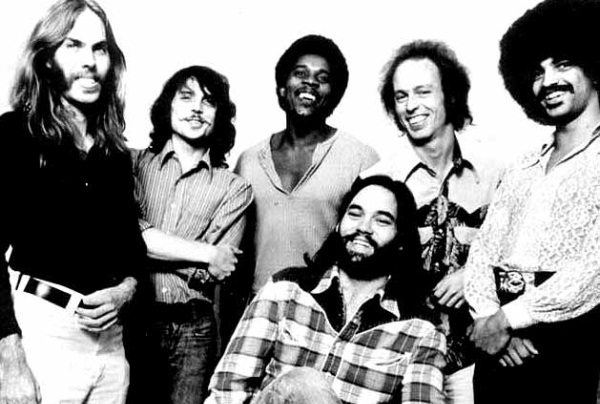
Little Feat, "Willin'"


It's been a week since I've given y'all a post, which is the longest hiatus I've taken in quite some time. I was on the road visiting friends and family, and opted to let my thoughts percolate on the road rather than write hot takes. My more measured thoughts should be available here soon.

In the meantime, I'd like to talk about a song I found singing to myself quite a bit on this trip. Every good road trip needs a good playlist, and I made one for this trip full of country songs about roads and trucking, both venerable subgenres. While Little Feat were more of a funky Southern rock band, "Willin'" stands as one of the greatest trucker country songs ever, a field with some tough competition.

It's sung from the point of view of a tired, world-weary trucker who is nonetheless dedicated to delivering his load. He's also a kind of hippie trucker, singing that "If you give me weed, whites and wine/ And you show me a sign/ I'll be willing/ To be moving." "Whites" in this case means amphetamine pills, sometimes necessary for those overnight trips. The lines are sung with an aching tone, the words of a man who has married himself to the road and resigned himself to it.

In my younger days I often thought of making such a move. Listless and restless at age 24 I thought about spending some years long haul trucking to make some dough and get my life together. I went to get my PhD instead. I still took a lot of road trips, though. For awhile I was even making the trek from Texas to New Jersey and back once a year. I have never been able to meditate more deeply on my life than when I am behind the wheel, watching that old white line dash on by. The trip I just returned from, with my wife and two daughters, was not as meditative, but a whole lot more fulfilling. We sang along to music, played games, and awed at the many wonders outside our windows. Hearing this song along the way was a nice reminder of the pleasures the road, but also the good feeling that comes with having a true home in this world.

Saturday, July 1, 2017

Signs Of The Times In St Louis

Today marked the biggest day of driving on our trip. We went from Bowling Green, Kentucky, to Kansas City, and after three days on the road I am pretty tired. This is fine, because we will be hitting the town in KC tomorrow, instead of hitting the road.

One of the best sights on the road today was crossing the Mississippi River, in St Louis as it perhaps flows mightiest at this point, absorbing the massive Missouri. We are hoping to get a closer look at St Louis on our way back to New Jersey, since I haven't really hit the town there since 1995. A lot of what I saw in St Louis today was a lot less inspiring than the river vistas, however.

My wife and I both like watching the signs on the highway, since they tend to reveal a lot. For example, once we saw a sign for a Joe's Crab Shack we knew that we had entered the more affluent outer suburbs, where the more upscale chain restaurants can be found. In St Louis I was taken aback by the number of aggressively Christian billboards, more than I've ever seen in an American city. In a big surprise, the Catholics seemed to be taking part as enthusiastically as the Bible thumpers, with billboards featuring the Virgin Mary mixed with those decrying evolution. It was at least interesting to see some ecumenicism when it came to simplistic billboard theology for a change.

As common as these religious messages were, they may have been outnumbered by tons of advertisements for casinos. I found all of this rather depressing, as these billboards often overlooked empty warehouses and abandoned buildings. St Louis' population loss rivals that of Detroit, and in the wreckage shysters are looking for easy marks whose despair can be manipulated into church pews or the craps table. Either way, the house always wins. It's also a sign of America writ large, where the search for easy, billboard-length answers to jarring changes has led to the current disaster in the White House.

Friday, June 30, 2017

Across The Appalachians

I've spent the last two days with my family traveling from New Jersey to Bowling Green, Kentucky, where I am writing this from a surprisingly swank La Quinta off of interstate 65. My wife and I are big proponents of having our vacation while we are supposed to be driving to our final destination. Yesterday our big drive was broken up by visiting friends in western Maryland. Today we explored Henry Clay's estate in Lexington and spent a few hours at Mammoth Cave. Tomorrow comes the long haul to Kansas City, and a blessed day of fun rather than driving. Truth be told, I am already getting a little white line fever.

This morning came the melancholy moment that happens every time I drive through Appalachia. All of a sudden, these old wise mountains disappear, the land more subtle rollings hills, and then flat. Appalachia is by far my favorite American landscape. I say this as someone who spent summers growing up in the Rockies. Now I think the Rocky Mountains are beautiful too, but they are extreme, almost anti-human. The Appalachians feel homey and human, lived in and welcoming rather than forbidding.

They are also a strange and unique borderland between the East and the middle of the country. Staying in Charleston, West Virginia, last night I was struck by the southern accents and social interaction rituals, but the weather was northern as can be. At least the biscuits at the hotel breakfast buffet this morning were of southern quality.

Speaking of food, I relished going to a "country store" across from a corn field tonight. I had the best damn fried catfish I've had in many a moon. It was a reminder that the south is the one region of the country with its own homegrown cuisine worth writing home about. Of course, we are now in the bluegrass country of central Kentucky, where the mountains are just a rumor.

Of course, I can't help but to think of politics. There haven't really been any outward manifestations, apart from a couple of random Trump signs. Traveling down the backroads and byways I was able to remember the spiritual mentality of my own rural upbringing, and what it means for the current political situation. For the past two days I have already been feeling cut off from the outside world. I was remembering that it is very easy for folks in rural America to think of themselves as the center, rather than the periphery. That mentality makes denying the will of the masses in the cities out to be a protective measure for those in rural America.