Showing posts with label bob dylan. Show all posts

Saturday, September 20, 2025

Autumn of the Band Part II: Dylan's Gunslingers

The Band's story is one that makes me think about the role of fate in the universe. The Hawks were a crack rock and roll band of the old school, ripping it up at dive bars and jook joints from Dallas to Toronto. They were precisely not the kind of band that emerged from The Beatles' revolution. They spawned garage bands from coast to coast of young men trying to imitate the mop tops and the more rough and rowdy Rolling Stones. By 1967 this had morphed into psychedelia, which Richard Manuel commented on hilariously in The Last Waltz as a time with groups with names like "Chocolate Subway" and "Marshmallow Overcoat." One can imagine a universe where The Hawks just faded away, relics of the pre-rock era rock and roll talked about by record collectors who might note that this Robertson guy who played on some killer obscure Ronnie Hawkins records went on to be a session man. Or a kid in Ontario may have discovered that his high school music teacher Mr Hudson was once a rock and roller. 

That didn't happen. Instead, the hand of fate came down in the form of Bob Dylan, who chose The Hawks to be his backing band for his tour in 1966. Dylan had famously gone electric, apparently giving in to the post-Beatles shift to rock (not rock and roll) music and abandoning the folk religion. That at least was the narrative of a certain subset of butthurt folkies who loom a bit too large in the memory of the event. What really happened was that Dylan was already shifting his songwriting away from folk into more personal and I would daresay poetic territory, even if he still strummed an acoustic guitar and blew into a harmonica. He was going to make music in a rock band format that was going to go way beyond what it had done so far. 

On the '66 tour he played an acoustic set followed by an electric set, which the aforementioned sect of aggrieved folkies detested and even booed. It was a whole lot of mishagas and Hawks drummer and de facto leader Levon Helm pulled out of the tour, not wanting to put up with it. The rest of the band drew on Canadian stoicism and soldiered on. You can hear the results in the fourth volume of the Bootleg Series, a famous show in Manchester that had been erroneously labelled as being from the Royal Albert Hall in London. If you were to ask me about my favorite Bob Dylan album, I would tell you that it's the second, electric disc from this release. Dylan and the Hawks play with both abandon and precision, rocking harder and louder than what just about anyone would have heard at the time. "She Acts Like We Never Have Met" is not a Dylan classic on the record, but here it rips and snarls. "Tell Me Mama" rollicks like a runaway train. The sneer behind "Ballad of a Thin Man" cuts sharper knowing that Dylan is directing it straight at members of his own audience who think him a Judas. Someone in fact famously yells that accusation (which you can hear on the album) right before Dylan turns to the band, tells them "playing fucking loud man" and they tear into a monumentally percussive version of "Like A Rolling Stone." Those folkies didn't know they were messing with some rock and roll gunslingers who had played some of the toughest clubs in North America. 

Relistening to the "Royal Albert Hall" show again I found myself even more impressed with it. I also thought of the role of fate. Dylan could have chosen any number of backing bands, many that have fallen into obscurity since. Somehow I don't think any of them would have worked as well as The Hawks. They were steeped in the older musical traditions, the ones Dylan had been drawing on his whole musical life. Hearing Rick Danko's high lonesome backing vocals I just don't think any other group could have worked out as well. In 1966 the meeting of Dylan and The Hawks was a world-historical bit of kismet, like Paul McCartney being the Liverpool bloke that John Lennon happened to meet and make music with. 

Even if The Hawks had never become The Band, they would have thus written a page in rock history. They ended up making a bigger impact with Dylan not by taking the stage and daring his audience to hate them, but by recording songs in their basement in upstate New York while Dylan was taking a break from the spotlight in Woodstock in 1967 after the tour in 1966 almost killed him. It was here that Dylan and The Band's shared expertise in the forms of American music really came together. Their basement recordings were bootlegged and circulated at a time when Dylan had taken a step back from the ground-breaking glories of his trio of albums from 1965-1966. The Basement Tapes are quite a thing to listen to, a combination of covers and Dylan songs far more elliptical and even silly than what he had done up to this point. The epic, logorrea of "It's Alright Ma, I'm Only Bleeding" had been replaced by relatively terse trifles like "Santa Fe" and "Quinn, The Eskimo." "Clothes Line Saga" funnily parodies/references the Gothic horror of Bobbie Gentry's "Ode to Billie Joe" while "Lo and Behold" takes us to a Mark Twain universe of shysters and ramblers. The Basement Tapes are such a rich text that Greil Marcus wrote a whole book about them that I consider one of if not his best (I read it when it was called Invisible Republic, not The Old Weird America.) 

For this blog I re-listened to the entire officially released six disc set, which I own because I am a weirdo like that. (Although a friend did burn CD copies of his bootlegs for me back in the 2000s.) This time around it was interesting to hear the primitive nature of the early recordings and covers, and slowly find The Band and Dylan figuring out an entirely new path in American music by drawing on its deepest wellsprings. It starts mostly with covers, with the lonesome "Still in Town" among my faves, along with the Johnny Cash covers like "Big River" and "Folsom Prison Blues." There's folk classics too, like "Ol' Roisin the Beau." It's a whole lot of fun, the fun you might have just hanging out with friends and banging out old favorites on guitar, like some of my happiest evenings in my 20s in grad school. Things get really wacky on stuff like "See You Later Allen Ginsburg," but there's also heartfelt beauty like the epic "The Sign on the Cross." 

I am not giving this album a ranking as a "Band" album because Levon Helm did not join up with them again until late 1967, after completing these recordings with Dylan. It's not the true Band sound without Levon on drums. Richard Manuel would often play drums in a delightfully ramshackle way that I think Greil Marcus described once as a "shopping cart with a broken wheel." (If you can't tell, Manuel is my favorite.) Levon also doesn't play on the 1966 tour, and you can hear it. Mickey Jones eagerly bashes the shit out of his kit, and in the context of that tour and its alienation of its audience, it makes sense. However, Helm played the drums with a kind of light, loving touch that would give The Band a foundation more profound than the hard rockers of the day. 

I can't even imagine what impact the Basement Tapes bootlegs would have made at the time, coming amidst the countercultural explosion of 1967-68. According to the Dylan obsessives of the day, the Bobfather had withdrawn from his position as generational prophet (one he NEVER wanted) at a time when the hippie masses needed him most. Here the supposed savior is making silly songs disengaged from the headlines. I think his true prophecy was to understand that "the Sixties" were going to run out of gas, and that the Chocolate Subways and Marshmallow Overcoats of the day were going to be period curios, not lasting milestones. By partnering with The Band, he rediscovered the rich seam of American music that could sustain him for over another fifty years. Again, a true moment of the rare benevolence of the hand of Fate.

Next time I will finally get into The Band's first proper album, one that supposedly prompted Eric Clapton to break up Cream and ended up radically reshaping rock music. Appropriately, it would be named for the big pink house where the Basement Tapes were mostly recorded. 

Tuesday, November 21, 2023

Seeing Bob Dylan on a Rainy Jersey Night

Tonight I got to see the last show on Bob Dylan's Rough and Rowdy Ways tour. As I wrote about on my Substack, I have been anticipating this for months now. I was not disappointed. 

His band set a perfect smoky vibe with Dylan behind the piano. I was in a large theater but it was a performance meant for a cozy club. Moody selections from his most recent album mixed with old chestnuts of the kind normies don't know. He started with "Watching the River Flow" and ended with "Every Grain of Sand." On the latter, he played a harmonica solo, a surprise where I could hear echoes of Woody Guthrie and freedom songs in the Mississippi heat.

It was hard to believe I was hearing an 82 year old; he played like a man reborn. The time in the hourglass is running out, but like his namesake, Dylan raged against the dying of the light. As I look at my own 48 years on this earth it's hard to believe there's anything coming that I haven't already seen. This show made me believe there's still surprises in store. 

We all have only one life to live, and each one is a fragile flame, ready to be blown out at any moment. In the meantime, we live and try to flourish. 

Saturday, September 16, 2023

Catching Up and Thoughts on Rock Geezerdom


The start of the school year had me on the longest hiatus of my blogging career, I think. I have had a ten megaton stress bomb detonated on me and it's been hard to do anything other than just maintain. I have written a couple of things over on Substack, however. One essay gets into the ways that we have failed to reckon with 9/11 and the wars that followed. Another is about how seeing Bruce Springsteen live motivated me for the school year

That was such a fine experience that when Bob Dylan tickets for shows in Jersey this coming November went on sale Friday, I snatched them up. As I have written about before, people my age (born in the mid-70s) have a strange emotional attachment to the music made by the generation before us. It was a product not just of the long Boomer shadow, but of growing up in the 80s corporatization of the radio waves. I could listen to one station and hear "Sussudio," or another and hear "Whole Lotta Love." The choice wasn't hard.

These days it's easy to wonder how long my most beloved geezer rockers will keep running. I bought Springsteen tickets -despite disliking stadium shows- because I wondered if this was my last shot. I am hearing similar rumors about Dylan's upcoming tour. I am also beginning to think I need to find a way to see Neil Young soon, or to finally catch the Stones. 

In recent years I have gone out of my way to listen to new music, and most of what passes through my Spotify is indie stuff by people in their 20s and 30s. While I enjoy seeing new bands live on their way up, seeing the geezer gods live gives me a feeling on a different level. The Springsteen show, for instance, was like a religious experience. I felt the same way when I saw Dylan the day after the 2004 election and he played "It's Alright Ma, I'm Only Bleeding" and sang "Sometimes even the President of the United States must stand naked" with a barbed intonation. 

What I also find interesting is that some of the geezer gods still make great and interesting new music, and others don't. Rough and Rowdy Ways is one of Dylan's best albums, in my opinion. Springsteen's more recent songs did not sound slight when played live next to his oldies. I really enjoyed Paul McCartney's last album, especially how much he experimented. Contrast this with The Rolling Stones, who have not put out an album of new material since 2006. They just put out a single, "Angry," that is, shall we say, suboptimal. It sounds like an outtake from Voodoo Lounge, and very well might be. Mick's posturing is parodic, and the production sounds dated, but not dated to the Stones' heyday. 

It's telling that the video features the young actress Sydney Sweeney dancing beneath images of the Stones' glorious past. The Stones simply aren't allowed to grow old, and self-reflection is anti-thetical to their music. Springsteen's concert was full of references to mortality, aging, and dedications to the departed. I wonder if the next Stones tour will do much to reckon with Charlie Watts' absence. 

I still love those old Stones records, but as I age I have less patience for people who try to fool the world that they are forever young. Springsteen and Dylan have crafted some profound songs in their later years about being old, songs I bet I will keep with me when I reach their current age and they are long gone. Maybe just maybe we can convince Mick and Keef to be a little vulnerable and admit that death's cold hand is soon coming for them, too. 

Sunday, August 7, 2022

Bob Dylan in the Reagan Dawn


One of my pet cultural history theories is that the popular culture of the period from 1979 to 1982 reflected and reinforced the neoliberal and social conservative turns that would set the Reagan years off from the social changes of the 1960s and 1970s. The cultural "eighties" did not really begin until 1982, when this process was ending and the new paradigm reigned supreme (and the economy finally started to recover.) I call this period Reagan Dawn.

I got to thinking about it again because I have been going through one of my periodic Bob Dylan obsessions, and have been trying hard to crack the mystery of his Christian years. I suddenly realized that Dylan's strange path made sense in the Reagan Dawn context.

In 1979, after years of gathering strength, evangelical Christians became an independent political force by establishing the Moral Majority. That happened to be the same year that Dylan declared his conversion experience, and put out his first Christian-themed record, Slow Train Coming. Unexpectedly, Dylan won some plaudits for his new direction. The album scored positive reviews, and he earned a Grammy for "Gotta Serve Somebody." I was shocked when I learned this, because I assumed his Christian stuff got a negative reaction. That would mostly come later.

For one thing, the record has a slick au courrant sound, the kind that Fleetwood Mac rode to the top of the charts at the time. He also keyed into the running on empty vibes of the sixties generation, to use the title of one of the truly emblematic Reagan Dawn songs. "Slow Train Coming" talks about people feeling shell-shocked in a cruel world run by a rigged system. Other searchers and seekers of the 70s turned away from wanting to change the world to change themselves. Dylan did that too, but through Christianity rather than New Age belief.

More people turned on him once Dylan toured again and started delivering fire and brimstone from the stage instead of "Like A Rolling Stone." It certainly must have been surreal to see the poet of the sixties counterculture telling his audience to adhere to the same narrow evangelicalism professed by the people who were pushing hard to erase all of the cultural changes of the prior twenty years. Saved and Shot of Love, his other Christian albums, were not as warmly received as Slow Train Coming. They are full of finger-pointing jeremiads against people who refuse to be born again, rather than Dylan's old targets in the establishment. The Bobfather was not directly singing about the Moral Majority or tax cuts, but his turn certainly felt like an endorsement of the conservative restoration. 

It's interesting then that Dylan stopped making explicitly Christian albums in 1983, after the end of the Reagan Dawn, with Infidels. (The title certainly shows some residue, though.) It was all over the map politically. "Neighborhood Bully" supported Israel after its bloody invasion of Lebanon, but "Union Sundown" commented on how Reaganomics and globalization left the American working class in the lurch. His other 80s albums would be far less topical, but in any case one could no longer assume that Dylan had thrown his lot in with the forces of the conservative restoration. 

I continue to find the Reagan Dawn to be a fascinating period because it represented the beginning of a political, economic, and cultural order where there was, in Thatcher's words, "no alternative." Even a figure like Bob Dylan was unable to resist. For better or for worse, it was the world I have spent most of my life in.

Sunday, June 12, 2022

Top Ten 80s Dylan Songs


None more 80s

Hey everybody, remember listicles? I sure do! They were all the rage about ten years ago, which is an eternity in internet time. In the early days of this blog, they were my metier, in fact. I figured if Bob Dylan's 80s music can be brought back (as it has been re-evaluated in recent years) so can the listicle. It's a match made in heaven! So, with that in mind, here are my top ten Dylan songs from the 80s.

1. "Every Grain of Sand" (Bootleg Series version)

Dylan began the 80s in his evangelical Christian phase. While he got some great musical backing on these records, the hectoring, overzealous lyrics on many of these songs are by far the worst of his career. At the same time, when he keyed into the true spiritual depth of religious music the sublime could emerge in new ways. "Every Grain of Sand," about the mysterious power of God and finding peace in closeness to Him, moves me like few other Dylan songs. When I am having a bad day I can listen to it and find some inner calm. 

2. "Blind Willie McTell"

The most famous outtake of all time, proof that Dylan either didn't know his own best songs or felt a perverse need to withhold them. I hear this song as a commentary on how the history of slavery still haunts this country, and how this country owes its musical heritage to Africans brought here against their will. Maybe Bob thought it was just too real. 

3. "Ring Them Bells" (New York Supper Club version)

This is a great example of how Dylan took the spirituality of his Christian phase onward, but took away the preaching while keeping the depth of emotion. It's just a flat-out beautiful song. The live version from the Signs of Life Bootleg Series entry is even better than the studio version. (Not a surprise considering the way Dylan tosses off stuff in the studio compared to how spontaneous he gets live.)

4. "Brownsville Girl"

Knocked Out Loaded is a terrible album, but it perversely includes "Brownsville Girl," one of Dylan's best all time songs. It's one of his shaggy narratives, like "Lowlands" or "Murder Most Foul," and like both of those songs, hypnotic. Despite the overblown production it is something I can't stop listening to. 

5. "Jokerman"

Reggae inflections, Mark Knopfler's sweet guitar tone, and one of Dylan's catchiest choruses. This is actually the song that sent me down my 80s Dylan rabbit hole in the first place. In 1984 Dylan decided to perform this song on Letterman with the punk band Plugz backing him. Their version of the song is pretty amazing, and it's a shame they didn't cut an album together. 

6. "Series of Dreams"

An outtake from Oh Mercy!, produced by Daniel Lanois. His impact on U2's sound is obvious here, and I would say this is the best U2 song that isn't done by U2. It has such a stirring, rising anthemic quality to it. Play this one at my funeral.  

7. "Most of the Time"

The Lanois sound is in full effect again here. Outside of Blood on the Tracks he never wrote a song this good about heartbreak. "Break" is the operative word here, since this evokes the feeling of being broken by lost love so damn well. 

8. "Dark Eyes"

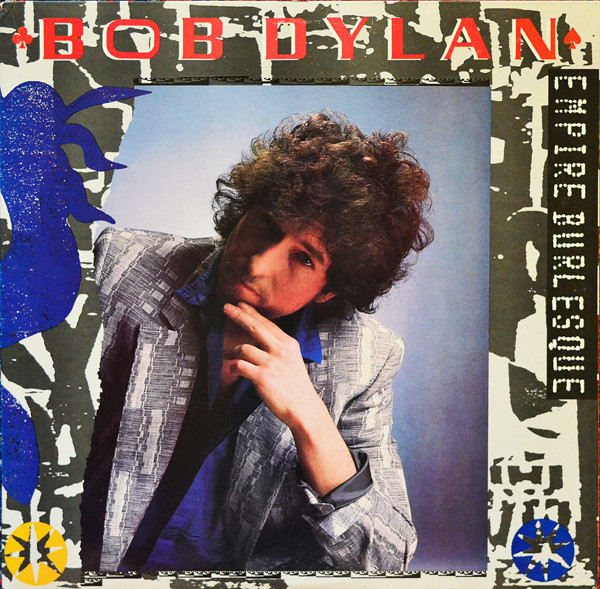
Empire Burlesque has Dylan's clumsy attempt to embrace 80s production techniques in full effect. However, this song eschews gated snares and synths for harmonica and acoustic guitars. Dylan employs his old tools of the trade gloriously. It's tantalizing taste of a road not taken by him in the 80s. 

9. "Silvio"

Down in the Groove is a bad album, but even the worst Dylan albums have a gem or two. "Silvio" is some rollicking fun, a mode Dylan should engage with some more since I always love the results. 

10. "Political World"

Yet another Oh Mercy! track, by far his best album of the decade. This long couldn't be more relevant today. It's about rigged systems and the venal, corrupt operators running the show. It's a testament to this song that it can be a political commentary without losing any of its contemporary relevance. 

Monday, June 21, 2021

Introducing the Summer of Dylan and Lost Highway Series


My summer break has officially begun, and I am now hard at work on various writing projects, including a book chapter and article. (I have come crawling back to academic writing.) When I am doing these kinds of things I tend to have less energy for additional blog posts. HOWEVER I have decided to meld my writing projects and the blog. SYNERGY, BABY!

My book chapter deals with Bob Dylan, and I am pretty darn pleased to do my first piece of academic writing related to my personal interests. To get in the mood I have been doing a deep dive into Dylanalia, and made the decision to listen to all of his albums, in order, this summer. (Thank you, magic of Spotify.) Not only that, I am planning on listening to the relevant Bootleg Series entries in the chronological order of their recording, not release. As I have said on other occasions, the Bootleg Series stuff probably gives the true insights into Dylan's work, the moments behind the mask. As I listen and research I will be making periodic blog posts.

My article is a joint effort dealing with postwar America's fascination with the road. I plan on hitting the road myself this summer as I write, and so will be including travelogues of my own, along with analysis of books and films about the American road trip. The pandemic has been difficult in so many ways, one of the biggest being my inability to travel on the open road. This summer will involve a return to Nebraska and some points in between and I can't wait to share what I find.

The two topics work well together considering Dylan's own love of the road and his Neverending Tour, which hopefully will be able to hit the road again soon as the COVID clouds lift. I've even made an extensive Dylan road mix for when we finally do take to the highway. This past year has been so awful, I am ready to share some joy.

Thursday, May 27, 2021

Bob Dylan's 80th Birthday Dream (New Podcast Episode)

Due to stress I had to wait on putting out a new podcast ep but Bob Dylan's 80th birthday gave me inspiration. This episode of Old Dad's Records is about the first three volumes of the Bootleg Series. This was oddly enough my first Dylan album. I chose 12 songs as a best of and talk about them. When I am done I still do my ritual of raving about new music, in this case Danz CM. 

Wednesday, May 19, 2021

Track of the Week: Bob Dylan "Jokerman"

The 40s are a treacherous decade that nobody warned me about. They've been the biggest moment of emotional volatility I have experienced since my teens. At this point the reality of middle age is inescapable, as is the knowledge that I have failed to achieve the goals I once set out for myself. I have not published my book or made a splash with my writing. Here I am blogging like it's 2005, terminally unhip.

You've got to be strong to get through, and to have an understanding of what's actually important in life. In my case my family and my work as a teacher give my life meaning, even if they don't give me fame and fortune. 

Back in the 80s I remember a lot of ink being spilled over the fact that there were now rock stars in their 40s. That's hardly news these days, but those who grew up with rock and roll had never seen such a thing. Many of those rock stars had their difficult 40s play out in public, only to rebound in the 90s after surviving the painful plunge into middle age. Neil Young is probably the best example. He went from a perplexing run of genre exercises in the 80s to some great records in the 90s like Ragged Glory and Harvest Moon.

Growing up in the 80s only a select few of the geezer rockers crossed my MTV and local hits station radar. I certainly knew the Stones, for instance. Bob Dylan was a mystery to me, however. When he had his spotlight in "We Are the World" he was the one singer whose identity escaped me.

When I first dipped a toe into Dylan fandom in the early 90s I already knew the (correct) conventional wisdom that his 80s output was suboptimal. Even as I have become a more and more devoted Dylanologist, I have pretty much avoided this music. I also knew that for some reason he left some of his best work of the era ("Blind Willie McTell," "Series of Dreams," "Foot of Pride" etc) on the cutting room floor. Did I really need to listen to any of this stuff apart from the bootleg series? I made only one exception, for Oh Mercy.

The other day I finally decided to listen to Infidels, considered to be among the salvageable works of the 80s from Dylan and the first song, "Jokerman," really struck me. It probably marks the point that Dylan's unmistakeable voice became more of a croak, as it's been for 40 years now. It came after his trilogy of Christian albums, one of the more unexpected midlife crises in rock history. 

At first I thought "Jokerman" was slight, but I have been singing its deceptively catchy chorus all day long today. It has a languid beat that's like a cross between reggae and yacht rock, with Mark Knopfler's irresistibly sweet guitar tone floating on the top. Something about it suggests middle class repose, sort of giving up and sitting back and letting life just happen to you. I know the song has all kinds of allegories and metaphors, but I am mostly just lost in the slipstream of its sound, which is perfect for a broken down 45 year old like me. 

Tuesday, November 13, 2018

Old Dad's Records (The Comebacks Episode)


Comebacks is the theme of the newest episode of my podcast. I start with one of the ultimate pop comeback songs, Tina Turner's "What's Love Gotta Do With It." The song certainly reflects the hard times Turner was emerging from, and its middle-aged world-weariness intrigued me as a young boy. From there I pull Elvis' double album From Vegas to Memphis/From Vegas to Memphis from my pile of old records. This is from Elvis' great and all too brief "comeback" period. I finish by discussing a new reissue of sessions from Bob Dylan's Blood On The Tracks, his own "comeback album."

Monday, October 17, 2016

Classic Albums: Bob Dylan Bootleg Series, Volumes 1-3


Last week's announcement of Bob Dylan's Nobel Prize win has put the Bobfather back on my brain. Every couple of years or so I go on a deep Dylan jag where his music dominates my listening habits, and it looks like this win may have started a brand new one. All of this got me thinking about the first Dylan album (in this case, box set) I ever owned.

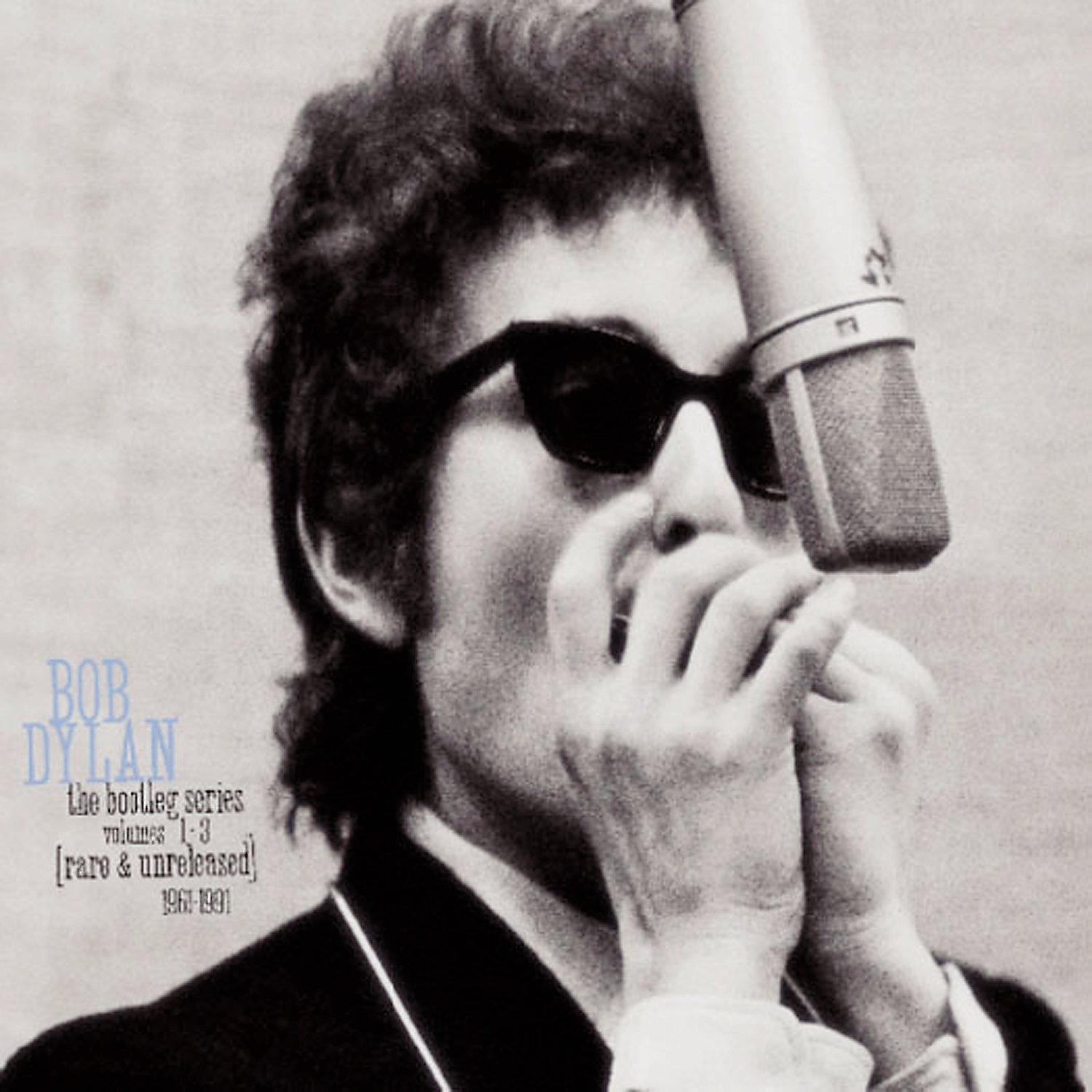
I had never really listened to Dylan when I was a 16 year old in the October of 1991, but I'd heard so much about him, and even checked out Clinton Heylin's biography of him from the local library. I was at the moment where I was discovering music not on the Top 40, but without a guide, other than the occasional issue of Rolling Stone bought at Walgreen's. In a strange bit of serendipity, a record store in a neighboring town was going out of business, with cassette tapes 66% off. I noticed that the just released The Bootleg Series Volumes 1-3 (Rare and Unreleased, 1961-1991) box set was there for the taking for only ten bucks, and I took the plunge. (I also bought my first Replacements album at that same sale. It was a good day.) It was strange to dig into Dylan through cast-offs and B-sides, but looking back on it, the best way to be introduced to him. It meant that when I heard his more famous material, I could put it into a broader context. And even if you happened to listen to his official stuff first, these "bootleg" songs open up an entire world.

Dylan was the first artist to be widely bootlegged, and one of the few this side of Prince whose vaults can yield unending amounts of great material. (Nice try, Beatles Anthology.) The complexity of his words and his studied mask of mystery pretty much impel his fans to know more. The official Bootleg Series, several volumes long by now, emerged more out of necessity than anything else due to how much of Dylan's material was being put out in substandard bootlegs.

The first three volumes were all sold together, but all tell a vastly different story. The first tape or disc takes us only to 1963. This volume tells us the story of Bob Dylan young folksinger, the new Woody Guthrie singing topical songs with a harmonica and a guitar. This is the figure misguidedly canonized by so many hardcore Village folkies, the one they would later call "Judas" for going electric and rock and roll. It starts with "Hard Times In New York Town," about the Minnesota country boy trying to make it in the hard-shouldered urban canyons of Gotham. Volume 1 ends with Dylan at Town Hall, no longer just playing Village coffee houses. It ends on such a fitting note, with a poem dedicated to Woody Guthrie, the man who was the obvious inspiration for this part of Dylan's career. In between there are many gems, including the piano version of "When The Ship Comes In" and "Let Me Die In My Footsteps," perhaps the best song about living with the threat of the Bomb. When I was 16 I listened to this tape the most, mostly because it was the least challenging and most familiar, since my parents were big fans of the poppier acts of the folk boom, like Peter, Paul, and Mary and the like. In any case, topical, finger-pointing songs like "Who Killed Davy Moore?" appealed to a teenager first realizing that he was actually a progressive and not a Republican.

The second volume is the one I later gravitated to, but also the strangest. Whereas the first one captures a specific moment in Dylan's career, the second takes us from 1963 to 1975, from Dylan the edgier folkie to Dylan the electric master of mayhem to the post-motorcycle crash recluse to the reborn artist of Blood On The Tracks. This volume also has precious little from his holy trinity of mid sixties peaks: Bring It All Back Home, Highway 61 Revisited, and Blonde on Blonde. Many of the songs from that period are also incomplete, perhaps reflecting the toll of touring and drugs. There's a weird, minute-long piano waltz version of the epochal "Like A Rolling Stone" that ends with Dylan tiredly announcing "My voice is gone, man." The promising "She's Your Lover Now" comes to a crashing halt. At the same time, there's a great version of "I'll Keep It With Mine," later famously sung by Nico. The songs seem chosen to imply that Dylan's years of quiet were the necessary result of exhaustion.

We get two precious little songs from the famous Basement Tapes, but both grabbed my attention so much when I first heard them that my obsession with what he recorded at Big Pink was born. There's the silly yet catchy "Santa Fe" and a jaw-droppingly beautiful rendition of "I Shall Be Released." From there, things get eclectic, reflecting Dylan's wanderings in the late 60s and early 70s, including the lovely, straight up country song "Wallflower," later put on wax by the great Doug Sahm. After hearing all the rock and folk, the bright country steel guitar on this song is jarring. The second volume ends on a much different note, however, with three songs from the Blood On The Tracks sessions. The version of "Tangled Up In Blue" on here is maybe my favorite, perhaps because you can hear the buttons on Dylan's jacket clanging on the guitar. It's such a great glimpse into his spontaneous recording process, a habit that can drive his collaborators nuts. "Call Letter Blues," which is "Meet Me In The Morning" with different lyrics, lays Dylan's separation from his wife bare. "Children cry for mother/ I tell them mother took a trip." It all ends with "Idiot Wind," completely and utterly different from "Last Thoughts On Woody Guthrie." The youthful hope has curdled into middle-aged bitterness. I love this version so much more than the one on Blood On The Tracks. It's more spare and wistful, less hateful. This version was perhaps too rare and real for the secretive Dylan to show the world. He had to cover up his vulnerability with vitriol.

I made a habit of listening to volume 2 on dark, lonely nights. The first side (remember album sides?) is the sound of a man breaking down in the midst of his career peak. The second is the sound of a man flailing and then hitting an emotional valley only to be shocked into making something great in response. That's an arc you can only get from the Bootleg Series, not from any compilation of Dylan's official recordings. Volume 2 might be the truest single disc picture of Bob Dylan that exists. It is not an album in the traditional sense, but is perhaps more masterfully organized and curated than any other compilation.

Volume 3, I must admit, is the least played of the three, but just as revealing. It starts strong, with songs from Dylan's mid-1970s comeback, including a great live rocking "Seven Days" and the pretty little baseball song "Catfish," about pitcher Jim "Catfish" Hunter. Unfortunately, it then gets into outtakes from Dylan's trilogy of Christian rock albums, and there's nothing here that revealing. His music in that era also imitated the dominant, middle of the road California cocaine rock. The real revelations come in the second half, with a passel of songs from the sessions for 1983's Infidels much stronger than much of what was officially released. "Blind Willie McTell" has become legendary as an example of how Dylan's outtakes in his 80s slough were better than the crap he put on wax. This fact is an enduring topic of conversation, but I think it just shows how bad his judgement had become, how lost he was. In 1991, listening to these songs I thought I was hearing the last gasp of a once great, but spent artist. The last song, "Series of Dreams," had an elegiac quality to it. Perhaps now, after thirty years, the dream is over and Bob Dylan has nothing left to say.

Of course, what I didn't understand then was that the Oh Mercy sessions that birthed that song gave Dylan the spark and confidence he needed to continue after many years of treading water. The great Signs Of Life entry in the Bootleg Series shows a second career beginning at this point, one with its own high points. In a way, the first three volumes of the Bootleg Series tell a story that the hits and well known songs never could. It shows a great artist able to weather two extended low points and still come back with songs just as good as any he wrote in his sixties heyday. If you want to hear the real greatness of Dylan, it's not on the broad interstate highways of "Blowin' In The Wind" and "Like A Rolling Stone," but in the potholed backroads of "Mama, You've Been On My Mind" and "Foot Of Pride." His cast-offs are other people's masterpieces.

Sunday, June 5, 2016

Track of the Week: Bob Dylan "Visions of Johanna"


I just found out today that last month was the fiftieth anniversary of Bob Dylan's landmark Blonde on Blonde album, the capstone to his mid-60s trilogy of artistic peaks, also including Highway 61 Revisited and Bringing It All Back Home.

I came to Blonde on Blonde last, back in the days when you had to buy albums to hear them. It is such a dense work, and one with such a uniquely thrilling sound. Dylan brought organist Al Kooper and guitarist Robbie Robertson with him to Nashville, where a crack group of country session musicians filled out the studio band. That combination of such disparate elements and obvious musical talents really enabled something special to happen.

"Visions Of Johanna" is probably the song that exemplifies this alchemy best. At this point Dylan was writing long songs full of all kinds of poetic imagery and modernist style, even if he would pen the occasional "Just Like A Woman." I've never actually bothered to figure out the "meaning" of this song, I've just contented myself with some of the images, like "the heat pipes cough." There's perhaps none more powerful than "the ghost of electricity/ howls in the bones of her face." That line will enter my head in random moments, no matter how long ago I heard the song.

The sound is really something else, from the spare drums to the prickly harmonica to guitar twanging in the twilight between blues and country to the decidedly un-churchy organ's faint keening. The words and their abstractions somehow fit the sound perfectly. Dylan's infamous motorcycle accident in the summer of 1966 took on mythic proportions, mostly because he would not return to this sound, something I'd bet he would've done anyway, knowing how fast he changes his approach, even to this day. Those who lamented the direction Dylan took after Blonde on Blonde are missing the point. The uniqueness of what he accomplished here makes it all the more special.

Wednesday, September 3, 2014

Geezer Rock of the 1980s

I just finished reading Peter Dogget's exhaustive analysis of David Bowie's work from 1969 to 1980, a period he calls "the long Seventies."  Ending in 1980 is obvious in Bowie's case, since he output since Scary Monsters has a few bright spots, but none of it is as good or as innovative as what he did in his prime.  That reminded me that in the 80s there were a lot of artists from the sixties and seventies that kept right on making music well past their expiration date.  The audience goodwill they had amassed in their primes remained, and people would buy the records and go to the concerts to remember their own glory days.  Since I grew up in the 80s I was unaware of their pasts, and didn't get why their videos were on MTV.  I remember seeing the one for "We Are the World" and when Dylan sang I wondered who the hell that old weirdo with the awful voice was.  (My opinions on the Bobfather have changed, obviously.)

It's strange to think that the forgettable stuff they produced in the 80s is now longer ago than the glory days these artists were still cashing in on back then.  Here's some of the good, bad, and plain ugly of 1980s geezer rock.

The Rolling Stones

In the early 1980s the Rolling Stones had one last flash of brilliance, mostly because the Tattoo You album was made up of songs first essayed during the 70s.  "Start Me Up" is one of their greatest grooves, and "Waiting On a Friend" perhaps their best ballad.  After that, things went downhill fast.  "Undercover of Night" tried to sound relevant with its New Wavey guitar and failed.  That song's album of the same name and Dirty Work were are awful as the pastel suits worn by the band on the cover.  When Steel Wheels came out at the end of the decade everyone acted like it was a return to form when it was in fact a boring piece of crap.  That record was positively brilliant compared to Jagger's self-parodic solo work of the time.

Neil Young

Young put together an amazing run during the sixties and seventies with his solo work, as well as with CSNY and Buffalo Springfield.  Then came the 80s.  He made albums so odd and trading in so many styles (electronica on Trans, rockabilly on Everybody's Rocking, and country on Old Ways) that his record company sued him for not making Neil Young albums.  Somehow Young broke out of his funk and managed to release the all-time great "Keep On Rockin' In the Free World" in 1989 and go on to put out some quality records in the early and mid-1990s.

Bob Dylan

Oh boy did Dylan fall off in the 80s.  The album titles themselves betrayed a lack of vision: Knocked Out Loaded, Down In The Groove, Empire Burlesque, etc.  He began the decade still in his evangelical Christian phase before being mired in a holding pattern in the mid-80s.  He famously did not release the best songs he recorded in the era, like "Foot of Pride" and "Blind Willie McTell," as if he didn't want people to hear what he could really do.  Finally, in 1989, he put out Oh Mercy, an inspired album that he says in his own memoir saved his interest in making music.  "Ring Them Bells" never gets old.

David Bowie

As I mentioned above, Bowie started the decade with a bang, and then suddenly decided that he'd rather be a pop star than an art rocker.  While "Let's Dance" is a great slice of 80s dance pop, his approach led to much diminishing returns, to the point that Never Let Me Down was the album I saw most often in used CD stores in the 1990s.  On the Glass Spider Tour for that album he began each show by being lowered, you guessed it, out of a giant glass spider, which is as tacky as things got in the 1980s.

Rod Stewart

Rod the Mod has been the punchline to a joke for more most people my age, but his early 70s solo output and work with the Faces was truly fantastic, and if you don't agree I'll fight you.  By the late seventies, however, he was cashing in with the endlessly silly "Do Ya Think I'm Sexy."  His 80s output continued that trend, with utter dreck like "Love Touch."  However, in the early 80s Stewart did manage to do a little good with the edgy pop of "Young Turks," which borrowed the New Wave sound without being derivative.  It was the exception to prove the rule.

The Kinks

Of all the geezer bands, The Kinks probably produced the best music in the hairspray decade.  They began in the mid-1960s with some rip-roaring proto-hard rock, and then from Face to Face in 1966 to Muswell Hillbillies in 1972, the Kinks had an amazing run of albums that did not fit any of the prevailing styles of the time.  After that they got lost in a wilderness of lame concept albums before returning with some decent hard rock albums in the late 70s.  In the early 80s they scored their biggest American hit with the fun nostalgia of "Come Dancing."  "Don't Forget to Dance" and "Living on a Thin Line" are great songs.  They ran out of gas afterwards, but it's always good to see a great band squeeze out one last hurrah.

Paul McCartney

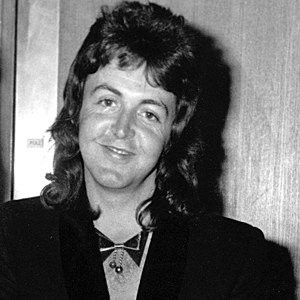
Macca's solo work is easy to malign as treacly and silly, but he put out a lot of good tunes in the seventies amidst the dross.  In the 80s, however, he became a complete and utter cheeseball.  The only misstep on Michael Jackson's Thriller album is his duet with McCartney on the ridiculously frivolous "The Girl Is Mine."  With Give My Regards to Broad Street he managed to produce a film even less inspired than The Magical Mystery Tour.  The soundtrack album contained "No More Lonely Nights," one of the eightiesist songs that ever eightesed.  That's not a compliment.  Through much of the decade he was sporting perhaps the most ridiculous mullet of the era, and that's saying something.

Saturday, February 15, 2014

Track of the Week: Bob Dylan, "Gotta Serve Somebody"


Bob Dylan has made a career confounding critics and frustrating his fans.  In recent days he has done so by figuring prominently in a Chrysler commercial that aired during the Super Bowl.  A couple of years ago he put out a perversely old-fashioned Christmas album, which while not quite on par with him going electric in '65 or country in '69, occasioned plenty of exasperation.

His most surprising and divisive change, however, probably came in the late 1970s, when he started putting out albums full of Christian music, beginning with 1978's Slow Train Coming and ending with .  The music reflected his involvement with the Vineyard Church, which was part of the explosion in the size and influence of non-traditional evangelical Christianity during the 1970s.

The single "Gotta Serve Somebody" boldly announced Dylan's new perspective, wrapping it in a pop package for maximum impact.  Dylan's fans, of course, were not amused.  To this day most view his music from this time as anathema, and voted "Gotta Serve Somebody" his second worst song in an online poll.  For the poet of the sixties counterculture to trade in the apocalyptic imagery and scripture-quoting of a revival preacher was just too much for a lot of people.

Looking back, Dylan's religious period was just a more intense expression of aspects of his art that had been there since the beginning.  Back in his earliest folky days his songs were packed with Biblical references.  "When the Ship Comes In" is the story of the Second Coming, complete with lyrics referencing the drowning of Pharaoh's army and conquest of Goliath.  "A Hard Rain's Gonna Fall" comes across like a piece of Old Testament prophecy.  Later songs in his career, like "Ring Them Bells," brim over with religious imagery.

Seen in this light, "Gotta Serve Somebody" is another "finger-pointing" Dylan song with heavy religious overtones, already common in his work, more pronounced.  What strikes me when I listen to it is the sound, which is as slick as slick can be.  It's got groovy funk and polished production and reminds me powerfully of the blockbuster work of Fleetwood Mac in this same era.  It is a far cry from the more off-the-cuff, thrown together sound you hear on most Dylan recordings.  (For him the song has been much more important than its mechanical reproduction.)  While some of the other material on the album might suffer from this approach, "Gotta Serve Somebody" still sounds great.

The lyrics point to a fundamental truth that exists for all of us, whether we be religious or not.  None of us is the master of our own destiny, and to think otherwise is a delusion.  We spend most of our lives serving somebody or something else, and ought to think long and hard about what it is that we are actually serving.  In this song Dylan proclaims his desire to serve the Lord instead of material things.  I read this as a statement about what really matters in life, and what doesn't, and what it means to live a good, meaningful live.  Even if you're turned off by Dylan's religious overtones, it's still a topic well worth contemplating.