Showing posts with label Lost Highway. Show all posts

Friday, August 6, 2021

Signs (Lost Highway Series)

I recently returned to my road trip out to Nebraska, where my whole family was together for the first time in two years. It was restorative as well as a lot of fun. We got to innertube on the Niobrara River, catch fish with my dad, and enjoy time at a friend's lake cabin.

On this journey I kept my eyes peeled for signs, both physical and metaphorical. I was trying to gauge the mood in Trump Country, or at least its rural Midwestern marches. I saw about a dozen Trump signs/flags/bumper stickers on this trip. Honestly, that's a lot less than I expected. I also however saw two large homemade QAnon signs, one at a farm in Illinois, the other outside Valentine, Nebraska. One was merged with Trump, the latter just read in huge letters "Who is Q?" These for some reason I was not expecting, but should have been. 

This is just anecdotal evidence, of course, but other anecdotal evidence supports my growing thesis that Donald Trump's importance to conservatives is shrinking but the politics he embodies have a stronger hold on conservatism than ever. For example, I went to 7:30 Mass with my parents, and outside of the doors where was a whole table of pamphlets, something I had never seen before. I didn't want to ruin my time with my folks by hectoring them about the stuff people leave at the church, so I only quickly managed to grab a flyer that caught my eye instead of multiple pamphlets, including one discussing the "Luciferian" Masonic ideology. 

Here's the flyer I grabbed:

It caught my eye because I had been reading the local newspaper and the firestorm over proposed changes to the state's sex education curriculum. Lots of things are striking about it. This man is no mere former Marine, but a failed Republican candidate for the Senate. Seeing an event at an evangelical church is something that never would have been promoted in a million years at my Catholic church growing up. Most of all, I was struck how there were claims of the presence of "critical race theory" in sex education, where it didn't seem applicable. Like the ubiquity of "communism" in reactionary rhetoric in the 50s and 60s, "critical race theory" is a free-floating signifier for the conservative fear that nefarious and shadowy forces are out to destroy their way of life. (You could argue this dates back to the discourse around abolition in the 1800s.)

The sex education standards were opposed by school boards and officials around the state, evidently for the crime of teaching children that gender identity, transgender people, and same sex marriages exist. They basically won the battle and the standards have mostly been dropped. This kind of cultural politics is red-meat for post-Trump conservatives. It's not about doing anything to change anyone's material circumstances, only to assure the MAGA majority in these red areas that their cultural values will remain hegemonic and that people they don't like will suffer.

Another way of formulating it is "Don't you dare tell me what to do, but I get to force "those people" what to do." This is how you get people who refuse to comply with masking ordinances and avoid paying their taxes waving the blue line flag, ostensibly showing their support for the state that they otherwise excoriate. They love the police because the police keep "those people" down, and are seen as a force that will always be on their side. Schools and public health officials and anyone with expertise is to be feared and knocked a peg. "Freedom" is not paying taxes and not being beholden to the most basic public health restrictions like masking. Criminalizing abortion and cannabis is not anti-freedom because those thrown in jail are "those people." (Speaking of I did see about a half dozen anti-abortion signs, including one saying "Life begins at conception" but showing a one year old and not a zygote.)

The whole mentality is a frightful combination of consumer capitalism and Herrenvolk nationalism, and it's pretty much become the common sense of forty percent of the country, but in "the Heartland" that proportion gets a lot higher. I enjoyed visiting my hometown and I am proud to call myself a son of Nebraska but every time I go back it feels less and less like the place that made me.

Thursday, July 29, 2021

West (Lost Highway Series)

Today we started our trek back to New Jersey to Nebraska. After some time fishing with my dad this morning, we got as far down the road as Iowa City. This university town has been a perfect place to stop. People take COVID seriously and we had an amazing meal outdoors. College towns are also one of the few places in America designed to be walkable, so it felt good to stretch our feet after six hours in the car.

Iowa City is definitively the Midwest. Just two days ago we were in Valentine, Nebraska, which is definitively the West. My hometown of Hastings lies somewhere in-between, a place I always thought of as Midwestern, but now feels geographically liminal. As a child I thought the West didn't begin until North Platte, 150 miles west. My view was confirmed in high school when I read On the Road and Kerouac (through the character of Sal) described the sudden change in the landscape as farms disappeared and the range opened up. To him the transition was melancholy:

"Tall sullen men watched us go by from false-front buildings; the main street was lined with square box houses. There were immense vistas of the plains beyond every sad street. I felt something different in the air in North Platte, I didn't know what it was. In five minutes I did....'What in the hell is this?' I cried out to Slim. 'This is the beginning of the rangelands, boy. Hand me another drink.'"

People may mock Kerouac's style but this is pretty much spot on. In this trip to the West, as in others, I like Kerouac was struck by its hardness and precariousness. Even my hometown, which puts on airs more than pure West towns, feels like a hard prairie wind could just blow it off of the map. On that broad flat plain under that impossibly big sky you feel like you are being smashed by nature's hammer and anvil. The horribly unpredictable and savage weather only compounds that feeling. I had nightmares growing up about the so-called "Children's Blizzard" in the late 1800s when an unexpected winter storm hit after a warm morning and children were stranded in their one room schoolhouses or froze to death, snowblind, trying to get home. There's a story of two girls at that time near Thedford who went out playing and lost their bearings. One survived, the other died after walking 75 miles. The West is a pitiless place. 

This trip a contrast hit me harder than ever: the West has the nation's most beautiful landscapes and its most atrociously ugly built environment. In the land of majestic mountains, mighty rivers, and breathtaking vistas so many buildings look like they are falling apart. The rest are practical to the point of grotesque. We ate at a metal-sided restaurant one evening in Valentine that felt like a glorified garage. The next night we ate at the best steakhouse in the area, a pricey place nonetheless located in a strip mall with an interior with all the charm of an airplane hanger. The other patrons were dressed like they just rolled out of bed, and this was what passed for fancy eating.

I think this awful built environment is a natural response to living in a place where nature is so powerful and fearsome that any human attempt to alter the landscape seems doomed to failure. No need to bother building nice things, they'll just get blown away. At other times it's a sign of the spiritual failure of the imperialist mission in the far West undertaken by the United States after the Civil War. The civilizers may have ravaged the original inhabitants and taken their land, but couldn't really do much with it. The people they killed and dispossessed had built something more sustainable and were treated with miserable cruelty in response. The Great Plains still feels like a place that has not been fully "settled." Everything is rough-hewn, not built to last. The food is the worst in the country: bland and lacking in variety. People still seem to eat merely to fill the need for calories, reflected a practical place stripped of any higher strivings apart from day to day survival. 

Be that as it may, I still love my Plains homeland. When our car headed west out of Iowa and broke free of the Omaha suburbs the immense sky lifted my heart. Floating down the Niobrara River I felt peace like I hadn't in a long time. Driving through the Sandhills I fell into a kind of mystic trance. The ugly dumpiness of the towns can't erase the sublime beauty of what surrounds them. Can't wait to go back. 

Sunday, June 27, 2021

Myth and Memory in Cooperstown and Woodstock (Lost Highway Series)


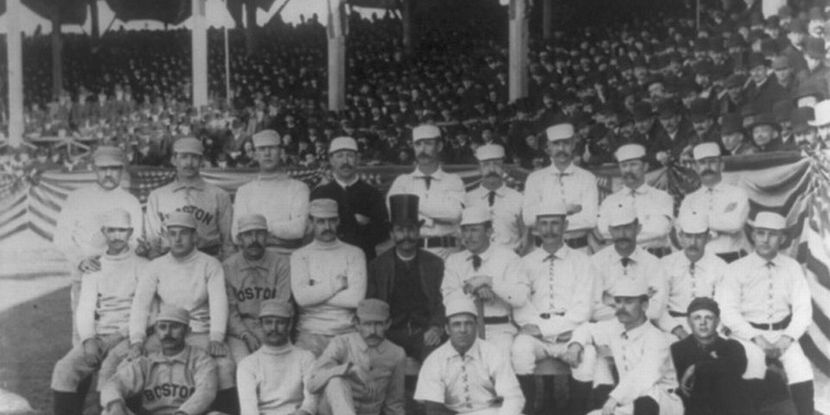
Old Hoss Radbourn giving the finger in this picture is a good allegory for the friction between our myths and historical realities

I am with my parents for the first time since Christmas of 2019. It is a joyous occasion, and keeping with the tradition of their summer visits to New Jersey we took a roadtrip together. Last time we went all the way to Maine. This time we only had three days we could travel, so we took a shorter trip to the Catskills and Cooperstown. Along the way there we made a stop to see some sights along the mighty Hudson up in Catskill, and on the way home went to the site of Woodstock 1969 (not to be confused with the mundane 1994 and catastrophic 1999.) In seeing the museum on that site and the baseball hall of fame in the same weekend I was struck by how both replicated or sometimes denied elements of American mythology. 

Right now we are in a moment of great contestation over the American past and our national identity. The storm and cry over "critical race theory" is based in the intense, burning fear many have that the unproblematic, rah-rah exceptionalist nationalism they were indoctrinated in is just not true. Rather than question their assumptions, they are going insane trying to avoid one moment of contemplation. 

Baseball can easily fit into the exceptionalist narrative, and there's a reason that "baseball, hot dogs, apple pie, and Chevrolet" has been used to sell cars. The supposed genuine American-ness of baseball required a myth, namely that the game was invented by Abner Doubleday in the bucolic rural village of Cooperstown, New York, in 1839. Even if the museum disavows that fabrication in its own displays today, it's still located in Cooperstown. It still passively affirms baseball as a product of rural small-town "real America," not evolved from older games from Britain and reaching its early popularity in its modern form in the growing big cities of the industrial revolution. 

The hall of fame museum does an impressive job of grounding baseball history in its social context and not merely echoing the dominant narratives. It has large exhibits about the women's baseball league, Latin American players, and the Negro Leagues. The almost exclusively white visitors to the museum I witnessed were much less drawn to these exhibits, despite their high quality. Most visitors to the hall are not interested in expanding their understanding of the history of race. 

The hall gives plenty of sugar with the medicine, of course. The new film for the hall gave me goosebumps and almost had me crying. This was partially because many of the players who spoke in it have recently passed (Joe Morgan, Bob Gibson, Hank Aaron, Phil Niekro, Tom Seaver), but also because it jammed in so many glorious moments with the players themselves getting a bit overwhelmed. Even my baseball skeptical daughter was moved by it. There's also of course the hall of plaques itself, the game's Valhalla. 

It was my second time visiting, and it still felt like holy ground to me. My first impulse upon entering was to genuflect. Here, however, the complicated and tangled history of baseball told in the museum disappears. The museum pointed out that the Boston Red Sox were the last team to integrate, in the hall Tom Yawkey, the man behind that shame, is honored with a plaque. Other racist villains called out in the museum like Cap Anson get laudatory words on their plaques in the hall with no mention of the terrible damage they caused. The likes of Effa Manley and Cool Papa Ball were finally included, but their plaques sit uneasy next to those who excluded them. The hall keeps you from questioning any of this as you look at the plaques in awe.

This experience got me thinking about the difficulties in telling a critical history to the public. In the end, the myth is just too damn attractive to leave behind. Baseball fans just want to believe in baseball. That impulse, when applied to larger American history, is hard to fight. 

The solution is thus not smashing all the narratives in a fit of iconoclasm, but to construct new and better narratives. This way of thinking has us replacing Columbus with Pocahontas, Jefferson with Benjamin Banneker, Robert E Lee with Frederick Douglass. 

This process can unfortunately devolve into mythmaking or worse when it turns radical figures of the past into safe symbols of consensus. This has already happened to Martin Luther King, who has been reduced in the minds of most Americans to one line in one speech. I was thinking about this going to the Woodstock museum on the site of the festival.

In the first place, a countercultural event having a museum devoted to it seems wrong. The exhibits themselves at least discussed how Woodstock was really a moment where things that had been "counter" just ended up being mainstream culture. As with the baseball hall of fame, a tension existed between laying out the history and giving the visitors the mythology they craved. The exhibits started with the standard self-serving narrative of "the Boomers lived in a cocoon of postwar prosperity that they rebelled against out of concern for making the world a better place." 

The museum weirdly also tried to present Woodstock as something that was all things to all people. As I gazed around the almost exclusively middle class white clientele gawking at the exhibits in standard issue suburban American clothing I found that conceit to be a cynical way to get the rubes through the turnstiles. The film showed some great musical highlights, including Santana's mind-blowing "Soul Sacrifice." They did not, however, mention the fact that Carlos Santana was tripping on acid and thought his guitar was a snake. That performance would not have been the same without hard drugs, but no need to freak out the squares, man. 

The de-fanging of Woodstock was everywhere. In one of the museum's movies Max Yasgur's son said something to the effect that people were protesting the war but that the American soldiers dying in Vietnam had made the festival possible. This is the usual bullshit when America's most imperialist wars are spun as victories for freedom in America when the poor guys who died in Southeast Asia sadly didn't have any effect positive or negative on the status of freedom in this country. I though of this too when we stopped into a roadside general store nearby for lunch. There was a peace sign American flag hanging outside, but also a POW-MIA flag flying from a flagpole. (If you don't know the pernicious history of the latter read Rick Perlstein's take on it.) The first was to get the tourists in, the second to show that the owners were still good rural "real Americans."

Driving through central New York this weekend I saw quite a few Trump flags and signs and a Confederate flag to boot. The museum's notion that Woodstock made it so the counterculture changed the world seemed laughable. Maybe at the end of the day it was just a different expression of the same individualist ethos that gave rise to someone like Trump. That's hardly the kind of the thing the Woodstock museum would want to cop to.

It's strangely fitting that two such powerful American myths are located less than a hundred miles from each other in upstate New York. It remains to be seen if we can construct a history of ourselves that's capable of being something other than a comforting myth. 

Monday, June 21, 2021

Introducing the Summer of Dylan and Lost Highway Series


My summer break has officially begun, and I am now hard at work on various writing projects, including a book chapter and article. (I have come crawling back to academic writing.) When I am doing these kinds of things I tend to have less energy for additional blog posts. HOWEVER I have decided to meld my writing projects and the blog. SYNERGY, BABY!

My book chapter deals with Bob Dylan, and I am pretty darn pleased to do my first piece of academic writing related to my personal interests. To get in the mood I have been doing a deep dive into Dylanalia, and made the decision to listen to all of his albums, in order, this summer. (Thank you, magic of Spotify.) Not only that, I am planning on listening to the relevant Bootleg Series entries in the chronological order of their recording, not release. As I have said on other occasions, the Bootleg Series stuff probably gives the true insights into Dylan's work, the moments behind the mask. As I listen and research I will be making periodic blog posts.

My article is a joint effort dealing with postwar America's fascination with the road. I plan on hitting the road myself this summer as I write, and so will be including travelogues of my own, along with analysis of books and films about the American road trip. The pandemic has been difficult in so many ways, one of the biggest being my inability to travel on the open road. This summer will involve a return to Nebraska and some points in between and I can't wait to share what I find.

The two topics work well together considering Dylan's own love of the road and his Neverending Tour, which hopefully will be able to hit the road again soon as the COVID clouds lift. I've even made an extensive Dylan road mix for when we finally do take to the highway. This past year has been so awful, I am ready to share some joy.