Showing posts with label Bruce Springsteen. Show all posts

Saturday, September 16, 2023

Catching Up and Thoughts on Rock Geezerdom


The start of the school year had me on the longest hiatus of my blogging career, I think. I have had a ten megaton stress bomb detonated on me and it's been hard to do anything other than just maintain. I have written a couple of things over on Substack, however. One essay gets into the ways that we have failed to reckon with 9/11 and the wars that followed. Another is about how seeing Bruce Springsteen live motivated me for the school year

That was such a fine experience that when Bob Dylan tickets for shows in Jersey this coming November went on sale Friday, I snatched them up. As I have written about before, people my age (born in the mid-70s) have a strange emotional attachment to the music made by the generation before us. It was a product not just of the long Boomer shadow, but of growing up in the 80s corporatization of the radio waves. I could listen to one station and hear "Sussudio," or another and hear "Whole Lotta Love." The choice wasn't hard.

These days it's easy to wonder how long my most beloved geezer rockers will keep running. I bought Springsteen tickets -despite disliking stadium shows- because I wondered if this was my last shot. I am hearing similar rumors about Dylan's upcoming tour. I am also beginning to think I need to find a way to see Neil Young soon, or to finally catch the Stones. 

In recent years I have gone out of my way to listen to new music, and most of what passes through my Spotify is indie stuff by people in their 20s and 30s. While I enjoy seeing new bands live on their way up, seeing the geezer gods live gives me a feeling on a different level. The Springsteen show, for instance, was like a religious experience. I felt the same way when I saw Dylan the day after the 2004 election and he played "It's Alright Ma, I'm Only Bleeding" and sang "Sometimes even the President of the United States must stand naked" with a barbed intonation. 

What I also find interesting is that some of the geezer gods still make great and interesting new music, and others don't. Rough and Rowdy Ways is one of Dylan's best albums, in my opinion. Springsteen's more recent songs did not sound slight when played live next to his oldies. I really enjoyed Paul McCartney's last album, especially how much he experimented. Contrast this with The Rolling Stones, who have not put out an album of new material since 2006. They just put out a single, "Angry," that is, shall we say, suboptimal. It sounds like an outtake from Voodoo Lounge, and very well might be. Mick's posturing is parodic, and the production sounds dated, but not dated to the Stones' heyday. 

It's telling that the video features the young actress Sydney Sweeney dancing beneath images of the Stones' glorious past. The Stones simply aren't allowed to grow old, and self-reflection is anti-thetical to their music. Springsteen's concert was full of references to mortality, aging, and dedications to the departed. I wonder if the next Stones tour will do much to reckon with Charlie Watts' absence. 

I still love those old Stones records, but as I age I have less patience for people who try to fool the world that they are forever young. Springsteen and Dylan have crafted some profound songs in their later years about being old, songs I bet I will keep with me when I reach their current age and they are long gone. Maybe just maybe we can convince Mick and Keef to be a little vulnerable and admit that death's cold hand is soon coming for them, too. 

Sunday, January 26, 2020

Synthy Winter Blues (Newest Old Dad's Records Ep)


I just put up my newest episode of my podcast Old Dad's Records, and I think the hiatus has been good for me. This edition concerns seasonal depression and synthesizer-driven music. This was inspired both by the awful weather, but also how the electronic sound of the 80s has made a comeback. I start with Bruce Springsteen's "Dancing in the Dark," where the Boss himself starting straying from his bar band roots to make music more relevant to MTV. After that I dig through New Order's first EP and talk about how their sound in this period continues to entrance me. I end with a rave for Sui Zhen, a new artist who is taking this sound in bold directions. In between I muse about why people like me loved sad British music in the 80s, and how the alternative music in the 90s was conservative in its love of heavy guitar riffs.

Friday, October 28, 2016

Bruce Springsteen, "Youngstown"


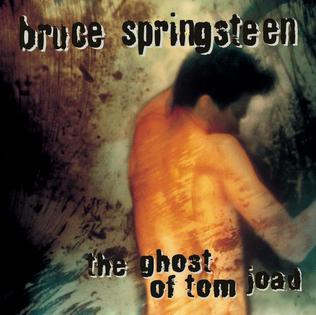
I am currently reading and greatly enjoying Bruce Springsteen's memoir. This has prompted me to do a deep dive into his back catalog, especially albums that I have neglected as of late. One of those records is The Ghost of Tom Joad, a mostly acoustic, political album in the vein of his more famous Nebraska. Ghost came out in 1995, years after the Reagan ascendance that the earlier album decried, but in a nation still marked by its inequities.

Like on Nebraska, Springsteen tells stories from the point of view of the marginalized. There are multiple songs sung from the perspective of undocumented immigrants, and one narrated by a former convict. Of all the songs, "Youngstown" sticks with me the most. The Boss's hometown of Freehold is in the Central Jersey mini-Rust Belt, and while this song references Youngstown specifically, it is a lament for the Rust Belt as a whole. At one point Springsteen speaks of a vast land, from the Monoghahela River to the Masabi Iron Range to Appalachian coal mines, that's facing extinction. He defines the Rust Belt as a nation within a nation, once glorious and now dying.

The tone is ominous, set by a scratchy fiddle, dark synthesizers like black clouds on the horizon, and a steel guitar like the wind blowing through a broken windowpane. Those instruments come in after the first verse, descending like the vultures of deindustrialization. Springsteen talks of the fiery furnaces of Youngstown's steel mills making the cannon balls that won the Civil War, and the steel that built the nation up after. But later its working class boys were sent off to die in Korea and Vietnam, and now the town lies in ruins, forgotten. In the words of the song, "Once I made you rich enough/ rich enough to forget my name."

This election year we've been hearing a lot about Youngstown, as it fits the vision of America that Donald Trump wants to exploit: jobless and resentful. It's a much more complicated place than that, obviously. Before the orange grifter showed up, the Rust Belt had been hurting hard for four decades. Trump's just another rich asshole hoping to rob the people there blind once more. I hope come November they listen to Springsteen, a true son of the Rust Belt, not a phony billionaire.

Sunday, March 27, 2016

Track of the Week: Bruce Springsteen "Atlantic City"


It's not making too many headlines outside of the Garden State, but Atlantic City is in trouble again. The collapse of the casino industry there, hampered by new competition, is driving the city to bankruptcy. Governor Christie is exploiting the situation, withholding aid unless the city puts itself under state control, the kind of thing that has led to poisoned water in Flint and uninhabitable schools in Detroit. Like in the casinos themselves, in modern American life the house always wins, and the regular palooka always loses. Donald Trump famously invested huge in Atlantic City and helped build the reputation he is using to run for president, all the while the people of Atlantic City are seeing their lives fall apart.

The casinos came in the 1970s in an attempt to save a once bustling resort centered around a famous boardwalk. Generations of American families had grown up battling for supremacy over its streets in countless games of Monopoly, perhaps never aware that these were real places. By the early seventies, as the stellar film The King of Marvin Gardens illustrates, Atlantic City had died off as a tourist mecca in the age of interstates and airports. When the casinos came to Atlantic City, gambling was really only legal there and in Nevada. As other, more convenient places closer to the homes of the marks have built casinos, Atlantic City has suffered.

Back in 1982, when Bruce Springsteen recorded his austere Nebraska album, he seemed to grasp the dark lie behind the supposed salvation. The whole record is a document of the harsh reality underneath the "shining city on a hill" rhetoric of the early Reagan years, stories of people on the margins who are losing out. "Atlantic City" hits the listener right away with the lines "Well they blew up the chicken man in Philly last night/ They blew up his house too." This world of casinos and the hopes of easy money is infused with organized crime and assassinations. The character singing the song is desperate, he talks of having "debts that no honest man can pay." As he sings to his lady, he promises her a romantic night out in Atlantic City, and lets her know ominously that he's "met a man and I'm gonna do a little favor for him." It's implied that this desperate character has found his way out by killing someone else for money.

It is a beautiful, dark, haunting song. The harmonica cuts like a cold wind coming in off the ocean whipping the boardwalk, and the mandolin echoes spookily. The key, cryptic lines of the song have always stuck with me "Everything dies baby/ That's a fact/ But maybe everything that dies/ Someday comes back." It could be a cheap justification by this newly minted killer for hire about what he's about to do. It could be fatalism about chucking his soul in the garbage can to do it. Or it could be a comment on the once beautiful city fallen into disrepair hoping to make a comeback. Today it looks like Atlantic City is never coming back. Like the character in the song, it made a dirty deal to save itself, but the bill for that deal has come due.

The leading candidate in one of the major party's for president made so much of his money off of a town that's broke, desperate, and having to beg for mercy from one of his political lackeys. As "Atlantic City" tells us abundantly, that town is a window into the dark heart of the American Dream, and the human cost of its illusions.

Thursday, February 4, 2016

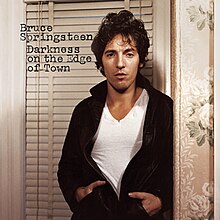
Classic Albums: Bruce Springsteen, Darkness On The Edge Of Town


Listening to Bruce Springsteen's music of the late 1970s and early 1980s, I was always struck at how true it sounded to my small town hometown in rural Nebraska.  I was never sure how that could be, since New Jersey seemed to me a much more urban and less isolated place.  After relocating to the Garden State, I became enamored with Asbury Park, the rough diamond of a Jersey Shore town, half ruins and half gentrification.  On one trip down there we passed through Freehold, Bruce Springsteen's hometown, and it all made sense.  It was a small industrial towns in the central flatlands, of similar size and feel to my own hometown.  Now I understood how the Boss could sing a line like "there's trouble in the heartland" on "Badlands" so convincingly.

When you grow up in a town like that, there really is something mysterious about the darkness on the edge of town.  It's a spooky feeling, knowing that the place you live in is a little oasis in the midst of emptiness, with an outside world out there that just feels so very far away and unattainable.  More than any of his albums except for maybe Nebraska, Darkness explores the convulsions tearing post-war American working class life to shreds in the aftermath of the mid-70s recession and slide into neoliberalism.  The cover says it all.  Springsteen's previous album, Born to Run, has him leaning rakishly on Clarence Clemons, smiling in a classic rock star pose.  This time the lettering is starkly type-written, and Springsteen is standing in front of the kind of cheap blinds and wallpaper I saw many times in the less affluent homes at the dawn of Reagan's America. He looks tired and apprehensive, dressed in a white tee and leather jacket, the old greaser uniform out of time in the Age of Limits.

The album starts with the aforementioned "Badlands," fast-paced and hard rocking, but full of dread.  The narrator of the song speaks of a "head on collision smashing in my guts" and being "caught in a crossfire that I don't understand."  During the summer after my first year of college, I listened to this song over and over again.  I was working the day shift at a rubber parts factory in my hometown, a place that seemed, if possible, even more hostile and forbidding to me after a year away in a place where I actually felt comfortable for a change.  I also was trying to (unsuccessfully) romance a young woman still in high school who was (of course) dating someone else.  (She still obviously liked me, and I wished I had the confidence and finesse to actually tell her how I felt without coming across as a creep.)  As frustrating as it was, I at least had a friend, but I couldn't give up my wish that the badlands would start treating me good.  This song seemed to articulate so much about how I was feeling at the time, and I can't hear it today without thinking about that summer.

After this point on side one, Springsteen gives up the anthemic rocking, and sets sail for some heavy emotional territory.  "Adam Raised A Cain" is most certainly about his contentious relationship with his father, and how you can't escape the pathologies of your parents, no matter how hard you try.  It's a slow, grinding rocker with the optimism of "Born To Run" drained away.  That feeling of being trapped by circumstances is all over this album, and is more pronounced on "Something In The Night."  The guitar drops out, replaced by piano and a Springsteen vocal whose intensity and anger get me every time.  The lines "You're born with nothing and better off that way/ Soon as you got something they send someone to try and take it away."  This is one of the hardest nuggets of working class wisdom on the album, and he sings it with what sounds like complete anguish.  Later songs, like "Glory Days," tell the tale of the bitter reflections of adulthood with an air of fun and wistfulness.  This song refuses to sugarcoat the message that most people are in for a big disappointment and are subject to forces bigger than them out to crush their hopes and dreams into the dust.

Perhaps to keep things from getting too dour, Springsteen follows with "Candy's Room," an electric song about the almost insane, desperate longing of young love.  Considering the album it's on, this testament of love is tinged with a patina of dread, the tempo almost too fast, making the song and the affection feel fragile.  After giving his listeners a dose of the old time Boss religion, Springsteen closes side one with "Racing In The Street," one of the few songs that moves me to tears almost every time I hear it.  The title and the chorus reference the joyous anthem of "Dancing In The Streets," but the joy has been drained out.  The narrator starts by talking about his hobby of drag racing, but it is a hobby that is really his only reason for living after a day of soul-numbing labor.  Whenever I hear it, I can picture a guy leaning on a hot rod smoking a cig in a 7-11 parking lot, watching the sun set and thinking about the night to come.  Things get even darker, as he talks about his "girl," who "Stares off alone into the night/ with eyes of one that just hates for being born."  That line, which so succinctly and poetically describes what it means to lose the will to live, gets me every damn time.  The music itself is so spare and moody, about as far from "Born to Run" as you can get, even if the songs are about the same thing.  This song, like the rest of the album, is an unsparing look at real life, something that rock and roll usually works hard to avoid or provide a distraction from.  Thus ends side one, making the listener think about some heavy shit while getting up to turn the record over.

Side two is not quite as strong, but still fantastic, and starts with a truly amazing song, "The Promised Land."  It sounds like it's sung from the perspective of the narrator of "Racing In The Street," but ten years earlier.  He talks about getting his paycheck and going out, hopeful not just for the weekend, but that someway, somehow, his dreary daily life will be blown away by a righteous whirwind.  The longing for a better life is saturated in hope, and when he sings the immortal line "take a knife and cut this pain from my heart" it's like a prayer, and not nearly as dark as it sounds on paper.  In the week after the 2004 election I listened to this song over and over again, wanting to hope that the insanity and degradation of the political times could somehow be overcome.

After that burst of hope, Springsteen refuses to let the listener off the hook with "Factory," a very straightforward ballad of the soul-crushing nature of factory work.  It's a little heavy-handed, but admirable in completely refusing to engage in any romanticization of the working life.  The message seems to be that the exuberant hopes of "The Promised Land" are just a mirage for working people once they get older.  And it's at this point, that Springsteen decides to give the listener a bit of a break, maybe just to keep the affair from going into full Emile Zola territory.  "Streets of Fire" is a rousing ballad, so much so that it's easy to overlook lyrics like "I'm wandering, a loser down these tracks."  Then comes "Prove It All Night," the one real pop song on the whole album, tellingly the second to last song, which in the album era would tend to be a bit of an orphan.  It's big and bright, like the kind of Top 40-friendly stuff that the Boss would release with greater regularity in the 1980s.  Clarence Clemons' sax finally gets a chance to shine out above the murk, which is a welcome addition.

Unlike most albums, the title song comes last, and it sums up the whole album so well.  There is the hope of a better life, but also the pain of present reality sung over a rising anthem.  The narrator has lost out, and talks about losing his money and his wife, but also that he will "be on that hill with everything that I got...for wanting things that can only be found in the darkness on the edge of town."  That darkness is thrilling, it is illicit and full of possibility.  The message here is that the larger forces of the world are against most people, but that the fight for meaning and dignity can't be stopped. It's a hopeful ending to a stark album, one that seemed to prophesy the horrors of the Reagan years to come.

Sunday, April 27, 2014

Track Of The Week: Bruce Springsteen, "Dancing In The Dark"


Over the last week or so I have been on a big Bruce Springsteen jag, and have listened intensely to albums and songs that I took for granted years ago.  I've been especially struck by "Dancing In The Dark," the first Springsteen song I was ever really aware of.

From the summer of 1984 to the spring of 1986, songs from Born In The USA ruled the airwaves, making the former scruffy poet of Asbury Park into a massive pop star along the lines of Madonna, Michael Jackson, or Prince.  (And not to sound like a bitter old man, but that lineup beats the heck out of what dominates the charts today.)  He gained a lot of new fans in the mainstream who had little idea of his older material, and that was hardly a mistake.  "Dancing In The Dark," which announced Springsteen's presence as a pop star, has all the hallmarks of Top 40 in 1984.  Synthesizers carry the melody, reverby guitar is merely a texture, Clarence Clemons' once brash sax just coos a little at the end, and driving things forward is a propulsive beat from an electronically enhanced snare drum.  The accompanying video made the bid for popularity that much more apparent.  It shows The Boss grinning sillily, dancing around on stage and then bringing a young Courtney Cox out of the audience to cut the rug with him.  This was my first impression of Bruce Springsteen, and had no clue this man was capable of wrenching songs like "The River" and "Highway Patrolman."

It could be easy to listen to this song and think that Springsteen had sold out, but I actually think its sound makes it more subversive.  The musical textures are appropriately bright, but there are lots of dark undertones.  This is a song of hope prompted by complete lonely desperation, beginning with the great, almost frantic lines "I get up in the evening/ and I ain't got nothing to say/ I get home in the morning/ I go to bed feeling the same way/ I ain't nothing but tired/ nothing but tired and bored with myself."  The song's narrator seems to be trying to romance someone, but is losing his cool and just pouring out his emotions because he doesn't have anyone to talk to.  Just because the song has the same jaunty, shiny feel as other 1984 tunes (like say "Tenderness") that doesn't change its dark core.  By taking one of his tales of loneliness but wrapping it in an upbeat sound and drenched with 80s studio magic, Springsteen may have made a subtly subversive song a big hit.

Regardless of how well it's aged, I still enjoy "Dancing In The Dark."  Whenever I listen to this song it reminds me of the times in my life where I've moved alone to a new town, feeling cut off and desperate.  Since I've made these moves either as a graduate student or junior academic, it's also meant being poor and being far away from anyone I know.  It's something I've done way too many times in my life, but thankfully I'll never have to do again.  Listening to this song makes it easy not to feel nostalgia for being young and single, since it's a good reminder of just how miserable that lifestyle could make me.

Friday, March 22, 2013

Classic Music Video of the Week: Bruce Springsteen and the E Street Band, "Rosalita"

My parents are visiting New Jersey from Nebraska, and I have been on a mission to win them over to the Garden State.  This has mostly involved pizza and trips of the many fine Portuguese restaurants here in the Ironbound.  However, I am bursting with excitement over our trip tomorrow to Asbury Park and the shore.  Yes, it still may be cold and windy out there, and Sandy has done her worst, but I can't wait to walk the boardwalk and gaze upon the ocean again.

Asbury Park has really won a place in my heart, since it combines natural beauty with the ghostly ruins and refurbished palaces of its beachfront.  Of course, the real reason I went there for the first time was because it was the adopted hometown and creative inspiration for Bruce Springsteen.  Having spent time there, I finally understood the goofy, having a party vibe of songs like "I'm a Rocker" and "Cadillac Ranch," which seem to co-exist rather uneasily with his sad reports on the decline of working class America in tunes like "The River."  Asbury Park bears the wounds of deindustrialization, but Shore life has a certain devil may care, you only live once attitude.

His first few records are inextricably marked by life on the Shore.  The first is entitled Greetings from Asbury Park, NJ, and the second The Wild, the Innocent, and the E Street Shuffle, has a back photo featuring the band posing in some of Asbury Park's grungier environs.  "Rosalita" appeared on the album, but it only reached full blossom in live performance, as is evident in this video.

The video didn't come out until the 1980s, but was filmed in 1978, before The Boss had been catapulted from stardom into super-duper-stardom.  In the 1980s live performance videos were a common genre, especially with hard rock bands like Def Leppard and Bon Jovi.  They always seemed so self-indulgent to me, and almost always featured live footage set to the studio track, not an actual live performance.  This video, however, is one of the purest expressions of joy I have ever seen.  The people in the audience are having the time of their lives; nubile young women are running up onstage and kissing Springsteen, and Bruce himself has a huge shining smile of pure bliss on his face.  He and the band are clearly having a blast, and don't need tired poses to express themselves.

Musically, "Rosalita" is not one of the best Springsteen songs, but in its live incarnation, it allows a template for the E Street Band to really cut loose and go crazy.  Watching this made me mourn the recent passing of Clarence Clemons once again.  Not only does he blast out his usual array of killer sax riffs, his playful flourishes of the castanets behind Springsteen are absolutely hilarious.  This band, and this song, would not exist if not for that special feeling you can only get on the Shore, which is why I am so excited to go back there tomorrow.