The start of the school year had me on the longest hiatus of my blogging career, I think. I have had a ten megaton stress bomb detonated on me and it's been hard to do anything other than just maintain. I have written a couple of things over on Substack, however. One essay gets into the ways that we have failed to reckon with 9/11 and the wars that followed. Another is about how seeing Bruce Springsteen live motivated me for the school year.
Saturday, September 16, 2023
Catching Up and Thoughts on Rock Geezerdom
The start of the school year had me on the longest hiatus of my blogging career, I think. I have had a ten megaton stress bomb detonated on me and it's been hard to do anything other than just maintain. I have written a couple of things over on Substack, however. One essay gets into the ways that we have failed to reckon with 9/11 and the wars that followed. Another is about how seeing Bruce Springsteen live motivated me for the school year.
Thursday, August 26, 2021
Introducing the "Autumn of Stones" Series
This summer I took it upon myself to listen to every single Bob Dylan album in order (including the Bootleg Series) and write about them on this blog. I enjoyed doing it, and also the conversations that came out of it with readers. With the sad passing of Charlie Watts I have been thinking that the Stones deserve similar treatment. Charlie's death also might mean (based on past statements) the end of the Stones for good. (I say the odds are fifty fifty.) As classic rock seems to be losing the powerful place it held in the popular culture landscape and contemporary rock music is absent from Top 40 stations it would be a good time to reevaluate the legacy of "The Greatest Rock and Roll Band in the World."
I picked up on the Beatles and Monkees while I was still in elementary school, but the Stones were the first vaguely dangerous band I ever became a fan of. (The "dangerous" contemporary bands were all dumb shit hair metal, which I hated.) I heard "Jumping Jack Flash" in middle school and was immediately electrified. Once I could drive I wore out my tape of Hot Rocks in my car stereo. They were also the first legacy band whose back catalog I explored in depth.
One biography of the Stones was called Old Gods Almost Dead. It was published twenty years ago, and now finally the bell may be tolling. At dusk let's go out looking for the owl of Minerva.
Sunday, May 5, 2019
Old Dad's Records 40 (England's Oldest Hitmakers)
Episode #40 of Old Dad's Records is now live. Every tenth episode I try to talk about a cherished record in my collection rather than mining oddities. The news about Mick Jagger's health ailments and the Stones postponing their American tour along with the release of their new compilation had me thinking it was finally time to discuss them in detail on the pod. I start with Devo's cover of "Satisfaction," since shows pretty starkly the evolution of rock music post-punk away from what bands like the Stones were doing. From there I do a deep dive into Beggar's Banquet, the album that started the Stones' golden four album run. Instead of discussing a new song at the end of the episode, I try to defend the band's much-maligned psychedelic period by raving about the song "Citadel" from Their Satanic Majesties Request.
Saturday, April 6, 2019
Rolling Stones, "Salt Of The Earth"
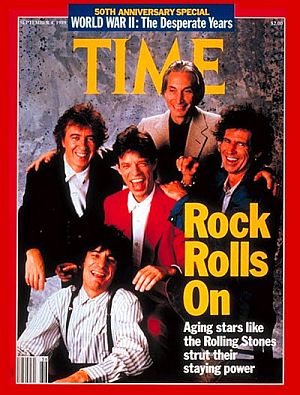
There was a lot of news recently about the Rolling Stones postponing their American tour because Mick Jagger had to get treatment for a heart issue. Despite the man's age, something about it took me aback. Way back in 1989 wags called the Stones' Steel Wheels Tour the Steel Wheelchairs Tour and that was 30 years ago! A friend who saw them back in the 2000s said he was shocked by Jagger's physical exertion and how much he ran about the stage at his age. Even though plenty of elderly rockers have been dying in recent years of old age ailments, rather than heroin overdoses and choking on vomit and the like, in my mind Mick Jagger was still ageless.
I was also struck by my lack of emotion at the news. By contrast, when Johnny Cash died I went into deep mourning. The Stones were such an important component to my musical education, even moreso than Cash, but I just didn't feel anything. In fact, I was kinda put off by the expressions of concern people were putting out there. It felt wrong to be giving well wishes to Mick Jagger, despite his condition.
I think that's down to the image he has crafted of himself over the past 56 years. Like a certain Robert Zimmerman, I suspect that Michael Jagger of Dartford has been completely subsumed by his persona. That persona was of a aristocratic satyr who sought pleasure above all else and seemed to look down with mockery on all social conventions. "Mick Jagger" has for a long time represented a kind of secret wish-fulfillment of less elevated (let's face it) men who can fantasize about a life of decadence. The Mick Jagger persona has no room for sentiment, and hearing people express heartfelt sentiment for him was strikingly off-key.
That got me thinking about the times that the Jagger mask has dropped a bit and some dribs and drabs of humanity have come out. "Salt Of The Earth," which closes out 1968's Beggar's Banquet, is a direct ode to the working class. There really isn't any guile here at all, any sneers or smirks. Perhaps that's why the vocals are so low in the mix. Jagger might have been a little embarrassed to be associated with such pure sentiment.
I'm sure he will be back soon, fronting the band on tour and charging the salt of the earth a king's ransom for tickets. After all these years, I find that thought quite comforting. Realizing that the Stones have little time left means that soon my generation will be in the front ranks when the scythe comes down.
Friday, February 20, 2015
Track of the Week: Rolling Stones "Before They Make Me Run"
Four years ago, in the midst of a rather difficult time, I made the decision to abandon academia and strike out into the world of independent schools. It felt like a risky decision, but being 1500 miles from my wife and working in a dysfunctional environment in an isolated, culturally bereft town was driving me nuts. During that time, a few songs were in heavy rotation in my stereo, and "Before They Make Me Run" was one of them. The chorus just said it all: "I'm gonna walk before they make me run."
It's a song sung by Keith, and he brings his customary tumbledown attitude and sly style, with a lot less affect than Jagger. The character he voices appears to have stumbled in from a Tom Waits tune. He talks of working the "sideshows and bars" of "Route 22" and saying "good-bye to another good friend" who got taken down by all the "booze and pills and powders." Richards' voice as he relates this story can only be described as a drawling sneer, and it's perfect. Musically it moves along well, aided by the fact that Richards, not Bill Wyman, plays bass on it. Based on the other songs where Richards plays that instrument, I'm pretty convinced that he could have been one of rock music's greatest bass players had he not been a guitarist. They song moves and grooves with fluidity, and Ron Wood provides some wonderful slide guitar touches.
"Before They Make Me Run" is one of the last great Stones songs before they turned into an oldies act during the great American Reagan-era cash-in. The funkier groove that Keith and co. seemed to pick up in the polyester decade often seemed wasted on half-baked, tossed off songs, but this tune is a rare exception. In any case, I have a soft spot in my heart for a song that gave me the strength to "find my way to heaven, 'cause I did my time in hell."
Sunday, December 14, 2014
Track of the Week: Rolling Stones "Can You Hear Me Knocking"
As I noted during my track of the week post last week, the great saxophonist Bobby Keys died recently. He was a legend, both as a musician and as a hell raiser. Like other great musicians, he made the people around him better, including The Rolling Stones. I've long thought that the Stones put out their best stuff in the early 1970s, on the Sticky Fingers and Exile on Main Street albums. It was the point at which their musical maturity had come into full flower, but before Richards' junk habit and Jagger's distracting pretensions turned them into the world's most lucrative oldies act.
Bobby Keys is all over those electric records, and there are many examples I could choose from. However, I'll go with "Can You Hear Me Knocking" because he gets an extended sax solo, and really makes the most of it. This is a rare Stones song, in that it is long, and also in that it contains multiple sections that act like different movements. Despite its length, it is an immediate song that hits the listener right across the face, perhaps the reason why Martin Scorsese used it in an epic montage in Casino where Joe Pesci's character goes on a crime spree of epic proportions.
Apart from Keys' great saxophone, this song contains some of Mick Taylor's best guitar work during the long, jammy midsection. It's a testament to the fact that the Stones aren't just Jagger and Richards, and that those two were at their best when working with others at the top of their game. They were lucky to have Bobby Keys, who was one of the best ever.
Wednesday, September 3, 2014
Geezer Rock of the 1980s
It's strange to think that the forgettable stuff they produced in the 80s is now longer ago than the glory days these artists were still cashing in on back then. Here's some of the good, bad, and plain ugly of 1980s geezer rock.
The Rolling Stones
In the early 1980s the Rolling Stones had one last flash of brilliance, mostly because the Tattoo You album was made up of songs first essayed during the 70s. "Start Me Up" is one of their greatest grooves, and "Waiting On a Friend" perhaps their best ballad. After that, things went downhill fast. "Undercover of Night" tried to sound relevant with its New Wavey guitar and failed. That song's album of the same name and Dirty Work were are awful as the pastel suits worn by the band on the cover. When Steel Wheels came out at the end of the decade everyone acted like it was a return to form when it was in fact a boring piece of crap. That record was positively brilliant compared to Jagger's self-parodic solo work of the time.
Neil Young
Young put together an amazing run during the sixties and seventies with his solo work, as well as with CSNY and Buffalo Springfield. Then came the 80s. He made albums so odd and trading in so many styles (electronica on Trans, rockabilly on Everybody's Rocking, and country on Old Ways) that his record company sued him for not making Neil Young albums. Somehow Young broke out of his funk and managed to release the all-time great "Keep On Rockin' In the Free World" in 1989 and go on to put out some quality records in the early and mid-1990s.
Bob Dylan
Oh boy did Dylan fall off in the 80s. The album titles themselves betrayed a lack of vision: Knocked Out Loaded, Down In The Groove, Empire Burlesque, etc. He began the decade still in his evangelical Christian phase before being mired in a holding pattern in the mid-80s. He famously did not release the best songs he recorded in the era, like "Foot of Pride" and "Blind Willie McTell," as if he didn't want people to hear what he could really do. Finally, in 1989, he put out Oh Mercy, an inspired album that he says in his own memoir saved his interest in making music. "Ring Them Bells" never gets old.
David Bowie
As I mentioned above, Bowie started the decade with a bang, and then suddenly decided that he'd rather be a pop star than an art rocker. While "Let's Dance" is a great slice of 80s dance pop, his approach led to much diminishing returns, to the point that Never Let Me Down was the album I saw most often in used CD stores in the 1990s. On the Glass Spider Tour for that album he began each show by being lowered, you guessed it, out of a giant glass spider, which is as tacky as things got in the 1980s.
Rod Stewart
Rod the Mod has been the punchline to a joke for more most people my age, but his early 70s solo output and work with the Faces was truly fantastic, and if you don't agree I'll fight you. By the late seventies, however, he was cashing in with the endlessly silly "Do Ya Think I'm Sexy." His 80s output continued that trend, with utter dreck like "Love Touch." However, in the early 80s Stewart did manage to do a little good with the edgy pop of "Young Turks," which borrowed the New Wave sound without being derivative. It was the exception to prove the rule.
The Kinks
Of all the geezer bands, The Kinks probably produced the best music in the hairspray decade. They began in the mid-1960s with some rip-roaring proto-hard rock, and then from Face to Face in 1966 to Muswell Hillbillies in 1972, the Kinks had an amazing run of albums that did not fit any of the prevailing styles of the time. After that they got lost in a wilderness of lame concept albums before returning with some decent hard rock albums in the late 70s. In the early 80s they scored their biggest American hit with the fun nostalgia of "Come Dancing." "Don't Forget to Dance" and "Living on a Thin Line" are great songs. They ran out of gas afterwards, but it's always good to see a great band squeeze out one last hurrah.
Paul McCartney
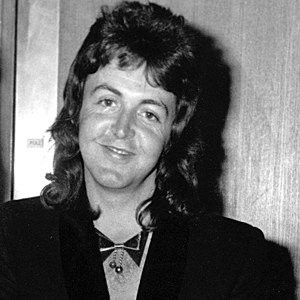
Macca's solo work is easy to malign as treacly and silly, but he put out a lot of good tunes in the seventies amidst the dross. In the 80s, however, he became a complete and utter cheeseball. The only misstep on Michael Jackson's Thriller album is his duet with McCartney on the ridiculously frivolous "The Girl Is Mine." With Give My Regards to Broad Street he managed to produce a film even less inspired than The Magical Mystery Tour. The soundtrack album contained "No More Lonely Nights," one of the eightiesist songs that ever eightesed. That's not a compliment. Through much of the decade he was sporting perhaps the most ridiculous mullet of the era, and that's saying something.
Sunday, June 8, 2014
Track of the Week: Ron Wood, "I Can Feel The Fire"
When I was younger, I never understood why Ron Wood had been the choice to replace Mick Taylor in the Rolling Stones. Taylor's playing provides some of the best moments on Sticky Fingers and Exile on Main Street, by far my two favorite Stones records back then and still to this day. By contrast, I never rated Wood as a guitarist, and always figured he was in the band because he had the right look and was Keith Richards' drinking buddy. The Stones' albums from the mid-70s onward have been almost universally lackluster, so that didn't make me think much of Wood, either.
As I got older and started digging the Faces, I soon learned the error of my ways. Back in the early 1970s there was perhaps no greater rock band in the world, and Ron Wood was a big reason why. The man's slide guitar is simply thrilling on tracks like "Around the Plynth," and he absolutely burns up the frets on "Stay With Me." It was around the time that I was discovering the Faces that my friend Edward played me Wood's first record, the hilariously titled I've Got My Own Album To Do. It is a dig at Rod Stewart, who had begun focusing his attentions on his solo albums rather than with the Faces. (Stewart still contributes to this album, though.)
The album's title is enhanced by its cover, showing Wood looking disheveled and hungover, wearing a rather unfortunate Hawaiian shirt beneath his frayed rooster coif. It's a real case of truth in advertising, since the album takes the Faces' penchant for ragged and spirited rocknroll that makes up in feeling what it lacks in precision. I was lucky enough to find this gem on vinyl at the WFMU Record Fair last weekend, and have been playing it to death since.
There are plenty of good songs, but "I Can Feel The Fire" is a great listen because it would be the best Stones song of the mid-70s if it was an official Stones song. Keith plays guitar and Jagger sings backup, and their mark is all over this thing. It is heavily influenced by the same reggae sounds that also inflected the Rolling Stones' music at the time, but incorporates them much more effectively and skillfully. This does not sound like a rock band playing at reggae, but rather a real gutbucket bar band that can play just about anything and just happens to dig reggae. The guitars are great without being flashy, the melody catchy, and the feel masterful. (It also doesn't hurt to have the great Ian McLagen on organ.) In many ways this is a precursor to the Clash's reggae-inflected numbers, although Joe Strummer would never have copped to it.
"I Can Feel The Fire" makes me a little wistful since it shows what the Stones could have been after their peak, but never were. They did indeed go in new directions (witness the disco of "Miss You" and reggae of "Emotional Rescue"), but rarely with the requisite effort. With Keith messed up smack and Mick distracted from music, Ron Wood's infusion of new blood and yes, fire, could only go so far.
Friday, January 3, 2014
Track of the Week: The Rolling Stones, "Start Me Up"
When I first heard popular music, it was the 70s soft rock and crossover country tapes we had at home: John Denver, Kenny Rogers, The Carpenters, and Tony Orlando. It was in the early 80s that I first became aware of what was on the radio, and began to know what the hits of the day were. The first song I ever remember digging through the radio was "Centerfold" by the J. Geils Band. I seemed to hear it every day on the radio on my way to school in kindergarten (which jives with the fact that it hit #1 in February of 1982.)
Of course, I had no idea of what the song was about, I just loved the catchy riff and the bright organ, an instrument for which I still have an inordinate affection. Back then I also assumed that all the songs I heard on the radio were by new artists. Around the same time, when I heard "Start Me Up," I thought the Rolling Stones were just as young and fresh faced as Rick Springfield or Duran Duran, and had no clue of their past. After all, my older cousin had "Start Me Up" on 45, just as she had Bow Wow Wow and Billy Idol. I always liked the song, which I thought of as the "make a grown man cry" song.
By the mid-1980s I saw the video for "Start Me Up," and found out that these guys were OLD. (They were about my age now in that video. Eek!) It was kinda puzzling, like when I saw Bob Dylan singing in the "We Are The World Video" and thought "who is that weirdo croaking, I want more Lionel Richie." It was perhaps my enthusiastic embrace of the Monkees and their 1986 reunion that made me aware that there was plenty of older music that I actually liked just as much as the stuff coming out of the local hits station.
Little did I know then that I had been just old enough to witness the Stones' last great single in its natural habitat, Top 40 radio (classic rock radio is more like a zoo than the wild.) In 1981, when it hit #2, the Stones had been together for 19 years, churned out several hits, and sold out arenas under the braggadocios banner of being "the greatest rock band in the world." Like I said, I thought they were pretty old and crusty at that point, but they've been together another 33 years, and while they still sell out stadiums, the Stones have not produced a single hit that any of their fans would elevate to the canon. Every few years they put out another album that their fans optimistically call "the best since Tattoo You", the record that spawned "Start Me Up." That's telling, since everyone seems to acknowledge that "Start Me Up" still hasn't been topped, and it doesn't look like it ever will be.
This begs the question, what makes "Start Me Up" so great, anyway? I would point to the groove. After Exile on Main Street in 1972 the Stones put out a lot of mediocre material (1978's Some Girls being the major exception), much of the mediocrity easily attributable to Keith Richards' drug use. (Their suckitude since his cleaning up is mostly the fault of Jagger's heart not being in it, IMHO.) That said, while the songs sucked, many of them had some seriously funky grooves. (The idiotic yet danceable "Emotional Rescue" is a prime example.) It's as if the band finally mastered rhythm, but lost everything else. Someway, somehow, the old standard of songwriting actually got molded to the groove on "Start Me Up," a song that is irresistible both for dancing and singing along to. It is their one last bright shining moment as group, and even if they've been milking their former glory for over three decades, songs like "Start Me Up" are the reason why they can get away with it.
Sunday, May 19, 2013
Track of the Week: The Rolling Stones, "Child of the Moon (rmk)"
What separates the good bands from the great? I would argue that non-album B-sides are the key. These are the ultimate throwaways, songs not worthy of inclusion on an album, and slapped on the back of a 45 so that there's at least something there. A band that has so many good songs that the stuff it releases as its disposable refuse is better than the hits of other artists certainly qualifies as great. Judging by that standard, it is "Child of the Moon (rmk)", not its justly famous A-side ("Jumpin' Jack Flash") that establishes the Rolling Stones' superiority.
"Jumpin' Jack Flash" may very well be the best song in the Stones' catalog, kicking off an amazing run from 1968 to 1972 that has yet to be matched by anyone else. With its killer, no-nonsense riff and funky blues feel, the Stones were also signaling an end to their psychedelic period and all of the phased drums, day-glo outfits, twee lyrics, and harpsichords that came with it. Traditionally, Stones fans and critics have lauded this moment, considering the Stones' foray into psychedelia to be a dire mistake that "Jumpin' Jack Flash" exorcised in a most spectacular way.
While the A-side was a major statement of purpose, the B-side was a wistful look back. The hippy-dippy lyrics, shimmering guitar, and trippy vocals of "Child of the Moon"embody the very psychedelia repudiated on the A-side. It's almost as if the band thought, "let's try this out one last time, and do it right." I have to say, the result is much more interesting and catchy than most of the stuff on their infamous psychedelic record, Their Satanic Majesties Request. Perhaps this forgotten yet brilliant B-side was just a small way to save face, to make the change from flower power to bluesy riff rocking from a position of strength. All I know for sure is that many of the legions of bands that imitate the Stones have been unable to match a song that is essentially a tossed-off relic from a much-maligned musical detour.