Saturday, February 18, 2023
The Crisis We See But Don't Name
Sunday, November 13, 2022
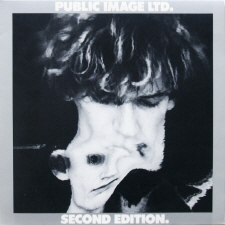
Public Image Ltd, "Swan Lake" (Track of the Week)
Monday, December 14, 2020
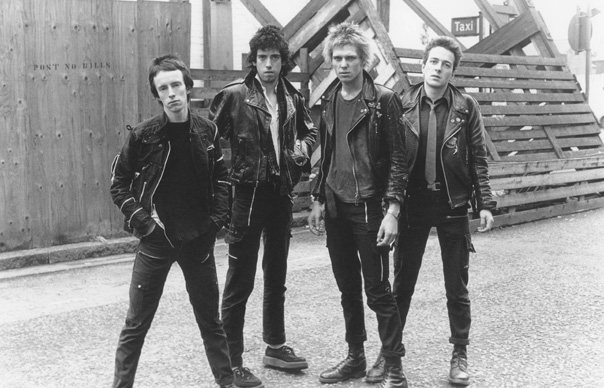
The Clash, "Death or Glory" (Track of the Week)
Today I saw a great article about London Calling on the anniversary of its release and that got me to re-listen to it for the first time in awhile. It's probably in my all time top ten, and was certainly one of the first albums I ever bought that branched out beyond classic rock and 90s alternative music I listened to at the time.
As I listened I slowly realized there was a reason I had put it down for so long. When my friend David and I roomed together in Chicago (one of the most fun years of my life) we listened to this album over and over. Whenever we were back in our favorite bar in Omaha (where he grew up and we both went to college) we'd pop "Death or Glory" onto the juke box. Dave also had a t-shirt of the album cover that I greatly envied. (My Clash shirt was of their first album.)
We were like two peas in a pod back then, about as close as friends could get. It was eight years this month that he died suddenly and unexpectedly. I realized I had unconsciously avoided this album because like some other things we enjoyed together (Army of Darkness, Syd Barrett-era Pink Floyd, and M*A*S*H* reruns included) being exposed to it brings up painful associations.
I guess that makes sense, since London Calling is as rich and sprawling as life itself. Genres explode out of every corner and amalgamate. Stories tumble out too, everything from the Spanish Civil War to the death of Montgomery Clift to the loneliness of suburban supermarkets.
"Death or Glory" is a more conventional rocker, but it is rock stripped of the bravado of youth. It's also cleaner and more direct than the chaotic spittle and crunch of the Clash's earlier punk efforts. "Protex Blue" this ain't. This is a song about what happens to young punks in middle age. "You end up making payments on a sofa or a girl." As the song goes, death or glory becomes just another story.
When Dave and I lived together in our Rogers Park apartment we got to live out the bohemian fantasy of lower-middle class Catholic Nebraska boys in the big city. We had espresso in coffee shops and read philosophy. We went to midnight showings of old cult classics. We drank in dive bars and ate at late night diners and talked big ideas. Neither one of us was all that interested in settling down or living the straight life but he ended up meeting his future wife and we both got accepted into doctoral programs in other cities that year.
Dave died at 36, right on the cusp of middle age. By that time we were both parents and pretty happy about it. "Death or Glory" is still right, though. The dreams of youth got eaten up for both of us. We were both PhDs working outside the academy by that point. If you hang onto those young dreams too tightly they will eat you alive.
It still stings that he and I were not able to grow old together, which is something I had somehow always expected to happen. If middle age has taught me anything, it's that you lose more friends than you pick up after a certain point. I can still pump my fist to The Clash and remember, though.
Wednesday, November 25, 2020
A COVID Thanksgiving Reflection
This Thanksgiving is not one I could have ever anticipated. Back in March when my school went remote I was shocked when the head said we might be remote to the end of the school year. Now I wonder when the next day I teach all of my students in the classroom will come, if it ever will. Sometimes I think of the World War I trench soldiers who thought about the war just going on forever, an eternal hell.
This month has given hope and fear in equal measure. The election and news of successful vaccines has lifted my spirits, but inauguration isn't until January and the drugs have yet to be administered. In the meantime the infection rate has skyrocketed and the winter weather will only make things worse. Millions have decided to have a "normal" Thanksgiving in these circumstances that will probably kill more people than Sturgis did. Your move, Christmas.
In the past week things have been hitting closer to home. The households of friends have been hit by the disease, including in the house literally next door to mine. This feels like the proverbial darkest hour before the dawn. Well, at least I hope there's a dawn.
In the midst of this gloominess comes Thanksgiving, a time of reflection. As I take stock of things, I certainly have plenty to be thankful for. In this time of economic anxiety I still have my job, and my employer has to my estimation done a good job of keeping me safe even though I am going in to school. Because of quarantine I have been able to spend a lot more time with my wife and children, and I am glad for that. During normal work weeks my commute made it so I barely saw them, and that when I did I was either stressed trying to get to work or exhausted coming home from it. I know I am fortunate and am planning on making some donations to help people who have not been as lucky.
I am also feeling thankful on a slightly different level. This week I started reading Thoreau's Walden, a book I had been circling around for almost thirty years. I had heard such conflicting things about it, but in September we took a trip to Cape Cod and I picked up his travelogue of the area at a local bookstore. I found that I really liked his prose style, so often derided by others.
Some books that are assigned to high school students never should be, and Walden is obviously one of them. The issues it raises only become clear once one has gone far into adulthood. At a certain point, usually middle age, most people realize they are no longer becoming the person they will be, but have already become the person they will be for the rest of their lives. This reckoning can be a tough one, and one no teenager on earth can truly comprehend. (And that's to be expected! Let them have their days in the sun because the sun will soon be clouded.)
The question the book forces the reader to ask, again and again, is "What am I doing with my life?" The one true gift the horror of COVID and the boredom of quarantine has given me is the clear knowledge that I am not wasting it. My work as a teacher, especially under the demands of quarantine, is difficult and draining. But it is also meaningful. I know what I am doing makes a positive impact on my students, and the paper shufflers, bureaucrats and salesman that make double and triple my salary really can't say that. All the time with my family has brought home to me that I have made the right choices in my priorities.
When this all started I had a couple of days of deep reflection, wondering if my soul was prepared if my life were to be taken in the pandemic. I have so much more to live for, but if the universe doesn't have that in the cards for me I know I did a lot with the time I managed to eek out. For that, I am thankful.
Sunday, May 24, 2020
Let's Have a Different Memorial Day This Year
Monday, November 11, 2019
Neil Young, "A Journey Through The Past"
This time of year, as late fall fades into winter, has become very tough for me. Six Novembers ago my grandmother died, a person who had been so present in my life I could not really conceive of life without her. Two years ago in early December my aunt Joann passed away. Last November my aunt Kathleen's health started failing, she died this past January. Too many trips home to rural Nebraska in the past few years have been marked by death. Three times I've talked with people I've loved over the phone halfway across the country, knowing in my heart it was the last time I was ever going to hear their voice.
Every morning when I ride the subway to work I can't get over that I grew up in a place so far removed from the world of New York City. It's not anything I could have imagined when I lived there. I love my job and I love my life here, but every now and then I feel like part of myself is missing. A big chunk of my soul is still out there, 1500 miles away, beneath the skies so vast they feel like they could crush all the world beneath them. When I go back to Nebraska I can feel that part of me reawaken.
I don't necessarily want to go back and live there, but living away from there weighs on my soul. It's the paradox of being a self-inflicted exile. Sometimes I fantasize about buying an old Nebraska farmhouse and making it a kind of low rent, countrified summer home. You can have Newport and Martha's Vinyard, I'll take the prairie.
I think I've always liked Neil Young partly because he too grew up in a small town, moved to the big city, but never really left rural Ontario behind. He was never more forthright about this than on "Journey Through the Past." It comes from the haphazard 1973 live album Times Fade Away, such a document of a low point in Young's life that he kept it out of print for decades. While there are decadent tales of junkies like the title song, or cries for help like "Don't Be Denied," "Journey Through The Past" is far more straightforward and sentimental in its emotions.
It's about homecoming as a journey through the past. When you leave where you are from, it's almost as if time stops there. For years I would come home to my old teenage bedroom, the same shelf full of Stephen King novels, the same Rolling Stone cover of Nirvana on my closet door. Even though my room has been made over some, it's still a place where I access feelings and memories that would otherwise disappear from my mind.
However, the people I knew and loved there keep disappearing, and this time of year I spend a lot of time remembering them. I can go back to my old room, but I can't ever talk to them again. So the years go by, the past fading ever more, and the ache that comes each November can't be nourished.
Sunday, September 22, 2019
Existential Dread on a New Jersey Sunday Drive
My children were bouncing off the walls and my spouse needed a break so I took the kids out of the house in that aimless Sunday afternoon kind of way. Today was one of those visually stunning days that also happened to be too damn hot, when the world looks best from inside of an air conditioned car.
This was a tradition back when my kids were toddlers and needed to take a nap and the gentle rocking of the road would lull them to sleep. Now they stay awake, but quietly read books in the back while I listen to my favorite shows on WFMU (that part has stayed the same.)
Today, in honor of the death of Ric Ocasek, the DJ spun "Drive" by The Cars. A chill came over me as I drove the winding Morris Avenue as it wended its way from Summit to Millburn. It's not just that this is one of the most profoundly sad songs allowed on the charts in the dayglo lobotomy of Reagan era America. I had a slight real life connection to Ocasek (not worth discussing here), but also got news that a friend from my time in Texas died suddenly on Friday morning.
For some reason that feeling of dread drifted to thinking about Friday's climate strike. Driving through the sprawl I looked out at the way of life destroying life on earth. What will future generations think of our Sunday drives? Of our pop music reveries while the tailpipe belches poison into the air? I get the feeling that the suburbs of New Jersey will be like Nineveh and Tyre for future generations.
On the way home we ran into a traffic jam at a bridge over the freeway. Evidently a horrible crash left a truck overturned and a car on fire. People from the neighborhood were gathered on the bridge looking at the wreckage below. It seems to have barely made it into the local news. Just another day in our way of being, I guess.
In any case, my kids and I went to the Dairy Queen and enjoyed some ice cream. That made me forget this doomed world and all the people I've lost in recent years for a bit.
Saturday, April 6, 2019
Rolling Stones, "Salt Of The Earth"
There was a lot of news recently about the Rolling Stones postponing their American tour because Mick Jagger had to get treatment for a heart issue. Despite the man's age, something about it took me aback. Way back in 1989 wags called the Stones' Steel Wheels Tour the Steel Wheelchairs Tour and that was 30 years ago! A friend who saw them back in the 2000s said he was shocked by Jagger's physical exertion and how much he ran about the stage at his age. Even though plenty of elderly rockers have been dying in recent years of old age ailments, rather than heroin overdoses and choking on vomit and the like, in my mind Mick Jagger was still ageless.
I was also struck by my lack of emotion at the news. By contrast, when Johnny Cash died I went into deep mourning. The Stones were such an important component to my musical education, even moreso than Cash, but I just didn't feel anything. In fact, I was kinda put off by the expressions of concern people were putting out there. It felt wrong to be giving well wishes to Mick Jagger, despite his condition.
I think that's down to the image he has crafted of himself over the past 56 years. Like a certain Robert Zimmerman, I suspect that Michael Jagger of Dartford has been completely subsumed by his persona. That persona was of a aristocratic satyr who sought pleasure above all else and seemed to look down with mockery on all social conventions. "Mick Jagger" has for a long time represented a kind of secret wish-fulfillment of less elevated (let's face it) men who can fantasize about a life of decadence. The Mick Jagger persona has no room for sentiment, and hearing people express heartfelt sentiment for him was strikingly off-key.
That got me thinking about the times that the Jagger mask has dropped a bit and some dribs and drabs of humanity have come out. "Salt Of The Earth," which closes out 1968's Beggar's Banquet, is a direct ode to the working class. There really isn't any guile here at all, any sneers or smirks. Perhaps that's why the vocals are so low in the mix. Jagger might have been a little embarrassed to be associated with such pure sentiment.
I'm sure he will be back soon, fronting the band on tour and charging the salt of the earth a king's ransom for tickets. After all these years, I find that thought quite comforting. Realizing that the Stones have little time left means that soon my generation will be in the front ranks when the scythe comes down.
Saturday, January 19, 2019
Death, Memory, and Internal Exile
Today I found myself engaging in what is now becoming too familiar a ritual. I called the airline, asked for a bereavement discount, was denied, and used my frequent flyer miles to get a ticket that wouldn't cost my eye teeth. I was a thousand miles short, so I had to spend $80 to get myself over the top. This comes with the territory when you're an internal exile. It doesn't help that my hometown lies 150 west of the nearest airport that I can get a direct flight to, so I will also be having to shell out for a rental car as well.
Despite these headaches I don't have any second thoughts about going. I spent more time with my aunt and her husband and daughter growing up than anyone else in my extended family. They were the only members of that large group (five siblings on each side) to live so close. Tightening the bond my aunt, who was my mom's sister, was married to my dad's brother. (Yes, my family is country. Got a problem with that?)
Many of the Nebraska Cornhuskers' most important 1980s football games were viewed in their living room accompanied by my aunt's delicious chili. I liked visiting her house because they had HBO and unlike my parents, were not opposed to getting takeout for dinner. I have fond memories of going to YMCA basketball practice across the street, then going to their place after before my dad picked me up. My aunt always had a snack to offer or a slice of pizza or taco leftover from the takeout dinner. Regardless of the reason, there was hardly a week that went by when I didn't see her.
I have been thinking about these memories all day today. Their power has been exacerbated by my feelings of exile. Here in New Jersey I live in a town full of Brooklyn refugees talking about gluten free options. I work at a private school in Manhattan that costs more money to attend in a year than I made until I was 33 years old. It's a million miles away from the cheap working class pleasures I used to enjoy so much with my aunt and uncle. I might as well be living in a different country.
This is the feeling I always get when I go back to Nebraska, where it's more and more common for people to treat me as an outsider when I tell them where I live and what I do. Around here in the Northeast my upbringing is a curiosity or an opportunity for someone to say something insulting to me about my background.
That bullshit always prompts me to take more pride in where I came from and cherish the people who raised me there. While I am grieving, I am least looking forward to seeing my family members again in one place. A lot of my cousins like me have left Nebraska and scattered to the four corners of the country. (Quite literally. I've got a cousin in Seattle and one on the Gulf Coast.) I know they'll at least get where I am coming from.
Sunday, December 2, 2018
On Coming of Political Age In The Bush41 Years
It was the absolute high point of the war on drugs, something pushed hard by the Bush administration. The streets of LA burned in 1992 after police officers were acquitted in the Rodney King case. The gang wars related to the drug trade were never bloodier, and the murder rate shot up in this era. The Cold War ended, and the Soviet Union ceased to exist. With the Gulf War, the United States went to full-fledged war for the first time since Vietnam. Soon after, a nasty recession hit.
Ironically, the Gulf War was the event that capped off my political migration from being a nominal Republican due to my parents' affiliation to adopting a much more progressive political stance. Two other Bush-era events put me on this road: the AIDS crisis and the Central Park Five. They both showed the indifference of the government to the mass suffering of marginalized people, as well as the unfairness of the criminal justice system. I had initially been enthusiastic for the Gulf War, but when it was over I wondered whether such horrible loss of life was necessary. The insane jingoism sparked by the war also frightened me. I knew my country had all kinds of problems, and people were willing to forget about them and wave the maniacally flag because of a victory over a third rate power.
The Bush41 years were also very fraught when it came to race, and forced me, as a white teenager living in a very white rural small town, to actually see the racial inequality I wasn't being taught about in school or able to observe around me. There was the War on Drugs, Central Park Five, and Rodney King beating. Above all, there was the infamous Willie Horton ad. By the end of the Bush41 years I was reading Malcolm X's autobiography in study hall and seeing the country of my birth in a new light.
This was a far cry from where I was in 1988, when I was old enough to observe politics but too untutored to understand what I was seeing. I remember George Bush attacking Michael Dukakis for being a liberal, saying the word like a curse. Saturday Night Live did a funny parody of it, imagining a liberal who like Richard Kimble in The Fugitive must keep running from the authorities. I honestly didn't know what the word even meant. I asked an adult what was so bad about being a liberal and the response was basically that liberals were terrible people who believed in taxes and were against religion.
Of course, liberals ended up having the last laugh when Bush lost to Bill Clinton in the 1992 election. The Bush years coincided with what I like the call the Reagan Dusk. The social problems and inequalities exacerbated by neoliberal policies were becoming more stark by 1989. As the Cold War ended there was a feeling that the United States needed to focus more on its own issues. Bush was not equipped to handle the backlash against the world created by his more amiable predecessor. Back in those pre-internet days of 1992 I bought a book called Bushisms that quoted his most maladroit attempts at rhetoric. As far as I could tell, he was a clumsy representative of a failed establishment.
In fact, Bush provided an example to me of how disconnected America's political leaders were from the lived reality of most people. This came through clearest in an famous moment where Bush was captivated by a supermarket checkout scanner. That one incident seemed to encapsulate so much. There was also the time he talked glibly with the press as the American dead from his attack on Panama were coming home to Dover Air Force Base. Perhaps most flagrantly, Bush seemed incapable of empathizing with people who were being hit hard by the recession in the second half of his term. It was slowly dawning on me that the people who ran everything couldn't care less about the people they ruled over.
Popular music certainly reflected the disenchantment so many had with their supposed social betters. Political rap music flourished in that era, from Public Enemy to Ice Cube. "Smells Like Teen Spirit" burst on the scene in late '91 and banished hair metal decadence to the dustbin of history. At the time I really felt like some real change was about to happen. "Change" was the theme of Bill Clinton's campaign, which I fell for hard. Little did I know how soon he would disappoint me.
The other day I was listening to some of my favorite music from the era, a time when I felt very optimistic about the future. The Cold War had ended without a bloodbath. The Reagan-Bush regime had been rejected. My generation, ready for a better world, was coming of age. My funeral this week is for that feeling, which I sadly found to be naive and short-lived.
Sunday, November 12, 2017
The Old Dad's Records Podcast Is Back, Baby!
After a month-long hiatus, I recorded another episode of my podcast. This episode was framed by the fact that an old professor and friend passed away on Friday. This prompted thoughts on death, autumn, war, and what it means to leave friends behind. You know, cheerful stuff! I discuss folk music, specifically Gordon Lightfoot's "Wreck of the Edmund Fitzgerald" and a greatest hits record by Ian and Sylvia. November and winter generally have always been perfect for folk music, as far as I am concerned.
Saturday, September 23, 2017
Requiem For A Dog
In adulthood I learned to be able to barely tolerate dogs since my outright fear was too embarrassing. It was thus an unpleasant surprise ten years ago when I found out that the woman I was wooing long distance had a big dog. (We had met in a third location.) I knew for our relationship to work I would have to be able to deal with the dog, and I wasn't sure if I would be able to.
To my surprise, I fell in love with the dog. She was a border collie-Bernese mountain dog mix, a big furry friendly animal who did not bark or jump. Instead, she would just come up to me and nudge my hand with her snout, encouraging me to give her some attention. Hannah melted my heart and made it possible for me to love dogs, something that I never thought that I would ever be capable of doing.
I'm sure you know the rest of the story. I ended up marrying her owner. After two years in long-distance marriage limbo, I was able to move to New Jersey and live with my wife and our dog. I am not sure how it happened, but at some point the first year I arrived I became the primary dog walker. Every morning the first thing I did was to take Hannah on a walk around our Newark neighborhood. She was a local celebrity, especially when I walked her after work. Little kids would run up and beg to pet her, or look out the windows of their cars and shout "bow wow!" She also made a new improbable friend: my cat Stella. The two kept each other company while my wife and I were out at work, and when I came home neither animal seemed starved for attention.
Hannah was ecstatic to have two parents rather than one. Her nightly ritual was to take a flying leap into our bed and nestle herself between the two of us, despite her sixty pound weight. The next year, that changed in ways I still feel guilty about. As we welcomed two girls into our life, Hannah was now permanently demoted. The first night we had them at home she was at least fiercely protective of the girls. However, as they grew older and started crawling, we had to keep her separate with a baby gate, something that she very obviously resented. I still kept walking her, and would slyly brag to my spouse that Hannah had switched her primary allegiance to me.
At least when our children were a year and a half old we moved out of our Newark apartment into a house. Hannah obviously enjoyed having more space, both indoors and outdoors, but sadly her feline companion died a year later. Her health took a deep dip, to the point that we thought Hannah was going to follow her into the grave. She managed to recover, and my daughters even began to develope a more sympathetic relationship with her.
Unfortunately, Hannah's health went into decline, as your would expect from a old dog. She had issues with incontinence that often frayed my patience and meant some very unpleasant surprises when I came home from work, stressed and exhausted. Some medicine helped with this, but she was not the enthusiastic dog she used to be. Instead of dragging me down the block on our walks, I had to cajole her to get out of the house. Last Thanksgiving I was seriously frightened at her health, but she managed to rebound to give us another year together.
Sluggish but cheerful, I hoped that Hannah was going to see another spring. But it was not to be. On Wednesday, as I was riding the train home from work, my wife let me know that she could suddenly barely stand, and was going into seizures. We both knew it was time. At the vet's office, it was obvious that she felt the same way too. In those horrible minutes of having to wait for the doctor to come in, I just kept petting and petting her, all while her face held the same panting grin that had melted my heart years ago. Her eyes had were now clouded, but she was still the same loving dog I'd known for a decade. I soon gazed into that face for the last time. When we came home we had to tell our daughters the news. One was nonplussed, the other shrieked a shriek of grief and despair that let me know that she understood what death meant, probably for the first time in her young life.
I'm trying not to let those last moments dominate my memory. Today, as the time for our usual late afternoon walk came around, I felt such an absence. I remembered all those walks with Hannah dragging me around. I remember her delighting all the neighborhood kids. I remembered a dog companion who made me capable of loving dogs. I do not think I will be able to love another one the same.
Sunday, May 1, 2016
When I Get Old Let Me Die During Baseball Season
This week I had the sad occasion to attend to funeral of a very closer friend of my wife's family. He was one of those people who was not related by blood, but as much or more a member of the family as any of my wife's blood relatives. He'd been ailing for a long time, but never wavered in his love of the New York Yankees. In fact, it was one of the first things mentioned by the priest in his funeral homily. Although I am a Yankees hater in long standing, he was the kind of Yankees fan I respect: humble and committed. Whenever I saw him (which was often, since he lived next door to my in-laws) I knew that six months out of the year we'd have an easy topic of conversation: baseball. Even if his body was in bad shape and he needed a scooter to get around, he stayed up on his team.
In that respect he reminded me a lot of my dad's grandfather. Living in Nebraska, his connection to the game was more about the game itself, rather than major league team fandom. Back in his day every small town in Nebraska like his (with only 250 people) had a town team, and he evidently played on it well into his 40s, and batted with a unique cross-handed style. He was also instrumental in the moment when my enjoyment of baseball in the abstract became an obsession. In the spring of 1986 when I was 10 he stayed at our house for a couple of weeks while getting some treatments at the hospital. At first I resented this, since my parents gave him my bed and I had to sleep on the living room couch. Very quickly I got over it, and I enjoyed hearing his stories of growing up in rural Missouri in a time when cars were new (he was born in 1903) and life moved at a more deliberate pace.
It seemed every day when I came home from school he would be sitting in the recliner, watching a Cubs game on WGN. (Back then all of the Cubs' home games were still during the day.) He didn't watch because he was a Cubs fan, he watched because he just loved baseball so much. His habit then got me into the habit of watching Cubs games when I came home from school, and soon enough, I was hooked. During the next season I was buried under baseball cards and I would go to my sister's softball games and "call" them in a Harry Caray voice. (Oddly enough I never became a Cubs fan, and stuck with the Royals until my later betrayal.)
Like my wife's family friend, my grandfather died in April, just as baseball was returning. (I have a distinct memory of being sad at my grandfather's passing, then seeing in the paper that Bo Jackson had struck out five times in a game, and wondering why everything in life had to be so terrible.) At the funeral last week I had an odd but intense revelation: if I am so lucky to live to old age, I want to die during baseball season. The rituals of each game will be a calming balm to soothe me as I ready myself for the end. The memories wrapped up in the game, from my walk-off hit in Little League to taking my infant daughters to the ballpark, will be there with each pitch.
Thursday, April 21, 2016
Prince, Memory, And Taping Off Of The Radio
I'm one of the millions of people stunned by the death of Prince today, and I thought I'd add my small voice to the chorus of mourning. His best musical years happened to coincide with my earliest consciousness of popular music. Back in 1982-1984 I started listening to top 40 radio, but the only album I owned was Michael Jackson's Thriller on cassette. I resorted to a practice that kids these know nothing of: taping off of the radio.
In 1984 my parents bought a boom box that enabled me to do this. The tape I made that year seems to have been lost to the sands of time, what I would give to have it back. So many evenings I sat with the radio on, my hand poised on the "record" button so I could get my favorite songs all to myself. When DJs talked over the intro it made me especially angry, because they ruined the song.
On New Year's Eve 1984 Casey Kasem was counting down the top 100 songs of the year, which made it the perfect opportunity for taping off of the radio. My older cousin in high school at the time babysat my sisters and I, and it was her who had cultivated my interest in popular music to begin with. (And she just emailed me as I was writing this. The age we live in now would've been incomprehensible in that 1984 world.) She encouraged our taping habit, and I distinctly remember being happy to have captured Billy Idol's "Eyes Without A Face," a song she especially liked.
Being young kids we had an established bed time, so my cousin promised that she would tape the songs we requested, and that she would tape the entire top five regardless of what was in it. The next morning I listened to the tape intently, and two songs most definitely grabbed me harder than any other: "Let's Go Crazy" and "When Doves Cry." Yeah, I got a kick out of "Footloose" and "Say Say Say," but damn, "Let's Go Crazy" was really something else for me.
It had such a feeling of energy. My sisters and I would go down into the basement of our house and put it on and dance around, hopping and running and laughing maniacally. It was such a fun song, and the lyrics about mortality flew straight over my head. As much as I loved the song, the epic, flaming guitar solo at the end was what I truly adored. It sounded like nothing else on the radio, which by the mid-80s was as homogenized as a stack of Velveeta cheese slices. It's the closest thing to Jimi Hendrix that anyone one else has ever done. It made me hunger for other music that transcendent.
And that was the genius of Prince. He made pop music, but pop music with something strange and beautiful at the heart of it. He could sing soul songs, but then peel off a guitar solo that blew anything that rock guitarists were doing then out of the water. Genres just didn't seem to matter to him. Now we are left in a musical world without him that is much poorer for it. RIP
Friday, January 1, 2016
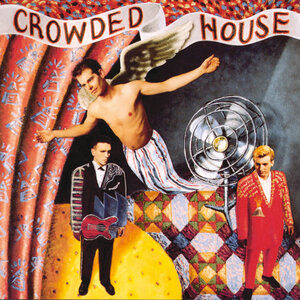
Crowded House "Don't Dream It's Over"
New Year's Eve has long been one of my favorite holidays, and and New Year's Day one of my least favorite. It's the day I realize that the holiday season is over, and that I am about to go back to work with the worst months of the year stretched out before me. In recent years it has become even more difficult because of the deaths of those close to me, and the changing in the calendar reminds me of their loss. The years keep rolling on, and fewer and fewer people are there with me, either due to distance or dying.
I've tried to take time this new year's season to remember those that I've lost. The song I choose for this reflection is always "Don't Dream It's Over" by Crowded House. This might sound like a strange choice, since it's apparently a minor key love song, but I have my reasons. The first person close to me I ever lost was my dad's father, in April of 1987, on Good Friday after a long illness. He and my grandmother lived in a tiny town half an hour away, and I swear every time we drove there over the days after my grandfather's death this song was on the radio. I cannot hear it without thinking about that moment in my life.
I often think about the fact that I was just really getting to know my grandfather as a real person right at the moment he died. The prior year he had stayed at our house for a couple of weeks while getting treatments at the hospital. I was at first resentful of the fact that he was sleeping in my bed, and I was now confined to the couch. I got over that pretty quickly, thankfully. My grandfather would tell me stories, and as a budding history nerd, they blew my mind. He was born in rural Missouri in 1903, and could thus tell me of a time when he surprised to see cars, not just horse drawn carriages, on the roads. He was actually in the train station in Kansas City during an infamous 1933 shootout there between gangsters and the police. More crucially, he wanted to watch baseball every day, and that habit drew me away from the after-school episodes of GI Joe and towards Cubs games on WGN. My life would never be the same again.
But I never really had the chance to talk baseball with him, even though he lit the spark for my more serious interest in the game. I watched the '86 World Series intently, and when the 1987 season began I was buying Topps cards like a maniac and checking the daily baseball scores, but he was already in the hospital for good. I still remember a day, maybe the day of his funeral or the day after, sitting disconsolately on my grandparents' couch in their always underlit, cramped and cluttered living room while looking at the sports page of the Omaha World-Herald and seeing that Bo Jackson, the Royals' great new hope, had struck out five times in his last game. (Based on my research, this was apparently on April 18, 1987.) That made a truly rotten day feel even worse. As I sat on the couch, despondent, my sweet Aunt S. came over to ask if I was all right, and I think I talked about Bo Jackson as a way to deflect the depths of my sadness over my grandfather's passing.
I was talking to my parents on the phone tonight, and my dad retold the story of how my grandfather loved baseball so much that he played on the town team (back when every little town had its own amateur teams) well into middle age, and used an unorthodox cross-handed hitting style to great effect. For some reason my hands instinctually want to grip a baseball bat that way. It's my grandfather's blood talking to me.
What I would give to be able to talk to him again. Listening to this song is the closest I can get.
Thursday, October 30, 2014
Ode to a Cat
My cat Stella had been ill for two months before dying next to me yesterday morning. She went from being sick the day before to suddenly being barely able to stand up. At that point I knew her time was short, and I stayed with her all through the night before she finally gave up her hold on life just before the break of day.
She didn't let go lightly, Stella was always a tenacious cat. She survived being orphaned on the streets as a kitten, when I was lucky enough to meet her acquaintance at an animal shelter back in January of 2007. I had just moved to Michigan back in August to take my first job out of graduate school as a visiting assistant professor. While I liked the town well enough, I was living alone for the first time years and feeling isolated in the depths of a typically hopeless Michigan winter. For a long time I'd wanted a cat of my own (my family had them growing up), but the life of a young scholar is certain, and I wanted to wait until I lived a more settled life. It soon became apparent to me that a settled life would be long in coming.
I still remember our first meeting like it was yesterday. I had first seen her in a plexiglass cage, her orange, black and white back against the wall while she slept. I had not picked her to be one of the cats to meet, but a person at the shelter thought I should give Stella a go. Sometimes I think of how easy it would have been to not have had her in my life, I could just as easily taken another cat home with me. They brought me into a little side room with a table and chair, then brought Stella in. She was little and sprightly, prancing about the room, then running up to rub her face on my hand. Her kittenish exuberance brought a smile to my face, and we made an immediate connection.
It was extremely hard yesterday to keep that image out of my head, and painful to contemplate when gazing on her lifeless, emaciated body, and more painful still as I dug a deep hole in the flower bed to bury her in. She had always been a very healthy and robust cat, active and avoiding the fattening that many cats undergo in their middle age. This made her mystery illness that much more shocking. During the first few years we had together her exuberance and desire for play was often exasperating. She used to demand to chase string on a stick until she collapsed, her sides heaving. She would complete flying backflips, and if I was trying to work instead of play with her, she would calmly put her front paws on the small of my back and subtly dig her claws into the most tender spot.
Unlike so many other cats, she could handle travel and life transitions. She made trips with me from Michigan and Texas to New Jersey on multiple occasions, including by car. During our time together we moved from Michigan to Texas, Texas to Newark, and Newark finally to Maplewood. She was so happy in our new house, since it gave her the top floor as her turf and more territory than she had in our old apartment, where the dog was loathe to cede any ground. She was with me every day in one of the most unpredictable periods of my life, where in the space of less than eight years I went from being a newly minted PhD on the contingent track to being an assistant professor to being married to leaving the academy to becoming a father. During those long nights in Michigan and Texas when I wondered if I had wasted my life and potential, she was always there for me. On those mornings when my serotonin levels dipped dangerously low and couldn't get out of bed, she would hop up and playfully bat my nose until I succumbed and got up.
I always figured I'd get eight more years with her, but life just isn't fair. I don't know if I will ever get another cat, if only because I never want to feel this kind of pain again.
Sunday, October 12, 2014
Track of the Week: The Kinks "Days"
The period from September until the end of the calendar year has long been my favorite. It combines the excitement of a new school year (before I inevitably start to lose energy around February) with my favorite holidays and cooler weather before it gets wearying and depressing (usually in mid-January.) Unfortunately, in recent years this season has brought the death of someone close to me. Last year it was my grandmother, the year before one of my best friends, a couple of years before that my wife's grandfather. This year my cat has been ailing, and after an emergency trip to the doctor last week, I took her home with the knowledge that she does not have much time left.
I've had her for almost eight years. I adopted her in the dead of my first winter in Michigan, where I was working as a visiting assistant professor. I had lived with other people all through grad school, and was not adjusting well to living alone, especially amidst Michigan's punishing cold and lack of sunshine. For the four and a half years that I continued to live alone, my cat was my one daily companion, and a loving one at that. She came with me to my tenure-track job in Texas, and then again with me to live with my wife in New Jersey. We have been through a lot together. She was a comforting presence during yearly bouts with the academic job market and some of the lowest points in my life. There were days when my alarm would go off and I had practically no desire to get out of bed. She would playfully mew and bat at my face until I got up, mostly because she wanted a drink of water from the sink, but it helped me survive some depressive troughs. Since those days she's been remarkably tolerant of my daughters and has learned to live with my wife's dog. Right now I am just trying to make her last days as pleasant as I can.
Pop music, like most of our culture, doesn't deal well with death. The best pop song about losing a loved one is actually more literally about heartbreak after the end of a long relationship. That said, "Days" by The Kinks has such fitting lyrics for mourning a friend. "I thank you for the days/ Those sacred days you gave me" and "And though you're gone/ You're with me every single day believe me" describe my feelings about my dear friend David's untimely death and the loss of my grandmother. It's a modest little song that's not musically distinct, but over the years, as I have sadly lost many near to my heart, it has meant more than just about any other song. So much so that I find it difficult to put my thoughts into words, and beg that you just sit down and listen to it. As the song says, 'The night is dark and only brings sorrow anyway."
Sunday, November 17, 2013
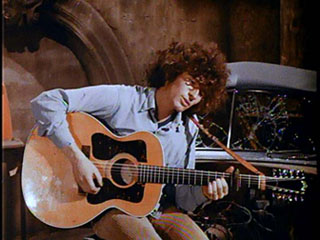
Track of the Week: Tim Buckley, "Song To The Siren"
I made it back from my grandmother's funeral in Nebraska today after many flight delays and the fun that is bringing twin toddlers on an airplane for a few hours. I was lucky enough to see many family members I hadn't seen in years this weekend, and I hope that we can get together outside of funerals soon.
Perhaps it was because my children were such a distraction that the true torrent of grief didn't start coming out of me until tonight. It is not easy to face the passing of a person who I loved so dearly and who played such an important role in my life. At times like these, I turn to the balm of bourbon and sad music, as I am right now, up too late on a Sunday night, unable to sleep.
Tim Buckley crafted some beautiful songs in his day, but perhaps none more so than "Song To The Siren." It is a song that always stops me dead in my tracks, and demands to be listened to with full attention. The Larry Beckett lyrics are, as usual, poetic and resistant to easy interpretation. One could read it as a lamentation about giving oneself over to love, and it all ending in pain and devastation. I hear it differently, as an acceptance of death's embrace. We all eventually have to go to sail to that undiscovered country on the far shore, a fact that is on my mind a lot this week.
Thursday, November 14, 2013
Dedicated to Grandma
***
Thursday, November 7, 2013
Death's Dominion and The Consolation of Country Gospel
So many people are trying to tell me that she is in a better place, but I am having a hard time believing it. Even the most religiously devout fight death to the last; I am not sure anyone has absolute confidence in the afterlife. There is a burning animal instinct in us to stay alive that overpowers the stories we try to tell ourselves about salvation and eternal life.
But I will try to respect my grandma by thinking of her in that "better place," no matter how deeply I doubt it. I've been listening to some country gospel music for comfort, and even if I don't actually feel the old time religion in my soul, this music is a powerful salve. During the times when I hope there is something else, these are the songs that stoke my faint faith when confronted with the death of someone I love:
"Wayfaring Stranger," Neko Case
Her voice is so powerful, one of the greatest that we have, and she really wraps it around this gospel chestnut.
"Lord, I'm Ready to Go Home," The Louvin Brothers
The Louvin Brothers' harmonies were never so erie and spine-tingling as on this song, where an old man readies himself for death.
"Dust on Mother's Bible," Buck Owens
Buck's warm voice wrings about as much pathos as he can from this song about the dusty Bible that remains once his mother is gone.
"I Saw the Light," Hank Williams
It's hard to buy a song about leaving sin for the straight and narrow when it comes out of the mouth of a horse tranquilizer popper who died in the back of a car on a way to a show. Then again, it makes the conversion narrative that much more believable.
"Can The Circle Be Unbroken," The Carter Family
Might as well go all the way back to the original country music group. This song about a funeral has one of the most hopeful, uplifting choruses of any song. Even if I can't muster confidence that there's a "better world a waiting in the sky," it still moves me.


.jpg)