My newest Substack is about the recently deceased Pope Benedict. I very much disagreed with his leadership of the church, but he ended his tenure as pope by doing something admirable: he quit. I wish more of our failed leaders had that courage.
Showing posts with label religion. Show all posts
Showing posts with label religion. Show all posts
Saturday, January 7, 2023

Thursday, October 20, 2022
It's the Silence of God, Charlie Brown

I was bummed to hear that It's the Great Pumpkin, Charlie Brown would not be getting a live TV airing this year. Perhaps it's my dumb old man nostalgia talking, but it was always my favorite of all the holiday specials on TV when I was growing up. In those pre-streaming days they were true appointment television, and this special was one of the first things my family taped off of TV onto our brand new VCR. It also inspired thoughts much more intense than the usual holiday special fare.
The Great Pumpkin special came out in 1966, in the midst of a cultural moment where many speculated that traditional notions of God had outlived themselves. Time magazine, hardly a radical outfit, put our their infamous "Is God Dead?" cover that same year.

Like Bergman, The Great Pumpkin contemplates God's silence. Linus is a true believer surrounded by doubters who mock his steadfast faith. In fact, their mockery only strengthens his belief. He goes out into the pumpkin patch, eagerly awaiting the Great Pumpkin's arrival, even fainting when he mistakenly believes it has arrived. When comes to, he finds out it was just Snoopy. His deity has refused to give him a sign, or to requit Linus' devotion.
However, his faith is not shaken. The next day Charlie Brown tries to comfort Linus by saying we've all done stupid things, causing him to explode in anger. How dare Charlie Brown call his belief "stupid"! His response to God's silence is thus to pray that much harder.
I've never known quite what to think of Linus in this moment. Yes, he is being obstinate and silly, but his devotion to his principles is admirable. After all, the Great Pumpkin will only reward the most "sincere" pumpkin patch, and Linus is wholly sincere.
We live in a scary and seemingly senseless world. It is hard to maintain belief in anything in the face of our world's all-consuming cynicism. In the face of injustice, humanity cries to the heavens for assistance, but it does not come. At the same time, letting cynicism win ensures that nothing will be able to change. Maybe Linus sitting fruitlessly in the pumpkin patch isn't so laughable. In this broken world cut adrift from divine assistance, we could all use a little sincerity.
Wednesday, February 24, 2021
COVID Lent
Last Tuesday we had a proper Mardi Gras in my house. My wife made a king cake and we danced around to Professor Longhair and Dr John. My kids donned beads and joined in on the fun. It was just the kind of break that we needed from a crushing daily routine that involves my wife and I having to leave our homes for our jobs while our children's school has yet to re-open. We've spent a year having to work several more hours a week at our reinvented jobs while acting as de facto teacher's aides for our kids. All the usual outlets on the weekend have been closed off to us this whole time.
That's why I even surprised myself by leaning into Lent this year. Loyal readers know I have a complicated relationship to the Roman Catholic faith of my upbringing. Regardless of how I feel about doctrines and institutions, however, a part of my soul still REQUIRES me to take Lent seriously. This year I decided to give up alcohol (my idea) and yelling at my kids (their idea.) I tried helplessly to explain to them that giving up the former will make giving up the latter much harder.
It feels strange to lean into Lent because we have been living in Lent since last March. So much has been given up and sacrificed. The clarity that comes with Lenten sacrifice has been bestowed on me in abundance this past year. I have received many a lesson in what matters and what does not matter in this life. I have spent months preparing for a new Easter where I can slough off the hairshirt and live the more fulfilled, purposeful life I know I am ready to have once the burdens of COVID have ceased. That end is in sight. This Saturday I am getting my second shot of vaccine. The transmission rates are trending down. Spring is coming.
So why all the Lenten sacrifice? Because all of what I have learned about what matters has ultimately taught me that the more distractions I eliminate, the better off I will be. I can't control the pandemic, the political situation, my children's school's policies, my employer's demands, or much else. Alcohol is an easy way to put a wall between myself and reality. It has been a very helpful wall in my adult life, especially in the last four years. Now it's time to stop building walls, to face the world straight, and yes, sober.
I am preparing my soul for the life beyond pandemic, and pushing myself to fulfill the promises I have made to myself. As the past year has painfully illustrated, there's only so much life to go around.
Thursday, May 16, 2019
Lessons From Living in the Anti-Abortion Bubble
Citizen Ruth, by my fellow Nebraskan Alexander Payne, seems more relevant than ever
I grew up in a very devoutly Catholic family in small-town Nebraska in the 1980s and early 1990s. I heard about abortion constantly from a very young age, it might have been the first political issue I was even really aware of. The first time I ever participated in a political protest was holding an "Abortion Kills Children" sign as part of one of the nationwide protest days (not sure which, but it was on a Sunday.) I participated in this event multiple times.
I was an altar boy who for a time thought about going for the priesthood, and was a member of Catholic youth groups in high school. My experience in the church was very positive, so I was primed to accept its line on abortion uncritically. Most of the congregants of the church were, like me of German ancestry. After the world wars our forebears had chosen complete assimilation to avoid having their patriotism questioned. This meant that the local cuisine was drained of any of its ethnic flavor, and that the brand of Catholicism was especially zealous. In other communities in America being Catholic is part of being Irish, Italian, Mexican, etc. Where I am from being Catholic is part of being Catholic.
The one and only political commitment demanded of this brand of Catholicism was opposition to abortion. There was not a month that went by when it did not make its way into the priest's sermons. The church bulletin boards always had information about anti-abortion organizations. Abortion was really the one and only time we were ever asked as Catholics to apply our faith to society. Jesus' exhortations to protect the most vulnerable among us were often interpreted to mean that we were demanded by God to defend "the unborn." (This had the added effect of not challenging the congregants on their support for the Reagan era assault on the poor.) After being told this message every week for years from the mouths of some of the people in my life that I trusted the most, it's no wonder I found myself carrying signs in anti-abortion protests.
My views have changed a lot since then, but I think my experience in the bubble might shed some light on the recent wave of draconian laws outlawing abortion across the country that I hope can aid in fighting back.
The first thing to understand is that the anti-abortion movement bears some similarities to the NRA. In both cases the majority of the country does not agree with the goals of these groups. Banning abortions outright and lifting all restrictions on guns are very unpopular positions. However, both movements have captured one of the major parties, which means that Republicans who are not really anti-abortion in their hearts (or who even ask their mistresses to get them) will vote for the most extreme abortion restrictions to maintain the support of the large group of one-issue voters.
The pro-gun and anti-abortion movements are also similar in that while they are a minority, their members care a LOT more about these issues than the people in favor of legalized abortion and gun control. There's obviously a strong pro-choice movement out there, but few people who agree with legalized abortion are part of it. The anti-abortion movement also benefits from the mobilization resources possessed by churches. In order to push this movement back, the silent majority of those in favor of choice needs to be mobilized with equal fervor, because those on the pro-life side never rest.
Having grown up in that milieu, I understand why. If someone really and truly believes that an abortion is tantamount to murder, and that God himself demands that something must be done about it, it is extremely hard for them not to put everything they've got into this issue. Some folks on the other side make the mistake of assuming that the cynical exploitation of these beliefs by conservative politicians means that pro-lifers don't really believe that they are stopping genocide, but I can assure you that they definitely do. There really isn't any point to changing anyone's mind, the real issue is getting that aforementioned silent majority engaged. Once the Republican party has to pay a price for its abortion position, it will go back to treating it as a matter of conscience among its members as opposed to a core priority.
While the belief that abortion equals murder among pro-lifers is a sincere one, the issue does indeed carry symbolic weight. If you come to my home region, you will notice that there are anti-abortion signs everywhere, unlike any other political issue. On my last trip back I got to thinking about this, and I think this tendency, along with the local churches' emphasis on it, demonstrates that abortion is a general proxy for traditional society. In the places where anti-abortion feeling is the hottest, there is also anxiety about the loss of "traditional values." This was a common refrain in church, but the one specific political issue this always seemed to land on was abortion. It stood in for anxieties about the nuclear family, women's sexuality, and women's liberation in general. It was about more than "controlling women's bodies" because women who were committed to traditional values were the staunchest supporters of the pro-life movement in my community. (You could call this the Schlafly Effect.)
However, it is not merely a political issue. Like guns, it is embedded in the very IDENTITY of those who call themselves "pro-life." This means fighting back against this determined minority is going to be tough, but the only way to do it is with a fight. The other side is not going to rest, nor or they going to change their minds.
Sunday, November 18, 2018
Trumpism And The Enchanted World Of Christian Conservatives

My confirmation saint kicking demon butt
When I was first grappling with history on a more serious level as a grad student, one concept that fascinated me was supposed "disenchantment of the world" that followed the Enlightenment in Europe. While most people still believed in God and had some nominal connection with religion, they were far less apt to see supernatural forces at work in the world. For example, French churches stopped ringing bells during thunderstorms as a way to call down God's protection on farmers' crops. Unfortunate events were no longer blamed on demons or witches.
Part of the reason this fascinated me is that I knew a lot of people who still believed in an enchanted world. My family's home Catholic parish is St. Michael's, and at some point in my youth it became a tradition to say this rather shockingly superstitious prayer at the end of each mass:
"St. Michael the Archangel,
defend us in battle.
Be our defense against the wickedness and snares of the Devil.
May God rebuke him, we humbly pray,
and do thou,
O Prince of the heavenly hosts,
by the power of God,
thrust into hell Satan,
and all the evil spirits,
who prowl about the world
seeking the ruin of souls. Amen"
This vision of angels and demons fighting over the world in a time post-space travel might seem insanely anachronistic to most people, but this is the mental frame of a great many Christian conservatives, both Protestant and Catholic. Just yesterday, for instance, there was a minor Twitter kerfuffle over conservative commentator Rod Dreher discussing a friend's exorcism. Plenty of folks were shocked that a person could believe in such things and still be taken seriously as a thinker, but I was not surprised. I grew up hearing stories of being helped by Good Samaritans after having been stranded on the road, and the story-teller assuming it was actually angels in disguise doing the good work. I once heard Hurricane Katrina described as God's punishment on a sinful city.
Those who believe in an enchanted world take that mentality with them into politics. It tends to mean a much greater willingness to accept outlandish interpretations of reality, since they are already well-practiced in it. Someone who thinks demons stalk the earth is much more likely to see the "caravan" as a horrifying threat. Supernatural and irrational forces explain everything to them, and if you combine that mentality with a generally bigoted and racist mindset it's like dumping bleach into a bucket of ammonia. This is especially evident in the Soros conspiracy theories, which feed on an anti-Semitism so rooted in the mentalities of certain devout Christians that they are not even really aware that they are anti-Semitic (i.e. seeing wishes for Jews to be converted to be a wholly benevolent thing and not understanding when it upsets people.) Take that prejudice and combine it with the notion that demons are prowling the earth and you will have a highly effective propaganda tool, as Republicans have discovered.
When Trump's approval is broken down by church attendance, Trump always comes out best among those who attend church on a weekly basis. (Here's just one example.) I think this is probably a better metric of understanding Trump's appeal than breaking it down by denomination, since the prevalence of white evangelicals in the South means (as far as I am concerned) that the religious connection there owes a good deal to a regional one. I do not have the data to prove this, but I can certainly surmise that the adherence to an enchanted worldview is most likely among those going to church more often. While the president's views on issues like abortion and transgender rights may appeal to these folks, his appeal also jives with a certain habit of mind. Those mental walls will not be broken down by fusillades of "facts" and "reason." Liberals who continue to think so will be disappointed.
Thursday, March 22, 2018
The "Ground Zero Mosque" Controversy Was A Harbinger Of Our Times
Hey folks, I've got a new piece over at Tropics of Meta, "The Ground Zero Mosque Was A Harbinger Of Our Times." It was inspired by an off-hand comment by Tropics editor Alex Sayf Cummings about that particular event. I happened to be present at the protest against the Cordoba House (which was not within site of the WTC, by the way) by accident. The hate-filled mob I witnessed on a summer day in 2010 scared me. Back then they were called the Tea Party, now we call them "Trump supporters."
Read the piece, and tell me what you think.
Saturday, December 23, 2017
A Secular Humanist Argument For Keeping Christ In Christmas
Today is Christmas Eve, the most magical day of the year when I was a child. Very little of my German ancestry's culture survived down to my parents' generation, but we did keep to the German tradition of opening presents on Christmas Eve night. My family also went to mass on Christmas Eve, rather than Christmas morning. When I was an undeniably doubtless true believer, the midnight mass on Christmas Eve swelled my soul like little else. It was not just the music and the incense and the weirdness of being at church on a pitch black night, but also the promise that the world, so broken and sinful, was in fact redeemed by the Son of God.
Last year when I went to Christmas Eve mass with my parents I got much of the same feeling, even if I am a lapsed Catholic agnostic who attends Episcopal services. I have been thinking about that experience for a year now, and have come to realize that there are completely secular reasons to "Keep Christ In Christmas," as the bumper stickers say.
What I mean here is the idea of Christ and what he represents. Those who are not believers could still take heart in the idea of redemption offered by Christmas. It is a chance to look out at our broken world and all of its problems and to think about redeeming it. Instead of looking to divine favor, Christmas could be a time to think about how we, in the here and now, can bring about that redemption.
That thought would also be necessary antidote to most of what Christmas has become in America. Its ridiculous, vulgar consumerism is the opposite of redemption. The idiotic culture wars over saying "Merry Christmas" are divisive and chauvinistic during a season that should be about acknowledging our common humanity. This is perhaps why I love the Charlie Brown Christmas special so much. The consumerism of his sister, dog, and friends has left Charlie Brown exasperated, and when he asks if someone can tell him the true meaning of Christmas, Linus quotes from the relevant passages of the Gospels.
I watch it nowadays with my children and see it less as an expression of Christianity and more as a plea to treat Christmas as something more meaningful than an orgy of materialism. This Christmas, as the Scrooges in Congress have voted to shovel more money into the bloody maw of the Moloch that is this nation's plutocratic class, it's more relevant than ever. Let's use Christmas to think about what kind of world we want to live in, and how we will bring that about.
Monday, December 26, 2016
A Christmas Eve Epiphany
My rate of postings has slowed down here in the last week due to the holiday and my good fortune at having my parents here to visit. This has actually allowed my mind to work and wander more, generating more and more ideas that I don't have the time to write about. Such is life.
One of those ideas hit me very strong on Christmas Eve. I went with my family and my parents to Christmas Eve mass, and despite my status as a lapsed Catholic agnostic Episcopalian, I felt something very, very strong, even if it was not what I was supposed to feel. Being with my parents at Christmas Eve mass again reminded me of my childhood, when my beliefs were pure and simple. The joy expressed at the coming of the Savior felt very real to me back than. My heart exulted, my spirits lifted, and my soul felt warm.
As I got a little twinge of that long absent feeling, I also began to feel extremely melancholy. For a believer, Christmas holds the prospect that this awful, corrupt, wretched world can in fact be saved. That belief has echoed in so many ways in the intellectual history of the West, even in the thought of those who were non-believers. Marx dreamed of the revolution that would end history and destroy alienation. Nietzsche foresaw humanity moving into a higher stage of being.
Standing there singing the old hymns of salvation I realized that I could only go half way. I do not think that this world can be saved, nor do I believe that there is any moral arc to the universe, as badly as I want to believe the famous words of Dr. King. I think that, as Werner Herzog has said, the universe is indifferent to our existence.
The election of Donald Trump has only confirmed the darker thoughts I've been having in recent years. I am beginning to think that all of the bad historical trends that I have been noticing for decades now have actually converged to create a new, much worse historical reality. Like the Soviet citizens of the Brezhnev era, I've noticed the rot but never thought this meant that the current political reality was going to undergo a revolutionary overhaul. I doubt that the international order will survive the next four years, and I doubt that the remains of the shredded social safety net will either. The police will be allowed to be even more murderous, and the strides made by gay and trans people will face setbacks.
The center will not hold, as the poet said, and no one will come to save us. We will have to somehow find a way to save ourselves.
One of those ideas hit me very strong on Christmas Eve. I went with my family and my parents to Christmas Eve mass, and despite my status as a lapsed Catholic agnostic Episcopalian, I felt something very, very strong, even if it was not what I was supposed to feel. Being with my parents at Christmas Eve mass again reminded me of my childhood, when my beliefs were pure and simple. The joy expressed at the coming of the Savior felt very real to me back than. My heart exulted, my spirits lifted, and my soul felt warm.
As I got a little twinge of that long absent feeling, I also began to feel extremely melancholy. For a believer, Christmas holds the prospect that this awful, corrupt, wretched world can in fact be saved. That belief has echoed in so many ways in the intellectual history of the West, even in the thought of those who were non-believers. Marx dreamed of the revolution that would end history and destroy alienation. Nietzsche foresaw humanity moving into a higher stage of being.
Standing there singing the old hymns of salvation I realized that I could only go half way. I do not think that this world can be saved, nor do I believe that there is any moral arc to the universe, as badly as I want to believe the famous words of Dr. King. I think that, as Werner Herzog has said, the universe is indifferent to our existence.
The election of Donald Trump has only confirmed the darker thoughts I've been having in recent years. I am beginning to think that all of the bad historical trends that I have been noticing for decades now have actually converged to create a new, much worse historical reality. Like the Soviet citizens of the Brezhnev era, I've noticed the rot but never thought this meant that the current political reality was going to undergo a revolutionary overhaul. I doubt that the international order will survive the next four years, and I doubt that the remains of the shredded social safety net will either. The police will be allowed to be even more murderous, and the strides made by gay and trans people will face setbacks.
The center will not hold, as the poet said, and no one will come to save us. We will have to somehow find a way to save ourselves.
Friday, November 25, 2016
Brother Bear's Black Friday Sermon
[Editor's Note: From time to time I let my shadowy friends and relatives post on my blog. You've heard a lot from Cranky Bear, but my old pal Brother Bear has yet to have his voice heard. Here's a transcript of the sermon he gave outside of a shopping mall today.]
Sisters and Brothers!
I am talking to you today on this most unholy of days, the so-called "Black Friday." And no, this is not the Friday when our Lord and savior gave his life on the cross, no sir. This is that awful day when so many of our brethren give in to their lust for consumer goods and the mad desire to shop and shop and shop. As the esteemed Reverend Billy has testified, this unholy day is one whose devilish call we must resist! It is a day that shows the sinfulness of our society, its slide into selfishness and materialism.
And yet, sisters and brothers, if we all stopped shopping today my heart would still be heavy with sadness. Because in less than two months the Golden Calf will be ambling his way into Washington DC in the form of Donald J Trump, a supremely wicked man with foul intentions. He spins webs of lies that would make Beelzebub blush. He brags and boasts of sexually assaulting women. He has preached hate against so many good people in this country, and his devilish minions are afoot spewing that hate forth on the vulnerable and marginalized. If there was a man in this world who represented the opposite of the example of Jesus, it would be him. In him I see the face of the devil when he tempted our Lord in the desert with money and power. In him I see Babylon.
It is easy to find people to blame for this state of affairs. We can blame the Russian government, our byzantine electoral process, our servile, shallow media, or those unholy men trying to prevent our sisters and brothers from voting. They are all to blame to be sure, and will hopefully someday face God's judgement. But we too are to blame, brothers and sisters.
Trump is a wicked man, but he is a mirror of our wicked society where we worship wealth, celebrity, and status over virtue and goodness. Where we trash Mother Earth so that we can buy another trunkload of useless pieces of plastic. Where we have children going to gleaming schools with all the best amenities within a handful of miles from schools that are literally falling apart. As the gleaming spires of New York City grow more and more, there are more and more of those left homeless in their opulent shadows, left to beg for their daily bread. Jesus must weep every day at how much want we have amidst so much plenty.
But much worse is the fact that so many who walk the streets refuse to see what is staring them straight in the face, or perhaps just don't even care. They care about themselves, and care not a thought for the lives of others. They spend their time fantasizing about having more. Having more stuff, more money, more power. Are we to be surprised that a man with money, power, and fame who preaches contempt for others has become the leader of this country? We worship the famous, we pamper the powerful and we bow to the wealthy. Our souls are so empty and bereft that we listen to the voices of those who we think wise because of the number of Twitter followers they have.
And on this most unholy of unholy days, we see the elevation of the Golden Calf, and then go worship it in the malls and megastores. Awaken your souls! Open your ears to the message of the Lord! Jesus commanded us to do for others as we would have them do unto us, how then can we be comfortable with such a constant violator of that rule at the throne of power of the mightiest nature on earth? Get out of the mall and onto the street! Get off of your phones and into the streets! Turn off your televisions and get into the streets! There, amidst your brothers and sisters thirsting for justice, there you will find the Lord!
Sisters and Brothers!
I am talking to you today on this most unholy of days, the so-called "Black Friday." And no, this is not the Friday when our Lord and savior gave his life on the cross, no sir. This is that awful day when so many of our brethren give in to their lust for consumer goods and the mad desire to shop and shop and shop. As the esteemed Reverend Billy has testified, this unholy day is one whose devilish call we must resist! It is a day that shows the sinfulness of our society, its slide into selfishness and materialism.
And yet, sisters and brothers, if we all stopped shopping today my heart would still be heavy with sadness. Because in less than two months the Golden Calf will be ambling his way into Washington DC in the form of Donald J Trump, a supremely wicked man with foul intentions. He spins webs of lies that would make Beelzebub blush. He brags and boasts of sexually assaulting women. He has preached hate against so many good people in this country, and his devilish minions are afoot spewing that hate forth on the vulnerable and marginalized. If there was a man in this world who represented the opposite of the example of Jesus, it would be him. In him I see the face of the devil when he tempted our Lord in the desert with money and power. In him I see Babylon.
It is easy to find people to blame for this state of affairs. We can blame the Russian government, our byzantine electoral process, our servile, shallow media, or those unholy men trying to prevent our sisters and brothers from voting. They are all to blame to be sure, and will hopefully someday face God's judgement. But we too are to blame, brothers and sisters.
Trump is a wicked man, but he is a mirror of our wicked society where we worship wealth, celebrity, and status over virtue and goodness. Where we trash Mother Earth so that we can buy another trunkload of useless pieces of plastic. Where we have children going to gleaming schools with all the best amenities within a handful of miles from schools that are literally falling apart. As the gleaming spires of New York City grow more and more, there are more and more of those left homeless in their opulent shadows, left to beg for their daily bread. Jesus must weep every day at how much want we have amidst so much plenty.
But much worse is the fact that so many who walk the streets refuse to see what is staring them straight in the face, or perhaps just don't even care. They care about themselves, and care not a thought for the lives of others. They spend their time fantasizing about having more. Having more stuff, more money, more power. Are we to be surprised that a man with money, power, and fame who preaches contempt for others has become the leader of this country? We worship the famous, we pamper the powerful and we bow to the wealthy. Our souls are so empty and bereft that we listen to the voices of those who we think wise because of the number of Twitter followers they have.
And on this most unholy of unholy days, we see the elevation of the Golden Calf, and then go worship it in the malls and megastores. Awaken your souls! Open your ears to the message of the Lord! Jesus commanded us to do for others as we would have them do unto us, how then can we be comfortable with such a constant violator of that rule at the throne of power of the mightiest nature on earth? Get out of the mall and onto the street! Get off of your phones and into the streets! Turn off your televisions and get into the streets! There, amidst your brothers and sisters thirsting for justice, there you will find the Lord!
Monday, April 25, 2016
On Being A Member Of The Moral Panic Generation

Todd Rundgren's band Utopia knew that the Beatles burning of 1966 was more a sign of the early 80s than an image of the past
I was born in 1975, the year of the lowest birth rate on record in American history. That reflected both a sluggish economy as well as a shift away from the power of the traditional family in post-60s America. It also made me the perfect age to endure a whole raft of moral panics, which came fast and furious in the 1980s as a response to the very era of decadence that I and my generational cohort was born into.
During the years when I was first able to trick or treat, the rumors about poisoned candy intensified. In the early 1980s in my grade school years "stranger danger" became a constant fear. It didn't help that two boys were horribly murdered in Bellevue, Nebraska, (my home state) by a serial killer who picked them up in his car. As I got older, sex, drugs, and rock and roll all became deadly and even devilish. By the time I was in middle school, I got heavy indoctrination in anti-drug propaganda, as was the style at the time. Tipper Gore and the PRMC were telling everyone that the music their kids liked was evil, and started slapping "explicit content" warnings all over it. Others went further, claiming backwards messages were inserted to incite devil worship and suicide. Instead of empathy and compassion, the AIDS epidemic resulted in fear and scapegoating of gays and panic over how it spread. I was constantly on the lookout for drugs being pushed on me, and constantly told when I went to the big city (Omaha, in my case) to be on the lookout for gang members who would hide under cars and slash my ankle tendons as part of their initiation. Hell, I couldn't even enjoy a harmless game of Dungeons & Dragons, which had been declared Satanic. At one point a family member panicked because someone had told her that Nintendo was Satanic, too. She couldn't actually remember the reason, but evidently my playing Nintendo was endangering my soul.
I've been thinking a lot about how this particular moment in American cultural history came to be. As more and more mothers worked, we were the daycare kids before becoming latchkey kids. The guilt and anxiety over this transition, combined with the rising influence of hardcore evangelicalism and Reagan-era backlash against the permissiveness of the 60s and 70s, perhaps made this all inevitable. Back in the sixties when Bible thumpers burned Beatles albums it was pretty obvious that the Fab Four were not under any serious kind of threat. All of a sudden, in the 1980s the Dobsons, Falwells, and Pat Roberstons of the world had their own media empires and powerful friends in office. Boomers who may have strayed from the righteous path started going back to church, but it was more likely to be of the mega variety. Even for those of a more secular bent or adhering to a different religious sensibility, a reevaluation of values, as Nietzsche would put it, was in the offing.
Whatever the reasons, the sons and daughters were forced to atone for the sins of the mothers and fathers. Although members of my generation were the most likely in history to experience parental divorce, it was our generation, not our parents' generation, that bore the cultural fallout. We were an object of suspicion as much as we were of protective anxiety. In school we were a "nation at risk" according to a famous report from 1983. In my teen years the African American and Latino members of my cohort were labelled "superpredators." Youth were feared as products of a society gone wrong, cannon fodder in the culture wars.
But nowadays, my comrades in the moral panic generation have had the last laugh. I have a theory, borne out by data, that the recent spike in those declaring themselves religiously unaffiliated began with my generation. Bombarded with a newly strengthened conservative Christianity powerful enough to engender court cases accusing day care centers of running Satanist death cults, many of us decided that religion just wasn't for us. We were bombarded with anti-drug education using spurious methods, but still were more likely than our parents' generation to favor legalization, which now looks like it is possible in the next ten years. With the advent of streaming on the internet, the attempt to limit music that teenagers can hear is now pretty much null and void. Hilary Clinton's "predator" comments -intended to harness the moral panic for the Democratic side- are now used AGAINST her. LARPing has become commonplace and is no longer fodder for scare-books like Mazes and Monsters.
People like to put my generation down as disaffected, but that disaffection is actually wisdom. We were fed massive tranches of steaming bullshit and fear mongering in our youth, and it's given us a healthy distaste for authority and a well-developed ear for malarkey. (And yes, I am aware that generational thinking is notoriously subjective, but just indulge me this once.) If that means we're not as big of "joiners" as our millennial juniors are, that's fine. We survived the wave of moral panics and defied them so that those younger than us could grow up with more possibilities for action and the necessary faith to be able to push for change. You're welcome!
Tuesday, December 1, 2015
The Need To Understand Soft Middle Of The Anti-abortion Movement
Like a lot of people, the shooting in Colorado Springs has
shocked and horrified me. As always
happens after mass shootings and terror attacks, the takes have been hot and
unending. One thing that has struck me,
however, is the depiction of those opposed to abortion. While I understand why pro-choice people
would lash out in anger after this attack, they are repeating the common
mistake of failing to understand their opponents.
I have been involved in a few protests over the years, but
the first ones I ever attended were anti-abortion protests. There was one every year in my hometown that
involved long lines of people on the two main streets (forming a cross) holding
signs that read “Abortion Kills Children.” I participated in that protest at
least twice. My parents both were and
are strongly against legalized abortion, and they still attend anti-abortion
events. Other members of my family are
also very vocal and politically active on the issue. My views on the subject have changed,
although I understand where my family members are coming from, even if I don’t
agree with them.
One thing I have noticed, ever since I was a child, was that
the ways that many pro-choice activists characterized opponents of abortion
seemed completely alien to my experience.
One accusation I kept hearing was that those against abortion were
simply misogynistic men who wanted to control women. This surprised me, since
the biggest and most passionate opponents of abortion I knew then (and now)
were women. These were also not meek,
submissive women, either. The men I knew
didn’t seem particularly patriarchal in their attitudes compared to the rest of the male population. By the way, I am not discounting in any way that criminalizing abortion carries with it an attempt to control and limit women. However, to view opposition to abortion only through that lens is a distortion that will make it extremely difficult to understand the resilience and power of the anti-abortion movement.
My concern with abortion in my youth had everything to do with growing up in the John Paul II Catholic Church. It was the one and only political issue that the priests would speak on from the pulpit, and they spoke on it incessantly. I swear it was the subject of every other homily I heard, and I heard a lot of them. I was a very devout believer, and my relationship with the abortion issue, like a lot of other Catholics in places like rural Nebraska, had a lot more to do with my religious beliefs than my political orientation. On pretty much every issue except for abortion, I was liberal, rather than conservative. As my more Leftist political outlook flowered in high school, I tried to see protecting fetuses as part of a greater concern with social justice and protecting the powerless from harm. That's at least how I tried to reconcile two sets of beliefs that seemed at odds with each other. Over time my mind changed, but it took awhile.
Of course, a lot of other people with similar upbringings have yet to change their minds. When I visited home this summer, I was struck and surprised by the sheer volume of anti-abortion billboards, both on the roads and in the towns. It was part of the landscape, like the clouds in the sky. I get the feeling that in that part of the world being anti-abortion is just another way of expressing allegiance to the local identity, as is being conservative, as in "of course I'm not pro-choice, I'm not some sort of weirdo from back East!" This is the soft middle of the anti-abortion side, the sector you don't hear much about.
Events in Colorado Springs have shown how there is also a violent, extremely radical sector of this movement, one that acts with bullets and bombs. Unlike what some folks have implied, the soft middle doesn't go for this. One close family relation of mine lives not far from Wichita, and even though she is very active in supporting pro-life causes, she took to social media to denounce the murder of Dr. Tiller. I'm a little put off by a lot of popular commentary on the anti-abortion movement, because it lumps people together with vastly different viewpoints, even if they agree on making abortion illegal.
Abortion is an issue I have shied away from discussing here, both because it is probably the issue with the least fruitful public dialogue attached to it, and also because I do feel a twinge of shame at breaking from my family members on an issue they probably care about more than any other. While I tend to take the pro-choice side these days, I am tired of the blanket stereotypes and bad faith when it comes to interpreting the motives of abortion opponents. I am sure it makes those who want to keep abortion legal feel good about themselves, but it won't help them if their goal is to actually advance their cause.
My concern with abortion in my youth had everything to do with growing up in the John Paul II Catholic Church. It was the one and only political issue that the priests would speak on from the pulpit, and they spoke on it incessantly. I swear it was the subject of every other homily I heard, and I heard a lot of them. I was a very devout believer, and my relationship with the abortion issue, like a lot of other Catholics in places like rural Nebraska, had a lot more to do with my religious beliefs than my political orientation. On pretty much every issue except for abortion, I was liberal, rather than conservative. As my more Leftist political outlook flowered in high school, I tried to see protecting fetuses as part of a greater concern with social justice and protecting the powerless from harm. That's at least how I tried to reconcile two sets of beliefs that seemed at odds with each other. Over time my mind changed, but it took awhile.
Of course, a lot of other people with similar upbringings have yet to change their minds. When I visited home this summer, I was struck and surprised by the sheer volume of anti-abortion billboards, both on the roads and in the towns. It was part of the landscape, like the clouds in the sky. I get the feeling that in that part of the world being anti-abortion is just another way of expressing allegiance to the local identity, as is being conservative, as in "of course I'm not pro-choice, I'm not some sort of weirdo from back East!" This is the soft middle of the anti-abortion side, the sector you don't hear much about.
Events in Colorado Springs have shown how there is also a violent, extremely radical sector of this movement, one that acts with bullets and bombs. Unlike what some folks have implied, the soft middle doesn't go for this. One close family relation of mine lives not far from Wichita, and even though she is very active in supporting pro-life causes, she took to social media to denounce the murder of Dr. Tiller. I'm a little put off by a lot of popular commentary on the anti-abortion movement, because it lumps people together with vastly different viewpoints, even if they agree on making abortion illegal.
Abortion is an issue I have shied away from discussing here, both because it is probably the issue with the least fruitful public dialogue attached to it, and also because I do feel a twinge of shame at breaking from my family members on an issue they probably care about more than any other. While I tend to take the pro-choice side these days, I am tired of the blanket stereotypes and bad faith when it comes to interpreting the motives of abortion opponents. I am sure it makes those who want to keep abortion legal feel good about themselves, but it won't help them if their goal is to actually advance their cause.
Monday, September 21, 2015
Francis and the Future of American Catholicism
Pope Francis is coming to the states this week, and I might even come close to crossing paths with his entourage during my commutes at the end of the week. At the very least I will be sharing my commuter train with pilgrims in New York City for his various appearances. Although he will not be holding a stadium-sized mass at Yankee Stadium, he will be doing a more humble, more Francis-like mass at Madison Square Garden, which sits above the rat trap otherwise known as Penn Station. We might both be in the building at the same time.
Although I have mostly cut my ties with the Catholic Church, an institution that was a central part of my upbringing (five years of altar boy service, etc), I do feel invigorated by Francis. He espouses the kind of Catholicism that drew me so much as a child. (It's also no mistake I prized a religious comic book about the life of St. Francis, the pope's inspiration and namesake.) For instance, my interest in social justice and my basic political orientation was first inspired by reading things like the Sermon on the Mount. People say that Francis is really just changing symbols and practices, and not doctrine, but in Catholicism symbols and practices are just as, if not more important than the doctrine. When I go to attend mass with my parents, those rituals and symbols still pull on something very deep inside of me. Francis has not changed doctrine, but he has made the church a more welcoming place, and has put his moral foot down on issues of income inequality and the effects of global capitalism, rather than sexuality and reproduction. He has been much more open to ecumenical approaches and much less judgmental towards other faiths. Of course, this hasn't trickled down to all levels of the institution.
The biggest misconception about Catholicism is that it is monolithic in nature, a perception partially stoked by the doctrine of papal infallibility, and by years of Protestant paranoia. It is in actuality a very diverse and broad church (small "c" catholic, so to speak), with all kinds of variations and orientations. This was brought home to me this summer while attending mass in my home church with my parents, right after the Supreme Court had put down its decision legalizing gay marriage. The priest, just out of the seminary, noted that he had been tasked by the bishop to speak out against the decision, which he did, with both gusto and some amount of sheepishness. It's a sermon I can't imagine being preached at the Catholic church nearest me, where the priest is of the kind of came up during Vatican II, and who has consistently threaded social justice issues into his sermons. As tolerant and welcoming as Francis wants to be, there are some bishops and priests happy to receive that message, but also many who want to stick to the old school blood and thunder.
That attitude certainly hasn't help maintain the hold of the church on its members. If "ex-Catholic" were a Christian denomination, it would be the second largest in America. According to a very recent Pew Research article, half of American Catholics have left the church at some point. This reflects some major failures on the church's part, from the unconscionable protection of abusive priests to a intense obsession with reproduction and sexuality. Catholics actually don't adhere closely to the church's teachings in these areas, so emphasizing them hardly keeps members in the fold.
It is still unknown whether Francis' reorientation towards issues of social justice will stick, and whether it will penetrate far into the "deep church," especially in America. He does have a unique opportunity, in that the church has finally been handling the abuse scandals and Francis has dramatically changed the papacy's tone. At the same time, the hard core of Catholics, those who go to mass every week, have been hewing closer to the hard doctrinal line laid out by John Paul and Benedict. The same goes for the bishops of the kind that demanded I sit through a screed denouncing gay marriage. Those weekly-mass Catholics also tend to be more politically conservative, and thus less open to hearing Francis' critiques of capitalism, which is a sacred cow in conservative America.
Francis just might alienate the most loyal American Catholics, and fail to win back the large numbers who have left. That isn't necessarily even within his control. 77% of former Catholics say they can't envision coming back. Those numbers reflect a fast-growing number of Americans who do not identify with any religion, almost 23%. That number has risen sharply in recent years. The American Catholic Church, like many of its Protestant counterparts, fought the culture wars of the last forty years with gusto, and is now paying the price with youth alienated from an institution that spent their youth assailing them with increasingly antiquated bromides. On top of that, just as American society becomes less communal and more atomized, religion is no exception. Francis just may staunch some of the bleeding, but the larger social factors in America do not favor a revival for the church as an institution.
That being said, it is heartening to see a pope who cares so much about inequality and who has tried hard to make the church more accepting. If anything, I hope that Francis' orientation will make the hardline revanchism of the church post-Vatican II look like a blip in a larger story of reform and positive reckoning with the modern world.
Although I have mostly cut my ties with the Catholic Church, an institution that was a central part of my upbringing (five years of altar boy service, etc), I do feel invigorated by Francis. He espouses the kind of Catholicism that drew me so much as a child. (It's also no mistake I prized a religious comic book about the life of St. Francis, the pope's inspiration and namesake.) For instance, my interest in social justice and my basic political orientation was first inspired by reading things like the Sermon on the Mount. People say that Francis is really just changing symbols and practices, and not doctrine, but in Catholicism symbols and practices are just as, if not more important than the doctrine. When I go to attend mass with my parents, those rituals and symbols still pull on something very deep inside of me. Francis has not changed doctrine, but he has made the church a more welcoming place, and has put his moral foot down on issues of income inequality and the effects of global capitalism, rather than sexuality and reproduction. He has been much more open to ecumenical approaches and much less judgmental towards other faiths. Of course, this hasn't trickled down to all levels of the institution.
The biggest misconception about Catholicism is that it is monolithic in nature, a perception partially stoked by the doctrine of papal infallibility, and by years of Protestant paranoia. It is in actuality a very diverse and broad church (small "c" catholic, so to speak), with all kinds of variations and orientations. This was brought home to me this summer while attending mass in my home church with my parents, right after the Supreme Court had put down its decision legalizing gay marriage. The priest, just out of the seminary, noted that he had been tasked by the bishop to speak out against the decision, which he did, with both gusto and some amount of sheepishness. It's a sermon I can't imagine being preached at the Catholic church nearest me, where the priest is of the kind of came up during Vatican II, and who has consistently threaded social justice issues into his sermons. As tolerant and welcoming as Francis wants to be, there are some bishops and priests happy to receive that message, but also many who want to stick to the old school blood and thunder.
That attitude certainly hasn't help maintain the hold of the church on its members. If "ex-Catholic" were a Christian denomination, it would be the second largest in America. According to a very recent Pew Research article, half of American Catholics have left the church at some point. This reflects some major failures on the church's part, from the unconscionable protection of abusive priests to a intense obsession with reproduction and sexuality. Catholics actually don't adhere closely to the church's teachings in these areas, so emphasizing them hardly keeps members in the fold.
It is still unknown whether Francis' reorientation towards issues of social justice will stick, and whether it will penetrate far into the "deep church," especially in America. He does have a unique opportunity, in that the church has finally been handling the abuse scandals and Francis has dramatically changed the papacy's tone. At the same time, the hard core of Catholics, those who go to mass every week, have been hewing closer to the hard doctrinal line laid out by John Paul and Benedict. The same goes for the bishops of the kind that demanded I sit through a screed denouncing gay marriage. Those weekly-mass Catholics also tend to be more politically conservative, and thus less open to hearing Francis' critiques of capitalism, which is a sacred cow in conservative America.
Francis just might alienate the most loyal American Catholics, and fail to win back the large numbers who have left. That isn't necessarily even within his control. 77% of former Catholics say they can't envision coming back. Those numbers reflect a fast-growing number of Americans who do not identify with any religion, almost 23%. That number has risen sharply in recent years. The American Catholic Church, like many of its Protestant counterparts, fought the culture wars of the last forty years with gusto, and is now paying the price with youth alienated from an institution that spent their youth assailing them with increasingly antiquated bromides. On top of that, just as American society becomes less communal and more atomized, religion is no exception. Francis just may staunch some of the bleeding, but the larger social factors in America do not favor a revival for the church as an institution.
That being said, it is heartening to see a pope who cares so much about inequality and who has tried hard to make the church more accepting. If anything, I hope that Francis' orientation will make the hardline revanchism of the church post-Vatican II look like a blip in a larger story of reform and positive reckoning with the modern world.
Sunday, July 5, 2015
A Trip Back To My Childhood Church
I'm still in my hometown, and this being Sunday, I went with my parents to the old parish church where I received first communion and was confirmed in the Roman Catholic church. It's a unique design from the 1960s, with a rotunda centered around an octogonal tower with wood lattice behind the altar. Sadly the abstract sculptures used for the stations of the cross have been replaced, and the blood-red carpet swapped out for a whitish gray. Growing up in this parish I thought that all churches were supposed to look like this, which meant I felt out of place whenever I went to a Gothic or Romanesque church.
While I attend Episcopal services these days when I go to church, I still enjoy visiting a place that played such a pivotal role in my youth. However, I was a little worried about today, a Sunday coming right after the Supreme Court's decision on gay marriage. Indeed, the priest (fresh out of the seminary) had been tasked by the bishop with telling his congregation about the evils of legalized same sex marriage. While the priest refrained from any denunciations of gay people, he still reiterated the tired old saw that Catholics who aren't in the clergy ought to engage in a heterosexual marriage and reproduce ad infinitum. It's always interesting to get such advice from a man who has pledged himself to a life of celibacy. Also interesting to hear priests lament the church's lessened moral authority as an indictment of a society gone wrong without any thought towards the abuse scandals.
Of course the sermon was full of fake facts and bad reasoning. The priest actually said that more contraception leads to more abortion. (Recent efforts in Colorado show quite the opposite.) He also claimed that opposition to gay marriage in France is practically universal (it's not.) The icing on the cake was the notion that the legalization of gay marriage is somehow oppressing the religious liberties of Christians. In his view, and in the view of a great number of the congregants I'd wager, being able to use the law to smite sinners is a key religious liberty, and that's now being violated.
Despite the priest's youth, the whole exercise was a glimpse into how American Christianity -especially American Catholicism- is immolating itself. While the pope has shifted his attention to social justice, the American church is still obsessed with sexuality and reproduction. It is sticking harder than ever to its ridiculously old-fashioned ideas on these issues while broader social attitudes are moving fast in the other direction. This is hardly the approach to draw in new worshipers or keep those raised in the tradition, especially young people. Instead of acknowledging the problem, the response is now to claim that the world is broken and falling from the one true path. If anything, today was a good indication as to why "ex-Catholic" is the second biggest denomination in America today.
While I attend Episcopal services these days when I go to church, I still enjoy visiting a place that played such a pivotal role in my youth. However, I was a little worried about today, a Sunday coming right after the Supreme Court's decision on gay marriage. Indeed, the priest (fresh out of the seminary) had been tasked by the bishop with telling his congregation about the evils of legalized same sex marriage. While the priest refrained from any denunciations of gay people, he still reiterated the tired old saw that Catholics who aren't in the clergy ought to engage in a heterosexual marriage and reproduce ad infinitum. It's always interesting to get such advice from a man who has pledged himself to a life of celibacy. Also interesting to hear priests lament the church's lessened moral authority as an indictment of a society gone wrong without any thought towards the abuse scandals.
Of course the sermon was full of fake facts and bad reasoning. The priest actually said that more contraception leads to more abortion. (Recent efforts in Colorado show quite the opposite.) He also claimed that opposition to gay marriage in France is practically universal (it's not.) The icing on the cake was the notion that the legalization of gay marriage is somehow oppressing the religious liberties of Christians. In his view, and in the view of a great number of the congregants I'd wager, being able to use the law to smite sinners is a key religious liberty, and that's now being violated.
Despite the priest's youth, the whole exercise was a glimpse into how American Christianity -especially American Catholicism- is immolating itself. While the pope has shifted his attention to social justice, the American church is still obsessed with sexuality and reproduction. It is sticking harder than ever to its ridiculously old-fashioned ideas on these issues while broader social attitudes are moving fast in the other direction. This is hardly the approach to draw in new worshipers or keep those raised in the tradition, especially young people. Instead of acknowledging the problem, the response is now to claim that the world is broken and falling from the one true path. If anything, today was a good indication as to why "ex-Catholic" is the second biggest denomination in America today.
Saturday, April 19, 2014
Track Of The Week: Blind Willie Johnson, "Dark Was The Night, Cold Was The Ground"
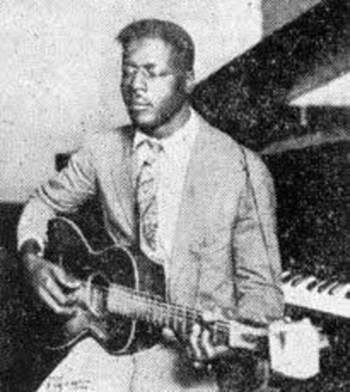
Last night I was motivated by Good Friday to sit down and watch Pasolini's Gospel According to St. Matthew. It's an amazing film in that Pasolini takes the techniques of Italian realism (spare dialogue, non-actors, stark black and white imagery) and applies them to the story of Jesus, which usually gets the gaudy Technicolor treatment of the likes of Ben-Hur, King of Kings, and The Greatest Story Ever Told.
Although Pasolini's sexuality, religion, and politics make him an unlikely chronicler of Jesus (he was a gay Marxist atheist), the film might be the most moving depiction of the Christ story I've ever seen on film. In this rendering Jesus is both mysterious and utterly relatable, a slight-looking fellow with intense eyes and a fervent manner of speaking. He comes across as a determined revolutionary, barely concealing his fury at those who refuse to help their fellow humans even while preaching love. (Pasolini's politics are pretty close to the surface in this regard.)
Just as the filming techniques are unorthodox, so is the soundtrack, which uses passages from 20th century music. The most effective in this regard is a snippet from Blind Willie Johnson's "Dark Was The Night, Cold Was The Ground," which is a lamentation for Jesus lying dead in the tomb on the evening of Good Friday. Johnson was a Texas bluesman who may have been the greatest artist of the slide guitar that there has ever been. It's actually hard to call him a bluesman, since he sang Gospel and devotional songs, but with blues accompaniment and a deep, gravelly voice that gave his words of heaven an unusual earthiness.
"Dark Was The Night, Cold Was The Ground" has no words, only an unearthly slide guitar that sounds like it's a transmission from Mars, rather than Texas in the 1920s, and Johnson's emotive, wordless singing. It puts chills down my spine every time, and reminds me of the pain I felt as a child when I went to do the stations of the cross on Good Friday. Each year I mourned as if Jesus had died that day, and while my piety is much less intense as an adult, I am still moved when I think of a man who did so much for others dying in such a horrible way, abandoned by most of his own disciples. As a child I was always haunted by the fact that Jesus himself cried out "My God, my God, why have you forsaken me?" Forget your hymns, "Dark Was The Night, Cold Was The Ground" is the only song I know that articulates the utter and complete despair of the crucifixion.
Thursday, November 7, 2013
Death's Dominion and The Consolation of Country Gospel
After two weeks of fierce struggle against death's cold hand, my grandmother passed away late last night. She was by far the kindest soul I have ever known in this world, someone who just radiated love and goodwill. Despite that, she was also pretty damn stubborn, and I knew that Death would have to work extra hard to claim her.
So many people are trying to tell me that she is in a better place, but I am having a hard time believing it. Even the most religiously devout fight death to the last; I am not sure anyone has absolute confidence in the afterlife. There is a burning animal instinct in us to stay alive that overpowers the stories we try to tell ourselves about salvation and eternal life.
But I will try to respect my grandma by thinking of her in that "better place," no matter how deeply I doubt it. I've been listening to some country gospel music for comfort, and even if I don't actually feel the old time religion in my soul, this music is a powerful salve. During the times when I hope there is something else, these are the songs that stoke my faint faith when confronted with the death of someone I love:
"Wayfaring Stranger," Neko Case
Her voice is so powerful, one of the greatest that we have, and she really wraps it around this gospel chestnut.
"Lord, I'm Ready to Go Home," The Louvin Brothers
The Louvin Brothers' harmonies were never so erie and spine-tingling as on this song, where an old man readies himself for death.
"Dust on Mother's Bible," Buck Owens
Buck's warm voice wrings about as much pathos as he can from this song about the dusty Bible that remains once his mother is gone.
"I Saw the Light," Hank Williams
It's hard to buy a song about leaving sin for the straight and narrow when it comes out of the mouth of a horse tranquilizer popper who died in the back of a car on a way to a show. Then again, it makes the conversion narrative that much more believable.
"Can The Circle Be Unbroken," The Carter Family
Might as well go all the way back to the original country music group. This song about a funeral has one of the most hopeful, uplifting choruses of any song. Even if I can't muster confidence that there's a "better world a waiting in the sky," it still moves me.
So many people are trying to tell me that she is in a better place, but I am having a hard time believing it. Even the most religiously devout fight death to the last; I am not sure anyone has absolute confidence in the afterlife. There is a burning animal instinct in us to stay alive that overpowers the stories we try to tell ourselves about salvation and eternal life.
But I will try to respect my grandma by thinking of her in that "better place," no matter how deeply I doubt it. I've been listening to some country gospel music for comfort, and even if I don't actually feel the old time religion in my soul, this music is a powerful salve. During the times when I hope there is something else, these are the songs that stoke my faint faith when confronted with the death of someone I love:
"Wayfaring Stranger," Neko Case
Her voice is so powerful, one of the greatest that we have, and she really wraps it around this gospel chestnut.
"Lord, I'm Ready to Go Home," The Louvin Brothers
The Louvin Brothers' harmonies were never so erie and spine-tingling as on this song, where an old man readies himself for death.
"Dust on Mother's Bible," Buck Owens
Buck's warm voice wrings about as much pathos as he can from this song about the dusty Bible that remains once his mother is gone.
"I Saw the Light," Hank Williams
It's hard to buy a song about leaving sin for the straight and narrow when it comes out of the mouth of a horse tranquilizer popper who died in the back of a car on a way to a show. Then again, it makes the conversion narrative that much more believable.
"Can The Circle Be Unbroken," The Carter Family
Might as well go all the way back to the original country music group. This song about a funeral has one of the most hopeful, uplifting choruses of any song. Even if I can't muster confidence that there's a "better world a waiting in the sky," it still moves me.
Tuesday, March 12, 2013
Benedict, Doubt, and the State of the Church
I was looking through the archives of my old blog, and found something I wrote about the state of the Catholic Church back in 2009. With the papal conclave happening right now, I think it's especially relevant, considering that the Church's current problems were plain as day early on in Benedict's reign. The distance I have traveled in terms of religion since then is telling. I was not an observant Catholic, but did get married by its rites, and considered myself at the very least a cultural Catholic. Nowadays I'm an agnostic Episcopalian, and like many lapsed Catholics over the last few years, I've cut what few ties to the Church I had left. It's hard to tell if the choice of the next pope will reflect any progressive change, or whether the Church leadership is fully aware of its current situation. Whoever the next pope happens to be, he will have his hands full.
Below are my reflections from four years ago, which don't really seem out of place these days. I am struck by my positive memories of my dealings with certain clergy and Catholic lay leaders at that time. It's a needed reminder that the Church can do things right, and that many great people do its work. I only hope the spirit of this positive side of the church carries the day in Rome this week.
***************
While I visited New Jersey over the winter holiday had many intimate encounters with the Catholic Church, an institution that I both love and revile in almost equal measure. L and I attended Mass at the old Italian church where we will be getting married, and on both occasions were treated to the homily stylings of an ultra-orthodox, aged priest. The Christmas morning sermon was a thing of true of awfulness wherein he expounded aimlessly on the Church's doctrine of Mary's virginity, sternly pointing out that she remained a virgin after the birth of Jesus to her ascension. This meant in fact that the baby Jesus had not gone down the Ever Virgin's birth canal, but had evidently appeared in her arms "like light through a pane of glass." Of course, like all unimaginative priests, he quickly politicized the Immaculate Conception by lecturing the congregation about abortion.
I was willing to cut the guy a little slack, since he was obviously too old to be doing what he was doing. Unfortunately for him and for the Church in general, the number of vocations has been dropping off severely. Worse yet, those young men who sign up for the priesthood today tend to be ideological firebrands who actually fervently believe in things like papal infallibility instead of merely paying lip-service to them, and seem content with the Church's larger turn to the Right in the last thirty years.
A couple of weeks later, however, I was reminded of the great potential latent in the Catholic Church. L and I attended pre-Cana, a seminar required of couples who wish to marry in the Catholic Church. Truth be told, I was quite worried about the event, afraid that I would be bludgeoned with doctrine on birth control by a man who had sworn himself to celibacy. The location itself raised my fears, as we sat in the gymnasium of an old Catholic school that reaked of the crushing guilt and intimidating austerity I knew well from my religious upbringing. That being said, the priest, a Benedictine monk, gave a talk brimming with humor that almost had me falling out of my chair. (Sample: he showed up in his hooded habit and announced, "I thought I would slip on something more medieval today." He cracked jokes about the Jesuits and Protestant perceptions of Catholics as drunks while acknowledging some of the truth behind the stereotype.) We also heard from two Catholic couples who had been long married and who offered practical advice that transcended religious doctrine. The woman who ran the session pointedly told us we could read the official stuff about abortion and birth control if we wanted to, but that the session would concern itself more with resolving the day-to-day issues married people face. Lo and behold, pre-Cana actually benefitted L and I. Too bad the spirit of practical morality and openness we experienced there seems to be in such short supply in the Church these days.
The two opposing forces in American Catholicism, inclusion and exclusion, are a major part of the movie Doubt, and lie at the heart of the contemporary Church. I happened to see Doubt while in Jersey, and it thoroughly touched me. At some points I almost broke down, because it portrays something that has all but died: American Catholicism as an organic, communal culture, rather than a zealous, inflexible, anti-modern ideology. It shows a world where people in the neighborhood walked to the church, and Catholicism was not merely a set of beliefs, but a cultural identity.
In the film, Father Flynn (Philip Seymour Hoffman), represents the inclusive impulse that moved the church towards reform in the 1960s. He wants to enlighten and welcome his congregation, not discipline and control them. Sister Aloysius (played brilliantly by Meryl Streep) does not agree with Flynn's approach, and subscribes whole-heartedly to the "do as you're told or else" school of Catholicism that traumatized my childhood. Sister James (Amy Adams) is a young nun stuck in the middle with a kind heart but unsure of herself. (She reminded me powerfully of the nun who taught me in the first grade and greatly encouraged my reading habit. I don't find it surprising that she left the cloister.)
Matters are complicated by the fact that Flynn has been credibly accused of abusing one of the more vulnerable boys in the school. While the viewer might sympathize with Father Flynn's attitude and despise Sister Aloysius' rigidity, we become suspicious of him and start to admire her tenacity. In the end, we don't know what really happened, but there's no mistaking the references to the Church's recent abuse scandals and its consequent loss of moral authority. Of course, this hasn't stopped the clergy from wagging their fingers on abortion during and after the election. In ways that I don't have time to detail here, Doubt displays HOW the mechanisms of the church and the arrogance of some of its leaders could be used to cover-up sexual abuse.
Pope Benedict exuded that arrogance in all its ugliness this week when he reinstated four schismatic, reactionary bishops, one of whom is an unapologetic Holocaust denier. Considering the long, ugly history of anti-Semitism that the Church has been trying to correct and atone for since Vatican II, this move could not be more retrograde. How an instituion that claims to be the moral arbiter for over a billion people could reward someone for downplaying one of the greatest crimes in human history (and with the participation of many Catholics) is as astonishing as it is appalling.
Even if one of these bishops had not been a Holocaust denier, Benedict's move would still signal a willingness to welcome the most reactionary interpretations of Catholicism. All of these bishops belong to the Society of Pius X, a splinter group opposed to the Vatican II reforms of the church. The pope and the other high clergy are open and inclusive, but only to those who want to bring the Church back into the Middle Ages. Catholicism does not have to go down this path, but men like Benedict are doing their best to drive out anyone who could steer it in a more modern, tolerant, and yes, viable direction. With their clergy aging, churches closing, and moral authority all but shot, they might not have a whole lot more time to work with.
Below are my reflections from four years ago, which don't really seem out of place these days. I am struck by my positive memories of my dealings with certain clergy and Catholic lay leaders at that time. It's a needed reminder that the Church can do things right, and that many great people do its work. I only hope the spirit of this positive side of the church carries the day in Rome this week.
***************
While I visited New Jersey over the winter holiday had many intimate encounters with the Catholic Church, an institution that I both love and revile in almost equal measure. L and I attended Mass at the old Italian church where we will be getting married, and on both occasions were treated to the homily stylings of an ultra-orthodox, aged priest. The Christmas morning sermon was a thing of true of awfulness wherein he expounded aimlessly on the Church's doctrine of Mary's virginity, sternly pointing out that she remained a virgin after the birth of Jesus to her ascension. This meant in fact that the baby Jesus had not gone down the Ever Virgin's birth canal, but had evidently appeared in her arms "like light through a pane of glass." Of course, like all unimaginative priests, he quickly politicized the Immaculate Conception by lecturing the congregation about abortion.
I was willing to cut the guy a little slack, since he was obviously too old to be doing what he was doing. Unfortunately for him and for the Church in general, the number of vocations has been dropping off severely. Worse yet, those young men who sign up for the priesthood today tend to be ideological firebrands who actually fervently believe in things like papal infallibility instead of merely paying lip-service to them, and seem content with the Church's larger turn to the Right in the last thirty years.
A couple of weeks later, however, I was reminded of the great potential latent in the Catholic Church. L and I attended pre-Cana, a seminar required of couples who wish to marry in the Catholic Church. Truth be told, I was quite worried about the event, afraid that I would be bludgeoned with doctrine on birth control by a man who had sworn himself to celibacy. The location itself raised my fears, as we sat in the gymnasium of an old Catholic school that reaked of the crushing guilt and intimidating austerity I knew well from my religious upbringing. That being said, the priest, a Benedictine monk, gave a talk brimming with humor that almost had me falling out of my chair. (Sample: he showed up in his hooded habit and announced, "I thought I would slip on something more medieval today." He cracked jokes about the Jesuits and Protestant perceptions of Catholics as drunks while acknowledging some of the truth behind the stereotype.) We also heard from two Catholic couples who had been long married and who offered practical advice that transcended religious doctrine. The woman who ran the session pointedly told us we could read the official stuff about abortion and birth control if we wanted to, but that the session would concern itself more with resolving the day-to-day issues married people face. Lo and behold, pre-Cana actually benefitted L and I. Too bad the spirit of practical morality and openness we experienced there seems to be in such short supply in the Church these days.
The two opposing forces in American Catholicism, inclusion and exclusion, are a major part of the movie Doubt, and lie at the heart of the contemporary Church. I happened to see Doubt while in Jersey, and it thoroughly touched me. At some points I almost broke down, because it portrays something that has all but died: American Catholicism as an organic, communal culture, rather than a zealous, inflexible, anti-modern ideology. It shows a world where people in the neighborhood walked to the church, and Catholicism was not merely a set of beliefs, but a cultural identity.
In the film, Father Flynn (Philip Seymour Hoffman), represents the inclusive impulse that moved the church towards reform in the 1960s. He wants to enlighten and welcome his congregation, not discipline and control them. Sister Aloysius (played brilliantly by Meryl Streep) does not agree with Flynn's approach, and subscribes whole-heartedly to the "do as you're told or else" school of Catholicism that traumatized my childhood. Sister James (Amy Adams) is a young nun stuck in the middle with a kind heart but unsure of herself. (She reminded me powerfully of the nun who taught me in the first grade and greatly encouraged my reading habit. I don't find it surprising that she left the cloister.)
Matters are complicated by the fact that Flynn has been credibly accused of abusing one of the more vulnerable boys in the school. While the viewer might sympathize with Father Flynn's attitude and despise Sister Aloysius' rigidity, we become suspicious of him and start to admire her tenacity. In the end, we don't know what really happened, but there's no mistaking the references to the Church's recent abuse scandals and its consequent loss of moral authority. Of course, this hasn't stopped the clergy from wagging their fingers on abortion during and after the election. In ways that I don't have time to detail here, Doubt displays HOW the mechanisms of the church and the arrogance of some of its leaders could be used to cover-up sexual abuse.
Pope Benedict exuded that arrogance in all its ugliness this week when he reinstated four schismatic, reactionary bishops, one of whom is an unapologetic Holocaust denier. Considering the long, ugly history of anti-Semitism that the Church has been trying to correct and atone for since Vatican II, this move could not be more retrograde. How an instituion that claims to be the moral arbiter for over a billion people could reward someone for downplaying one of the greatest crimes in human history (and with the participation of many Catholics) is as astonishing as it is appalling.
Even if one of these bishops had not been a Holocaust denier, Benedict's move would still signal a willingness to welcome the most reactionary interpretations of Catholicism. All of these bishops belong to the Society of Pius X, a splinter group opposed to the Vatican II reforms of the church. The pope and the other high clergy are open and inclusive, but only to those who want to bring the Church back into the Middle Ages. Catholicism does not have to go down this path, but men like Benedict are doing their best to drive out anyone who could steer it in a more modern, tolerant, and yes, viable direction. With their clergy aging, churches closing, and moral authority all but shot, they might not have a whole lot more time to work with.
Wednesday, February 27, 2013
Religious Moderates of the World, Unite!
It's inherently difficult to get moderates and even-tempered folks to get riled up, hence their being moderates. America's religious landscape has become increasingly polarized and extremist, both in terms of increased zeal of fundamentalists and conservative Catholics, but also in the increasingly strident, intolerant tone of the new unbelief embodied by Christopher Hitchens and Richard Dawkins.
The most intelligent voices are completely written out of our religious discussions, which usually ends up being a red-faced yelling match between Bible-thumping ignoramuses and smug, insufferable atheists of the Bill Maher stamp. Everyone in the middle, from agnostics to Prebyterians to lapsed Catholics, is sidelined, even though those who are not fundamentalists for the Bible or soldiers for human reason make up the vast majority of people in this country. Jews, Hindus, and Buddhists are especially disadvantaged by this dualistic construction of our public debate (where only Christians like Pat Robertson get to talk), and Muslims are only allowed in to be attacked or to defend their basic right to practice their faith, whether it be in rural Tennessee or lower Manhattan. Religion is not simple, it is startingly complex, mysterious, and multifaceted. Those who present questions of faith and religion in simplistic terms are stupid at best, malevolent at worst.
(This is why I enjoyed Hal Crowther's piece in the Oxford American where he castigates the fundies but defends a more tolerant practice of religion, rather than just dumping it all out, Richard Dawkins style.)
Neither side speaks to me, mostly because I've been in both of their camps, and became disillusioned. I grew up in a very devoutly Catholic family living in a rural diocese often considered the most conservative in the nation. I was an altar boy for five years, briefly considered joining the priesthood, and took part in a couple of anti-abortion protests. For a long time this ironclad Catholic belief fulfilled me, until I started learning the church's history and reading philosophy. I then very quickly found the church and its faith demands to be ridiculous, mendacious, and incapable of being followed. These thoughts were already in my head in high school, and once I went to college (ironically at a Jesuit university) I quickly stopped going to church, and soon declared myself to be an agnostic, then an atheist. I enjoyed entering theological debates with my more devout fellow students, drunk with the powerful arrogance of my new way of thinking.
I'm not sure how, but over time, my views moderated. I spent a long time thinking of myself as a "culturally-Catholic agnostic." Much of this had to do with the fact that I knew plenty of people from a variety of faiths and denominations whose belief seemed to bring out the good in them. I am still frightened at what horrible acts zealotry can spawn, but I am equally convinced that many great people, such as Gandhi, MLK, and Sarah Grimke, were strengthened, nurtured, and driven by their faith, and contra the new atheists, would not have done what they did without it.
Nowadays I'd call myself an Agnostic Episcopalian. After going to an episcopal church with a friend a couple of years ago, I have been attending services off and on. The ritual still speaks to my soul, and the hour I spend in church is positively therapeutic, even though I don't fully believe the words I say and hymns I sing. It feels good to be part of a loving, accepting community, and to listen to a pastor who is just as much a humanist as he is a Christian. Of course, to the fundies (and the clergy of my former church) I am an unbelieving apostate who is breaking bread with sodomites and their allies, members of a denomination that has strayed from the true path of Christ. To the atheists, I am an idiot and a weakling seduced by the blandishments of unreason and emotion. Whatever they all may say, I don't really think of myself as wither an apostate or a mental weakling, but as a spiritual seeker who has finally found a home.
Perhaps it is time for a new ecumenical movement that embraces ambivalence, mystery, and uncertainty rather than castigates it. According to our public discourse, there are only two choices: zealotry and apostasy. Both are thin spiritual gruel. Instead, why not a lavish feast of different faiths grounded in mutual respect and humanity? It's time for the fundamentalists and the apostates to spend time on the sidelines for a change. I have a feeling that the rest of us would be a lot happier.
Footnote: One relatively recent, great book on the effects of Biblical literalism by James Simpson (Burning to Read), really got me thinking about all this. He argues that the Reformation did not lay the groundwork for the emergence of liberalism (as the Whiggish view goes), but in fact was marked by fundamental intolerance grounded in the doctrine of Biblical authority. Reading his account of the early English Reformation has a lot to tell us about America's current religious culture.
The most intelligent voices are completely written out of our religious discussions, which usually ends up being a red-faced yelling match between Bible-thumping ignoramuses and smug, insufferable atheists of the Bill Maher stamp. Everyone in the middle, from agnostics to Prebyterians to lapsed Catholics, is sidelined, even though those who are not fundamentalists for the Bible or soldiers for human reason make up the vast majority of people in this country. Jews, Hindus, and Buddhists are especially disadvantaged by this dualistic construction of our public debate (where only Christians like Pat Robertson get to talk), and Muslims are only allowed in to be attacked or to defend their basic right to practice their faith, whether it be in rural Tennessee or lower Manhattan. Religion is not simple, it is startingly complex, mysterious, and multifaceted. Those who present questions of faith and religion in simplistic terms are stupid at best, malevolent at worst.
(This is why I enjoyed Hal Crowther's piece in the Oxford American where he castigates the fundies but defends a more tolerant practice of religion, rather than just dumping it all out, Richard Dawkins style.)
Neither side speaks to me, mostly because I've been in both of their camps, and became disillusioned. I grew up in a very devoutly Catholic family living in a rural diocese often considered the most conservative in the nation. I was an altar boy for five years, briefly considered joining the priesthood, and took part in a couple of anti-abortion protests. For a long time this ironclad Catholic belief fulfilled me, until I started learning the church's history and reading philosophy. I then very quickly found the church and its faith demands to be ridiculous, mendacious, and incapable of being followed. These thoughts were already in my head in high school, and once I went to college (ironically at a Jesuit university) I quickly stopped going to church, and soon declared myself to be an agnostic, then an atheist. I enjoyed entering theological debates with my more devout fellow students, drunk with the powerful arrogance of my new way of thinking.
I'm not sure how, but over time, my views moderated. I spent a long time thinking of myself as a "culturally-Catholic agnostic." Much of this had to do with the fact that I knew plenty of people from a variety of faiths and denominations whose belief seemed to bring out the good in them. I am still frightened at what horrible acts zealotry can spawn, but I am equally convinced that many great people, such as Gandhi, MLK, and Sarah Grimke, were strengthened, nurtured, and driven by their faith, and contra the new atheists, would not have done what they did without it.
Nowadays I'd call myself an Agnostic Episcopalian. After going to an episcopal church with a friend a couple of years ago, I have been attending services off and on. The ritual still speaks to my soul, and the hour I spend in church is positively therapeutic, even though I don't fully believe the words I say and hymns I sing. It feels good to be part of a loving, accepting community, and to listen to a pastor who is just as much a humanist as he is a Christian. Of course, to the fundies (and the clergy of my former church) I am an unbelieving apostate who is breaking bread with sodomites and their allies, members of a denomination that has strayed from the true path of Christ. To the atheists, I am an idiot and a weakling seduced by the blandishments of unreason and emotion. Whatever they all may say, I don't really think of myself as wither an apostate or a mental weakling, but as a spiritual seeker who has finally found a home.
Perhaps it is time for a new ecumenical movement that embraces ambivalence, mystery, and uncertainty rather than castigates it. According to our public discourse, there are only two choices: zealotry and apostasy. Both are thin spiritual gruel. Instead, why not a lavish feast of different faiths grounded in mutual respect and humanity? It's time for the fundamentalists and the apostates to spend time on the sidelines for a change. I have a feeling that the rest of us would be a lot happier.
Footnote: One relatively recent, great book on the effects of Biblical literalism by James Simpson (Burning to Read), really got me thinking about all this. He argues that the Reformation did not lay the groundwork for the emergence of liberalism (as the Whiggish view goes), but in fact was marked by fundamental intolerance grounded in the doctrine of Biblical authority. Reading his account of the early English Reformation has a lot to tell us about America's current religious culture.
Sunday, January 27, 2013
Do We Ever Stop Having Awkward Conversations With Our Parents?
I was raised in an extremely Catholic family, and was a fervent believer as a child. That included five years as an altar boy, and a period of time, around the age of 13, when I seriously considered a career in the priesthood. My parents are anti-abortion activists, and when I was younger, I came along to "life day" protests with them. During my teen years, that faith began to wane, especially after I learned more about the history of the Church and developed an interest in the ideas of other religions. Even though I went to a Jesuit university as an undergraduate, I came in as a doubting agnostic, and ended my time there as a self-avowed atheist.
The whole time I kept these beliefs a secret from my family. One of my gay friends used to tease me about this, urging me to "come out" as he had done with his parents (with something much more stigmatized) and that I was being chickenshit. I wanted to, but never could, since I felt that they would think I was somehow rejecting them or putting them down.
As time went on, I dropped my atheism for my former agnosticism, and would still occasionally attend mass. I got a great deal of enjoyment out of this during my time in Germany, with its gorgeous medieval churches and dedicated parishioners who acted like they really wanted to be there. I regained my old appreciation for my the mystical and the power of ritual. In recent years, after going to a close friend's church, I began attending Episcopal services, and felt something important inside of me rekindled. I am still not a completely committed believer, but I feel something stir in my soul again, and I enjoy being around good-hearted people who really care about making the world a better place.
This is all background to a phone conversation this evening, when I told my parents that the reason we haven't baptized the girls is that I do not wish to remain affiliated with the Catholic church. I framed it in positive terms, in that I felt more comfortable in a different faith community, rather than going negative and cataloging my many deep frustrations and critiques of the Catholic church. However, there were still some awkward moments, to say the least. I'm thirty-seven, but I felt fifteen again. As I grow further and further apart from the person I used to be, I wonder if these moments will ever go away.
I always fear that the decisions I've made with my life are interpreted by them to be rejections and repudiations of their love. I went into an unorthodox career, married late, left Catholicism, and settled down in the dreaded land "back East." As they get more set in their ways, and I get to be more confident in revealing my true self to them, I wonder what kinds of strain our relationship will face. I guess dealing with the ensuing awkwardness is a worthy price to be paid for living in the truth rather than hiding behind twenty years of lies.
The whole time I kept these beliefs a secret from my family. One of my gay friends used to tease me about this, urging me to "come out" as he had done with his parents (with something much more stigmatized) and that I was being chickenshit. I wanted to, but never could, since I felt that they would think I was somehow rejecting them or putting them down.
As time went on, I dropped my atheism for my former agnosticism, and would still occasionally attend mass. I got a great deal of enjoyment out of this during my time in Germany, with its gorgeous medieval churches and dedicated parishioners who acted like they really wanted to be there. I regained my old appreciation for my the mystical and the power of ritual. In recent years, after going to a close friend's church, I began attending Episcopal services, and felt something important inside of me rekindled. I am still not a completely committed believer, but I feel something stir in my soul again, and I enjoy being around good-hearted people who really care about making the world a better place.
This is all background to a phone conversation this evening, when I told my parents that the reason we haven't baptized the girls is that I do not wish to remain affiliated with the Catholic church. I framed it in positive terms, in that I felt more comfortable in a different faith community, rather than going negative and cataloging my many deep frustrations and critiques of the Catholic church. However, there were still some awkward moments, to say the least. I'm thirty-seven, but I felt fifteen again. As I grow further and further apart from the person I used to be, I wonder if these moments will ever go away.
I always fear that the decisions I've made with my life are interpreted by them to be rejections and repudiations of their love. I went into an unorthodox career, married late, left Catholicism, and settled down in the dreaded land "back East." As they get more set in their ways, and I get to be more confident in revealing my true self to them, I wonder what kinds of strain our relationship will face. I guess dealing with the ensuing awkwardness is a worthy price to be paid for living in the truth rather than hiding behind twenty years of lies.
Sunday, March 25, 2012
Resisting the Temptation of the New York Yankees
I have a confession to make. Ever since moving out here to New Jersey, I have been strongly tempted to become a fan of the New York Yankees. It is only appropriate for me to voice this confession during the Lenten season, when Jesus fasted for forty days in the desert, while the devil offered to turn stones into bread and to give control over the world. The dreams of a baseball life made easy, and an end to the long fasts of bad seasons and to attain the power of a perennial contender, threaten to turn this fan's soul to the dark side
I have been surprised by these temptations, since I had always considered myself immune to the lures of "Satan's jeweled crown" as the Louvin Brothers song goes. For years, I thought of the Yankees as the enemy, a an arrogant franchise able to throw money around and buy the World Series, rather than winning it fair and square. They were run by George Steinbrenner, a vulgar, authoritarian jerk whose teams succeeded in spite of, rather than because of, his decisions. His obstinacy prevented revenue sharing in major league baseball, greatly increasing the gaps between the haves and have nots. Yankee fans were the worst kind of front-runners, the type of people who cared more about being on the winning team than about the game itself.
However, as I learned from watching Star Wars films as a child, the Dark Side is easier and more seductive. I still remember my one trip to the old Yankee stadium, and seeing the banner behind home plate proclaiming the Yankees winners of twenty-six World Series titles, about a quarter of all the World Series' ever played! As a White Sox fan, I have typically expected my teach to fuck up, even in 2005 when they won the title. Sitting in the stands at Yankee Stadium, I could tell that the fans fully expected their team to win, and that anything else was a terrible failure. That particular game was a blow-out of the Devil Rays (before their name change and improvement), and the Yankee faithful bellowed a kind of bloodthirsty howl that must have been heard at ancient Roman gladiatorial contests. In Yankee Stadium I felt like I was part of a community of winners, perhaps the most seductive thing the Yankees offer their fans who, like the rest of us, live lives of quiet desperation.
How wonderful it must be to know that the owners of your team will pay top dollar to retain rising young players, rather than trade them before they hit free agency. How comforting it must be when your team is willing to make any acquisition necessary down the stretch to win the pennant. Most baseball fans, especially those in small-markets, are used to seeing fire sales of young talent in the late summer months, and must comfort themselves with the mantra "there's always next year." For these fans, a wild card berth is cause for celebration; for Yankees fans, anything less than a title is a failure.
How could I possibly justify rooting for the bad guys? I'd like to think my main reasons go beyond the delights of being on the winning team. In the first place, I must admit that my attraction to the Yankees has deep roots. My immersion into baseball and baseball history roughly coincided with the decline of the Yankees franchise in the late 1980s and early 1990s. As I learned about the Bronx Bombers' storied past, I felt that baseball was missing something if the Yankees weren't great; it just didn't seem to be right that they were a last place team. Thus in my mind wanting the Yankees to be good meant I wanted baseball to be made whole. It didn't hurt that I had a deep fascination with New York City itself at that time. In high school or college (I can't remember which), I bought a Yankees cap and wore it out. I remember rooting for them in the 1995 playoffs and 1996 World Series, and catching hell for it from other baseball fans.
After moving to Chicago, the White Sox became my team, and thus my only rooting interest in the American League. Despite that fact, I had a great deal of admiration for the Yankee title teams of 1998-2000. In a time of steroid-inflated biceps and over-reliance on the home run, they won by playing team baseball and doing the little things well. It was hard not to like guys like Jorge Posada, Mariano Rivera, Derek Jeter, Bernie Williams, and Paul O'Neil. It was especially difficult to dislike Joe Torre, a once hard-luck manager who seemed to have tamed Steinbrenner's worst impulses and molded a team based on cohesion rather than ego. Of course, that didn't stop me from being overjoyed at their defeat at the hands of the Red Sox in the 2004 play-offs.
Some of my other major reasons are purely practical. I've committed myself to living in the New York City area for the forseeable future. As a sports fan, it's hard to live somewhere long term and not have a rooting interest in a local team. When I was affiliated with a university, the choice was made for me, but I am no longer in that position. As I get older, baseball is the one professional sport I really, truly care about, partly because the NFL's technocratic violence no longer appeals to me much. That leaves me with the Yankees or the Mets. Over the past few years, I've tried to claim the Mets as my National League team. Truth be told, their new stadium is kinda lame. Beyond that, their ownership is implicated in the Madoff scandal, and is currently completely dysfunctional. Most importantly, I have many more Yankee fans in my circle here than I do Mets fans.
After all, isn't sports fandom really about community? My continued devotion to Husker football, thirteen years after leaving the state of Nebraska, is a kind of cultural glue that allows me to more easily connect to my father and other members of my family. That fandom I did not choose, like the Roman Catholic Church, it was chosen for me. It is the one sports connection that I will never shake, since it's practically in my blood, and that's not necessarily a good thing. By choosing the Yankees, aren't I just electing to more closely tie myself to the community I already live in? Isn't team loyalty a kind of fetish?
Ah, here are the sweet words of the Father of Lies, taking my weakness, vanity, and lust for power and glory and calling them virtuous. Satan, be gone with you! You can keep your crown, encrusted with twenty-seven championship jewels. I shall continue my time in the baseball desert, spending the next season watching Jake Peavy and Gordon Beckham fail to fulfill their promise, groaning at yet another Adam Dunn strikeout, mourning Mark Buehrle's loss to the Marlins, and observing with dread the great Paul Konerko's slide into old age. I might even wander over into the Mets' unforgiving wilderness, to take on the role of a baseball St. Anthony. Blessed are baseball's poor in spirit, for they are the true fans. Or, as Met Tug McGraw once said, "you gotta believe."
Subscribe to:
Posts (Atom)