Showing posts with label life. Show all posts

Sunday, December 17, 2023

The Holdovers and Alexander Payne's Cinema of Life

Yesterday I had the good fortune to see The Holdovers in the theater. It's been out for awhile, so I saw it in a small box inside of a small-town independent movie theater, which was pretty much the perfect combination. 

I had seen the trailer multiple times, and I knew the movie would be catnip for me. Not only was one of the main characters a history teacher at a private school (like me), it was about the melancholy side of the holidays, it was set in the 1970s, and it was directed by Alexander Payne. What a combo! I was glad that it exceeded my expectations.

Payne has long been one of my favorite filmmakers, and not just because he's a fellow Nebraskan. He started out making wicked satires like Citizen Ruth and Election, but since About Schmidt has mostly made films about life itself, in particular how we deal with its inevitable pains and disappointments. As I have entered middle age, that subject has felt much more real. I have probably never cried harder in a movie theater than I did when I watched Nebraska because it so perfectly represented the world where I am from and I had never imagined ever seeing its stilted emotional landscape being put up on a big screen for all the world to see. 

I cried a lot at the movie theater yesterday, too. I knew that mourning a loved one was a theme because of the school's chef losing her son in Vietnam. I did not know it was also about the experience of mourning a loved one while they are still alive because a mental illness has made them into someone else. (I won't give away any spoilers beyond that.) That's a kind of mourning I am very familiar with. 

The pains and disappointments of life are often followed by resentments, something Payne explores deftly in this film and others. Giamatti's teacher character resents his wealthy students for their privilege, even more for their obliviousness to it. He may live in a campus apartment and drive a shit car, but he gets to put them in their place when he fails them on their exams. Of course, this is not a healthy way to go through life. I think too of his character in Sideways, the father in Nebraska, and the title character in About Schmidt. All of them seem beaten down by life's unfairness and the feeling that things should have turned out differently.

The other characters in The Holdovers have ample reasons for resentment. Angus is stuck alone on the holidays because his mother would rather vacation with her new husband. Mary had her son's promising life snuffed out by a stupid and unjust war. In middle age I have learned that resentment is the soul killer. Life is unfair and heartless but dwelling on it will make you insane. If I think too long about how I work hard to teach students who are often blase about an education that costs more than my old yearly salary as an assistant professor I get paralyzed. 

We all have to find ways to overcome the dynamic of disappointment and resentment because there are only a blessed few whose lives turn out the way they want them to. Even then, bad things happen. I heard this week that an old classmate of mine who was a good dude and had gone on to be a highly successful basketball coach is beset with a painful, deadly illness. For some cruel reason the hardest and most untimely losses of life among people I care about have happened in December, so I can't get through the holiday season without thinking about how some people are robbed of the time they should have had on this earth. 

I appreciate Alexander Payne's cinema of life because he gets at the dailiness of these emotions. Certain feelings are always with us, sometimes as a barely perceptible ache, sometimes as an all-consuming fire. I also appreciate how the endings are never neat. The characters in The Holdovers find ways to survive and gain some needed perspective, but there's no guarantee that they won't get pulled back into the undertow of disappointment and resentment. We can only try to handle it as best we can. I hope Payne keeps making movies like this because they've helped me with my own process. 

Monday, November 25, 2019

Badfinger, "Got to Get Out of Here"


Badfinger should have been huge. They were one of the first bands on Apple Records, endorsed by the Fab Four themselves. Their first hit, "Come And Get It" was written by Paul McCartney. "Day After Day," one of the most sublime pop hits of the early 70s, has a soaring slide guitar hook courtesy of George Harrison. They wrote a whole passel of catchy pop songs with some cracking music backing them up. This combo would later be called "power pop," but like Big Star, they were a few years too early. Both bands became major points of influence for 80s and 90s indie rock.

Both Badfinger and Big Star had their inability to get the audience they deserved compounded by tragedy and misfortune. Apple ended up being a famously dysfunctional company before it died an ignominious death. Once the band was ready to put out a new record on a new label, Apple dropped a substandard record on the public, undercutting their comeback. Their management also ripped them off at every turn. In 1975 Wish You Were Here, one of their strongest outings, got pulled from shelves a few weeks after its release due to managerial disputes. Pete Ham, the band's principal songwriter, killed himself the same year. Tom Evans, the other main creative force in the band, took his own life a few years later.

I love this band so much, but listening to their songs, no matter how joyous some of them are, is always leavened with feelings of sadness. All they wanted to do was give the world some great music, and lots of shitty people wouldn't let them because they'd rather squeeze them for money instead. It also reminds me of how so many people have their ideals betrayed and abilities squandered by a society that only cares about filthy lucre. I think especially of academia where there are a lot of Badfingers toiling in contingent jobs. They still produce scholarship that's just as good as anyone else with better positions, but it still gets them nowhere. I'm sure a lot of this will be read in a few years by a new generation of young scholars, wondering what happened to the person who wrote the book or article that blew them away but who has dropped off the radar.

Despite their difficult straights, Badfinger did not write doom and gloom songs. However, one standout track on Wish You Were Here seems to signal to the despair, even if it's written by Joey Molland instead of Pete Ham. "Got to Get Out of Here" is one of the few Badfinger songs not driven by elecrtic guitar, the principle instruments a simply strummed acoustic guitar what appears to be a sad-sounding harmonium. You can hear the fatigue in this song, the feeling of being trapped in an impossible situation. Molland sings "got no choice" over and over again over a very Beatlesque beat.

I feel like we have all been there, stuck somewhere oppressively unhappy and feeling like there's no way to get out. The song starts building a little as it goes on, leaving a slight, small feeling of hope, but hardly an anthem of triumph. It's the soundtrack of just getting through the day, only so you can go to sleep and have to face another one after you wake up, over and over and over again. I listen to it now with sadness over what being trapped can do to people, but also relieved I've escaped my own emotional cul-de-sacs in my life. If you see someone else struggling there, give them a hand. If you've found yourself there, don't be afraid to ask for help. The people who love you want to be there for you.

Wednesday, April 17, 2019

A Teacher's Due


This week ends the fourth term of the school year, with just one more to go. This has been an especially tough term, mostly because I am teaching an overload with four different preps. I am back in the frenzied mode I occupied as a beginning teacher, working from before dawn to after dusk, all only to just stay afloat. It's something I could handle back when I was 31 and single, but now that I am 43 with a family (and a long commute) it's taken me to the breaking point.

It hasn't helped that members of my extended family have been stirring up drama and cruelty, or that the political situation seems so bleak. Over spring break, for the first time that I can remember, I asked myself if teaching was even what I was meant to do on this earth. As always in times of great stress, I started hating on myself, thinking that I had lost my mojo.

Students of course do not know the internal struggles that we teachers have, nor should they. Today that was my saving grace. One of my senior electives ended today, and my students gave me a round of applause and thanked me for the class. I don't think they have any way of knowing just how much that has uplifted me today.

So now I am kicking myself for having been so down on myself. (The self-flagellation never ends with me, folks.) Despite my exhaustion, what mattered was that I still put the effort in, even on days when my nerves were shredded and my patience was shot. Teaching is a job where the reward never comes in the form of money or social status. Day after day I see articles about teacher shortages. and of teachers leaving the profession.

It's a hard job that demands both intellectual and emotional labor, the latter being the most draining. When I tell people I teach, there's a good chance that they will say something completely idiotic, like "it must be good to have your summers off." (If teaching were so easy we would not be seeing such turnover, but I digress.) This reflects the dominant American idea that work is measured in the numbers of hours of labor, not its intensity. That's a fundamentally flawed metric. As we all know, and hour of combat is not the same as a quiet hour spent on base. Being in the classroom is like being at the battle front for half the year. Without break time we would go berserk.

As tough as the job is, it is hard to top a moment like I had today. Every morning I wake up thankful that I spend my days doing work that MEANS SOMETHING. I am not just pushing papers or acting as a gear in the corporate machine. It's probably the only reason that turnover isn't higher in the profession. I'm just glad that I teach students so willing to give me thanks. I wish every teacher were so lucky.

Monday, April 15, 2019

Burning Rust (New Podcast Episode)


The newest episode of Old Dad's Records in number 39, "Burning Rust." As always, I go "live on the nines" and discuss two live albums I picked up on Record Store Day. One is Iggy Pop, the other Emerson, Lake, and Palmer. It's proof, if needed, that I contain multitudes. I start by talking about Neil Young's "My My Hey Hey" and how burning out rather than fading away is really about burning your artistic lamp, not dying young. I end by talking about the new Jenny Lewis album, where I think she burned her lamp quite well.

Monday, February 11, 2019

Avoiding the Middle Age Bitterness Trap

I'm getting through middle age by tapping into my inner Peter Falk

Hitting 40 did not seem like much of a milestone, but age 43 has suddenly brought all the middle-aged thoughts I thought were coming three years ago. They aren't all necessarily bad. I think all the time about how I've done a lot in my life, and that what I do for a living has had a positive impact on the world. I'm okay not being young anymore. The bad thoughts are the morbid ones, of course. At this point it's very likely that I have more yesterdays than tomorrows. The problem with having gained a renewed will to live in the past eight years is that death scares me a lot more than it used to. In my younger days I was pretty ambivalent about living. I have learned to enjoy life more fully and now I desperately don't want to have to give it up. Sometimes on my morning commute I hope that when I eventually go I'm more prepared for it.

At the same time, watching other middle-aged people around me has made me hyper-aware of the traps of middle age. The two big ones are bitterness and resentment, which usually come together. Middle age is when you have the harrowing realization that you have become what you are. In youth you tend to think of yourself becoming something, there is still room for self-invention, and still room to think that your faults will eventually fade. If you don't "make it" in your chosen field by your 40s, well, you're never going to make it. That can be a spur for bitterness and resentment.

For the vast the majority of us never achieve the things we dream, and our consumerist society is constantly pushing us to "dream big," which usually means a big disappointment. In that respect I am glad that I left academia at the age of 35, when I was still young enough to reinvent myself and recover from the mental blow that transition made. If I did so at 40 I wonder if I would feel so good about myself right now.

I have seen so many people succumb to bitterness and resentment in middle age, their souls wilted and withered. This form of self hate always ends up getting projected onto other people. It closes minds and closes hearts and deafens ears to the sufferings of others. Those who are frustrated at their position and feel let down by life inevitably derive satisfaction from seeing other people brought down to their level. If the people around them are not as miserable as they are, they will make it so. These are the poisonous gossips at work, the family members who engage in belittling behaviors, the tyrannical boss who goes out of their way to always make you feel small. 

What's especially frightening to me is that this form of middle aged dysfunction has been weaponized for political use. White men in their 50s were Trump's most loyal bloc, the group most likely to be resentful about their lives. Those emotions can be easily turned against the "other" who is then blamed for their situation. I was just talking to a friend who said a bunch of his formerly apolitical friends (also middle aged) suddenly became vocal Trump supporters. It makes sense to me, considering the appeals he makes to resentment and those most receptive to it.

So every day I tell myself not to succumb, and to try to throw a lifeline to the people I see drowning in an all-consuming bitterness. Sure I never became a tenured professor or published a book, but there are things in life a lot more important than that. 

Saturday, September 22, 2018

Thoughts On A Gorgeous September Saturday

Today is the genre of days that I treasure the most: a calm, sunny autumn Saturday with a cool breeze. I think this type of day is the most perfect of days. It is a day for apple picking, going to a college football game, or just sitting on the back porch, as I am doing right now. My wife and children are out of the house, and so I have this rare and treasured moment of solitude.

A day like this is so beautiful that it almost makes me cry because I know there aren't more of them in the year. Much more common are the gloomy, overcast winter Sundays where the walk needs to be shoveled, or the rainy Mondays or those dog days of summer where it gets too hot for our air conditioning to handle.

When I was younger I didn't think like this, of course. I would just got out and enjoy the day. I'd play touch football in the park with my friends or walk in the woods or get together with the gang and have some beers and watch the Huskers game. At age 43 I am suddenly much more aware of the passage of time, and that what I have left is limited. Maybe this is being prompted by my daughters entering the first grade and becoming these new beings completely removed from the babies and toddlers that they used to be. Or perhaps it's because after years of wandering from the age of 22 to 35 I've actually been settled down and not desperate for an extended period. Not so long ago I was the new guy at my job, now I am one of the veterans. Financially I spent years just trying to get by, and then trying to afford all the stuff our kids needed and to establish our new house. My newfound security has given me the time to breathe and the time to think, and that's been a blessing.

With all of those years of struggle over, it is suddenly hitting me in the face that my life is likely at least at the halfway point. If I was ever going to be a highly-regarded historian or recognized writer, that would have happened by now. It's finally time to let the last of those kinds of dreams die. My work as a historian and writer is merely a hobby, but at least it's a fulfilling one.

On this beautiful day, I am feeling okay with that. Age can bring bitterness and narrow-mindedness, but it can also bring wisdom if you take the time to discover it. I know now that anything I write won't last that long anyway. What will last is my marriage, my family, and my students. Every single day that I am with my children and every day I enter the classroom I am doing something vastly more meaningful than anything I else I could ever hope to accomplish.

Calm, sunny, September days like this are truly therapeutic. I hope when I go it's on a day like this so that I can leave this broken world behind remembering what a great place it can be sometimes. I don't know if there's a heaven, but a day like this is about as close as it gets.

Saturday, September 8, 2018

Roxy Music, "More Than This"


The temperature dropped today in that very September way that signals the turn from summer into autumn. Autumn has always been my favorite season, and while every seasonal change dredges up memories both personal and musical, the one in September is by far the most evocative to me.

Perhaps it's because I was born in September, and my body is also aware that it has just completed another trip around the sun. It also doesn't hurt that as a teacher I am back in the classroom with a new cast of fresh faces.

Usually this time of year I bust out music that has long served as the soundtrack to this journey, like REM's Automatic for the People album. However, this year I rediscovered a song that is number one on my Top 40 autumn songs with a bullet: "More Than This" by Roxy Music.

I'd been diving back into Roxy after listening to a really good podcast episode about the making of their first record. I am a sucker for 1970s art rock and Brian Eno, so I love those first two albums before Eno split. I never really spent much time with what came after, partially because I just didn't "get" Brian Ferry's schtick. The tuxedoed crooner thing never seemed to work with the context of the music, which I felt was ill-served by the singer's approach.

I decided today to listen to the band's swan song, Avalon, an album an old girlfriend had loved but I could never give myself over to. For some reason "More Than This" really sank its teeth into me this time. It could have been the early 80s synthesizer production done right, the catchiness, or the lyrical theme of resignation, but I think it was the fall weather. It seemed to be the exact right song at the right time, a rumination on the unchanging nature of a world without redemption. As the song goes, "There's nothing more than this."

Seasonal changes are a reminder that nature and world will keep going with or without us. That can be a scary thought, but I find it comforting, even sublime. It was especially sublime to get that message from a song that truly revealed itself to me years after I first heard it. Big things rarely change, but small things can in the best ways. Here's to the small but profound changes.

Sunday, April 30, 2017

April Is The Cruelest Month, Baseball Edition


This baseball season is not progressing as I thought. While my White Sox are playing above expectations, the New York Mets seem to have been cursed by the baseball gods. Seth Lugo and Stephen Matz were quickly out of the rotation due to injury, and today it appears that the might Thor, Noah Syndergaard may soon be out too. In our arrogance so many Met fans scoffed at the earlier injuries, bragging about the depth of Mets pitching talent. Now that overconfidence has been broken on the wheel of the ever-capricious wheel of the pitching arm.

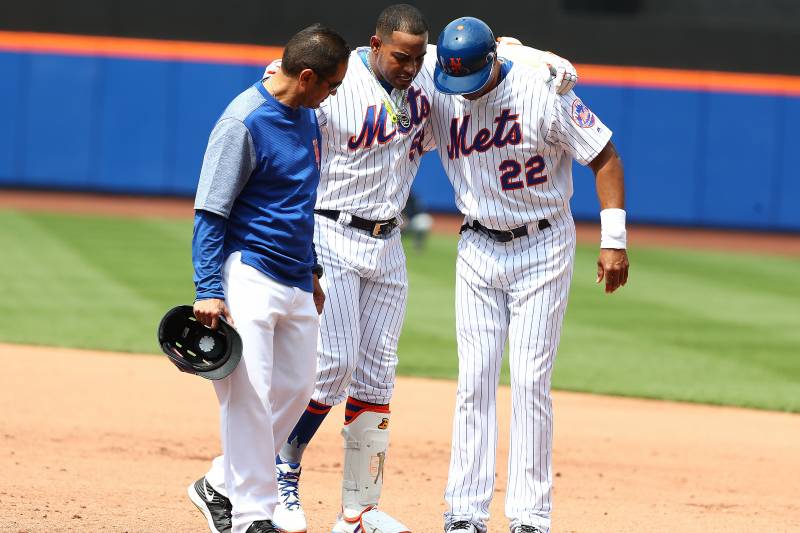
On top of that, the mighty Yoenis Cespedes is also injured, along with fellow slugger Lucas Duda. The team that I thought was poised to compete for a title just dropped six straight games at home in embarrassing fashion. Any hopes for contention seem to be dashed, but there's still five months of games to come that I will have to suffer through.

Oh, I have rooted for many a losing team before, to be sure. After all, I am a Mets and White Sox fan. However, when teams I root for have been crappy in the past, I pretty much expected it. Much worse is the cruelty of having your hopes up, only to have them dashed. That happened last year when the Mets lost their one game playoff, but at least I could be happy that my team battled injury to sneak into the playoffs. This year every game I watch will likely be tainted by the excruciating thought of what could have been. The White Sox have actually done this to me before many times in the past, like the time they signed Adam Dunn and he promptly had one of the worst seasons by a player ever.

It would also be easier to take if I already hadn't experienced a similar cruel crushing of hopes in the election last November. So in that sense the dull pain I feel on a daily basis in regards to the state of the country should prepare me for a similar pain when it comes to baseball.

For in baseball everything, including the pain, is daily. Your football team may suck, but its suckiness will only torture you one day out of the week. When it comes to baseball, the reminders are constant. On top of that, your team will win some games here and there, meaning that your expectations never truly fall to where they should be. Also, if you root for an epically bad football team, you can take a sheepish delight in the occasional win. In baseball even the worst team will win sixty games, so winning one does not bring the same feeling of release. It only serves to fool you that tomorrow will be a brighter day. In that sense baseball's illusions mirror life's.

Saturday, July 23, 2016

Track of the Week: Kate Bush "Wuthering Heights"


I have a history of ignoring a particularly important or notable artist for years, then hearing them one day and getting obsessed and buying all of their albums. That's basically what happened after with me when it came to Tom Waits and Gram Parsons. At least in the streaming age it doesn't set me back as much, like it has this week.

I am currently reading the novel Beatlebone by Irish author Kevin Barry, which is set in 1978. The main character (who happens to be John Lennon taking a trip to a remote Irish island he bought years before) keeps talking about hearing the song "Wuthering Heights" by Kate Bush on the radio. Evidently it was a big hit across the pond, but like a lot of great British music, wasn't big in America. I wanted to listen to it so I could better understand its meaning in the book.

I put it on, through the modern magic of Spotify, and was immediately blown away. Kate Bush has a singular voice in pop music, one that is most definitely weird in an off putting way. I used to think the same of Tom Waits, but in both cases once I got over that I realized that these were voices much more compelling than most others. For the past five days now I've been warbling "out on the wiley, windy moors"to myself, even though I am living through the dog days of a New Jersey summer, and not in some foggy bog in the isles. With Bush it just took that hook of the opening lines to keep me coming back to the song until something just clicked and all I could think to myself was that I had been wasting so many years of my life not listening to Kate Bush.

At forty years of age I thought that these moments of intense enthusiasm were over for me, but dang if they still don't happen. I hope they still do in my future, greying years, because having this enthusiasm has reminded me of what it was like when I was 21 and Bowie finally clicked, or when I was 26 and The Band became the only thing I listened to for two months. It just makes me happy to have a love of music as one of my lifetime companions.

Wednesday, June 15, 2016

Last Day Of School


Yesterday was the last day of school, a day that feels very different as a teacher. When I was a child it was the king of all holidays, the day of the year when I knew I would never have more freedom. The entire summer, two and a half months of sun and fun without any bullies or authoritarian teachers to ruin it, was stretched out before me, seemingly endless. Leaving school on that day was always such a high, a feeling of complete and unaltered joy that I have only had small glimpses of since.

Nowadays the last day of school comes as bittersweet relief. My wife and I have honed our morning routines with military precision in order to be able for both of us to leave the house at the same time and for me to get to New York City, her to her school in suburban New Jersey, and my daughters to their preschool. Balancing the intensity of the school year with parenting is a daily test of our abilities. Summer feels less like freedom and more like being a World War I soldier on leave from the trenches, knowing full well that we'll be back at the front for the fall offensive.

Thus the relief. The bittersweetness comes with saying goodbye to the students at the end of the year, especially the seniors. This year there is a group of seniors who I have advised for several years and feel very close to, and their hugs and tears have moved me but also made me sad for their parting. Working in secondary education means constantly meeting new young people and helping them grow, and then having to watch them leave right at the moment they become adults.

Amidst the bittersweetness of the last day of school, I also get a needed reminder of where I've come in my life. Once summer starts I usually begin thinking about how fortunate I was to escape the world of academia and land where I am now. It is sad to see the students go, but they make me feel so appreciated. They make me feel like my work MATTERS. I got that feeling so rarely in my former life. It's the feeling that has me looking forward to September and a new beginning with a new class of students, an anticipation so foreign to my childhood summers, but one that tells me I've made the right career choice.

Sunday, May 1, 2016

When I Get Old Let Me Die During Baseball Season


This week I had the sad occasion to attend to funeral of a very closer friend of my wife's family. He was one of those people who was not related by blood, but as much or more a member of the family as any of my wife's blood relatives.  He'd been ailing for a long time, but never wavered in his love of the New York Yankees.  In fact, it was one of the first things mentioned by the priest in his funeral homily.  Although I am a Yankees hater in long standing, he was the kind of Yankees fan I respect: humble and committed. Whenever I saw him (which was often, since he lived next door to my in-laws) I knew that six months out of the year we'd have an easy topic of conversation: baseball. Even if his body was in bad shape and he needed a scooter to get around, he stayed up on his team.

In that respect he reminded me a lot of my dad's grandfather. Living in Nebraska, his connection to the game was more about the game itself, rather than major league team fandom.  Back in his day every small town in Nebraska like his (with only 250 people) had a town team, and he evidently played on it well into his 40s, and batted with a unique cross-handed style. He was also instrumental in the moment when my enjoyment of baseball in the abstract became an obsession.  In the spring of 1986 when I was 10 he stayed at our house for a couple of weeks while getting some treatments at the hospital. At first I resented this, since my parents gave him my bed and I had to sleep on the living room couch. Very quickly I got over it, and I enjoyed hearing his stories of growing up in rural Missouri in a time when cars were new (he was born in 1903) and life moved at a more deliberate pace.

It seemed every day when I came home from school he would be sitting in the recliner, watching a Cubs game on WGN. (Back then all of the Cubs' home games were still during the day.) He didn't watch because he was a Cubs fan, he watched because he just loved baseball so much. His habit then got me into the habit of watching Cubs games when I came home from school, and soon enough, I was hooked. During the next season I was buried under baseball cards and I would go to my sister's softball games and "call" them in a Harry Caray voice. (Oddly enough I never became a Cubs fan, and stuck with the Royals until my later betrayal.)

Like my wife's family friend, my grandfather died in April, just as baseball was returning. (I have a distinct memory of being sad at my grandfather's passing, then seeing in the paper that Bo Jackson had struck out five times in a game, and wondering why everything in life had to be so terrible.) At the funeral last week I had an odd but intense revelation: if I am so lucky to live to old age, I want to die during baseball season. The rituals of each game will be a calming balm to soothe me as I ready myself for the end. The memories wrapped up in the game, from my walk-off hit in Little League to taking my infant daughters to the ballpark, will be there with each pitch.

Tuesday, March 29, 2016

A Letter From Nebraska


I arrived back in the Cornhusker State on Saturday, and so far have really been enjoying my time here. Spending day after day commuting to New York City and enduring its crush and push then coming home to parent two amazing yet rambunctious three year olds with my equally exhausted spouse can get really tiring. Last week I got to spend a day just exploring the city, which was helpful, since I could exult in New York's energy without feeling like a rat in a maze. Nevertheless, I needed to get some peace and quiet.

That exists in abundance in my home state. Getting off of the plane I was struck, as always, by the immense expanse of the sky, a sky so huge to seem threatening. When you are in Nebraska you get the feeling that the towns and cities are a middle finger to nature, which obviously never intended such things to exist here. That ever-present tension is responsible in large part for the humility of people who live here. You know full well that the wind and sky are permanent, and you are simply a temporary occupant of their space, and are there at their discretion. Occasionally a tornado comes around to remind you of that fact.

We landed in Omaha about 6:30, and that feeling of smallness got much more intense after the sun came down and we were driving west of Lincoln. It had been an overcast day, and the clouds blotted out the moon and the stars. Miles from any city the darkness was positively primeval, a kind of darkness that I had forgot could even exist in the world. It was so dark I couldn't see my daughters in the back seat, despite being on the one and only major interstate highway in the state. Under that huge dark sky you can feel as if the world outside of your car has simply disappeared. It felt good to be so isolated, the polar opposite of being packed cheek to jowl on the 2 train with someone's elbow in my kidney.

Easter morning I walked outside and smelled an old smell I had almost forgotten about: cow manure. My parents' house is near the edge of town, and just a few miles southwest there's a big feedlot. On the rare days the wind comes out of that direction, the smell saturates everything. As a child I hated it, but now I have to admit I exult in it a little. It is a wonderfully earthy smell, without the sickening burn of the ammonia in pig manure. And it was a welcome change from the unnatural chemical smells of New Jersey or the fuggy miasma of Penn Station. More old smells awaited, from the incense at Easter mass (used perhaps overzealously by a young priest) to my mother's ham baking in the oven.

Even better than the smells were the sounds of my daughters playing enthusiastically with their cousins. It made me feel a bit guilty that they only ever see them about once a year. I was lucky enough to have lots of great cousins, which made going to family events something to look forward to, rather than dread. I feel like out in New Jersey, where they don't have any cousins, that they are missing out on something important. My wife and my parents and I are currently plotting ways to get them out to Jersey this summer. Maybe we can introduce them to what real pizza tastes like before it is too late.

The smells of manure, incense and ham are all memory triggers, and coming home can be difficult for me sometimes because it reminds me too much of the person I once was. My home life was great growing up and I was lucky to have such caring parents and siblings and a tight extended family. However, much of what happened outside of that cocoon was shit. We walked all the cousins over to my old elementary school on Sunday to use the playground, and as I walked past the brick wall outside of the cafeteria I vividly remembered the time a kid shoved me, causing the skin on the tops of my knuckles to rip apart. I saw the kickball field where the other boys in the sixth grade banned me from playing with them during recess. I saw the spot in the schoolyard that very year where a bully literally spat on me and I finally cracked and started going after him. I wish I'd had the nerve to do that more growing up. I was a passive child, probably somewhere on the spectrum, and thought ignoring the bullies would make them go away. That passivity in my youth held me back so much in so many ways, from an inability to ask girls out to an inability to stick with student journalism because I was mortified at asking people questions. In my time growing up outside of my family I was as lonely and lacking in confidence as someone could be.

My dad showed me an old videotape of us playing a game of touch football with some of my relatives in my grandparents' farmyard when I was 16. I was a bit horrified by the gangly dork I saw before me, but watching it made my father really happy. I saw on the video that I managed to throw a pretty wicked bomb to my cousin for a touchdown, and started to feel a little bit better about myself. After all, I spent years and years pushing to not be that gangly, withdrawn dork. I'd like to think I've been largely successful. Coming home has been so relaxing as an escape from the stress of my daily life, but also an uneasy reminder that it took getting away from it for me to have any chance of coming into my own as a human being.

Wednesday, April 22, 2015

A Final Report On Letting The Academic Dream Die


Loyal readers of this blog may know that I once wrote quite a bit about academia and negotiating life after quitting academia.  If you look at the sidebar with my most popular posts, you’ll see that this topic has brought more readers to this site than any other.  Since this blog is not a careerist endeavor, I haven’t felt the need to keep providing more post-ac content, since that’s not where my head has been. 

I have been thinking about it again, but mostly reflecting about how I’ve begun to think of my academic life as something confined unalterably to the past.  I’m just about to finish my fourth year of teaching at an independent high school, and I have fully internalized my new career and vocation.  I don’t really think of myself as a former professor who happens to be a teacher, but a teacher, full stop.  I no longer see that as a step down or a sign of failure, or am even tempted to even think about it that way.


Four years ago, it would have been hard to think about being in this situation.  I was about to fly out to NYC for a job interview, desperate to escape my circumstances but frightened and anxious about what lay ahead.  I was elated to get the job, but in the summer that followed I often had heart-pounding anxiety attacks and was bedeviled by self-flagellating thoughts about my apparent failure to stick with academia.  I had devoted seven years of post-graduate schooling, two years of a low-paid low-respect visitorship, and three years on the tenure track to the academic dream.  I had a dental health issue I waited too long to get fixed due to grad student penury, and which still cost me an arm and a leg because my visitorship didn't come with dental insurance.  I had moved to a town 1500 miles from my soon to be spouse where I felt isolated and lost.

Thankfully I had stopped committing myself to the life equivalent of throwing good money after bad.  Four years later, I am so much happier living in a place where I want to live, with a job I love, and most importantly, with my family.  For about three years or so the nagging doubts and feelings of inadequacy would still sneak up on me from time to time, but they've passed.  This year I think that finally ended.  I taught a historiography class, and really enjoyed introducing my students to the basics of the scholarly approach to history.  It wasn't a graduate seminar, mostly because it was actually enjoyable.  Once my students found out that I had written journal articles, they really wanted to read one of them, which we did.  In their eyes I was not a failure, and it seemed pretty stupid at the time for thinking myself one for never having published a book, and letting my current projects slide.

Yes, I would love to get that book published and finally get an article manuscript out that I've been sitting on for three years, but I've got more important things to do.  I have students to teach, children to raise, family vacations to take.  When the end of my life comes, either tomorrow or in fifty years, will I really care that I never got tenure at a university?  I doubt it.

Monday, September 1, 2014

September Baseball


The month of September has come, a momentous one for baseball fans like myself.  It is a sad irony that right as baseball's pennant races are being decided that the sporting public shifts its gaze from the diamond to the gridiron.  For a big chunk of summer, from the NBA finals to preseason NFL games, baseball holds sway, and that's usually the time I find myself most likely to be at a ballgame, during what I call the "high summer."

Since I root for two losing teams, the White Sox and Mets, my baseball focus shifts a bit in September from my teams to the larger game.  I have not used my MLB TV subscription much this season, mostly because I see Mets games locally and I get WGN in my cable, meaning I get to watch lots of White Sox games.  Now that it's September and the pennant races are heating up, I've got the Royals game on the TV and plenty of hope that the team I rooted for in Nebraska childhood can make it to the playoffs for the first time since 1985.  The last time the Royals made the post-season was so long ago that Reagan was in the White House and Gorbachev in the Kremlin.  I am sure that over the next month I will spend my evenings watching key games in the various playoff hunts, but I will be giving special attention to the Royals.

Since the advent of the wild card format, September baseball has been a little less exciting.  With more playoff spots and smaller divisions, pennant races have lost a lot of their tension.  For instance, Oakland looked like a sure thing to win the American League West, but they've been overtaken by the Angels, even though they have the second best record in all of baseball.  Back in the old days before 1995, Oakland would have been shit out of luck come season's end, but now they know they can coast into a wild card spot.  The knowledge that it was win or go home gave September baseball an intensity that is not quite as strong today.  Of course, there are exceptions.  The last day of the season in 2011 was one of my favorite days ever as a baseball fan.  The new streaming technology allowed me to flip between games and see Boston crash is spectacular fashion.

If you root for a successful team, September brings the joyous, cathartic moment of clinching the pennant.  No other sport has these champagne-soaked celebrations before the playoffs, the reason being baseball's long and grueling schedule.  As a White Sox fan, I've only been able to experience three clinchings since adopting them as my team, but each was memorable.  A clinching is especially sweet for long-suffering fans of crummy teams who finally get their moment of glory.  I am sure that if Kansas City wins the division that there will be great scenes of jubilation.  Growing up I saw most of my baseball on WGN, and even though I was not a Cubs fan per se, I wanted them to do well.  I still remember watching them clinch in 1989, and Harry Caray's frantic call of "Cubs win the division!  Cubs win the division! Cubs win the division!"  He sounded like a boozed up street preacher singing hallelujah.  If you stick with a team and follow them each and every day over baseball's grinding six month season, it is easy to feel this way. (At :54 you can hear the call.)

If you do not root for a contender, September baseball gets more complex.  Some fans just stop paying attention, and pour their sports allegiance into their favorite football squad.  Others find things to still care about, like hoping their team makes .500 or manages to claw their way out of the cellar.  Since rooting for a losing team means taking a "wait 'til next year" attitude, such fans can take heart in all of the prospects who get called up late in the season when teams are allowed to expand their rosters.  Still others, like myself, take the opportunity to get interested in baseball more generally.  I tend to pick a couple of contending teams that I'd like to see win it all, and pull for them all the way through.  This September it's the Royals, due to my childhood connection to the team, and the Oakland As due to my respect for their ownership and affinity towards rust belt cities.  (For that reason I would be happy with Pittsburgh, Detroit, or Baltimore in the World Series.)

September baseball is also a good reminder of how the game mirrors the seasons.  It begins in spring, as new life blooms, and ends in the autumn, when the leaves die nature goes dormant.  I am a sucker for elegaic moments, including the season of autumn itself, so I never tire of September baseball's charms.

Tuesday, August 5, 2014

On Rooting For a Losing Baseball Team


I have a contrarian streak a mile wide, which helps explain why my two baseball teams are the Chicago White Sox and the New York Mets, both the less popular teams in their respective cities.  I've only adopted the Mets since moving to Jersey, so I wasn't around for their World Series win in 1986 and reappearance in 2000.  The Sox winning the title in 2005 was great, but after years of good but not great teams they've suddenly hit the skids.

Rooting for a losing baseball team is different than rooting for a loser in other sports.  On the plus side, even the worst teams in all of baseball will win sixty games in a season, giving the fan sixty reasons to celebrate.  60 out of 100 isn't so bad when compared to the NFL, where bad teams regularly go 1-15 and 2-14.  On the negative side however, since baseball is a daily game, each day gives your crappy team a chance to frustrate you and let you down.  For instance, the Mets blew a ninth inning lead yesterday after getting crushed in embarrassing fashion the day before.  When you root for a bad baseball team, or even for a good one, you can't allow yourself to get too caught up in each game, since there are 162 of them, too many to live and die over.  The key is to not let the constant losing and blown leads get to you, and to take heart in the wins, which will happen.  Losing with the occasional sweet victory has pretty much been the story of my life, so rooting for a losing team comes naturally to me.

Fans of losing teams are much more invested in the future than fans of winning teams, who often have little clue about their squad's farm system, and never speculate about what the team will be like years in advance.  Fans of losing teams do this all the time, "Hey, if we get a couple of bats in the off-season and the young pitchers keep developing, we might be able to contend for the playoffs in 2016."  (This is basically the gist of a conversation I had with a Mets fan friend the other day.)  This is not something that As and Tigers fans are thinking about right now, the only future on their minds is the upcoming October.  All of this means that life is pretty miserable for young prospects on losing teams, since they are expected to somehow turn everything around, despite being green and untested.  As with Jose Abreu with the White Sox this year, sometimes those players exceed expectations and the team still sucks.

Those unlucky enough to root for perennial losers usually have to make a decision over whether to take a glass half empty or half full attitude towards their hometown nine.  The optimists latch onto every unexpected win and maintain hope that the kids coming up out of the minors will pan out.  To think that it will all add up to another season of futility is such a depressing thought that the optimists would just prefer to ignore it and find the silver lining in everything.  Although I am a pessimist when it comes to most things in life, I am usually a half-full kind of guy when it comes to baseball, something I can't quite explain.  "Maybe next year will be better" is a mantra I can live with, since it's pretty applicable to life, too.

Of course, many fans take the half-empty approach, taking an attitude of loathing towards the team they ostensibly root for.  I know Mets fans who treat their attachment to the team as some kind of curse as they gnash their teeth at the ownership and tear their hair out over the lack of good bats in the lineup.  The hate of these fans is a fearsome thing, since they refuse to leave their abusive relationship with their  team, no matter how much pain it brings them.  Talk to these folks and you'd be hard-pressed to think of sports as a leisure activity intended to relieve stress.

As a more optimistic fan, I try to stay interested in the season long after my teams are out of contention by creating what I call "secret pennant races."  If my teams can't make the playoffs, at least they can shoot for some more modest goals, like finishing in third place or with a .500 record.  That's a rather humble goal, since winning as many games as you lose only amounts to mediocrity.  If your team is bad enough, mediocrity looks pretty damn good, though.  It looks like the White Sox are in a position to achieve that less than exalted position, which makes me happy.  As far as the Mets go, I am hoping to see them finish with a better record than the Yankees this year, not as big a goal as in years past.  Nevertheless, if they do it will be a victory for contrarians everywhere.

Wednesday, February 26, 2014

Stop Telling Young People to "Follow Your Dream"

Being an educator, I have sat through my fair share of graduation speeches and presentations.  The phrase I have heard the most often in them is one that sticks on my tongue like a burnt piece of popcorn "follow your dream."  I heard it plenty growing up myself, and I kept listening to it despite what the pursuit of my dream was costing me.  That phrase is one of the great propaganda slogans of American society, akin to the maxims taught to the little babies in A Brave New World.  It's a slogan, not a cliche, because it makes an implicit statement about American life: if you pursue your dream and put in enough work, you will eventually achieve it.

I have a crown on one of my molars, and I occasionally feel it with my tongue and get wistful.  That molar is a my constant reminder of what it really means to follow your dream.  I cracked that molar at the end of my time in grad school, but did not have the money to get it fixed.  When I left grad school for a job on the contingent track I still didn't have dental insurance, and had to opt for a temporary fix that lasted me until I was out of academia and had a dental plan that actually did its job.  (I used to get blinding toothaches when I was in the latter days of my tenure-track gig, but knew that my crummy dental plan wouldn't really cover anything.)

The dream meant more to me than my health or financial security back then.  I remember lean end of the month weeks in grad school where I feared spending any money lest I bring on an overdraft.  I remember driving cars that were practically falling apart, including one whose automatic seatbelt was busted, which wasn't exactly safe.  I remember the 80 hour weeks and sleepless nights.

I followed that dream to a contingent position in Michigan, then to a tenure-track gig in the pine forests of east Texas.  It meant being separated from my wife and living in place where I felt like a lonely outcast, lost and unable to find my way home.  I endured a toxic work environment and bullying that nearly broke my spirit.  By the time I left academia for a private school gig in New York my confidence was so shattered that I wondered if I was capable of trying anything without failing at it.  I had put so much of myself into my identity as a professor that I felt like I had been expelled into exile.

Luckily, I managed to land in a great job.  Unfortunately, the emotional investment I had made in my old career did not immediately go away.  For about a year and a half I mourned the death of my academic dream, as if I was mourning the death of a loved one.  Or more accurately, mourning the death of part of my soul.  I am only finally getting over it, but occasionally a memory of my past life will trigger a stinging emotional pain.

At least I met a lot of great people along the way and cultivated my mind in the bargain.  It wasn't a total loss, but I now know that I can never tell a young person to "follow your dream" and leave it at that.  It's pretty easy to follow that dream right into the abyss.

Saturday, June 15, 2013

In Praise of LaTroy Hawkins


Baseball fans this season are well aware that this will be Mariano Rivera's last.  He is perhaps the greatest relief pitcher in the history of baseball, and along with Derek Jeter, the one constant on the Yankees going back to the 1990s.  While we are rightfully lauding Rivera for his accomplishments, there is another relief pitcher in his forties who also deserves some praise: LaTroy Hawkins.

He's not a household name and he has a losing record across his career, but there are only twenty-four other pitchers who have appeared in more games than him in the entire history of baseball.  If he appears in just nine more games this season, he'll be number 21 on the list.  This is a major accomplishment in a sport where most players who are signed to minor league contracts never play in the bigs, and most who make it to the show don't play more than a handful of seasons.  Hawkins, however, is in his nineteenth season at age forty.  To put that in perspective, he first started playing in the majors back in 1995, when the internet was for geeks, "The Rachel" dominated hair salons, and a gallon of gas cost $1.09.

Hawkins is the classic journeyman.  He has bounced from team to team, playing for the Twins, Cubs, Giants, Yankees, Astros, Orioles, Rockies, Brewers, Angels, and now the Mets.  He began his career as a starter, and the stats show a lot of struggles.  He then moved on to relief pitching as a closer for a short time, and then to middle relief, baseball's ultimate yeoman's work.  He thrived in that role, although took a lot of fan abuse during his time with the Cubs, despite being a local guy from Gary.  With the Cubs' closer Joe Borowski injured in 2004, Hawkins was tapped by manager Dusty Baker, even though he had struggled in the closing role.  Hawkins blew saves in some crucial games, which led to him getting booed and abused by Cubs fans in a way that I'd never seen before.  The Cubs faithful are notoriously laid-back and willing to accept losing, yet they jumped all over Hawkins, even accusing him of shirking.  This is odd, considering that he has appeared in so many games, season after season.  It could be argued that the intensity of the ire directed at Hawkins is par for the course for Cubs fans when comes to how they treat black baseball players.

Hawkins has pitched for almost a decade since leaving the Cubs without drawing a whole lot of attention to himself.  He's done what a journeyman does: play well enough to stay in the majors, and bounce around to whatever team needs your services.  It certainly isn't as glamorous as being an ace starter or shut-down closer, but doing it for nineteen years is just as impressive.  Let's face it, the vast majority of use are not stars, we are journeymen and journeywomen who rarely get much attention or praise for our daily toil.  We don't do our jobs for fame and recognition, but still want to do them right.  So I tip my hat to LaTroy Hawkins, from one journeyman to another.

Sunday, April 28, 2013

Nostalgia for Living the Low Life

Now that I am married with kids and have a job teaching impressionable teenagers, I have largely abandoned my rough and rowdy ways.  It's been awhile since I have been up late enough to see the sun.  I can't remember the last time that I woke up feeling like troll used my head for an ashtray.  Hell, I can't even remember the last time I woke up after 7:30!

Back in my old days, especially when I lived in Michigan, I often found myself alone at diners and bars having conversations with complete strangers.  They were my surrogate family, having left my old grad school clan behind to take a job in the Wolverine State, and before I met a couple of great friends there. However, these friends had wives and fiances, which meant many Friday and Saturday nights all by my lonesome.  Around this same time I first picked up a Charles Bukowski novel (Factotum, to be exact) and I fell in love with the idea of being a permanent, lifelong bohemian bachelor.  I also happened to enter a major Tom Waits phase, so I interpreted my late night conversations with a bartender who looked like Bob Seger's long lost cousin to be a kind of romantic rebellion.  That romance included eating twice a week at a place that specialized in coney dogs where I was always sure to hear some funny jokes told at the counter told by weary working class philosophers.

In the midst of my Bukowski-Waits phase, I started to romance my now wife, even though she was out in New Jersey.  This meant I no longer searched for love in all of the wrong places that my Rust Belt city had to offer, but that there were plenty of lonely nights to be drowned in whiskey and beer.  These nights all came flooding back to me two weeks ago, when I was running some errands, and my wife was nice enough to let me take a detour to a craft beer bar in the area.  Lo and behold, there was a range of interesting characters with their feet on the rail and stories to be told.  I heard tales of decadent clubs in Newark in the 80s and commiserated over how bad the Devils have sucked this season.

As much fun as it was to remember my old life, it felt good to leave after an hour, and come home to my family.  It's easy to romanticize shooting the breeze over a pail of suds with articulate strangers, less so coming home to an empty apartment and the need to pass out lest the pains of solitude intrude.  I miss living the low life sometimes, but it can't beat the love of a wonderful woman or the wide-eyed looks I get from my daughters when I walk into the room.  When I ever get nostalgic for my rough and rowdy days, I just remind myself what going to bed is like now, and the feelings of dread and loneliness that used to grip my soul.

Tuesday, March 13, 2012

Life Metaphors from Baseball

[This is one of my favorite all-time posts. Seeing some old friends from grad school recently has it back on my mind.]

The sport of baseball has provided many useful metaphors over the years.  Some people have two strikes against them, some throw you a curve ball, others hit a home run in their career, or strike out, if they're unlucky.  Unprofessional behavior is "bush league."  High school boys still grade their sexual encounters by what base they happen to reach, or at least claim to have reached.  (Stand-up doubles very easily get stretched into triples or homers in the retelling.)

I was reminded of this today in an email conversation with a close friend.  Like me, he's been buying old wax boxes of baseball cards from the 1980s (they are surprisingly cheap), and has been noticing the career trajectories of the various players.  He saw a parallel with his academic career, likening himself to Steve Balboni and perceiving a similar career decline.  (I think he is being to hard on himself, and also forgets that Balboni hit clean-up for the 1985 World Series-winning Royals.)

During my brief academic career, I never managed to stick as a big league starter.  I was a solid journeyman who never played for the right team, and am now I out of the game as a player.  Working as a "visitor" for a regional state u was like riding the bench on a fifth place team.  Moving from there to my job as a tenure-track professor, where I was not allowed to teach in my specialty most of the time, was like hitting seventh and being switched from a left fielder to a third baseman.  My current job teaching high school is almost like becoming a minor-league manager.  The best player metaphor for myself that I could come up with was Tom Brookens (he managed the West Michigan Whitecaps, one of Detroit's class A teams, when I was living in the area.  He also wore glasses as a player.)  Then again, maybe I never played in the majors at all.  My old institution was the very definition of bush league.

Baseball stings hard because like life itself it is so dominated by fear of failure.  One line in the movie Moneyball has really stuck with me: "at some point, we all realize that we can no longer play the boy's game."  As I crack open my packs of baseball cards, I see names that I had forgotten about, and players whose accomplishments have all but disappeared into oblivion: Calvin Schiraldi, Ken Phelps, Chet Lemon, Kirk McCaskell, Atlee Hammaker, Sid Bream, Oddibe McDowell, Mark Wasinger, Floyd Youmans, and on and on and on.  Some were pretty damn good for awhile, others only managed a season or two in the majors.  Then again, they did make it to the bigs, their names are in the Baseball Encyclopedia and they've been immortalized on very own bubblegum cards, something that can never be taken away from them.  Baseball greatness, like greatness in any walk of life, is pretty goddamned hard to achieve.  Perhaps its pursuit, rather than its attainment, ought to be emphasized in this cruel, failure-laden world.  After all, we all can't be Robin Yount.

Saturday, February 4, 2012

A Good Bar is Hard to Find


Since I have moved out to New Jersey, my life has changed dramatically.  I eat healthier, walk more, and spend very little time in bars.  The first two developments are welcome, the last, I must admit, makes me a little sad.  Some of the best times of my life have been in bars, and I have yet to find an institution better for washing the grime and frustrations of the working week off of my back.  Granted, my spending less times in bars is the result of living with my wife, but recently, when I stopped into a corner Irish pub for a pint with a work chum after the school day was done, I forgot how much I loved life behind those swingin' doors, as the song goes.  Bars have often been a friendly port of call when traveling in unfamiliar places.  Last year, during a trip to New Haven, I had some wonderful conversations with the patrons at a storied dive.  When I first moved to Michigan, I quickly established some homes away from home that made my life bearable.  On the other hand, the lack of a good bar is a real drag on my quality of life.  Back when I lived in Texas, my friends and I went out for drinks with friends quite often, but never enjoyed the establishments where we socialized, which were either over-priced, lame, full of students, or all three.  (Of course, a good bar opened there a month after I left.)  So what makes a good bar?  Here are some criteria that I have come up with after years of experience.

Atmosphere
A good bar is a place where you want to settle in and spend some time.  The first bar that I ever truly embraced was the Dubliner, in downtown Omaha.  It's a basement Irish pub with an extra whiff of dank that always made me feel like I was spending time in a warm, jovial cave.  I could spend hours down there, and never feel that any time had passed.  For me, that is the test of a homey bar.  Does last call come as a surprise since you haven't been looking at the clock?  Is so, you've found your place.

Decor is a crucial element in setting the atmosphere.  In my experience, wood-panelled walls are the sign of a quality establishment, since it means it's a joint that still draws in plenty of paying customers without updating the interior since at least the 1970's.  Sometimes decor can keep a wretched bar from being unbearable.  My local in Texas was usually full of obnoxious students, had nothing better than Rolling Rock on tap, and bartenders who didn't know how to mix Manhattans.  However, it had some of the most unintentionally hilarious and endlessly fascinating wall hangings of any bar I've known.  Back in the 80s and 90s, it had also been a music venue, and pictures of the bands and artists desperate enough to play in a last-chance shit-hole town stuck in the back woods of East Texas were now immortalized by the framed black and white promotional pictures hanging on the wall.  Because of the time and place of these photos, there were more bad mullets and silly mustaches than you'd see at a tractor pull.  Another dive I frequented in Chicago left much to be desired, but I was always entranced by the giant clock above the bar, which had the face of former mayor Richard J. Daley painted on it.

Quality Beers on Tap
There are some bars that I love that fail this test, but they must have a musty, homey character of the highest quality, like Jimmy's in Chicago.  This place was so dark (before its later remodeling) that I swear I could never see the ceiling.  Unless a bar can reach that high standard of atmosphere, it must serve something on tap surpassing the standard Bud, Miller, and Coors.  Life is too short to spend it drinking the watered-down swill peddled by the megabrewers.  My local in Grand Rapids won my heart from the first, since it had twelve shiny taps dispensing micro-brewed and imported goodness.

A rare bar without good beer can pass this test by having exceedingly shitty beers on tap, if the bar is divey enough.  For example, I once spent a few evenings in a place called The Brass Rail (a plus) whose bathrooms smelled so awful that just opening the door to them gave the entire establishment a stench of urinal cakes (another plus), and contained an antiquated jukebox with 45s instead of CDs (huge plus) that allowed me to spin tunes like "Kentucky Rain" and "King of the Road" for a quarter (mega-plus!).  This place had Miller High Life and Pabst Blue Ribbon on tap (before it was a hipster beer), and a cooler that dispensed forty-ounce bottles of Mickey's Malt Liquor to the neighborhood ragamuffins.  In the context, these deficiencies of beer quality added to The Brass Rail's priceless atmosphere, rather than making it uninhabitable.


Understanding and Competent Staff
Establishing a relationship with bartenders and bar maids is a skill that every seasoned drinker knows well.  After I moved to Michigan I spent a lot of time at a bar where I hated the atmosphere but liked to go  because the staff were so good to me.  Every third drink was free, and there were always interesting conversations to be had.  At my local, one of the bartenders became legendary among my friends for his ability to keep all of his orders in his head, and to get us our bubbly pints faster than you could say Jack Robinson, even at the height of happy hour mania.  I also tend to like bar staff who take the piss.  For instance, at a place that I liked in Chicago, one waitress called me a "nancy boy" for ordering my whiskey on the rocks, rather than straight up.  Rather than being offended, I was honored to be served by someone who cared.

On the other hand, shitty service can ruin a night out.  Whenever one of my friends gets a pint with half an inch of beer missing off of the top, he calls it a "Hamilton's pour," in (dis)honor of a poorly staffed pub bearing the name.  Some bar staff seem to think that their good looks, rather than responsiveness, ought to earn them tips.  One such waitress at the otherwise wonderful Dubliner had my friend Dave and I ready to put our table on fire if it meant drawing our waitress from flirting with an admiring table of frat boys.  If you belly up to a bar and ask for any kind of cocktail more sophisticated than vodka and cranberry juice and are met with a slack-jawed look of incomprehension, or they put grenadine in your Manhattan, slowly back away and never darken that establishment's door ever again.


Agreeable Clientele
If you're gonna spend a lot of time in a place, it has to be spent with people you actually want to be around.  This was always a problem in grad school, because seemingly promising establishments would suddenly get overrun by hordes of ass pants sporting bleached blondes and spiky-haired, thick-necked bully boys wearing white baseball caps from the local undergraduate population.  I tend to like bars full of serious drinkers, the type of joints that a friend of mine calls "alkie bars."  Their patrons typically go the bar as a place of meditation and contemplation, and since they've got so much swirling around in their heads, make for good company.  My favorite bars are the places where I've had interesting conversations with complete strangers.


Food
A bar does not necessarily need food, but it doesn't hurt.  After all, you don't want to have to actually leave and go somewhere else to eat, do you?  Bars with run of the mill food are a dime a dozen, the sign of a bar with good food is that they have unique items on their menu.  For instance, my fave bar in Michigan had an eponymous sandwich, "The Logan" on the menu, which vanquished many a hardy punter.  They also served free pizza on Sunday (along with $4.75 pitchers of PBR), a true embarrassment of riches.  Failing such unique attributes, quality burgers and free popcorn are always good signs.


Intangibles
Of course, finding the right bar, like finding the right life partner, is not a matter of constructing a checklist.  There has to be an extra-special bond that surpasses articulation between you and the bar.  I've been in many bars in all kinds of places in my time, but a precious few conform to this standard.  In my memory, they are like old friends, and they bring me great joy when I get to visit them after years apart.  Hopefully I will find one again before my time is up.