Showing posts with label film. Show all posts

Friday, June 23, 2023

70s Airport Movies as Pre-historic Blockbusters


Perhaps it's a reaction to the WGA strike, but all of a sudden I am seeing a whole bunch of older movies on Netflix again. Last week I saw that they had 1970s Airport and its sequels, and I figured they would make decent dumb entertainment for a lazy Saturday afternoon. 

They aren't great films, but definitely met the decent dumb entertainment criteria. The only one I had seen was the one from 1979 that took place on a supersonic Concorde, and I saw it at night on TV in a roadside hotel while traveling with my parents in the 80s. The airport movies were the kinds of movies shown on TV I grew up with, but the one I actually saw multiple times was Airplane!, a  hilarious spoof of the genre. I laughed at the jokes, but didn't get that the sick kid and stewardess flying the plane were direct calls to Airport 75. 

It's weird getting to known entertainment first through its spoofs, something that used to happen to me a lot when I first red MAD magazine as a kid. In a weird way, it's liberating. My expectations were already low, and it was fun to find the things that the parodists referenced. Because I am a cinema nerd, I became fascinated as I watched these films with their part in film history. 

I have an especially weird fascination with Hollywood's attempts to revive its lost relevance due to the rise of television and changing cultural values in the 1960s. Ultimately the way forward was to give the so-called "movie brats" the keys to the kingdom, a very well-documented story. The conventional narrative says that the era of "New Hollywood" ended when Jaws and Star Wars (made by a couple of movie brats) showed that the blockbuster could be Tinseltown's salvation, putting an end to the daring film-making of the early 1970s. 

While much of this narrative is true, I think the Airport movies show that blockbusters were already a thing before Jaws, but in a kind of pre-historic form in need of evolution, a celluloid trilobite, if you will. 1970s Airport was one of the first films to ever top $100 million in domestic box office. It also spawned numerous sequels, just like modern blockbusters.

The trilobite status of the first one is obvious in so many ways. The heroes are all film stars of the last generation (Burt Lancaster, Dean Martin, and George Kennedy) and so is the villain (Van Heflin.)  The film stars the great Jean Seberg, but in a secretary role where she is not given much to do. Similarly, Jacqueline Bisset ends up being the damsel in distress when Heflin's bomb blows a hole in the back of the plane. Absolutely nothing dates the film more than Dean Martin's rogueish Brat Pack act, which feels as out of place as singing "That's Amore" at a love-in. 

Unlike future blockbusters, the plot gets very soapy. It's less about the action and more about whether Burt Lancaster is going to divorce his shrewish wife, who is reasonably tired of him sacrificing his time to managing the airport. The film techniques are also very much in keeping with mainstream film-making of the late 60s, the kind soon to be swept aside in New Hollywood. The sets are pristine and the lighting so bright that you can see every corner of every room. The camera is pretty stationary, too. The use of split screens is the one nod to newer film-making styles. 

While it looks very old fashioned compared to the type of stuff Friedkin, Bogdanovich, Rafelson, Coppola etc were putting out at the time, from the point of view of 2023 I can say it's some of the most gorgeous cinematography of that particular late studio system style. People at the time certainly liked it, and much of the response was literally "they don't make them like this anymore!" There was a craving out there for big crowd-pleasing movies, the kind of thing TV (especially then) could not provide.

Airport 1975 (actually released in 1974) also had high production values, but it's also clear why Jaws and Star Wars would blow movies like this off of the screen. The special effects are really clunky, especially when the jet airliner gets hit by a small prop plane and a stewardess played by Karen Black has to take over. The scene when Charlton Heston, the ultimate sweaty token of Old Hollywood masculinity, gets helicoptered in is similarly laughable. Speaking of laughs, few come from the creaky, groan-worthy bouts of comic relief (with Jerry Stiller's drunk salesman the one exception.) 

Airport 1975 followed the formula of other prehistoric blockbusters like The Towering Inferno by packing the cast full of bygone stars that might get older audience members off of the couch and back in the theater. For example, Gloria Swanson shows up playing herself in her last film role. Karen Black is the only New Hollywood mainstay, and this film wastes her manifest talents as an actor. 

Beyond all of this, the Airport films like other prehistoric "disaster movie" blockbusters echo the downbeat themes of failure and disillusionment that permeated American society after the end of the 1960s. In Airport, Burt Lancaster has to fight against airport owners who are unwilling to finance necessary improvements. In the Towering Inferno, a new skyscraper catches fire, and in the Poseidon Adventure. a modern ocean liner sinks. The jet liner, once a symbol of advanced modern life, is shown to be fragile and a site of anxiety and fear. Star Wars had such an impact in part due to its optimism, of a human being heroically triumphing over the forces of evil in a "galaxy far away" not beset by our own problems. 

Star Wars would Airport movies look like the film equivalent of a horse and buggy in their own time. As more and more people begin to tire of CGI spectacles and Marvel's tiresome march of one blockbuster after the other, it's good to watch some prehistoric blockbusters and enjoy big popcorn entertainment still mired in the conventions of Old Hollywood. 

Saturday, July 30, 2022

Ghost World, The Last Nineties Movie


Decades are notoriously inelegant ways of periodizing popular culture but impossible to resist. "The sixties" obviously did not start in 1960, or really by at least 1964 for that matter. Chuck Klosterman's recent book The Nineties argued for it as a "last decade" in this regard, and I tend to agree with him. When we say "nineties" in terms of popular culture we still have a notion of what that means in the way we just don't for the 2000s or 2010s. 

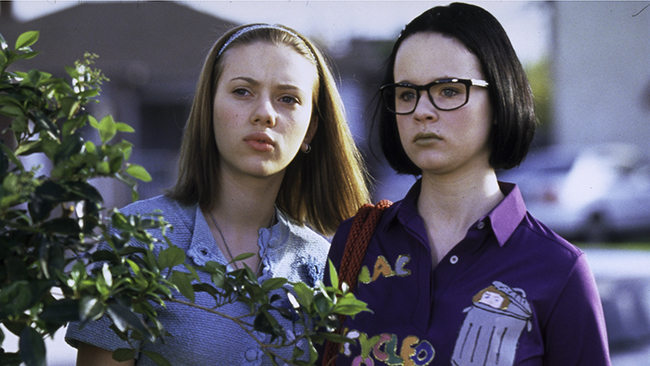
I recently rewatched Ghost World, and even though it came out in 2001 (just ten days after the 9/11 attacks), it feels like the last nineties movie. Like many indie films of that decade, it prioritizes an outsider perspective and the whole slacker mentality. It disdains politics as a waste of time, an annoyance that has little meaning for daily life. That's a perspective that's impossible to imagine in this day and age.

The main characters, Enid, Rebecca, and Seymour, are out of step with the consumer world of late capitalism. Since there's no political way to counter it in a world of "there is no alternative," resistance takes the form of slackerdom. Gen Xers who grew up with the Reagan delusion of "morning in America" did not have many productive ways to reject it. Being one of those young people, I longed to be a part of political movements for change that didn't exist yet. Instead, I abandoned the profit motive by going to grad school (lol). 

Enid and Rebecca are two high school grads with no clear ideas about the future and brimming with loathing over their surroundings. Seymour is an adult with the same mentality who lives a monk-like existence, driving a broken down car and living in a crappy apartment while putting his money and passion into collecting old blues records. Rebecca starts to make peace with the world, but Enid and Seymour never will, and they can't even maintain a connection with each other despite having so much in common.

Nowadays, the characters' obsession with authenticity feels quaint. Everybody sells out. Indie rock bands license their music for car ads and social media has turned everyone into a PR flack for themselves. Plenty of prominent socialists spend their days on Twitter hustling to get more followers. 

The film also has a very 90s attitude towards politics. The two parties both bought fully into neoliberalism and neither seemed all that appealing. The whole Lewinsky thing summed it up. Clinton was a slimey liar, but Newt Gingrich and Ken Starr were reactionary liars trying to gain power in skeevy ways. The serious problems the country faced weren't being addressed at all, either by politicians or the media. There did not seem to be much point in engaging with such a completely hopeless political world. 

This stance comes across in Enid's art class. Her teacher seems to think that art can only be "serious" if it specifically topical. She therefore touts her own bad video art and praises a student in class who constructs pieces that are very heavy handed allegories for abortion rights. The film treats this as unbelievable cringy and lame. When Enid tries to get her teacher's approval by doing a "found art" piece using a nasty old racist caricature to point out modern hypocrisies over race, she ends up getting in trouble at the exhibition. The film treats the reaction as an example of what today gets called "cancel culture." The lesson seems to be that political engagement is ultimately futile, a common understanding of the time.

Back in the 90s using blatantly offensive language and imagery to critique bigotry was far more accepted than it is today. It was also striking to hear characters throw the word "retarded" around so much and to use "gay' as an insult. Modern day Enids would probably be put off by that kind of thing. 

In smaller ways the film reflects the 90s in a positive fashion. Enid and Rebecca both work low wage jobs, but can also rent a decent apartment together on that money in the LA area. That's pretty much impossible today. The scenes where Enid fails to catch on doing crumby service work at a movie theater reflects 90s tropes in movies like Clerks and books like Generation X. The reality of low wage service labor has pretty much disappeared from film nowadays apart from a few exceptions.

It might be a cliche that the nineties ended on 9/11, but things become cliches for a reason. The problem of the nineties, of how to find meaning in a postmodern world devoid of anything real, got replaced by the war on terror, and that was replaced by battle over the country's very soul. Nostalgia is stupid, but I do have nostalgia for a time when the stakes were lower and the problems more quaint. When I feel that way I can always pop on Ghost World. 

Tuesday, August 24, 2021

Watching Ikiru on School Year's Eve

I start back at school tomorrow. It's not the first day of classes, but the ever-metastasizing gauntlet of meetings and trainings that educators must go through before the school year starts. (How else will the ever-growing corps of administrators justify their existence?)

Due to how awful and difficult the last school year was and the Delta surge I had been thinking about this school year with a great deal of anxiety and trepidation. I look around at my non-educator friends who are also white collar professionals but aren't expected to show up to the office most days and get resentful. I think about all of the sacrifices and extra work I did over the last year and a half in order to completely alter my teaching practice from top to bottom TWICE, which was not rewarded with extra pay from my employer or respect from other people in society, many who really seem to hate teachers. I saw the latter as a history educator this summer, witnessing the reactionary mobs scream about "critical race theory" and making laws that would basically make it illegal in many places to teach the actual events of American History. After a year and a half of wearying sacrifice, it felt like getting punched in the face.

Reader, I will be honest and admit I did a thought experiment last week. I asked myself, if I was offered some dumb useless corporate job that paid me the same as my modest salary and allow me to work from home half the time, would I take it? I decided I would take it in a heartbeat. 

Today I changed my mind because of a Japanese movie from 1952.

With the school year looming and my kids in day camp and my wife at work, I decided to use Monday and Tuesday this week to watch the movies I would not subject my family to but which require too much concentration for me to watch late at night when everyone is asleep. Today I decided to watch Ikiru, since I love Kurosawa but have mostly watched his movies set far off in the past.

Ikiru's title means "To Live." It is the story of a local bureaucrat named Kanji Watanabe. At the start of the film he is an old man detached from those around him, focused on his work but mostly just pushing paper and avoiding actually doing anything of substance. His diligence and hesitance to rock the boat helped him rise to the top of his department, but he is clearly not a happy man. He then discovers that he has stomach cancer, and thus six months to live.

At this point he questions his life. His wife had died years before and he had dedicated himself to providing for his son. However, his workaholic ways meant he never emotionally connected with him, and his son is thus more concerned about his inheritance than his father's health. This of course breaks his heart, and he first reacts to impending death by becoming decadent, going out to bars and brothels. This does not satisfy, so he strikes up a friendship with a young woman who clerked in his office. She still has a zest for life which lifts his spirit, but as a young person she gets bored with their relationship. At this point Watanabe realizes what he needs to do. He goes back to work.

However, he does not go back to work as before. At the beginning of the film we see a group of women trying to get a cesspool in their neighborhood covered and a playground built. They get the runaround from Watanabe, who as the head of Public Affairs is supposed to be helping them. When he goes back he throws himself into this project, pushing the stodgy bureaucrats in the other departments to get this important work done. The day the park is completed, he dies, satisfied that he had actually done something. At his funeral dinner the other bureaucrats try to avoid giving him credit for the park, but the mothers come in weeping, despondent that they lost the one man with power who had actually listened to them. The bureaucrats then realize they too should be spending their lives more fruitfully.

It's often not pleasant to think about death, but it is clarifying. Yes teaching under COVID is grueling, and yes it forces me to take risks and reimagine my work in ways I would not have had to do had I gone to law school. Needless to say, it pays a lot less, too. But this film was a reminder to me that my work MATTERS. At a time when reactionaries are trying to force false propaganda about the past on our students, my work in the classroom is necessary. I know too that what I do has had an impact on so many people who still bother to remember me and talk to me. That's what gets me up in the morning. Now time to get to work. 

Wednesday, December 25, 2019

What If...Bedford Falls Was A Real Town?


[Editor's Note: It's A Wonderful Life is a holiday classic that also contains a critique of capitalism. But what if Bedford Falls was a real place? What would it look like today?]

BEDFORD FALLS TODAY (NOT SUCH A WONDERFUL LIFE)

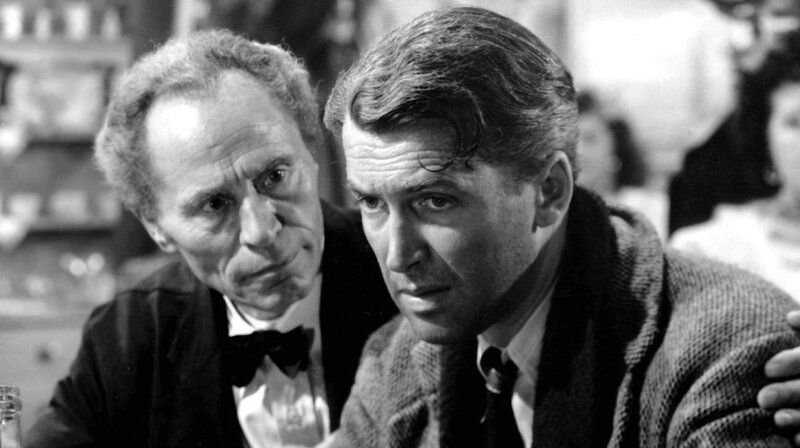
BEDFORD FALLS, NEW YORK) Seventy-three years ago Bedford Falls became famous as the hometown of George Bailey, hero of It's A Wonderful Life. A lot has changed in this small town in upstate New York since that time.

Most notably, the Building and Loan run by the Bailey family no longer exists. Like other such institutions it went under during the savings and loans crisis of the 1980s. During the 1970s George Bailey passed the business down to his children, who took advantage of Reagan-era deregulation to engage in real estate speculation. The town's economy was not strong enough to support such risky investments, a familiar story across the country.

The Building and Loan's fate was mirrored by that of the local mill, which shut its doors in the 1990s after years of downsizing and layoffs. With the decline of local manufacturing the job opportunities available to residents of the town drastically decreased. Nowadays young people who get an education do not even have the option of choosing to stay home like George Bailey did. There simply is no work requiring their degrees. Those people end up in bigger cities in the region, often with fond memories of a place they are estranged from out of necessity, rather than choice. Those who lack education have few options in Bedford Falls as well, and what jobs do exist are mostly minimum wage work in the service sector.

Todd Bishop, whose grandfather was famed local cabbie Ernie Bishop, said "I drive Uber but there's not much business in a town this poor. Mostly getting drunk people home from bars. Apart from that I work part-time at the local gas station."

The once glittering main street has gone dark, with many storefronts having been empty for decades. Gower's Drugstore became a pawnshop before closing for good ten years ago. An empty home like the one the Bailey family took over has gone from being a rare oddity to a typical sight. The one advantage to living in Bedford Falls is the low cost of home ownership due to depopulation.

The land downtown has been passed down from Henry Potter -George Bailey's economic rival- to his descendants. All but one live outside Bedford Falls, most having moved to the New York City area. These absentee landlords see their holdings more as an heirloom or tax write-off than a viable business commodity. The one exception is Jacob Potter, a twenty-something descendent of Henry who has started a microbrewery and axe throwing club in one of the downtown buildings.

The commercial center began shifting to the highway on the edge of town in the 1980s, but the closing of the mill has meant even the absence of big box stores like Wal-Mart. Dollar stores are the only retail left in Bedford Falls. For anything else residents have to drive several miles to either Rochester or Syracuse. The one industry doing well in the region is the medical industry, which makes money from an aging population and a spike in opioid addiction.

George Bailey Jr still lives in his family's old Victorian home in Bedford Falls, even after the Savings and Loan debacle. "I know my father did a lot for this town, but keeping a town afloat isn't a one person job. An individual can't hold back a tidal wave. I have no doubt he made a difference, but I am almost glad he died thirty years ago so he didn't have to see what's happened."