Showing posts with label country music. Show all posts

Sunday, September 6, 2020

Waylon Jennings, "Old Five and Dimers Like Me" (Track of the Week)

I turned 45 on Friday. Despite being in quarantine, it was a good birthday. My wife got me some amazing gifts, and we had a decadent dinner of takeout sushi washed down with quality white wine. 

Since reaching middle age each birthday has become time to take stock of my life. That's been even more the case in the time of covid. Already back in March when it hit I asked myself if I could face death confident I had lived a good life. I did some soul-searching and said yes. 

However, middle age still continues to be a phase in life about the shedding of dreams, layer by layer. There's a reason that deaths from suicide, alcohol, and drugs spike in this part of the life-cycle. Rarely does anyone's life turn out how they wanted it too. As I hit 45 I reminded myself once again that I never got to be a noteworthy historian, and never will. I never wrote my book, and likely never will. My chance to be an internet scribbler of note has passed, too. Instead I take comfort in my friends and family, and the knowledge that my CV won't keep me warm at night or visit my grave.

These are feelings absent from pop music but at the center of classic country. Country, soul, and the blues all have room for the middle-aged experience. One of the best of these songs is "Old Five and Dimers Like Me," performed by Waylon Jennings but written by Billy Joe Shaver.  The first lines are cutting;

"I spent a lifetime making up my mind to be/ More than the measure of what I thought others could see."

Yes, I am a teacher, one of the least respected professions and a job that doesn't pay. And I never wrote anything that ever made any kind of impact. But I still have the vanity to think people should see me as more than the schlub that I actually am. 

It's a very unhealthy attitude. The end of the song is about accepting being a schlub, a "five and dimer." If you can't change that, there's no real point in beating yourself up about it. I think a lot about my dad's father, and how life dealt him a bad hand but he always seemed able to stay contented in spite of it. Middle age is discovering that you are no longer becoming the person you want to be, you are the person you are whether you like it or not: "It's taking me so long and now that I know I believe/ All that I do or say is all I ever will be." 

Or to put it even more bluntly:

"An old five and dimer is all I intended to be."


Thursday, October 24, 2019

Waylon Jennings, "Only Daddy That'll Walk The Line"


I did a little extra work at my job last week, and I used the money to buy the DVD set of highlights from the Johnny Cash Show, which ran from 1969 to 1971. Unlike most country music television it wasn't syndicated but a major network production and the performances crackle and pop in ways that variety show TV rarely did. 

Variety shows seem to have disappeared after the 70s, which is a damn shame. Sure they're as cheesy as all get out, but I'd rather watch great musicians do their thing than some rich failson or trophy wife clown in from of the camera on a "reality" show.

One of my favorite performances on the DVD is Waylon Jennings doing "The Only Daddy That'll Walk The Line." It's a song from his pre-outlaw days when Nashville just didn't know what to do with him. While Jennings languished a bit in those days, this track has the bite and rhythm that his future outlaw classics would show. 

On the Johnny Cash Show Jennings turned in a great gritty performance of this song, breaking it out of the shackles of the Nashville Sound. He also performs a truly baller move (as the kids say) when the band strikes up the song while he is still being interviewed by Cash, Jennings strides across the stage and grabs his guitar to join in at the exact right moment. 

It's a moment that's both contrived and spontaneous, and the kind of thing, for better or worse, you just don't see on television anymore. 

Thursday, July 4, 2019

July 4th Podcast Special


This week, for the first time ever in my long and not so storied blogging career, something I wrote went viral. So if anyone read that piece and decided to stick around, I'd ask you to give my podcast, Old Dad's Records, a try. This time around I decided to go with an Independence Day theme and focus on country music, the style of music most invested in nationalism. I start with Lee Greenwood's "God Bless the USA," a propaganda anthem birthed at the height of Reagan that owes its longevity to our Foreverwar. From there I pull a record from my pile of old records, and this one is a doozy. Porter Wagoner's The Cold Hard Facts of Life is full front to back with heartbreak, murder, drunkeness, and depression. Here we see the duality of country music, which often claims the mantle of "traditional values" while diving in the darker side of life. I end with a rave for Orville Peck, who has combined 80s indie British rock with country twang in a way I find very appealing. He's also gay and wears a mask, which puts him in with a long tradition of country music eccentrics, the same tradition Porter Wagoner belongs to.

Friday, March 24, 2017

Old Dad's Records Episode 7 (The Gambler)


The seventh episode of my podcast is now up!

https://soundcloud.com/jason-tebbe/old-dads-records-7-the-gambler

After my trip to Austin, where I bought a bunch of country records, I thought it was time that I do a country music episode. I am also feeling homesick right now, and this music is always a good taste of home for me. I get into "The Gambler," a Merle Haggard record, and Neko Case. Delving back into country has also been refreshing, since country music is music for adults about adult problems from an adult perspective.

Wednesday, August 3, 2016

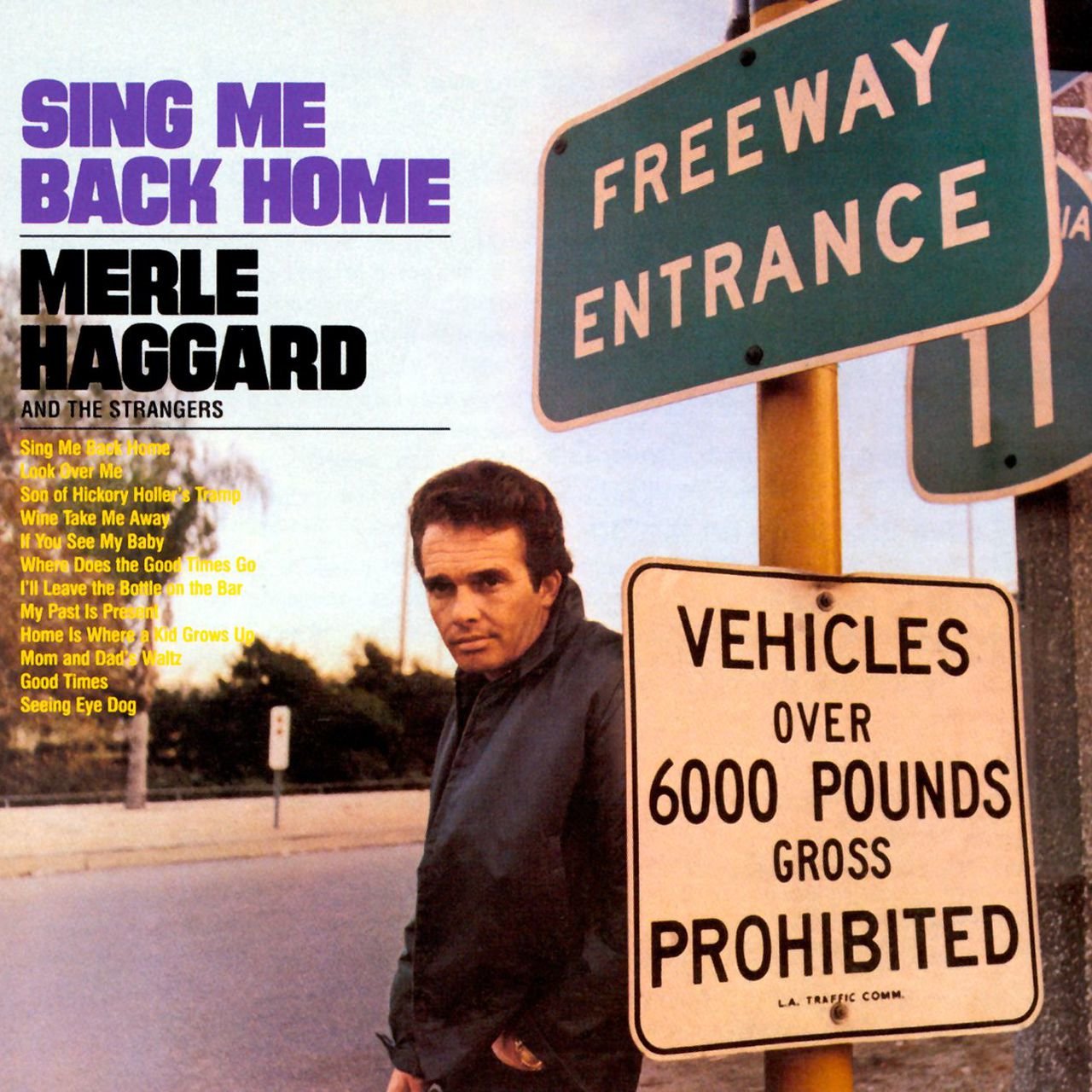
Merle Haggard, "Sing Me Back Home"


This summer has been quite a success from a record buying perspective. Just yesterday I was in Easton, Pennsylvania, taking the kids to the big Crayola Experience playfest. We wandered the rust belt in recovery downtown, and I found a record store where I was able to get a pristine copy of Stevie Wonder's Innervisions for just seven bucks. My best finds have not been soul music, but country music. I went to an estate sale last week, and was surprised to see a huge collection of classic country from the 1960s. I made off with a Charley Louvin solo album and some really old Jimmie Rodgers and Bob Wills compilations. Two weeks before at the incomparable Princeton Record exchange I managed to find, for two bucks each, Porter Wagoner's Soul Of A Convict and Merle Haggard's Sing Me Back Home. I never thought such treasure troves of classic country were available in New Jersey.

Listening to these records has been great, but a little painful. Classic country music is not necessarily my favorite kind of music, but is elemental to my being. Its sounds call forth things in my bones. It is music I associate very strongly with my central Nebraska homeland, and when I hear it, it can make me extremely homesick. I love living here in Jersey and getting to work in New York City, but there are daily reminders that where I live and where I am from are really two different countries within the same country. Sometimes, when it comes to politics, that's a comforting thought. Nevertheless, I miss my family back home and lots of small things, from the taste of a Runza to the sound of a Cornhusker football game coming out of a radio on a fall Saturday afternoon to the skies so expansive that they seem infinite.

One song above all others wrecks me, "Sing Me Back Home." Merle Haggard could get away with a bit of corn in his music because he had the tough guy bonafides. When the man who sang songs about drinking like "Tonight the Bottle Let Me Down" or crime like "Mama Tried" turned to ballads, you get the feeling he means it in a way that you wouldn't if the song was sung by, say, Ray Price. (No disrespect to Ray Price.) It's the song of a convict walking to his execution, pleading for his fellow prisoners to "sing me back home before I die." 

As I have been learning since listening to those old country records, next to food nothing can evoke home like music. The prisoner, knowing he is about to die without seeing his home every again, at least wants the songs of home to send him off in his last moments. And so I listen to that old country music on my record player, and think of home, get a little smile on my face, and try not to cry.

Thursday, April 7, 2016

Merle Haggard And My Crooked Path To Country Music

If "Sing Me Back Home" doesn't move you, you have a heart of stone

The passing of Merle Haggard yesterday hit me harder than I was expecting. It might be because I had just come back from visiting Nebraska and nights spent playing cards with my parents with songs like "Mama Tried" playing in the background. It also might be that the greats of country music are now almost gone. Loretta Lynn, Willie Nelson, and Dolly Parton are with us, but that's about it. Johnny Cash, Tammy Wynette, George Jones, Waylon Jennings, Buck Owens, Porter Wagoner, and others have crossed over.

Unlike almost any other genre, the weight of history and tradition weighs heavy on country music. It prizes authenticity, and lament from fans that the genre has lost its way is pretty damn old itself. Heck, Waylon Jennings' "Are You Sure Hank Done It This Way" is now over forty years old. In the midst of the "countrypolitan" movement on the sixties, with its strings and Nudie suits, Haggard brought back the old time honky tonk religion. A gut-bucket tune about trying to drink away bad memories like "The Bottle Let Me Down" is about as far from the likes of Eddy Arnold as you could get. Haggard was no rhinestone cowboy, he'd grown up in a house made out of an old box car and did time in San Quentin. Not only that, he sang about that world in songs like "Hungry Eyes."

I didn't know much about Merle Haggard, even though I came of age in a place saturated in country music. When people said "country" I thought of Garth Brooks and other generic singers with big hats and hacky songs. Country was becoming, in Tom Petty's words, "bad rock with a fiddle." It was the one genre of popular music that I had no use for.

That changed in 1994 when Johnny Cash put out his first American Recordings album. A lot of hip people were endorsing it, and it was produced by Rick Rubin, whose work I knew well. While today I consider it the weakest of his late period albums, at the time it really grabbed me. Soon I expanded beyond Johnny Cash to Uncle Tupelo, and got excited by contemporary country music made by people who sounded more like The Clash than Billy Ray Cyrus. After that I got into Hank Williams, and I was hooked for life.

Eventually I got around to listening to Hag, which I'd avoided because of his political songs, such as "Okie From Muskogee" and "Fighting Side Of Me." I learned that the former was actually meant less as an endorsement of reactionary small town politics than a tongue in cheek description of them. Now I listen to that song and get a laugh. The latter is not redeemable.  After awhile I reminded myself that while I loved old country music, my relationship with it was a bit complicated, much like my relationship with the region I come from.

I come from Nebraska and I'm proud of it, but its politics make me crazy and its parochial viewpoint tries me. But I can't deny my loyalty or my deep and sincere love for the place. At the same time, while country music has long given voice to reactionary sentiments (despite folks like Willie Nelson and Johnny Cash), it's music that affects me on an elemental level that I cannot describe. It's music that is, like my home state, a part of me, whether I like it or not. I might listen to other kinds of music more, but when I throw Merle Haggard's Same Train, A Different Time on my turntable, something deep inside of me sings along. I'm sad that one of few people left on this earth who could do that kind of magic is no more, and that his like will never be seen again.

Sunday, April 3, 2016

Track of the Week: Pointer Sisters "Fire"


We live in a cultural moment where an obsession with "authenticity" co-exists with increasing cultural segmentation.  Even though I am getting long in the tooth, I can still follow pop music because the amount of it that crosses over the various segments is really tiny compared to the past. The various genres of music seem to multiply with each year, and seem to be saying less and less to each other.

It wasn't always like that. Back in 1930 the king of country music, Jimmie Rodgers, cut the song "Blue Yodel #9" with Louis Armstrong, jazz legend. In the 1960s, Nina Simone's music seem to pull from innumerable genres, from jazz to classical to to show tunes to soul. The Clash's magnum opus London Calling has everything from reggae to ska to rockabilly to hard-charging punk on it.

In 1979, the same year as that Clash record, the Pointer Sisters released "Fire," which sounds as if country and soul got together to make a beautiful baby. Like the sensation described in the lyrics, this song just smolders until the drums, piano and organ come in big, then draws back again, only to burst forth once more on the solo. There are few other songs that replicate the sensation of trying to suppress burning lust so well, and it's all done with a sultriness that's neither playful or silly. I've been listening to this song non-stop for the last month, and as much as I enjoy it, it makes me wistful for a time when pop music could hold multitudes.