Thursday, August 26, 2021

Introducing the "Autumn of Stones" Series

57 years later are they finally fading away?

This summer I took it upon myself to listen to every single Bob Dylan album in order (including the Bootleg Series) and write about them on this blog. I enjoyed doing it, and also the conversations that came out of it with readers. With the sad passing of Charlie Watts I have been thinking that the Stones deserve similar treatment. Charlie's death also might mean (based on past statements) the end of the Stones for good. (I say the odds are fifty fifty.) As classic rock seems to be losing the powerful place it held in the popular culture landscape and contemporary rock music is absent from Top 40 stations it would be a good time to reevaluate the legacy of "The Greatest Rock and Roll Band in the World." 

I picked up on the Beatles and Monkees while I was still in elementary school, but the Stones were the first vaguely dangerous band I ever became a fan of. (The "dangerous" contemporary bands were all dumb shit hair metal, which I hated.) I heard "Jumping Jack Flash" in middle school and was immediately electrified. Once I could drive I wore out my tape of Hot Rocks in my car stereo. They were also the first legacy band whose back catalog I explored in depth.

One biography of the Stones was called Old Gods Almost Dead. It was published twenty years ago, and now finally the bell may be tolling. At dusk let's go out looking for the owl of Minerva.

Tuesday, August 24, 2021

Watching Ikiru on School Year's Eve

I start back at school tomorrow. It's not the first day of classes, but the ever-metastasizing gauntlet of meetings and trainings that educators must go through before the school year starts. (How else will the ever-growing corps of administrators justify their existence?)

Due to how awful and difficult the last school year was and the Delta surge I had been thinking about this school year with a great deal of anxiety and trepidation. I look around at my non-educator friends who are also white collar professionals but aren't expected to show up to the office most days and get resentful. I think about all of the sacrifices and extra work I did over the last year and a half in order to completely alter my teaching practice from top to bottom TWICE, which was not rewarded with extra pay from my employer or respect from other people in society, many who really seem to hate teachers. I saw the latter as a history educator this summer, witnessing the reactionary mobs scream about "critical race theory" and making laws that would basically make it illegal in many places to teach the actual events of American History. After a year and a half of wearying sacrifice, it felt like getting punched in the face.

Reader, I will be honest and admit I did a thought experiment last week. I asked myself, if I was offered some dumb useless corporate job that paid me the same as my modest salary and allow me to work from home half the time, would I take it? I decided I would take it in a heartbeat. 

Today I changed my mind because of a Japanese movie from 1952.

With the school year looming and my kids in day camp and my wife at work, I decided to use Monday and Tuesday this week to watch the movies I would not subject my family to but which require too much concentration for me to watch late at night when everyone is asleep. Today I decided to watch Ikiru, since I love Kurosawa but have mostly watched his movies set far off in the past.

Ikiru's title means "To Live." It is the story of a local bureaucrat named Kanji Watanabe. At the start of the film he is an old man detached from those around him, focused on his work but mostly just pushing paper and avoiding actually doing anything of substance. His diligence and hesitance to rock the boat helped him rise to the top of his department, but he is clearly not a happy man. He then discovers that he has stomach cancer, and thus six months to live.

At this point he questions his life. His wife had died years before and he had dedicated himself to providing for his son. However, his workaholic ways meant he never emotionally connected with him, and his son is thus more concerned about his inheritance than his father's health. This of course breaks his heart, and he first reacts to impending death by becoming decadent, going out to bars and brothels. This does not satisfy, so he strikes up a friendship with a young woman who clerked in his office. She still has a zest for life which lifts his spirit, but as a young person she gets bored with their relationship. At this point Watanabe realizes what he needs to do. He goes back to work.

However, he does not go back to work as before. At the beginning of the film we see a group of women trying to get a cesspool in their neighborhood covered and a playground built. They get the runaround from Watanabe, who as the head of Public Affairs is supposed to be helping them. When he goes back he throws himself into this project, pushing the stodgy bureaucrats in the other departments to get this important work done. The day the park is completed, he dies, satisfied that he had actually done something. At his funeral dinner the other bureaucrats try to avoid giving him credit for the park, but the mothers come in weeping, despondent that they lost the one man with power who had actually listened to them. The bureaucrats then realize they too should be spending their lives more fruitfully.

It's often not pleasant to think about death, but it is clarifying. Yes teaching under COVID is grueling, and yes it forces me to take risks and reimagine my work in ways I would not have had to do had I gone to law school. Needless to say, it pays a lot less, too. But this film was a reminder to me that my work MATTERS. At a time when reactionaries are trying to force false propaganda about the past on our students, my work in the classroom is necessary. I know too that what I do has had an impact on so many people who still bother to remember me and talk to me. That's what gets me up in the morning. Now time to get to work. 

Monday, August 23, 2021

Vaccine Mandates Are A Force For Freedom

My Gen X freedom song

Back in late spring the country got way too complacent about COVID. Vaccines were out, cases were down to their lowest levels, time to party! Delta put an end to that right quick this summer.

That complacency was deadly. Nothing was being done to to push those not getting the vaccine to do so, the whole thing was being framed as a "personal choice." It was a ridiculous understanding, akin to saying it's my personal choice to drink six beers at the bar then get behind the wheel because I know my body and know how to hold my liquor. 

Now the mandates (in some parts of the country) are coming at last. My school already let me know earlier this summer that we were required to get vaccinated. Now with the Pfizer vaccine getting FDA approval New York City and New Jersey are mandating vaccines for teachers and school staff. Mandates are also coming at various other establishments and in the military.

I witnessed this first hand last week when I took a day to bum around Manhattan and ended my perambulations at Film Forum so I could see The Birds on the big screen. I had to show proof of vaccination, the first time this year anyone had ever asked to see my vaccination card. In that moment, I realized that vaccination mandates are about increasing freedom. I could go to the movies for the first time in a year and a half -one of my favorite things to do- with greatly reduced fear of contracting the virus. (I have two kids under 12 so I am more cautious than most vaccinated people.) I felt more free than I had at any time since March 11, 2020. 

You wouldn't know that by our public discourse, which is full of anti-vaxxers claiming they are freedom fighters. They are expressing a typically impoverished understanding of freedom common in America: the freedom not to do anything you don't like. This negative freedom is responsible for greatly restricting the freedom of others. Those who want unlimited access to guns make it so teachers like me must live with the possibility of school shootings. The businessman who doesn't want regulation doesn't care that the rest of us choke on his pollution. The anti-vaxxers do not think of all the people getting infected and dying as a result of their idea of "freedom." 

Vaccine mandates are a good way to illustrate positive freedom to the country. They will allow children the freedom to be able to go to school and not have their education interrupted. They will give restaurant workers the freedom to work without catching a potentially deadly disease. The more people get vaxxed, the more we will be able to go back doing all kinds of things that give us joy, from traveling to movies to worship to concerts to eating out. Bar, restaurant, hotel, and club owners will reap the benefits, too. 

I hope with this example of positive freedom that Americans might see its necessity in other areas. Universal health care, for example, would give people the freedom to switch jobs and go into business for themselves without worrying about losing access to medicine. Subsidized day care would give the parents the freedom to take on a wider range of jobs. Subsidized higher education would give young people the freedom to advance themselves without being shackled by debt, thus allowing them the freedom to buy homes and start families if they so choose. 

The pandemic has pushed Americans to reevaluate their lives. In many cases, they decided that they were over-valuing work in favor of other things that give life meaning. If that spirit can be combined with an appreciation of positive freedom, I might actually feel optimistic for once. 

Thursday, August 19, 2021

Multitudes (Summer of Dylan part ten)

I didn't plan for the recap of Dylan's albums to be ten parts, but I like the symmetry. (I will be writing a recap post soon, though.) We come now up to the present. I wasn't sure how to periodize Dylan's 21st century, but I feel like there's a definite before and after that's marked by his Christmas album, since he has been more invested in recording standards since then. As with the rest of his career since the late 70s there are peaks and valleys and the valleys make the peaks that much more remarkable.

Christmas in the Heart (2009)

Like Self-Portrait and his Christian period this was a true "what the fuck?!?" for Dylan fans. At the time I myself was flabbergasted that this came after a great four album run. Since then I've become a parent, which has rekindled my love of Christmas and corny Christmas music, but even with that reevaluation I can't like this album. The arrangements are fun and retro, which saves this from being a two star album. The problem is Dylan's voice, which has never sounded more atrocious. It makes this album physically difficult to listen to, even though I appreciate the jaunty glee he brings to songs like "Here Comes Santa Claus." Of course, Dylan loves making these confounding choices and I will always tip my hat to that. Fan service is the enemy of art.

Rating: Two Bobs

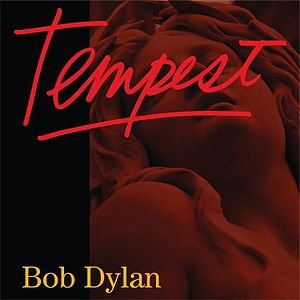
Tempest (2012)

I didn't hear this one when it first came out since it was released right after my children were born. During the first two years of their lives I basically fell off the pop culture map. I really enjoyed listening to it. It has a lot of the feel and bluesy vibe of his triumphs in the oughts. Not all of the songs are strong and none stick out to me as greats. but it's a solid effort and I plan on listening to it again.

Rating: Four Bobs

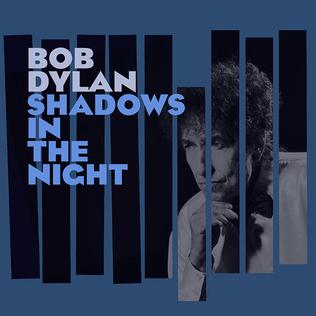
Shadows in the Night (2015)

In the 1990s Dylan revitalized himself by doing albums of folk covers. That made a lot of sense, considering his origins in the Greenwich Village folk scene. In this period he was doing covers of Christmas songs and old standards. That was a bit more perplexing, and to me, uninteresting. I did not listen to this album until this week. I have to say, I was pleasantly surprised. It's not as good as his 90s folk albums, but it's a better listen than I expected. Nevertheless, one listen was enough.

Rating: Three Bobs

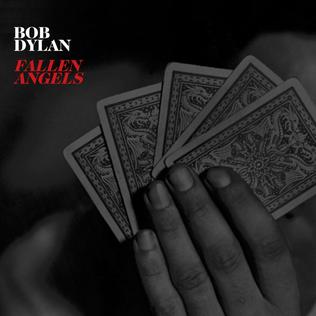
Fallen Angels (2016)

More standards, but these are done with more of a country feel, which I appreciate. I liked this album more than the last. It still suffers from the material not being Dylan's strong suit. Some of the high notes are painfully beyond his range. The best stuff reminds me of cuts from Love and Theft. The real star here is Dylan's touring band playing live in the studio. One sometimes wishes they were paired with a different singer. The arrangements on this album as especially appealing. I might be coming back to it.

Rating: Three and a half Bobs

Triplicate (2017)

The third in the trilogy of standards albums. The style is a bit jazzier, but the backing band sounds great yet again. Some songs are better than others, I found "Braggin'" and "As Time Goes By" to be real highlights. When Dylan sticks to a narrow range in songs that require feel he sounds good. The straining on the high notes is not enduring. This album might be a bit overloaded with songs, but the selections are impeccable and they are performed with real feeling. A quiet accomplishment for Dylan this century has been his producing chops. The records sound great, very different than his self-produced work earlier in his career. It seems that his road band knows him well enough to keep up with the changes.

Rating: Three and a half Bobs

Rough and Rowdy Ways (2020)


As with Time Out of Mind Dylan's foray into traditional music reignited his songwriting muse. Seemingly out of nowhere he gave us a similar, sprawling album. He also had his first number one single, the improbable 17-minute opus "Murder Most Foul." He released it at the start of quarantine, and it felt like an epitaph for his generation and the America they lived in. I listened to it practically every day back then, along with "A Hard Rain's A-Gonna Fall." Lest we forget, this was in the depths of the Trump administration. Everything seemed to be falling apart, and Dylan had the perfect message for it. The song implied that since Kennedy's assassination progress has been hard to find, and that we have been numbing ourselves with popular culture. However, he does not deliver this as a jeremiad, but with sadness.

There's plenty of other standout tracks, notably "I Contain Multitudes," quite the statement of purpose at his age. The most miraculous thing about this album was that it seemed to say that even at the doorstep of 80, Dylan had profound gifts. This album would be a remarkable epitaph to his career, but I doubt Dylan is going to stop now. I am glad for that. 

Rating: Five Bobs

Thursday, August 12, 2021

COVID and the Texas Way


The news from Texas this week is grim. COVID numbers are spiking and hospitals are running out of beds. The governor, Greg Abbott, has put a call out for doctors and nurses from less overwhelmed states to come in and help.

And yet....

The same governor has been trying to prevent local governments and schools from enacting mask and vaccine mandates. It seems like complete madness, as if a sea captain's ship had a hole in it and he was refusing to let his sailors bail out the water engulfing the hold.

How to explain this contradiction, other than being the result of a fit of madness?

I lived in Texas for three years and some of my dearest friends reside there, so I still feel invested in the state I left ten years ago. (For example, I have traveled back a few times and even subscribe to Texas Monthly!) What we are seeing here is the typical outcome of the Texas Way.

Texas' economy is fundamentally extractionary. The state would be a giant, less fertile Alabama if not for its oil deposits. However, it doesn't just extract and use up resources, it extracts and uses up people. When I worked as a professor at a regional state university I was struck at how poorly prepared my students were compared to a similar institution where I had taught in Michigan. I soon discovered that the state had some of the lowest education outcomes in the country. Some of my students were aware that they had been shortchanged, and were in fact pretty mad about it.

Despite having low test scores and high drop out rates, the Texas economy attracts high tech industry. It does so with lots of land to build on, and with low taxes to lure in those companies. Those businesses then attract highly educated and skilled workers, who have been educated in other states (and countries) where the governments actually bothered to fund education. I noticed a situation (which I was actually a part of) where northern states with higher taxes created the skilled workers poached by Texas' low tax, anti-labor policies. If Texas had to rely on the products of its own education system there would be no technology hub in Austin.

When these skilled and educated workers arrive in Texas, however, they must live under the boot of a ridiculously reactionary state government, one that attacks trans kids, lights its hair on fire about "critical race theory," and currently bans local governments from mitigating COVID. The newcomers might generally be more progressive than "Texas natives" but their numbers keep a stranglehold on the political system. To get elected to state office you have to be a Republican, and to win the Republican primary you have to be the most awful troglodyte possible. 

Now is the time to note that Texas draws a labor pool from south of the border, one that doesn't get to vote in elections. The state's Democrats have also done a horrible job of outreach with those Latinos who are eligible to vote, too. They have spent a lot of time just assuming they will get those voters, and have failed miserably. They don't seem to have a plan, or even a nominee for governor next year.

Texas conservatives like Abbott are thus used to outsourcing the training and education of their laborers to other states, and to treat the poor already in Texas with complete contempt. That explains the contradiction between Abbott asking for outside nurses at fraying hospitals while refusing to let public schools mask up when private schools can. The Texas Way is deadly, from gun deaths to people freezing to death to COVID, but I don't see any signs of it changing.

Tuesday, August 10, 2021

Second Coming of the Second Coming (Summer of Dylan part nine)

 I hate it when fans and critics react to a new album by a legacy artist by saying "it's their best since ______." The implicit message is that this artist will never be as good as they were in the good old days. The other side of the double edged sword of this statement is that it can be a way for the fan/critic to find something to praise about a beloved artist's recent, mediocre effort. I have heard so many Rolling Stones albums called "their best since Some Girls" when none of them are really much good. There, I said it! (I also think Some Girls is a bit spotty but I don't want to start an argument.)

The beauty of Dylan's second comeback in the late 90s was that his music was so good that it could not be damned with faint praise. It was at least as good as his best, period. At the time it thrilled me because I first started listening to him in '91 but none of his current stuff had felt remotely relevant. Then, as his hit single of the time said, things had changed. 

Time Out of Mind (1997)


I remember the wave of hype when this album came out, and I assumed it was the usual "his best since ____" bullshit. Then I bought it and was totally transfixed. I don't know how many times I listened to it in my little studio apartment in Chicago late at night. In the fall of '98 I got to see him live for the first time at the United Center, and it was just a fantastic show. I was hard up at the time and basically barely ate for a month to afford the floor-level tickets. Totally worth it.

For this album Dylan brought back Daniel Lanois, who did so much for Oh Mercy. His recent dive into the blues on World Gone Wrong comes through as well. There is an eerie midnight sound compounded by the deft use of the organ, one of my favorite instruments. The songs are also just powerhouses. Even the schmaltzy "To Feel My Love" is a good one. The shaggy dog 15 minute closer "Highlands" is great too, it adds some needed lightness. I hadn't listened to it in awhile and wondered if Time Out of Mind held up, and it totally does. The years of woodshedding and returning to his roots paid off in great music that did something new.

Rating: Five Bobs

"Love and Theft" (2001)

This album famously came out on 9/11 and was a constant companion for me in those awful times. It also came after the flood of roots music set off by the O Brother Where Art Thou soundtrack. Here Dylan goes back to the country blues and bluesy country (a la Jimmie Rodgers.) He plays with his touring band, giving the songs a lived-in feel. It is a top five all time Dylan album for me. Listening to it again I realized I still knew every damn word.

The overall sound of the album is great, but so are the songs. "High Water" is a wonderful homage to Charley Patton, Big Joe Turner, and all kinds of American musicians. "Mississippi" is simply one of his best songs ever. "I'm going to look at you until my eyes go blind" is a great lyric on its own, but the way he sings it with such longing makes it sublime. Sure Dylan is croaking here, but croaking works with the blues! Just an amazing album and the true culmination of Dylan returning to the deep roots of American music that he was so tied to early in his career.

Rating: Five Bobs

Modern Times (2006)


The rootsy sound is in evidence again here, but more attuned to jazz and ballads than rollicking good times songs like "Summer Days." The songs also stretch out some more and take their time. At the time I liked it but did not embrace it as much as the prior two albums. Listening to it again I realized I was wrong, and that my judgement may have been clouded by the fact that I was going through multiple difficult life transitions at the time that other music spoke to better. (Let's just say I was listening to Gordon Lightfoot's "If You Could Read My Mind" on repeat back then.)

"Workingman's Blues #2" is the highlight here, and it gets at the emotional weariness of the late Dubya years. Like the last record Dylan had his touring band in the studio, and the sound is just incredibly warm. Dylan also seems to have figured out how to produce by this point. Great stuff.

Rating: Five Bobs

Together Through Life (2009)


I maybe listened to this album two or three times when it came out. It's not that I didn't like it, it just did not scale the heights reached by the prior three albums, all among the best of Dylan's career. This one was less meticulous and more in the mode of Dylan's spontaneous style of earlier years in the studio. This basically means it could have been better with more time and care. That said, David Hidalgo from Los Lobos is a great addition in the studio, and his Mexican accordion flourishes add a nice new wrinkle to the sound. The songs get a little same-y but listening to it again I realized it's a great little stylistic detour, akin to Nashville Skyline or Desire. The songs are not as strong, but they are good enough. It's a good little coda to one of the best periods of Dylan's entire career. A period when his music was not "his best since..." but perhaps his best.

Rating: Four Bobs

Odds and Ends

As I mentioned last time, many of the songs from this period are on the Tell-Tale Signs entry in the Bootleg Series. I love hearing the alternate takes on "Mississippi," although I still like the album version best. Even 40 years into his career Dylan was recording multiple, radically different versions of his songs. I saw him on tour in 2004 and while it was not the best performance, I admired how willing his was to take his songs in new directions. In this period he also released a non-album single, "Things Have Changed," which as I progress further into middle age has kind of become an anthem of mine. 

Saturday, August 7, 2021

Lost in the Wilderness (Summer of Dylan part eight)

Now that I am in my mid-40s I can definitively say that middle age sucks. You realize you won't get to do a lot of what you wanted to and your physical and mental powers start to decline. The rock stars of the sixties were never supposed to grow old, and a bunch of them were pretty lost in the 80s, including Dylan. Some managed to find a way back (including Dylan.) 

This was the era when I encountered Bob Dylan. In my case it was through the "We Are The World" song and I had no clue who that weird old guy croaking happened to be. Years later I saw his chaotic/brilliant Grammy performance in 1991, which was weirdly the catalyst for digging into his music. Anyone so willing to confound a national television audience must have been on to something, after all. 

This is the longest period I am covering in this series, and until the late 90s I pretty much assumed the rest of Dylan's career was going to be all wilderness. However, there were some good moments in the wilderness, there's a reason the Bootleg Series on this era is called Tell-Tale Signs. Now on to look at the good, the bad, and the downright awful.

Infidels (1983)

Coming after the Christian trilogy Dylan's fans and critics loved his return to secular music. I only first heard it a few months ago and it's pretty good. However, its reputation has been inflated a bit by the low quality of what came before and after. "Jokerman" is a song I can't stop singing to myself, and is the obvious highlight. Some of the political stuff in the others songs is weirdly off-key. "Neighborhood Bully" has been interpreted many ways, but I hear the title meant to be taken ironically as part of an implicit defense of Israel's awful tactics in their invasion of Lebanon in 1982.

The real kicker is the best songs he recorded at the time aren't even on the record! (More on that in a bit.)

Rating: Three and a half Bobs

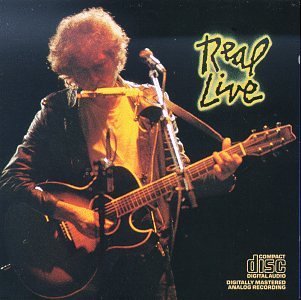
Real Live (1984)

Confession: before I did this series I did not know that this album even existed! Evidently rock audiences at the time didn't either, based on the sales figures. Yes folks, it's yet another mediocre live album. However, Mick Taylor on guitar and Ian McLagan on keys give it some real rock power. That saves the mostly tepid performances from Dylan himself.

Rating: Three Bobs

Empire Burlesque (1985)

Hoo-boy this is bad. Why on earth does Allmusic give it four and a half stars? The problem is not the mid-80s production, since I actually like that sound. The issue is that Dylan as producer does the mid-80s sound all wrong. In his hands it sounds as tacky as the album cover looks. "Tight Connection to My Heart" is a good one, but there's only a couple of other interesting songs.

Rating: Two and a half Bobs

Knocked Out Loaded (1986)

Welp, this one is even worse. As on Self-Portrait, some of the songs are actually unlistenable, especially the fake profound "They Killed The Man." It's like the worst lounge singer trying to rip off "Abraham, Martin, and John" but with a treacly kids chorus at the end. A lot of people talk about "Brownsville Girl" as one of Dylan's best, but the production on this album is so terrible I was too distracted to enjoy it fully. It does save this album from a one Bob review, though.

Rating: Two Bobs

Down in the Groove (1988)

The second album in a row with a title that seems to reference being in a low position. Perhaps it was a cry for help. I just listened to it for the first time and then pretty much forgot it the next day. Like the other albums of this era it has a couple of moments to show you that Dylan had not completely lost his spark. I dig "Silvio."

Back in the day the Onion's AV Club section had a yearly roundup of "the least essential albums." The distinction was that "least essential" did not necessarily mean worst, just the albums with the least reason to exist. So far this is Dylan's least essential album.

Rating: Two Bobs

Dylan and the Dead (1989)

There are people in this world who like the Grateful Dead. I am not one of them. They always struck me as an interesting roots rock band that needed to stop noodling and get a singer with the soul power necessary to bring their music off properly. 

At the time this album came out there was a group called Dread Zeppelin that played Led Zeppelin covers in a reggae style while being fronted by an Elvis impersonator. Dylan with the Dead is like that with all the fun, humor, and inventiveness drained out. These are all live cuts and Dylan's voice sounds ragged. The Dead's accompaniment is boring and surprisingly anonymous. The song selections are questionable, especially the godawful "Joey." The one highlight is the funky take on "Gotta Serve Somebody." I agree with the critics who say this was his lowest point.

Rating: One and a half Bobs

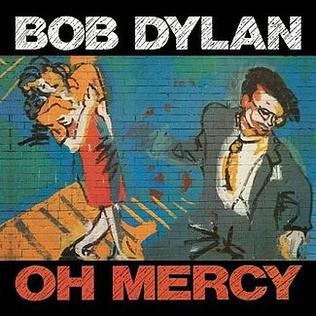
Oh Mercy (1989)

Suddenly, in the midst of his lowest point, Dylan put out a great album. People who read his memoir were surprised that he devoted so much time to it, but I wasn't. This was the moment where he realized that he could still make great music. Having Daniel Lanois as a producer helped, and this album makes me wish he had a stronger hand with him in the studio at other points in his career. I should admit that I love Lanois' ethereal sound, as much as some other people don't like his formula. Recording in New Orleans also seemed to give it a good dose of that swampy juju that nourished the roots of American music for so long. 

There's so many songs I love on this record. After listening to the rest of his 80s output something like "Ring Them Bells" or "Most of the Time" is just absolutely stunning by comparison. Unlike most of his other 80s output, it actually sounds like a cohesive whole, a true album. I listen to it a lot but hearing it in this context I can see why it would have been proclaimed "his best since Blood on the Tracks." In this case that phrase is not faint praise.

Rating: Four and a half Bobs

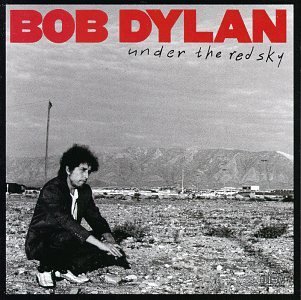
Under the Red Sky (1990)

However, I can't use Oh Mercy to start another period in Dylan's career because he followed his best album of the 80s with his worst album of the 90s. I mean really, what the hell is going on here? I've read that the whole thing was basically just tossed off, and it certainly sounds like it. There's weird nursery rhyme lyrics and meandering songs. I've always liked Don Was' production (I am an early 90s kid) so at least it doesn't sound as atrocious as his mid 80s records, even if the songs are far weaker. 

I've read that Dylan's work with the Traveling Wilburys pushed him to do better and Oh Mercy was the result. Evidently this album was rushed due to his work on the second Wilbury's record. The Traveling Wilburys giveth and they taketh away. Still worth it to get Oh Mercy.

By the way, Robert Christgau gave this awful thing an A-. Dean of Rock Critics my ass.

Rating: One and a half Bobs

Good as I Been to You (1992)
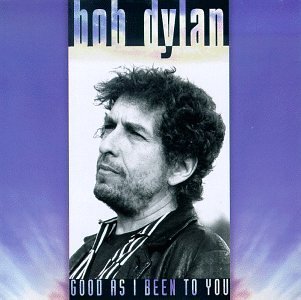
A covers album is often a sign that an artist is out of ideas. Dylan's songwriting well was low, but the covers here are so spirited and confident after a decade of Dylan sounding tentative while flailing around in the modern studio. I hadn't listened to this one in years and really enjoyed hearing it again. The guitar is lively and driving in these songs, it's folk music as good time music for an artist who's not exactly known as a good time sporting man. The two folk albums he did in the 90s seem to have revived a love of music in him, something that seemed missing in most of the prior decade. Highly recommended.

Rating: Four Bobs

World Gone Wrong (1993)

As a later Gen X white guy who loved alternative music, 1992-1994 is one of my favorite music eras. The stuff I liked punched out of the underground, and even the cover of a Dylan album was drenched in its aesthetic. A lot of music in the 90s was about stripping away all the Reagan Era dayglo frippery and getting at the root. This was going on in the whole "alt-country" music, in how Nirvana brought the punk ethos mainstream, and in gangsta rap's hard-hitting directness. 

Dylan's exploration of older music with just his acoustic guitar fit the times well, and also reflected how many legacy artists managed to find their way home in this time. Johnny Cash came back in a similar way, while Neil Young brought back Crazy Horse and their caveman stomp after a decade in the wilderness. I might like this one best of the two Dylan albums of the time due to the presence of hardcore blues songs. He sings them so well and with such obvious affection. While there are no original songs, this sounds like a man who is falling in love with music again, and remembering why he did all this in the first place. It's about to pay off big.

Rating: Four Bobs

Unplugged (1995)

MTV's Unplugged was one of the most popular manifestations of the aforementioned 90s obsession with getting down to the roots. Plenty of artists went on, from the cutting edge popular acts of the day to legacy artists trying to be relevant. Dylan was obviously in the latter category. I watched the show pretty religiously at the time, but I don't have clear memories of this one. There's no revelations here but it's a surprisingly strong set and the audience is into it. His return to folk seems to have given him much more confidence as a performer.

Rating: Three and a half Bobs

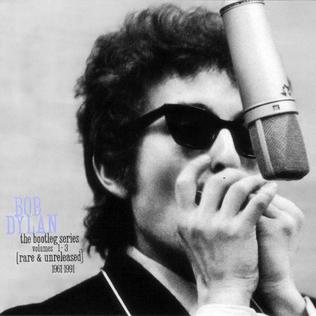
Bootleg Series Vol 3 (recorded 1975-1989)

This is the last disc (or tape in my case) of the first Bootleg Series release and almost all of it covers the 80s. At the time fans were blown away by songs like "Bling Wille McTell" and "Foot of Pride," either of which would have competed with "Jokerman" for the best song on Infidels. "Series of Dreams" is the best U2 song U2 never recorded. It is just gorgeous and listening to it lifts my soul. Daniel Lanois wanted to make it the first track on Oh Mercy and Dylan kept it off! I get that the mood is a little different from the album, just like "Blind Willie McTell," but it is unbelievable that Dylan would keep these songs under wraps when he was releasing dreck like "They Killed the Man"! I wonder if this was a result of a lack of confidence on his part, or even a weird desire to self-sabotage. Nevertheless, give it a listen. These relics are great songs, and proof that artist's don't know their own work best sometimes.

Rating: Five Bobs

Bootleg Series Vol. 8 Tell-Tale Signs: Rare and Unreleased 1989-2006

Some of these songs straddle the post-Time Out of Mind renaissance, so I will just stick to the ones from the wilderness and discuss the others next time (although I will give my rating this time.) It is noteworthy that none of the songs here come from his troika of awful mid-80s records. When I bought the album it immediately deepened my appreciation for Oh Mercy and just how much Dylan's creativity had been revived in that period. The live version of "Ring Them Bells" is one of my favorite all time Dylan recordings. The alternate versions of songs from Oh Mercy are revelatory and might please those who don't care for Daniel Lanois' production techniques. The wealth of stuff here makes you wonder how the hell Under the Red Sky ever happened. Taken as a whole it's a fantastic listen.

Rating: Four and a half Bobs