Showing posts with label The Smiths. Show all posts

Wednesday, March 16, 2016

Classic Albums: The Smiths, Meat Is Murder


An album can be classic even if it's not perfect or has some dud tracks, and The Smiths' 1985 record Meat Is Murder might be the best example. The good songs on this album are just so damn good that it's easy to forget the ones that don't hit. The Queen Is Dead might be a better album, but its best songs are not as good as the best songs on Meat Is Murder.

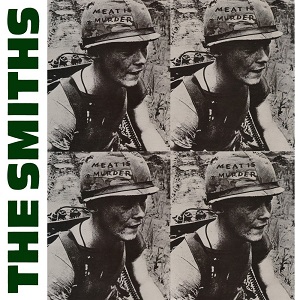
Meat Is Murder was the dreaded sophomore album for The Smiths, a band that had hit the ground running with their first, self-titled album. The title is about as stark as it gets, accompanied by a grainy picture of an American soldier in Vietnam. This is a kind of statement of purpose, to let you know that this is going to be some hard-hitting stuff. And it is, from the slaughter of animals to child abuse. The first song, the masterful "Headmaster Ritual," sets the tone. It hits hard with one of Johnny Marr's best churning riffs getting things off to a rolling start before Morrissey intones a perfect Morrissey line: "Belligerent ghouls run Manchester schools." It's an indictment of abusive and authoritarian educators, one that's always resonated with me after surviving a hellish kindergarten. It sets the tone for the album, one that concerns itself with inhumanity, cruelty, and abuse. Musically it seems to perfectly integrate all the band's elements into an almost seamless whole.

The next song, "Rusholme Ruffians," is one of my favorite Smiths deep tracks. It has a certain rockabilly swing to it, unlike almost any other Smiths songs, and some incidental noise to evoke the mood of the local fair that it describes. It reminds me of that elegiac feeling of the end of summer, of going out at night but needing to wear a jacket, aware of the hint of winter in the evening chill. It's followed by "I Want The One I Can't Have," a typical Morrissey unrequited love lament. I was a very romantic teenager with a complete inability to speak to the opposite sex, which of course meant listening to the Smiths was love at first hearing, because of songs like this. I made my pathetic secret crushes grandiose by imagining them sung in Morrissey's high voice. While this type of song would be made too many times by this band, this time around the approach is pretty fresh.

"What She Said" is less romantic and almost claustrophobic. It's fast and dirty, and finds the semblance of a groove, rare for a Smiths song. It's also a song that shows the importance of track listings on albums, a lost art in this age of playlists. So far side one has gotten faster and faster, and this song even seems to come close to classic punk territory. It ends abruptly, and throws the listener into the languid, slow burn of "That Joke Isn't Funny Anymore."  This song is a real stunner. It starts beautifully with a little acoustic guitar figure, Morrissey sings "At the car at the side of the road" then the drums and bass come in as he finishes his thought with "Time's tide will smother you/ And I will too." Marr goes from riffing to some gorgeous, feedback-laden moods in the background over a tight little groove by Joyce and Rourke. It is hard for me to listen to this song with any objective remove, since I associate it very strongly with a particular person in my past life. We were once inseparable friends, and while in Chicago would often frequent a bar with a CD jukebox (remember those?) that had a Smiths compilation on it. Almost every time we went to the bar one of us would play this song, and we would sing along together. Even when time's tide sent me to downstate Illinois and her to Toronto, we maintained our friendship, up until a sad falling out five years ago. We haven't talked since, and hearing this song will always remind me of a once beautiful friendship that went sour, appropriate for the theme of this song.

"That Joke Isn't Funny Anymore" is probably my second favorite Smiths song. My favorite? Without a doubt, it's "How Soon Is Now," the next song on the album. That might sound cliched, but things get cliched for a reason. (And yes, I am aware that this song wasn't on the UK version of the album, but I've only ever listened to the US one.) Swirling reverby guitar, big beat, and "I am the son and heir of a shyness that is criminally vulgar," perhaps the most Morrissey line that ever Morrissey-ed. The dance-y beat is atypical for the band, but it really works. When Marr's crystalline guitar backs Morrisey's "I am human and I need to be loved/ Just like everyone else does" I am immediately transported back to my adolescence. This song is adolescent longing personified, in all its silly grandiosity and self-pity. I have been listening to it for well over twenty years and ever time it still completely grabs me and won't let go.

It's hard to top that, and the rest of the album doesn't really try. "Nowhere Fast" revives the rockabilly feel with a clickety clack I'm used to hearing from Johnny Cash and the Tennessee Two. This song is a sign that side two of the album is going to be more political, as Morrissey takes the persona of a stuffed shirt incapable of expressing a "natural emotion" who wants to drop his "trousers to the queen." Cheeky! "Well I Wonder" goes back into melancholia, with some Morrissey crooning and mooning over unrequited love. Andy Rourke's bass, strong on the whole album, sounds especially good here.

The album ends with two long, more political songs. "Barbarism Begins At Home" has a funky groove to it, a kind of goth disco. It concerns domestic violence against children, but the message is blunted by the music, which doesn't quite fit. Marr's guitar sound is pretty interesting, though. Last and certainly least comes "Meat Is Murder." I've got no problem with vegetarianism, but direct political songs are so often clumsy and ham-fisted (excuse the metaphor) and this song is a case in point. The music is unformed and plodding, meant to evoke a funeral march, but it just doesn't connect.

But hey, I just don't bother listing to the last two songs on the album when I put it on, which vastly improves the experience. The Smiths might not have had quite enough good songs to make a flawless album, but they were smart enough to put the weakest ones last.  And in any case those songs are a small price to pay for the amazing likes of "Headmaster Ritual," "How Soon Is Now," and "That Joke Isn't Funny Anymore," songs I expect I will listen to until the day I die, far far removed from an adolescence that they evoke so well.

Sunday, April 19, 2015

Track of the Week: The Smiths "The Queen Is Dead"


I'm putting together some new lessons for my American history classes on the 1980s and the rise of neoliberalism, and I am getting some rather intense flashbacks to that period of time, which now is actually starting to feel rather distant to me.  We have been awash in 80s nostalgia for quite some time, and it seems to be reaching fever pitch, from TV shows like The Goldbergs to the rebooted Ghostbusters franchise.  Putting my classes together is reminding me just how awful that time could be, and how the reality of the time for so many people is lost in the nostalgia.  My farm belt hometown has never recovered, and neither has Rust Belt and inner city America, but we still think of it as a fun time of crimped hair and rubics cubes.

By the mid-1980s, resistance was futile, and in those pre-Internet days getting ahold of challenging music, films, and books could be extremely difficult.  In terms of popular culture, at least, I tend to see 1986 as the year that the 80s mentality finally vanquished what few traces of the counterculture of the 60s and 70s were left in mainstream American life.  Neoliberalism had become the new norm, rather than an insurgent philosophy, family sitcoms like The Cosby Show ruled the airwaves and Top Gun packed people into the theater to witness a massive ode to the military industrial complex.

I wasn't hip enough yet to know, but in 1986 the great band The Smiths (who I would discover in the early 1990s) captured the dread and ennui of that time perfectly on record.  Although Morrissey is crooning about the British royal family and the effects of Thatcherism, the spirit of it applies quite well to America at the time.  It starts with a rough recording of "Take Me Back to Dear Old Blighty" before pounding drums come bashing in and Johnny Marr announces his presence with a kind of mangled feedback rarely heard on Smiths recordings.  Strange voices echo and a paranoid-sounding bass thrums up high in the mix, driving things forward at an insistent pace.  In many respects this song is the anti- "Where The Streets Have No Name," in that it uses guitar effects and tight drumnbass rhythms in a much less anthemic fashion.  Morrissey is at his sinister best here, joking about breaking into the royal palace to have the Queen tell him he can't sing, and for him to cheekily reply "you should hear me play piano!"  It isn't just an attack on the royal family, but on a society failing to offer its youth anything real or meaningful.  Morrissey decries "the pub that wrecks your body/ and the Church that steals your money," and repeats the line later in case you missed it.  Unlike Johnny Rotten in the previous decade, he combines his vitriol with a heaping dose of wit, like a man telling jokes while his hands are clenched in fists of rage.

It is a long song by Smiths standards, and the later part of it doesn't contain any lyrics, just the same propulsive sound with a little echoey piano thrown on top of it.  I had (sadly) first heard the Smiths through compilations, so when I finally picked up The Queen Is Dead I was blown away at first listen by the title track, which was too long and too political and too divergent from usual Smiths songs to be included in a compilation.  If anything, its proof that compilations are bollocks.  That and how the 80s managed to produce some trenchant reactions to the neoliberal onslaught if you know where to look for them.

Saturday, November 15, 2014

Track of the Week: The Smiths "William It Was Really Nothing"


I got really sick this week, so sick that I actually went to the doctor.  The last time I'd done that was five years ago, so this was a serious problem.  When I get sick I feel vulnerable, and I often return to the music I loved during my adolescence, during that most vulnerable period in a person's life.  As I sat in my chair tired from coughing and waiting for the meds to take effect, I put on The Smiths, the band I went to for wallowing in my emotions as a young man.  I listened to the grab bag collection Hatful of Hollow, whose eclectic nature makes it a good, basic Smiths album to listen to.

So many of the songs have resonated with me over the years, but it was "William It Was Really Nothing" that first hooked me as a sixteen year old.  I was just a smidge too young to have heard them in their 80s heyday (I didn't get into interesting music until 1990 or so), but an older kid on my high school debate team was obsessed with the Smiths and evangelized them so forthrightly that I gave them a shot.  I bought a compilation, and the second song was "William It Was Really Nothing."  The first lines hit me like laser beam "The rain falls hard on a humdrum town/ This town has dragged you down."  Living at the time in a humdrum town that had been dragging me down, I felt instant kinship with Morrissey and the Smiths.

It's not one of their greatest songs, just a short little fast-paced vignette that's gone before it starts.  Nevertheless, the music and words perfectly evoke the quotidian experience of living yet another mundanely dissatisfying day in a dreary place you want to leave but can't.  There's no one horrible thing that's happened to you here, it's just that each and every passing day chisels away part of your soul.  I am sad to say that I have lived in more than one place that did this to me, but am glad to say I broke out twice.  This song provided me a lot of comfort in both humdrum towns.

Monday, December 10, 2012

Top Five Songs By The Smiths

I've had The Smiths on my brain a lot over the last couple of days after reading an interview with the author of a recent book about them, which got me thinking about which album of theirs I like the best.  I've always thought of The Smiths as more of a songs, rather than album band, but I do think that Meat is Murder is the one album of theirs I spin the most.  In any case, I decided that it's been too long since I put together a list, and thought that a top five Smiths list would generate some debate (proprietor of the WCFC, I'm looking at you.)  These five are entirely subjective, of course.

1.  "How Soon is Now?"
This is the song that made me a believer, and it still holds up today.  My fifteen-year old ears perked up when I heard the wall of reverby guitars, and when Morrissey intoned "I am the son and heir of a shyness that is criminally vulgar" I felt as if there was someone out there who understood me.  Johnny Marr's Dopler-effect guitars over the trance-like rhythm track still have the power to move my soul.  I still vividly remember one time I listened to this song as I drove south on Lakeshore Drive in Chicago on a clear summer morning, the sun rising gloriously above Lake Michigan, its golden light reflecting off of the buildings to my right, with the ethereal sounds of this song on my stereo.  I may have been alone, but I did not want to go home and cry and want to die.

2.  "That Joke Isn't Funny Anymore"
This song is so fraught with personal meaning that it can be rather difficult to listen to, as much as I love it.  An old, dear friend and I would always put this on the jukebox and sing along on nights out at the bar in Chicago.  We would always giggle a little bit at the way Morrissey sang "Time's tide will smother you, and I will too," delivering the second line in a kind of sinister falsetto.  Whenever I hear this song, I am reminded of her, but the memories bite a little.  We had a severe falling out about three years ago, and haven't spoken to each other since.  As the man says, I've this happen in other people's lives, now it's happening in mine.

3.  "Half a Person"
When I first really delved into The Smiths as a teenager, they were a voice of understanding in a cruel and difficult adolescent world.  I was not conventionally masculine or confident, and I combined these deficiencies with an anti-social streak a mile wide.  You can probably guess that I didn't have any girlfriends, and that was certainly true.  However, I was a bit of a cracked romantic, and developed insanely intense crushes on girls well out of my league.  This simple song told by a "sixteen clumsy and shy" narrator spoke to me like nothing else.

4.  "Stop Me If You've Heard This One Before"
Apart from Keith Richards and Chuck Berry, Johnny Marr has constructed more classic riffs than any other rock guitarist.  This song might have the best riff of them all, subtle yet undeniable.  Unlike a lot of other guitarists who are more fetishized, he serves the song rather than reeling off solos.  It's also got one of Morrissey's best quips, "I crashed down on the crossbar, and the pain was enough to make a shy bald Buddhist reflect and plan a mass murder."

5.  "The Queen is Dead"
The Smiths were too understated and smart to rock out in the overt ways of other great indie bands of the time like The Minutemen and The Replacements.  They get pretty damn close with this song, however, with its punishing drums and jagged chords from Marr that sound positively violent.  It's all a great bed for Morrissey's denunciation of life in Thatcher's Britain, taunts lobbed at Prince Charles and the rest of the aristocracy, and a warning to the working class about the "pub who wrecks your body and the church who takes your money."  Unlike most Smiths songs, it goes well beyond three minutes, an extended explosion of anger, disappointment, and class resentment.  In an increasingly hierarchical and technocratic America, we need more songs like this.