Showing posts with label texas. Show all posts

Sunday, June 4, 2023

ZZ Top, "Jesus Just Left Chicago" (Track of the Week)


I was weirdly missing Texas this week. I lived there for three years in a kind of love-hate relationship. I came to adore Houston and Austin, the amazing food, the great musical tradition, and a certain kind of zest for life that was refreshing after spending the rest of my life in the staid Midwest. At the same time, I despised its fascistic politics, open bigotry, and suffocating provincialism. I went back to visit last summer and enjoyed myself, but also knew it was definitely not a place I wanted to live.

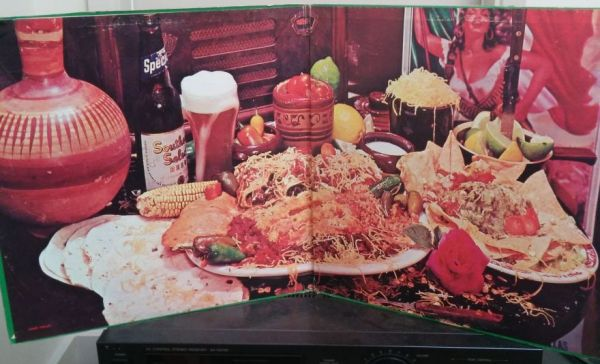
Despite my resolution on this count, there are days when I need a taste of Texas. So this weekend I thew on ZZ Top's Tres Hombres record. It includes maybe the greatest gatefold of all time (pictured above), a gorgeous still-life tableau of Tex-Mex food. Eat your heart out, Rembrandt. 

Beyond the imagery, the music is pure Texas. It's a perfectly executed blues shuffle shot through with the spirit of Lightnin' Hopkins. When I listen to "Jesus Just Left Chicago" I can imagine myself sitting at the bar in the Flashback Cafe in Nacogdoches, sucking down a dollar twenty five Lone Star on a sticky Friday night. My time in Texas wasn't all that fun, but it sure was memorable. Despite its faults, it's a place with a real unique culture and spirit that you just can't elsewhere. While ZZ Top is best known for their sleek 80s hits, their bluesy 70s stuff will give you some of that Texas spirit without having to go there.

Sunday, August 14, 2022

Notes on a Texas Sojourn

Last week I went down to Amarillo, Texas, to visit an old friend. Beyond having a good time, I also took the time to take the political temperature. My trip coincided with news revealing why authorities searched Mar-a-Lago, as well as a deranged Trumper attacking an FBI building. 

I knew from talking to my friend that I was in a very conservative corner of a very conservative state. (I spent three years in East Texas, so I have some lived experience with Texas politics.) Therefore, what I saw surprised me a little. We took many walks around various neighborhoods, and during that time I noticed a few Beto signs. I never saw a single Greg Abbott sign. 

I am well aware that this doesn't say much about the election's probable outcome. Abbott will win handily in Amarillo. He got 71% of the vote in PotterCounty in 2018, and 81% in Randall County. (Amarillo straddles the county line.) However, the signage I saw in Amarillo points to a certain political mood. 

I did see expressions of conservative political sentiment, but they were mostly few and on the extreme end. For example, while driving by a strip mall I saw a tricked-out pickup truck parked to be a sign that had "Murder all Molesters" painted on it. (I assumed this was some kind of QAnon thing.) At the local minor league baseball game a guy was sitting in front of me wearing camo shorts and a "Let's Go Brandon" shirt with lots of firearms on it. I saw two political billboards, one promoting House Republican representative Ronnie Jackson, the other for failed radical conservative gubernatorial candidate Don Huffines.  

My theory about all of this is that the most extreme conservatives feel very motivated, but normie conservatives are ambivalent. I am sure they will come vote in November and give Abbott another four years as governor, but more out of obligation than conviction. The January 6 hearings and the FBI search of Trump's home have undermined his support among the kind of Republicans who voted for him with reservations back in 2016. Once taking the presidency, Trump won enthusiasm from those voters by effectively hurting the people they wanted to hurt. Now that he's out of office, it's easier for the old doubts to come through.

I also wonder if the repeal of Roe has anything to do with this. Texas now has draconian abortion laws, laws which I would bet would be defeated if they were put up for a referendum in the state. While walking downtown I noticed flyers for a past abortion rights rally. (A crisis pregnancy center advertised at the baseball game, though.) This surprised me, considering my assumptions about the city's conservatism. My friend also told me about the city's well-attended Pride event, and took me to a curiosity store carrying a whole rack of 'zines, including one called "Queer Werewolves Defeat Capitalism." Even in the extremely conservative Texas Panhandle there seemed to be a strong and vibrant community of people challenging the dominant politics and culture.

Of course, these are merely anecdotal impressions, but they add up well with other experiences I have had in recent weeks.  While radical conservative politicians have been calling for "war" in response to the FBI search, less extreme conservatives have disengaged. The reality of the new abortion laws has also exposed the reality of the radical conservative agenda writ large. It was easy to support when it was immigrants getting smacked around by the state, it's different when it's you or people you care about getting a taste.

Back in 2016, I thought that the Republican Party establishment reluctantly supported Trump because they knew they were unpopular and needed him to win the White House. They made a blood pact with each other: Trump would push their priorities, they would shield him from legal prosecution. Trump's success in meeting the demands of the Republican base allowed him to become a metonym for the party itself. Up until now, I assumed this relationship was permanent. If Republicans would defend Trump's attempt to steal the election, what could possibly cause them to turn on him? The last tumultuous week has tested the blood pact. The politicians have stayed loyal, but many of the voters seem to be withdrawing their enthusiasm. Time will tell if this is just another blip, like McConnell's immediate response to 1/6, or a long-awaited chink in the Republican Party's commitment to Trump. Up until now I didn't think such a thing was even possible, but I also know the folly of assuming the status quo will be permanent.


Thursday, August 12, 2021

COVID and the Texas Way


The news from Texas this week is grim. COVID numbers are spiking and hospitals are running out of beds. The governor, Greg Abbott, has put a call out for doctors and nurses from less overwhelmed states to come in and help.

And yet....

The same governor has been trying to prevent local governments and schools from enacting mask and vaccine mandates. It seems like complete madness, as if a sea captain's ship had a hole in it and he was refusing to let his sailors bail out the water engulfing the hold.

How to explain this contradiction, other than being the result of a fit of madness?

I lived in Texas for three years and some of my dearest friends reside there, so I still feel invested in the state I left ten years ago. (For example, I have traveled back a few times and even subscribe to Texas Monthly!) What we are seeing here is the typical outcome of the Texas Way.

Texas' economy is fundamentally extractionary. The state would be a giant, less fertile Alabama if not for its oil deposits. However, it doesn't just extract and use up resources, it extracts and uses up people. When I worked as a professor at a regional state university I was struck at how poorly prepared my students were compared to a similar institution where I had taught in Michigan. I soon discovered that the state had some of the lowest education outcomes in the country. Some of my students were aware that they had been shortchanged, and were in fact pretty mad about it.

Despite having low test scores and high drop out rates, the Texas economy attracts high tech industry. It does so with lots of land to build on, and with low taxes to lure in those companies. Those businesses then attract highly educated and skilled workers, who have been educated in other states (and countries) where the governments actually bothered to fund education. I noticed a situation (which I was actually a part of) where northern states with higher taxes created the skilled workers poached by Texas' low tax, anti-labor policies. If Texas had to rely on the products of its own education system there would be no technology hub in Austin.

When these skilled and educated workers arrive in Texas, however, they must live under the boot of a ridiculously reactionary state government, one that attacks trans kids, lights its hair on fire about "critical race theory," and currently bans local governments from mitigating COVID. The newcomers might generally be more progressive than "Texas natives" but their numbers keep a stranglehold on the political system. To get elected to state office you have to be a Republican, and to win the Republican primary you have to be the most awful troglodyte possible. 

Now is the time to note that Texas draws a labor pool from south of the border, one that doesn't get to vote in elections. The state's Democrats have also done a horrible job of outreach with those Latinos who are eligible to vote, too. They have spent a lot of time just assuming they will get those voters, and have failed miserably. They don't seem to have a plan, or even a nominee for governor next year.

Texas conservatives like Abbott are thus used to outsourcing the training and education of their laborers to other states, and to treat the poor already in Texas with complete contempt. That explains the contradiction between Abbott asking for outside nurses at fraying hospitals while refusing to let public schools mask up when private schools can. The Texas Way is deadly, from gun deaths to people freezing to death to COVID, but I don't see any signs of it changing.

Sunday, May 23, 2021

Notes On Larry McMurtry's Moving On

The cover of my edition, found in a second hand store

There are few things I enjoy more than tackling a long, far-ranging novel with all kinds of characters, meandering subplots, and a scope that suggests an overview of society itself. Usually one has to go back to the 19th century for books like this. I still remember when I finished Bleak House, I suddenly felt empty and bereft, deprived now of a whole world.

Some 20th century novelists were capable of this feat, and one of them was Larry McMurtry. Because he was from Texas and wrote about Texas and set some of his books in the 19th century West he was a "regional" and "genre" writer. I will consider myself guilty of that perception, despite having read the fantastic The Last Picture Show years ago. A few years back a beloved student and prodigious reader gave me a copy of Lonesome Dove, which I kept on the shelf until the pandemic made me long for the open western skies and a book long enough to keep me occupied. 

Well pard, that book absolutely blew me away. It had the broad scope and array of characters of my beloved doorstop 19th century novels, yet also managed to deconstruct myths of the west without becoming didactic and dour. I immediately went out and bought and absorbed the sequel, The Streets of Laredo.

I was bummed when I heard about his recent death and happened to be in a local second hand store and saw a pristine copy of Moving On. This seemed to be some kind of sign from above. I had first noticed the book over ten years ago when I lived in Texas, where I saw it on the shelf of the local bookstore. It was a massive book and seemed to be about the reality of modern Sun Belt Texas as opposed to the cowboy past. It intrigued me, and I picked it up to read the back jacket on more than one occasion, but had never pulled the trigger. After all, it was a massive brick and at that time I was in a lull when it came to reading fiction. (One of the consequences of academia.)

The edition I bought came from the late 1980s, although it was first published in 1971. The author's introduction surprised me a bit. He basically admitted that he meandered in his writing of the book and that many readers were critical of how he depicted the emotional world of the protagonist, Patsy Carpenter. (She cries. A lot. More about that later.) He also talked about how going to grad school was a thing that smart but aimless young people did back in those days and, let me tell you, I knew at that point there would be at least one thing about this book that would really connect with me.

I had no clue, since the cover always emphasized the other closed world investigated by the book: the rodeo. I am sure the publisher felt this necessary, in order to draw in the fans of his other work. After all, who wants to read about grad students? 

The book revolves around Patsy Carpenter and her husband Jim. They are both in their mid-20s, both from well to do Texas families, and both unsure of their path in life. I had always thought that the "quarter life crisis" was a recent invention, and this book proved me wrong. When it begins Jim has decided to become a photographer, and takes Patsy with him as he follows the rodeo in order to construct a photo essay. Patsy is not enamored of the lifestyle, especially after being exposed to some rough characters and Jim himself gets beaten up by two angry cowboys who didn't want their picture taken. 

Jim decides instead to go to grad school in English at Rice. Jim and Patsy become increasingly estranged, have a baby, engage in affairs, and eventually split. At the end of the book Patsy has to help rescue her pregnant sister from the counterculture dream gone wrong in San Francisco. She is able to construct a life for herself, raising her son, helping her sister, and perhaps feeling optimistic about the future at last. 

It certainly seems slight for a plot to carry 800 pages. It is, since it's a book meant to convey the struggles of daily life and how they operate in sub-cultures like the rodeo and grad school. That's why I didn't mind. It's ultimately a story about life, and the hard choices it presents. The mid-20s is indeed a fraught stage in life, one that in my own case came with its fair share of romantic adventures and emotional pitfalls. 

The book also captures the changes of the late 1960s, but from outside of the center of the counterculture. Houston, obviously, is not Haight-Ashbury or Greenwich Village. McMurtry may be known for writing about cowboys, but he is secretly a chronicler of sex. (When I first read The Last Picture Show I was a bit taken aback by its frankness.) There's plenty of bed hopping among the characters and a sense that the sexual freedoms opened up at the time weren't just being enjoyed by hippies. There is also a surprising amount of writing detailing bad sex, the most difficult thing in the book to read. McMurtry takes great pains to show how Jim and Patsy's incompatibility is reflected and confirmed by their bedroom difficulties, which he returns to time and again, picking at the wound. 

Ultimately the novel throws cold water both on the traditional "establishment" way of life via the empty lives of Jim and Patsy's parents, as well as the decadence of the counterculture. This is most stark at the end, where Patsy must go to San Francisco without Jim to track down her 19 year old sister estranged sister. The one real false note in the book comes from the fact that her sister is living with a controlling, mean-spirited African American man and the plot unfortunately echoes old captivity narratives. There is a whole panoply of intriguing characters, but the Black and Chicano characters are not really fully fleshed out in this book, sadly. 

I found Patsy herself to be a very compelling character. As McMurtry notes, she does cry a lot. However, I did not read this as a statement on the emotional fragility of women, and more as a tic specific to her character's personality. (The other women don't cry like she does.) Through most of the book Patsy is deeply unhappy. She is obviously just as intelligent (or more so) than her feckless husband, but must constantly follow him and support his dreams, which he never bothers to actually follow through on. I interpret her tears as the explosion of her deep frustrations about her life and how it has trapped her. In many respects this book is a subtle argument for women's liberation.

Patsy is also a real person. She is not lovable, and she herself even acknowledges this, to the point of calling herself a "bitch." When I have looked at online reviews of the book by readers (as opposed to critics) they often note how they did not love the book because they just didn't like Patsy. I guess I didn't mind because I have known a few Patsy types in my life. Their privileged upbringings and tightly wound emotions make them prone to outbursts and judgement. At the same time, they realize this about themselves and are desperate to be better able to connect with people instead of drive them away. The novel is about ultimately Patsy growing up and finding a way to become happy despite the flaws in her personality. 

In telling this story McMurtry also weaves a social portrait of Houston at the time of its Sun Belt ascendancy, along with beautiful writing on following the open road and the disorienting but seductive nature of Los Angeles. (I skipped over some subplots in my description.) He was a master of rendering small moments, like the feeling of the wind when a norther sweeps into Houston.

I think I enjoyed this book even more for its flaws because so many of these moments were spread throughout it. It is such a sprawling narrative to properly render in cohesive fashion, and it doesn't really manage to do so. But hey, life is messy. If you like to spend time reflecting on this fact, go and pick up Moving On.
Friday, September 1, 2017

Houston

There's a lot of the spirit of Houston in native son Lightnin' Hopkins

I have been watching the news from Houston this week with shock and horror. Houston is a city I know well. During my three years living in the isolated piney woods of East Texas, I was only a two hour drive away, and I made that drive every chance I could get.

I learned very quickly that Houston is an underrated city, a true gem. The weather there is forbidding, but I began to enjoy it as its own kind of thrilling, awfully intense experience, like eating a hot pepper. I'd come home from my trips with a trunk loaded with goodies. Books from Half Price and records from Cactus Music would sit alongside a box of wine from Speck's as I drove up highway 59, which went from a massive river of automobiles to a much sleepier road through the trees and pastures of East Texas.

I went to some Astros games, and learned that Houston fans are the most polite in the game. I still remember one game where a drunken buffoon in a Cubs jersey was screaming insults at Hunter Pence while refusing to sit down. It was the kind of behavior that would have led to a knifing in Chicago or New York. Instead someone let security know, and the hooligan was quietly taken out.

I saw in Houston tremendous diversity, great food, and a vagabond that spirit I enjoyed. Houston is famous for its lack of zoning, which creates some crazy juxtapositions, like a church right by a nudie bar. Its anything goes, let it all hang out attitude, perhaps derived from the oil wildcatters of yore, make Houston the perfect city to visit for a weekend of fun.

At the time I was living alone in one of those sterile, depressing apartment complexes on the edge of a sleepy, boring town. I craved culture, excitement, and that ineffable city feeling. Houston gave that to me. Houston was there for me when I needed it. So in return, I have tried to be there for Houston, donating money to the Houston Food Bank, which I recommend that you do too.

Monday, March 20, 2017

Thoughts On Visiting The LBJ Library


I'm at the end of a short spring break jaunt in Austin, Texas. It's been great to hang out with an old friend and do the kinds of things together other people might find lame, like exploring a historic cemetery and trolling for old country music records. Yesterday we went to the LBJ presidential library, which prompted a great deal of reflection on my part.

I've been to a lot of presidential libraries, and for the most part they are their to burnish the historical reputation of their subjects. I know that when the library was being built that Johnson himself wanted it to not shy away from mentioning things like Vietnam. The exhibits have been recently updated, so I have no way of judging what they used to be like. While there is a great deal of elision when it comes to the Gulf of Tonkin incident, the museum was not simple hagiography.

As I looked at the exhibits, I could not help but contemplate the current occupant of the White House. The LBJ library shows well Johnson's commitment to the poor, and his desire to use the government as a mechanism to help the less fortunate. Exhibits touted accomplishments like Medicaid and Head Start, as well as non-poverty related initiatives like the NEA, NEH, and PBS. Everything was something that the current president and his gang of supporters wants to destroy. A great deal of space, as you would imagine, was devoted to the Voting Rights Act, passed in 1965. We are now living with a president who decries "illegal voters" and a Republican Party that has successfully rolled back many of the Voting Rights Act's provisions. Being confronted yesterday by all the things about to be destroyed by the current regime was profoundly depressing.

As greatly flawed as Johnson was in regards to Vietnam, his occasional foot-dragging on civil rights and his inability to make the recommendations of the Kerner Commission a reality, he used his power to do more good for common people in this country than any president since at least FDR. There's a clip of him at the end of his presidency on a film at the library, and he basically says that improving the lives of regular Americans was his primary goal, and that he wanted to be remembered for doing that, or at least trying. The party and the man in charge of this country today seem to have the opposite impulse. They want to punish the poor, enrich the wealthy, and disenfranchise voters. The modern day Democratic Party has failed in many ways, but its inability to get this very basic message across to the voters may have been its biggest one.

Beyond the fact that the current regime is poised to destroy what's left of the Great Society, I was particularly struck by the Oval Office exhibit, common to many presidential libraries. In that section there's an audio portion where Johnson is talking about the awesome responsibilities of the office, and how humbling they are. As far as I understand, this is something that all of the presidents in my lifetime, good or bad, took to heart. All except the current president. He has shown absolutely no sense of responsibility, no sense of public service, no sense of the possible negative consequences of his actions. Johnson agonized over escalating the war in Vietnam, while I imagine that Trump would not think twice about launching a nuke if the fancy struck him. If someone like Johnson could get America mired in Vietnam, I can't even imagine what someone like Trump is capable of doing. So far his incompetence has been our saving grace.

To keep my sanity while living in Trump's America, I have to wake up each morning and not contemplate the total, full, enormity of what I am living in. I tend to focus on little pieces of what's happening at a time. Yesterday I was confronted with the big picture again, and the fact that the full power and might of the American state is in the hands of a dangerous person driven by a bigoted, nationalistic ideology. I am fighting as best I can, but I am fighting with the understanding that things are going to get a whole lot worse, possibly in ways that we will never recover from in my lifetime.

Sunday, August 2, 2015

Track of the Week: Sir Douglas Quintet "Mendocino"


I'm back from the Bay Area but still can't get over what an engaging place it was.  I've only immediately fallen in love with three cities in my life: Baltimore, New Orleans, and San Francisco, and in the latter case I fell super hard. (I guess I have a thing for port cities.)

Like New York City it's a place that has long drawn musicians in like a cultural magnet, often from far away places.  Doug Sahm and his original band the Sir Douglas Quintet hailed from Texas, where they cut one of the best garage rock tracks of the mid-60s, before heading out to the bay like so many other "gentle people."  This gang of Texans who favored the rhythms of 50s R&B and Mexican folk music must have been out of place amidst amidst all of the psychedelia, something referenced in songs like "At The Crossroads," which have longings for the Lone Star State.

While Sahm wrote a lot of other songs about Texas (where he eventually returned), one of his best is about a California town, "Mendocino."  It has his usual off-hand feel, starting with a little thank you leading into a memorable Farfisa organ hook over a choogling piano part driving things along. The organ is not psychedelic, but reminiscent of 50's sock hops, and the beat is more Tex-Mex than it is rock and roll.  Sahm and his band were a throwback to popular music as a soundtrack to a good time, as something you could dance to.  Sure, I like heavy rock and music that takes itself super seriously, but now that it's summer I just want something fun for letting the good times roll.  That's why every year when summer hits the dog days I listen to a little Doug Sahm on the road to a Mendocino of the mind.

Tuesday, May 7, 2013

Is Texas Headed for a Fall?


As regular readers know, I lived in Texas for three years.  I loved the food and scenery there, and made some great friends, but was nevertheless determined that my children would not be brought up there.  In terms of its political, economic, and social models, I found Texas to be an intolerable place to live.  Strangely enough, governor Rick Perry has been going around trying to persuade businesses to come to Texas (and devastate their current communities) on the basis of those models. In his mind, Texas is a paradise of freedom, if by "freedom" you mean low regulations and taxes, not the right to vote, or marry who you wish.

While on the surface Texas looks to be successful in its pitch, I can see a potential big fall on the horizon, and one directly attributable to its insanely reactionary politics.  Perry is trying to draw in businesses from the West Coast and Northeast, and while businessmen there might share his views on taxation and regulation, they are likely to be horrified by other aspects of Texas society.

You can just look at last week's news for evidence.  In the face of growing support for same sex marriage rights and gay rights more broadly, Perry compared the Boy Scouts' stand against admitting gays to the opposition to slavery.  Evidently his hatred of gays makes him the moral equivalent of Abraham Lincoln in his mind.  The state's attorney general has recently ruled that domestic partnerships are unconstitutional under state law.  This could potentially prevent employers who have been giving domestic partner benefits from doing so.  I get the feeling that a lot of companies would be wary of relocating to a place where many of their employees would be defined as second class citizens.

Also this week, the Texas legislature has responded to post-Sandy Hook calls for more gun control by declaring "gun day" and voting for twelve measures to increase access to guns and their use, including in college classrooms.  In the midst of the growing wave of gun violence and concern about public safety, moves like this hardly make Texas look like a place you would want to uproot your life to move to.

The news coming out of West, Texas, has shown the consequences of the state's light regulatory environment.  The fertilizer plant hadn't been inspected since 1986, and the lack of zoning laws meant that schools and homes were located next to a potential powder keg.  We have business regulations to protect the safety of the public, something that the explosion in West has demonstrated as much as the Triangle Fire did back in 1911.  Are people from outside of Texas going to be anxious to flock to a place with such dangers lurking, including fearsomely high rates of pollution?

Texas' anti-tax ways have also had real consequences.  The social safety net is threadbare, meaning that Texas has the highest rate of uninsured in the country.  This effectively creates a burden for employers, who must provide benefits and support that the state will not.  Texas has also slashed education funding, and I seriously doubt that companies would want to relocate to a place with such a poorly trained workforce.

Rick Perry and other purveyors of the Texas Way are really just trying to entice business to their state with the lure of cheap labor and low taxes.  In our changing economy, however, more cutting edge businesses will require a lot more than that.  They will certainly want to draw in young, educated employees, just the type who will be turned off by Texas' reactionary nature.  The Texas Way is fast making the Lone Star State look like an embarrassing relic, rather than a future-oriented place.  I get the feeling that fewer and fewer people are going to find its pull alluring.

Tuesday, November 13, 2012

What If: Texas Actually Seceded?

[Editor's Note: During my time in Texas, I was preplexed that such an interesting state of made up of a mix of diverse cultures and regions also sustained such a wide streak of parochial, Bible-thumping authoritarian politics. As most of y'all must know, Governor Rick "Goodhair" Perry made a career out of attacking the federal government, and has even made noise about possible secession. Now it seems that there is a petition with tens of thousands of signatures calling for secession.  In the highly unlikely event that Texas would in fact secede, I anticipate that the troops stationed at Fort Hood would very quickly march on Austin, declare marital law, and take the secessionist nimrods into custody. Still, I write these what ifs to examine how the improbable offers a persepective on our reality, so enjoy.]

Texas Secession: Ten Years On

November 14, 2023

AP) Today marks the tenth anniversary of the declaration of the Republic of Texas, which took place in 2013 after Barack Obama was inaugurated for his second term and did not accept Texas' ultinatum-backed demand that he step aside. This week happens to mark more than an anniversary for the fledgling state; on Sunday Sally Davis of Tyler became the three millionth Texan to flee across the Red River into the United States since independence.

That massive outflux of citizens well reflects the economic problems that have bedeviled Texas in the last decade. Before secession, Texas did a very poor job of educating its populace, possessing the lowest percentage of adults with high school diplomas of any state in America, while supporting a small number of research universities for a state with its large population. During those years, Texas made up for this neglect by drawing in educated people from other states who now do not want to live in a foreign nation. Texas' oil economy has also taken a hit because without many of its strongest boosters in Congress energy reform has passed and renewable sources of energy have allowed the American government to place a ban on the purchase of foreign oil. After eliminating the minimum wage and prohibiting labor unions as impositions on "economic freedom," the poor and working class of Texas went from living in a bad situation to an impossible one.

Other laws have also been blamed for economic problems. After Texas Rangers "secured the border" by shooting several would be immigrants and the state deported all those born outside of the old 50 states, whether they had emigrated to American legally or not, several sectors of the economy have been severely harmed, especially agriculture and construction. On a more private level, many Texans now grumble about having to brave the country's infamous summer heat and mow their own lawns. Austin, once famous both for its vibrant music scene and high tech economy, now looks like a ghost town. Musicians and other artists fled to America and greater artistic freedom, and the high tech economy could not function with many of its workers deported while others, who mostly did not hail from Texas, feared permanent separation from their families.

In fact, a large number of those who had once moved to Texas for greater opportunity are now fleeing. They tend to be better educated and more economically valuable than the average native born Texan, and their loss has led to much discussion of a "brain drain" in the Republic. That crisis has been worsened by the new policies towards the universities formulated by a panel dominated by Christian conservatives. Once history professors were told that they had to teach students that American was a "Christian nation" and the separation of church was a "myth," and biology professors were forced to "teach the controversy" over evolution, many academics decided to pick up and leave. Those who remain live under the constant fear of losing their jobs if a student reports any deviation from the state-mandated standards. One history professor, James McCann, was recently fired by Texas Northern University after he taught the Constitution without any reference to Thomas Aquinas or John Calvin.

Those Texans who have stayed now face several mounting problems. Since the Republic repealed all environmental legislation, drinking water has become dangerously unpalatable in many localities and the numbers of birth defects have risen steeply. After the Republic repealed all property taxes state services, including education, have been horribly underfunded, with some schools operating only five months out of the year. Under the advice of Secretary of the Treasury Ron Paul, Texas pegged its money to the gold standard, which has resulted in a stagnant, cash starved economy. The Republic has also come close to war with the United States over claims related to Texas' 1836 borders.

Many Texans I talked to expressed the desire to emigrate, but others defiantly supported secession and President Perry. As Bobby Cummings of Longview told me, "We managed to run those eggheaded liberals out, and now I can carry my concealed handgun anywhere, including into the state capitol building. I call that a win-win."

Texas' secession has also had a profound effect on the United States. Since America has reduced its dependence on oil, the economic costs of losing Texas have actually been rather meager. With a large number of the most conservative voices in Congress absent, and a large chunk of reliably Republican electoral votes neutralized, the Democratic party has dominated national politics. Since secession meaningful financial and energy reform has been passed that might have been impossible beforehand. Subtler changes have occured as well. Without Texas' disproportiante influence over their content, history and biology textbooks now reflect much better the scholarly consensus in their respective fields.

For these reasons, former president Barack Obama's decision to let Texas go without a fight now appears to have paid off. At the time he faced little opposition from the now weakened Republicans, who adamantly defended "states rights," to their immense detriment. Much to the surprise of most observers, there is almost zero popular support within the United States for an effort to reintegrate Texas into the Union. Now it appears that the secessionists should have heeded the old adage about being careful for what they wished for.

Tuesday, May 1, 2012

Making My Peace With East Texas

This past weekend I went into Manhattan to see a showing of the new film Bernie, which was followed by its director, Richard Linklater.  (I've been a fan for quite some time.)  In case you didn't know, it's the true story of a funeral director in Carthage, Texas, who romanced and then murdered a rich widow, and whose winning personality and generosity made it difficult for the townspeople to disown him.  I liked the film a lot, but I laughed a lot harder than the New Yorkers in the audience on more than one occasion.  Linklater, born and raised in East Texas, really nails a lot of the region's idiosyncracies in all of their brash ridiculousness.  As he ably demonstrates, East Texas is a very distinct place with its own rules, culture, and way of life, all which tend to be rather strange to outsiders.

I lived for three years "behind the pine cone curtain," as they say, in a university town not too far from Carthage.  Apart from some fine students I had the pleasure to teach, and some great friends I was truly lucky to meet, they were three of the worst years of my life.  Most of this had to do with having a shitty job with a controlling boss and bullying colleagues, but much of it had to do with the town I lived in.  The locals seemed absolutely hostile to the university, even though it was the only viable employer in town besides a chicken gutting operation.  Outside of the campus itself, you'd never guess you were in a college town.  There was not a single used book store, no quality sit-down restaurant, and only one viable non-undergrad bar, which wasn't that much to write home about.  Bakery-made bread and copies of the Times could not be had.  At least the downtown had beautiful bones, it was full of gorgeous old buildings.  However, instead of being occupied by funky college-town type businesses, they either sat empty or housed antique stores.  Apart from Wal-Mart, non-antique retail stores were practically non-existent; I had to drive to other towns miles away to do my shopping.  At least I had access to a truly fantastic local coffee house, my one refuge outside of my friends' patio.

The politics of the place were truly scarifying.  On tax day in 2009, my town, despite its small size, had one of the biggest Tea Party rallies in the state.  A speaker invited by the students to a history club event referred to Arabs as "rag heads" in a discussion with a student after his talk.  One member of my department referred  to "lesser peoples" when discussing Native Americans (on multiple occasions.)  The school regularly invited in reactionaries to speak, including bringing in Dinesh D'Souza under the auspices of "international studies."  The faculty was almost completely white, and several departments were a whitewash, but no one in the administration seemed to care.

If you dared suggest to any of the locals that something was amiss, they looked at you as if you had just taken a dump on the American flag.  As far as they were concerned, Texas was the greatest place on earth, and East Texas was the crown jewel.  This defensiveness and lack of contact with the outside world infected the university, which had all the signs and consequences of inbreeding.  Its leaders all had connections to the place, and seemed to concern themselves most with doing whatever they could from keeping anything from changing. It became obvious to me, in both the university and the town, that I would always be an outsider, and a threatening one at that.

I spent three years fantasizing about getting out of the place, and when I drove out of town I blasted Bruce Springsteen's "Thunder Road" at top volume.  I had made a solemn oath to myself that whatever happened to me, I was never, ever going to die in East Texas.  Leaving (and moving to be in New Jersey with my wife) felt like some kind of salvation from the Almighty.  Needless to say, I never thought I would ever want to go back to the place I managed to escape from.

Despite all of these feelings, watching Bernie gave me a little sentimental twinge.  Most of it came from being reminded of a place where such cherished friends still live. Some of it, I must admit, came from a grudging attachment to the place.  Make no mistake, my relationship with East Texas is a hate-love relationship; it's just that there is a little glimmer of the love.

Some days I miss the food.  I used to get great Vietnamese sandwiches, succulent barbecue, delicious fried chicken, and mouth watering tacos on a regular basis.  The sit-down places sucked, but man the take out was out of sight.  Other times I miss the beauty of the pine trees, their smell, and the gentle sound of the wind rustling through them.  I also fondly recall the easy-going nature of the locals, and personal interactions so much less laden with bullshit than the ones I have now.

Most of all, however, I miss the bizarro character of East Texas so well captured by Richard Linklater.  It's a place that seems to cultivate wierdos, eccentrics, brigands, thieves, and colorful characters.  For an area with such a small population, the local crime reports always brimmed over with all kinds of crazy events.  Just recently an insurance agent whose face is plastered on prominent billboards throughout the area was implicated in a drug ring selling cocaine and GHB.  When I lived there, the authorities busted an illegal casino set up, I kid you not, in a double-wide trailer.  It's a fucked-up, backwards world where if you lift of the rock of its Southern Baptist exterior you find all kinds of sinful lichen and disreputable worms underneath.

Still, the memories of my time there are so painful that I don't think I could ever bring myself to go back for a visit.  Instead I have delved back in the work of East Texas writer Joe R. Lansdale, the true poet laureate of life behind the pine cone curtain.  I figure I also avidly read the works of Doestoevsky and Tolstoy, but have no desire to go back and live in nineteenth century Russia.  Present day East Texas is just as rich a literary seedbed, and just as maddeningly behind the times.  At least it makes for good stories, and my time in the purgatory of the piney woods lets me in on the jokes.

Monday, August 15, 2011

Rick Perry's Texas Hustle

Some new stuff is coming soon, but until then here's a relevant piece from awhile back.

*****
Yesterday my state's illustrious governor and defender of "states' rights" came to my campus to speak and hawk his book. Unfortunately, I was in a meeting, and so I could not ask him directly how he can claim to be against a meddling government when he opposes gay rights and abortion rights while forcing all state university professors to put their student evaluations and syllabi online and calling for predator drones to patrol the border.

In any case, in recent weeks Rick Perry has been busy taking his message outside of the Lone Star State, even to the Daily Show. I am constantly amazed at how much credibility he seems to get outside of Texas, as if he is some kind of innovator worth listening to. Perry is in fact a practiced political hustler of the smoothest and lowest sort. His state does not provide a shining example to the rest of America. In fact, it is a good example of how the hard Right's neo-Gilded Age ideas benefit the few at the expense of the many. I am getting tired of the kid-glove treatment that Perry gets fromt the national media, and the false narrative that his leadership of Texas presents some kind of success story. It's hard even to know where to begin, so here's a quick bullet-point list:

In my experience living here, I've found Texas to be like Alabama with oil and better roads. The Texan penchant for bragging and self-importance seems to have obscured that basic reality from the rest of the country.