Saturday, August 31, 2013

Track of the Week: Marshall Tucker Band, "Take the Highway"


Last weekend I had the good fortune to attend a friend's wedding down in Spartanburg, South Carolina.  I had me a real good time, and got to see a lot of old friends in the bargain.  I also learned that Spartanburg has rich a musical heritage for such a small town, including the Marshall Tucker Band.  They were lesser known than more prominent Southern rockers of the 1970s like The Allman Brothers Band, but had their share of great songs.

My friend Brian was with me this weekend, and he has long tried to change my mind about Southern rock.  I am a lover of much of the South's musical heritage, such as the blues, R&B, bluegrass, rockabilly, and (classic) country.  However, I'd long been wary of Southern rock, mostly because the people in my hometown who listened to it tended to be the Nebraska equivalent of the dopes on the Jersey Shore: boorish lowlife ingrates.

That said, thanks to Brian I have really developed a love for the Allman Brothers, mostly because they might meld jazz to rock better than any other band that's ever been.  The Marshall Tucker Band could do that well too, as evidenced by "Take the Highway."  It's got a great, folk-rock riff with jazzy flute laid over the top, not the kind of thing one stereotypically expects from a band hailing from a small town in the Carolina piedmont.  There's also a loose, jazzy, jammy structure that shows off the band's musicianship.  Overall, it has the same level of craft and instrumental complexity as your average Rush record, but is a helluva lot funkier and less pretentious.  If you're ever driving down a backwoods highway through the pines, put it on and prepare to be entranced.

Thursday, August 29, 2013

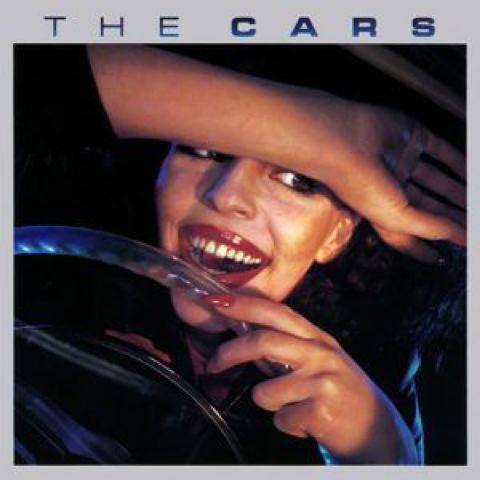
Classic Albums: The Cars


There are precious few records that can be called "all killer, no filler," and The Cars' debut album is certainly one of them.  While they had more and bigger hits later in their career, they never put together a single album as good as this one.

They are a band that has faded from popular consciousness, in large part because like a power-forward with a hot outside shot, they're tweeners who can't be easily categorized.  The Cars are one of the few bands that have a foot in New Wave and in classic hard rock.  Their use of synthesizers and their tight, power-poppy tunes fit right in with the punk/New Wave trends of the late 1970s, but their heavy, straight-ahead riffs are more Foreigner than Elvis Costello.

On The Cars, that combination is as glorious as peanut butter and chocolate, gin and vermouth, or Tango and Cash.  The meld of rock tradition with New Wave innovation is apparent on the first track, "Let the Good Times Roll."  It starts with a riff that sounds like the blues, but as played by one of Kraftwerk's robots. The song title recalls classic R&B, but Ric Ocasek's voice is as angular as his face.  From there the album segues into "My Best Friend's Girl," which has a 1950s rock theme and retro organ triplets paired with modern synths and a liquid guitar solo.

Just when you thought the band couldn't top that one-two punch, up comes "Just What I Needed," a gloriously catchy power-pop number that still invigorates every time I hear it.  It's more on the New Wavey side, with the faux British pronunciation of "perfume that you wear" and the synthesizer riff between the verses.  That last two songs on side one, "I'm In Touch With Your World" and "Don't Cha Stop" can't match this brilliance, but they do bring in nervy New Wave rhythms and an artier touch than the poppy tracks that start the album.  It's hard to find many records what have a better side one.

Side two tempers the rocking rave-up with fraught emotions.  The first song, "You're All I've Got Tonight," is about crawling back to a bad ex out of loneliness and sexual need.  The guitar gets skanky and Ocasek drops the arty pose for some cutting anger.  The temperature keeps rising on "Bye Bye Love."  Again, the title recalls old time rock and roll (the Everly Brothers, in this case) but the song has got punky edge and an epically cool descending synth/guitar hook.

At that point, the tempo slows for the album's end.  "Living in Stereo" is a moody, minor-key track that sounds like a refugee from the Talking Heads' Fear of Music album.  Things end with the emotionally tumultuous "All Mixed Up," leaving the listener in a very different place from where the good times are rolling.  All in all, this is a record that moves from peak to peak so effortlessly that you would never believe that it's a debut album.

The Cars' straddling of hard rock and New Wave may have allowed them to be overlooked or underrated, but they were able to put together a record jam packed with more memorable songs than many acts produce in their lifetimes.  They did it all by bringing different genres together and playing to the strengths of both.  It's something more artists ought to be doing nowadays.

Wednesday, August 28, 2013

The Brilliant Insight of Veep

Television has been revolutionized in the past decade by innovative new adult dramas like The Sopranos, Breaking Bad, and Mad Men, among others.  However, some genres still needed shaking up, especially shows taking place in a political setting.  For years I have failed to ever see a film or television show about politics that rang true in any way.

There are people who stand by The West Wing, but it bears as much resemblance to the reality of politics as I do to Ethel Merman.  None of the politicians in the show, especially the saintly president Bartlett, appear to be motivated by anything other than their ideals.  There are ridiculous soap opera plots, like the kidnapping of the president's daughter, the president being incapacitated, etc.  The West Wing echoes older visions of Washington, like Frank Capra's Mr. Smith Goes to Washington, where good-hearted pols fight and win against entrenched interests and unscrupulous opponents.  The characters of West Wing are fundamentally good people with the public's interest in mind and the whole enterprise just drips with sugary-sweet sentiment.  Whenever I tried to watch this show, I laughed my ass off.

A more recent show that I find to be equally laughable is House of Cards.  It takes a completely different approach showing a Washington full of back-stabbing and intrigue.  In this version, our politicians are not dewey-eyed do-gooders, but malicious power-mad manipulators.  This version of American politics is just as silly. It turns all of our half-assed, idiotic political leaders into criminal masterminds.

Our political class is not made up of super-villains nor knights in shining armor.  As far as I can tell, it is full of narcissistic, venal, short-sighted, and incompetent careerists. I recently read Mark Leibovich's alternately funny and infuriating new book This Town, which pulls back the curtain behind the world of Washington insiders.  The political class, which includes journalists, flacks, hacks, lobbyists and operatives as much as it does politicians themselves, comes across as ridiculously egotistical and disconnected from the rest of America.  Just imagine an entire world full of the Type A brown-noser who got elected class president at your school.  Washington is neither the font of virtue we sometimes see portrayed on the screen, nor is it a land of malicious puppet-masters.  No, it's a colony of self-centered, bumbling assholes.

While the situations in Veep aren't exactly true to life, it really nails the ethos of Washington's political class, and its priorities.   Selena Meyer's staff frets over what kind of frozen yogurt to buy at a photo-op, so as to send the right message.  The liason to the president is an insufferable turd, but his proximity to higher power means that others must curry favor with him.  Any attempt at passing legislation gets shredded by special interets, and at the end of the day, Meyer is more worried about how the failure of her pet initiatives hurts her image than anything else.  Nobody seems to care at all about the public good; keeping donors happy and maintaining a high media profile are far more important.  With a thoroughly useless and inept Congress constantly threatening to shut down the government or hold the debt ceiling hostage, Veep is definitely a sign of the times, and a funny one at that.

Monday, August 26, 2013

An Amateur Ethnography of My Grad School Tribe

I haven't been writing for the last few days because I was down in South Carolina at a friend's wedding.  Some of my grad school friends were there, and I saw some more in North Carolina and Virginia on the way home.  I was very fortunate to fall in with a great group of people in grad school at Big Ten University who made my time there some of the best years of my life.  Somewhere on the New Jersey Turnpike today, I realized that an analysis of our experiences might help illuminate the problems facing young(ish) scholars today.

There are eight people in the cohort I am analyzing, counting myself.  Seven of us have PhDs, and another is going to be defending this semester.  Six of the eight have degrees in history, one in English, and one in computer science.  Five of us are still employed in academia, although we all were professors at some point.  I have left to be a private school teacher, another is doing political advocacy and studying to be a social worker, and another works as a researcher.  Of the five in academia, three are tenured/tenure track, and two are in full-time contingent positions with a measure of job security.  Of the three who are in tenurable positions, one works at a regional state university with onerous workloads, another at a SLAC, and another at a SLAC with a research-friendly workload.  Essentially, only one of eight of us got the kind of job that our grad school mentors prepared us for.

Since I don't want to single any of my friends out (some of whom read this blog regularly), I'll just talk about our experiences and feelings collectively, based on the conversations I've had this weekend.  There are a few things that stick out.  In the first place, there is an almost universal feeling of letdown, as far as academia is concerned.  This even includes those who managed to get the brass ring of the tenure-track job.  Of the three people who are no longer in academia, two of us were well on our way to getting tenure, and decided to walk away.  Three of the five people who are still professors talked seriously with me about leaving the profession in the near future themselves.

These numbers might be explained by the general feeling that academic work is poorly paid, highly insecure, and forces those who take it to live in places that they don't really want to live in.  This last factor was an important one for all of those who left academia, and something that bears more conversation.  Academia is like the priesthood, in that the vast majority of scholars have little to no control over where they will be able to find full time work.  That's why I ended up in a wretched East Texas town, and many others I know are living in benighted rural burgs that they never would have chosen to live in if they had not been professors.  This is a major quality of life issue that grad school mentors tend to gloss over, because if more grads were aware of just how little freedom they would have to choose where they live, they wouldn't bother to finish their studies.

It was so great to see everyone again, but bittersweet to see so many people with so much to offer given so little opportunity and reward by the profession that they have sacrificed so much to be a part of.  If more folks out there would do an amateur ethnography of their grad school circle of friends, I bet they'll uncover some similar things.

Thursday, August 22, 2013

Track of the Week: Pulp, "Mile End"


From about 1995 to 1998, most of the new music listen I listened to came from the British Isles.  During that time Blur, Suede, Oasis, Radiohead, Portishead, and The Verve put out some amazing stuff that also got airplay on American alternative rock radio.  Pulp, on the other hand, were so British that they translated poorly to these shores, which made me love them all the more.  While Oasis, The Verve, and Radiohead blasted along with heavy guitars that reflected grunge's dominance, Pulp had a sound like cabaret filtered through 80s New Wave with a dash of The Smiths.  As time has gone by and the 90s are receding like my hairline into the realm of memory, Pulp comes out looking a lot more relevant and less dated than the likes of Oasis.

Lead singer Jarvis Cocker didn't write conventional rock songs.  He sang a lot about sex, but told stories of unhealthy obsession and embarrassment, not cock-rocking bedroom conquest.  Cocker also spun tales of mundane adventures in the everyday world.  "Dishes" is about washing the dishes as an act of love and self-reflection.  "Sorted Out for E's and Whizz" relates the horror story of going to a rave gone wrong, complete with bad drugs.  "Mile End," from the 1996 cinematic masterpiece Trainspotting, describes living in a cheap apartment in a crummy building, and does so in exacting detail.  There's the piss in the elevator, constant fish smell, and ruffians making a violent racket.  There aren't many rock bands who would bother writing about such a thing, much less so poetically.

Anybody who's had the experience knows what it's like.  I always associate this song with the Chicago apartment my buddy Dave had until we lived together.  The halls of the building looked like a cheap, hourly rate motel and smelled like burnt hair, and his unit was a tiny studio with godawful rust-colored shag carpeting straight out of 1973.  Because of that, and the fact that we both loved Trainspotting, with this being among his favorite songs on the soundtrack, I have a hard time listening to it these days.  He died suddenly last December, and every time I hear a song or see a movie that we would enjoy together, it just rips my heart out.  It's just the kind of thing that Jarvis Cocker and Pulp could make a song about. 

Tuesday, August 20, 2013

Letting the Mask Drop a Little

When I first started blogging back in 2004, I did it under my own name, and didn't start hiding my identity until about 2007 or so.  Being on the academic job market at the time meant that I was wary of  having my blog used against me, and so I figured it was best to create a secret identity to protect myself.  I am now beginning to think that maintaining my anonymity is a little cowardly and also a drag on my writing.  Sheltering behind a persona has made it easier for me to express my true thoughts and emotions, but it has also been too easy to angrily vent my spleen and not consider my words.  I'm keeping my Werner Herzog's Bear handle, partly because that's how most folks online know me, and party because I've always been proud of it. However my official name can be found on the sidebar, for anyone who's actually interested.  To all my friends whom I've scolded in the past about connecting my name to the blog on social media, don't sweat it anymore.  I figure if people are going to love or hate what is written here, they ought to know who's doing the talking.

The Royals, A-Rod, and the End of the Steroid Era

Baseball has a talent for letting its drama and foibles overwhelm its public image.  Everyone's talking about A-Rod, not the resurgence of once moribund franchises like the Royals and Pirates, or the amazing feats of Miguel Cabrera, who is on his way to being one of the all time greats.  Compare this to the NFL.  Aaron Hernandez is accused of murder -a crime slightly more heinous than injecting steroids- but conversation in the football world is much more centered on the field than off.  Some of this might have to do with the weird and outdated expectations of purity among baseballers representing the sainted National Past-Time.

Be that as it may, the current A-Rod saga (and Ryan Braun sideshow) is merely the last, strained coda of baseball's Steroid Era.  Of course, plenty of players are still juicing and will continue to do so, but the way baseball is played has definitively changed, and that has benefitted certain teams and hurt others.  For evidence, look no further than the Kansas City Royals.  At the start of the 2012 season, I wrote a long piece about their epic futility over the last twenty years, and there seemed to be little hope of a rebound.  This year they are winning and in contention for a possible play-off spot.  They are also winning in ways that pre-steroid era teams won.  As a great piece at Grantland demonstrates, the key to this team's success has been pitching assisted by stellar defense.  It certainly hasn't been home runs, since the Royals have only hit 84 this season, the lowest total in the American League.

This Royals team reminds me of the Cardinals of the 1980s, who were one of the top squads of the era, but hit few homers.  Now that the Steroids Era is over and pitching is ascendant (just look at the number of no-hitters in recent years), pitching, fielding, and base-running are much more important components of the game.  This Royals team has weaknesses, but their strengths are strengths that play to the trends in the game.  Even Kaufman Stadium itself symbolizes their throwback methodology.  The Royals play in a big, pitcher-friendly park of the kind totally foreign to the homer-friendly bandboxes built around the league in the 1990s and early 2000s.

It's not just the Royals, either.  The Pirates, a team perhaps even more perennially disappointing to their faithful for the past two decades, are leading their division with a similar model.  They rank 11th in the National League in runs scored, but first in ERA.  The Dodgers, who are just killing their competition right now, are ranked 12th in home runs in the National League.  Of course, there are teams like the Braves who are winning with the long ball, but the contours of the game have made other paths to winning easier.  Sluggers like Miguel Cabrera still stalk the earth, but the best player in the senior circuit just might be the Pirates' Andrew McCutcheon, a great all-around player who can hit for modest power, high average, steal bases, and patrol center field.

All of this means that the average baseball game is more exciting and interesting than it was fifteen years ago at the heigh of homer mania.  Daring base running and stellar fielding are great things to watch.  Fewer homers makes them that much more exciting when they happen.  On a more personal note, the Mets are rebuilding their team around strong pitching and timely hitting, and the success of the Pirates and Royals gives me hope for my newly adopted squad.  The fact that the shift in the game has led to longtime doormats getting back into contention and shaking things up is reason enough to welcome it.