I wrote the following on my old blog four years ago, and it's as relevant now as ever. With May here all kinds of academic departments will be hiring, just not in public.
****
It's been awhile since I've talked about the academic job crisis in these pages, but recent things I've observed and heard about merit comment. I've been reminded this week that the month of May is an intense one in the academic job world, but one you won't discover in the jobs section of the Chronicle of Higher Education. Oh yes, many jobs are being offered and taken right now, but very few of them have been advertized.
Here's the deal: at the end of the school year, department chairs have to scramble to fill all the slots in their introductory level classes in the Fall. Because of hiring freezes, this year the gap between class sessions that need to be taught and the number of faculty on hand will be quite severe. However, department chairs can safely rely upon the large reserve army of unemployed academics to take low paying adjunct work at the last minute. They never have to look far. Just as a contractor knows the corners where the day laborers wait and can be hired for low wages, department heads have a steady supply of newhomegrown MAs and PhDs who need work and are willing to teach classes for peanuts and without benefits.
The key to the informal job market is to be at the right place at the right time. Most department chairs want to put as little work as possible into finding the warm bodies necessary to fill in the classroom gaps. In the past I have witnessed patently incompetent people get jobs simply because of desperation on the part of department chairs. These incompetents (who are a minority of adjuncts, btw) then managed to retain their jobs because it was just too much bother to replace them with someone who knew what they were doing. The quality of education received by the students very rarely factors into the equation. Even worse, the naked exploitation of a captive labor force making poverty-line wages never, ever seems to make those doing the hiring lose any sleep.
As the formal job market gets worse with each passing year, the informal market will only get bigger. The math is pretty simple, actually: tenure track positions keep getting scarcer, but enrollments are still growing. Until we shine a light on the informal market and force the same "accountability" on university administrators that's being forced on faculty by them, in no time at all the "formal" market will be a thing of the past.
Wednesday, April 30, 2014

Monday, April 28, 2014
Bundy And Sterling Make Us All Too Comfortable
The racist words of Cliven Bundy and Donald Sterling have justifiably raised hackles across the land. In a sense, however, their blunt bigotry has allowed the nation the breathe a collective sigh of relief. It is so much easier and cheaper to discuss racism as something spewing from troglodytes like Bundy and Sterling, rather than talking about the much messier (and more damaging) institutional racism in this country. I am afraid that in the broad outcry against these two men we are rushing to avoid deeper questions.
In fact, these two men are both great illustrations of institutional racism at work, and that fact ought to be playing a bigger part in our discourse on them. In Sterling's case he had to pay the federal government a large settlement after being accused of striving to keep African Americans and Latinos from living in some of his housing developments. Residential segregation is sadly an old story in this country, and something that has helped contribute greatly to wealth disparities. As awful as Sterling's words were, his housing decisions were at least ten times more damaging and damning. And yet for some reason his behavior in this regard received a fraction of the media coverage that his ignorant tirades have garnered.
In Bundy's case the connection to institutional racism is less direct, but no less profound. Bundy is essentially claiming the right to graze his animals on federal land for free. Even if he actually bothered to pay the fees, he would be paying well below market rates, a huge giveaway for ranchers. Not only do we not refer to ranchers as "welfare queens," our media often plays them up as rugged individualists. The ranchers who benefit greatly from this system are overwhelmingly white, as are the farmers who rake in federal subsidies. Those facts are the result of the influence of white supremacist politicians on New Deal legislation back in the 1930s. I doubt a black man brandishing a gun at law enforcement officers in the cause of getting access to public land without paying would receive fawning media attention, either. Instead of being met with the praise of Fox News and the like, he would have a fusillade of hot lead to look forward to.
Bundy and Sterling aren't just unreconstructed bigots, they are both all too apt illustrations of the all-pervasive structural power of racism in this country. That subject, however, tends to make people (especially white people) uncomfortable, and it is certainly more divisive. When the supreme court struck a blow against affirmative action last week, public reaction was decidedly mixed, with mainstream conservative sources like Fox News praising the decision. These same outlets have been running as fast as they can from Cliven Bundy after his remarks, even though they made him into a media figure and exalted his defiance. His and Sterling's words are considered universally repugnant, but Sterling's racist business practices have barely registered. Isn't about time that we focus on racist actions over racist words?
In fact, these two men are both great illustrations of institutional racism at work, and that fact ought to be playing a bigger part in our discourse on them. In Sterling's case he had to pay the federal government a large settlement after being accused of striving to keep African Americans and Latinos from living in some of his housing developments. Residential segregation is sadly an old story in this country, and something that has helped contribute greatly to wealth disparities. As awful as Sterling's words were, his housing decisions were at least ten times more damaging and damning. And yet for some reason his behavior in this regard received a fraction of the media coverage that his ignorant tirades have garnered.
In Bundy's case the connection to institutional racism is less direct, but no less profound. Bundy is essentially claiming the right to graze his animals on federal land for free. Even if he actually bothered to pay the fees, he would be paying well below market rates, a huge giveaway for ranchers. Not only do we not refer to ranchers as "welfare queens," our media often plays them up as rugged individualists. The ranchers who benefit greatly from this system are overwhelmingly white, as are the farmers who rake in federal subsidies. Those facts are the result of the influence of white supremacist politicians on New Deal legislation back in the 1930s. I doubt a black man brandishing a gun at law enforcement officers in the cause of getting access to public land without paying would receive fawning media attention, either. Instead of being met with the praise of Fox News and the like, he would have a fusillade of hot lead to look forward to.
Bundy and Sterling aren't just unreconstructed bigots, they are both all too apt illustrations of the all-pervasive structural power of racism in this country. That subject, however, tends to make people (especially white people) uncomfortable, and it is certainly more divisive. When the supreme court struck a blow against affirmative action last week, public reaction was decidedly mixed, with mainstream conservative sources like Fox News praising the decision. These same outlets have been running as fast as they can from Cliven Bundy after his remarks, even though they made him into a media figure and exalted his defiance. His and Sterling's words are considered universally repugnant, but Sterling's racist business practices have barely registered. Isn't about time that we focus on racist actions over racist words?
Sunday, April 27, 2014
Track Of The Week: Bruce Springsteen, "Dancing In The Dark"
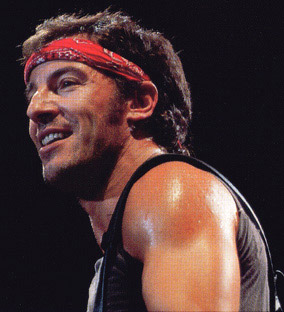
Over the last week or so I have been on a big Bruce Springsteen jag, and have listened intensely to albums and songs that I took for granted years ago. I've been especially struck by "Dancing In The Dark," the first Springsteen song I was ever really aware of.
From the summer of 1984 to the spring of 1986, songs from Born In The USA ruled the airwaves, making the former scruffy poet of Asbury Park into a massive pop star along the lines of Madonna, Michael Jackson, or Prince. (And not to sound like a bitter old man, but that lineup beats the heck out of what dominates the charts today.) He gained a lot of new fans in the mainstream who had little idea of his older material, and that was hardly a mistake. "Dancing In The Dark," which announced Springsteen's presence as a pop star, has all the hallmarks of Top 40 in 1984. Synthesizers carry the melody, reverby guitar is merely a texture, Clarence Clemons' once brash sax just coos a little at the end, and driving things forward is a propulsive beat from an electronically enhanced snare drum. The accompanying video made the bid for popularity that much more apparent. It shows The Boss grinning sillily, dancing around on stage and then bringing a young Courtney Cox out of the audience to cut the rug with him. This was my first impression of Bruce Springsteen, and had no clue this man was capable of wrenching songs like "The River" and "Highway Patrolman."
It could be easy to listen to this song and think that Springsteen had sold out, but I actually think its sound makes it more subversive. The musical textures are appropriately bright, but there are lots of dark undertones. This is a song of hope prompted by complete lonely desperation, beginning with the great, almost frantic lines "I get up in the evening/ and I ain't got nothing to say/ I get home in the morning/ I go to bed feeling the same way/ I ain't nothing but tired/ nothing but tired and bored with myself." The song's narrator seems to be trying to romance someone, but is losing his cool and just pouring out his emotions because he doesn't have anyone to talk to. Just because the song has the same jaunty, shiny feel as other 1984 tunes (like say "Tenderness") that doesn't change its dark core. By taking one of his tales of loneliness but wrapping it in an upbeat sound and drenched with 80s studio magic, Springsteen may have made a subtly subversive song a big hit.
Regardless of how well it's aged, I still enjoy "Dancing In The Dark." Whenever I listen to this song it reminds me of the times in my life where I've moved alone to a new town, feeling cut off and desperate. Since I've made these moves either as a graduate student or junior academic, it's also meant being poor and being far away from anyone I know. It's something I've done way too many times in my life, but thankfully I'll never have to do again. Listening to this song makes it easy not to feel nostalgia for being young and single, since it's a good reminder of just how miserable that lifestyle could make me.
Thursday, April 24, 2014
A Hidden Cost Of Contingency
A friend of mine of Facebook is about to leave his second temporary gig in as many years, and posted a comment from his student evaluations: "This is the best class I have had in college so far." On this same day, the last for the seniors in my elective class, one of them came up to me to let me know how much he appreciated having me as a teacher. I have taught many in this group of seniors for three years now, and it has been one of the great pleasures of my life to see them develop and help them along the way. My academic friend will never get to do that, because he has to hit the pavement and find another gig.
His story reminded me of my last day of my visiting assistant professor gig. I wore an ascot to class on a bet between two of my colleagues over who among us would be the first to score a tenure-track job. The students in my class that day were a memorable bunch, one of the best classes I've ever had. They asked me why I was leaving, and felt hurt, as if I someone was rejecting them. I had to then explain that I was not a "real" professor, and had to go somewhere else if I wanted to be one. I had proved myself in that job, had developed a loyal student following, and liked the city where the university was located and wanted to stay there, but in the end, that didn't really matter.
One of the hidden costs of contingency is never being a full member of a university community. It doesn't just mean not having a voice or a seat at the table, it means not being allowed to develop long-term student relationships. I came back to the university where I VAPed two years later for a conference, and one of my favorite former students was there, who had sent me some punk rock mix CDs after I moved to my t-t job in Texas. It was great to catch up with him but bittersweet, knowing that I only knew him as an intro-level student, and never got to teach him in any upper-level electives. At the place where I taught, like so many others, first year students were introduced to college-level disciplines by temporary laborers who would be long gone by the time they graduated. Perhaps some of those students were confused the next year when they looked for our names in the course catalog and couldn't find them. We were ghosts hovering over the commencement ceremony, I hope fondly remembered.
His story reminded me of my last day of my visiting assistant professor gig. I wore an ascot to class on a bet between two of my colleagues over who among us would be the first to score a tenure-track job. The students in my class that day were a memorable bunch, one of the best classes I've ever had. They asked me why I was leaving, and felt hurt, as if I someone was rejecting them. I had to then explain that I was not a "real" professor, and had to go somewhere else if I wanted to be one. I had proved myself in that job, had developed a loyal student following, and liked the city where the university was located and wanted to stay there, but in the end, that didn't really matter.
One of the hidden costs of contingency is never being a full member of a university community. It doesn't just mean not having a voice or a seat at the table, it means not being allowed to develop long-term student relationships. I came back to the university where I VAPed two years later for a conference, and one of my favorite former students was there, who had sent me some punk rock mix CDs after I moved to my t-t job in Texas. It was great to catch up with him but bittersweet, knowing that I only knew him as an intro-level student, and never got to teach him in any upper-level electives. At the place where I taught, like so many others, first year students were introduced to college-level disciplines by temporary laborers who would be long gone by the time they graduated. Perhaps some of those students were confused the next year when they looked for our names in the course catalog and couldn't find them. We were ghosts hovering over the commencement ceremony, I hope fondly remembered.
Monday, April 21, 2014
When Cable Sucked
Many things about our 21st century existence never cease to amaze me, and I am not talking about the device in my pocket that can be a computer, phone, and hold my entire music collection. I am equally amazed at the vastly superior quality of coffee and beer in this country compared to three decades ago, and with the rise of basic cable television to respectability. I want to talk about the latter today, because back in the 1980s few could have imagined shows like Breaking Bad or Mad Men even existing, much less on the lowly and much-maligned medium of basic cable.
In the first place, the cable pre-history before digitization meant only a limited number of channels were available, and there was no "guide" function to tell you what was on. My mother is an assiduous neat freak, and as a child I had to watch the TV listings section of the local Saturday paper like a hawk, lest my mother toss it out with the rest of the newspaper. (Her TV watching habits are so regular, rare, and narrow that she never needed the listings.) Much of what was on consisted of cast-off, unwanted crap from the networks. The reruns were often shows so slight that they never made it to network syndication, and the movies of B-grade quality. Cable was so scuzzy that they had their own awards show (The Ace Awards) because no cable show was ever going to win an Emmy.
It's hard to say when exactly cable started getting respectable. It became less of a joke roughly between 1987 and 1991, dates that marked the advent of NFL games on ESPN and CNN's coverage of the Gulf War, respectively. I miss my old low-rent cable, and here are some reasons why:
Cubs and Braves Games
My love of baseball was nourished by WGN and TBS, since they were so starved for programming back then that they broadcast all of the Cubs and Braves games, respectively. I really learned about baseball by listening to Steve Stone's commentary during Cubs games, and to this day will watch games played at Wrigley on TV just to rekindle old childhood memories. Oddly enough, the experience never turned me into a fan of either team. I got sad in later years when both networks cut back on their baseball coverage.
USA Up All Night
My love of guilty cinematic pleasures and so-bad-it's-good movies originates in many a Friday and Saturday night spent watching the fare on USA Up All Night hosted by Gilbert Gottfried on Saturday and Rhonda Shear on Friday.
Music Videos On MTV
I read an oral history of MTV a couple of years ago, and realized that the folks behind MTV were ingenious because they got their programming for free. The record labels paid for all of those videos, which were much more interesting and compelling than anything any one cable company could have afforded to produce at the time. I've written a lot about music videos on this blog, suffice to say that they captured my youthful imagination like little else at the time.
Odd Movies
Every now and again I will be flipping channels and see that a cable station in running a Star Wars or Indiana Jones marathon. Such a thing would have been a complete impossibility in the days of old cable. On old cable you'd be much more likely to see a Billy Jack or Walking Tall marathon. Yes those movies are silly by comparison, but they are damn hoot, something there's just too little of these days.
Odd Sports
Before ESPN was the "Worldwide Leader" they filled their hours with roller derby, monster trucks, kick boxing, and Australian rules football. My dad and I loved to watch these events together, it was a real bonding experience for us. We especially loved Australian rules football, a sport that combines some of the best attributes of football, soccer, and rugby. The international programming that ESPN resorted to probably made me a more cosmopolitan, broad-minded person.
Old School CNN Headline News
I was a huge lonely nerd as a kid and abnormally obsessed with the news. Our local podunk paper had little international news, so I loved watching CNN, back when it was a hard news channel with a heavy emphasis on global events. I liked Headline News best, since I could get a thirty minute newscast any time of the day, complete with sports highlights at 19 and 49 minutes after the hour. I was bored and living in the middle of nowhere, so there was nothing more exciting than seeing footage of things like the anti-poll tax protests in Britain or the Ayatollah's funeral. This once humble channel, which is now a haven for bad morning shows and Nancy Grace, did a lot to educate me about world events.
I was a huge lonely nerd as a kid and abnormally obsessed with the news. Our local podunk paper had little international news, so I loved watching CNN, back when it was a hard news channel with a heavy emphasis on global events. I liked Headline News best, since I could get a thirty minute newscast any time of the day, complete with sports highlights at 19 and 49 minutes after the hour. I was bored and living in the middle of nowhere, so there was nothing more exciting than seeing footage of things like the anti-poll tax protests in Britain or the Ayatollah's funeral. This once humble channel, which is now a haven for bad morning shows and Nancy Grace, did a lot to educate me about world events.
Saturday, April 19, 2014
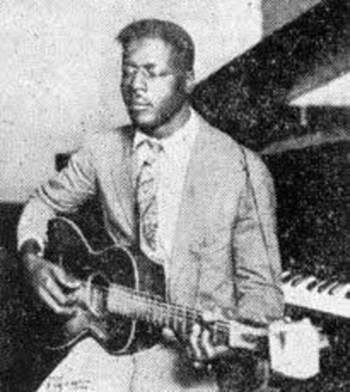
Track Of The Week: Blind Willie Johnson, "Dark Was The Night, Cold Was The Ground"
Last night I was motivated by Good Friday to sit down and watch Pasolini's Gospel According to St. Matthew. It's an amazing film in that Pasolini takes the techniques of Italian realism (spare dialogue, non-actors, stark black and white imagery) and applies them to the story of Jesus, which usually gets the gaudy Technicolor treatment of the likes of Ben-Hur, King of Kings, and The Greatest Story Ever Told.
Although Pasolini's sexuality, religion, and politics make him an unlikely chronicler of Jesus (he was a gay Marxist atheist), the film might be the most moving depiction of the Christ story I've ever seen on film. In this rendering Jesus is both mysterious and utterly relatable, a slight-looking fellow with intense eyes and a fervent manner of speaking. He comes across as a determined revolutionary, barely concealing his fury at those who refuse to help their fellow humans even while preaching love. (Pasolini's politics are pretty close to the surface in this regard.)
Just as the filming techniques are unorthodox, so is the soundtrack, which uses passages from 20th century music. The most effective in this regard is a snippet from Blind Willie Johnson's "Dark Was The Night, Cold Was The Ground," which is a lamentation for Jesus lying dead in the tomb on the evening of Good Friday. Johnson was a Texas bluesman who may have been the greatest artist of the slide guitar that there has ever been. It's actually hard to call him a bluesman, since he sang Gospel and devotional songs, but with blues accompaniment and a deep, gravelly voice that gave his words of heaven an unusual earthiness.
"Dark Was The Night, Cold Was The Ground" has no words, only an unearthly slide guitar that sounds like it's a transmission from Mars, rather than Texas in the 1920s, and Johnson's emotive, wordless singing. It puts chills down my spine every time, and reminds me of the pain I felt as a child when I went to do the stations of the cross on Good Friday. Each year I mourned as if Jesus had died that day, and while my piety is much less intense as an adult, I am still moved when I think of a man who did so much for others dying in such a horrible way, abandoned by most of his own disciples. As a child I was always haunted by the fact that Jesus himself cried out "My God, my God, why have you forsaken me?" Forget your hymns, "Dark Was The Night, Cold Was The Ground" is the only song I know that articulates the utter and complete despair of the crucifixion.
Friday, April 18, 2014
The Heartland Doesn't Want To Be Saved

I've always winced at the term "heartland" because I grew up there. Locals deployed it constantly, affecting a kind of moral superiority over the more supposedly wicked and less righteous parts of the country. It seemed to me an evasion of a grim reality, like the scion of an impoverished noble family trotting out his coat of arms and wearing a flea-bitten ermine coat. In reality the "Heartland" is a backwater not at the heart of much of anything in this country whose population loss has occasioned plenty of talk about what can be done to revive it. Those who have a stake in Great Plains (a term I prefer) like myself know that it is a region in dire circumstances.
Timothy Egan, who knows the area well, wrote the latest entry in this venerable genre in the New York Times last week. I agreed with much of what he had to say. He noted that irrigation-heavy agriculture is sucking the Ogallala Aquifer dry, and that the recent wave of immigrants from Latin American and Asia to the Plains needs to be encouraged, in order to bring new blood and arrest the alarming population decline in the area. He could also have added that the proposed Trans-Canada pipeline would cut right through the Aquifer, and a blow-out would effectively destroy the whole area's water supply.
However, I feel Egan missed something crucial, which I know to be true: the Heartland doesn't want to be saved. If you dare bring up the aquifer's depletion and the need for conservation you'll be treated like a communist. For more evidence of a lack of desire to change, look no further than how many of the locals are treating recent immigrants. Instead of welcoming them with open arms, ecstatic that an area that's literally dying off is getting a fresh infusion of young people, immigrants are being met with ugly nativist and racist pushback. States like Kansas and towns like Fremont, Nebraska, are passing laws intended to drive immigrants from the area and make it harder for them to vote.
What about the youth who grow up on the Plains, you ask? Those who get an education tend to get the hell out at their first convenience. They might stick close to home, in places like Omaha, Denver, or Kansas City, but those cities are increasingly foreign to their rural hinterlands. There are few job opportunities for young educated ruralites, and the culture of the area is so oppressively conservative that those who aren't Republicans, aren't straight, aren't religious, and aren't interested in maintaining a 1950s version of gender roles do not feel welcome. Of course, the locals actually tend to see that as an asset rather than a curse, since it keeps things just the way they like it. To say otherwise would challenge the aforementioned sense of moral superiority.
Despite all of this I can't help but love my Nebraska homeland, its wide vistas, laid-back attitude, and lack of pretension. Whenever I go home I mark in my head just how much emptier and more lifeless it seems with each passing visit. It makes me sad, especially when I recall my faint memories of how vibrant my hometown was before the farm crisis of the 1980s. Like an alcoholic friend who refuses to admit they had a problem, the "Heartland" will only heal when it realizes it needs healing. Don't count on that happening any time soon.
Subscribe to:
Posts (Atom)