This week brought the sad news of the passing of Sir George Martin, the man who signed the Beatles to their first record contract and produced all but one of their albums. He always seemed such a contrast to the band, especially in their psychedelic period when their long locks, facial hair, and love beads clashed with his suit and tie wardrobe and Brylcreemed hair. Despite those differences, Martin continued to make his mark on the Beatles' music.
I am of the adamant belief that creativity is an inherently collaborative thing. We have become overly enamored with the cult of the genius, forgetting that even the greatest geniuses had help along the way. George Martin's brilliance was that he was able to take the visions of Lennon and McCartney and help make them real. This was no small feat at a time when recording technology was pretty primitive by modern standards, and the studios at Abbey Road could only record on four tracks. In 1966-1967, the Beatles really began to broaden their horizons and revolutionize their approach, and maybe no one song is more emblematic of that change than "Strawberry Fields Forever."
It famously underwent drastic changes in its history, going from a quiet folkie song to the final product, which is heavy, mysterious, and off-putting as it is beautiful. It sounds absolutely nothing like the Beatles had written before, and certainly like nothing else on the radio in February of 1967. I remember hearing it for the first time as a child, and its difference from the likes of "Love Me Do" shocked me. While the song is ostensibly a longing for childhood, it seemed to me an uncanny sonic evocation of the dream world.
Perhaps its mysteriousness had to do with its genesis. The final song is actually two different takes spliced together, even though they were recorded in different keys. The slight change in speed (necessary to change the pitch) adds greatly to its unreal feeling. Without Martin's efforts, this song would not exist in its current form. May he rest in peace.
Feeling the spirit of the good Dr. Thompson tonight
I'm in the mood to get a bit more personal here. Yesterday I felt myself suddenly overwhelmed by a feeling of dread about political life in America.
Much, but not all of it, has to do with the rise of the Trump phenomenon. Ever since the late 80s I've viewed him as the avatar of America's post-Reagan vulgarity. He has always represented a corrupt and selfish values system utterly corrosive in its search for fame and lucre. He has now added to it racism, sexism, and noxious nationalism. His flacks assault journalists and his fans sucker punch protestors, but more people vote for him. He lies constantly, his mouth an open sewer of bigoted mendacity, but more people vote for him. He uses time in a presidential debate to talk about his dick size, and more people vote for him. It is dawning on me that the vulgarity Trump has so long represented has a lot of fans, and they vote.
I also just don't understand these people. Perhaps the kid I worked with detasseling in the corn fields of Nebraska in high school who joked about nuking Mexico is a Trump voter now. I sure as shit didn't understand people like him when I was surrounded by them, either. Hell, it's part of the reason I fled my hometown. And please spare me the talk of Trumpism as the angst of the dispossessed. Plenty working and middle class folks who've fallen on hard times, both white and not, have avoided blaming their plight on immigrants.
I can't stop thinking about the fact that there is a significant chunk of this country, including prominent elected officials like Chris Christie, who actually support Trump. Celebrities and athletes have started endorsing him publicly. When Trumps speaks he just talks out of his ass, and the only coherent things he says are hateful garbage. Who is impressed by this? As far as I can tell, a large number of Americans are political nihilists. Even if Trump gets slaughtered in the general election, they'll still be around, waiting for some other demagogue to rally them.
For beneath this I see two major reckonings. The first is the unresolved consequences of 9/11. The response to that attack included an unnecessary war in Iraq, and generally the United States has failed to win a lasting victory against Islamist terror. As with Vietnam, the sense of defeat and wounded nationalism leaves many vulnerable to narratives of national renewal through violence. Reagan exploited it then, Trump exploits it now. The other major reckoning is with the economic shift of the last forty years, which has left the rich richer, the middle class shrinking, and the poor in desperate straights. Neither party has adequately responded. The Republicans have doubled down on the very policies contributing to income inequality, while Democrats have been too chickenshit and weak to move the needle the other way. The failure to change this problem though normal means makes it easy for a man like Trump to flourish, and things aren't getting any better.
Beyond the rise of Trumpism, I despair at what's being done to education in this country. Public higher education is being gutted even worse than before. Even in flush times states are slashing budgets because schools are being starved of funds by governors hell-bent on protecting the wealthy from taxation. States like Louisiana and Kansas are making drastic cut-backs at all levels of education, and in Illinois some schools might not be able to stay open until the end of the academic year due to a budget impasse. Netflix billionaires give their money to education "reform" initiatives aiming to further limit and degrade teachers. When I was an academic and now that I am teacher I feel like I am part of a group of people who is absolutely loathed by the powers that be.
It doesn't matter who's elected president, tinpot tyrants like Sam Brownback and Bruce Rauner will keep gutting education so rich people can buy another yacht. There doesn't seem to be any way to stop the Republican juggernaut on the local or state level. The Democrats are too weak, and the post-Citizens' United reality means big money can make a huge impact, and that money is usually coming from conservative ideologues.
My dread and loathing keeps welling up. Young black people are murdered by the police, and despite the massive movements in protest, it keeps happening. State legislatures vote to legalize discrimination against gay people, and call it "freedom of religion." A fascist demagogue approaches the presidency, and most people treat it as humorous as much as anything else. Some day I fear my daughters will take me to task for having brought them into such a world.
BBC) Today's presidential inauguration was perhaps the most surreal in American History. Donald Trump gave the first off-the-cuff inaugural address, rambling for two hours with some heightened moments interspersed. At one point he asked those present to raise their right hands and pledge to loyally carry out his agenda, then led those present in a chant of "USA! USA! USA!"
A large number of the raucous crowd are members of the Real Americans, the controversial group of red-capped Trump supporters accused of harassing racial minorities at several polling stations across the country on election day. These actions led to several lawsuits in many different states, but a deadlocked Supreme Court, still with only eight members after months of Republican filibustering, was unable to to intervene.
Trump also broke with the typical decorum of the occasion to assail Barrack Obama as a "loser" as he was sitting just a few feet behind him. The crowd roared its approval as the now former president tried to keep his composure. Sources say that Obama is considering living in seclusion in Hawaii after a raft of death threats and Trump signaling that he might block Secret Service protection for Obama once he is no longer president. He has also promised a criminal investigation of the Obama administration in regards to the Benghazi attack in 2012, promising his supporters to put the former president behind bars.
There was little of substance in Trump's inaugural remarks. He repeated himself a lot, saying the phrase "make American great again" more than 30 times. He also bragged extensively about the inaugural ball, saying multiple times that it would be "huge" and "classy." The ball has already attracted criticism for the giant gold-embossed "Trump" sign placed on the White House for occasion. Some inside sources claim that the president wants to make the sign permanent.
While some protestors had planned to line the parade route from the Capitol to the White House, gangs of Real Americans armed with bats and clubs set themselves upon those protestors brave enough to show up, all while the DC police looked on. Many have claimed Trump's promise to support the nation's police forces by calling off all Justice Department investigations into police brutality has emboldened local police forces to tacitly support violence carried out by Real Americans across the country.
The inauguration also saw a new feature, a torchlit parade at night led by members of the Real Americans. The participants were extremely enthusiastic. Tom Hickenlooper of Flower Mound, Mississippi said "This is the greatest moment of my life, and I am a father of three!" Grace Benedict of Mount Vernon, Illinois, proclaimed "Trump is going to clean this country up once and for all!" Joe Hess of Fort Smith, Arkansas, yelled out "Today America, tomorrow the world!" several times to lusty cheers by his compatriots.
I've been thinking a lot lately about a weird sub-genre of 80s music, which I guess you could call Rust Belt Decline Rock. In the 80s deindustrialization weaponized by Reaganomics smashed factory towns like an economic hurricane, except that the storm has raged for decades, rather than a couple of days. That experience would get discussed in the rock music of the era, but from a weirdly nostalgic angle. "My Hometown" by Bruce Springsteen is a great example, along with Billy Joel's "Allentown," of songs from this genre actually entering the charts.
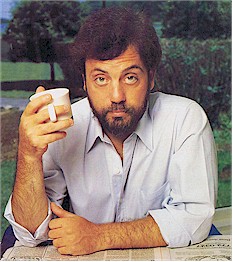
"Allentown" is ostensibly about the decline of the steel industry in eastern Pennsylvania, although the song title's city was less impacted than other cities in the area like Bethlehem. It came out in 1982, in the depths of the Reagan recession, a time I remember well. I found out later from my dad that the small factory he worked for almost went under during that period, which was a fate others didn't escape. Collective memory of the Reagan years tends to forget the double-digit unemployment of the year this song came out.
"Allentown" is nostalgic, and the video even more so, with all kinds of 1940s imagery and longing for a time of economic prosperity. Musically it's poppy and catchy, a world apart from Bruce Springsteen's Nebraska album of the same year that dealt heavily with hard time stories. The Boss grew up in the Rust Belt, working class world, while Billy Joel came from the Long Island suburbs, and that tells the tale. Joel was looking for some lyrics for a song he'd already written, and got inspiration from one of the issues of the day. Springsteen was commenting directly about the world he grew up in being destroyed and a lot of the people he knew being crushed.
While "Allentown" laments the economic downturn, there's no anger or anguish in the singing or in the lyrics. It's quintessentially 80s in that respect; you wouldn't want politics to get in the way of a money-making radio hit. And it's certainly a great bit of pop music, but it makes me sad to contemplate that the degradation of the American working class has been cultural wallpaper for over three decades now. The Flint water crisis is a national shame, but the rest of the country has stood by for decades while an economic Katrina has been battering that city, like so many others, from Detroit to Youngstown to Camden to Stockton. We don't hear any jaunty pop hits about it anymore, either, it's become so routine.
[The newest post in my continuing series of looking at what was in the top ten in times past during the same week.]
So far we've been looking at 80s top tens, let's dip back a little bit into the 70s, shall we?
10. Dire Straits "The Sultans Of Swing"
Before Dire Straits started rocking sweatbands and getting money for nothing and chicks for free, they managed to update blues rock for a post-New Wave world. This song shows off the beauty of Mark Knopfler's guitar tone, which can cut through the pedestrian lyrics and flat singing. This is by far the best thing the band did, and they never equaled it, despite having songs that were more popular.
9. YMCA "The Village People"
The song that launched a million grandmas to hit the dance floor at Midwestern weddings. This song may be played today than any more on the countdown, primarily at sporting events. The music itself is B-grade disco, but the fact that it hides a subversive message of cruising for guys at the Y in an ostensibly family fun song deserves to be saluted.
8. The Doobie Brothers "What A Fool Believes"
Ah, the first true Yacht Rock crossover song. The Doobies had been around for awhile, putting out rootsy rock with some rhythm behind it. Then came the late 70s and the entrance of Michael McDonald, whose voice practically defined Top 40 in the 1979-1981 period. That voice is almost indescribable, as powerful as it is uncannily off-putting. (And not necessarily in a good way.) The segue into the "wise man has the power" falsetto is pure pop magic, though. It's also noteworthy that Kenny Loggins, whose smooth sounds were also of the moment, co-wrote the song. Notice as well the airy synthesizers, a sign of the decade to come.
7. Peaches and Herb "Shake Your Groove Thing"
This song is what I love about late period disco music. It is silly and frivolous but also fun and funky. All these years later it still gets them out on the floor.
6. Olivia Newton-John "A Little More Love"
People easily forget just how huge Olivia Newton-John was between 1978 and 1981. Sure, between her twin peaks of Grease and "Physical" she appeared in Xanadu, but it was hardly a career-killer. She had that wispy blonde look that was so of the moment, and a gentle voice that was both homey and sexy. This song has kind of a gritty vibe to it, the guitars glitzy yet rough. Unfortunately, it's a bit clunky, which is why it's one of those hits that never made it into the oldies pantheon.
5. Donna Summer (with Brooklyn Dreams) "Heaven Knows"
Donna Summer too was "hot stuff" in the late 70s, but this is not one of her iconic tracks. Unlike her collaborations with Giorgio Moroder, this is disco by numbers, except for the sparkling synthesizer on the bridge. This song might as well be Exhibit A in the decline of disco from the perfect dance music to manufactured pablum. Fun fact, the male singer is Joe "Bean" Esposito, the guy responsible for "You're The Best" from The Karate Kid, one of the all time great 80s hype songs.
4. The Pointer Sisters "Fire"
This song in a lot of ways is a sign of things to come. It isn't disco, and it combines R&B with rock, a formula that would yield a big bonanza in the 80s. In fact, it even has a little bit of a country feel to it. The reverby guitars remind me of the decade to come as well, but without the overdone production. Man this is a great little song.
3. The Bee Gees "Tragedy"
The Bee Gees ruled the late 70s after their contributions to the Saturday Night Fever soundtrack, managing to weld their unique voices to some great disco tracks laid down by Miami-area R&B vets. What they did afterward has been lost in the mists of time. Their follow-up, Spirits Having Flown spawned some hits, but those songs never seemed to having staying power in the pop cultural memory. "Tragedy" is a case in point. It hit near the top of the charts during Bee Geemania, but has basically been forgotten. It's an odd song, sounding like minor-key ABBA with a dash of early 80s dance music. If they hadn't been so popular at the time, I doubt this would've been a hit (and I say that as someone unafraid to profess his love of the Bee Gees.)
2. Rod Stewart "Do Ya Think I'm Sexy"
This song is Exhibit B in disco jumping the shark. It was a music form song so dominant that rockers like Stewart got into the act, hoping to cash in. This song also embodies the transformation of the sexual revolution from free love in the 60s into soulless pleasure-seeking in the 70s. Above all, it shows the sad depths that Rod Stewart had sunk to in the late 70s. He began the decade with an amazing run in the Faces and a quartet of fantastic solo records. At some point he decided to sell his soul for fame and fortune, scoring hits with crap like this, which can't hold a candle to the likes of "Stay With Me."
1. Gloria Gaynor "I Will Survive"
Now this right here is a number one song, people. I still remember when the alternative rock band Cake put out a cover of this in the mid-90s and people thought it was a joke, and the band quickly shot that accusation down. They understood the emotional power of this song, perhaps the most iconic song about being jilted ever written. It's different because it is defiant. The singer gets over her feelings of loss and demands that her former lover's ghost never haunt her anymore. The music itself is not remarkable, but Gloria Gaynor sings the everloving shit out of this song and imbues it with much more meaning than it has any right to have. It will live forever.
I am going to repeat myself, but I am saying something I have been saying for years and it bears repeating: nationalism is an extremely powerful force in American politics and Trump is exploiting it. Most Americans are under the self-serving delusion that Americans are "patriotic" and not "nationalistic," which is just not true. Scholars of American history are surprisingly susceptible to the soft-pedaling of nationalism as a force in American life. On top of that, so many scholars in the humanities have been talking about diasporas and the declining power of the nation-state, as if it were an inevitability. While we have experienced a great deal of globalization over the last three decades, those forces have done much to stoke the flames of nationalist resentment. Look no further than Trump. He is using global trade and immigration to throw gasoline on those nationalist fires.
The lack of an understanding of the centrality of nationalism in American history and politics is causing many pundits to just miss the boat. They scratch their heads and say "Trump is getting support from across class and regional and religious lines, how is he doing this?" He's doing it because nationalism is a force that has the ability to transcend other identities and bring people together who might not normally see themselves on the same team. It is a force that can whip up the masses in a frothy frenzy to be channeled by demagogues.
Because let's be clear here. The vast majority of Republicans probably don't give a flying fuck about the capital gains tax or the estate tax. Unless you are a millionaire, those taxes are pretty irrelevant to your life. Most Republicans probably don't even really care all that much about supply side economics. That's for the small number of people who read National Review.
They do, however, invest a lot of themselves in their national identity. When someone comes along and tells them that the nation has been brought low, and that he can bring it back, that message will resonate with them. When he is able to finger scapegoats and blame them for all the troubles of the nation, heads will nod in agreement. Because of all of the bullshit drilled into us in our youth, appeals to nationalism hit most people right at their emotional core. While Republicans got emphatic about the tax code but only gave their supporters dog whistles when it came to immigration and Islam, Trump started throwing out the red meat, and the hounds of the Right leaped on it.
Until the pundits seriously try to understand American nationalism, they will fail to understand Trump. If the Left does not gain an appreciation of how nationalism feeds Trump's popular appeal, they may well lose to him. That can't happen, so I am going to repeat this message over and over and over again.
Super Tuesday could well be Trump's electoral equivalent of the March on Rome. The show of popular force may well push the old guard elites to pledge fealty to a demagogue.
Just when I thought that this current political situation couldn't be crazier or more depressing, last week brought news of two very curious and very telling official endorsements of Donald Trump. The first came from David Duke, America's most well-known white supremacist. (Since that endorsement white nationalist groups have been making calls on his behalf.) Now it had been pretty obvious that Trump was appealing to white nationalists, but it was something else that those connections were now completely out in the open and laid bare for all to see. (And now this weekend Trump was unwilling to disavow the endorsement of the KKK.)
A more shocking endorsement came days later from Chris Christie, the first powerful Republican to endorse Trump, who did so despite the recent Duke endorsement. Other Republican politicians, not wanting to be Johnny-come-lately to the now probable Trump nomination jumped on the bandwagon, including Maine governor Paul LePage, former Arizona governor Jan Brewer and Alabama senator Jeff Sessions. Thus a man who endorses the deportation of eleven million American residents, coercing Mexico into building a border wall, colonizing Iraq to take its oil, banning Muslims from America, and murdering the relatives of accused terrorists, is now getting the backing of powerful, established figures in one of the country's major parties. After Super Tuesday, expect more to follow.
Trump has been unleashing nascent forces in American life that right wing politicians have gestured towards, but have never totally embraced. The essence of fascism is redemptive nationalism wedded to militarism and authoritarianism centered around a charismatic leader. Trump is the first American politician to embody that essence to achieve the heights that he has climbed. Like all good fascists, he has few specific ideas, but acts as if he can achieve what he wants through pure force of will. He treats any political obstacles as illegitimate, and removing them as more important that following the rule of law. For instance, this week he pledged to change libel laws (which don't exist on the federal level) so that he could sue hostile media outlets out of existence.
Fascists have been able to take power historically once old-line conservative elites are willing to make a deal with them, since fascists are fringe enough that they usually can't quite make it to the top on their own. The old conservatives elites make these deals once they realize that the masses are sick of them, and thus think they can keep power by allying with, or even controlling, a populist demagogue. We seem to be on the cusp of entering that phase. I think the next month will pretty much decide it. If Trump keeps winning primary election, I doubt many in the Republican party will have the decency to stand in his way.