Showing posts with label rust belt. Show all posts

Wednesday, July 27, 2016

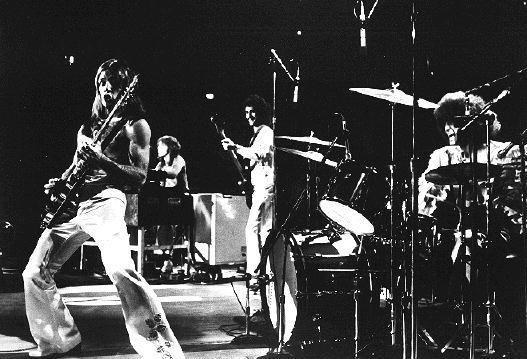
Grand Funk Railroad "We're An American Band"


[Editor's note: just a reminder that tracks of the week are jumping off points for discussion, and not always a statement of a particular song's worth. That said, this song is a bit of a guilty pleasure.]

I have an admitted fascination with the hard arena rock of the early to mid-1970s. I own REO Speedwagon's second album on vinyl and have been known to crank "I Don't Need No Doctor" by Humble Pie from time to time. I am not proud of this, this music is often dumb, macho, and is used quite often by the Trump campaign. See for instance his use of "All Right Now" by Free, a 1969 song that basically set the template for the hard arena rock of the decade to come. It was the first song he played after his nomination speech.

One of my favorite Simpsons episodes is the one where Homer joins the Lollapalooza tour as a circus freak getting shot in the belly by a cannon. He shows up to the famous alternative rock festival as a way to prove his coolness to his kids. In an eternally hilarious scene Homer earlier tries playing the classic rock station for his kids, and he is shocked, SHOCKED that they have never heard of Grand Funk Railroad, including "the competent drum work of Don Brewer." Homer's love of Grand Funk signaled his absolute lack of current musical knowledge and being stuck in the past.

Homer was actually on to something. There is no song that better exemplifies the spirit and meaning of the hard arena rock of 1969-1976 than Grand Funk Railroad's "We're An American Band." It's a song about the arena rock culture of the time, the band singing about being on a rock tour as if they are conquering heroes. This was before the rituals of the rock show were completely ossified, when the tickets weren't outrageously priced, and when you could still slam a sixer and blaze a doobie in the parking lot without the authorities or venue getting too uptight about it. The rock show was one of the newest and most exciting cultural happenings in the youth culture of the time, part of the reason so many arena rock bands replicated it on innumerable double live albums.

The beginning has all the necessary elements of hard arena rock, and more. There's a big drum fill and some guitar that moves into a tight riff backed up by thundering bass and, you guessed it, cowbell. In the first verse of "We're An American Band" the aforementioned Don Brewer, as opposed to lead singer and guitarist Mark Farner, brags about playing poker all night with bluesman Freddie King and that "Booze and ladies keep me right/ Just as long as we make it to the show tonight."Then we hear the anthemic chorus, which combines nationalism and partying. I can never get over the repetitive organ part on the chorus, which makes it sound like John Cale or Philip Glass sneaked into the session. (The fact that this record was produced by Todd Rundgren might have something to do with that.)

The second verse starts with Brewer leering at "Four young chiquitas in Omaha/ Waiting for the band to return from the show." Part of the key to this song is that the places mentioned are Omaha and Arkansas, spots off the beaten track that nevertheless are drawn into the new national rock concert culture. Living in an out of the way dullsville place? Well just come on down to the local sports arena and let Grand Funk help you party down! As lame as you might think this song is, I love Brewer's delivery of the line "Feelin' good feelin' right it's Saturday night." It just perfectly captures that feeling of being young in some podunk place on a hot summer night off of work looking for some action. More bragging ensues, as the band parties with the "chiquitas" and proceeds to tear the hotel apart, the ultimate sign of 70s rock star immaturity.

This song feels like an artifact from a long lost civilization, and hence why the writers on the Simpsons chose Grand Funk to be Homer's favorite band. It's not only from a different time, but also from a different place. A very large percentage of American arena rock bands of the 70s came from the industrial midwest right at the point that it was getting smashed on the rocks of recession and deindustrialization. Grand Funk hailed from the auto city of Flint, Michigan. Glenn Frey (the hardest rocking guy in the Eagles before Wichita-born Joe Walsh) and Ted Nugent (barf) were Detroiters. Illinois was especially fertile: Styx from the South Side of Chicago, Head East and REO Speedwagon from  central Illinois and Cheap Trick from Rockford. Forty years of getting hit by an economic hurricane have changed those places into something almost unrecognizable, without many American bands to come to town to help anybody party down. At least not with the out and out unironic gusto of Grand Funk.

Sunday, March 6, 2016

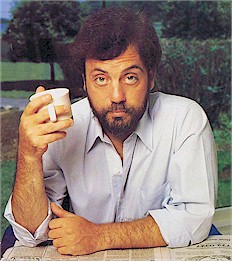
Track of the Week: Billy Joel "Allentown"


I've been thinking a lot lately about a weird sub-genre of 80s music, which I guess you could call Rust Belt Decline Rock.  In the 80s deindustrialization weaponized by Reaganomics smashed factory towns like an economic hurricane, except that the storm has raged for decades, rather than a couple of days.  That experience would get discussed in the rock music of the era, but from a weirdly nostalgic angle.  "My Hometown" by Bruce Springsteen is a great example, along with Billy Joel's "Allentown," of songs from this genre actually entering the charts.

"Allentown" is ostensibly about the decline of the steel industry in eastern Pennsylvania, although the song title's city was less impacted than other cities in the area like Bethlehem.  It came out in 1982, in the depths of the Reagan recession, a time I remember well.  I found out later from my dad that the small factory he worked for almost went under during that period, which was a fate others didn't escape. Collective memory of the Reagan years tends to forget the double-digit unemployment of the year this song came out.

"Allentown" is nostalgic, and the video even more so, with all kinds of 1940s imagery and longing for a time of economic prosperity. Musically it's poppy and catchy, a world apart from Bruce Springsteen's Nebraska album of the same year that dealt heavily with hard time stories.  The Boss grew up in the Rust Belt, working class world, while Billy Joel came from the Long Island suburbs, and that tells the tale. Joel was looking for some lyrics for a song he'd already written, and got inspiration from one of the issues of the day.  Springsteen was commenting directly about the world he grew up in being destroyed and a lot of the people he knew being crushed.

While "Allentown" laments the economic downturn, there's no anger or anguish in the singing or in the lyrics.  It's quintessentially 80s in that respect; you wouldn't want politics to get in the way of a money-making radio hit.  And it's certainly a great bit of pop music, but it makes me sad to contemplate that the degradation of the American working class has been cultural wallpaper for over three decades now.  The Flint water crisis is a national shame, but the rest of the country has stood by for decades while an economic Katrina has been battering that city, like so many others, from Detroit to Youngstown to Camden to Stockton. We don't hear any jaunty pop hits about it anymore, either, it's become so routine.

Saturday, October 6, 2012

The Rust Belt versus High Finance: A Metaphor for the American League Playoffs

After the late season collapse of my beloved White Sox, I am at least now free of anxiety regarding the baseball playoffs, which I can joyfully watch as a fan of the sport, suffering the gut-churning intensity that comes with rooting for my squad in high-pressure games.  Looking at the American League playoffs from this more detached point of view, I see a clear metaphor for our increasingly unequal society.

Three of the four teams that made the playoffs in the AL -the Baltimore Orioles, Oakland As, and Detroit Tigers- hail from cities that are bywords for urban decay.  Detroit in particular has come to symbolize the slow death of America's old industrial economy, Oakland has long been the less savory side of the Bay Area and has been full of unrest, and Baltimore was the setting for The Wire, urban decline's artistic magnum opus.

The other team, the New York Yankees, represents the economic hegemony of the financial sector in more ways than one.  The team is located in the world financial economy's capital, New York City, and like that part of the economy, values money and "winning" at all costs.  Despite the fact that the Yankees were the wealthiest franchise in baseball, they still forced local authorities to pitch in public money for an unnecessary new stadium, one whose ticket prices are prohibitive for many of the people whose tax dollars built the place.  The Yanks have the most expensive payroll in baseball this year, almost $200 million, and have long been able to purchase the most prized free agents and essentially spend their way past the kinds of problems that sink most other franchises.  As with the big banks, the Yankees benefit from a system that's rigged in their favor, and they are fighting hard to keep it that way.

The As, by contrast, had the lowest payroll in the American League, only $55 million, only a little over a quarter of what the Yankees spent.  Their presence in a small media market in a less than wealthy city has forced the As (as immortalized in Moneyball) to outsmart other teams by finding the best players for the money.  The Orioles are also in the bottom half of teams in terms of spending, and have reached the post-season this year for the first time since 1997, reflecting years lost in the baseball wilderness.

Of the three possible challengers to the Yankees, my heart is most set on the Detroit Tigers.  I lived in Michigan for two years, and saw first hand both the loyalty of Tigers fans, as well as the soul-crushing economic decline of Michigan.  If there was ever a city that needed a pick-me-up, it's Detroit.  I still remember being in Ann Arbor back in 2006, the last time the Tigers were in the World Series, and the first time they'd been since 1984.  I was in a bar with a couple of friends when the Tigers lost the series, and I swear I heard a collective cry of anguish that echoed from Saginaw to Traverse City.  It was a feral scream of pain that Yankees fans, with their 27 championships, have no way of understanding.