Tuesday, January 28, 2020
Reading the TV Listings and Other Dead Practices
Every now and then it hits me that certain aspects of daily life have actually changed a great deal in my lifetime. It's easy to miss this, since I tend to dwell on the political stasis of my lifetime. We are still making the same damn arguments about abortion and immigration I've been hearing since I first watched the TV news in the 1980s. I still keep hearing that inequality is getting worse, the globe is warming, that prisons are overcrowded. and depressed areas are falling behind.
While our society has essentially lost any belief in the future, day to day life feels a lot different. To reference Virginia Woolf, on or about June 2007, human character changed. The power of the internet had grown to the point that it was reordering our lives via social media, streaming, and personal devices. We are still living with the consequences. In this brave new world it is easy to miss the points at which the old ways faded.
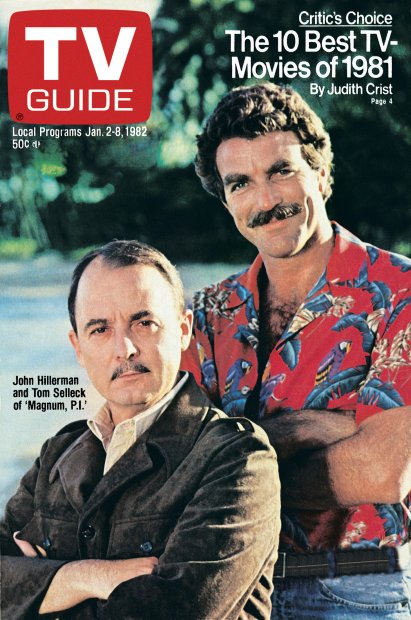
One of the artifacts of this bygone time was printed television listings. Appropriately, it was in 2007 when TV Guide's circulation dropped to a paltry three million. The digital cable interface, TiVo, and that ever reliable cable guide channel had made printed listings obsolete. It is hard to believe there was a time when millions subscribed to a small little digest that mostly consisted of television listings.
My family did not, instead we relied on the listings in our local paper. Every Friday the paper had an insert called "Happenings" that included some entertainment items alongside the complete television listings. Every Friday I would pore over that insert with as much dedication as a Talmudic scholar, just as much as I applied to the baseball statistics in the Sunday paper. Before we had cable this was pretty boring, but once we did (in 1986, I believe) I looked to see what movies were coming and whether my favorite shows were going to be reruns or not. This was especially important work in the summer, where I spent way too much time glued to the tube. (The Price is Right, Sportcenter, and reruns of The Gong Show were my daily bread.)
The listings were an important part of my family's life. One common phrase in my home growing up was "Hey, where's the Happenings?" Now and again the stone bucket in the corner of the family room that held the newspapers would be cleaned out with the Happenings section accidentally included, which inspired much gnashing of teeth and recrimination in my household. (I'm not sure when it stopped appearing in the paper, but it's long gone.)
Make no mistake, I am not writing about this out of a sense of nostalgia. Streaming is far preferable to having to dig through the TV listings to find something worth watching on the boob tube. I'm more interested in marking how my patterns of daily life have changed, for better or worse. Reading the TV listings is one of those dead practices that illustrates how our mental worlds have been shifting in imperceptible ways.
Sunday, January 26, 2020
Synthy Winter Blues (Newest Old Dad's Records Ep)
I just put up my newest episode of my podcast Old Dad's Records, and I think the hiatus has been good for me. This edition concerns seasonal depression and synthesizer-driven music. This was inspired both by the awful weather, but also how the electronic sound of the 80s has made a comeback. I start with Bruce Springsteen's "Dancing in the Dark," where the Boss himself starting straying from his bar band roots to make music more relevant to MTV. After that I dig through New Order's first EP and talk about how their sound in this period continues to entrance me. I end with a rave for Sui Zhen, a new artist who is taking this sound in bold directions. In between I muse about why people like me loved sad British music in the 80s, and how the alternative music in the 90s was conservative in its love of heavy guitar riffs.
Thursday, January 23, 2020
Abortion, The Right's Indispensable Weapon
There's a reason that Citizen Ruth's satire of the abortion issue was made by a fellow Nebraskan
The news came this week that Donald Trump will be personally attending the annual March For Life march in Washington DC. This has never happened before, and is ironic considering Trump's earlier statements of being pro-choice and my absolutely certain belief that he has paid for at least one abortion in his life.
It is entirely in character considering Trump's craven, transactional instincts. If he waves the Bible and goes to Liberty and says all kinds of anti-abortion stuff he expects conservative Christians to vote for him in return. These Christians are also so craven that they do not care if Trump is a greedy, corrupt, immoral sexual abuser as long as he puts their judges on the bench.
Both Trump and conservative Christian leaders understand that abortion is their indispensable weapon. Christians who might balk at Trump's words and behavior, or question his other policies, are simply told that they HAVE to vote for him or else condemn the unborn to genocide. This issue has helped tie Catholics and Evangelicals together in a common political alliance, when those groups have traditionally been on opposite sides. Hell, even in private today they still talk the worst shit about each other. (I will admit that my disdain for American evangelicalism began with my Catholic upbringing and the fundie kid in school who said I wasn't a real Christian.)
I have special insight into abortion's power as an issue, having been brought up in a very anti-abortion devout Catholic milieu. In my rural Nebraska stomping grounds you can't throw a rock without hitting an anti-abortion billboard or bumper sticker. Abortion was and remains the sole political issue that priests would consistently expound on from the pulpit. We heard about it all the time in youth groups, and saw anti-abortion flyers on the church bulletin board. (My all time fave was for an event called "Guns For Life" at a shooting range.) I have been involved in many political protests over the years, but my first protests were anti-abortion protests.
My views on this subject have changed since then, but it wasn't easy. I still feel residual pangs of guilt over my newfound support for legalized abortion, and am more hesitant to talk about this political issue with my family over any other. (Just typing that last sentence made my heart race.) This issue was made the absolute center of my moral universe in my youth, and that is not something you can simply uproot from your soul.
One huge mistake that pro-choice folks make is that the stance of so many anti-abortion folks is just as cynical as Trump's. It's not. There is a genuine and deeply abiding belief that life begins at conception and that abortion is tantamount to murder. While I often hear it said that pro-lifers want to control women's bodies, which is true, that is not the sum total of their reasoning, or even their primary motivation. If it was, this movement would not be nearly so important to the Republican party.
The GOP knows that they (excuse the expression) hold a valuable trump card. For a large chunk of voters it is just flat-out morally unacceptable for them to vote for a pro-choice candidate, and nothing will change that. Like the gun issue, abortion is not a political view, it is a fundamental attribute of their very identity as human beings. Furthermore, they will go to the polls and vote even for Trump because if one truly believes they can stop a mass murder, they are obligated to do it even if The Donald is their champion.
Trump knows he's in trouble, that's part of the reason he's going to March For Life. It's the same reason he has prioritized putting judges on the bench. He knows that there is a fervent core of his supporters who will snap to attention when he and other Republican leaders invoke the fetuses. This will happen no matter how horribly Trump fails and whatever crimes he commits. If that's not an indispensable weapon, I don't know what is.
Tuesday, January 21, 2020
After Richmond, Read Bring the War Home
The extreme right-wingers who showed up to Richmond with their murder toys after the Virginia legislature proposed some mild gun control laws has been in the news. What has struck me is how the media has protrayed these folks merely as supporters of the 2nd Amendment, and not as members of armed militias. If their memebership in militias is mentioned, there is little context provided as to what that actually means. In doing so the media not only downplays the nature of this rally, it erases some crucial and bloody American history.
I recenly read Kathleen Belew's excellent Bring the War Home, a history of what she calls the "paramilitary Right" and "white power movement" of the 1970s, 80s, and 90s. That particular movement had its apotheosis in the Oklahoma City bombing in 1995. As Belew shows, Timothy McVeigh was no "lone wolf," but embedded in a much bigger network of racist violent extremism.
This book ought to be required reading for anyone currently trying to understand the current outburst of right-wing extremism. The white power movement of the 70s was dominated by Vietnam veterans ready to "bring the war home." Their war experience fed into a paramilitary style, and also allowed them to feed off of a popular culture satured with paramilitarism. (They made a Rambo cartoon and sold the toys to boys my age, for crying out loud.) America's 21st century wars have led to a similar militarization of society, a sea that makes it easier for gun toting extremists to swim around.
Part of the reason this movement was able to operate with such impunity was that the FBI treated its actions as isolated cases, rather than part of a mass movement. Even after the Oklahoma City tragedy the media continued in this mindset. Richard Jewell's name is well-known and there was a movie made about him. The man who actually committed the bombing, Eric Rudolph, is less known. When he was captured he was treated as a lone crackpot, not as a member of extremist circles who was raised in white supremacy and got support from locals when he went into hiding.
Today we see the militia members march in Richmond, and they claim that they did so without committing violence. Meanwhile, people affiliated with them commit atrocities like shootings in Charleston and Pittsburgh and they pretend they have nothing to do with the behavior of these "lone wolves." It's an old trick but it keeps working because our government and media are too lazy to press the issue. What we saw in Richmond is part of a much longer story that will lead to more bloodshed. The difference is this time the man these extremists support is in the White House. If he is voted out, don't expect them to go quietly. Get prepared to confront them.
I recenly read Kathleen Belew's excellent Bring the War Home, a history of what she calls the "paramilitary Right" and "white power movement" of the 1970s, 80s, and 90s. That particular movement had its apotheosis in the Oklahoma City bombing in 1995. As Belew shows, Timothy McVeigh was no "lone wolf," but embedded in a much bigger network of racist violent extremism.
This book ought to be required reading for anyone currently trying to understand the current outburst of right-wing extremism. The white power movement of the 70s was dominated by Vietnam veterans ready to "bring the war home." Their war experience fed into a paramilitary style, and also allowed them to feed off of a popular culture satured with paramilitarism. (They made a Rambo cartoon and sold the toys to boys my age, for crying out loud.) America's 21st century wars have led to a similar militarization of society, a sea that makes it easier for gun toting extremists to swim around.
Part of the reason this movement was able to operate with such impunity was that the FBI treated its actions as isolated cases, rather than part of a mass movement. Even after the Oklahoma City tragedy the media continued in this mindset. Richard Jewell's name is well-known and there was a movie made about him. The man who actually committed the bombing, Eric Rudolph, is less known. When he was captured he was treated as a lone crackpot, not as a member of extremist circles who was raised in white supremacy and got support from locals when he went into hiding.
Today we see the militia members march in Richmond, and they claim that they did so without committing violence. Meanwhile, people affiliated with them commit atrocities like shootings in Charleston and Pittsburgh and they pretend they have nothing to do with the behavior of these "lone wolves." It's an old trick but it keeps working because our government and media are too lazy to press the issue. What we saw in Richmond is part of a much longer story that will lead to more bloodshed. The difference is this time the man these extremists support is in the White House. If he is voted out, don't expect them to go quietly. Get prepared to confront them.
Labels:
history,
militias,
politics,
Richmond,
right wing extremism
Saturday, January 18, 2020
The (Fourth) Winter Of Our Discontent
January and February are the nadir of the calendar year. It is dark and cold and punctuated only by the revolting holiday of vulgar American consumerism that is the Super Bowl. I am likely to fall into a depressive spiral this time of year, made worse in recent years by political events.
After coming back rested from his golf holiday, Trump likes to start the new year with his most blatant actions. In 2017 it was his post-inauguration onslaught, including the ban on travelers from majority Muslim nations. Last year it was a government shutdown over the wall. This year it is the double whammy of escalating the conflict in Iran and trying to sabotage the impeachment process.
In this fourth discontented winter of the Trump administration, which I pray will be the last, I feel like the nation is being confronted with its complete and utter loss of coherence. It is obvious for anyone to see that Trump has committed crimes. His refusal to cooperate with Congressional investigations is a crime on its face, of course. We also have clear proof that he tried to force the Ukranian government to investigate his domestic political rival, and in doing so unlawfully withheld aid to Ukraine apportioned by Congress. None of this even touches on his brazen use of his office to bring money to his properties, the many credible allegations of sexual misconduct women have leveled against him, and his campaign's links to Russian intelligence.
Despite the obvious and unambiguously clear evidence that Trump has abused his power like no president before him, we are all assuming that the Senate will not convict him. In fact, the Senate might not even allow a real trial to even take place. We are not surprised because we all know, deep down, that our institutions have completely failed. The Republican Senators don't care a whit for the law or Constitution, only for raw power. Anyone who denies this is a fool.
I don't believe we have given needed thought to the implications of this. For an openly criminal president to escape scot free with the aid of his party effectively means that we don't really have a democracy in this country. That cabal's use of gerrymandering and voter supression to win elections when they are in the minority has made this clear, but acquital will make it visible to even the most complacent person.
So what happens then? I get the feeling that the reality of the current situation will just be met with denial. I already know Republicans who never liked Trump but voted for him who have put their heads in the sand and have refused to acknowledge reality. Plenty of Democrats who want to think we can simply go back to the way things used to be, or "work with Republicans" are also willfully blind.
Like authoritarians who have toppled countless other democracies, America's conservative leaders assume that their opposition is too weak, divided and uncommited to stop them. Right now, in this fourth winter of discontent, I have to agree with them. Back in 2016 I worried that we would not learn from our mistakes, and I was right. Twitter is burning up with stupid petty arguments between partisans of different Democratic candidates while the world burns. Instead of taking to the streets we've got our heads shoved up our own asses. When the Senate refuses to convict Trump, I doubt there will be much public reaction. I think deep down most of us already know that the die was cast in November of 2016. I am going to spending this winter of discontent trying to figure out how the hell to move forward from this situation, or just giving into it myself. Maybe I'm the foolish one for believing that this country has a future.
Wednesday, January 15, 2020
Rush, "Spirit of Radio"
Rush is one of the most unique bands in the classic rock pantheon, and one I avoided for years. Geddy Lee's voice bugged me and I had read too many rock critics, and so I despised anything proggy. In my 30s, after taking a deep dive into jazz, I started to listen to much more complex music, and in that mood Rush started to make a lot of sense to me.
Since hearing of drummer Neil Peart's passing last Friday, I have been doing a deep dive on Rush, with a particular focus on their early 80s work. Unlike other artists of their generation, they progressed and adapted, getting better in a decade when classic rock died for the most part. It wasn't just synthesizers; Rush started using new rhythms, lyrical themes, and even vocal styles (Ged's voice finally dropped.)
Peart has to be one of the most singular figures in rock history. His drumming wasn't just stunning in its virtuosity, it was flat-out creative, too. Virtuosic drumming can come across like wanking, but Peart still always served the song (like his idol Keith Moon.) This might be because he wrote the songs, a rare thing for a drummer. If you listen to Rush's early music without Peart the lyrics are almost a parody of early 70s boogie rock. It basically boiled down to "Oh baby love me let's have a good time tonight" *guitar solo*.
Peart's drumming and lyrics turned Rush from a really good Zeppelin clone to something wild and new and impossible to immitate. While I am no fan of Peart's 70s Ayn Rand lyrical obsession, he eventually got over it. In any case the lyrics were not the usual cock-rock bullshit, even if they were overblown. I think the new direction of the band was announced in "Spirit of Radio," their first single of the 80s.
This song has one of Alex Lifeson's best bulldozer riffs, but it has to make way for several time changes and a reggae-inspired breakdown. Its subject is radio and its degeneration from an inspiration to a corporatized tool for "SALESMEN!" That was appropriate for Peart, a kind of anti-rockstar not into sexndrugs excess who'd rather be reading a book. Despite the myriad changes in this song, the professor never misses a beat. If I had to play just one song to introduce someone to Rush, this is the one I would choose. RIP
Sunday, January 12, 2020
It's About More Than Just The Textbooks
24 years later this clip from Lone Star is stil relevant
There's an excellent Times piece making the rounds where they compare history textbooks between California and Texas. As you could guess, the study reveals discrepancies driven in large part by partisan politics.
We need to talk more about how history is taught to high school students, but way too much space is taken up in the discourse by textbooks. Examining them ought to be a starting point, and they are something that only tells us so much. Students tend to read textbooks pretty indifferently, what the teachers emphasize in the classroom matters a whole lot more. I also know from my time as a student that much of what is in the textbook gets stepped over, too. I only really use textbooks as a reference guide for my students, and we do very little reading from it in my survey class.
I am sure that there are teachers in Texas who are giving their students a very bottom-up version of American History that takes a critical and honest view of the nation's past. (I should know, I taught high school students in Texas once upon a time.) I am also totally positive that there are history teachers in California giving their students a traditional top-down narrative full of "America is the greatest country on earth." I am even more sure that in both states there are football coaches teaching history classes without even a rudimentary knowledge of the subject who don't bring anything to the material.
Of course, it's hard to know what all these teachers do in the classroom without some intrusive studies or potentially inaccurate self-reporting. Getting access to the course plans, syllabi, and schedules teachers use might be possible, however, considering the number of schools that require them. Just looking at the readings that teachers assign beyond the textbook would probably tell you all you need to know about the approach being taken by the class.
Or better yet, I have often thought that a survey asking teachers what movies (or movie clips) they show in class and how they use them would perhaps tell you the most, since most teachers would find this to be an inoccuous question. I got to thinking about this when a former student of mine tweeted about her rural Texas high school teacher, who would show movies like Dances With Wolves multiple times. I've seen others mention Remember the Titans as a favorite of football coach teachers (for obvious reasons) as well.
If a teacher shows films uncritically as secondary sources, and these films tend to confirm America's goodness and downplay any problems, that will say more than what textbook they use. If a teacher uses films to teach about the time they were made in, or examines them critically to get at popular myths of American history, that would tell you something else entirely.
If we are to improve the quality of history education in our schools, we need to get beyond the textbook wars. A good teacher incorporating primary sources, deep knowledge, and a critical perspective, will more than negate a bad textbook. On the other side, a teacher with little content knowledge who does not assign readings from diverse voices from the past and takes a completely uncritical approach will turn even the best textbook into hash.
So yes, we have now unearthed the textbook discrepancies. Instead of endlessly litigating this particular point of conflict, let's bear down and get deeper. That's the only way forward.
Subscribe to:
Posts (Atom)

