A friend of mine once told me that a sign of growing up working class is a father who "washes up" when he gets home from work. Since class is just as much cultural as it is economic, that's always made sense to me. When I worked factory jobs during my college summers, I'd come home covered in grime; "showering" could not begin to describe what I had to do when I got off work.
My own father had his own steady post-work ritual built up over years of labor: he would get home, "wash up," change into his casual clothes, and then sit down in his recliner and read the evening edition of the local newspaper. (My hometown is so old fashioned that we still have an evening edition.) He always washed up in the spartan basement bathroom, which until insurance money paid for renovation after a flood when I was in high school, consisted of an exposed copper water pipe, toliet, and metal shower spigots and pipes naked without tile or fancy fixtures. I never used the shower without wearing flip-flops; the shower floor -really just cement with an industrial drain in the middle- was that dirty.
Around the time dad finished the paper after he had washed up, we'd eat supper as a family, and he would finally be ready to socialize. His need for about forty-five minutes of quiet solitude after getting home subtly let me know that his job took a lot out of him. My mother, on the other hand, always came home with an indignant story about a treacherous colleague, dumbass administrator, or disobedient student (she's a high school teacher). She ranted and raved at the indignities of her job, but her anger and frustration reflected a real commitment to her profession. As much as she complained, I knew she taught because that's what she loved to do. If there has ever been such a thing as a born teacher in this world, she's it. My father, on the other hand, seemed not to have any real connection to his work besides that of duty. The duty to work hard, to not let the company down, and most of all, the duty to support his family. Perhaps his stoic sacrifice, enacted each and every day for decades, was the reason why he was much more supportive of my decision to go to graduate school than my mother. He knew full well what it was like to spend a life's energies on something he didn't want to do, and the need to pursue a dream.
Although he worked at a factory for over forty years until his retirement last year, my father had been a manager in the office, rather than working on the floor, since before I was born. (He worked as a machinist while going to night school, and once he graduated the company promoted him.) Despite the nature of his work, my father's working class upbringing never left him. He very rarely wore a suit and tie to his job, usually a pair of cotton slacks and an open-collar patterned button-down shirt instead, both purchased at K-Mart. Like his plain clothes. washing up might have been a ritual he maintained out of the very powerful force of habit among stubborn small town Midwesterners.
Now that I work at a high school rather than a university my work day has become much more rigid and ritualized. One of the great perks of academia is flexibility. I worked over fifty hours a week as a college professor (just like I do now), but I had a lot of freedom over when I worked those hours. Some days I got up early, on others I woke and worked late. Nowadays I get up at 5:30 every morning, get dressed, walk the dog, eat breakfast, walk to Penn Station, catch the train to the city, take the subway, walk to work, do my job, take the subway, ride the train, walk home, and walk the dog. This week, perhaps out of some kind of intergenerational osmosis, I've started washing up after walking the dog. It's quite invigorating; like a lot of rituals, it marks the transition from one state of being into another.
I guess I understand why my dad kept doing it, even though he no longer had to clean the grit of the factory off of his body. I must say I also hope that some of my father's virtues rub off on me by imitating his rituals. (To a point, of course. I am just as likely as my wife to be the one making dinner.) The older I get, the more I realize how much bullshit he had to swallow and how many dreams he had to defer each day he did his job, a job that allowed me to have a much more comfortable upbringing than the one he'd had. That's a debt I can never even hope to repay; my only hope is to be able to sacrifice half as much for my own children someday.
Tuesday, February 28, 2012

Sunday, February 26, 2012
The Favorite Buzzwords and Phrases Used by Educational Administrators, and What They Really Mean
Back when I was still an academic, my wife and I noticed that administrators at all levels of education tended to fall back on a ready reserve of stock words and phrases. Like all experts, including those in the supposedly more rarified air of higher ed, they use jargoned language to boost their authority by implying that they know something that other people, usually the faculty, don't. One increasingly hears these terms in our increasingly fatuous public discourse on education, where, like a virus, words like "accountability" attack the listener's brain and render it paralyzed. Luckily, I currently teach at an institution that has eschewed most of this heinous bullshit. Here are a few of the key terms I have noticed, with their real meanings broken down as a public service.
Flexibility
This term is borrowed from the corporate world, where "flexibility" means "we want to hire temporary and "part-time" labor so that we can keep our employees low-paid and compliant." This same meaning can apply to the use of adjunct labor in academia, but usually when administrators say they want the faculty to be "flexible" they mean "shut up and do as you're told."
The research data shows/studies say
Whenever administrators try to push a new initiative that the faculty don't like (especially in terms of assessment and online courses) they will silence their opponents by saying, "there are studies that show that this really works." Keep in mind that they don't actually present this data, or go into any detail as to how it was compiled, or even offer their own reasoning. The "studies show" gambit basically boils down to "I can't actually offer a convincing argument for why we're making you do this, just do it because we said so."
Student/child-centered learning
I am all for "student centered learning" in the abstract. My current institution actually practices it, but many administrators who invoke it do so only to make themselves sound good. "Student centered learning" has become a well-worn cliche, and really another way of saying "do whatever makes the customers happy."
Transparency
Again, I'm all for transparency, but in my line of work "transparency" is a one-way mirror. When the higher ups tell the hoi polloi that they want transparency, they really mean "we're going to be looking over your shoulder no matter what you do."
Accountability
This word has gotten a lot of mileage recently, and has been used as a rallying cry for attacking teachers and knee-capping professors. Of course, it is faculty who are always held accountable (and mostly the vulnerable untenured variety), while administrators are never evaluated. As my wife likes to say, accountability really means "do our job so we don't have to." As for me, it also means "don't forget who's in charge."
Innovation
Administrators love to claim that they are going to bring innovation. They often fancy themselves to be innovative, creative minds who must move the lazy, hidebound faculty into action. The word innovation, however, ought to be taken with a grain of salt. I've read a lot about the shenanigans that led to the financial collapse, and bankers used to throw around the word innovation to describe extremely risky practices that exploited loopholes in regulation. Similarly, academic and school administrators call things of questionable value that benefit their CV "innovation." For instance, forcing the university to use an entirely new software program for its admissions and academic records when the old one is doing just fine is a common "innovation" that the "innovator" will put on his/her resume when looking for the next step up on the academic ladder.
Assessment
This one is so tricky and laden with landmines that I should devote a whole post to it. The new assessment regime in our universities, in all its bureaucratic insanity, is like Dickens' Circumlocution Office combined with something straight of Jonathan Swift with a dose of Orwell thrown in. Let me just say that the word "assessment" has become as amorphous in its meaning and application as academic terms like "modernity" and "transnational."
Any other terms worthy of being added to the list?
Flexibility
This term is borrowed from the corporate world, where "flexibility" means "we want to hire temporary and "part-time" labor so that we can keep our employees low-paid and compliant." This same meaning can apply to the use of adjunct labor in academia, but usually when administrators say they want the faculty to be "flexible" they mean "shut up and do as you're told."
The research data shows/studies say
Whenever administrators try to push a new initiative that the faculty don't like (especially in terms of assessment and online courses) they will silence their opponents by saying, "there are studies that show that this really works." Keep in mind that they don't actually present this data, or go into any detail as to how it was compiled, or even offer their own reasoning. The "studies show" gambit basically boils down to "I can't actually offer a convincing argument for why we're making you do this, just do it because we said so."
Student/child-centered learning
I am all for "student centered learning" in the abstract. My current institution actually practices it, but many administrators who invoke it do so only to make themselves sound good. "Student centered learning" has become a well-worn cliche, and really another way of saying "do whatever makes the customers happy."
Transparency
Again, I'm all for transparency, but in my line of work "transparency" is a one-way mirror. When the higher ups tell the hoi polloi that they want transparency, they really mean "we're going to be looking over your shoulder no matter what you do."
Accountability
This word has gotten a lot of mileage recently, and has been used as a rallying cry for attacking teachers and knee-capping professors. Of course, it is faculty who are always held accountable (and mostly the vulnerable untenured variety), while administrators are never evaluated. As my wife likes to say, accountability really means "do our job so we don't have to." As for me, it also means "don't forget who's in charge."
Innovation
Administrators love to claim that they are going to bring innovation. They often fancy themselves to be innovative, creative minds who must move the lazy, hidebound faculty into action. The word innovation, however, ought to be taken with a grain of salt. I've read a lot about the shenanigans that led to the financial collapse, and bankers used to throw around the word innovation to describe extremely risky practices that exploited loopholes in regulation. Similarly, academic and school administrators call things of questionable value that benefit their CV "innovation." For instance, forcing the university to use an entirely new software program for its admissions and academic records when the old one is doing just fine is a common "innovation" that the "innovator" will put on his/her resume when looking for the next step up on the academic ladder.
Assessment
This one is so tricky and laden with landmines that I should devote a whole post to it. The new assessment regime in our universities, in all its bureaucratic insanity, is like Dickens' Circumlocution Office combined with something straight of Jonathan Swift with a dose of Orwell thrown in. Let me just say that the word "assessment" has become as amorphous in its meaning and application as academic terms like "modernity" and "transnational."
Any other terms worthy of being added to the list?
Thursday, February 23, 2012
A Compendium of Baseball Books
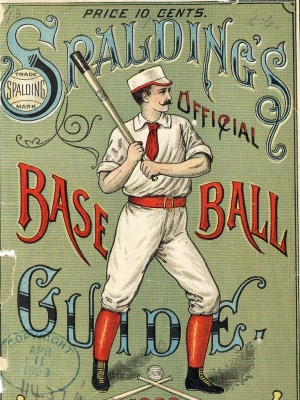
Favorite Book by a player: Jim Bouton, Ball Four
You have to love a book that gets its author called into the commissioner's office, which is exactly what happened after pitcher Bouton's account of his 1969 season was published in 1970. At a time when few players or baseball journalists let the public know the reality of baseball life, Bouton gave a day to day warts and all testimony, discussing the womanizing of idols like Mickey Mantle and strong-arm tactics used by owners in contract negotiations in the days before free agency. The dailiness of the book is its greatest asset, since it is a running diary of the season, and it more than anything else out there gives the reader a window into what it's really like to do the job of a ball player.
Honorable mention: Doug Glanville, The Game From Where I Stand
For those wanting a more modern take on baseball life, this is the book to get. Glanville has a wonderful writing style and great wit, as his columns attest.
Favorite Book about a single team's season: Jeff Pearlman, The Bad Guys Won
In case you didn't know, the "bad guys" of the title refer to the 1986 Mets, perhaps the most interestingly dysfunctional squad since the "Bronx Zoo" Yankees of the 1970s. Pearlman describes that team's rocky road to victory in one of the most exciting World Series ever, vividly sketching the many characters, from Gary Carter (may he rest in peace) to Keith Hernandez to Daryl Strawberry. Here's a hint: the title's pretty accurate.
Favorite Book by an owner: Bill Veeck, Veeck As In Wreck
Not a lot of competition for this category, but this is as funny a baseball book as they come. The former owner of the Browns and White Sox skewers fuddy duddy owners and relates one hilarious story after another. The best is his account of the Eddie Gaedel game, when Veeck's team put a midget in to pinch hit in order to get a player on base.
Favorite Player Biography: Howard Bryant, Hank Aaron: The Last Hero
I usually do not like biographies. They tend to be too long, too detail-oriented, and overly exaggerate the importance of their subjects. While Bryant's book has some issues, he does a fantastic job of exploring Aaron's life, in particular the difficult racial dynamics he faced as a black ballplayer in the early post-Jackie Robinson years.
Favorite Book of Analysis: Bill James, The Bill James Historical Baseball Abstract
As true baseball fans know, James' use of complex statistics has completely revolutionized the way that the game is seen and players are judged. What is less known is that James is a witty, compelling writer who does a fantastic job of humanizing his formulas and explaining them to a math-phobic audience. For my money, this is James' magnum opus and a book that any serious student of the game should read.
Favorite Book by a Manager: Joe Torre and Tom Verducci, The Yankee Years
As much as I dislike the Yankees, I really admire Torre, and he manages to do the impossible: make me feel sympathy for George Steinbrenner. Sure, he comes off a wee bit tyrannical, but also interested in getting his team to win above all else, a quality many fans wished their teams' owners had. Torre also offers priceless observations on A-Rod's vanity and an apt explanation of the Yankee franchise's decline after the 2001 season.
Favorite Book about Baseball Cards: Josh Wilker, Cardboard Gods
Wilker weaves his life into aphoristic discussions of individual baseball cards, making connections between the players and his own fate. I think it's one of the most brilliant things I've read in recent years, especially in exploring the contours of sports fandom. If you haven't yet, check out Wilker's blog.
Favorite Book That Does Not Exist Yet, but Should: Roger Angell, Complete Baseball Writings
Angell has written on baseball for the New Yorker for decades in wonderfully crafted, evocative prose. I have read all of the various collections of his various writings on baseball for that publication, but I think the time has come to gather them together in a single volume. I can't think of another writer who is so consistently interesting in his observations on the game. If you have a subscription to the New Yorker, go into the online archive and enjoy some of his vintage baseball material.
Tuesday, February 21, 2012
The Persistence of Baseball

Until about four years ago or so, I was an extremely close follower of the sporting scene. I listened to the radio shows, watched the highlight reels, and was aware of all the ups, downs, and scandals, from professional golf to college football. My interest in athletics did not match any real talent on my part. During the same youthful years that I had a subscription to Sports Illustrated, diagrammed my own football plays, and collected baseball cards, I found myself picked last in gym class with depressing regularity. It did not matter that I could recite the winners of all of the Super Bowls or the full line-up of the 1927 Yankees. Perhaps my interest in sports saved me from being a complete and total misfit, I could still hold my own in a sports conversation with my peers. (This did not always get me respect, however. Back in 1991 there was a bullying jerk in my science class who claimed the Bills would wipe the floor with the Giants in the Super Bowl. I thought he was wrong and bet him two bucks. When I asked to collect the day after the game, he punched me in the stomach instead of paying up.)
Since I have passed the age of thirty, my priorities in sports, as in many things, have shifted. I rarely watch ESPN, check the college football polls, or even take the time to watch my once beloved Nebraska Cornhuskers when they have a game on TV. I certainly get a kick out of the occasional game, and I greatly enjoyed seeing my first NBA game in person two weeks ago, but I am not "up" on most of the doings in the world of sports. Only two things truly remain vital to me, World Cup soccer and baseball. The World Cup is easy to explain, since it is the most important single sporting event in the world, and combines nationalism, history, identity, and global talent in a way that nothing else can match. Baseball might be harder to explain, since it has earned a reputation for being "slow" and "old fashioned." Professional football has overtaken it as America's premier spectator sport. Of all the team sports, I could actually play basketball reasonably well, and my playing experience allows me to understand the game with real depth. In fact, I probably get more enjoyment out of a well-played basketball game than any other. Why is it, then, that when I hear that pitchers and catchers have reported to spring training this week, my soul is lifted and I feel as if all is right in the world again?
I have liked baseball for a long time, but it is only in the last five years or so that this particular emotion has bubbled up inside of me. I delight in much of the game, from a well-thrown curve to a bang-bang play at the plate. Then again, I still marvel at a tight spiral, a quick drive to the hoop, and a bicycle kick goal. Perhaps my emotional connection is because now that my youth has ended, I appreciate and am more aware of my own mortality. Baseball's season, unlike that of other sports, mimics the human life cycle. It begins in spring, when flowers bloom and trees bud, reaches its pinnacle in the summer sun, and comes to an end as the leaves fall and the grass turns brown. The coming of baseball is a reminder that I am still alive, and that after winter's cold and dark, spring will come. It's a rather comforting thought.
Baseball is also something that I have to link me with ancestors. Both of my grandfathers loved baseball, and regaled me with stories in my youth of the 1930s "Gashouse Gang" Cardinals. My Dad and I still cherish our memories of playing catch in the backyard. Sure, we also shot "horse" and played one-on-one, but my father had never done that with his father, and not at such a young age.
This speaks to baseball's sense of history, the same attribute that leads to charges that it is retrograde, stuck in the past, un-modern. As a historian who has never felt comfortable in his own time, even as a child, baseball's immersion in the past (much more so than other sports) makes me feel more comfortable. Baseball connects more to the past because the rules and players have changed less than in other sports. Think about basketball before and after the three point line, and the innumerable rules changes regarding the forward pass in the NFL. With baseball, you can compare players more readily across eras, (at least after 1947) in ways that are impossible in other sports.
I also relish baseball's dailiness. Unlike other sports, even basketball and hockey, with their 82 game seasons, baseball goes on every day for six months solid, except for the day before and the day after the All-Star Game. Each team plays six days a week, their players coming to work to do their jobs much like the rest of us. The older I get and more removed I am from youth's freedom, the more my life has become a daily affair. I must get up early, walk the dog, catch the train, and do my job, and do the same the next day. Now that I am removed from the ivory tower of academe, and must plug away like the rest of working stiffs of this country, I have an even greater appreciation of a ball player's job.
Most of all, baseball is just much more fun to experience in person than the other major sports. I have greatly enjoyed myself at baseball games that were far from close or exciting. It's one of the most relaxing things for me to take a seat with the emerald diamond laid out before me, the sun shining, pennants blowing in the breeze, a beer in hand and that wonderful low buzzing chatter of the ball park in my ears. I can think of few things I would rather do on a summer day. Those summer days in our short lives are precious and few, and my heart leaps with the knowledge that they are soon to come again.
Sunday, February 19, 2012
Academic-Themed TV Shows I'd Like to See
Academics rarely appear on television, apart from talking heads or the rare show like The Paper Chase. Our culture is so rife with insanity and foolishness that reality shows and sit coms should start taking the ivory tower as a subject. Here are a few ideas that I've had:
Undercover Dean
Each week a dean will have to go back to being a full time faculty member, and actually implement the nonsensical assesment regime that they crafted, and be forced to sit through the ten office hours they require of faculty.
The Job Candidate
Similar to The Bachelor, several grad students and adjuncts will compete for the favors of an academic search committee. The show will follow the candidates through each stage of the weeding out process and track the wreckage of broken dreams and stress-induced ulcers.
The Academic Apprentice
On this reality show, graduate students will compete to be chosen as their advisor's favorite. Brown-nosing, backstabbing, and theft of research projects will give this program the drama that most reality show producers salivate over.
Southern Exposure
Taking the only academic job available, a young scholar from the Northeast moves to a small Arkansas town full of quirky locals who would be a lot more likable if he could get past their myopic, narrow-minded, and outright bigoted outlook on life.
Law and Order: Academic Integrity
In this show a team of scholars works to crack the toughest plagiarism cases. Each episode ends with the satisfactory punishment of an insufferably entitled millennial, only after the protests of parents and administrators are overcome.
What Not to Wear: Academic Edition
This would just be like shooting ducks in a barrel, wouldn't it?
Survivor: AHA Edition
Watch as impoverished graduate students must find out how to scrape the money together to attend a conference held at an expensive hotel in a faraway city just so they can talk for twenty minutes with a bored search committee inside of a loud, featureless, and overcrowded ballroom with zero room for dignity.
Shit My Chair Says
The title pretty much explains it all.
Wednesday, February 15, 2012
My Top Five Favorite All-Time "Out of Nowhere" Athletes
In case you haven't been paying attention, New York Knicks point guard Jeremy Lin has been taking the sporting world by storm these past two weeks. It's not just that he has been a great player for the NBA team in America's biggest media market, it's also that like Victor Cruz of the football Giants, he's a great "out of nowhere" athlete. As the enduring popularity of films like The Natural attests, American sports fans love it when a player who has been little regarded or obscure suddenly comes from out of nowhere to dominate in the big time. It speaks to the fantasies of fans themselves, and the idea that a schlub like them could play with the big boys.
Of course, Lin is hardly the first athlete to go from being cut and scrambling to find a job to sudden greatness. Here's a top five list of my favorite of such stories. Notice that I said "favorite," not "best" or "most compelling." My judgements are entirely subjective.
5. Mark "the Bird" Fidrych
I was barely alive for The Bird's magic 1976 season, but it's something that captured my attention at a young age seeing clips of him on a baseball show (probably This Week in Baseball.) He was 21 year old rookie from small town New England who talked to the ball, insisted on shaking the hands of all his opponents after his starts, and managed to win nineteen games with a league-leading 2.34 ERA. He did all of this while radiating a kind of child-like joy to be playing in the major leagues. Sadly an arm injury shortened his career in an era when surgery for pitchers was much less developed. This turned him from a potential all-time great player into one of the game's more colorful and memorable footnotes, and a reminder of the cruelties of the baseball gods.
4. Timmy Smith
Another rookie, Smith barely carried the ball during the 1987 season for the Redskins, running for only 126 yards. However, when Washington played the Denver Broncos in the Super Bowl, Smith ran for a record 204 yards, much more than he had racked up through the entire season! He's pretty much forgotten today, but his out of nowhere accomplishment ought to be remembered.
3. Kurt Warner
I've got a soft spot for Warner, since he's a fellow Midwesterner. As the story goes, he was bagging groceries at a Hy-Vee in Iowa when he got the call up to the St. Louis Rams. Warner had played college ball for Northern Iowa (hardly a big-time program) and hadn't even started there until his senior year. After failing to make it with an NFL team, he played in the Arena League, then Europe. Finally getting his chance to play on the big stage in 1999, he turned in one of the greatest single season performances by a quarterback in NFL history, and won the Super Bowl in the bargain. People forget it now, but that year's Rams offense was something truly remarkable to behold, a quick-striking juggernaut that made fools out of the best defenses in the league, and helmed by a guy who had nearly as much experience saying "paper or plastic" as calling audibles. He went on to be one of the best quarterbacks in the history of the game.
2. Geoff Blum
As a White Sox fan, Blum is especially near and dear to my heart. He came so far out of nowhere that I was an even more rabid Sox back fan in 2005 and still had little clue who he was. That's what you expect from a guy nicknamed "Random Man." Blum is a classic good field-no hit utility infielder whose versatility, rather than his bat, has kept in the major leagues, bouncing around between six different teams. A career .250 hitter, Blum got the right hit at the right time in the 2005 World Series, lifting the White Sox over the Astros with an epic homer in the 14th inning of game three. It was his only at bat of the entire series, but boy did he make it count.
1. Buster Douglas
Growing up in the sports world of the 1980s, I thought of Mike Tyson not as a mere mortal human being, but a kind of fearsome demigod. He might be a figure of mirth or disgust today, but back then nobody dared laugh or sneer at Iron Mike. Tyson brought a scary intensity and absolutely devastating punches to ring, and his fists dispatched many worthy challengers, from Larry Holmes to Michael Spinks, in embarrassingly short order. Then, in early 1990, Tyson fought the little regarded Buster Douglas in Japan in a bout that most Vegas odds makers didn't bother taking bets on. Shocking the world, the virtually unknown Douglas knocked the champ out. If you look at the film clip, you can see the absolute punishment he dished out on the heretofore undefeated Tyson, who looks completely lost after hitting the canvas, looking for his mouthguard with a dazed expression. Douglas promptly got fat, got beat bad by Evander Holyfield, and then retired. Where do you go after you defeat a man who was supposed to be invincible? Much like Alexander the Great after his conquests, Douglas simply didn't have anything else to fight for that could top what he had just done, and that was his undoing.
Of course, Lin is hardly the first athlete to go from being cut and scrambling to find a job to sudden greatness. Here's a top five list of my favorite of such stories. Notice that I said "favorite," not "best" or "most compelling." My judgements are entirely subjective.
5. Mark "the Bird" Fidrych
I was barely alive for The Bird's magic 1976 season, but it's something that captured my attention at a young age seeing clips of him on a baseball show (probably This Week in Baseball.) He was 21 year old rookie from small town New England who talked to the ball, insisted on shaking the hands of all his opponents after his starts, and managed to win nineteen games with a league-leading 2.34 ERA. He did all of this while radiating a kind of child-like joy to be playing in the major leagues. Sadly an arm injury shortened his career in an era when surgery for pitchers was much less developed. This turned him from a potential all-time great player into one of the game's more colorful and memorable footnotes, and a reminder of the cruelties of the baseball gods.
4. Timmy Smith
Another rookie, Smith barely carried the ball during the 1987 season for the Redskins, running for only 126 yards. However, when Washington played the Denver Broncos in the Super Bowl, Smith ran for a record 204 yards, much more than he had racked up through the entire season! He's pretty much forgotten today, but his out of nowhere accomplishment ought to be remembered.
3. Kurt Warner
I've got a soft spot for Warner, since he's a fellow Midwesterner. As the story goes, he was bagging groceries at a Hy-Vee in Iowa when he got the call up to the St. Louis Rams. Warner had played college ball for Northern Iowa (hardly a big-time program) and hadn't even started there until his senior year. After failing to make it with an NFL team, he played in the Arena League, then Europe. Finally getting his chance to play on the big stage in 1999, he turned in one of the greatest single season performances by a quarterback in NFL history, and won the Super Bowl in the bargain. People forget it now, but that year's Rams offense was something truly remarkable to behold, a quick-striking juggernaut that made fools out of the best defenses in the league, and helmed by a guy who had nearly as much experience saying "paper or plastic" as calling audibles. He went on to be one of the best quarterbacks in the history of the game.
2. Geoff Blum
As a White Sox fan, Blum is especially near and dear to my heart. He came so far out of nowhere that I was an even more rabid Sox back fan in 2005 and still had little clue who he was. That's what you expect from a guy nicknamed "Random Man." Blum is a classic good field-no hit utility infielder whose versatility, rather than his bat, has kept in the major leagues, bouncing around between six different teams. A career .250 hitter, Blum got the right hit at the right time in the 2005 World Series, lifting the White Sox over the Astros with an epic homer in the 14th inning of game three. It was his only at bat of the entire series, but boy did he make it count.
1. Buster Douglas
Growing up in the sports world of the 1980s, I thought of Mike Tyson not as a mere mortal human being, but a kind of fearsome demigod. He might be a figure of mirth or disgust today, but back then nobody dared laugh or sneer at Iron Mike. Tyson brought a scary intensity and absolutely devastating punches to ring, and his fists dispatched many worthy challengers, from Larry Holmes to Michael Spinks, in embarrassingly short order. Then, in early 1990, Tyson fought the little regarded Buster Douglas in Japan in a bout that most Vegas odds makers didn't bother taking bets on. Shocking the world, the virtually unknown Douglas knocked the champ out. If you look at the film clip, you can see the absolute punishment he dished out on the heretofore undefeated Tyson, who looks completely lost after hitting the canvas, looking for his mouthguard with a dazed expression. Douglas promptly got fat, got beat bad by Evander Holyfield, and then retired. Where do you go after you defeat a man who was supposed to be invincible? Much like Alexander the Great after his conquests, Douglas simply didn't have anything else to fight for that could top what he had just done, and that was his undoing.
Monday, February 13, 2012
Why Progressives Need to Go On the Offensive in the Culture Wars
Having been born in the 1970s, raised in the 1980s, and having reached adulthood in the 1990s, the culture wars have been raging across America's political landscape for as long as I can remember. The explanation is two-fold. In the first place, the monumental social changes in the 1960s and 1970s prompted a considerable backlash by reactionaries, and then the Right learned to harness that zeal, getting the masses to vote for their plutocrat-friendly economic policies as long as they occasionally threw out some social issue red meat to feast on. For almost all of this time, conservatives have been the culture war instigators, from rolling back abortion to "intelligent design" in schools to referendums against same-sex marriage.
With Rick Santorum seeping his way into the front-runner position and the support given to the Catholic Church's refusal to cover contraception for its employees, the GOP appears, inexplicably to me, to have gone all in on the culture wars in this election year. This is a turn of events that ought to be welcomed by progressives across the country, mostly because the Right's positions on many culture war issues are very unpopular, and if progressives pin these issues on conservatives, they stand to lose support from moderate voters unhappy with the nation's economic state. By fighting the culture wars on the offensive, progressives can also expose some of the fundamental fissures in the conservative coalition, and thus help divide their enemy.
Case in point is New Jersey governor Chris Christie. The state legislature is about to approve a bill allowing for same-sex marriage, but Christie has pledged to veto it. Of course, he is trying to weasel out of having to veto the bill, preferring to have the issue decided by a voter referendum. Why is he being so cowardly? Essentially, because he is stuck in a tough bind. On the one hand, if he votes in favor of the bill, he might get broad support in New Jersey, but doing so means the end of his national political aspirations, because the social conservatives in the Bible Belt will abandon anyone who supports gay marriage. On the other hand, if he votes against the bill, he retains national support, but stands to lose a lot of support from New Jersey voters, endangering his reelection. American attitudes towards same-sex marriage have changed dramatically in the last decade, and the young upcoming generation is much less hung up on it than their elders. For the GOP to be branded the party of homophobia means lasting damage to their image for years to come.
Much the same could be said when it comes to reproductive rights for women. Instead of just harping on the abortion issue, where some of the candidates for president ascribe to a highly unpopular ban on abortion even in cases of rape or incest, conservatives have upped the ante by going after contraception. Now that they have done so, progressives need to hold conservatives' feet to the fire, and constantly push them on their stance on contraception. As with gay marriage, moving to the right will kill their chances with moderates, moving to the left erodes support among the base. It's really a win-win for progressives: either Republicans placate their base, or they take more progressive stances on the issues.
This post might sound a little crass, but time has taught me that politics is a street fight, and if the other side brings a gun, you best not be fighting with a knife.
With Rick Santorum seeping his way into the front-runner position and the support given to the Catholic Church's refusal to cover contraception for its employees, the GOP appears, inexplicably to me, to have gone all in on the culture wars in this election year. This is a turn of events that ought to be welcomed by progressives across the country, mostly because the Right's positions on many culture war issues are very unpopular, and if progressives pin these issues on conservatives, they stand to lose support from moderate voters unhappy with the nation's economic state. By fighting the culture wars on the offensive, progressives can also expose some of the fundamental fissures in the conservative coalition, and thus help divide their enemy.
Case in point is New Jersey governor Chris Christie. The state legislature is about to approve a bill allowing for same-sex marriage, but Christie has pledged to veto it. Of course, he is trying to weasel out of having to veto the bill, preferring to have the issue decided by a voter referendum. Why is he being so cowardly? Essentially, because he is stuck in a tough bind. On the one hand, if he votes in favor of the bill, he might get broad support in New Jersey, but doing so means the end of his national political aspirations, because the social conservatives in the Bible Belt will abandon anyone who supports gay marriage. On the other hand, if he votes against the bill, he retains national support, but stands to lose a lot of support from New Jersey voters, endangering his reelection. American attitudes towards same-sex marriage have changed dramatically in the last decade, and the young upcoming generation is much less hung up on it than their elders. For the GOP to be branded the party of homophobia means lasting damage to their image for years to come.
Much the same could be said when it comes to reproductive rights for women. Instead of just harping on the abortion issue, where some of the candidates for president ascribe to a highly unpopular ban on abortion even in cases of rape or incest, conservatives have upped the ante by going after contraception. Now that they have done so, progressives need to hold conservatives' feet to the fire, and constantly push them on their stance on contraception. As with gay marriage, moving to the right will kill their chances with moderates, moving to the left erodes support among the base. It's really a win-win for progressives: either Republicans placate their base, or they take more progressive stances on the issues.
This post might sound a little crass, but time has taught me that politics is a street fight, and if the other side brings a gun, you best not be fighting with a knife.
Subscribe to:
Posts (Atom)