Friday, March 25, 2016

Thoughts On An Imminent Trip To Nebraska


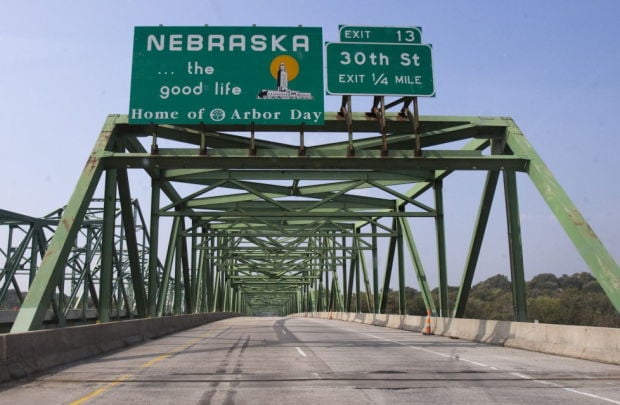
Tomorrow I depart with my wife and kids for my rural Nebraska hometown. I am very happy to be seeing my parents and sisters, nephews, nieces, in-laws, aunts, uncles, cousins, and friends again.

At the same time, it is a bittersweet feeling. There are days when I feel like an internal exile. My hometown and the greater New York City area are such different places that they might as well be in different countries. My travels around the country, which have included residential stints in places as far-flung as Chicago and Texas, have taught me that this is a nation of regions.  By that I do not mean the facile "red state versus blue state" cliche. Places where I have lived, like East Texas and West Michigan, have a unique culture that is all their own, even if both are "red" regions.

Like most of my grad school peers, I am living in a place that I never expected to live in, even though I left academia. I certainly enjoy teaching in New York City, and I have learned to love New Jersey. At the same time, it's still easy to feel out of place. This happens most often when I tell people where I'm from, and they treat me as some kind of oddity, or say disparaging things about "flyover country" in casual conversation. I don't think I've ever encountered a group of people more provincial than the residents of the Upper West Side of New York, and that is saying something, since folks in my hometown often treat the world beyond central Nebraska as if it has "here be dragons" written on the map.

I've at least grown a little used to these feelings ever since I moved to Chicago in 1998 and had someone call me "country" for saying the word "supper" and having a clerk stare at me in bewilderment when I asked for a "sack" with my order. What's been a little harder is the feeling that where I am from feels more and more alien to me. Some of this is the natural process of living apart from it for almost twenty years.

It also has to do, in large part, with the growing political and cultural divisions in the country. In my return visits to my homeland, I've noticed an increasing turn inward, party having to do, I suspect, with the aging of the population in that area. It was always a very conservative place, but it has become radically conservative, in the talk radio mode I normally associate with places like Texas. I still remember a couple of years ago being amused and horrified by a flyer posted in my parents' church about an even called "Guns for Life" featuring a minuteman and a fetus. Evidently it was some kind of gun range anti-abortion fundraising event. That kind of thing never would've happened in my childhood. Last year I had to hear a sermon, demanded of the parish priests by the local bishop, attacking the Supreme Court's recent decision on gay marriage. When Barack Obama spoke his infamous line about people in these areas being bitter and clinging to guns and religion, I just nodded in agreement. I have yet to witness anything in the ensuing eight years to get me to change my mind.

So I am left negotiating two worlds, one where a public attack on gay marriage is mandated, another where it would be thought of as hate speech. (And trust me, I am well aware that other people have much harsher negotiations due to race, sexuality, etc. I'm just thinking out loud here about regional differences.) I wish there was a way to bring the best of both of them together. Rural Nebraska has got to be one of the most culinarily benighted lands in the nation, a place where cheese is a spice and corn is a vegetable, as a friend back home likes to say. Here in New Jersey, on the other hand, there is amazing food from a variety of culinary traditions, so much that it never fails to amaze me. On the other hand, the people of my homeland have an admirable humility, and are much, much less obsessed with status and material possessions as folks are here in the Northeast. (This is perhaps one reason why Trump has not won any states as of yet in the Great Plains.) The way people in these parts view one's college alma mater as a reflection of their value as a human being never fails to disgust me. People back home are a lot more rooted. Unfortunately, that rootedness often expresses itself in an exasperating narrow-mindedness. People in both regions by and large don't understand the other. New Yorkers think of rural Nebraskans (if they ever think of them) as a bunch of dumb hicks, and Nebraskans think of New York as some wretched hellhole of immorality and degradation. Both are completely wrong, and both will never change their minds.

I know I will keep going on, enjoying the pizza and diversity in my new homeland, but silently shocked at the materialism. And I will go home tomorrow and enjoy the easy-going social interactions but be ready to be exasperated at the politics. Perhaps I'll just be satisfied that as an internal exile, I understand a lot of places a whole lot better than people who have lived there their entire lives.

Wednesday, March 23, 2016

Brussels And The Power of Nightmares

David Ortiz's fearless and unifying response to the terror attacks in Boston is one we ought to emulate, not the fearful hate mongering clogging up the airwaves today

After the attack in Brussels yesterday we saw the ever more predictable response. (Note as well we didn't see this response after similar attacks in Mali, Burkina Faso, and Turkey.) Trump renewed his calls to ban Muslims from entering America and use torture. Ted Cruz, ever the eager Eddie Haskell trying to curry favor with the talk radio masses, proposed that law enforcement "secure" and "patrol" Muslim neighborhoods within our own borders. If there is a similar attack in this country I can expect that internment camps will be Republican orthodoxy within a matter of days.

Of course, this kind of stuff only helps the extremists who plan these attacks. As anyone except the American news media appears to know, terrorism is a tactic intended to provoke a disproportionate response that will hurt bystanders and thus get the people affected to support the cause of the terrorists, which they would normally find to be too extreme. "Carpet bombing," torture, and mass detentions plays right into the hands of terrorists. Of course, Trump and Cruz could care less, since fear is their biggest selling point, especially for Trump. When people are afraid, their lizard brains kick in and they become children, looking for mommy or daddy to protect them. Authoritarians like Trump know this, and feed off of it.

Keep in mind, however, that Trump and Cruz are merely less subtle practitioners of this dark art, which had been mastered by Dick Cheney and his crew of neo-cons. I've said it before and I will say it again: the most important political documentary of our times is the BBC's 2004 tour de force The Power of Nightmares. In three parts it tells parallel histories of neo-conservatism and Islamist extremism. The basic thesis is that after the failures of the political elite to improve the lives of their constituents, many of them turned to using fear of the other as a justification for staying in power.

Dubya and his handlers certainly understood this. Before 9/11 he was a semi-legitimate president whose one accomplishment was pushing through tax cuts for the wealthy that had little broad support. He exploited the attacks (which his administration had failed to prevent) to both gain popularity and re-election, and also to make the neo-con wet dream of invading Iraq to come true.

While Bush, Cheney, and their gang used the power of nightmares to advance an imperialist agenda under the auspices of "preserving freedom" and "expanding democracy," Trump and Cruz are more nihilistic. Cruz seems willing to say anything if it will appeal to the hardcore conservative base (hence his "New York values" comment). He knows that these people hate and fear Muslims, and speaks to them accordingly. Trump, I am more convinced, is not putting on an act. I really and truly think that he is a committed fascist, even if he wouldn't use that term. (More on that in a future post.) Like any good fascist, he wants to "cleanse" the nation and make it great through military conquest ("we're going to take their oil!") Increasing fear only helps him.

People who are usually level-headed can lose their minds in moments like this, driven by the imperatives of their fear reflex. If we are to break out of the fifteen year nightmare we have been living in, we must stop living in fear and stop looking for some authoritarian daddy figure to protect us. If not, the nightmare will just keep going on and on and on.

Monday, March 21, 2016

Let's Be Honest, The Democrats Are A Party In Crisis, Too

It's very easy these days to point and laugh at the Republican Party and mock it for getting itself into its current position. Years of a cynical leadership promoting supply side economics while throwing some culture war bones to supporters getting screwed by those economics created a base so rabid that it can no longer be controlled, and can be easily swayed by a Trumpian demagogue. The bill for decades of double-dealing has finally come due.

Because the Democrats are not imploding as spectacularly, it is easy to overlook their current mess. Their party's clear standard bearer has been losing states to a cantankerous outsider with few presidential bona fides who until recently held office as an independent socialist. The most enthusiasm from the base is coming from his supporters, even though he's not even really a Democrat. More crucially, while Republicans have turned "red" states like Louisiana and Kansas into one party governments capable of maintaining power even after running their states into the ground, Democrats have lost control of "blue" states like Michigan, Wisconsin, and New Jersey. This has led to once impossible things, such as Michigan becoming a "right to work" state.  Clinton is 69 years old, Sanders is 74. The party's failures on the state and local level have left it without a new generation of Democrats in office. Who the hell would even be able to run in 2020 with any real national following?

The crisis runs even deeper than these tip of the iceberg symptoms of decline. The Democrats have been getting squashed in midterm elections, effectively squandering the Obama presidency as the Republicans have gone into full-on resistance mode. The scene was set back in 2009, when the screamers and ranters went out to berate politicians who supported the Affordable Care Act, leading to the Tea Party midterm of 2010. As the current election has shown manifestly in the case of Jeb Bush, lots of superPAC money won't swing a presidential election by itself. However, in Congressional races, it makes a huge difference. With corporations solidly in the Republican camp, the Democrats play at a huge disadvantage when it comes to winning Congress. After that 2010 sweep, they also got to redraw electoral maps and gerrymander several states. On top of all of that, the Supreme Court invalidated parts of the Voting Rights Act, enabling voter suppression on a massive scale.

The only way for the Democrats to overcome these obstacles is by increasing their turnout, especially in off-year elections. Voter suppression makes that hard, as well as the fact that the Democratic party does so little for its base. Teachers and their unions are supposed to be a part of the coalition, but Democrats consistently enact education "reforms" contrary to what teachers want. It's as if Republicans passed major regulations on oil companies then expected their usual support. Latinos support the Democrats, but when the party had both the presidency and Congress, it increased deportations rather than push through comprehensive immigration reform. African-Americans vote overwhelmingly Democratic, but the party has been slow to move against mass incarceration after spearheading such efforts in the 1990s. How do Democratic politicians expect to win if they refuse to do the things their voters put them there to do? Is someone really going to be motivated to go out and vote in an off-year election for a candidate who will give them nothing but lip service?

The Democrats have been able to console themselves with presidential wins, but the current favorable conditions won't last forever. A nightmare scenario could be coming. Trump could well be the nominee, then go down in flames in the general election. That might give the Romney wing of the party the ability to say "see I told you so" and push the party in a more moderate direction, especially on immigration. If the Republicans are able to pivot on those issues while not totally losing their base, the Democrats will be in deeper trouble. I'm not putting any money on this, but this is a party whose success has more to do with the dysfunction of their opponents than any other quality. That's not a good place to be.

Sunday, March 20, 2016

Track of the Week: The Jacksons "Shake Your Body (Down To The Ground)"


I recently watched Spike Lee's new doc about Michael Jackson's career transition from the Jackson 5 to his solo breakthrough with Off The Wall in 1979, and really got into it. I hadn't known much about that liminal time, or the songs he did with his brothers (minus Jermaine and with now with Randy) as The Jacksons for Epic Records, their home after leaving Motown.  While the music Michael Jackson made in this period is not as consistent or iconic as what he would go on to do, some of it is really fantastic. My favorite of these songs is "Shake Your Body (Down To The Ground)," a superbly funky groove with Earth Wind, and Fire's horn section adding some sparkle.

Michael's voice has really matured at this point, and that ineffable Michael Jackson "feel" is already in effect.  The most bittersweet point in the documentary was seeing the Jacksons perform this song on American Bandstand, and seeing Michael's electricity as a performer, and the smile on his face as he was obviously just enjoying himself so much. At this point he was still only 19 years old, but aware of his powers and his ability to master them, and gleeful at that knowledge. He looked so young and so real, before the years of disfiguring his face and of fame warping his mind. I could feel tears welling up in my eyes thinking about what was to come for him. The decades of tabloid stories and the relatively mediocre nature of his later output had made me forget just how amazing he was in his day.

Friday, March 18, 2016

Disco Musicals: The Ultimate So Bad It's Good Genre


I am a sucker for what the hosts of The Flop House podcast call "good-bad movies." These are movies whose badness is so unique and fascinating that they elevate themselves into a realm of awful genius. No genre of film has produced a higher rate of good-bad movies than disco musicals. They were are sort of perfect for the role, combining the cashing in on a played out cultural trend, the interestingly wretched fashion of the period from 1978 to 1980, and a music genre that could produce maximum cheesiness.  If you, like me, enjoy these kinds of movies, I'd recommend all of them on the following list.

Sgt Pepper's Lonely Hearts Club Band

This is a film so transcendently bad that it prompted me to write a long blog post just to be able to process it. It stars the Bee Gees and Peter Frampton as the make-believe group from the famous Beatles album and perhaps the most asinine plot ever put on film.  Words cannot do justice to this. The brothers Gibb appear at the height of their disco period, and many of the songs get a disco-makeover. At the very end of the film a bunch of B and C-list celebrities do some terrible disco dance moves as the reprise of the title song. The YouTube video has been taken down, likely due to extreme embarrassment on the part of one of the participants. Here's what I said about it after my first viewing:

"At this point I didn't think the film could possibly go any lower or be any more ridiculous, but boy, was I wrong! It ends with a bunch of mid-level 70s celebrities singing the reprise of the title song, making poorly choreographed disco-by-numbers moves in the process. For some reason the camera keeps finding Carol Channing, whose eerie grin unfortunately distracts from a young Tina Turner standing right beside her. Many of the assembled celebs look bored, stoned, hungover, or all three. The hokey dancing, awful wardrobes, shaggy haircuts, and complete lack of taste on display manage to encapsulate all that was wrong about the 70s and put it into one coke-addled package.

When I finished watching Pepper, I then realized its disturbing implications. Is it actually so bad that it is beyond bad? That made me wonder if there is anything in the world that is as good as Pepper is bad. Can evil in fact sink deeper than virtue can soar high? Furthermore, does a truly horrible piece of culture leave a more lasting imprint on my psyche than a sublime one? Or is something this bad sublime in its own way? Needless to say, I think I'll have to see it again."

Xanadu

At least the Sgt Pepper film came out right when the Bee Gees were standing on top of the world (although the film would help knock them from their perch.) Xanadu came out in 1980, right as disco was playing itself out. It starred Olivia Newton-John, fresh off of Grease and at that time both a hit maker and object of desire.  The theme song was written by Electric Light Orchestra, still riding high on a wave of prog meets soft rock hits.  Xanadu could've been a contender, but like the other disco musicals, the writing is just downright awful.  Michael Beck, who had just played badass Swan the gang leader in The Warriors the year before, stars as a struggling artist who meets a muse, played by Newton-John. Disco and Greek mythology ensue. The plot has something to do with a nightclub called Xanadu, and Gene Kelly appears to boot, in what would be his last film.  I get the sad feeling that this one broke him.  There isn't just disco, but ROLLER DISCO here, people.  The theme song is actually pretty good as this style of music goes, and Newton-John is as appealing as always. The problem is, the song comes at the end, after the viewers have already longed for the sweet release of death to get them away from the film. The dance scenes in parts look more like an industrial film than Busby Berkley.  But hey, there's so much light-hearted cheese here that someone recently made this into an ironically bad musical and it was a Broadway hit.

The Apple

Also from 1980, The Apple truly one of those movies that has to be seen to be believed. I learned of it through the stellar Electric Boogaloo doc about Cannon Films. This musical was intended by Cannon impressario Menachem Golan to be his magnum opus and entree into Hollywood success. Instead, it was so bad that the premiere audience started throwing promotional copies of the soundtrack at the screen. The premise is so insanely awful that I feel like I lose IQ points just trying to type it. It is 1994, and an authoritarian regime keeps the masses in line through pop music and enforced dancing. A cute folk-singing couple are tempted to take the "apple" of fame in one of many convoluted Biblical metaphors. (In case this is all too hard to grasp, you can watch one of the tempters in a loincloth holding a giant apple.)  They eventually flee to a hippie commune and when the evil music exec/dictator/Satan named "Boogalow" comes to get them, they are Raptured as God appears in a translucent Rolls Royce. No, I am not kidding. Before we get there we witness the musical number for "Coming For You" (featured above), a piece of Donna Summer knock-off disco and the least veiled metaphor ever in the history of pop music. (The MPAA had to be asleep at the switch to give this one a PG rating.)

Can't Stop The Music

Just when you thought 1980 couldn't have been more saturated with bad disco musicals comes Can't Stop The Music, starring Steve Guttenberg and the Village People. It starts with Guttenberg on roller skates wearing flared trousers and an Izod shirt, and only gets worse/better from there. My favorite thing about the trailer is that it proclaims this will be "the movie that launches the 80s." Instead it feels like the last groaning gasp of the 70s, a decade now totally exhausted, its polyester torn and frayed. Don't believe me? Just take a look at the "Milkshake" number in the trailer. The Village People themselves had already reached their very short expiration date, I am sure no one in the film thought that Steve Guttenberg would emerge as the one star from this piece of dreck.

Wednesday, March 16, 2016

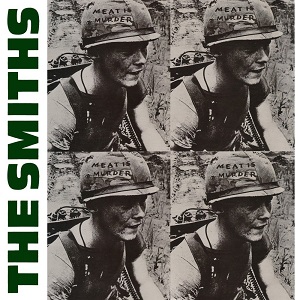
Classic Albums: The Smiths, Meat Is Murder


An album can be classic even if it's not perfect or has some dud tracks, and The Smiths' 1985 record Meat Is Murder might be the best example. The good songs on this album are just so damn good that it's easy to forget the ones that don't hit. The Queen Is Dead might be a better album, but its best songs are not as good as the best songs on Meat Is Murder.

Meat Is Murder was the dreaded sophomore album for The Smiths, a band that had hit the ground running with their first, self-titled album. The title is about as stark as it gets, accompanied by a grainy picture of an American soldier in Vietnam. This is a kind of statement of purpose, to let you know that this is going to be some hard-hitting stuff. And it is, from the slaughter of animals to child abuse. The first song, the masterful "Headmaster Ritual," sets the tone. It hits hard with one of Johnny Marr's best churning riffs getting things off to a rolling start before Morrissey intones a perfect Morrissey line: "Belligerent ghouls run Manchester schools." It's an indictment of abusive and authoritarian educators, one that's always resonated with me after surviving a hellish kindergarten. It sets the tone for the album, one that concerns itself with inhumanity, cruelty, and abuse. Musically it seems to perfectly integrate all the band's elements into an almost seamless whole.

The next song, "Rusholme Ruffians," is one of my favorite Smiths deep tracks. It has a certain rockabilly swing to it, unlike almost any other Smiths songs, and some incidental noise to evoke the mood of the local fair that it describes. It reminds me of that elegiac feeling of the end of summer, of going out at night but needing to wear a jacket, aware of the hint of winter in the evening chill. It's followed by "I Want The One I Can't Have," a typical Morrissey unrequited love lament. I was a very romantic teenager with a complete inability to speak to the opposite sex, which of course meant listening to the Smiths was love at first hearing, because of songs like this. I made my pathetic secret crushes grandiose by imagining them sung in Morrissey's high voice. While this type of song would be made too many times by this band, this time around the approach is pretty fresh.

"What She Said" is less romantic and almost claustrophobic. It's fast and dirty, and finds the semblance of a groove, rare for a Smiths song. It's also a song that shows the importance of track listings on albums, a lost art in this age of playlists. So far side one has gotten faster and faster, and this song even seems to come close to classic punk territory. It ends abruptly, and throws the listener into the languid, slow burn of "That Joke Isn't Funny Anymore."  This song is a real stunner. It starts beautifully with a little acoustic guitar figure, Morrissey sings "At the car at the side of the road" then the drums and bass come in as he finishes his thought with "Time's tide will smother you/ And I will too." Marr goes from riffing to some gorgeous, feedback-laden moods in the background over a tight little groove by Joyce and Rourke. It is hard for me to listen to this song with any objective remove, since I associate it very strongly with a particular person in my past life. We were once inseparable friends, and while in Chicago would often frequent a bar with a CD jukebox (remember those?) that had a Smiths compilation on it. Almost every time we went to the bar one of us would play this song, and we would sing along together. Even when time's tide sent me to downstate Illinois and her to Toronto, we maintained our friendship, up until a sad falling out five years ago. We haven't talked since, and hearing this song will always remind me of a once beautiful friendship that went sour, appropriate for the theme of this song.

"That Joke Isn't Funny Anymore" is probably my second favorite Smiths song. My favorite? Without a doubt, it's "How Soon Is Now," the next song on the album. That might sound cliched, but things get cliched for a reason. (And yes, I am aware that this song wasn't on the UK version of the album, but I've only ever listened to the US one.) Swirling reverby guitar, big beat, and "I am the son and heir of a shyness that is criminally vulgar," perhaps the most Morrissey line that ever Morrissey-ed. The dance-y beat is atypical for the band, but it really works. When Marr's crystalline guitar backs Morrisey's "I am human and I need to be loved/ Just like everyone else does" I am immediately transported back to my adolescence. This song is adolescent longing personified, in all its silly grandiosity and self-pity. I have been listening to it for well over twenty years and ever time it still completely grabs me and won't let go.

It's hard to top that, and the rest of the album doesn't really try. "Nowhere Fast" revives the rockabilly feel with a clickety clack I'm used to hearing from Johnny Cash and the Tennessee Two. This song is a sign that side two of the album is going to be more political, as Morrissey takes the persona of a stuffed shirt incapable of expressing a "natural emotion" who wants to drop his "trousers to the queen." Cheeky! "Well I Wonder" goes back into melancholia, with some Morrissey crooning and mooning over unrequited love. Andy Rourke's bass, strong on the whole album, sounds especially good here.

The album ends with two long, more political songs. "Barbarism Begins At Home" has a funky groove to it, a kind of goth disco. It concerns domestic violence against children, but the message is blunted by the music, which doesn't quite fit. Marr's guitar sound is pretty interesting, though. Last and certainly least comes "Meat Is Murder." I've got no problem with vegetarianism, but direct political songs are so often clumsy and ham-fisted (excuse the metaphor) and this song is a case in point. The music is unformed and plodding, meant to evoke a funeral march, but it just doesn't connect.

But hey, I just don't bother listing to the last two songs on the album when I put it on, which vastly improves the experience. The Smiths might not have had quite enough good songs to make a flawless album, but they were smart enough to put the weakest ones last.  And in any case those songs are a small price to pay for the amazing likes of "Headmaster Ritual," "How Soon Is Now," and "That Joke Isn't Funny Anymore," songs I expect I will listen to until the day I die, far far removed from an adolescence that they evoke so well.

Monday, March 14, 2016

Reports Of The Nation State's Demise Have Been Greatly Exaggerated

In 1913 world trade was at an all time high and Germany exported to the world. It also completed this massive nationalist monument. Globalization and nationalism coexisted then, and appear to still coexist now

I've spent a lot of time talking about Donald Trump in historical terms, but it's probably better to ground him in a present day, international context.  As I have been saying on repeat, Donald Trump's rise has to do with the power of American nationalism. I will add today that his appeal to nationalism is indicative of a rise in nationalism's impact worldwide. This I feel has caught a lot of people off guard, since globalization seemed to be bringing about the weakening of nation states. Of course, as any student of the past well knows, history does not move in a straight line. In 1913 the world looked as if it were globalizing, but after the bloody events spawned by 1914 levels of world trade would not return to 1913 levels until the late 20th century. Nothing guarantees that a similar shift is impossible today.

It already seems to be happening. Nationalism is on the march all over the world. In Europe anti-immigrant parties have gone from fringe elements to major political forces. Witness the National Front in France, UKIP in Britain, and Alternative for Germany, which won big in local elections recently. In Eastern Europe full on nationalists have won in Hungary and Poland, and Vladimir Putin has pitched his appeal in terms of national renewal. In India the Hindu nationalist BJP is in power. In China Xi Jinping has made nationalism a hallmark of his time in power. Even the famous non-state actors like Islamist terrorists have gotten in on the act, as ISIS strives (as its name suggests) to build a new nation-state.

We should not be surprised, then, that a politician like Trump has come around to exploit American nationalism, in yet another riposte to the silly notion that America is an exceptional nation. Based on what's happening in Europe, we should also not be surprised by who supports him. In both Europe and America nationalist politicians draw from working and lower-middle class voters anxious about their status. In Europe the traditional parties of the working class, like the SPD in Germany and the Socialists in France, were successful in setting up a robust welfare state, union recognition, and hybrid economy. Those ideas are now the political consensus, meaning that it is hard for those parties of the left to have much political ground to stand on. The nationalists offer a new scapegoat for their uneasy voters, and profit. In America the dynamics are a little different, as a combination of racist resentment by whites and the Democratic party's adherence to pro-corporate policies makes it hard for them to appeal to the white working class.

The nationalist wave in the West at least has everything to do with the consequences of the last four decades of neoliberal globalization. It created a new global elite, but also a system that shut out a lot of people who had been conditioned to prosperity in the immediate postwar period. The nationalists in Europe and America are not neoliberals in economics. They want to maintain a robust social state, but to do it for people "like us." The Left is in tatters and the progressive parties are often run by privileged members of the global elite, making so many voters easy pickings for nationalists. Part of the reason that Bernie Sanders has energized so many despite being a 74 year old with one real issue is that he is actually speaking to the discontents of globalization from the Left side.

The rise is nationalism is disturbing because I find it to be such a noxious, anti-humanist ideology. You could argue that it is the "ism" that killed to most people in the 20th century, responsible for the First World War and countless others, and the biggest ingredient in Fascism. It is crucial for the Left to reconstitute itself, because it is the one force capable of breaking the nationalist wave. Instead of hate and tribalism, the Left needs to once again preach the message of solidarity and humanity. Failing to do so will have disastrous consequences, I fear. Nationalists are never happy until they destroy the "enemies within" and start invading other peoples' countries.