Sunday, February 14, 2016
Track of the Week: Earth, Wind and Fire "Got To Get You Into My Life"
Death struck the music world again this month with the passing of Maurice White, founder of Earth, Wind, and Fire. He pioneered a truly unique sound, one borrowing from jazz, soul, funk, and Latin music while not sounding derivative of any of those genres. There's a lot of songs to choose from, but I'm picking "Got To Get You Into My Life," since this cover of an already great Beatles tune showcases Earth, Wind, and Fire's pure musical brilliance.
The original had a bold horns part, making it pretty ideal as an Earth, Wind, and Fire cover, but the similarities end there. The beat and the arrangement are totally different, even if the tempo is still the same. It's funky, complex, and intricate in ways that the original, which was more of a hard-driving rock song, wasn't. Many have attempted to cover the Beatles, and this is one of the rare cases where the cover matches or improves on the original.
The context for this cover is also interesting. It was included in the soundtrack to the wretched Sgt Pepper's Lonely Hearts Club Band film, a late '70s pastiche of disco-era awfulness. Several contemporary artists, especially the Bee Gees and Peter Frampton, who starred in the film, covered classic Beatles tracks on the soundtrack. The vast majority of these covers are really shite. When Earth, Wind, and Fire come on near the end, it is an invigorating shot of energy that makes the crap surrounding it look even worse by comparison. Maurice White's vision was so unique that no one else really repeated it, not the same way as say, David Bowie. It would be a shame if that keeps a brilliant artist from getting his due.
Labels:
classic R&B,
music,
track of the week
Friday, February 12, 2016
Suffer Little Children
Today brought an article in the Times about the educational tactics used in Success Academy charter schools. Here's a brief glimpse:
I did in fact did have a traumatizing kindergarten experience myself. For my first two years of schooling I went to a Catholic elementary school in my Nebraska hometown before my parents pulled me out and put me in a public school in second grade. My first grade year wasn't that bad, but kindergarten was a nightmare. Later I learned that it was supposed to be a time of exploration and happiness, of nap time and play. My kindergarten was a misery.
My teacher was evidently brand new, and considering the protocols of small town Nebraska Catholic schools, I doubt she had much in the way of training or education. You would think that a teacher of kindergarteners would love little children, but she seemed to despise us. For some reason she had a special dislike of me. I was constantly getting yelled at, usually for the crime of daydreaming, hardly. We had to bring athletic socks in for some kind of activity one day, and while I was looking out of the window (most likely because I had been able to do the day's schoolwork with little fuss), she yelled at me and made me sit in a chair in the hallway outside of class. While doing so, she threatened to shove my socks down my throat. (And I hadn't even said anything!) At least my mom called the school and demanded to talk to the teacher.
Our days were an unending train of wretched rote learning. I remember distinctly for our school's Christmas pageant the entire class had to memorize an extremely long nativity story. We spent hour after hour, day after day, repeating it over and over and over again, getting barked at when we made a mistake. It's a miracle that my love of learning survived that year.
Of all the rotten things I experienced that year, two were worse than being threatened with physical violence by my teacher for the crime of looking out of the window. One day I was pulled out of class. I was taken to the cafeteria, which was empty, and two strangers asked me to do things and took notes. I had no clue at the time what was going on. I later found out fifteen years later that I was being tested for developmental disabilities. My teacher, who never bothered to understand me, assumed that there was something wrong with me. At the time I didn't know the reason I was made to jump up and down on one foot in the cafeteria, but it felt pretty ominous, nonetheless.
The worst thing didn't happen to me, but to another student. We were tasked with being able to tie our shoelaces. One day we were to come in and demonstrate our ability. One little girl did not seem able to do it. The teacher, in a fit of rage, shoved her out of the way. The girl, flung to the side by the shove, struck a desk right on the bridge of her nose, which started bleeding out a gusher of blood. I have yet to see another bloody nose so scary in its fearsomeness. The blood covered the front of her white puffy Catholic school blouse. The teacher sent her off to the nurse's office for help, but without a single shred of compassion or remorse in her voice. The vision of that bloody blouse has been burned into my mind like a hot branding iron.
My mom swears that my experience in kindergarten had an extremely negative effect on my social abilities. I was already anxious before all of this, but afterwards the anxiety and lack of confidence I felt became crippling. This makes me think about those children being taught this very day in the Success Academy, and how many of them are losing heart when it comes to learning. I wonder how many them will have their belief in themselves permanently shredded. All the while Eva Moskowitz, the Success Academy's leader, will keep amassing power and influence amidst the Success Academy's systematic mental abuse of children. Like I did, they will grow up, too. I can only hope that they are able to recover from trauma, as I have been lucky enough to do.
"Indeed, several of the current and former staff members interviewed said that the network’s culture encouraged teachers to make students fear them in order to motivate them. Carly Ginsberg, 22, who taught for about six months last year at Success Academy Prospect Heights, said teachers ripped up the papers of children as young as kindergarten as the principal or assistant principal watched. She once witnessed a girl’s humiliation as the principal mocked her low test score to another adult in front of the child.This article made me so very glad that I teach in a progressive school where students are treated with respect and humanity. At the same time it brought back some very bad memories, memories that are lodged so deep in my brain that I will never forget them.
In one instance, the lead kindergarten teacher in her classroom made a girl who had stumbled reciting a math problem cry so hard that she vomited. Ms. Ginsberg resigned in December because she was so uncomfortable with the school’s approach. “It felt like I was witnessing child abuse,” she said, adding, “If this were my kindergarten experience, I would be traumatized.” She is now teaching in Los Angeles."
I did in fact did have a traumatizing kindergarten experience myself. For my first two years of schooling I went to a Catholic elementary school in my Nebraska hometown before my parents pulled me out and put me in a public school in second grade. My first grade year wasn't that bad, but kindergarten was a nightmare. Later I learned that it was supposed to be a time of exploration and happiness, of nap time and play. My kindergarten was a misery.
My teacher was evidently brand new, and considering the protocols of small town Nebraska Catholic schools, I doubt she had much in the way of training or education. You would think that a teacher of kindergarteners would love little children, but she seemed to despise us. For some reason she had a special dislike of me. I was constantly getting yelled at, usually for the crime of daydreaming, hardly. We had to bring athletic socks in for some kind of activity one day, and while I was looking out of the window (most likely because I had been able to do the day's schoolwork with little fuss), she yelled at me and made me sit in a chair in the hallway outside of class. While doing so, she threatened to shove my socks down my throat. (And I hadn't even said anything!) At least my mom called the school and demanded to talk to the teacher.
Our days were an unending train of wretched rote learning. I remember distinctly for our school's Christmas pageant the entire class had to memorize an extremely long nativity story. We spent hour after hour, day after day, repeating it over and over and over again, getting barked at when we made a mistake. It's a miracle that my love of learning survived that year.
Of all the rotten things I experienced that year, two were worse than being threatened with physical violence by my teacher for the crime of looking out of the window. One day I was pulled out of class. I was taken to the cafeteria, which was empty, and two strangers asked me to do things and took notes. I had no clue at the time what was going on. I later found out fifteen years later that I was being tested for developmental disabilities. My teacher, who never bothered to understand me, assumed that there was something wrong with me. At the time I didn't know the reason I was made to jump up and down on one foot in the cafeteria, but it felt pretty ominous, nonetheless.
The worst thing didn't happen to me, but to another student. We were tasked with being able to tie our shoelaces. One day we were to come in and demonstrate our ability. One little girl did not seem able to do it. The teacher, in a fit of rage, shoved her out of the way. The girl, flung to the side by the shove, struck a desk right on the bridge of her nose, which started bleeding out a gusher of blood. I have yet to see another bloody nose so scary in its fearsomeness. The blood covered the front of her white puffy Catholic school blouse. The teacher sent her off to the nurse's office for help, but without a single shred of compassion or remorse in her voice. The vision of that bloody blouse has been burned into my mind like a hot branding iron.
My mom swears that my experience in kindergarten had an extremely negative effect on my social abilities. I was already anxious before all of this, but afterwards the anxiety and lack of confidence I felt became crippling. This makes me think about those children being taught this very day in the Success Academy, and how many of them are losing heart when it comes to learning. I wonder how many them will have their belief in themselves permanently shredded. All the while Eva Moskowitz, the Success Academy's leader, will keep amassing power and influence amidst the Success Academy's systematic mental abuse of children. Like I did, they will grow up, too. I can only hope that they are able to recover from trauma, as I have been lucky enough to do.
Wednesday, February 10, 2016
Truth or Consequences, New Hampshire
This montage of red shirt deaths reminds my of the Republican primaries this week
I don't think I've ever witnessed a New Hampshire primary as momentous as this one. It took out the electoral equivalent of the Star Trek red shirts (Fiorina and Christie and maybe Carson), severely damaged another leader candidate (Rubio), and handed victories to a crypto-fascist in Trump and a socialist (more like social democrat, to be fair) in Bernie Sanders.
The latter phenomenon is especially striking, in that it shows the complete weakness of the political parties. Trump has never held office, and was long a Democrat, but now is the front runner in the Republican race despite being feared and despised by the party leadership. Running close behind is Ted Cruz, who inspires similar loathing. Sanders was an independent for years in Congress, and became a Democrat merely for the convenience of running in this race. In the process he defeated the hand-picked candidate of the Democratic party, a candidate thought to be so unassailable that more established figures didn't dare challenge her.
The political trends of the past few years have accelerated longer-term declines in party strength. The bans on "soft money," which went to the parties, led to the workaround of the superPACS, which are technically (and often in practice) independent of the candidates. This means, especially for the Republicans, that rich groups of donors, not the party bosses, hold the power. For the Democrats, labor's power in the party has declined along with its power in the nation. Most of the old local political machines have also been broken, so nowadays the party leaders have few mechanisms to get the rank and file into line or get them out to vote for preferred candidates.
This is not a totally positive development. While it is good that for the Democrats that the vested interests can't necessarily call the tune, on the other side the current situation tends toward demagoguery and anarchy. Republicans compete to do the bidding of hardcore reactionaries like the Koch brothers, and have the money win once blue states like New Jersey and Wisconsin. The alienated right wing base, no longer held in check, is free to be tempted by the likes of Trump. I get the feeling that this weakness in parties will only continue on into the future.
The Republican leadership is desperate for a standard bearer to take on Cruz and Trump, but can't seem to find one. New Hampshire, more than anything, exposed the difficulties inherent in trying to stop Trump. It was hard for him to win a caucus state like Iowa, where ground game is essential, but in a primary state like New Hampshire, he does not really have to work hard to get out the vote. The Republican vote is divided, and Marco Rubio, the candidate many (including myself) thought would be the establishment champion got intellectually pantsed on live television on Saturday. I've long thought Rubio to be a lightweight, but then again, so was Dubya. But a lightweight who is visibly anxious and scared (that's why he kept repeated the same phrase like a talisman) has no chance of becoming president. Kasich looked strong, but he is so moderate by modern Republican standards that I see him having a hard time mustering the votes. Bush, of course, has been completely lame, a punchline to a joke nobody told. He has shown some fire recently, but the die has been cast. Right now I can't make any kind of confident prediction about how this is going to turn out.
I do know that Christie is done, an almost shocking downfall. He should have been the mainstream standard bearer, but his relationship with Obama during Sandy hurt him, Bridgegate mortally wounded him, and his grating, mean-spirited nature alienated voters and helped finish him off. Of course before he went out he did a kamikaze attack on Marco Rubio, both motivated by revenge (his favorite emotion) and the pleasure he derives from bullying a weak person and humiliating them in public. I can only hope that when he gets back to New Jersey his need to lash out at his enemies will have subsided.
I am also still agog at the fact that Donald Trump just won a primary election by a wide margin. He says horrific, bigoted things all while just talking out of his ass while wearing a spray-on tan and laughable haircut. Who on earth is impressed by this? He sounds like someone who doesn't know what the hell he's talking about. I guess his legions of knuckle-dragging troglodytes don't know either. His audience scares me more than him, since after he's gone they'll still be around.
I but two things to say about the Democrats. In the first place, the youth vote for Sanders is indicative of a larger generation gap. Boomers got to benefit from a generous social state and low cost higher education in their youth, got tax cuts in middle age, and will still have Medicare and Social Security waiting for them in retirement. Those in Gen X and younger had much of that taken away from them with fewer job opportunities. Socialism is not the boogeyman if you never really got all the goodies from the social state to begin with. Last, people should be careful about overestimating Sanders' chances. New Hampshire is an open primary state, and Clinton actually won among registered Democrats. Demographically and geographically, the state was in his wheelhouse. Soon the primaries will move to the South, where Clinton will clean up. If Sanders survives that onslaught, then we can start taking his chances more seriously.
Labels:
election 2016,
New Hampshire,
politics
Monday, February 8, 2016
Billboard's Top Ten February 2, 1985
[Editor's note: I was thinking about this time of year today and a very specific memory bubbled up in my head about listening the Casey Kasem's Top 40 in February of 1985. I then looked up the charts and was surprised and amused by what I saw. Every now and then I plan on looking at what the top ten was that week during a year in the past, both for my own amusement and as an exercise in cultural history.]
Starting in late 1984, I began to religiously tune in to Casey Kasem's weekly top 40 countdown, one of the great bygone cultural practices of the spandex decade. Being a nerd, I took note of which songs were on top, and which were climbing and falling. This week sticks in my mind, because Madonna's hold on the top slot was finally broken by Foreigner, of all people. And now, on with the countdown.
Number 10: "The Neutron Dance" by The Pointer Sisters
I remember really liking this song at the time, one of the many tracks from the Beverly Hills Cop soundtrack to hit the charts. It marries the Pointer Sisters' soulful singing with the electro-plastic production of mid-80s pop music, which isn't as bad as it sounds. There's not much funk here, emblematic of how the pop music of the mid-80s drained away groove and feel in favor of big dumb beats. In many ways we are still living with that change.
Number 9: "Method of Modern Love" by Hall and Oates
I also remember digging this song, which is rarely cited these days by Hall and Oates enthusiasts. Like the Pointer Sisters they had dialed back the rhythm and amped up the gated snare drums and synths. Listening to it today I can hear traces of Can and Neu!, which makes me realize that the influence of krautrock reached deeper than I ever imagined. It's got some odd sound textures, making it fairly daring by the pop song standards of the time.
Number 8: "I Would Die 4 U" by Prince
This too is a lesser single by a renowned artist. By this time Prince was starting to suck his monumental Purple Rain album dry of singles. This song is in no way the equal of say "Let's Go Crazy" or "When Doves Cry," but it's a nice bit of pop song, and has enough of the Prince character to make it stand out from the other chart-seekers of the time.
Number 7: "Like A Virgin" by Madonna
I must admit, this song kinda scared me. I was nine years old, and I had no clue what a virgin was. Madonna was sexy, but not in the smiley accessible way of Catherine Bach aka Daisy Duke, my first celebrity crush. I had no way of understanding the words of the song, but the deeper meaning was somewhat apparent, and it frightened the shy little third grader I was. Listening to it now I can't stop hearing how limited Madonna's singing was at the time (she got a lot better), but also how in the midst of the boring shopping mall facade of Reagan-era America this was something a bit dangerous.
Number 6: "Boys Of Summer" by Don Henley
Okay, here's a song I really liked at the time and I still most confess to have never left behind. The mid-80s had a genius for dark sultry top 40 music with an air of mystery to them. The rhythm is insistent, like driving a car 70 miles an hour in a rain storm. The song touches on nostalgia and loss, and hearing it was a kind of early introduction to adult emotions. The Doppler-effect guitar still spooks me, just like the immortal line about seeing a "Deadhead sticker on a Cadillac." This song might be better than anything Henley did in the Eagles.
Number 5: "Loverboy" by Billy Ocean
Billy Ocean is one of the great forgotten chart toppers. Why do some people score hits and then fade out of consciousness? Perhaps this song is too much 80s. It's part of that weird mid-80s rocking R&B genre, with synth-drums and squeeeely guitar as far as the eye can see. It is not something you can listen to and find timeless, that's for sure.
Number 4: "You're The Inspiration" by Chicago
I remember staring with hate-filled eyes at the happy lovers couple skating to this song at the roller rink. It is hard to imagine that the same band responsible for jazzy rock like "25 or 6 to 4"in the 1970s would conquer the charts with soft rock pablum like this in the 80s. Peter Cetera's voice has a certain timbre that I can't describe, but which seems perfectly suited for the 1980s and no other time. I am surprised that there's no sax solo here.
Number 3: "Careless Whisper" by Wham!
Oh, but speaking of saxophones, the the sax riff on this song is one of the most memorable of the era when mellow sax ruled the charts. This was the last song on Wham!'s Make It Big album (don't ask how I know that), and seemed a lot more serious and adult that the jaunty fare like "Wake Me Up Before You Go Go." There is no Andrew Ridgely on this song, which seems to signal that George Michael is about to strike out on his own. For some reason Great Britain has kept the groove of soul music alive, and this song actually has some cool musical interplay beneath the requisite sheen. At the time I found this song rather emotionally moving, but while I certainly no longer feel that way anymore, I don't think it's a punchline to a joke about the 80s, either.
Number 2: "Easy Lover" by Phil Collins and Philip Bailey
I wrote about the video for this song, which is just so much of its time. The mid-80s had a thing for duets, and this is an odd one on the surface. Phil Collins, who was drummer for proggy Genesis in the 70s, and Philip Bailey, who lent his falsetto to the great Earth, Wind, and Fire at the same time, make for an interesting combo. This song has a rocking tempo with some bonafide rocking drums (not a drum machine), giving the right foundation for the kickass guitar riffing. It's ultimately saved from being butt rock both by those drums and Bailey's always wonderful falsetto, which is too cutting and unique to be constrained by the strictures of mid-80s chart topping pop music.
Number 1: "I Want To Know What Love Is"
Foreigner were world-conquering cock rockers in the 1970s who managed to update their sound to make it in the 80s, adding synths and New Wave beats and saxophones on songs like "Urgent." It was thus inevitable that they would make a power ballad. This song starts so moody, with singer Lou Gramm, once "hot-blooded" now talking about his "heartache and pain" walking the mean streets of life with a minor chord synthesizer accompanying him. The song builds and builds, until a massive gospel choir comes in, turning the very teenage sentiment of "I wanna know what love is/ I want you to show me" into something like a hallelujah. The choir lifts the song up into something so much better than it has any right to be.
Starting in late 1984, I began to religiously tune in to Casey Kasem's weekly top 40 countdown, one of the great bygone cultural practices of the spandex decade. Being a nerd, I took note of which songs were on top, and which were climbing and falling. This week sticks in my mind, because Madonna's hold on the top slot was finally broken by Foreigner, of all people. And now, on with the countdown.
Number 10: "The Neutron Dance" by The Pointer Sisters
Number 9: "Method of Modern Love" by Hall and Oates
Number 8: "I Would Die 4 U" by Prince
Number 7: "Like A Virgin" by Madonna
Number 6: "Boys Of Summer" by Don Henley
Number 5: "Loverboy" by Billy Ocean
Number 4: "You're The Inspiration" by Chicago
Number 3: "Careless Whisper" by Wham!
Number 2: "Easy Lover" by Phil Collins and Philip Bailey
Number 1: "I Want To Know What Love Is"
Labels:
80s,
Billboard Top Tens,
memory,
music,
popular culture
Saturday, February 6, 2016
Track Of The Week: Elvis Costello "Man Out Of Time"
It's February, the most miserable month of the year. I am currently listening to the Republican presidential debate, which is making me even more miserable. However, both the month and the debate have given me inspiration for my track of the week.
Some albums are season-coded in my mind, and seem to fit best with certain times of year. For whatever reason, I associate Elvis Costello's Imperial Bedroom record with February. It might be that I first heard it in the winter, and thus the songs were burned into my mind with associations with slushy sidewalks and grey skies. It also has a kind of cold classicism in it, especially in Steve Nieve's elegant piano playing, which is prominently featured. It's also a sign that Costello had stretched out from his nervy New Wave beginnings into something very different. It's an album I really love, but it also marks the end of his stunning six album run from 1977-1982 (I don't include Almost Blue, since it's really more of a side project/novelty album.)
"Man Out Of Time" is a song about a vulgar yet powerful man, and as such reminds me of so many of the clowns I see before me on the Republican debate stage tonight. I can't hear the lines "He's got a mind like a sewer and a heart like a fridge/ He stands to be insulted and he pays for the privilege" anymore without thinking of Donald Trump. I could apply that to a lot of the other fools sharing the stage with him. The song is about the disgust one feels in encountering a person with a lot of wealth and prestige who is a complete piece of shit. Bourbon and this song are two of the few things capable of getting me through this debate, where multiple of these specimens are on display.
Labels:
elvis costello,
music,
track of the week
Thursday, February 4, 2016
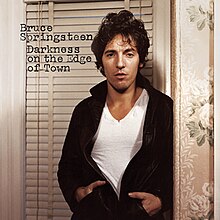
Classic Albums: Bruce Springsteen, Darkness On The Edge Of Town
Listening to Bruce Springsteen's music of the late 1970s and early 1980s, I was always struck at how true it sounded to my small town hometown in rural Nebraska. I was never sure how that could be, since New Jersey seemed to me a much more urban and less isolated place. After relocating to the Garden State, I became enamored with Asbury Park, the rough diamond of a Jersey Shore town, half ruins and half gentrification. On one trip down there we passed through Freehold, Bruce Springsteen's hometown, and it all made sense. It was a small industrial towns in the central flatlands, of similar size and feel to my own hometown. Now I understood how the Boss could sing a line like "there's trouble in the heartland" on "Badlands" so convincingly.
When you grow up in a town like that, there really is something mysterious about the darkness on the edge of town. It's a spooky feeling, knowing that the place you live in is a little oasis in the midst of emptiness, with an outside world out there that just feels so very far away and unattainable. More than any of his albums except for maybe Nebraska, Darkness explores the convulsions tearing post-war American working class life to shreds in the aftermath of the mid-70s recession and slide into neoliberalism. The cover says it all. Springsteen's previous album, Born to Run, has him leaning rakishly on Clarence Clemons, smiling in a classic rock star pose. This time the lettering is starkly type-written, and Springsteen is standing in front of the kind of cheap blinds and wallpaper I saw many times in the less affluent homes at the dawn of Reagan's America. He looks tired and apprehensive, dressed in a white tee and leather jacket, the old greaser uniform out of time in the Age of Limits.
The album starts with the aforementioned "Badlands," fast-paced and hard rocking, but full of dread. The narrator of the song speaks of a "head on collision smashing in my guts" and being "caught in a crossfire that I don't understand." During the summer after my first year of college, I listened to this song over and over again. I was working the day shift at a rubber parts factory in my hometown, a place that seemed, if possible, even more hostile and forbidding to me after a year away in a place where I actually felt comfortable for a change. I also was trying to (unsuccessfully) romance a young woman still in high school who was (of course) dating someone else. (She still obviously liked me, and I wished I had the confidence and finesse to actually tell her how I felt without coming across as a creep.) As frustrating as it was, I at least had a friend, but I couldn't give up my wish that the badlands would start treating me good. This song seemed to articulate so much about how I was feeling at the time, and I can't hear it today without thinking about that summer.
After this point on side one, Springsteen gives up the anthemic rocking, and sets sail for some heavy emotional territory. "Adam Raised A Cain" is most certainly about his contentious relationship with his father, and how you can't escape the pathologies of your parents, no matter how hard you try. It's a slow, grinding rocker with the optimism of "Born To Run" drained away. That feeling of being trapped by circumstances is all over this album, and is more pronounced on "Something In The Night." The guitar drops out, replaced by piano and a Springsteen vocal whose intensity and anger get me every time. The lines "You're born with nothing and better off that way/ Soon as you got something they send someone to try and take it away." This is one of the hardest nuggets of working class wisdom on the album, and he sings it with what sounds like complete anguish. Later songs, like "Glory Days," tell the tale of the bitter reflections of adulthood with an air of fun and wistfulness. This song refuses to sugarcoat the message that most people are in for a big disappointment and are subject to forces bigger than them out to crush their hopes and dreams into the dust.
Perhaps to keep things from getting too dour, Springsteen follows with "Candy's Room," an electric song about the almost insane, desperate longing of young love. Considering the album it's on, this testament of love is tinged with a patina of dread, the tempo almost too fast, making the song and the affection feel fragile. After giving his listeners a dose of the old time Boss religion, Springsteen closes side one with "Racing In The Street," one of the few songs that moves me to tears almost every time I hear it. The title and the chorus reference the joyous anthem of "Dancing In The Streets," but the joy has been drained out. The narrator starts by talking about his hobby of drag racing, but it is a hobby that is really his only reason for living after a day of soul-numbing labor. Whenever I hear it, I can picture a guy leaning on a hot rod smoking a cig in a 7-11 parking lot, watching the sun set and thinking about the night to come. Things get even darker, as he talks about his "girl," who "Stares off alone into the night/ with eyes of one that just hates for being born." That line, which so succinctly and poetically describes what it means to lose the will to live, gets me every damn time. The music itself is so spare and moody, about as far from "Born to Run" as you can get, even if the songs are about the same thing. This song, like the rest of the album, is an unsparing look at real life, something that rock and roll usually works hard to avoid or provide a distraction from. Thus ends side one, making the listener think about some heavy shit while getting up to turn the record over.
Side two is not quite as strong, but still fantastic, and starts with a truly amazing song, "The Promised Land." It sounds like it's sung from the perspective of the narrator of "Racing In The Street," but ten years earlier. He talks about getting his paycheck and going out, hopeful not just for the weekend, but that someway, somehow, his dreary daily life will be blown away by a righteous whirwind. The longing for a better life is saturated in hope, and when he sings the immortal line "take a knife and cut this pain from my heart" it's like a prayer, and not nearly as dark as it sounds on paper. In the week after the 2004 election I listened to this song over and over again, wanting to hope that the insanity and degradation of the political times could somehow be overcome.
After that burst of hope, Springsteen refuses to let the listener off the hook with "Factory," a very straightforward ballad of the soul-crushing nature of factory work. It's a little heavy-handed, but admirable in completely refusing to engage in any romanticization of the working life. The message seems to be that the exuberant hopes of "The Promised Land" are just a mirage for working people once they get older. And it's at this point, that Springsteen decides to give the listener a bit of a break, maybe just to keep the affair from going into full Emile Zola territory. "Streets of Fire" is a rousing ballad, so much so that it's easy to overlook lyrics like "I'm wandering, a loser down these tracks." Then comes "Prove It All Night," the one real pop song on the whole album, tellingly the second to last song, which in the album era would tend to be a bit of an orphan. It's big and bright, like the kind of Top 40-friendly stuff that the Boss would release with greater regularity in the 1980s. Clarence Clemons' sax finally gets a chance to shine out above the murk, which is a welcome addition.
Unlike most albums, the title song comes last, and it sums up the whole album so well. There is the hope of a better life, but also the pain of present reality sung over a rising anthem. The narrator has lost out, and talks about losing his money and his wife, but also that he will "be on that hill with everything that I got...for wanting things that can only be found in the darkness on the edge of town." That darkness is thrilling, it is illicit and full of possibility. The message here is that the larger forces of the world are against most people, but that the fight for meaning and dignity can't be stopped. It's a hopeful ending to a stark album, one that seemed to prophesy the horrors of the Reagan years to come.
Labels:
Bruce Springsteen,
classic albums,
music
Tuesday, February 2, 2016
A Modest Proposal To Make New Jersey The First Primary State
Every presidential election year, there are the same complaints about the disproportionate influence that small, mostly white states like Iowa and New Hampshire have on the process. Their position also gets these states special treatment, such as the ethanol subsidy, a boon to Iowa farmers. The primary system is completely ridiculous, but this seems particularly unfair.
If I were in charge I'd scrap the current system altogether and replace it with all states voting on the same day, about a month before the conventions, thus cutting the length of the campaign in half and saving us all a lot of aggravation in the process. Since I am not in charge of things, I have a modest proposal: reverse the order of the primaries in 2020, switching back and forth with each election. This way no one state gets a permanent advantage.
Furthermore, I would like to see New Jersey separated out from the other states at the tail end (like California), and for first in 2020. I would also like to see, as part of this change, New Jersey switch to a caucus system. There are many, many reasons to do this.
First, New Jersey is much more representative of the country as a whole. It is much bigger than Iowa and New Hampshire, with almost nine million residents. Its population is 73% white, as opposed to 77% for the country as a whole, making it much more in line with the country's racial demographics. African-Americans, Asians, and Latinos all make up a larger percentage of the population of New Jersey than they do of the nation as a whole, but not a whole lot more so. New Jersey has cities, suburbs, and small towns, but no one city dominates the state. One area where New Jersey is an outlier should also qualify it for first: New Jerseyans are more highly educated than the rest of the country. Shouldn't that allow us in the Garden State to get bumped up? New Jersey is also a moderate state politically. The radical nature of conservative politics in a place like Iowa gives extra power to loonies like Ted Cruz, who wouldn't stand much of a chance in Jersey. Considering that radical conservatism is currently the most disruptive force in our political life today, tamping it down would be great for everyone but the wingnuts. The anti-immigrant rhetoric would also be very hard to sustain on the campaign trail in this state. Simply put, if presidential candidates are force to pander to New Jersey, the whole country wins.
Second, New Jersey deserves to go first because the people of New Jersey contribute disproportionately to the rest of the country. The Garden State consistently gets the lowest or near the lowest return of any state on its federal tax dollars, only getting back 48 cents for each dollar it contributes, making it by one measure the state least dependent on the federal government. We've been paying the way for other states, but also having to live with the moron candidates that they vote for. Enough is enough. If states like Nevada and South Carolina want our money they've got to listen to our wishes, dammit. Having Jersey go first will rectify this situation, since politicians will scramble to promise the pork. If New Jersey went first, I imagine that the train tunnel we need to connect to New York would suddenly appear. The pock-marked, pot-holed roads would suddenly be as smooth as a baby's butt. You might call that unfair as the ethanal subsidy, but those roads are necessary to maintain the transportation network of America's biggest and most important city.
So yes, for reasons of representation and fairness, Jersey deserves to go first in 2020. However, if justice doesn't sway you, maybe entertainment value will. We see footage of the Iowa caucuses, and hear the announcers and commentators gush as they put their hands on their hearts about the wonderful nature of true democracy blah blah blah. That's because Iowans are nice. By contrast, I would imagine that a caucus system in New Jersey would lead to fisticuffs, salty language, and perhaps a knife fight or two, which would both be entertaining and provide a less sanctimonious and more real image of what pure democracy looks like. Real politics is not a bunch of friendly Iowans in a room, but a bunch of sharp-elbowed New Jerseyans with bad attitudes and malign dispositions.
I can think of a bunch of bonus reasons, too. New Jersey is small in size and has the densest population of any state, making it easier for upstart candidates to get a foothold here. Instead of that godawful Pizza Ranch shite, the candidates could actually get to eat some real pizza for a change.
New Jersey is the nation's tugboat. We may not look pretty, but we are the little state with a lot of strength that's been selflessly helping to push the nation along. Can't we, even if just once, actually get a say in the primaries?
Subscribe to:
Posts (Atom)