Friday, December 26, 2014

The Interview And The Value Of Indies

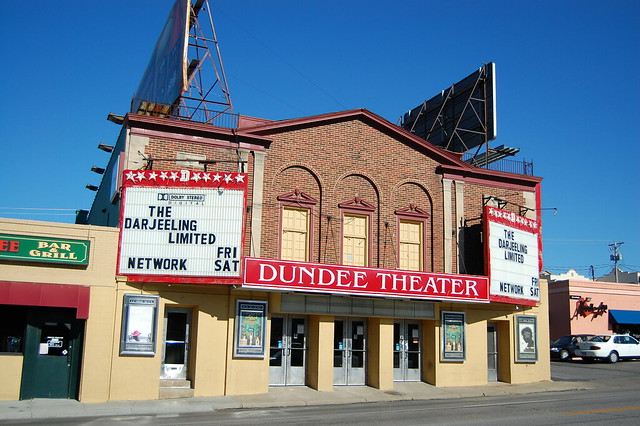
The Dundee Theater in Omaha, where I first gained a love of foreign and independent cinema

As I get older I fight the urge to sentimentalize the past, since that's the most annoying thing that aging people do.  That being said, I refuse to apologize for mourning the loss of independent book stores, video rentals, record stores, and movie theaters.  Books, film, and music matter a great deal to me, and I learned to truly appreciate these things with the help of independent businesses staffed by knowledgable people who did it out of love.  As a youth I could go and spend hours in such places in an almost trancelike state, high off of the association with all kinds of culture that I was just dying to absorb.  I bounced around a lot of places in my twenties and thirties, but wherever there was an independent book or record store, I had a home.

Of course, in America under late capitalism independent distributors of culture, like everyone else, are inevitably consumed by the great bloody Moloch of large corporations.  It has gotten to the point that corporations like Blockbuster and Borders, which destroyed the mom and pop places, have now been cannibalized themselves by the likes of Netflix and Amazon.  While these companies tout their convenience and the breadth of what they offer, they also act with little respect for the cultural commodities they sell.  Take for example Amazon's feud with Hatchette, which made it difficult for readers to get the books they want because Amazon wants to squeeze publishers and bring them to their knees.  Or take Netflix, which often does not present its streaming films in the proper aspect ratio.  Regardless of these abuses, the behemoths triumph and put those who actually do care about books, film, and music out of business.

With all this in mind it was odd this week to see independent movie theaters come to the rescue of megacorporation Sony in the affair over The Interview.  Sony pulled the film once the large corporate theater chains refused to see it, evidently frightened of what could happen to their bottom lines and stock values if the threats of North Korean hackers turned out to be true.  Some indie theaters defiantly said they would show it instead, and were initially rebuffed, before being embraced by Sony.

I should preface what I am about to say by noting that I think that The Interview's portraying the assassination of Kim Jong-un is extremely wrong-headed, stupid, and tasteless.  I have also heard via the We Hate Movies podcast that the film doesn't really do anything to discuss the actual, horrific abuses of Kim's regime.  For that reason I find the notion that Seth Rogen has any real principles about taking on an autocratic, murderous regime to be specious.

All that being said, I found the decision by the theater chains not to show the film to be cowardly and setting a bad example whereby films could be stopped from distribution via hacking and violent threats.  I will not buy a ticket to see this turkey, but I am glad that people who want to see The Interview can see it, and that violent intimidation has not been allowed to win the day. If we didn't have any more independent movie theaters, then the film would have been suppressed, and the bad precedent set.

We need independent sites for culture for a variety of reasons, including things I mentioned earlier about how they foster community and deeper cultural appreciation.  Most of all, recent events have shown us that they are often willing to defend principles that corporate entities are too greedy or too chickenshit to care about.

Tuesday, December 23, 2014

Pop Culture Ephemera To Beat Holiday Dread And The Winter Blues

This time of year fills me with conflicting emotions.  I'm actually a big fan of the holidays, and am lucky not to suffer from the holiday-induced depression that plenty of people suffer from for a variety of reasons (crummy family, bad holiday memories, sadness over those who've died who can't be there with you.)  However, I have a big tendency to over-think things, and while I am looking forward to Christmas and New Year's, I'm already dreading what comes after.  January, February, and March are the garbage months on the calendar: cold weather, lack of sunlight, no seasonal food (or beer), and no holidays to brighten things up.  Over the years these times have also been layered over with bad memories.  Lent begins in February, which as a child meant sacrifice and self-induced guilt.  The American Historical Association has its annual conference the weekend after New Year's, a place where I went for five years straight to either interview for a job or talk to university presses to get a book published to get me a better job, or both.  The next months would then be full of anxiety attacks and painful rejection.

It's going to take some Groot levels of strength to get through the year's garbage time.  I've assembled a list of stuff (mostly video clips) to cling on to.

Battle of the Network Stars: Gabe Kaplan Bests Robert Conrad


It starts with Telly Savalas in a tracksuit and shades smoking a cig, and just keeps getting better.  ("I'm from New York, I want the bread, baby.")  Robert Conrad is taking this way too seriously, and it makes my heart happy to see his macho bullshit not work.  Gabe "Mr. Kotter" Kaplan's victory in this competition (and getting a kiss from Linda "Wonder Woman" Carter) is a victory for nerds everywhere.

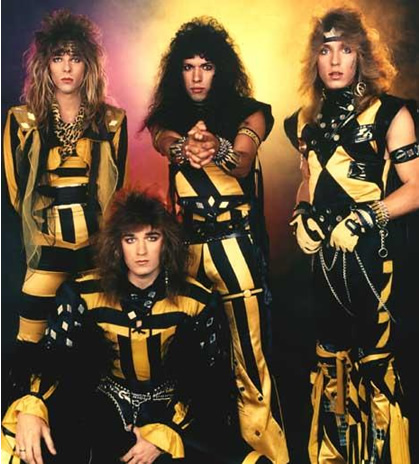
Stryper Promo Picture

How could you make hair metal even more ridiculous?  Throw in some old time religion and a yellownblack spandex getup.  *Shudder*

Ben Stiller Show U2 Rockumentary


Ben Stiller has become a a big time movie star, but I still fondly remember his old sketch show back in the 1990s, which also featured Andy Dick, Janine Garafolo and Bob "better call Saul" Odenkirk.  Stiller's Bono impersonation still kills me, as does the image of him playing a bar mitzvah while sharing a manager with the Partridge Family.

Ronald Reagan Gives The Gift Of Lung Cancer

This just doesn't need a comment.

Mets Banner Day, 1984


When I try hard to get my mind away from the wretchedness of winter I think about the ballpark.  I imagine myself on a mild early June afternoon drinking a tasty, crisp beer while sitting on the third base side, lost in a baseball game.  The Mets, me newly adopted local team, have a great tradition of fan banners, and "Banner Day" when fans get to parade their creations on the field.  This little video from 1984 shows young people pre-internet with the time on their hands needed to make an amusing creation on a bed-sheet so that they can step out onto the glorious hallowed green of Shea Stadium.  This video also makes me happy, since it helps me recall the ordinary, mundane fashions of the 80s.  (It wasn't all shoulder pads and Don Johnson suits, you know.)

The Cover of Mac Davis' It's Hard to Be Humble Album


Ah, the 70s, when a perm and bare hairy chest were the height of masculine allure.

William Shatner Sings "Rocket Man"


If I am in the lowest of moods, when nothing in the world can cheer me up, I turn to this.  This performance is truly amazing, in that Shatner somehow manages to transcend irony completely.  If only all tacky awards ceremonies had a moment like this to show what rubbish the rest of the proceedings are by comparison.

Monday, December 22, 2014

On Weimar Metaphors


The last few days are proof that we are often ruled by capricious events.  On Saturday the protest movements against police brutality and the legal system's failures managed to shut down the massive Mall of America in Minnesota.  Just as those movements were showing their continued strength, an unhinged assassin shot his girlfriend in Baltimore, then drove to Brooklyn and murdered two police officers in an ambush.  The forces of reaction and authority wasted no time exploiting this awful event by blaming it on protestors and mayor Bill de Blasio.  In a particularly galling display of contempt, New York police officers literally turned their back on the mayor, a man who was accused by their union to have "blood on his hands."

Soon afterward I saw people I follow on Twitter and friends on Facebook likening the current situation to Weimar Germany.  As a scholar of German history, I thought I'd talk about this.  While those invoking Weimar don't come right out and say it, I wonder if they are thinking of the exploitation of violence by the NYPD to condemn their opponents is akin to the Reichstag Fire, but don't want to reference Nazis directly because of Godwin's Law or something.  While I find that allegorical link a little much, there are some ways we can recall the history of the Weimar Republic that are fruitful for analyzing our current, tumultuous moment.

Weimar was an attempt to establish a democracy in a very new nation (united only since 1871) that had previously been an oligarchic autocracy and that had recently undergone a traumatic defeat in a war that killed two million of its young men.  This was a tall order, and the Republic barely survived a wave of crises from 1919 to 1923, including multiple Communist revolts, a military coup, hyperinflation, the occupation of the Rhineland by the French army, and Hitler's Beer Hall Putsch.  Between 1924 and 1929 it managed to attain a degree of stability and prosperity, but that came crashing down with the Great Depression.  Well before Hitler took power in 1933, Germany had already ceased being a real democracy after president Paul von Hindenburg began ruling by decree in 1930.  When people mention "Weimar" I assume they mean the late period, when Communists and Nazis fought each other in the streets.

Where I see a linkage that the non-historian might not is in the divided nature of Weimar society and American society today.  1920s Germany was a place of massive cultural changes, where young women in the cities began living more independent lives, where marriage ages rose and birth rates declined (spurring fears of the decline of family values), and old elites suddenly lost their prestige and power, among other things.  The Weimar Republic represented these changes, among others, and was thus hated and resented by those who preferred a hierarchical, traditional society.

The forces of reaction thought of the Weimar government as illegitimate, and still held plenty of power, especially in military and judiciary.  This helps explain why Hitler could attempt to overthrow the German government in the Beer Hall Putsch, but serve less than three years in prison.  The Nazis weren't the first or only group to claim Germany had only lost the war because it had been "stabbed in the back" by Leftist elements.  The adherents to the Republic were un-German traitors in the eyes of its opponents.  The Social Democrats were the political party most committed to maintaining the Republic, and thus reviled by reactionaries and nascent fascists.  They were also attacked hard by Communists, seeing Social Democrats as selling out the revolution for their part in suppressing worker revolts in the early Weimar years.  By the time the Nazis gathered a plurality of the vote in 1933, a majority of voters were casting their votes for parties committed to destroying the Republic.

I think we can all agree that the American political and cultural landscape today is as polarized as it has been in quite some time.  Politics and culture have also intertwined to the point that progressives and conservatives don't watch, read, or listen to the same things.  Conspicuous gun ownership has become a Rightist fetish, and in some corners of America Fox News is ubiquitously blared in public spaces.  Those on the Left tend to find these things abhorrent.  While there is a strong regional flavor to these deep differences, the Red State-Blue State model obscures as much as it reveals.  For example, New York City is supposed to be the bluest of blue territories, yet former mayor Guiliani has blamed African-Americans for the police violence used against them, and the NYPD has used inflammatory rhetoric against the current mayor for daring to criticize them.  They, like the Fox-devoted aging Boomers in my hometown view progressives in power as illegitimate, an abomination to be destroyed.  The unhinged manner in which the Republican Congress has dealt with Democratic presidents in recent decades (impeaching Clinton and engaging in unprecedented insults and obstruction against Obama) shows this.

There is a sense that those on the Left and Right no longer see their political opponents as people who hold different ideas, but as entirely different kinds of people completely.  The racial dynamics of political devotion today, where the Right is extremely White and engaging in White identity politics against a much less White opposition, has a lot to do with this, much more so than the pundit class would ever dare to admit.  I can certainly see in this intense division, where the side on the Right questions the very legitimacy of the government, echoes of Weimar.  Of course, such situations have appeared elsewhere in history, notably in France in the same era, when opponents of the Leftist coalition used the slogan "Better Hitler Than Blum."  Much the same could be seen in Chile in the early 1970s, too.  Things didn't end too well in any of these scenarios.  This makes me fearful, especially in a country where the police and military are two of the most trusted institutions.  It can't happen here?  Don't kid yourself.


Saturday, December 20, 2014

Track of the Week: James Brown "Go Power at Christmas Time"


Christmas brings us wretchedly saccharine television programming, an orgy of wasteful consumerism, and worst of all, wave upon wave of godawful music.  Back home in Nebraska there are actually radio stations that play that crap for a month solid, making resistance futile.  Going out in public means having one's ears assaulted by tuneless rubbish, often created by people who ought to know better.  It is only in the last five years or so that I have managed to find good Christmas music, the vast majority of it hiding out in obscure corners that streaming services like Pandora and Spotify have shed new light on.

I never knew until this week that James Brown had put out quite a lot of Christmas music.  Like the best of this genre, his holiday tunes are not retreads of the same old standards, but original creations that break from the usual formulas.  "Go Power At Christmas Time" is a classic hard groove like the rest of his output in his late 60s-early 70s glory days.  The piano and bells sound a little Christmas-y, I guess, but the song is hardly drenched in the usual holiday garlands.  It's really more about the JBs getting tight and funky, and the Godfather of Soul pulling out all the vocal stops as only he can.  What I would give to hear this great slice of pure energy blasting at the mall instead of the usual limpid Christmas fare.  In any case, put this one on at your holiday party if you want to start cutting the rug.

Thursday, December 18, 2014

How Bond Themes Prove the 80s Sucked

Roger Moore plays Bond playing a clown, a pretty good metaphor for the franchise in the 80s

Lately I have been on a real film music kick, which has coincided with my revisiting 1960s James Bond flicks.  (For some reason I always seem to go back to Bond this time of year.)  I've been listening to a lot of the Bond theme songs, and noticed evidence for a certain hypothesis of mine: the 80s sucked.

Of of course there was good stuff, like The Smiths, Public Enemy, Prince and the Indiana Jones movies.  However, I am of the opinion that popular culture writ large started turning into the boring, corporatized gloop that it has become today.  (This is especially the case with cinema, just compare the glory days of 1971-1977 to today.)  While Connery left the role to one timer George Lazenby and then to walking self-parody Roger Moore, the music in 70s Bond films still kept the pace.

In the sixties John Barry composed the deathless Bond theme, as well as the wonderfully bombastic "Goldfinger" and "Thunderball."  He could also take things down a notch, with the absolutely mellow, shagadelic "You Only Live Twice."  While the Bond themes of the seventies (like the movies) were mostly not of the same quality, they were still pretty damn good.  Shirley Bassey proved she could still belt it on both "Diamonds Are Forever" and "Moonraker."  Of course, that decade also brought us arguably the best Bond theme, Carly Simon's "Nobody Does It Better" from The Spy Who Loved Me. 

And then came the 80s.

The decade began with Sheena Easton's "For Your Eyes Only," an example of the quivery, schmaltzy easy listening shite I had to endure in every doctor's office and grocery store I ever visited in the 1980s.  It is limpid, uninteresting, and totally representative of its time.  Oh, but it gets worse, so much worse.  In 1983 Rita Coolidge's "All Time High" opened up the hilariously named Octopussy.  Kenny G-style sax? Check.  Cheesy, cliche-ridden lyrics?  Check.  Complete lack of emotional connection despite the distractedly emotive singing?  Check.  In 1985 things got (slightly) better with Duran Duran's "View to a Kill," which replaced the godawful schmaltz with a less convincing, less interesting version of their sound, which by this time was already past its expiration date.

Speaking of past its expiration date, 1987 brought Norwegian one hit wonders A-Ha's "The Living Daylights."  By this point the aging Moore had been replaced by Timothy Dalton, a man great for the role but given the unenviable task of livening up a tired franchise relying on crap scripts and ideas.  A-Ha's song is just as tired, an amalgam of overproduced 80s music cliches (obvious drum machine beats, a reverb drenching of everything, chiming synthesizers, and overall mechanical, inorganic feeling.)  In 1989, the crimped-hair apotheosis of the spandex decade, things reached an all-time low with Gladys Knight's "License to Kill."  Replacing overwrought New Wave bands with an over the hill soul singer didn't help things.  Don't get me wrong, I love Knight's early work, but this piece of crap borrows the melody from "Thunderball," but none of its immediacy.  This song is what they play in hell's dentist office.

The schmaltzy, overwrought and overproduced Bond themes of the 1980s fit that decade pretty well.  It was a time of studied artificiality like no other before or since.  Anyone who wants to engage in 80s nostalgia needs to be forced to sit down to listen to the Bond themes of the era, which I am sure can change their minds.

Tuesday, December 16, 2014

Key Moments In My Gen X Political Awakening

I know a lot of young people taking to the streets right now and getting involved in politics for the first time to protest police violence.  This has gotten me thinking about my own adolescent political awakening.  I grew up in a conservative family in a conservative town in a conservative area of one of the most conservative states (Nebraska.)  How the hell did I embrace the political Left by the age of 17?  I've come to realize over the years that the key was in my voracious appetite for current events and political magazines, which allowed certain crucial events of my youth to sink in and change my consciousness.  I am willing to bet that these same events had a big impact on other people born in the mid-1970s.  Anyway, here they are:

The Iran-Contra Scandal

Ronald Reagan's inauguration was the first major political event that I can vividly remember, along with Hinkley's assassination attempt.  During my childhood I thought of Reagan as a gentle, avuncular leader who was doing a great job.  Although the full import of it didn't become obvious to me until a couple of years later, the Iran-Contra affair started me on the road to questioning authority.  It seemed obvious that the president had circumvented the will of Congress, and that his later "I don't recall" testimony meant that he was either a liar or totally incompetent.

ACT UP Protest at St. Patrick's Cathedral

Being a devout Catholic at the time, this protest freaked me out.  I couldn't believe that protestors would interrupt mass and even desecrate the host.  At the same time, I really began to question the church's anti-safe sex stance.  In the midst of a horrible epidemic it seemed insane to oppose condoms on narrow moral grounds.  The church's response to the AIDS crisis really disturbed me, as did the awful homophobia of people like Jesse Helms.  I was not yet too enlightened when it came to sexuality, but despite that fact I thought that hating people for who they were was appalling.  The fact that one political party accepted people who spewed such hate was not lost on me.

Gulf War

This event, perhaps more than any other, shifted my frame of reference.  When the war started I was very gung ho, and thought the kids at my high school who protested the war were ridiculous.  In the months that followed it, however, I really began to question things.  I saw articles about the "highway of death," and felt sorrow that so many people had to die, sacrificed to petro-politics.  When the US stood by while Saddam massacred the Shiites that the US president had encouraged to rise up, I knew that there was nothing behind that war except oil.  The insanely shrill nationalism unleashed in that war disturbed me as well, since it seemed to make people lose their senses.

Rodney King Beating and Trial

The video of the King beating landed like a bomb in my head.  Around that time I had been heavily listening to Public Enemy, which had me thinking about white supremacy in a serious way for the first time.  It was so completely obvious for anyone to see that Rodney King had been the victim of a horrific crime, and that the LAPD was full of violent racists.  The acquittal of the police officers at the hands of an all white jury probably did more to increase my distrust of the criminal justice system than anything else.  I was surprised at the decision, considering how obvious the crime seemed to be.  Ever since the King case I have been disheartened by similar miscarriages of justice, but never surprised by them.

Clarence Thomas Confirmation Hearings

Before these hearings I'd never really known anything about sexual harassment.  I was disturbed by Anita Hill's testimony, and wondered how many other men acted like that.  At the same time, I was less enlightened in these matters, and wondered why Hill hadn't come out with the allegations at an earlier time.  For that reason I was actually sympathetic with Thomas' comments about a "high tech lynching."

NAFTA

I was excited when Bill Clinton became president.  I was one of only two students in my history class to vote for him in our mock election, and proud of it.  His willingness to fight for gun control and health care made me happy, but very early on I wondered about Clinton's reliability.  The NAFTA proposal didn't seem all bad to me, except for the fact that there were few labor and environmental protections.  While I didn't care for Ross Perot, I did wonder if his prediction of job migration would be true.  In any case, the whole thing was written in a way to be beneficial to business and not for workers, but was being promoted by a man claiming to be a liberal.  It was about this time that I realized that the DLC version of liberalism was barely better than conservatism, leading me to vote for a third party candidate in 1996.  This was really the point when I lost any attachment to the Democratic Party, and started thinking of myself as Left of the party of Jackson and Jefferson.

The Contract With America

Believe it or not, I was a little happy when the Democrats got shellacked in the 1994 election.  I figured it would force them to take stronger stances and listen to their base (boy was I wrong about that.)  At the same time, the Gingrich-style conservative politics that emerged in the aftermath of that election made it obvious that as much as I disliked the Democrats, I would never, ever vote for a Republican.  This election convinced me that the two parties were not two legitimate, centrist institutions not too different from each other.  Instead one was a milquetoast arrangement of hacks with corporate ties who made promises they didn't keep to the lower and middle classes, and the other was the vehicle for an extremist Right wing political movement that would stop at nothing to force its ideology on the country.  Since that time I've wavered from calling myself a socialist to settling for social democrat, but my larger sense of the political lay of the land hasn't changed since I was 19.

Sunday, December 14, 2014

Track of the Week: Rolling Stones "Can You Hear Me Knocking"


As I noted during my track of the week post last week, the great saxophonist Bobby Keys died recently.  He was a legend, both as a musician and as a hell raiser.  Like other great musicians, he made the people around him better, including The Rolling Stones.  I've long thought that the Stones put out their best stuff in the early 1970s, on the Sticky Fingers and Exile on Main Street albums.  It was the point at which their musical maturity had come into full flower, but before Richards' junk habit and Jagger's distracting pretensions turned them into the world's most lucrative oldies act.

Bobby Keys is all over those electric records, and there are many examples I could choose from.  However, I'll go with "Can You Hear Me Knocking" because he gets an extended sax solo, and really makes the most of it.  This is a rare Stones song, in that it is long, and also in that it contains multiple sections that act like different movements.  Despite its length, it is an immediate song that hits the listener right across the face, perhaps the reason why Martin Scorsese used it in an epic montage in Casino where Joe Pesci's character goes on a crime spree of epic proportions.

Apart from Keys' great saxophone, this song contains some of Mick Taylor's best guitar work during the long, jammy midsection.  It's a testament to the fact that the Stones aren't just Jagger and Richards, and that those two were at their best when working with others at the top of their game.  They were lucky to have Bobby Keys, who was one of the best ever.