Showing posts with label Pink Floyd. Show all posts

Monday, February 5, 2018

Classic Albums: Pink Floyd, Animals


[Editor's Note: It's been far too long since I've done a classic album on here, so here it goes.]

There was a certain time in my youth where I listened to Pink Floyd's The Wall album pretty religiously. I can even locate it: late winter of my junior year of high school, 1993. Roger Waters' curdled sensibility and rage against school and society was tailor-made for angsty teenaged me. That was actually my first Floyd album. The following summer I picked up Dark Side, and found myself totally entranced by the more proggy, psychedelic band I found on that album. The two tapes alternated in the stereo of my Mazda Protege, depending on my mind. When I felt good, it was Dark Side, when I felt rotten, The Wall.

Later I developed a taste for the early Syd Barrett Floyd, as well as their gonzo material that bridged their 60s sound and their 70s stardom. Only much later did a friend introduce me to Animals, a true bridge album from Pink Floyd the band to Pink Floyd the Roger Waters apparatus. It's an album that has The Wall's social commentary and anger, but maintains the old prog religion. In fact, it's a far proggier album than anything the Floyd had done since Meddle. Listening to it now it sounds like a missed opportunity, as The Wall would take the band into a more conventional musical direction and more overblown conceptual direction. 

Animals starts and ends with two parts of a simple, mournful acoustic song called "Pigs on the Wing." It's about love, not society, but makes for a soft takeoff and landing on a difficult album. The rest of side one is taken up with "Dogs," about those people who obediently follow the rules of society while seeking to dominate others. Richard Wright's organ is subdued, but provides an eerie, horror movie mood underneath the proceedings. Gilmour's fast acoustic guitar is like the sound of a dog bounding quickly after a ball, but the mood darkens when his voice comes in. While the song is credited to both Gilmour and Waters, it definitely has more of a Gilmour feel to it, especially the amazing, typically searing guitar solos interspersed. The lyrics are very dark and reflective of Waters' new direction. There's talk of backstabbing and duplicity, all so one can grow to be old, alone, and dying of cancer. The stretch in the middle of unsettling music and dog noises is pure prog and adds to the somber and off-putting mood.

Unlike other Floyd albums, this one will put me in a down mood pretty fast, and I usually only listen to it when I am feeling in the dumps. I don't exactly need to be reminded these days of how cruel and mean-spirited people can be, or how careerists and opportunists are constantly poisoning just about everything. I happened to buy it on a trip home over the holidays from grad school in December of 2000, precisely when I was in a bit of a down period. Perhaps that's why it took hold of me so fast.

Side two starts off with "Pigs," which if we know our Orwell is talking about all those self-appointed "leaders" who constantly engage in parasitic, sociopathic behavior. Unlike your run of the mill dog, a pig is secure in their power, and has no need to backstab to climb the ladder because they are already at the top. The song itself is loud and punishing, perhaps a riposte to the punks who had deemed the Floyd and their contemporaries dinosaurs. It's also rather relevant these days. Former PM David Cameron is purported to have had sexual relations with a dead pig in his youth as part of one of those Oxbrige groups where everyone grows up to run the country like it's still 1890. And of course, the president of the United States is as piggish as they come, from his porcine body to his tiny, groping hands.

The music of "Pigs" is simpler than usual Floyd, a sign of the direction the band was heading. At this point, however, it's not overly simple. The last long song, "Sheep," ends things in a rousing fashion. It starts, however, with a nice jazzy Wright keyboard number, really the last time he was allowed to fill that kind of space on a Floyd record in their classic era. (After this Waters would cruelly demote him to the status of a sideman, rather than a full band member.) The sheep, of course, are those people who go meekly about their days, living lives of quiet desperation being ruled by pigs and bossed by dogs. While the whole "the people are sheeple" thing has gotten out of hand these days, in the late 70s it was not yet fully played out. In addition to organ this song has some fine bass work from Waters, which gives it a pulsing groove a la "One Of These Days." In this version of things the sheep actually do rise up and take down those who presume to dominate them. 

I do not find "Sheep" as musically cohesive as the other tracks, but right now its theme speaks to me. In this era where pigs run our politics and dogs overwhelm our workplaces, I'd like to think that they finally get theirs. Animals may not be in the Floyd pantheon, but it gets at some of the realities of modern life in ways that other allegorical renderings are rarely able to elucidate. Other Floyd records may be better, but there will never be one more relevant. 

Friday, June 17, 2016

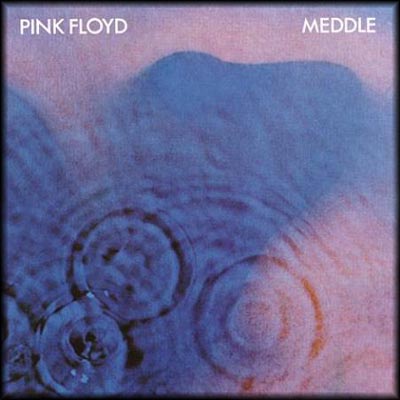
Classic Albums: Pink Floyd, Meddle


When people talk about the great Pink Floyd albums, they'll mention Dark Side of the Moon and The Wall, those two staples of classic rock radio, Those with an appreciation of the band's Syd Barrett incarnation will talk about Piper At The Gates Of Dawn. Wish You Here will get some attention, especially from the more serious fans, and there will always be some overly-intense young men who will name Animals as their favorite.

Rarely will you hear talk of Meddle, the album Floyd put out in 1971 that bridged the gap between their psychedelic years and the arena-ready sounds of Dark Side. Those who know Meddle know its power, however. I was not surprised years ago to read in an interview that Johnny Greenwood, guitarist for Radiohead, counts it among his favorites. This is an album of moods more than songs.

The one real rawk song is the first, the sinister "One Of These Days." It begins with the sounds of howling wind, and then an overpowering bass riff unlike anything on a rock record to that point. I hear this song as Pink Floyd throwing down the gauntlet and announcing a new beginning, much like the Stones' similarly up-tempo "Jumpin' Jack Flash."  The song sounds like a horde of horsemen sweeping across a wind-blasted plain out for blood, a feeling confirmed by the only words, spoken through a voice distorting modulator: "One of these days I'm going to cut you into little pieces"

"One Of These Days" grabs the listener's attention with its brute force, but the rest of the album is decidedly mellower as it segues into the appropriately named "A Pillow Of Winds." The tone is set by David Gilmore's gentle slide guitar, and million miles from the slash and burn we've just heard. While this song is a nice little gem, the following song, "Fearless," is one of my all time favorites. Just today I was bumming around Central Park, killing time before my school's graduation while I listened to this song as a cool summer breeze blew through the trees. The song and experience were a perfect, serene combination. Whenever I hear this song I feel calmed, uplifted.

I'm not the only person who loves it. In Everybody Wants Some, his most recent film, Richard Linklater devotes a whole scene to the characters listening to the song while smoking up and listening to the resident pothead philosopher's enthusiastic promotion of it. It's also an interesting example of Floyd bringing in outside noises into the studio, something that Dark Side would very successfully incorporate. The beginning and end use recordings of Liverpool soccer fans chanting "You'll Never Walk Alone," still sung today at Anfield stadium. The song gives real meaning to the lyrics; it's impossible to hear and think that you're alone in the universe.

And just to make things even less consistent, the next song "St Tropez," is a jazzy little number that sounds like something a 40s lounge band might've played. Again, it's less a song than a mood, one of detached decadence in the sun of the French Riviera. Refusing to stick to a theme, the last song on side one is "Seamus, " a joke song. It features David Gilmore playing Delta blues slide guitar over the sound of his dog Seamus howling and moaning. As a song it's not all the great, but on the record in contributes to the surreal feeling established elsewhere. There's an intimacy here, as well as the rest of side one, which has made this album a favorite of mine to play as I lay down to go to sleep.

Pink Floyd developed a reputation for concept albums later in their career, but you'd be hard-pressed to find any hard and fast concepts on the first side of Meddle. Side two has a very simple concept: an album-side length song: "Echoes." It starts with the crystalline sound of piano keys that ping like sonar or a faint signal from a distant star. Those pings come in throughout the song, which has few words and a lot of musical interplay. It's a song I love getting lost in for awhile. When I listen to all twenty-three minutes of it and clear out other distractions I feel greatly refreshed by the time it ends. Unlike a lot of other prog rock of the day the musicianship does not over power the song or kill the mood with excessive showiness. The feeling is the most important thing in this song.

The feeling that this whole album gives me is why I keep coming back. It is a feeling of comfort and belonging. In a day to day existence that is full of too much work and stress, these songs reveal the secret veins of the universe, the deep rivers of meaning beneath all of this material garbage. If you need 45 minutes to transport yourself off of this vulgar plane into a world of beauty and mystery, then look no farther than Meddle.

Friday, November 7, 2014

The Pros and Cons of Roger Waters Period Pink Floyd

I am a regular listener to the Sound Opinions podcast, which recently did a thing about the 35th anniversary of Pink Floyd's Wall album.  That inspired me to listen to it again, something I hadn't done in quite a long while.  For a three month stretch when I was seventeen I must have listened to it practically every day, trying to glean meaning from what was locked in the cassette tape.  Soon afterward I picked up Dark Side of the Moon, and decided that I much preferred the psychedelic, prog-rock Floyd to their hard rocking dystopic Roger Waters-centric period.  I would occasionally pick up The Wall, but much preferred spinning Dark Side of the Moon, Wish You Were Here, Meddle, Relics, and Piper at the Gates of Dawn.  (In college I discovered and quickly embraced their early, Syd Barrett incarnation.)  A friend in grad school convinced me to pick up Animals, but it was too straight ahead for my tastes.

Around that time I picked up a history of the Floyd and learned the reasons for the change in sound and theme.  Roger Waters had become the dominant force in the band, with songs and concepts exploring the anomie of modern life written in a much less textural, progressive mode than what the band had done before.  The spikiness of the sound also reflected increasing tensions in the band.  1975's Wish You Were Here was a kind of transition, as it contained both the extended, textured "Shine On You Crazy Diamond" and the hard rock sound and cynical attitude of "Have a Cigar."  That song, with its acid take on the music industry, would be a harbinger of things to come.

Waters' albums as the Floyd's impressario form a sort of trilogy: Animals in 1977, The Wall in 1979, and The Final Cut in 1983.  On the latter Waters took sole credit for the music and lyrics, and sang on almost all of the tracks, effectively making it a Waters solo album with the other band members as side men.  Like his official solo work, it's not very good, evidence that Waters needed David Gilmour and Rick Wright's touch and sense of tone to properly translate his ideas.  (On the other end, the material the band has put out since Waters' departure has been decidedly mediocre, since it lacks Waters' animating ideas.)

Re-listening to Animals and The Wall, however, has shown me these albums' unique power in ways I hadn't quite realized when I was younger.  In the first place, they dig really deep into the everyday inhumanity of lives lived with fear and loathing.  The epic "Dogs" on the first record delves into the minds of the servile brown-nosers that shake your hand while they jab the dagger in your back, and "Pigs" the mentality of the kind of authoritarian prig I once had the misfortune to work under.  This is really adult music for adults, despite the facade of flying pigs on the cover.  The Wall turns this theme of modern inhumanity to rock operatic lengths, and while the story doesn't quite hold together, it does not flinch at delving into deeply painful territory.  It's good to know that Pink Floyd for a time used their power and ability to make what they wanted to touch on mature subjects and not the usual rock and roll clatter, cock rock strutting (looking at you, Mick Jagger) or silly demons and castles storytelling a la Led Zeppelin.

The other thing I've noticed is David Gilmour's guitar playing, which has gone from psychedelic and atmospheric to thrillingly searing.  This is especially the case on songs like "Run Like Hell," "Young Lust," and the soaring solo on the otherwise quiet "Mother."  On "Comfortably Numb" Gilmour gives us the last dose of that old psychedelic magic, which has made it a classic rock radio staple for over three decades.  If not for his contributions this rock opera would have been much too stark and lacking in beauty for its own good, much like The Final Cut.

On Animals and The Wall Waters proved that he may have had the most astute conceptual mind in rock, but still needed Gilmour to make those visions sublime, rather than just angry and narcissistic.  It's a pity they never managed to do it again.

Sunday, July 29, 2012

Playlist: Pink Floyd After Syd Barrett and Before Dark Side of the Moon

These days I spend a lot of time feeding babies in the dead of night.  Since they were premature and are still quite young, we have to feed them every three hours, whether they ask for it or not.  My wife and I have worked out a system where I stay up until the 2AM feeding, and she gets up early for the 5AM feeding, which allows us to get 5-6 hours of solid sleep.  Our little ones really love listening to music, and I have learned that playing a record is the perfect thing to do during our feedings.  The time it takes for one side of the LP to play is about as long as I need to diaper, feed, burp, and rock a baby to sleep.

Of course, when you're dealing with babies in the dead of night, you don't want to agitate them too much, which requires records that are on the mellow side.  One old standby that I have found to work very well is Pink Floyd's Meddle, which I had used for years to relax me for sleep, never knowing I would be using it on my daughters.  Listening to it has got me thinking about that obscure period in Pink Floyd's history after original leader Syd Barrett lost his mind and was kicked out of the band in 1968, and the Floyd's triumphal launch into stardom via one of the most iconic albums of all time, The Dark Side of the Moon, in 1973.  It's not their best stretch of work, but a lot of it is fantastic, and the band is probably at their most experimental in that period.  So plug in the lava lamp, roll your smokeables, and prepare to get mellow.

"Fearless"
This track from Meddle is one of the most beautiful songs in the whole Pink Floyd catalog, one I was lucky enough to tape off the radio during an all-day Pink Floyd marathon on the local classic rock station when I was in high school.  I have a killer 90 minute Maxell tape in the bottom of a box somewhere as the fruit of that day.  (Back in my day we didn't have illegal downloading, we had to sit next to the radio with a trigger finger to record the songs we wanted. ) This song struck me immediately, it just felt like therapy listening to it, and to this day is one I like to play on a bad day.

"Let There Be More Light"
Pink Floyd's original guitarist, lead singer, and principal song writer Syd Barrett started losing his mind after the band's amazing first album (Piper at the Gates of Dawn), and even though he's listed in the credits of the second, A Saucerful of Secrets, he didn't really contribute much beyond the epically disturbing "Jugband Blues."  (He also wrote the unhinged "Vegetable Man," which was used as a B-side.)  This song kicks off the latter album, and has a wonderfully creepy vibe.

"See Saw"
Another track from Saucer, and one that I've always loved even though others (including the band) do not.  It's also one of the few written by keyboardist Rick Wright.  It might not be a masterpiece, but I do love a little psychedelic confection, since it does wonders for the old nerves.

"Granchester Meadows"
The Pink Floyd aesthetic transformed into English folk, and absolutely lovely.

"Careful With That Axe, Eugene"
I've linked here to the version from the Live From Pompeii film, since I find it to be especially powerful with the volcanoes blowing off and such.  This sounds more like an avant-garde jazz experiment than rock and roll, and while the Floyd would go on to make better music, it would never be this daring.


"Free Four"
Roger Waters went on to take himself a little too seriously on later albums, turning his pessimism a little too loose on Animals, The Wall, and most egregiously, The Final Cut.  Before then, he was able to harness his dark outlook on life to write profound little ditties about mortality.  This song contains one of my favorite lyrics on the subject, "Life is a short warm moment/ and death is a long cold rest."

"Echoes"
This track takes up the entire second side of Meddle, something that really intrigued me when I first heard it, since it was the only song I knew of that was longer than "In-a-Gadda-Da-Vida."  (I've got that song on a Maxell tape somewhere, too.)  After all these years I don't find it ponderous or overdone, but singularly beautiful, like watching the tides roll in.  I can't think of a better song to rock my daughters to sleep to.