Tuesday, October 16, 2018

Newt Gingrich And The Need For A Democratic Narrative

Advocating for a moon base was Newt at his Newtiest

There's a recent profile of Newt Gingrich in the Atlantic that's been making the rounds, and it has been giving me uncomfortable flashbacks to the 1990s. He led the Republican stampede into Congress in 1994, the first use of a partisan government shutdown, and the impeachment crusade against Bill Clinton. Beyond that (as was even evident in the 1990s), he was responsible for a new kind of Congressional politics. Ever since the Republicans have been practicing a kind of right wing Bolshevism, treating power as the only moral concern. Trump has merely dropped the last pretenses of decorum and civility. He is a creature who arose from the muck of this fetid swamp, not an alien to the Republican party.

Gingrich is a fatuous blowhard who likes to talk like what a dumb person thinks a smart person sounds like. Even so, he proved himself to be an effective tactician. Back in 1994 one thing he perfected was the use of political narratives. His GOPAC campaign was all about attacking Democrats as immoral, corrupt, and wasteful with coordinated messages. He also generated the so-called "Contract With America," which gave every GOP candidate, no matter how uninspired, a narrative and platform to run with. Republicans, already whipped into a frenzy with their dislike of first-term president Bill Clinton, came out in droves to the polls and took both houses of Congress for Republicans for the first time in 40 years.

Flash forward to 2018.

Democrats are also running against an unpopular first term president whom their base despises. It's fertile soil for a landslide, but that's hardly a guarantee. The issue is not just an unfavorable Senate map and gerrymandering in House. The Democrats have elected not to generate a national narrative. They have taken a "let a thousand flowers bloom" approach, perhaps hoping not to alienate voters in red areas with a progressive national message. The issue is, I have no clue how the Democrats will govern if they win Congress. Do you?

That is a huge problem. How can you claim to be an alternative to the status quo when you aren't telling people what that alternative even is? Democrats need to take a page from Newt Gingrich and establish a broader narrative. They need to paint conservatives as antithetical to the will of the people, and to make them have to come out and play defense against that narrative. Right now all the talk is about Trump, and that's not good enough.

There's three weeks left until the election, and Mitch McConnell provided the perfect ammunition today. He essentially said that his biggest regret as a politician was that he has failed to cut back on Social Security, Medicaid, and Medicare, and that cuts in those programs would be necessary to cut the deficit. The narrative here is pretty simple: Democrats want a country where people's basic needs are taken care of, and Republicans want to take away your health care and retirement so that they can give even more money to rich people through tax cuts. Please Democrats. Say it. Again and again and again and again. Say it until you are blue in the face. Say it until even our wretched excuse for a fourth estate forces Republicans to have to answer to it. The stakes are too high for politics as usual, and those politics have been a massive failure for Democrats anyway.

Wednesday, October 10, 2018

Pulp, "Common People"


Nothing was conventional about Pulp. Their lead singer, Jarvis Cocker, was a beanpole in giant nerd glasses whose lyrics discussed sexuality in extremely real and uncomfortable ways. The band's sound, with plenty of synths and the guitars relegated to moods and textures on most tracks, was completely out of step with the go-hard rock riffing of 1990s grunge and Britpop. They were one of those bands that if you liked them, you felt like you were in a club (at least in America.) Whenever I met a fellow Pulp fan back in the 90s I always felt an immediate bond with them.

Nobody obsesses over social class like the Brits, and so its not surprising that maybe the best pop song ever about class comes this literate band hailing from Sheffield. On "Common People" Cocker took a slight break from his romance and sex obsessions to deliver a staggering anthem about what it's like to be a common person confronted by a rich hipster poseur. Because Pulp are not a riff-rocking band, the anthemic chorus is almost orchestral, the guitars and synths climbing to a fever pitch as Cocker hits the high notes as he sings "You'll never live like common people."

While the song is a tell off to a rich girl who "came from Greece with a thirst for knowledge," there is a strain of sadness, rather than defiance to it. The line "you'll never watch your life slide out of view" is on my mind as I am in middle age. Working class people very early on in their lives are aware of limits, of their ideal life having to give way to reality, a moment where the life they see their life "slide out of view." Another painfully real line is Cocker saying this rich girl will never know what it's like "to live your life with no meaning or control." The wealthy are usually unaware of the security and options their wealth gives them. As Cocker sneers, "If you call your dad he can stop it all." That's not an option for common people.

It's easy to see why this was a hit in the UK, and why it went nowhere in the US, a nation constantly denying the existence of its social class hierarchy. This song has been on my mind a lot recently. The Kavanaugh hearings were a pretty clear example of how this nation's ruling class exists above the rules that the rest of us must follow. The people who went to Georgetown Prep will never live like common people. I only wish Americans could see this as clearly as folks across the pond can.

Monday, October 8, 2018

Fascism 2.0

I am trying and failing to get the old time religion today

Back in the year 2000 in my first year as a doctoral student I wrote a historiographical paper for one of my grad classes about the historiography of fascism, especially the discussions of its definition. After all, fascism was something so universally condemned in those days that you could not throw the epithet around without justifying yourself. Grad student me tended to think of the word as really having more of a historical than contemporary meaning. Back then I saw fascism as a moment in time after the crises brought on by World War I and the Great Depression, and less as a relevant political movement. Of course there were fascists still around, but they were on the fringiest of fringes.

Obviously, things have changed. At the same time, we lack a proper vocabulary to describe the phenomenon that includes Donald Trump, Bolsonaro in Brazil, Italy's Five Star Movement, the National Front, and Alternative for Germany. The American media uses the insipid phrase "populism," which is a political style rather than an ideology. All of these movements are made up of extreme nationalists using populist rhetoric as their vehicle. They are running campaigns for national regeneration predicated on mass action but enforced by state brutality. That sounds remarkably like, well, fascism.

I am beginning to think of this new wave as "Fascism 2.0." Why that terminology? Because fascism is a reactive phenomenon that emerges in times of crisis. What we are seeing now is less an attempt to be part of a longer fascist lineage, and more a reimagining of fascism for a new crisis in a new era. Fascism 1.0 featured paramilitaries and their leaders in uniform, an obvious influence from the Great War that birthed the movement its leaders had participated in. The nations currently getting hit by a fascist wave are not nearly so militarized, so that kind of thing doesn't make sense. People looking for fascism are looking for brownshirts, instead they should be looking at internet trolls, who are the modern day squadristi. They go around looking to do verbal violence to their opponents, to doxx and shame them instead of making them drink castor oil. The intention is the same, though: the clean the public sphere of the enemy.

Fascism 2.0 has adapted to our modern world. It knows to avoid flagrant fascist symbolism and to cling to respectability. It knows that once you deny something, i.e., "I was NOT flashing a white power symbol," the media will automatically report the controversy and give up on finding the truth. Fascism 2.0 is kicking Jean Marie Le Pen out of the party, but still espousing all of the old ideas. Fascism 2.0 uses the fringe nasties like neo-Nazis and Klansmen to pretend that it does not hold the same essential beliefs, that those hated groups are the "real fascists," not the Stephen Millers of the world (who so clearly are.) It knows not to reach for absolute dictatorship, but to leave just enough wiggle room to say "see, people here have freedoms." Orban in Hungary and Putin in Russia have perfected this sham, especially Orban. Countries where the system is rigged can avoid the fascist label by still having elections (which are manipulated) and opposition media (which is marginalized.) Old institutions are maintained, but subtly turned into tools for the regime. Just look at what's happened to the court systems of Poland and the United States. We think of fascists as totalitarians, but in our modern world where people are so atomized and cut off from each other that disconnection and apathy is a thousand times more powerful tool than propaganda posters. As Putin has learned, you can allow your opponents to speak, just make sure no one is able to hear them.

Make no mistake, Fascism 2.0 has the same worldview as the old version. It is based on redemptive nationalism, misogyny, anti-intellectualism, racism, xenophobia, contempt for international peace, and naked power over the rule of law. What scares me is that is able to work its way into power much more seamlessly than before.

I greatly fear that the future holds even worse things. Fascism 1.0 was an inherently self-destructive phenomenon. Its leaders lusted for the wars that would enlarge those borders, and it was war that brought those regimes down. The current crop of fascists is not so eager for a new conflagration (yet.) They also have in-built advantages the old fascists didn't have. The left is incredibly weak. Labor unions have been losing power and socialist parties are often the ones bleeding out their members into the National Front and Alternative For Germany. As Macron has demonstrated, the liberal center is ineffectual and compromised. Today's fascists have far less opposition than the old ones did, and their ability to grab power without resorting to totalitarian means makes opposing them even harder.

The global climate crisis will only increase their appeal. As David Astin Walsh wrote about on Twitter this morning, fascists are obsessed with scarcity and borders. They will use ever-growing refugee crises and battles over resources to make fascism even more appealing.

With each day I get more and more hopeless for the future. Fascism 2.0 is much bigger and more powerful than I initially thought. What's worse is that so many people don't even see it, and corporate media, refusing to break their bothsidesism, will never name the problem. Because there aren't brownshirts in the streets and Hitler salutes that doesn't mean that fascism isn't winning.

I hope I'm overreacting, but right now it looks like what little democracy we ever had is going to end not with a bang but with a whimper.

Saturday, October 6, 2018

"Our Girls"

Janelle Monae with the message we need

There's a speech by Elizabeth Cady Stanton called "Our Girls" that I use to teach 19th century feminism, in all its flaws. It makes a good contrast with Frances Willard's linking of women's rights to temperance and "home protection," and often surprises my students because they did not think there were women in the Gilded Age who thought as radically as Stanton did. The opening lines are certainly evocative:

"They are the music, the flowers, the sunshine of our social life. How beautiful they make our homes, churches, schools and festive scenes: how glad and gay they make our streets with their scarlet plumes, bright shawls and tartan plaids. Who can see a bevy of girls tripping home from school without pausing to watch their graceful motions, pretty faces, feet and legs, to listen to their merry words and peals of laughter. See how they romp and play with hoops and balls, with sleds and skates, wash their brothers’ faces in the snow, and beat them in a race on yonder pond. These boys and girls are one to-day in school, at play, at home, never dreaming that one sex was foreordained to clutch the stars, the other but to kiss the dust."

I think about these lines all the time when I watch my six year old daughters playing with their friends in their joyous, carefree way. It often fills me with profound sadness, because I know what society is about to put them through.

The glimpses are already there. Based on their behavior, the boys I see their age have not been taught a lot about being nice to each other or caring about other people's feelings. I know that in a few years my daughters' male peers will be judging them by their looks, and that they will be dealing with the Kavanaughs, Squis, and Judges of the world. My wife and I know that as their parents there is only so much that we can do, and that they are going to have to navigate the minefields of female adolescence mostly by themselves. Things were bad enough already, but with the election of Trump and the confirmation of Kavanaugh the abusers, predators, and misogynists can rest easy that their people are at the helm. I am sure that they feel emboldened.

I know too many people to count who have been sexually abused and assaulted (not all of them women, by the way.) I am sure that I know many more who have not shared their stories with me. I know that in some cases the resulting pain and trauma lasts a lifetime. I also know that not a single person who perpetuated these assaults on the people in my life ever had to face justice. I have also seen up close and in painful ways how institutions and authority figures makes excuses for abusers. Kavanaugh's confirmation sends a clear message to the already disbelieved and disrespected victims: your pain, your experience, and your life simply don't matter.

That's the message Trump's America sends to so many people on a daily basis. The children murdered in school shootings, the black men and women shot down by the police, the immigrant families broken apart and jailed, and the women who are sexually assaulted have essentially been told that their sufferings are justified.

I can't help but to make it personal, and to think about what my girls are growing up into. Those who want them conditioned to "kiss the dust" are behaving with impunity. They have control over the courts now, so their vile fantasies about what kind of lives our girls can and cannot have will soon be a reality. I owe it them to fight to my last breath.

Wednesday, October 3, 2018

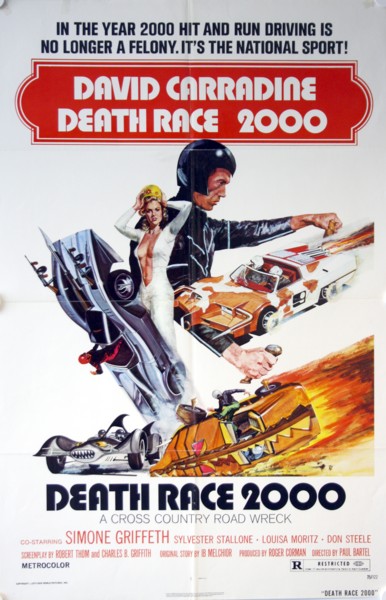
Bring Back Trash Cinema!


We are living in dark times. In these days of woe we need escapist entertainment to distract us. We need cheap thrills. We need dumb fun. We need trash cinema.

Back in the olden times trash cinema could be found in the drive in theaters across America. From killer robots to killer shrews to killer motorcycle gangs there were cheap thrills aplenty. The drive-ins hit their decline, but in the 1970s the grindhouses stepped into the breech. Exploitation cinema hit a high point worldwide, from Italian horror to Australian road flicks to American blaxploitation. A lot of film-makers raised on this stuff turned it into art cinema in the 1990s, with Quentin Tarantino being the most notable. In the 1980s the home video market undercut the grindhouses but opened up many more opportunities for trash cinema. A suburban dad might not go to the city to see an exploitation movie in a grimy cinema, but he would totally rent American Ninja.

I saw so many B-action movies as a kid because my father loved martial arts (he earned a black belt) and would watch anything with Chuck Norris in it. In the early days of cable in the 80s stations like WGN and TBS would show any old Charles Bronson or Lee Marvin flick, and I would watch it. Burt Reynolds became the biggest box office draw of the late 70s and early 80s via what's essentially a higher budget drive-in feature, Smokey and the Bandit.

While the 80s were a golden age of trash cinema, in the 90s it went into decline. Mom and pop video stores were replaced by Blockbusters. Those mom and pop places needed those B movies to have product on the shelves, a reputable megacorp like Blockbuster would just put up an entire wall of copies of Armageddon. The world of streaming that replaced the local Blockbuster store should have resulted in a trash cinema renaissance, but it hasn't.

On the big screen studios put out fewer and more expensive movies, with the cheap thrills of the past left aside. On the small screen there is an obsession with "prestige" television. Amazon and Netflix are swimming in cash, and so can bankroll attempts at recognition rather than a shotgun blast of B movie pleasure.

Of course, a lot of this "prestige" television has grown stale and formulaic and self-serious to a self-parodying level. I'm honestly bored and tired of it. America wants, nay craves trashy cheap thrills, not yet another group of stiff-lipped royals or criminal suburban dads. If you want to know what you're missing, watch Electric Boogaloo on Netflix. It is an amazing documentary about Cannon Films, the ultra-productive schlock producers of the 1980s led by the undaunted Golan and Globus. It's made by the same people responsible for Not Quite Hollywood, a similarly engaging look at Australian genre cinema in the 70s and 80s.

So please Netflix, hire a modern-day Roger Corman to run a spin-off studio that makes dumb, fun, inventive genre movies. Bring back the backwoods moonshiners running from the revenuers, the Pam Grier-type righteous woman hero, giant mutated animals, ninja throwing stars, and over the hill action stars shooting up the screen

Here's some great clips to tide us over until we get our trash cinema back:

Ninja golf course massacre in Ninja III: The Domination


Don't mess with a pissed off trucker! White Line Fever is a secret blue collar masterpiece


Before he was the Bandit, Burt Reynolds was Gator. Both films also featured themes by underrated country singer Jerry Reed, who also starred.

1970s trash cinema, when Joe Don Baker could be an action hero.


The one and only Pam Grier


Death Wish 3 is grotesque, what a friend called "a Trump speech given sentient life." Trash cinema should occasionally make you feel icky for watching it.

Monday, October 1, 2018

Old Dad's Records Gets Melancholy


Episode 32 of Old Dad's Records is up now. The unifying theme is melancholy, which I have been feeling a lot of recently. I recorded the episode two days after Christine Blasey Ford's testimony, and the fact that her great bravery will likely be for naught is almost too much for me to bear.

I start with "More Than This" by Roxy Music, a song I recently wrote about on this blog. After that I dig into Time Fades Away, the first entry in Neil Young's so-called "ditch trilogy." Whenever I am feeling melancholic in autumn, it is a go to. I end with a rave for Falcon Jane, whose music is more ennui than melancholy, but still great.

Tuesday, September 25, 2018

How College Debate Explains Ted Cruz


Beto saying Cruz was "working for the clampdown" is the kind of pop culture reference I would have made in a 1990s debate round, and so I tip my hat

Ted Cruz does not have the kind of personality that puts people at ease. Successful politicians must first and foremost be likable, not inspire Zodiac killer memes. Nevertheless Cruz stands at the heights of national politics.

What explains this?

The keys to Cruz’s combination of effectiveness and creepiness can be found in his time as a college debater. I have insight into this obscure world, where I competed for four years for a much less vainglorious university than Princeton. When I read an article in the New York Times in 2015 by Jason Horowitz about Cruz’s time on the debate circuit I suddenly realized why I found his uncanny affect and florid rhetorical style so eerily familiar. 

There are many different debate formats, both Cruz and I competed in parliamentary style (at the same tournament once, even). In “parly” teams debate a resolution provided only 15 minutes before the round begins. Debaters thus must be nimble, resourceful, and able to access personal knowledge in the absence of ready evidence. Such skills translate well to the world of politics.

The emphasis on persuasion over evidence can obviously lead to chicanery.  I once witnessed a team win a crucial round by saying that hospice care involves forced lobotomies. If a debater says something exaggerated or untruthful, but keeps hammering at it with absolute conviction, that person will go far. If their opponents spend all of their speaking time disputing the facts, they have de facto put themselves on the defensive, the surest way to lose a debate round. Cruz obviously learned these dark arts well. For example, he has had the audacity to claim he had nothing to do with a government shutdown he clearly instigated back in 2013. Or just look at his recent debate with Beto O'Rourke, where he claimed without a quiver of doubt that Martin Luther King would somehow be opposed to black athletes protesting against police brutality during the national anthem.

Beyond his dissembling, Cruz’s manner of speaking is unsettling because he is still arguing to a debate judge. Debate judges tend to be debate coaches or debaters who must be persuaded according to the game’s unwritten rules. Those judges only consider arguments made in the round, not their own common sense. They write down every argument made, meaning that “dropping” an opponent’s argument can lose a round. This encourages a shotgun approach where debaters blast opponents with too many arguments to answer. One way to deflect this strategy is to keep changing the subject when pressed, a strategy I have witnessed Cruz use more than once. In any case, this is not a way that normal people argue, and debaters who have been trained in the rules of the game like Cruz have a hard time breaking the habit.

Cruz’s oddest rhetorical ticks are also familiar from my college debate days. Debaters commonly pepper their speeches with pop cultural references to add levity and charm judges. Since we were huge nerds judged by huge nerds, the references could be obscure or maladroit. Cruz can’t help himself from making such allusions. Take, for instance, his assertion that the Republicans were like Bart, Homer, Marge, and Maggie Simpson, and the Democrats were like Lisa. I laughed when I heard this because it sounded like something straight out of a 1990s debate round, right down to the fact that The Simpsons is among that decade’s biggest cultural touchstones. (His statement about Beto O’Rourke bringing “tofu, silicone, and dyed hair” to Texas was just plain weird, though.)

Even Cruz’s campaign ad featuring a “humorous” song putting down Beto O’Rourke because of his name makes sense as a college debate strategy. The parliamentary debate format tried to mimic aspects of debate in English Parliament, including witty put-downs of one’s opponent. If the jokes landed, judges would accept mockery of opponents. This is an aspect of college debate that tripped Cruz up, and he still seems to have a hard time sticking the punch line. Just recall his characterization of O’Rourke as a “Triple Meat Whataburger Liberal.”

However, O’Rourke ought to be prepared for someone who can bend the facts with absolute conviction, distract with shotgun blasts of rhetoric, and change the subject whenever caught in a tight spot. Cruz’s time as a college debater may have made it difficult for him to talk like a normal human being, but it also gave him powerful abilities that other politicians crave. Based on the first debate, it seems that Beto figured out how to keep from getting distracted and kept pushing his message forward.

On the debate circuit we used to joke about people we called “lifers.” They loved debate so much, they just couldn’t give it up after graduation, so they became coaches or perennial judges. In the case of one such lifer we used to joke with him by tapping our arms like heroin user preparing a vein for an injection. Their lust for debate was as intense as a drug addict’s need for junk, a compulsion rather than a choice. Sometimes these debaters, like Cruz, would come back and compete at the Worlds tournament while they were in law school. (That was the tournament at Princeton, in 1995, where I also competed.) It is obvious that Cruz is a lifer in his own way, but instead of judging rounds he is continuing to compete by other means in the political realm. The same arcane approach that makes him so off-putting is paradoxically the key to his success, and one key to understanding how to defeat him.