Friday, April 14, 2017

Palace Coup

In the Bible the people of Moab descended from the children conceived incestuously between Lot and his daughters. The MOAB name is fitting for another abomination.

This week saw maybe the most stunning presidential policy reversal I have witnessed. Just days after the Trump administration said that it was basically accepting that Assad would maintain his position in Syria, it ordered a large missile strike and started talking about regime change.

What happened, of course, is that we are currently witnessing a palace coup in the White House. Bannon and his ilk are being pushed aside at the behest of Ivanka and Jared. As I have said before, Trump is really just an old, mad king. He appears to be highly suggestible, and not quite in full command of his mental faculties. He does not want to govern, he wants other people to do that for him. That allows maximum time for television and golf. Because he does not take an interest in anything, he is easily swayed by those he thinks he trusts.

It was inevitable that Jared and Bannon were going to clash. Bannon is an anti-Semite, for one. Kushner is a fellow sleazebag, to be sure, but one gets the sense that he does not buy into Bannon's worldview, which is a mishmash of xenophobic French novels and minor fascist theorists. Throughout his entire life Trump has used people then tossed them aside when it was convenient. Did Bannon think he would be any different than Lewandowski, Manafort, or innumerable contractors? Like the mafia don that he is, Trump will protect and trust his family above all others.

Also, since he is ignorant, suggestible, and lazy, and Jared and Ivanka are equally inexperienced, Trump is now just leaning hard on the military. His statements seem to say that he will let the military leaders do whatever they want, and what they want, as always, is more war. We are killing more civilians and even friendly rebels because the generals have allowed to run wild. Presidents are supposed to be above the military, but Trump has basically let himself be their servant. Ironically, this man obsessed with projecting strength comes across now as a pathetically weak leader. He lets the leader of China tutor him on the things he should already know. He throws a temper tantrum and refuses to shake hands with Merkel. He is so clueless about war that he just lets his generals do everything, and he reverses policy because a different person has his ear.

It would be funny if it wasn't so serious. What scares me is that the current palace coup could solidify his presidency like nothing else. Americans have become so accustomed to war that those in the middle will rally around the flag if Trump makes a bigger military commitment. If you remember, Dubya was an unpopular president with questionable legitimacy until 9/11, and that coupled with the invasion of Iraq ensured his reelection. I fear that unless the pressure is kept on, Trump may well get away with recasting himself as a wartime president. Don't say you weren't warned.

Tuesday, April 11, 2017

New Essay At Liberal Currents


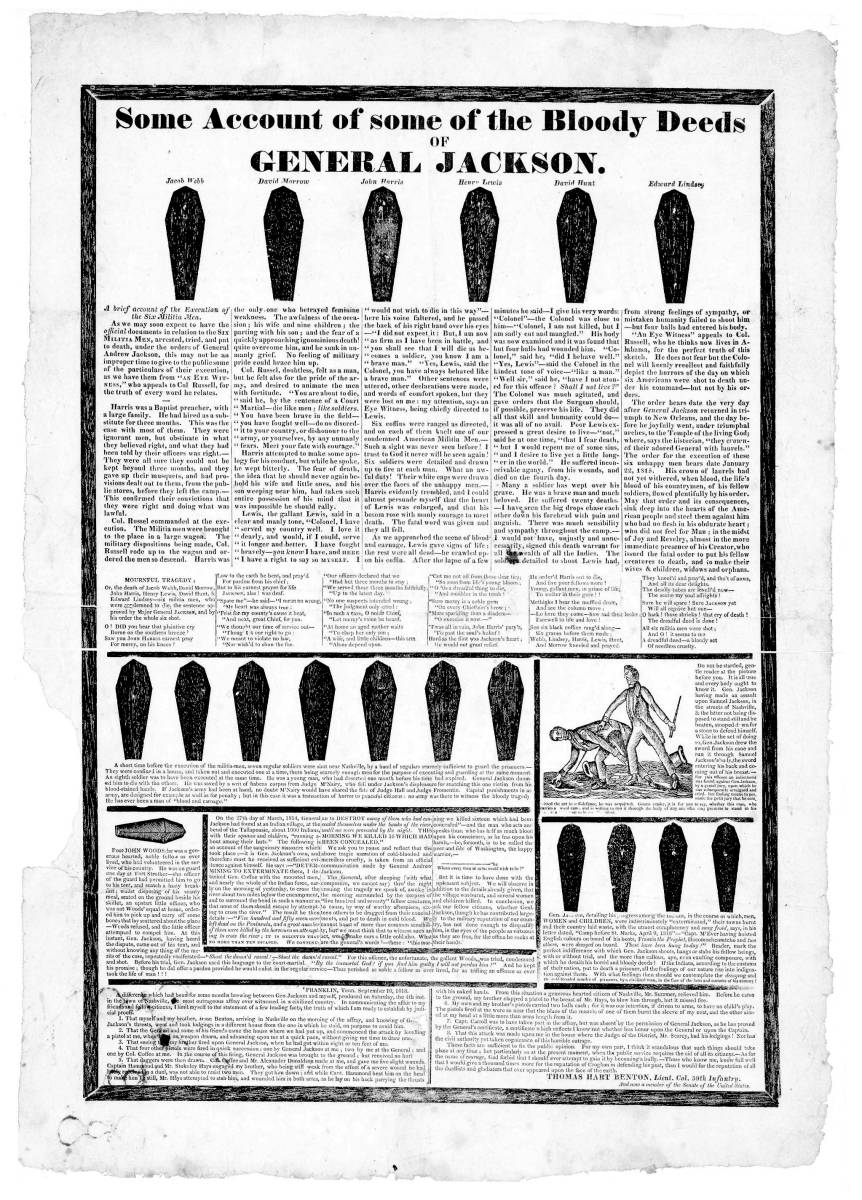
I had a very productive spring break. My second recent article, following the one I did for Tropics of Meta, is up now at the new site Liberal Currents. It's called "Trump's Jacksonianism And Its Needed Response." I've written about the current relevance of Andrew Jackson on this blog before, but this essay is a much more comprehensive take on it.

You should also check out Liberal Currents, which I think is doing valuable work in trying to wrest liberalism from its slide into an overly centrist position divorced from the concerns of its constituents. You may wonder how I can publish with a liberal site and with a socialist one like Jacobin, but I would say in return that I believe that the left side of the political spectrum needs a healthy dose of ecumenicalism. We'll all hang together or we'll all hang separately, y'all.

Monday, April 10, 2017

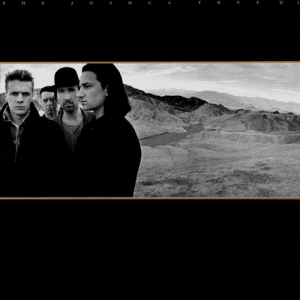
Memories Of The Joshua Tree At 30


It was a gorgeous spring day today. Due to the Passover holiday, I don't have to go to work tomorrow or Wednesday, so when I stepped off the commuter train into brilliant sunshine, I felt a brush of the divine. The long dark winter seemed to melt away in an instant.  When I got in my car, I knew what to do. I rolled down my windows, and fired up "Where the Streets Have No Name" and drove home with the wind in my hair.

I suddenly remembered that the The Joshua Tree turned 30 in March. Its music was some of the first contemporary music that ever meant anything real to me. The reason isn't a happy one, though. It was thirty years ago this April that my grandfather passed away, the first person I was very close to who ever died. He lived about thirty miles away from my hometown, in a tiny rural village that required lots of backroads driving. On the many days we drove back and forth from Hastings to Lawrence for funeral preparations, the funeral itself, and to check in on my grandmother, the radio in my parents' van seemed to play "With Or Without You." To this day I still cannot listen to that song without thinking about my grandfather's death. Even though it's a love song, it's one drenched in a sense of loss and powerlessness, things I was feeling very intensely in my 11 year old soul at the time.

It is very easy to mock U2 these days, it's practically become its own cottage industry. But in 1987, in the midst of the stasis of the later Reagan years and pop music and hair metal with about as much soul as a slice of processed cheese, U2 was a breath of fresh air. As insufferable as Bono can be in his constant political moralizing that lacks a proper level of self-awareness, after years of Reagan and Thatcher and the big dumb lobotomy of 80s pop culture it was exhilarating to hear the anti-imperialist critique contained in a song like "Bullet The Blue Sky."After years of Cold War bullshit, hearing a song about the Mothers of the Disappeared, their children murdered by regimes that had the support of the United States government, felt positively revolutionary.

The songs that were warmer to America (the subject of most of U2's music from about 1984-1989), were more inclined towards the places most Americans choose to overlook. I think here especially of "In God's Country," a wonderful evocation of what it's like to drive through the expansive deserts of the American west. In their video for "I Still Haven't Found What I'm Looking For" the band wanders around Fremont Street, in the seedier, now forgotten part of Las Vegas.

It took awhile before I was sophisticated enough to know that this album was reflecting my country back to me from the point of view of outsiders. That moment I think came when I was in college, when through my Latin American history classes I learned about the real Mothers of the Disappeared. It's also when this album took on another meaning. My friend Lorna really loved it, and back then, I had it on tape, a tape that pretty much lived in my car. On more than one occasion we'd be driving back to the dorms (I was one of the few car owners in our circle of friends on an urban campus), and she'd demand we drive around the block until the last song on side one finished. That song was "Running To Stand Still," a ballad ostensibly about heroin abuse. I hear it now, twenty years after those young and free days, and only think of the blazing fire of college friendships, a fire that lives on in my memory, a fire that those old photos on Facebook can only barely represent.

The Joshua Tree may be the only album in my collection with two such powerful memory triggers spaced ten years apart. It's a wonderful record and it still holds up. Forget every annoying thing Bono has done in the last twenty years and the fact that they put that crappy album on your iPhone without your permission. Give a new listen, and hear the dreams of a time not unlike our own.

Sunday, April 9, 2017

Old Dad's Records 8: Bette Davis Eyes


Episode number eight of my podcast has finally dropped! The theme for this one is "Reagan Dawn," a concept I have discussed on this blog before. Basically, this is the period from 1979 to 1981, where popular culture has a foot in the seventies, but is looking to the eighties. I discuss "Bette Davis Eyes," Genesis' Duke album, and Tim Curry's "I Do The Rock," a forgotten artifact of that time.

https://soundcloud.com/jason-tebbe/old-dads-records-episode-8-bette-davis-eyes

Thursday, April 6, 2017

New Article at Tropics of Meta

As readers of this blog know, I have often talked about America's recent history as its Brezhnev Years. Well, I finally got off my butt and wrote about it for a better venue than this one. They published it over at Tropics of Meta, and I hope you check it out!

Tuesday, April 4, 2017

Sheepish Musical Pleasures: Red Rider "Lunatic Fringe"


[Editor's Note: I've been swamped with work, a commute made difficult by a train derailment yesterday, and writing and editing articles to be published on more renowned websites than this one. So it's time for the equivalent of a Notes From The Ironbound clip show. This is a post from when this blog was new and a series I need to reanimate.]

I used to talk about having guilty pleasures when it came to pop music, but my friend Rachel L. convinced me that I should just like the stuff I like, and therefore not feel guilty about it.  I think she's right, and consequently, I feel no guilt about loving cheestastic ABBA and rock snob-approved Pavement with equal feeling.  That said, I do get a little embarrassed about admitting some of my musical preferences to the my more discerning friends.  My emotions about this less than exalted music is more sheepishness than guilt.  I hope to have a running series on this blog about sheepishmusical pleasures.


What better place to start than with "Lunatic Fringe" by Red Rider?  It's a song I've heard for years, but I never knew the artist until recently, when I saw it featured on a Vh1 "one hit wonders" countdown.  The band is the north of the border combo Red Rider, featuring future "Life is a Highway" singer Tom Cochrane.  "Lunatic Fringe" is one of those songs that seems to have just been dropped out of the sky solely for the purpose of being pumped through the sound systems of pickup trucks in the heartland as it's being played on the local classic rock station.

You can tell it's from 1981, because the drums and guitars are leavened by a good dose of synthesizers, which give the song the added ingredient to put it over the top.  Like their Canadian peers Rush, Red Rider (at least on this track) figured out how to make synthesizers work in the interest of the song, rather than the other way around, especially in setting an ominous mood at the beginning.   The loud splashes of synth in the breaks raise the drama, too.

My favorite part about the song, however, is the fantastic rolling rhythm established at the beginning, which suggests a semi-truck of pure rocking power cruising down a glorious highway.  By the early 1980s, most classic rock had become completely uninteresting from a rhythmic point of view.  I also really dig the soaring steel guitar solo, which sounds like something the Edge would have played had he grown up in Winnipeg rather than Dublin.

Furthermore, I've recently discovered the political meaning of the song; the title refers to the rise in right wing, racist extremists at the time the song was written.  Very rarely can such a pointed political song ("you're not gonna win this time") rock this hard without devolving into sanctimony.

Of course, there's plenty here to make me sheepish, from the 80s production to the simplistic nature of the lyrics (lack of sanctimony only carries you so far) to the fact that this is the kind of song that Kenny Powers listens to.  But hey, I am sure there are others of discerning taste who like this song.  I know you're out there.

Saturday, April 1, 2017

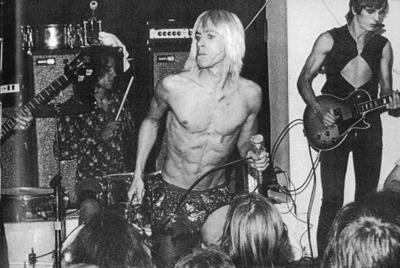
Iggy and The Stooges, "I Got A Right"


I finally got to see Jim Jarmusch's documentary about The Stooges this week (yay spring break), and it was interesting to see them in the context of their time. I've always thought about Iggy and the Stooges as being timeless, their music so unique and strange and exciting that it just doesn't exist in my mind as a cultural product of the 1969-1973 period when they put out their records. This is also because they set such an obvious template for punk, and that their music was so radically opposed to the trends at the time. It became clear to me that they were in some respects the most radically oppositional musical product of the counterculture more famous for producing hippie bullshit.

"I Got A Right" may be their one song that managed to seamlessly combine both their potential for catchy riffs and total rocknroll mayhem. At this stage in his life Iggy was rock's true Dionysus, making people like Jim Morrison look like Gene Pitney by comparison. The song is also the closest thing the Stooges had to a manifesto: "I got a right to move."

The sound is also appropriately grimy and immediate. It sounds like a caged wolverine being prodded by electric shocks, whirling and lashing but still not totally out of control. By this time James Williamson had replaced Ron Asheton on guitar. Asheton's style was even trashier (and the one I prefer), but Williamson could play with flashes of truly jaw-dropping dynamism, which you definitely hear on this song and classic ravers like "Search and Destroy." The craziest moment of the documentary for me was finding out that Williamson, who always looked super tough and scary in the Stooges, went on to be a computer engineer and corporate guy after the band broke up.

I doubt I will ever run for public office, but if I do, I will have two campaign songs ready for the moment I hit the stage: "(For God's Sake) Give More Power To The People" by the Chi-Lites, and this song.