If you want to feel embarrassed to live in America, take a
trip to Germany and ride its rail system.
The trains are clean, safe, speedy, efficient, timely, and go to just
about anywhere you would want to be.
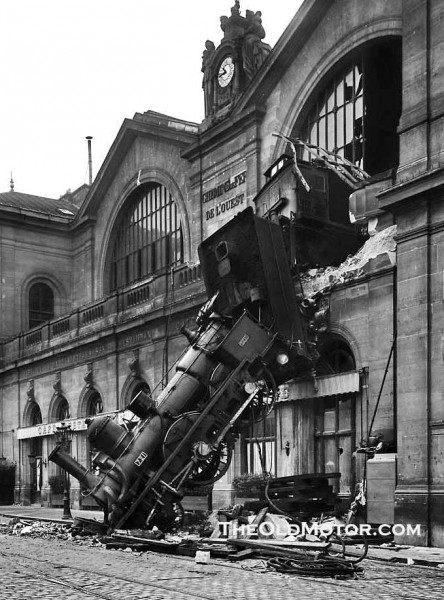
Contrast that with the American train system. Regular delays, train cars left over from the
1970s, limited options, and periodic crashes and accidents that could be easily
preventable. Instead of subsidizing mass
transit, Congress has gutted it.
Things aren’t any better on the state level. I rely on New Jersey Transit to get to work
in New York City every day, like hundreds of thousands of others who will now
be facing major fare hikes brought by Chris Christie, the same man who squashed
a second tunnel beneath the Hudson. Now I hear that tracks in the main tunnel
will have to be shut down to repair Sandy damage, meaning that I will soon be
paying more money for a much shittier service.
This is all happening despite the fact that New Jersey’s
economy is dependent on its transit
links to New York, and also that the state has the second lowest gas tax in the
country. Just like on the national
level, mass transit is neglected in favor of the automobile. This is being done despite the contributions
of cars to the greenhouse effect, the cost of expanding highways, and the high
number of traffic fatalities.
I am increasingly convinced that our mass transit policy is
the result of a kind of social insanity.
Conservative politicians want to privatize Amtrak, effectively stripping
it of all subsidies, saying that its cross country rail service does not “turn
a profit.” That is an absurd statement
when made in context of the billions and billions of dollars spent every year
on highway construction and maintenance.
Those highways have gutted neighborhoods in our cities, spew pollution,
and see thousands die each year in automotive carnage. On what planet is the war on mass transit not
a horribly stupid thing?
There are a lot explanations for “American
exceptionalism” when it comes to our nation’s failure to maintain a proper
passenger rail system. On some level I
don’t this has anything to do with a cultural preference for cars over trains,
since trains keep places like New York City viable, cultural preferences or
not. No, this is the result of our
nation’s tragic adherence to an outmoded federalist constitutional model. Having a robust train system, especially in
the Northeast, is very much in the national interest. However, it is not in the interest of a great
number of the states. There are over ten
million people who live in the New York City area, but states like Wyoming,
Nevada, Alaska, the Dakotas, Montana, and a few others could all be added up
and still not equal the Tri-State Area’s population. All of those states each get two Senators,
despite that discrepancy. That’s the
reason why New Jersey’s tax dollars go to fund highways through the middle of
nowhere, but not improved rail connections to America’s biggest metropolis and
the world’s economic capital. I doubt
that the situation will change, since this country is devoted to its original
flawed, outdated Constitution, no matter how badly it fails.
I am currently reading and enjoying Jeff Katz's Split Season, a look at the 1981 baseball season and accompanying strike. It's the latest in the genre of "year in baseball history" books, including Dan Epstein's wonderful Stars and Strikes from last year about the 1976 season. If I had the time, resources, and talent, I know exactly what year I would write a baseball book about: 1987.
Of course time, resources, and talent are not things I possess a lot of these days, and instead of writing a book, I guess this blog post will suffice. Hopefully someday someone else with more time, resources, and talent than I can write the book.
The 1987 season is still ingrained in my mind because it was the first season of baseball when I was actually a student of the game. I'd seen plenty of games before, and played the game too, but did not yet understand it on a deeper level. In 1987, at age eleven, I started collecting baseball cards with a single-minded ferocity, and in the process absorbed a lot of statistical knowledge. I watched a lot of Cubs games on WGN and Braves games on TBS that summer, and am still indebted to then Cubs announcer Steve Stone for teaching me some of the finer points of the game. I learned what the different pitches were, the fundamentals of strategy (when to bunt, hit and runs, right vs lefty, etc), and even more advanced stats (for the time) like on base percentage. If I were to write that mythical book, here are a bunch of things that would get a lot of attention:
Mark McGwire and Home Runs
Baseball had gone through a power outage for years by 1987, and pitching, defense, and base-running were consequently highly valued. I never really thought it was possible for hitters to hit a lot of home runs and also for high average, I found the two to be mutually exclusive. I looked back in baseball history at players like Ruth, Gehrig, Aaron, Mays, and Williams and wondered if such feats could ever be repeated. All of a sudden, almost out of nowhere, the home runs just started flying out of the park. Hitters known for slapping singles were suddenly smashing dingers. Wade Boggs had never hit double digit homers in a season, in 1987 he hit 24, a total he would never come close to equalling. A rookie by the name of Mark McGwire came out of nowhere to hit homers at a torrid pace; he slammed 37 before the all-star break. I was convinced that he would break Maris' then almost unbeatable record of 61. It did not come to pass, but both he and Andre Dawson would finish the season with 49 homers, a number that seemed impossible only the year before. I remember reading that the ball had likely been juiced, which almost seems quaint today, when we know that the players were too, including, of course, Mark McGwire. It's interesting to think of a time when he was not the sad man peering behind those grandpa reading glasses at the congressional hearing saying "I'm not here to talk about the past" nor the broad-chested conqueror of the home run record in 1998, a folk hero come to life. In 1987 he was a young rookie with enormous potential, with a story that turned out differently than anyone could have known.
Bo Jackson
Growing up in Nebraska, I was a Kansas City Royals fan, until I betrayed them after my move to Chicago. They won the title in 1985, and had amazing young players like Bret Saberhagen and Bo Jackson in 1987, along with proven veterans like Frank White and George Brett. Little did I know that the team would not see the playoffs again until 2014. While I still idolized Bret, I was in awe of Bo Jackson, like most sports fans of my generation. He could hit monstrous home runs and literally climb the walls to steal doubles and homers from his opponents. He was also still young and remarkably inconsistent in 1987. I still remember him striking out five times in a game that April, because it happened to be the day of my beloved grandfather's funeral. I distinctly remember going to my grandparents' tiny, ramshackle house after the service and wanting to avoid conversation in my state of sadness and mourning. I picked up a copy of the Omaha World Herald lying on the couch, and was briefly distracted by possibility that a major leaguer with Bo's gifts could strike out five times. It only made life seem that much more strange and tragic.
Kevin Gross and Joe Niekro
1987 was the year I learned about the practice of doctoring baseballs. That summer two pitchers got caught in the act. Kevin Gross of the Phillies was less subtle, sporting sandpaper glued into his glove. Knuckleballing Joe Niekro was a little more subtle. When the umps came to inspect him, he non-chalantly turned his pockets inside out, pretending that an emery board hadn't just gone tumbling to earth.
Baseball Cards
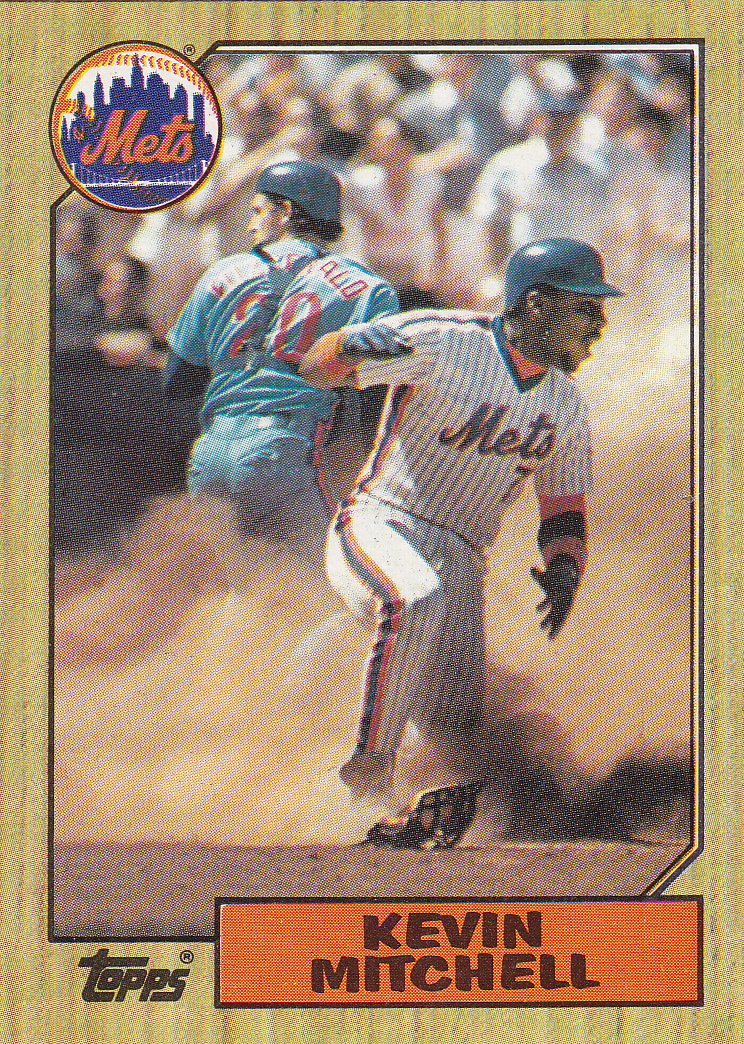
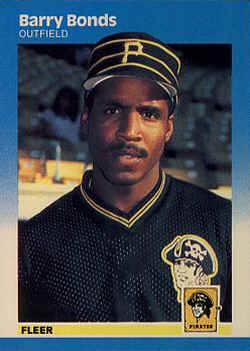
As I said before, I really got into collecting cards in 1987, which happened to be the year when the late 80s baseball card boom really began. I honestly thought I was collecting something that would be highly valuable in later years, only to find out that a box of Topps wax packs now goes for only $12, less than the $14.40 it would have cost in 1987 dollars. That Topps set is a favorite among collectors like myself, although I preferred the Fleer set at the time, mostly because those Fleer cards were unavailable in my podunk hometown.
One Game Playoff
The most compelling pennant race in 1987 came in the AL East, between the Blue Jays and Tigers. Back in those days before the wild card format, teams had to win their division to advance to the postseason. Toronto and Detroit ended the season tied, leading to a one game playoff at the venerable Tiger Stadium. After the grueling rigors of baseball's almost torturous 162 games, the players had to go one more time in a sink or swim situation. The drama doesn't get much better than that. My family went out to the park or something that day, but now just having turned 12 I could opt to stay home and watch this game. I still remember napping for a bit on the couch, then waking up in time for the ninth, and pitcher Frank Tanana driving a stake through the heart of the Blue Jays' season by forcing the memorably named Garth Iorg to hit a weak grounder to the mound that he threw to first for the putout. I remember the ancient and cramped Tiger Stadium looking like it was about to collapse from the bedlam, and thinking that the Tigers were destined to win the Series. Of course, they didn't.
The Twins and the World Series
As a child of the Midwest, the 1987 World Series was particularly sweet, since it included the Cardinals and Twins. As a Royals fan I felt obligated to root against the Cardinals, and in any case, I liked the Twins as an underdog, since they only won a paltry 85 games. They managed to defeat the Detroit juggernaut in only five games. They played in the Metrodome, about the most unbaseball stadium ever, with its low roof and football atmosphere. The fans used the structure to their advantage, making insane levels of noise. On top of that, they waved their homer hankies, creating a sea of white in the stands. They were also not the most athletic team, unlike the fleet footed Cardinals, who boasted speedsters like Vince Coleman and Willie McGee. The Twins had big-butted sluggers like Kent Hrbek and scrappy fireplugs like the great Kirby Puckett. The Twins had plenty of other characters, including relief pitcher Juan Berenguer, responsible for "The Berenguer Boogie," a song that makes the "Super Bowl Shuffle" sound like the Beatles. If there was ever a baseball team that stepped out of a Hollywood movie where a team of lovable slobs finally prevails, this was it.
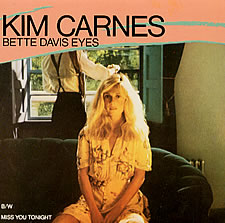
The "eighties" did not begin on January 1, 1980, at least not as a cultural phenomenon. They slowly came into being, fully solidified in 1982 with the end of the economic turmoil that began in 1979 and the beginning of a wave of popular culture distinct from that which came before. (That's my periodization, and I'm sticking to it.) The 70s was The French Connection, Taxi Driver, and Star Wars, while the 80s was Beverly Hills Cop, Ghostbusters, and Return of the Jedi. I have a theory that "Bette Davis Eyes" as performed by Kim Carnes is the true beginning of the 80s as a cultural epoch.
The sound is unalterably, unmistakably 80s, from the reverby guitar to airy synths to metronomic beats to its processed production. Tapping into the Zeitgeist, this song spent a whopping eight weeks at the top of the charts in 1981. America had spoken, and it was tired of the shaggy, macrame-festooned 70s and ready to catapult into the clean, brightly lit, angular 80s.
If you need an example to see the contrast, compare Carnes' icy cool rendition of the song to the rollicking, country rockish version first cut by Jackie De Shannon in 1974. The woman described in this song is more ribald than anything else, in the Kim Carnes version, she is dangerous. The hard-edged 80s, where getting ahead mattered above all else, is very much apparent here, as well as the backlash against feminism, which meant that women who used their sexuality to get what they wanted were no longer sympathetic or seen as empowered.
Despite all this, the song has elements that elevate well beyond the usual 80s FM radio fare. Most important is Carnes' raspy voice, containing a grainy, earthy quality that cuts against the metallic sheen of synths and drum machines. Her voice sounds perilously close to cracking at a couple points, the kind of thing you'd expect on say, a punk rock or Bob Dylan record. Take a look at some of the other huge hits of '81 -"Endless Love," "Lady," "Morning Train," "Kiss On My List"- and it's pretty easy to see why this song has had a stronger afterlife than the other ones.
The film podcast The Projection Booth is a must-listen for me, and they've termed this month "maudit May." They have been discussing films so snakebitten or unfortunate that they cannot be seen, such as Orson Welles' The Other Side of the Wind, which the master never completed. Imagine my surprise when I saw that Star Wars is their film this week. Wasn't the world saturated with Star Wars, and DVD copies easy to find? After that initial thought, I remembered the reason: Star Wars cannot be seen in its original 1977 version, which George Lucas has kept under lock and key, and which he has even claimed no longer exists. (I call shenanigans on that one.) Instead we are stuck with constant revisions of the original film, which I can only see now with cheesy add-ons made with low-grade 1990s CGI. This great film now has a completely clunky, idiotic scene with Jabba the Hutt jammed in where Han is forced to step on Jabba's tail to account for the gratuitous retrofitting of a fake-looking CGI slug, in addition to all kinds of silly crap happening during the trip into Mos Eisley spaceport.
The new sequels make me mildly excited. You know what would make me truly elated? Seeing a restored, remastered, 70mm version of the 1977 original in stereo sound on the big screen. This would still technically be a "special edition" because the original, first release of the film in May of 1977 had multiple sound mixes, both mono and stereo. The stereo mix was a bit of a rush job, and Lucas actually preferred the mono mix because it was more refined. (Little known fact, the sound mix was still being put together just days before the film hit theaters.)
Seeing the original film with cleaned up sound fit for modern theater speakers in glorious 70mm would truly be something else. I saw the 1997 special edition at the now demolished Indian Hills theater in Omaha in 70mm on a towering, concave screen built for Cinerama. Despite the annoying additions to the film, it was one of the most amazing cinematic experiences of my life. Please Disney, get this right and give the people what they want: the movie they fell in love with (or at least the closest we can come to it) looking fantastic and sounding great in glorious analog film. There are a lot of people who will put cash on the barrelhead for this. If that isn't motivation enough, at least bring back one of the most culturally significant films ever made and stop allowing it to be suppressed in favor of a far inferior version.
In 1982 Andy Kaufmann and Jerry "the King" Lawler did their legendary wrestling feud on Letterman's show
It’s an interesting coincidence that Mad Men and The Late Show
With David Letterman both had their last episodes this week.Both are shows that radically challenged
venerable genres, and their trip into the sunset ought to prompt questions
about those genres’ futures.
Mad Men was the first “new TV” show to hook me in. I didn’t have HBO during the heyday of The
Sopranos and The Wire, but when Mad Men came on I was working my first job, and
at least had the dough for basic cable.
While there have always been aspects about Mad Men that bug me
(especially the smugness about how far we’ve come as a society), I think it’s a great show,
and more importantly, a pathbreaking one.
It introduced a drama of true complexity and characters of great depth,
qualities absent in the television landscape at the time. It felt less like older dramas like NYPD Blue or thirtysomething and more like European art cinema. It allowed space for the equally important and morally complex Breaking Bad to appear on AMC.
The finale showed just how vital and inspiring
Mad Men could be. With this show gone
and Breaking Bad before it, I feel a real emptiness. Sure, there’s plenty of good television out
there, but nothing that really MATTERS like Mad Men did in its earlier days. To put it another way, current television drama lives in world created by that show, but does not seem poised to generate a program as revolutionary for the foreseeable future. (Adam Kotsko puts it better than I can.) In terms of narrative television, it's the satirical comedy shows that I make time for like Veep and Silicon Valley. David Letterman's been on TV so long that it is very hard to remember just how revolutionary he was in his early days. Since moving to CBS in an earlier time slot, his show has gotten glitzier and his guests higher caliber. As a child in the 80s I was rarely awake late enough to see Letterman's show, but the times I did I was struck by just how DIFFERENT it was. I was the kind of strange kid who idolized Johnny Carson (I was a very old soul in my youth), and was thrown by Letterman's deliberate amateurishness. There were jokes beneath and between the jokes I didn't quite get. Once the early 90s rolled around my sense of humor had matured, and started to "get" it. Thinking back on my youth in the televisual dark ages, when network TV aimed for the lowest common denominator and cable was reruns and cast offs, Letterman was providing the one outlet for truly edgy humor and an out of the mainstream sensibility. Until shows like In Living Color and The Simpsons came on the scene, you'd have to stay up real late to get a dose of comedy that wasn't just overcooked sitcom gags or glib Carson-esque joking. (Keep in mind I still loved Carson, though.) The "guy in a suit who tells a monologue then interviews guests with a comedian or musician thrown in" genre of late was perfected by Carson in its original form; Letterman made it more responsive to the 1970s revolution in stand-up comedy. Hosts who've come later, from Conan to Fallon to Kimmel have followed in Letterman's footsteps, not Leno's. Leno got the plumb gig at the Tonight Show, but lost out to Letterman when it comes to respect and influence. The current late night landscape has become rather calcified, however. None of the current hosts seem willing or able to break the basic mode that Carson made and that Lettermen altered. This isn't to say that I don't enjoy watching the occasional Fallon episode, but that the genre of late night, like that of TV drama after Mad Men, doesn't seem poised to outdo that which has come before. I hope someone is out there to prove me wrong.
The first part of The Power of Nightmares, still relevant as an examination of how the neocon invasion of Iraq came to be
I have been taken aback at how the invasion of Iraq in 2003 has suddenly become a political issue again. Republican candidates have been made to say whether they would have made the same decision Bush did, and have been memorably maladroit in their desire to say what people want to hear while not admitting that the whole enterprise was a massive failure. The main dodge so far has been to say that "we went to war based on false intelligence."
Of course, anyone with a brain and a memory knows that this is the usual political bullshit. The crummy, doctored intelligence used to justify the war in Iraq was created to give public support for a decision that the Bush administration had already made. Hell, Donald Rumsfeld was talking about the invasion of Iraq on 9/11. Most people in this country were either too nationalistic, too desirous of post-9/11 revenge, or just too damn lazy to see the truth back in 2003. Polls at the time showed that most Americans thought that Saddam Hussein was connected to the 9/11 attacks.
Twelve years later, things have changed. The invasion of Iraq has turned out to be an even bigger catastrophe than I predicted at the time. I figured that the war would create a fake democratic American puppet state and embroil the United States in a whole host of "regime change" in the region for the forseeable future. I did not predict that American troops would watch while the country was looted, that armed resistance to occupation would continue for years, that civil war between different factions would erupt, and certainly not that an institution like ISIS would rise from the ashes of conflict. Basically, the absolute worst case scenario actually happened, and it's a long way from "we will be greeted as liberators." It is now the majority opinion that the invasion was a mistake, something blindingly obvious even to the biggest nimrods drooling their way across this land of ours.
I feel a big part of Iraq's comeback in political discourse isn't just because of ISIS, but due to a major miscalculation by Republicans. They know that the economy is improving, and thus need to steer towards foreign policy in the 2016 election. Conservatives have long painted liberals as "weak" and themselves as "strong," but seem to have forgotten what their "strong" neocon policies have wrought. When they try to tell the electorate that they will keep them same from ISIS, members of the electorate reasonably ask them where ISIS came from in the first place.
Republican presidential candidates have also been pretty brazen in continuing the neocon foreign policy and even taking advice from architects of the Iraq invasion. Paul Wolfowitz, for example, is an advisor to Jeb Bush. Chris Christie has vigorously defended the NSA, employing the kind of "give up your freedom or the terrorist boogie men will get you" rhetoric favored by Dick Cheney at the height of the 2001-2005 neocon fever dream. Lindsey Graham has jumped in the ring, declaring his love of drone strikes on anyone who even THINKS of joining ISIS. Only Rand Paul has only questioned this, and even he is pretty limited.
Of course, it's not like the Democrats have a much better track record. Many of them voted for the invasion, and president Obama has unleashed American air power in what amounts to a third American war in Iraq. While Iraq has become an issue again, it won't actually lead to any true reckoning with America's global role, just a lot of finger pointing. Republicans will use the old scare tactics, and Democrats will continue military interventions lite. For all the talk about Iraq, little will change, I fear.
The 80s were a very, very strange time. Every now and again I try to explore the true heart of that decade by looking at YouTube videos compiling TV commercials, that era's truest cultural artifacts. That time contained a reaction against the social and cultural changes of the 1960s and 1970s, but at the same time was motivated by such a destructive neo-liberal ideology that pervaded (and changed) everything. A lot of popular musicians from the 60s and 70s suddenly found themselves on the wrong side of the line. Neil Young spent the decade in the wilderness, jumping from rockabilly to country to electronica, never really finding his feet until "Keep On Rocking In The Free World." Paul McCartney started things off with Tug of War, but soon devolved into the likes of "No More Lonely Nights." The Rolling Stones began their now seemingly permanent reign as the supreme oldies act. Bob Dylan put out a wave of dreck. None of these acts maintained their old levels of popularity and artistic credibility.
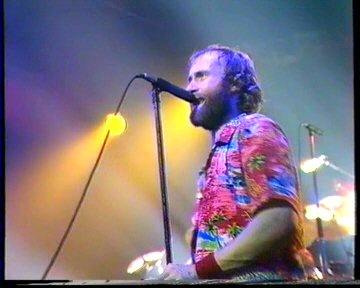
Not all artists from the past failed to prosper in the spandex decade, however. Prog-rock band Genesis dropped the art and added some hooks, putting several songs in the charts. Member Phil Collins became the unlikeliest of pop idols, a short stocky middle-aged balding drummer with a penchant for wearing patterned shirts and matching white sneakers with suits. He would have innumerable hits, both solo and with Genesis, having mastered the formula for 80s chart success.
Genesis' first 80s hit, 1980's "Misunderstanding", fit the Zeitgeist well. The song's "rocking chair" rhythm was reminiscence of 1950s R&B, rather than the pumped up beats heard in the discos of the era. After all, the conservative revolution led by Reagan promised a return to old values, and the 1950s had come to symbolize a certain kind of utopia in some people's minds. The guitar and piano shine brightly, and subtle synths gently amp up the wattage. Although this is a melancholy song about getting stood up, the sour gets subsumed by the sweet, making it a kind of pop music lemon tart. If 80s culture was about anything, it was the pervasive attempt to drown out the crushed dreams of the time with escapism and a kind of creepy inability to face reality.
Like lemon tarts, I like this song. Genesis' musicians really knew how to play, the hooks are delightfully catchy, and I do certainly dig that R&B rhythm. Collins and co. would get less subtle and less interesting later in the decade ("Invisible Touch" anyone?) and a lot more bombastic. Judge all you want, but since the neoliberal onslaught continues unabated, I need a little escapist entertainment to get myself through.